Thanks to a dedicated ‘Down-Under’ benchrester, Australian shooters have an excellent web resource for their sport. Sydney’s Robert Carnell has created a content-rich website for Australian shooters, www.benchrestbulletin.net. Carnell’s Benchrest Bulletin provides match schedules and results, range info, recent news, record listings, shooting tips, and links to important Australian and Pacific Rim shooting organizations. You’ll also find gear reviews and a Shooter’s Forum.
Carnell, a past Australian Sporter Class champion, is an accomplished benchrest shooter with decades of experience. In 1993 he won a Silver Medal at the World Championships, and he has placed highly in events he’s attended in the United States. But Carnell is far more than an ace trigger puller. Robert is a skilled and creative “home gunsmith” who has crafted his own custom action and built his own railguns from scratch. You can learn about these and other Carnellian creations in the “Personal Projects” section of Robert’s website.
Home-Built Rail Gun — Aussie Innovation
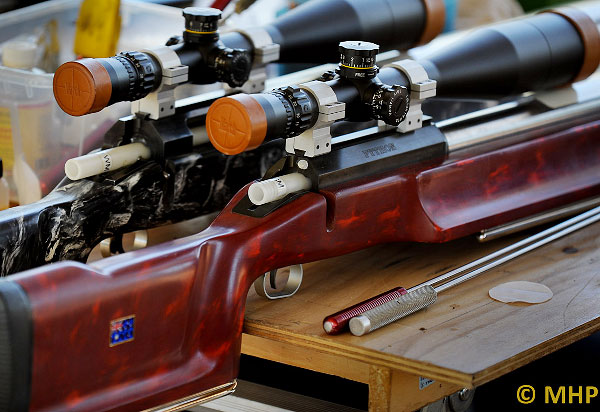
Below are photos of one of Rob Carnell’s most amazing builds. This liquid-cooled, tension-barrel rail gun is a great example of self-reliant Aussie engineering. The barrel runs inside a coolent-filled, large-diameter sleeve, much like an old water-cooled machine gun. This is the fourth rail gun that Rob built, and the second fitted with a tensioned barrel.
Robert explains: “My railgun design has a 1.75″ barrel under tension inside an aluminium tube filled with radiator coolant. There is nearly a gallon of coolant, and the barrel stays cool no matter how many shots I seem to fire, or how quickly they are shot. The brass nut on the front rides on a nylon bearing and can be tightened to get the best accuracy. I am a believer in the ‘tuner’ idea and this seems to work for me. The main tube is thick-walled aluminium 600mm (24″) long. There is a flange at both ends. The flange at the back fits onto the barrel before the action is screwed on. The front flange is a press-fit into the tube, then there is a brass nut that fits over the barrel and screws against a nylon washer on the front flange. The Railgun’s base is aluminium and has the standard adjustments — windage, elevation and a sighter cam. In addition, there is a 1/10 thou dial indicator for windage. This allows me to zero the indicator and shoot my group. If I need to add a bit of windage for a condition, I can quickly get back to the original position if my condition comes back.”
Home-Built Action Uses Remington Bolt
Rob’s rail gun uses his own home-made stainless action, which features Panda-spec threads and a modified Remington 700 aftermarket bolt. Not bad for a do-it-yourself project we’d say! CLICK HERE to read how Rob designed and built the action.
When it comes to long-range optics, some folks can’t have too much magnification (as Tim Allen used to say: “More Power!”). At 500 yards and beyond, when the air’s misty or the mirage is thick, you can’t always use extreme magnification. But, when the conditions are excellent, it’s nice to have 50X magnification (or more) on tap. You can always “crank it back down”. Higher magnification (when conditions are good), can help you see your bullet holes at long range, and that makes it easier to judge your hold-offs and keep your group centered. In addition, there’s no doubt that high magnification lets you aim more precisely, no matter what the distance. Even at 100 and 200 yards, short-range benchresters are using 40X, 50X, and even 60X power scopes. This allows you to position your cross-hairs with extreme precision — something you need when you’re trying to put multiple shots through the same hole.
Raising the Optics Bar
How much power is usable? A few years back, folks said you can’t use more than 45X or so at long range. Well, as modern optics have evolved, now guys are buying scopes with even more magni-fication — way more. There are practical limits of course — with a 56 to 60mm front objective, the exit pupil of a 60X or higher-power scope will be very tiny, making head orientation ultra-critical. Any many scopes get darker as you bump up the magnification.
Despite the exit pupil and brightness issues, shooters are demanding “more power” these days and the scope manufacturers are providing new products with ever-greater magnification levels. Right now, the most powerful conventional riflescope you can buy is the March X-Series 8-80x56mm scope. Featuring a 34mm main tube and 56mm objective lens, this offers a true 10-times zoom ratio and up to 80X magnification. This scope has minimal distortion thanks to high-quality ED lenses designed in-house by Deon Optical, which also machines the main tube from one solid piece of billet aluminum.
To demonstrate the capabilities of high-magnification March scopes, Aussie Stuart Elliot has created a cool through-the-lens video with the March 8-80x56mm scope set at 80-power (See 0:30 timeline). Along with being one of Australia’s top benchrest shooters, Stuart runs BRT Shooters Supply, dealer for March Scopes in Australia. In the video below you can see the March 8-80X focused on a target at 1000 yards (910m). For best resolution, watch this video in fullscreen, 720p mode.
Look through the Lens of 80-power March Scope at Target 1000 Yards Away
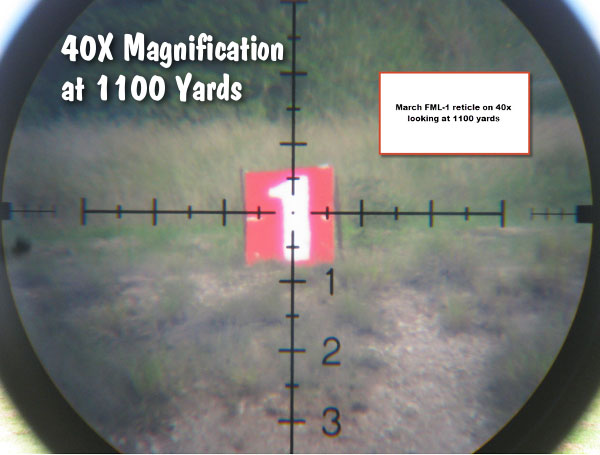
Through-the-Lens Views at 40X and 80X at 1100 Yards
To reveal the difference between 40X and 80X magnification, here are two through-the-lens still images taken with March scopes sighting to 1100 yards. The top photo is at 80X magnification, looking through the March 8-80x56mm. The lower photo is at 40X magnification viewed through a 5-50x56mm March X-Series scope. You can see there is a big difference in perceived target size! Click on the “Larger Image” button to see full-screen version at 80X.
Here is another view through a March high-magnification scope, this time at 1000 yards. We’re not exactly sure of the power setting, but we think this is at least 40X. Note the good contrast, and the absence of color fringing or chromatic distortion. When you’re shooting at 1000 yards and beyond, having high-quality glass like this can provide a competitive advantage.
Video Find by Boyd Allen. We welcome reader submissions.
AccurateShooter.com has a HUGE collection of FREE downloadable PDF targets. We offer a very wide range of target designs: Load Development Grids, NRA Bullseye targets, Official-Size BR targets, Realistic Varmint Targets, Silhouette Shapes, Fun Plinking Targets, and even specialized tactical training targets.
If our collection of free targets isn’t enough, or if you want to create a new kind of target — you’re in luck. There’s an Australian-based interactive website that allows you to create your own customized, printable PDF targets. Just follow the step-by-step instructions to set paper size, layout, bullseye color and diameter. You can even add Score Numbers to your target rings. The Aussie Shooting Targets website is easy and fun to use. It’s much faster to create targets this way than to try to draw a series of circles with PowerPoint or MS Paint. And, if you’re not feeling creative, you can download nearly 100 pre-design A4-sized targets from the same Website.
Story based on Report by Lars Dalseide for NRAblog.
This year the Long Range Championships at Camp Perry have attracted top shooters from around the globe. At Camp Perry this year are teams from Australia, Canada, Japan, and the United Kingdom (UK). “We have 81 international shooters for F-Class and Long Range in the competition right now,” said NRA’s High Power Rifle Match Director Sherri Judd. “A good portion of those competitors will be shooting in this year’s America Match.” The Long Range High Power Championship matches precede the America Match, an international team event. For many, the NRA Long-Range Championships will serve as a warm-up for the America Match.
A biennial team event, this is the first time the America Match will be conducted at Camp Perry. To take part in the event, each country sent eight shooters here to the United States. Categories include an F-Class division, an Under-25 division, and an Open division. The Under-25 section is open to all age-qualified 4-man rifle teams, the Open section allows 8-man rifle teams (multiple teams per country may compete), and the F-Class section is limited to one, 8-man rifle team per country. NOTE: Photos were selected to illustrate international competitors from particular nations. They may or may not be members of specific national squads competing in the America Match following the NRA Long Range Championships.
F-Class at Camp Perry
Some folks were surprised to see “belly benchresters”, i.e. F-Class shooters on the firing line during the Long Range Nationals. In fact, many of the long-range events are open to F-Classers this year. Forum member Nate G. explains:
F-class will be shot alongside the LR matches, 11-16 August, with the same course of fire as the sling shooters. On Saturday (8/11), there are two individual matches: unlimited sighters + 20 for record in each. Then, for the high score for each rifle class on each relay, there’s a shoot off for each match. (3 sighters + 10 for record, continuing in blocks of 5 shots in the case of a tie)
On Sunday and Monday, there’s an individual match in the morning and a team match following. After the team match, there’s the shoot-off from the day’s individual match.
From the NRA Blog: “The NRA Freedom Match 703 and 707 are shot with an F-Class Rifle and competitors have the option of supporting the rifle with a rear and/or front rest or with a bipod and/or sling and rear rest. On Sunday, David Bailey took the win in the Open 703 Match after a shoot-off performance of 99-4X. A tie-breaking shoot-off was required in the T/R 707 match after Daniel Polabel and Nikolos Taylor both shot 97-2X scores. [Polabel won] the tie-breaker.”
Tuesday is the individual Palma match (unlimited and 15 at 800, 2+15 at 900 and 1000), with divisions for Palma, Any, Service, and F-Class. [It’s not clear whether F-Class will shoot on Tuesday]
Wednesday is the Palma team match, which for this year is the America’s Match. With the exception of the Palma individual and team matches (or, this year, the America’s Match), all the matches (individual and team) are 20 shots for record with individual matches having unlimited sighters and team matches limited to two sighters.
Score one for Australian shooters. After a lengthy legal battle, the New South Wales Rifle Association (NSWRA) has preserved its rights to use the historic ANZAC Range on the outskirts of Sydney.
Last week, the New South Wales Supreme Court ruled that the Commonwealth Government could not shut down NSWRA shooting operations at ANZAC Range (and sell the 100-hectare Range site) because the Commonwealth had not provided a suitable alternative facility. The Court held that, under the terms of a 2000 License Agreement, NSWRA could not be evicted from the ANZAC Range until such time as a suitable new range was provided for use by the NSWRA and affiliated shooting clubs.
The ANZAC Range, the largest rifle range in the southern hemisphere, is located on the Malabar Headland, south of Sydney. The ANZAC Range has been a revered venue for Australian marksmen for more than a century and a half. It is headquarters to the New South Wales Rifle Association (NSWRA), and hosts the annual NSW Queen’s Prize. The range is shared among various shooting associations and clubs with the Sporting Shooters Association of Australia (SSAA) occupying the “southern” end of the complex. The range is also extensively used by clubs affiliated with the SSAA and NSWRA. The ANZAC range is steeped in history. It has been used for recreational shooting since the 1860s. The term “ANZAC” comes from the Australian and New Zealand Army Corps. The early Australian Defense Corps trained at the Malabar Range, and Allied troops trained there during World War II.
In recent decades, the New South Wales Rifle Association has been embroiled in a court case against the Commonwealth Government over the Malabar Headland, the land on which the ANZAC Rifle Range is located. In July 1986 the Commonwealth Government resolved to sell the ANZAC Rifle Range. Since that time the NSW Rifle Association and the dozens of gun clubs that regularly use the ANZAC Rifle Range have been facing closure. There were a series of eviction notices and legal proceedings, culminating in a year 2000 License Agreement under which the NSWRA was allowed ongoing use of the ANZAC Rifle Range at Malabar until an alternative site became available. There were plans to open a new public range for the NSWRA at the Holsworthy Army Base. However, those plans were scrapped and the Commonwealth never acquired and built a new facility. (Under the terms of the License Agreement, the Commonwealth was to give the NSWRA part of the Holsworthy Barracks and $9 million to help it relocate there.)
Commonwealth officials assert the ANZAC Range would be converted to a National Park once shooting activities were terminated. The Range property would be deeded to the NSW State Government for Park use.
Though there were a number of lesser issues involved in the ANZAC Range litigation (including asbestos abatement and structure maintenance), the NSW Supreme Court’s decision turned on the failure of the Commonwealth to provide an alternative facility: “The Commonwealth has not given a Relocation Notice. Apparently it was decided that it was not appropriate that the Holsworthy Army Base be made available to provide a range for private shooting clubs. Although other potential rifle ranges have been identified, so far as appears, no steps have been taken, other than the carrying out of studies, to relocate the ANZAC Rifle Range.”
Under the terms of the Court’s ruling, the NSWRA can continue to use the ANZAC Range (but not necessarily forever). The Supreme Court’s ruling specifically blocks the Commonwealth from evicting the NSWRA from the ANZAC Range… for now. And likewise the Commonwealth is enjoined from selling or transferring the range property on the Malabar Headland. A range closure is still possible in the years ahead, but the Commonwealth must first provide a suitable replacement range complex.
Aussie Shooters Celebrate Legal Victory
Australian shooters are hailing this court decision as a major victory. The editor of Shooting.com.au, a leading Australian shooting sports website, tells us: “The NSWRA has won its case against the Government, thereby establishing [an important] precedent for shooters in Australia. Where previously we were trod upon without care, we now have a strong precedent with which to challenge, and hopefully prevail over, future legislative changes and government actions. It’s been a long time since Australian shooters had anything to celebrate about.” For more information, visit www.saveanzacrange.com.
Most of you have seen the “I Like Guns” music video by Australian singer/songwriter Steve Lee. This politically-incorrect ballad was released a couple years back, but in this election year, we thought it deserved an encore performance. In the song, Lee describes his affection for guns large and small, from revolvers to shotguns to safari rifles to .22 LR plinkers.
Lee wrote the song, in part, to draw attention to the gun restrictions in his home country of Australia. As a result of those tough gun laws, ownership of semi-automatic rifles and many types of handguns is tightly regulated down under. Consequently, some of the sequences in Lee’s pro-gun music videos have been filmed in other countries.
Steve Lee grew up in outback NSW and guns have always been a part of his life. “I never knew that people didn’t have guns when I was a kid, it just seemed like a normal, practical thing to have and shooting seemed like a normal, fun thing to do”. Now 42, Steve hasn’t slowed up and still loves guns just as much. He’s a member of his local pistol club, and enjoys nothing more than spending a weekend camping and shooting with his family and friends. His love of guns has led him all over the world from Africa to America, all places that allowed him to experience freedom with different types of guns.
On his Ilikeguns.com.au website, Steve explains: “I really wanted … to help us reflect on the good aspects of gun ownership and remind us that guns are a part of our Australian heritage. Both my dad and my grandfather owned guns and never had any trouble.”
If you enjoyed the “I Like Guns” video, you’ll get a kick out of Steve’s recent release, “I’ve Shot Every Gun”. Steve wrote the lyrics, but the tune is based on the song “I’ve Been Everywhere’ written by Aussie Geoff Mack in 1959 and popularized by North American performers Hank Snow and Johnny Cash.
Report by Murray Hicks
On March 10, 2012, history was made down under when 78 shooters attended the inaugural BRT 500m Fly Shoot National Championships held in Canberra, Australia. 500m fly shooting has grown immensely in popularity down under since the first Fly Shoot was held in Canberra, 22 years ago. The Fly Shoot is a highlight of the Aussie shooting calendar, attracting the largest field of competitors among any benchrest-style match in Australia. The day of the match was a cracker (that means good in the Aussie lingo) with blue skies and light winds.
CLICK “PLAY” to hear Murray Hicks talk about the sport of Fly-Shooting in Australia. Murray explains Fly Shoot rules, including the famous Rule 10: “Any competitor found not enjoying themselves, will be disqualified”.
[haiku url=”http://accurateshooter.net/Video/flyshoot.mp3″ title=”Fly Shoots by Murray Hicks”]
The 500m (560-yard) Fly Target is shot for score on a target with 10 scoring rings, plus a central fly image (instead of an “X”). A shot that hits any part of the fly counts as 10.1. Bonus points are also awarded for group size, with one point for a group under 10″ up to a maximum of 10 points for a group under 1″. Thus, 60.5 is the max possible score for one five-shot target (10.1 x 5 plus ten bonus points).
The Fly Shoot has two equipment classes: Light Gun (under 17 lbs.) and Heavy Gun. This is one of the few matches in Australia where Light and Heavy guns shoot head to head for overall placings. The wide variety of chamberings/calibers used by competitors is remarkable. Unlike the 600-yard BR game in the USA, which is dominated by small 6mm cartridges, at Australia’s Fly Shoots, you will see everything from small varmint calibers all the way up to big-bore Magnums. Many shooters favor the big 30s because it’s easier to see .30-caliber bullet holes through the mirage. This year’s Canberra event was won by Stuart Elliott shooting a 300 Win Mag. It was fitting that Stuart won the Inaugural BRT 500m Fly National Championships. Stuart, who runs BRT Shooters’ Supply, was one of the three Fly Shoot “founding fathers” who dreamed up the Fly Shoot discipline 22 years ago.
Spotters Add to the Fun
The use of a spotter during the match is permitted and even encouraged. This adds greatly to the fun of the shoot. Having a good mate on a spotting scope alongside you spotting your shots and helping to call the wind changes can really help when conditions get rough (as they often do).
The past year has seen the 500m Fly Shoot officially recognised by the Sporting Shooters Association of Australia (SSAA) and added to the official rule book. As a result the March shoot in Canberra this year became the Inaugural Fly Shoot National Championships. BRT Shooters’ Supply came on board as the event’s major sponsor, offering BRT’s full support and organizing an excellent prize pool. Thus the “BRT 500m National Fly Shoot Championships” was born.
The BRT 500m Fly Shoot Nationals were shot in reasonably good conditions, with major rains and floods in the week leading up to the shoot things were looking a bit dodgy. Luckily the day before the shoot the weather started to clear and over 40 tons of gravel had to be bought in to repair the access road to the 500m target line which had been washed away. The main organiser David Groves and his willing team of helpers took this all in their stride and did a tremendous effort to keep things running smoothly.
The inaugural shoot had an international flavor with shooter Sebastian Lambang, maker of the Seb rest, making the trek from Indonesia to compete. Lambang bought along his new switch-barrel rifle. With wide front “wings” attached and his .284 barrel, Seb finished 14th overall and 7th in Light Gun.
Top Competitors at 500m BRT Fly Shoot Championships
Name – Score – Class + Placing
1. Stuart Elliott: 261.03 — HG 1
2. Murray Hicks: 260.05 — HG 2
3. Anthony Hall: 257.03 — LG 1
4. Jason Trotter: 249.02 — HG 3
5. Annie Elliott: 247.03 — HG 4
6. Michael Farr: 242.04 — HG 5
7. Les Fraser: 242.01 — HG 6
8. Les Fraser: 241.01 — LG 2
9. Tyson Trotter: 238.01 — LG 3
10. Roy Gow: 237.02 — LG 4
11. Mick Easton: 235.02 — LG 5
12. Dave Groves: 228.02 — HG 7
13. Michael Bell: 228.01 — LG 6
Other Important Results
Small Group Paul Read: HG 1.382″
Best target Jason Trotter: HG 58.01
Best Junior Roy Gow: LG 237.02
Note on Rankings: The ranking list (the “Dirty Dozen”) includes 13 rankings of 12 shooters. Les Fraser shot both classes, finishing 7th overall with his HG and 8th overall with his LG. A second entry is included in the “Dirty Dozen” list for Les to allow recognition of his second highest score in Light Gun Class. However, each shooter normally only gets one overall ranking in the “Dirty Dozen” top 12.
All photos are copyright Murray Hicks, used with permission.
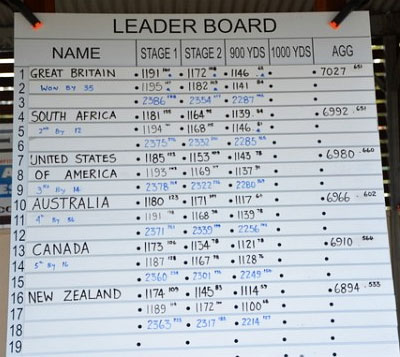
It’s Sunday, October 22nd in Australia, on the other side of the International Dateline. That means that the World Long Range Rifle Championships (WLRC) has concluded. The last major event was the Palma Cup Match, the most prestigious event in full-bore competition. The 2011 Palma Match has been completed with Team Great Britain the clear winner with a total Aggregate of 7027-651V. That’s 35 points ahead of South Africa which took second with a score of 6992-651V. (Interestingly had exactly the same V-count, for Center hits). Team USA captured the Bronze Medal, finishing third with a total of 6980-655.
Yanks Finish Third
Our friend Kelly Bachand, one of the Team USA Palma shooters, reports: “I’m a very proud member of the 2011 bronze medal winning USA Palma Team! There was very, very stiff competition and the conditions on the range tested our coaches and shooters thoroughly. After two long days of shooting we found ourselves bested by Great Britain and South Africa. While we did not win gold, this was still a tremendous accomplishment for our team, and I was very proud to shoot alongside the best rifle shooters in our country and from around the world.”
Link for Match Results
Preliminary results for the Palma Team Match and all the 2011 World Championships events are available online. For results for both individual and team events, visit the WLRC Results Page.
Great Britain’s Richard Jeens won the Individual World Long Range Full-Bore Rifle Championship in Brisbane, Australia with a final score of 725-49V. (A “V” is a center-ring hit, equivalent to an “X” in American matches). Ceremonially hoisted in the air by his fellow competitors at the awards ceremony, Jeens was all smiles, having earned a title he’ll retain until the next World Championships in 2015. Jeens topped a field of 374 shooters from seven countries. Andre Du Toit of South Africa took the Silver Medal after a shoot-off for 2nd/3rd position against bronze-medal winner David Luckman of Great Britain. CLICK HERE for complete results.
Finishing 5th overall in the Three-Day Aggregate, Jeens had to rely on his shooting skills (plus a little bit of luck) to win the shoot-off (the top ten competitors after three days of competition advance to a final shoot-off.) The little bit of luck came by way of the winds during the 1,000-yard phase of the competition. Long Range shooters usually deal with all sorts of conditions, but the day’s wind was enough to knock a few of the favorites (such as SGT Sherri Gallagher) out of the Top Ten. Nonetheless, it was a well-deserved win, and we congratulate Richard on his achievement. Looking at Richard’s winning rifle, we surmise his victory settles the question whether a thumb-hole stock will work for long-range prone shooting — it seemed to suit Jeens just fine.
Jeens wasn’t the only hot-shooting marksman from Great Britain in the competition. Fellow Brit David Luckman shot a 723-68V, matching South African Andre Du Toit for the second highest score (Du Toit then prevailed in a shoot-off for second place). Only 4 Vs behind her team-mate Luckman, Great Britain’s Jane Messer finished fourth with 723-62V. Notably, three women finished in the Top 10, led by Messer, with Americans Trudie Fay and Nancy Tompkins in sixth and tenth, respectively. Heading into the final day of the Individual Championships, Nancy’s daughter SGT Sherri Gallagher was in the lead, but she dropped points in the very windy conditions on the last day.
With the individual side of the competition complete, all that remains is the Palma Match. Here are the final individual scores:
Photo Credit: US Palma Team member Dave Cloft. Report by Lars Dalseide for The NRA Blog.
One of the most prestigious rifle competitions in the world is underway right now at the Belmont Shooting Facility, near Brisbane, Australia. Many of the best sling and irons marksmen (and women) in the world are competing for individual and team honors. American aces such as SGT Sherri Gallagher, Noma Mayo, Trudie Fay, Nancy Tompkins, Bob Gamboa, Bryan Litz, Robert Mead, and John Whidden are representing the Red, White, and Blue down-under, but they and their American teammates are facing stiff opposition from the Brits, South Africans, Canadians, New Zealanders, and the host Australians.
One of the best performances so far was turned in by Bryan Litz, Berger Bullets’ Ballistician. In the Senior Australia Team match last week, Bryan outshot every other individual on the course, nailing a perfect 200-26V to tie the Championship Record. This was a brilliant display of marksmanship by Bryan. At the Awards Ceremony after the match, Bryan received a long standing ovation from his fellow competitors.
You’ll find lots of match photos in the official match Photo Gallery. Plus, Facebook users can access hundreds of photos uploaded by members of the USA Young Eagles Team. Young American shooters have been performing well. Russ Theurer reports: “Team USA Red won the Under 25 Australia Team Match, while Team USA Blue came from behind at 1000 to place third. Young Eagle Joshua Lehn was high score shooter of the team match of all teams combined.” Below are photos of the Young Eagles from Day 5, the Under 25 match:


 When it comes to long-range optics, some folks can’t have too much magnification (as Tim Allen used to say: “More Power!”). At 500 yards and beyond, when the air’s misty or the mirage is thick, you can’t always use extreme magnification. But, when the conditions are excellent, it’s nice to have 50X magnification (or more) on tap. You can always “crank it back down”. Higher magnification (when conditions are good), can help you see your bullet holes at long range, and that makes it easier to judge your hold-offs and keep your group centered. In addition, there’s no doubt that high magnification lets you aim more precisely, no matter what the distance. Even at 100 and 200 yards, short-range benchresters are using 40X, 50X, and even 60X power scopes. This allows you to position your cross-hairs with extreme precision — something you need when you’re trying to put multiple shots through the same hole.
 Raising the Optics Bar


 AccurateShooter.com has a HUGE collection of


 Score one for Australian shooters. After a lengthy legal battle, the
 Commonwealth officials assert the ANZAC Range would be converted to a National Park once shooting activities were terminated. The Range property would be deeded to the NSW State Government for Park use.
 Most of you have seen the “I Like Guns” music video by Australian singer/songwriter Steve Lee. This politically-incorrect ballad was released a couple years back, but in this election year, we thought it deserved an encore performance. In the song, Lee describes his affection for guns large and small, from revolvers to shotguns to safari rifles to .22 LR plinkers.
 The 500m (560-yard) Fly Target is shot for score on a target with 10 scoring rings, plus a central fly image (instead of an “X”). A shot that hits any part of the fly counts as 10.1. Bonus points are also awarded for group size, with one point for a group under 10″ up to a maximum of 10 points for a group under 1″. Thus, 60.5 is the max possible score for one five-shot target (10.1 x 5 plus ten bonus points).



 It’s Sunday, October 22nd in Australia, on the other side of the International Dateline. That means that the World Long Range Rifle Championships (WLRC) has concluded. The last major event was the Palma Cup Match, the most prestigious event in full-bore competition. The 2011 Palma Match has been completed with
 Yanks Finish Third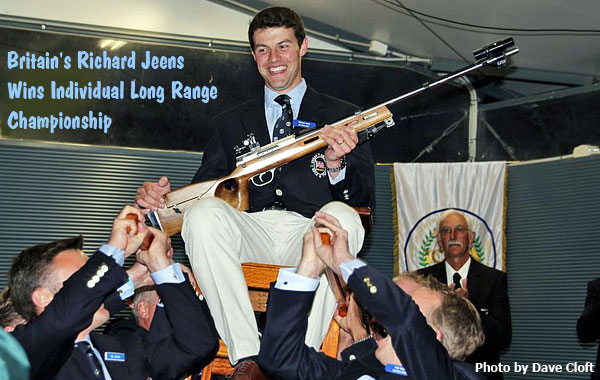


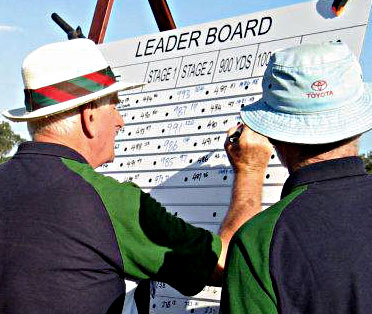 One of the best performances so far was turned in by Bryan Litz, Berger Bullets’ Ballistician. In the Senior Australia Team match last week, Bryan outshot every other individual on the course, nailing a perfect 200-26V to tie the Championship Record. This was a brilliant display of marksmanship by Bryan. At the Awards Ceremony after the match, Bryan received a long standing ovation from his fellow competitors.


