|
|
October 2nd, 2014
When does a scope cost as much as a new Harley-Davidson? When it is a top-of-the-line 72mm Hensoldt (by Zeiss). The remarkable Hensoldt ZF 6-24x72mm SAM scope integrates ultra-bright apochromatic fluorite glass with a calculator module that provides ballistic info and weather data to the shooter. This 6-24x72mm SAM Hensoldt may be the most advanced riflescope on the planet. With a street price of $11,982.00, it is certainly one of the most expensive. Take a 360° tour with this cool video from Hensoldt Zeiss.
Please enable Javascript and Flash to view this VideoPress video.
Hensoldt ZF 6-24x72mm SAM
SAM stands for “Sniper Auxiliary Module”. An integrated ballistics calculator can be programmed for up to four different types of ammo. Sensors in the integrated ring mount measure weather parameters. These values, as well as scope data, are then directly projected into the visual field of the eyepiece. This provides selectable displays of elevation clicks, windage clicks, angle of fire, cant angle, temperature, and air pressure.


October 1st, 2014
Accuracy 1st Development Group, a training operation based in Texas, will soon release a new instructional video: Long Range Made Easy. This training video features Bryan Litz, author of Applied Ballistics for Long Range Shooting. Many of the shooters shown in the video use the new ABM ammo developed by Bryan’s Applied Ballistics lab for Berger Bullets. Check out the preview “trailer” for Long Range Made Easy.
Watch Trailer for “Long Range Made Easy”


Accuracy 1st Scope Levels
Accuracy 1st also sells some interesting products for precision rifle shooters. Check out this unique, curved-vial scope leveler ring. More precise and sensitive than other scope levels, the Accuracy 1st leveling device can detect 1° of cant. Displayed line increments represent 2.5° of cant.
You may wonder: “Why are these scope levels better than other similar products?” Accuracy 1st explains: “Our levels are of the highest quality and accuracy. Some scope level manufacturers� use plastic housings, air bubbles and sub-par glass in their vials. In lieu of a straight bubble vial, Accuracy 1st utilizes a custom curved vial featuring medical-grade glass and a ceramic ball. The use of the ceramic ball eliminates the inherent flaws associated with air bubble levels, which at higher temperatures and pressure will compromise the bubble size causing level inaccuracies. Typically air bubble levels require 3° to 5° [tilt] to even register movement. By contrast, the Accuracy 1st custom level will read movement at a minimum of 1° and will extend measurements out to +/- 10°.”
September 26th, 2014
If you haven’t visited the Norma website recently, you should click over to www.norma.cc/en/ (the ‘en’ is for English version). There you will find Norma’s “Ammo Academy”, a technical resource that provides information on: Ballistics, Powder Storage, Barrel Wear, and Bullet Expansion. In addition, the Ammo Academy now links to Norma’s Reloading Data Center, where you’ll find loads for nearly 70 cartridge types including: .223 Rem, .22-250, 6mmBR Norma, 6XC, 260 Rem, 6.5-284, 6.5×55, 7mm-08, .270 Win, .284 Win, .308 Win, .30-06, 300 Win Mag, .338 Lapua Mag and dozens more.

The Ammo Academy’s Ballistics section contains some fascinating technical facts:

- After the trigger is pulled, it takes around 0.005 seconds before the firing pin reaches the primer.
- From the firing of the primer it takes 0.0015-0.002 seconds until the bullet exits the muzzle.
- When the bullet leaves the muzzle, the hot gases surround and overtake the bullet, continuing the acceleration for a few centimeters.
- Because the barrel is always angled slightly upwards, the bullet’s flight starts about 3-5 cm below the line of sight.
Norma also offers some good advice about Powder and Cartridge Storage:
To maintain the product quality for as long as possible, you have to keep the powder in a suitable place under suitable conditions. Where possible, store the powder at a constant temperature, ideally between 12 and 15°C (54°F to 59°F), and a relative humidity of 40–50%. If the air is too dry, it will dry out the powder, which will cause the pressure to be higher, thus affecting performance. Also make sure that you close the powder container properly afterwards. Cartridges should be stored under the same ambient conditions to maintain their quality.
For more info on Norma products, CLICK HERE to access Norma’s Catalog Download Page.
Story Tip by EdLongrange. We welcome submissions from our readers.
August 9th, 2014
Most of us can figure out how to zero our rifles at 100 yards. But do you know how to get a solid zero at long range — as far as 1000 yards? You need to know your ballistics, otherwise you may waste a lot of ammo “sprayin’ and prayin'”. You definitely need to know your exact muzzle velocity, within a few FPS. This is not as simple as it seems, because it is not uncommon for chronograph results to be off by 10 to 20 fps or more, just through calibration error. Accordingly, you may want to test with a pair of chronos and record the results from each (you may be surprised at the variances).
 Video Illustrates Zeroing Process Video Illustrates Zeroing Process
The process of zeroing rifles for long range is covered in a new “Firearm Science” video from the NRA. This video features George Reinas, a popular competitor on the Top Shot TV Show. George demonstrates how to adjust his scope to compensate for bullet drop at long range. Our friend Dennis Santiago was involved in the making of this video, which was filmed at the Burbank Rifle & Revolver Club in Southern California. The video is narrated by the talented Jessie Duff, one of America’s best action shooters.
 When zeroing at long range, you should first consult a good ballistics program. Select your baseline zero distance (such as 100 yards), then plug in the MV along with salient environmental factors: Altitude, Air Pressure, Temperature, Humidity. After you enter bullet BC, your ballistics program will calculate the drop to the target, expressed in MOA or Mils. Some programs will actually list the number of clicks up from your current zero. When zeroing at long range, you should first consult a good ballistics program. Select your baseline zero distance (such as 100 yards), then plug in the MV along with salient environmental factors: Altitude, Air Pressure, Temperature, Humidity. After you enter bullet BC, your ballistics program will calculate the drop to the target, expressed in MOA or Mils. Some programs will actually list the number of clicks up from your current zero.
You can print out the data from your ballistics solver as a “drop chart” that can be attached to your rifle stock. If you shoot at various altitudes you may need multiple drop charts.
July 22nd, 2014
 Carl Zeiss Sports Optics (Zeiss) has a new mobile Ballistics Calculator App for iOS (Apple) and Android devices. Modeled after the web-based Zeiss Ballistics Calulator, the new Mobile App is tailored to work precisely with Zeiss Ballistic reticles. Mike Jensen of Carl Zeiss Sports Optics explained: “We wanted those who use our proprietary ballistic reticles to have a ballistic tool that could be used virtually anywhere you have a signal for your device.” Carl Zeiss Sports Optics (Zeiss) has a new mobile Ballistics Calculator App for iOS (Apple) and Android devices. Modeled after the web-based Zeiss Ballistics Calulator, the new Mobile App is tailored to work precisely with Zeiss Ballistic reticles. Mike Jensen of Carl Zeiss Sports Optics explained: “We wanted those who use our proprietary ballistic reticles to have a ballistic tool that could be used virtually anywhere you have a signal for your device.”
The Zeiss Ballistic Calculator App allows users to pick their ballistic reticle from a drop-down menu. The user also has the ability to select factory or hand load data as well as environmental variables, and then the system will calculate and display the optimum magnification setting. With this system, distant yardages now coincide with the Zeiss ballistic reticle subtensions. The system allows the user to adjust standard settings for altitude and temperature, as well as other advanced settings, e.g. for muzzle velocity and sight height above bore.
Zeiss Ballistics Calculator App Features:
– One page screen application for fast data entry and easy to read results.
– Comprehensive and current database for factory and hand-loaded ammunition.
– Adjustable settings to customize unique shooting environments.
– Slide feature to visualize how magnification change alters point of impact.

The Zeiss Mobile Ballistic Calculator App can be downloaded at Google Play (Android App) and iTunes (iPhone App) for $4.99. Zeiss has noted that the App will soon be updated to include the Zeiss ASV ballistic turret system.
June 26th, 2014
 Applied Ballistics, LLC is offering an all-new book by Bryan Litz, the first in a series. The new 339-page, hard-cover book, Modern Advancements for Long Range Shooting, Volume I, documents the ongoing R & D being done at the Applied Ballistics laboratory, the “Area 51″ of the shooting world. Applied Ballistics, LLC is offering an all-new book by Bryan Litz, the first in a series. The new 339-page, hard-cover book, Modern Advancements for Long Range Shooting, Volume I, documents the ongoing R & D being done at the Applied Ballistics laboratory, the “Area 51″ of the shooting world.
“This new series is heavily based in experimental ballistics, and takes a ‘Myth Busters’-type approach to many of the questions and problems faced by modern long range shooters,” stated Litz. Volume I of the series is scheduled for release in late July, 2014. The book will cost $39.95, but you can pre-order now for $35.95, a 10% savings.
Bryan adds: “Anyone interested in the underlying science behind shooting can benefit from this book. We address the important questions… How much does faster twist affect MV? How does stability affect BC from the muzzle and downrange? What chronographs are capable of high accuracy and precision? What characteristics should you look for in your long range rifle and optic set up? What new gadgets are being developed to enhance long range shooting?
New Book Features Extensive Live-Fire Test Results
Bryan tells us: “The book spotlights state-of-the-art technologies (and methodologies) in long range shooting. New equipment and old ideas are explored using experimental, live-fire testing. Extensive test results are reported in an easy-to-understand way. Among other things, our tests explore the effects of twist rate on muzzle velocity, BC (supersonic and transonic), precision, even spin rate decay for various rifling profiles as they are tested experimentally.
Chronographs and Optics Are Tested and Compared
Litz’s new book traces the evolution of modern rifle, bullet, and optic design. Results from chronograph comparison tests are presented, showing the strengths and weaknesses of available commercial chronographs. High-tech instrumentation such as laser rangefinders and wind measurement devices are explained in detail by contributing author Nick Vitalbo.
The New Book Puts Theory into Practice
We asked Bryan Litz how this new book differs from his previous treatises. Bryan replied: “My original Applied Ballistics for Long-Range Shooting book explains the fundamental elements of external ballistics. It’s the academic background which all future work relies on. The new book, Modern Advancements in Long Range Shooting, covers the ongoing development of equipment and ideas. We explore things like twist rate effects, modern rifle and optic design, and some of the high tech instruments which are being used to enhance the effectiveness of long range shooting.

June 9th, 2014
 Ballistics books have gone digital. Bryan Litz’s Applied Ballistics For Long-Range Shooting (2nd Edition), the leading treatise on the subject, is now available in digital eBook format. This new eBook version contains all the text of the print version, all the charts, all the diagrams, and all the photos. You get all this in an easy-to-read, easy-to-search format that can be viewed on a variety of devices*. You can access the book on your home computer, on your laptop, on a tablet, on a smartphone, or on a lightweight, portable Kindle e-Reader. And yes, iPad users can use the Kindle app to read the book on an iPad. Ballistics books have gone digital. Bryan Litz’s Applied Ballistics For Long-Range Shooting (2nd Edition), the leading treatise on the subject, is now available in digital eBook format. This new eBook version contains all the text of the print version, all the charts, all the diagrams, and all the photos. You get all this in an easy-to-read, easy-to-search format that can be viewed on a variety of devices*. You can access the book on your home computer, on your laptop, on a tablet, on a smartphone, or on a lightweight, portable Kindle e-Reader. And yes, iPad users can use the Kindle app to read the book on an iPad.
CLICK for FREE Sample of Applied Ballistics
for Long-Range Shooting (2d Ed.) eBook
NOTE: After clicking this link to go to Amazon.com, click on the blue book image labeled “Look Inside”. This will launch a preview window. Alternatively, Kindle users can click the “Send Sample Now” button.
|
Advantages of the eBook Edition
The eBook release of Bryan Litz’s most popular and comprehensive ballistics book is a big deal, in our opinion. There are many advantages to the digital format. First you can quickly search for any term or reference, or click from table of content entries to desired chapters. Second, you can highlight text and bookmark pages for future review. Third, you can easily change the font size to enhance reading for older eyes. Fourth, you can zoom in the charts, diagrams, and photos for a better view. Last but not least, you can easily carry the entire text in the field on the same digital device that holds your ballistics solver software.
The new eBook version of Applied Ballistics for Long-Range Shooting (2d. Ed.) is available now on Amazon.com for $39.95. |
Highlights of eBook Edition
The eBook version of Applied Ballistics for Long-Range Shooting (2d Ed.) is available now on Amazon.com. Since its release in 2011, the second edition (hardcopy) of Applied Ballistics for Long Range Shooting has sold over 10,000 copies. It’s the modern ‘go to’ book on the subject of ballistics for long range shooters. The Second Edition of the book includes two additional chapters covering extended long-range shooting and monolithic bullets.
200 Bullet Types Tested. In this eBook edition, Bryan Litz includes data from his own personal field tests with over 200 bullet types. Performance data (G1 and G7 BCs confirmed by live-fire testing) is presented along with 2-D drawings for hundreds of long range bullets.
Ballistic Program Included. eBook buyers can receive the Point Mass Ballistics Solver 2.0 for no extra charge. The software comes on a CD with the hardcopy. With the eBook, there are two ways to access the ballistics program. First, you can access the free AB online ballistics solver through embedded links in the eBook and run directly from your eReader. Alternatively, you can request the PM Solver program to be emailed to you for running on a PC.
“Our mission at Applied Ballistics is to be the complete and unbiased source of external ballistics information for long range shooters,” stated Bryan Litz, author and owner of Applied Ballistics, LLC. “We’re constantly testing new claims, products and ideas and dispensing the marketing hype which can make it difficult for shooters to master the challenging discipline of long range shooting. We developed the original hard copy of the book in order to provide shooters of all capabilities with this knowledge. The release of the eBook will not only provide readers with the same knowledge, but do so in a more accessible and mobile way.”
Sample Page from eBook

* Installation of FREE eReader software may be required for viewing on desktop computers, laptops, tablets, and smartphones. This only takes a minute or so.
June 5th, 2014
The new-for-2014 Caldwell Crosswind Professional Wind Meter does much more than measure wind velocity. Along with Current Wind Speed, this device will measure and display: Average Wind Speed, Max Wind Gust, Temperature, Station Pressure, Barometric Pressure, Altitude, Density Altitude and even Wind Chill factor. Select among mph, ft/min, km/h, m/s, or knots for the wind speed units.

The swiveling impeller head (set parallel to barrel) allows you to determine an interpolated 90° crosswind value to use in your ballistics calculations. This eliminates a lot of guesswork.
You might say, “Why do I need a rotating head, I can just turn the whole wind meter to align the impeller axis with the wind?” Yes you can, but then you merely get a raw speed value, and you have to guesstimate the wind angle, and then calculate your actual windage correction based on the vector.
The rotating impeller ring on the Caldwell simplifies the job of calculating windage. The swivel head is designed to show an effective 90-degree crosswind value, no matter what the actual wind direction. Here’s how it works. Hold the unit with the display screen facing you. Then rotate the impeller head until it aligns with the barrel axis (bullet line of flight). The plastic shell surrounding the impeller is specifically designed so that the blades will spin faster or slower depending on the true wind angle. This allows the unit to estimate the effective 90-degree crosswind value (for your ballistics program). Pretty clever eh? See diagram to understand how this works:

This unit comes complete with rotating anemometer head, protective holster case, and one CR2032 battery. The unit has an auto “Power-Off” feature to preserve battery life. There is also a “Data Hold” function plus an LCD Backlight. NOTE: When figuring effective 90° crosswind values, Caldwell recommends using Average Wind Speed mode rather than Current Wind Speed.
March 24th, 2014
If you only know Bryan Litz from his Applied Ballistics Books and DVDs, you may not realize that this guy is a great marksman (along with being an actual rocket scientist). This guy can shoot. At the recent Berger Southwest Nationals (SWN), Bryan took top honors among all sling shooters — and he managed to do that while performing many other important match duties. The pay-off for Bryan was getting his name on a really cool “ghost dancer” perpetual trophy. Litz joked: “With what the wind gods can do at shooting matches, it makes sense to have a trophy that puts you in touch with the spirit world.”

This is actually the second time Litz has finished first in Sling class at the Southwest Nationals. After his impressive win, we asked Bryan if he had any advice for other long-range competitors. First Bryan provided three tips concerning Ballistics, his special area of expertise. Next Bryan offered three more general tips about long-range competition — how to analyze your shooting, how to choose your ‘wind strategy’, and how to avoid the most costly mistakes, i.e. how to avoid the “train-wrecks”.

Litz Ballistics Tips
Ballistics TIP ONE. If you’re having trouble getting your ballistic software to match actual drops, you need to look at a number of possible reasons. Here are some common issues that can cause problems.
Click Values Are Not Exact. Scopes and iron sights don’t always produce accurate adjustments. In other words, if your ballistics program predicts 30 MOA of drop, and you dial 30 MOA but hit low, it might be that your sight actually only moved 28 MOA (for example). To see if your sight is adjusting accurately, shoot a tall target at 100 yards and measure group separation when dialing your sight.
Barometric vs. Station Pressure. This is a commonly misunderstood input to ballistics programs. You can avoid this pitfall by remembering the following: station pressure is the actual measured pressure at your location, and you don’t need to tell the program your altitude when using station pressure. Barometric pressure is corrected for sea level. If you’re using barometric pressure, you also have to input your altitude.
Muzzle Velocity. Chronographs are not always as accurate as shooters think they are — your true MV may be off by 10-20 fps (or more). If your drop is different than predicted at long range, it might be because your muzzle velocity input is wrong.
Mixing Up BC (G1 vs. G7). Knowledgeable long range shooters know that the G7 standard is a more representative standard for modern LR bullets. However, using G7 BCs isn’t just a matter of clicking the ‘G7′ option in the program. The numeric value of the BC is different for G1 and G7. For example, the G1 BC of the Berger 155.5 grain Fullbore bullet is .464 but the G7 BC is .237. If you were to enter .464 but click on G7, the results would be way off.
Ballistics TIP TWO. A properly installed level is absolutely essential for long range shooting. Without a good level reference, your long range wind zero will be off due to minor canting of the rifle from side to side. You can verify that your level is installed correctly on a 100-yard ‘tall target’. Draw a plumb line straight up the target and verify that your groups track straight up this line as you go up in elevation.
Ballistics TIP THREE. If your long range ballistic predictions aren’t tracking, always come back and verify your 100-yard zero. Sometimes a simple zero shift can be misconstrued as errors in long range ballistics predictions.
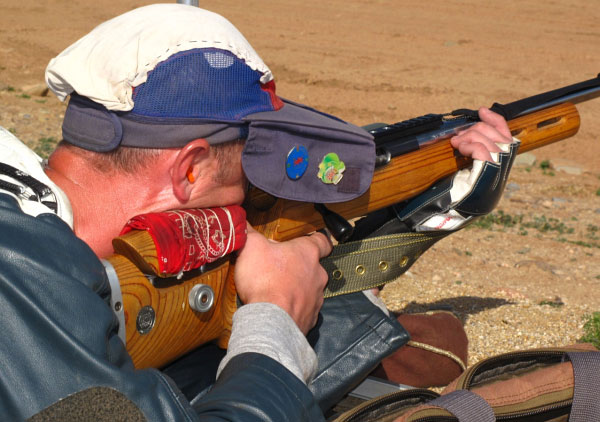
Litz Competition Shooting Tips
Competition TIP ONE. Improving your scores in long range competition is a constant process of self-assessment. After each match, carefully analyze how you lost points and make a plan to improve. Beginning shooters will lose a lot of points to fundamental things like sight alignment and trigger control. Veteran shooters will lose far fewer points to a smaller list of mistakes. At every step along the way, always ask yourself why you’re losing points and address the issues. Sometimes the weak links that you need to work on aren’t your favorite thing to do, and success will take work in these areas as well.
Competition TIP TWO. Select your wind shooting strategy carefully. For beginners and veterans, most points are typically lost to wind. Successful shooters put a lot of thought into their approach to wind shooting. Sometimes it’s best to shoot fast and minimize the changes you’ll have to navigate. Other times it’s best to wait out a condition which may take several minutes. Develop a comfortable rest position so you have an easier time waiting when you should be waiting.
Competition TIP THREE. Actively avoid major train wrecks. Sounds obvious but it happens a lot. Select equipment that is reliable, get comfortable with it and have back-ups for important things. Don’t load on the verge of max pressure, don’t go to an important match with a barrel that’s near shot out, physically check tightness of all important screws prior to shooting each string. Observe what train wrecks you and others experience, and put measures in place to avoid them.

Photos by Steve Fiorenzo
January 13th, 2014
 More and more people are reading books on tablet computers and eReader devices such as the Kindle and Nook. Recognizing the demand for digital resource works, Applied Ballistics has just releases of its first eBook — a digital version of Accuracy and Precision for Long Range Shooting. This work (which has sold 5000 hard copy versions), is now available in electronic format for both Kindle and Nook eReaders. iPad users can use the Kindle app to access the eBook. More and more people are reading books on tablet computers and eReader devices such as the Kindle and Nook. Recognizing the demand for digital resource works, Applied Ballistics has just releases of its first eBook — a digital version of Accuracy and Precision for Long Range Shooting. This work (which has sold 5000 hard copy versions), is now available in electronic format for both Kindle and Nook eReaders. iPad users can use the Kindle app to access the eBook.
This book discusses how to evaluate multiple variables to improve your hit percentage. It explains how to correct the trajectories for drop, wind deflection, etc. through the use of Weapon Employment Zone (WEZ) analysis. WEZ is applied throughout the book, showing readers how to get more rounds on targets, more reliably. Case studies (with live fire verification for many scenarios) show what things affect your hit probability at long range.
All formats of the eBook are sold for $27.99 (hardcopy is $34.99). The Kindle book is available directly from Amazon.com, while the Nook version can be purchased from BarnesandNoble.com.
Free eReader Content on Applied Ballistics Website
If you have a Kindle, Nook, or iPad, you should visit the Ballistics website. You’ll find many free technical articles you can download as PDF files or in Kindle format or Nook format. To access these FREE articles, select the “Recreational” or “Professional” tabs on the top of the Applied Ballistics home page, then choose the “Articles” link from the pull-down menu. Bryan Litz tells us: “We recently updated our website and we’ve included a number of free articles about bullet design, long-range ballistics, and aspects of WEZ analysis. You don’t need an eReader for these — just download the PDF versions.”
|


