Hail the new F-Class World Champions: Australian Rod Davies (F-Open) and the USA’s Derek Rodgers (F-TR). The 2017 F-Class Individual World Championships event was memorable — with thunderstorms, tight competition, and wicked winds on the final day. On Day 1, Saturday 8/12/17, only one 700m relay was completed before a massive storm front dropped a deluge. Conditions prior to that were good, with dozens of competitors shooting “clean” — one competitor lamented “I didn’t drop a point but ended up way down the standings on V-Count…”
After one yardage, the FCWC was halted on Saturday (Day 1) by a massive thunderstorm. Sebastian Lambang photo
F-TR — The King of 2 Miles vs. The Newly-Crowned Canadian Champ
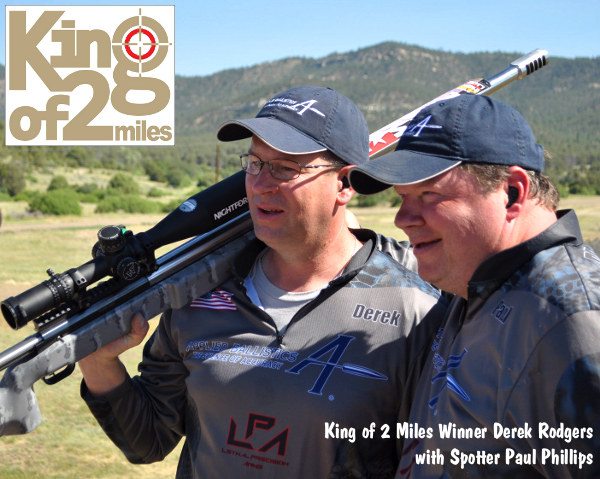
The F-TR event couldn’t have been closer — this went down to the wire. American Derek Rodgers scored 473-36V to win the title on V-Count over Canadia Kevin Chou (473-31V). Kevin is a very tough man to beat on his home range in Ontario. At this same venue, Kevin recently won Canada’s F-TR National Championship, his second F-TR Canadian National title in a row.
This has been a great summer for Rodgers. Last month Derek won the King of 2 Miles competition in Raton, NM. But the World Championship F-TR win didn’t come easy. Not by a long shot. This was a tough, come-from-behind win for Derek. After Day 1, which was halted by rain, Derek was in 77th position. On Day 2, he had climbed to 17th. He moved all the way to the top of the podium on the third and final day by shooting brilliantly in very tough conditions.
Derek told us: “The wind was changing very rapidly on Monday (Day 3). There were radical changes. It was blowing left to right, but there were rapid velocity changes. You might move from holding at the edge of the black ring on the left, then over to the 2 ring on the right from shot to shot.” Derek noted that the match was “pair fire” so you had to wait up to 45 seconds for your partner to shoot. “That means you couldn’t shoot fast. You had to watch the conditions very carefully — watch those big canvas flags and the mirage.” Derek said the mirage was “huge in Canada… but it looks different than what I’m used to in the American Southwest. The mirage off grass is different.”
Many observers had counted Rodgers out when he stood in 17th place after Day 2, but he mastered the tough conditions to move up in the standings as others were dropping points in bunches. Derek said that starting in 17th might have been a blessing in disguise: “Starting 17th, I didn’t feel any pressure on the last day. Once I got the wind ‘roped’ on that last day, it was actually fun. I nailed a bunch of Vs, and that’s what carried me to victory.”
F-Open World Champion Rod Davies (Australia) Receives the Milcun Shield Trophy Jenni Hausler photo.
Australian Captures F-Open Title with a Powerful Performance
In F-Open, the story was all Rod Davies, the talented Australian. He shot strong and steady throughout the match, to top the field with a 489-41V score. Finishing second was the UK’s Paul Sandie (485-38V), while another Australian, Adam Pohl, took third with 482-38V. Those Aussies do know how to shoot off grass in windy conditions. Five of the top 15 F-Open shooters were from Down Under. The top American was Jim Murphy in fourth place, followed by Erik Cortina in fifth.
Tough Conditions on Day Three
Erik Cortina told us that conditions were very tough on the last day. Wind velocities were changing unpredictably — with disastrous results for some shooters dropped 10 points or more. Somehow, in those rapidly changing winds, Eric nailed the top Aggregate for the last day, out-shooting the field: “I was lucky enough that conditions were very tough on the last day and that I was able to read the conditions good enough to win the Aggregate for the day. I moved up from 27th to 5th (overall) in one day. There were close to 200 of the best F-Open shooters in the World competing at this match, what an amazing experience to share the range with such an outstanding group of people.”
2017 FCWC relays were conducted with Pair Firing, with each shooter alternating shot by shot. Here are Mark Fairbairn (Australia) and Matt Schwartzkopf (USA) on the right. Sebastian Lambang photo.
YOUNG GUNS: At the 2017 FCWC the first-ever Under 25 World Champions were crowned: Mitchell Fitzpatrick (F-TR) and Rhys Ireland (F-Open). Rhys also won the 2017 Canadian National F-Open Championship last week. Mitchell is a past KO2M winner.
The young pit crew members did a great job. Sebastian Lambang photo.
Team Matches Come Next
There is a lay day today, August 15th, after which the Team Competition phase of the F-Class World Championships commence. We can expect a tough battle among the top teams: Australia, Canada, Great Britain/UK, South Africa, and the USA. Here is the schedule/course of fire for the Team Matches:
FCWC Team Competition
Wednesday, August 16: 2+15 @ 700m, 2+15 @ 800m, 2+15 @ 900m
Thursday, August 17: 2+15 @ 700m, 2+15 @ 800m , 2+15 @ 900m
Prize Giving and Closing Ceremonies
The F-Class World Championships (FCWC) commence today at the Connaught Ranges outside Ottawa, Ontario, Canada. We wish good luck to all the competitors. Based on the conditions at the recent Canadian F-Class National Championships, conditions could be challenging.
F-Class World Championships EVENT SCHEDULE: Friday, August 11 (REST DAY – RANGE CLOSED)
Competitor Check-In for FCWC; Rifle Inspection; International Teams Reception
Saturday, August 12: Opening Ceremonies; ICFRA FCWC (Individual)
Sunday, August 13: ICFRA FCWC (Individual)
Monday, August 14: ICFRA FCWC (Individual); Awards Prize Giving
Tuesday, August 15: TEAM PRACTICE DAY
Wednesday, August 16: ICFRA FCWC (Teams)
Thursday, August 17: ICFRA FCWC (Teams): Awards Prize Giving & Closing Ceremonies
Tips for Success at the F-Class Worlds — #1, Avoid Train Wrecks
As an assist to all the competitors, we’re repeating an article by Bryan Litz, which many have found very helpful — how to avoid “Train Wrecks” at major championships.
When you have a major, critical problem at a shooting match, i.e. a “train wreck”, this can be the end of your weekend. In this article, Ballistics Guru Bryan Litz talks about “train wrecks” — the big disasters (such as equipment failures) that can ruin a whole match. A recent USA F-TR Champion, Bryan illustrates the types of “train wrecks” that commonly befall competitors, and he explains how to avoid these “unmitigated disasters”.
Success in long range competition depends on many things. Those who aspire to be competitive are usually detail-oriented, and focused on all the small things that might give them an edge. Unfortunately it’s common for shooters lose sight of the big picture — missing the forest for the trees, so to speak.
Consistency is one of the universal principles of successful shooting. The tournament champion is the shooter with the highest average performance over several days, often times not winning a single match. While you can win tournaments without an isolated stellar performance, you cannot win tournaments if you have a single train wreck performance. And this is why it’s important for the detail-oriented shooter to keep an eye out for potential “big picture” problems that can derail the train of success!
Train wrecks can be defined differently by shooters of various skill levels and categories. Anything from problems causing a miss, to problems causing a 3/4-MOA shift in wind zero can manifest as a train wreck, depending on the kind of shooting you’re doing.
Below is a list of common Shooting Match Train Wrecks, and suggestions for avoiding them.
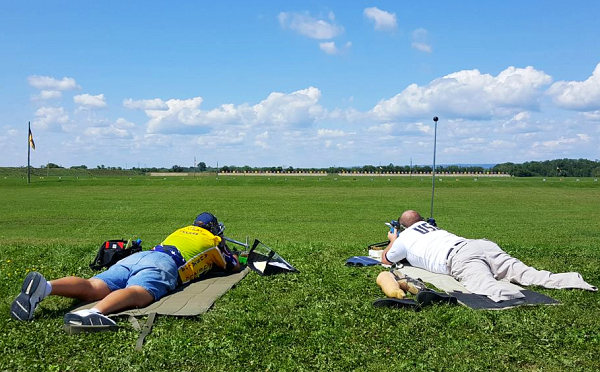
1. Cross-Firing. The fastest and most common way to destroy your score (and any hopes of winning a tournament) is to cross-fire. The cure is obviously basic awareness of your target number on each shot, but you can stack the odds in your favor if you’re smart. For sling shooters, establish your Natural Point of Aim (NPA) and monitor that it doesn’t shift during your course of fire. If you’re doing this right, you’ll always come back on your target naturally, without deliberately checking each time. You should be doing this anyway, but avoiding cross-fires is another incentive for monitoring this important fundamental. In F-Class shooting, pay attention to how the rifle recoils, and where the crosshairs settle. If the crosshairs always settle to the right, either make an adjustment to your bipod, hold, or simply make sure to move back each shot. Also consider your scope. Running super high magnification can leave the number board out of the scope’s field view. That can really increase the risk of cross-firing.
2. Equipment Failure. There are a wide variety of equipment failures you may encounter at a match, from loose sight fasteners, to broken bipods, to high-round-count barrels that that suddenly “go south” (just to mention a few possibilities). Mechanical components can and do fail. The best policy is to put some thought into what the critical failure points are, monitor wear of these parts, and have spares ready. This is where an ounce of prevention can prevent a ton of train wreck. On this note, if you like running hot loads, consider whether that extra 20 fps is worth blowing up a bullet (10 points), sticking a bolt (DNF), or worse yet, causing injury to yourself or someone nearby.
3. Scoring/Pit Malfunction. Although not related to your shooting technique, doing things to insure you get at least fair treatment from your scorer and pit puller is a good idea. Try to meet the others on your target so they can associate a face with the shooter for whom they’re pulling. If you learn your scorer is a Democrat, it’s probably best not to tell Obama jokes before you go for record. If your pit puller is elderly, it may be unwise to shoot very rapidly and risk a shot being missed (by the pit worker), or having to call for a mark. Slowing down a second or two between shots might prevent a 5-minute delay and possibly an undeserved miss.
4. Wind Issues. Tricky winds derail many trains. A lot can be written about wind strategies, but here’s a simple tip about how to take the edge off a worse case scenario. You don’t have to start blazing away on the command of “Commence fire”. If the wind is blowing like a bastard when your time starts, just wait! You’re allotted 30 minutes to fire your string in long range slow fire. With average pit service, it might take you 10 minutes if you hustle, less in F-Class. Point being, you have about three times longer than you need. So let everyone else shoot through the storm and look for a window (or windows) of time which are not so adverse. Of course this is a risk, conditions might get worse if you wait. This is where judgment comes in. Just know you have options for managing time and keep an eye on the clock. Saving rounds in a slow fire match is a costly and embarrassing train wreck.
5. Mind Your Physical Health. While traveling for shooting matches, most shooters break their normal patterns of diet, sleep, alcohol consumption, etc. These disruptions to the norm can have detrimental effects on your body and your ability to shoot and even think clearly. If you’re used to an indoor job and eating salads in air-conditioned break rooms and you travel to a week-long rifle match which keeps you on your feet all day in 90-degree heat and high humidity, while eating greasy restaurant food, drinking beer and getting little sleep, then you might as well plan on daily train wrecks. If the match is four hours away, rather than leaving at 3:00 am and drinking five cups of coffee on the morning drive, arrive the night before and get a good night’s sleep.”
Keep focused on the important stuff. You never want to lose sight of the big picture. Keep the important, common sense things in mind as well as the minutia of meplat trimming, weighing powder to the kernel, and cleaning your barrel ’til it’s squeaky clean. Remember, all the little enhancements can’t make up for one big train wreck!
The 2017 Canadian F-Class Championships have concluded. As the event preceded the 2017 F-Class World Championship (in the same venue) by a few days, many of the world’s best F-Class shooters were on hand at the Connaught Ranges outside Ottawa, Ontario. Competition was fierce — as were the winds at times. The challenging conditions gave shooters a good test in preparation for the FCWC which gets underway in earnest on Saturday, August 12, 2017.
Kevin Chou Wins Second Straight F-TR Canadian Title
Canada’s Kevin Chou (Aurora, ON) shot great to win the F-TR match with a strong 426v30 score. This made was two wins in a row for Kevin, who also took the F-TR Title in 2016. Two Yanks completed the podium, with Jeff Rorer (420v25) taking second place, and Robby Burton (418v25) placing third.
Rhys Ireland Wins F-Open Canadian Championship
The F-Open Championship was a tightly-fought match that went down to the wire. Rhys Ireland won the Individual F-Open Championship with a 434v30. Just one point behind at 433v39 was Australia’s Rod Davies. Third, again just one point back, was Canadian Barry Price (433v30).
Team USA (Litz) Wins F-TR Team Championship
American F-TR Teams managed a clean sweep of the top three places in the 4-shooter LUM Team Match. Team USA Litz secured the team victory with a 875v71 score. Finishing second in F-TR was USA Team Swartzkopf (871v74), followed by Team USA Hardin (870v72).
Who can explain the lines and dots on this shot tracking chart used by Bryan Litz?
F-TR Team USA (Litz) members (alphabetically) Douglas Boyer, Robby Burton, Dan Lentz, Monte Milanuk; Bryan Litz (head coach), Stan Pate (asst.)
Team USA (Nancy) Wins F-Open Team Title
The F-Open 4-shooter Team Competition was also dominated by American squads which finished first and second. Winning F-Open Gold, with a score of 888v98, was Team USA (Nancy), coached by Nancy Tompkins, America’s “First Lady of Shooting”. Finishing second was Team USA (Walker) with 887v100, followed by the Canadian F-Open Team at 887v90.
F-Open Team USA (Nancy) was packed with talent. Shooters were: Shiraz Balolia, Ken Dickerman, James Laney, and Pat Scully. Another American deserves mention, John Myers of the Texas F-Open Team. We believe John’s 225v27 was the high score for the team match, and he was the only competitor to shoot “clean”, not dropping a point.
Sebastian Lambang, inventor/builder of SEB Rests, competed in the Canadian Championships. Over half the competitors used SEB rests — Joy-Pods for F-TR and NEOs and MINIs for F-Open.
Conditions were windy and challenging at the 2017 Canadian F-Class Championships. Will the strong winds continue for the F-Class World Championships (FCWC) starting tomorrow, August 12, 2017. Only the wind gods know for sure. Good luck to all the FCWC competitors from all nations!
Photos by Stephen Fiorenzo, courtesy Applied Ballistics.
The 2017 King of 2 Miles match has concluded, and we have a new monarch. F-Class Ace Derek Rodgers is the new King of 2 Miles. Shooting with Team Applied Ballistics, Derek delivered a dominant performance, scoring nearly twice as many points as his nearest rival, Ronnie Wright. And Derek was the first KO2M marksman in history to hit the target at the maximum 3368-yard (1.91 mile) distance.
With his McMillan-stocked .375 CheyTac rifle, Derek shot brilliantly from the start. He was perfect — without a miss — at the first three yardages: 1543, 1722, and 1888. He had some misses at 1953 and 2667 yards, but then he out-shot all competitors at 3028 yards, going two for five. No other shooter managed a single hit at 3028 yards. Then it all came down to the big one — the last (and greatest) challenge, the target at 3368 yards (1.91 miles).
This would require superior shooting skills, a masterful wind call (by Emil Praslick), and nerves of steel. Derek tried four shots without success. It looked like the two-mile hit would continue to be an impossible goal. But then, on his fifth and very last shot, Derek did it — he hit the 3368-yard target.
After Derek made the (nearly) two-mile shot, cheers erupted on the firing line — what an achievement! Derek is the first (and only) shooter to make the 3368-yard shot at K02M. Watch him do it in this video:
Derek Rodgers Hits Target at 3368 Yards on his Final Shot:
Derek Rodgers K02M-Winning Hardware and Ammunition
Factory Rifle Finishes in Second Place
With so many full-custom rifles on the firing line, many were surprised to see a factory rifle finishing second overall. Ronnie Wright shot superbly with his stock Barrett M99 chambered in .416 Barrett. Ronnie’s impressive second-place performance proved the effectiveness of the .416 Barrett cartridge (and the build quality of the M99). For ammo, Ronnie used Cutting Edge 472gr MTAC projectiles loaded in Barrett-stamped .416 cases. The powder was Alliant Reloder 50 ignited by CCI #35 50 BMG primers. The rifle had a Barrett factory 32″ barrel fitted with an Accuracy 1st level.
INTERVIEW with DEREK RODGERS:
Q: What do you believe contributed to your success at this match?
Derek: This match was truly a team effort from the entire Applied Ballistics Team. Emil Praslick and Paul Phillips are world class wind-readers and spotters. They have the ability to make decisive decisions and trust that I (as the shooter) will put a bullet on target every time a command is given. We posses a dynamic team background with a lot of history and experience under our belt. Our positive team synergy is hard to find. The addition of vital tools played a huge role in our success. A few of the tools we used were the AB Kestrel and Garmin Foretrex 701 AB Elite to give absolutely crucial and accurate ballistic solutions. The new McMillan ELR Beast stock was stable and the NF ATACR scope is robust and clear. The Bartlein barrel used was top notch! However, one of the most important pieces of the ELR puzzle and the only thing that separates the target is — the bullet. We chose Cutting Edge (CE) bullets due to their high level of precision. These bullets proved to be invaluable in connecting every piece of steel at the KO2M competition. The CE 400gr Lazer Max bullet was selected and was tremendously accurate. This bullet transitioned into a sub-sonic velocity without any loss of precision at ELR distances. Our success would not be possible if the projectile did not fly correctly for 7+ seconds of flight time. CE has outstanding designs and several quality choices to choose from.
Q: How many hours would you say you practiced for this match?
Derek: It is hard to calculate practice time in hours. ELR is a program that we work on every chance we get — day and night for months prior to the event. We have an extremely strong background of team shooting and long range shooting. A lot of time has been invested on and off the range, but does not stop there. The combined range time from other disciplines really helped me to be successful in transitioning from long range to ELR. It really is a compilation of 10 years of trials and tribulations. Some would say, “the Devil is in the details”. Our team tries very hard to not overlook any small detail. Practice and training is always scrutinized for improvements. Our Applied Ballistics team has a love and passion that goes beyond measurable amounts of time. We were fortunate to get together for two days a month prior to the Ko2M event to review our program and practice as a team. Bryan Litz had a plan, and we discovered as a team we had flaws in our program. Each one of us contributed from years of experience on improving our technique until we had a winning solution.
Q: Why did you choose the .375 CheyTac cartridge?
Derek: When I was asked to join the AB Team, I needed to get an ELR rifle built in a short period of time. I was under a very tight time schedule to get the project complete. In an effort to eliminate variables, I decided to keep things standard and as simple as possible. I chose the .375 CheyTac for the ease of getting components. The larger rifles are more difficult to get components quickly and I felt like the .375 CheyTac had enough attributes to be competitive at ELR distances.
The Cutting Edge 400gr bullets are milled from solid copper bar stock on a CNC Swiss-style lathe.
New ELR Hardware and Software on Display at K02M
This marks the second straight year that Team Applied Ballistics has won the K02M event. Last year, Team AB shooter Mitchell Fitzpatrick won the coveted “King of 2 Miles” title (Fitzpatrick finished fourth this year, just off the podium). In the past year, there has been considerable evolution in Extreme Long Range hardware and software, and projectiles are constantly being improved.
Bryan Litz (center) conferring with Team AB members Emil Praslick (L) and Doc Beech (R).
We asked Bryan Litz, founder of Applied Ballistics, to summarize developments in the ELR game. Here are Bryan’s observations:
“Each year the KO2M sees advancements and shooters converging on those tools and processes that have proven effective in prior years. It’s rather apparent, for example, that spotting impacts is a crucial part of success in this match. This was improved by the match directors/organizers placing the targets in very good locations for spotting impacts. We’re seeing less set-ups with adjustable bases, and more with solid/fixed scope mounts. One of the exciting new pieces of equipment is the periscope device made by TACOMHQ (John Baker). This device provides an optical shift to the image which allows you to get more elevation for those long shots. Also, the refinement of fire control (ballistic) solutions has really played a role in getting shooters centered up for their first shots.”
“This tournament highly favors first-round impacts with the scoring system, so the approach of ‘walking the shots on’, isn’t a winning strategy. Those who employed accurate ballistics solvers were able to score more first round hits, and pile up the points. First and second place (at least) were using Applied Ballistics solvers to center their shots. We’re looking forward to even more advancements and making these ELR shots even out to two miles more commonplace in the future thru systematically applying the Science of Accuracy.”
In this video, Bryan Litz of Applied Ballistics focuses on training. Bryan says that training is key for success in Long Range shooting: “Training in the sense that you want to want to refine your fundamentals of marksmanship — your sight alignment, your trigger control. You should practice those things enough that they become second nature and you don’t have to think about them. Keep in mind, it’s not just good enough to train, you have to learn how to train. You need to learn how to practice effectively, to get the most out of everything you do.”
Bryan says that success in Long Range shooting is not just about the hardware. It’s what’s between your ears that really counts: “The most important element in Long Range shooting is your knowledge — your understanding and practice of fundamentals of marksmanship, as well as your understanding of ballistics. You have to be able to fire the rifle, execute good shots that will put your rounds on target, but you also need to make intelligent sight corrections that will accurately account for the effects of gravity drop, and wind deflection, to center your group on those targets”.
Litz Competition Shooting Tips
Competition TIP ONE. Improving your scores in long range competition is a constant process of self-assessment. After each match, carefully analyze how you lost points and make a plan to improve. Beginning shooters will lose a lot of points to fundamental things like sight alignment and trigger control. Veteran shooters will lose far fewer points to a smaller list of mistakes. At every step along the way, always ask yourself why you’re losing points and address the issues. Sometimes the weak links that you need to work on aren’t your favorite thing to do, and success will take work in these areas as well.
Competition TIP TWO. Select your wind shooting strategy carefully. For beginners and veterans, most points are typically lost to wind. Successful shooters put a lot of thought into their approach to wind shooting. Sometimes it’s best to shoot fast and minimize the changes you’ll have to navigate. Other times it’s best to wait out a condition which may take several minutes. Develop a comfortable rest position so you have an easier time waiting when you should be waiting.
Competition TIP THREE. Actively avoid major train wrecks. Sounds obvious but it happens a lot. Select equipment that is reliable, get comfortable with it and have back-ups for important things. Don’t load on the verge of max pressure, don’t go to an important match with a barrel that’s near shot out, physically check tightness of all important screws prior to shooting each string. Observe what train wrecks you and others experience, and put measures in place to avoid them.
This article originally appeared in the Rifleman’s Journal website.
Many of you have doubtlessly read Bryan Litz’s articles in our Daily Bulletin and on his Applied Ballistics website about various current long-range bullets. Bryan’s work carries a great deal of weight in the world of ballistics, so his comments (and mathematical proofs) regarding the benefits of bullet pointing certainly caught my attention. Bullet pointing, like meplat trimming, is an effort to reduce the ballistic inconsistency created by the somewhat jagged tip of the jacket where the bullet forming dies bring it to a point in the manufacturing process. Of course, we could eliminate this problem altogether by shooting closed-tip, open-base bullets like the Lapua D46, but that merely shifts the jacket problem to the other end of the bullet.
In any event, hollow point bullets rule the accuracy world today, so John Whidden, multi-time National Long Range Champion and a talented gunsmith to boot, came up with a very handy tool to let us make those hollow points pointier. Let’s have a look at John’s tool and see how it works.
The Whidden Bullet Pointing Die System uses a Forster bullet seating die body as its basic structure and that’s a good choice given the quality machining Forster does on these. The real heart of the tool comes in two parts: the caliber sleeve and the pointing die that fits inside the sleeve. In fact, to point up different caliber bullets, you only need to change the caliber sleeve, everything else remains the same. The last item is the bullet base that slips into a standard .308 shellholder and supports the bullet as it goes into the die body.
It took me less than five minutes to get everything set up, including changing the caliber sleeve from 6mm to .30 caliber. John’s instruction sheets are well illustrated and clearly written; you should have no problem getting up and running.
Pointing the bullets is as easy as sizing a piece of brass. You can see in the second photo above the difference between a few pointed bullets and a few un-pointed ones. The innermost pointed bullet in the picture was my first attempt and I adjusted the die a little after that, you can see that the others are closed a little more. John even includes a couple of sample bullets so that you can see one done right and one done wrong. That is a nice addition that can help you achieve the desired results.
This YouTube Video Shows the Whidden Bullet Pointing Die in Action
I think Bryan’s work supports the validity of this concept and John’s tool puts it into practice in a simple-to-use manner that makes it just about impossible to do any damage to the bullet. I have shot pointed bullets in various calibers at many matches now. Pointing is not a “miracle cure”, but I believe that pointing bullet tips can produce long-range accuracy gains, through reduced vertical dispersion, for many popular types of match bullets. The Whidden Bullet Pointing Die System retails for $220.00 (with one insert). Additional die inserts are $42.00 each. Extra caliber sleeves are also $42.00. You can purchase directly from Whidden Gunworks, or from Sinclair International.
We know many of our readers aren’t 100% clear on the difference between a secant ogive bullet and a tangent ogive bullet. Add the “blended” or “hybrid” ogive into the design equation and you add to the confusion. In this article, Berger Ballistician Bryan Litz, explains the characteristics of the three popular ogive types: tangent, secant, and hybrid.
In discussions of ballistics, you’ll see references to “tangent” and “secant” bullet shapes. For many readers, these terms can be confusing. To add to the confusion, bullet makers don’t always identify their projectiles as secant or tangent designs. This article provides a basic explanation of tangent and secant designs, to help you understand the characteristics of both bullet shapes.
Tangent vs. Secant vs. Hybrid
Most match bullets produced today use a tangent ogive profile, but the modern VLD-style bullets employ a secant profile. To further complicate matters, the latest generation of “Hybrid” projectiles from Berger Bullets feature a blended secant + tangent profile to combine the best qualities of both nose shapes. The secant section provides reduced drag, while the tangent section makes the bullet easier to tune, i.e. less sensitive to bullet seating depth position.
Berger Bullets ballistician Bryan Litz explains tangent and secant bullet ogive designs in a glossary section of his Applied Ballistics website, which we reprint below. Bryan then explains how tangent and secant profiles can be combined in a “hybrid” design.
How Bullet Ogive Curves are Defined
While the term “ogive” is often used to describe the particular point on the bullet where the curve reaches full bullet diameter, in fact the “ogive” properly refers to the entire curve of the bullet from the tip to the full-diameter straight section — the shank. Understanding then, that the ogive is a curve, how is that curve described?
LITZ: The ogive of a bullet is usually characterized by the length of its radius. This radius is often given in calibers instead of inches. For example, an 8 ogive 6mm bullet has an ogive that is a segment of a circular arc with a radius of 8*.243 = 1.952”. A .30-caliber bullet with an 8 ogive will be proportionally the same as the 8 ogive 6mm bullet, but the actual radius will be 2.464” for the .30 caliber bullet.
For a given nose length, if an ogive is perfectly tangent, it will have a very specific radius. Any radius longer than that will cause the ogive to be secant. Secant ogives can range from very mild (short radius) to very aggressive (long radius). The drag of a secant ogive is minimized when its radius is twice as long as a tangent ogive radius. In other words, if a tangent ogive has an 8 caliber radius, then the longest practical secant ogive radius is 16 calibers long for a given nose length.”
Ogive Metrics and Rt/R Ratio
LITZ: There is a number that’s used to quantify how secant an ogive is. The metric is known as the Rt/R ratio and it’s the ratio of the tangent ogive radius to the actual ogive radius for a given bullet. In the above example, the 16 caliber ogive would have an Rt/R ratio of 0.5. The number 0.5 is therefore the lowest practical value for the Rt/R ratio, and represents the minimum drag ogive for a given length. An ogive that’s perfectly tangent will have an Rt/R ratio of 1.0. Most ogives are in between an Rt/R of 1.0 and 0.5. The dimensioned drawings at the end of my Applied Ballistics book provide the bullets ogive radius in calibers, as well as the Rt/R ratio. In short, the Rt/R ratio is simply a measure of how secant an ogive is. 1.0 is not secant at all, 0.5 is as secant as it gets.
Hybrid Bullet Design — Best of Both Worlds?
Bryan Litz has developed a number of modern “Hybrid” design bullets for Berger. The objective of Bryan’s design work has been to achieve a very low drag design that is also “not finicky”. Normal (non-hybrid) secant designs, such as the Berger 105gr VLD, deliver very impressive BC values, but the bullets can be sensitive to seating depth. Montana’s Tom Mousel has set world records with the Berger 105gr VLD in his 6mm Dasher, but he tells us “seating depth is critical to the best accuracy”. Tom says a mere .003″ seating depth change “makes a difference”. In an effort to produce more forgiving high-BC bullets, Bryan Litz developed the hybrid tangent/secant bullet shape.
Bryan Litz Explains Hybrid Design and Optimal Hybrid Seating Depths
Shooter behind the .375 Lethal Magnum. Check out the size of that suppressor!
Two-Mile ELR Training The Applied Ballistics ELR Team spent the weekend at the NRA Whittington Center in New Mexico training for the upcoming King of 2 Miles event. Former USAMU coach Emil Praslick III was on hand to help with wind calls. The results were impressive — all team members had confirmed hits at 2.05 miles on a 36″x36″ steel target. Bryan Litz even had a 3-shot group that measured 17.5″ x 22″. That’s under 0.6 MOA!
Most guys would be happy with 0.6 MOA at 300 yards. Bryan did it at 3611 yards, shooting Paul Phillips’s .375 Lethal Magnum. When you consider all the variables involved (bullet BC variance, shot velocity variance, wind changes during flight, Coriolis effect etc.), that’s phenomenal.
Report by Paul Phillips
Just got done shooting two days in New Mexico with Recoil Magazine and the Applied Ballistics ELR team. We learned a lot and had great success. Every team member made impacts on target at 2 miles. The best 3-shot group at 3611 yards (2.05 miles) was shot by Bryan Litz with my 375 Lethal Mag. The group measured 17.5 inches tall by 22 inches wide with Cutting Edge bullets. We also had Recoil’s David Merrill shoot at two miles and was laying them in there like a true pro. We had three team members make impacts on the 36-inch plate at two miles within just three attempts in a mock competition. I also increased my personal longest shot by hitting only 15 inches right of center at 3611 yards. 2.05 miles. I did it with a GSL Technology Copperhead Silencer.
Report by Emil Praslick
I participated in the Extreme Long Range training with the Applied Ballistics team at the Whittington Center in Raton, NM. All team members had confirmed hits at 2.1 miles. Components and hardware suppliers included: Berger Bullets, Cutting Edge Bullets, Nightforce Optics, Kestrel, FLIR Systems.
Q: At that distance (2.1 miles), how much do spin drift and the Coriolis effect impact bullet trajectories?
Praslick: At 3613 yards we had to adjust about 1.5 MOA/56″ of Coriolis (up), and 5 MOA/~190″ of right spin drift adjustment. You’d have to come down if facing East. The planet rotates counter-clockwise (from above), so your target would be falling away from you.
Here is a 3-round group at 1898 yards (1.08 Miles) shot with factory ABM Ammo .338 Lapua Magnum loaded with 300 grain Berger Bullets Hybrids. That’s sub-MOA elevation. (The guy calling wind didn’t do too bad, either.)
Report by Bryan Litz
Learning is my favorite part of new ventures and we learned a LOT this weekend shooting extreme range in New Mexico. I connected on a second round hit on a 3-foot square target at 2 miles in simulated match conditions under coaches Emil Praslick and Paul Phillips. In fact all five of our team shooters got on at 2 miles. The Applied Ballistics Extreme Long Range team is in good shape for the King of 2 Miles match later this month, and there is still so much to LEARN!
You need serious equipment for shooting beyond two miles. Who can identify this high-tech hardware?
Any long range shooter knows that wind is our ultimate nemesis. The best ways of overcoming wind are to measure what we can and use computers to calculate deflection. The Applied Ballistics Kestrel is a great tool for this. As good as our tools may be, we don’t always have them at our fingertips, or they break, batteries go dead, and so on. In these cases, it’s nice to have a simple way of estimating wind based on known variables. There are numerous wind formulas of various complexity.
The Applied Ballistics (AB) Wind Hack is about the simplest way to get a rough wind solution. Here it is: You simply add 2 to the first digit of your G7 BC, and divide your drop by this number to get the 10 mph crosswind deflection. For example, suppose you’re shooting a .308 caliber 175-grain bullet with a G7 BC of 0.260 at 1000 yards, and your drop is 37 MOA. For a G7 BC of 0.260, your “wind number” is 2+2=4. So your 10 mph wind deflection is your drop (37 MOA) divided by your “wind number” (4) = 9.25 MOA. This is really close to the actual 9.37 MOA calculated by the ballistic software.
WIND HACK Formula
10 mph Cross Wind Deflection = Drop (in MOA) divided by (G7 BC 1st Digit + 2)
Give the AB wind hack a try to see how it works with your ballistics!
Some Caveats: Your drop number has to be from a 100-yard zero. This wind hack is most accurate for supersonic flight. Within supersonic range, accuracy is typically better than +/-6″. You can easily scale the 10 mph crosswind deflection by the actual wind speed. Wind direction has to be scaled by the cosine of the angle.
Getting started in long-range shooting? Need some pointers on gun set-up and hardware options? Bryan Litz of Applied Ballistics has created a helpful series of videos for the NSSF covering long range shooting. Bryan, a past F-TR Long-Range National Champion and Chief Ballistician for Berger Bullets, knows his stuff. His Applied Ballistics squad was the winning team at the 2016 King of 2 Miles event. Here are four (4) videos, each covering a topic of interest for long-range shooters. Running 3-4 minutes each, these videos can help you get started, and invest wisely when acquiring your next long-range rifle, scope, and accessories.
Long Range Precision — The Keys to Success
TIP for Plotting Long Range Trajectories: You want to know the true, actual ballistic coefficients of your loads. The BCs listed by manufacturers for their projectiles may be somewhat unreliable — the real BC could be higher or lower (and BC can change with velocity). That can result in problems at longer distances. Using sophisticated equipment, Applied Ballistics has measured true BCs for hundreds of projectiles. Plugging these verified numbers into your Ballistics App can improve your hit percentage at long range.
Tools of Choice — Purpose-Built Long Range Rifles
TIP for Choosing a Rifle: When you’re selecting a rifle for long range shooting, it’s important to understand your application and objectives. The applications for long-range shooting can be very refined. You have to select all the details of your application to select the correct rifle. Here are two examples — a semi-auto AR-platform rifle with scope and a bolt-action Fullbore (Palma) rifle with aperture sights. There are many other long range disciplines — F-TR for example. The F-TR rig uses a bipod and rear bag and a scope. To be competitive, a modern F-TR rig should shoot well under half-MOA.
Equipment Advice — Upgrading Your Hardware
TIP for Upgrading Your Rifle: At some point factory rifle owners will recognize weak links in the equipment chain. You can run that factory rifle for quite some time, but the barrel is eventually what’s going to hold you back. The twist-rate may not be high enough to stabilize the high-BC bullets. So the first thing you’re going to want to upgrade is the barrel. You want to get a fast twist-rate barrel with a chamber that is optimized for the bullet you’ll be shooting. A good-quality, custom barrel will be easier to clean, and it will improve the overall accuracy and precision of your shooting.
Big Boomers — Large-Caliber Rifles for Long Range
TIP for Shooting Hard-Recoiling Rifles: Bryan Litz defines “Large Caliber” as .338 caliber and bigger. These rifles can shoot heavy bullets with high BCs. However there are some trade-offs. It can be hard to maintain good fundamentals of marksmanship (trigger control, sight alignment) when you’re fighting heavy recoil and burning 100+ grains of powder. You’re dealing with the challenges that high energy brings. You want a muzzle brake with any cartridge .338 or above. Also, when considering lathe-turned solid bullets, remember that these typically have less sectional density compared to lead-cored bullets with similar profiles. This affects ballistics as well as recoil energy.




 Train Wrecks (and How to Avoid Them)
 4. Wind Issues. Tricky winds derail many trains. A lot can be written about wind strategies, but here’s a simple tip about how to take the edge off a worse case scenario. You don’t have to start blazing away on the command of “Commence fire”. If the wind is blowing like a bastard when your time starts, just wait! You’re allotted 30 minutes to fire your string in long range slow fire. With average pit service, it might take you 10 minutes if you hustle, less in F-Class. Point being, you have about three times longer than you need. So let everyone else shoot through the storm and look for a window (or windows) of time which are not so adverse. Of course this is a risk, conditions might get worse if you wait. This is where judgment comes in. Just know you have options for managing time and keep an eye on the clock. Saving rounds in a slow fire match is a costly and embarrassing train wreck.




 We know many of our readers aren’t 100% clear on the difference between a secant ogive bullet and a tangent ogive bullet. Add the “blended” or “hybrid” ogive into the design equation and you add to the confusion. In this article, Berger Ballistician Bryan Litz, explains the characteristics of the three popular ogive types: tangent, secant, and hybrid.
 Hybrid Bullet Design — Best of Both Worlds?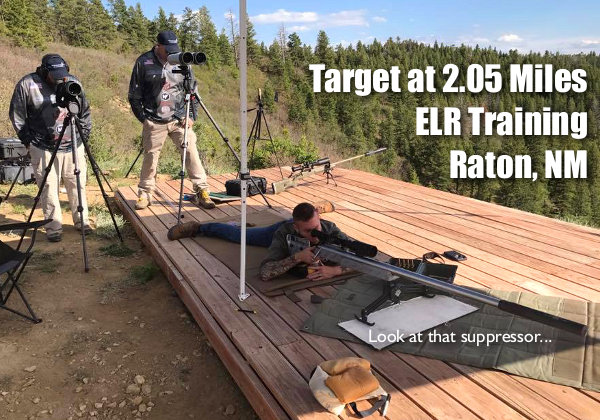
 The Applied Ballistics ELR Team spent the weekend at the NRA Whittington Center in New Mexico training for the upcoming King of 2 Miles event. Former USAMU coach Emil Praslick III was on hand to help with wind calls. The results were impressive — all team members had confirmed hits at 2.05 miles on a 36″x36″ steel target. Bryan Litz even had a 3-shot group that measured 17.5″ x 22″. That’s under 0.6 MOA!


