Imagine this — your “home security” handgun is stored safely and securely near your bedside. But with the simple swipe of a keyfob, card, or wristband, you have instant access to the gun. Sound like science fiction? Well, this is real. Hornady’s new RAPID Safe uses RFID (Radio Frequency Identification) technology to allow instantaneous access to a firearm using either a special card, an RFID bracelet, or a special keyfob. In addition, the safe can be opened using a programmed keypad or a traditional key lock.
Brownells.com already has this new product in stock. Watch the video to see how the RAPID Safe works. The system runs with 110 volt AC power or internal battery pack. This short video shows various opening modes:
Open your safe in the blink of an eye. Simply place the included RFID bracelet, card, or key fob over the reader, and the RAPiD™ safe springs open to present your handgun.
As the majority of states now allow concealed carry (under “shall issue” or similar doctrines), there are more Americans armed with carry guns than ever before. And now there’s a new resource that lets CCW holders keep track of the value of their totable weapons.
covers all types of carry handguns from derringers up to full-frame semi-autos and large relovers. This full-color book offers accurate pricing estimates along with handgun specifications, production history, and market information.
This resource features the Red Book Code™, a universal system of identifying and organizing firearms on the secondary market. Additionally, since wear is a huge factor in determining a firearm’s value, the book offers a firearm condition grading scale, rating guns at NIB (New in Box), Mint, Excellent, VG+ (Very Good Plus), Good, Fair, and Poor.
Commentary by John Buol
The critics say that the M9 pistol (the U.S. military’s version of Beretta’s m92) must go. We’re told that the 9x19mm (aka 9mm NATO) is a poor pistol cartridge. Our Soldiers and Marines are being hampered by an inferior handgun and cartridge — or so the argument goes.
We are told that the military needs a new pistol, to be called the Modular Handgun System (MHS). According to Fox News: “The MHS would replace the Army’s inventory of more than 200,000 outdated M9 pistols and several thousand M11 9mm pistols with one that has greater accuracy, lethality, reliability, and durability.” The MHS will be a “total system replacement — new gun, new ammo, new holster, everything,” reports Daryl Easlick, Army project officer at Fort Benning, Georgia.
Easlick says that the Army, and other services, demand a pistol with a more powerful cartridge that does more damage to the bad guys: “We have to do better than our current 9mm.”
Does the military really need a new pistol, with a different chambering? Maybe not…
Here’s the real problem. Most Marines, Soldiers, police, and gun owners tend to be novice marksmen, especially with handguns. Very few people have trained to shoot a handgun well enough to offer a competent opinion on the matter. To underscore this point, let’s look at some ranges for evidence of typical skill levels.
Army Pistol Qualification Target
As you can see, there is no real trend in hits and the entire barn door (full sized silhouette) has shots sprayed all over it. And these are the shots that actually hit, all of them receiving full value. On this particular Army course, shooters are given 40 rounds to engage 30 targets and are considered qualified if 16 of the 30 targets are hit, somewhere. Soldiers can miss nearly half the time, even with ten extra rounds, and still pass. The “fast” stages of the course allow two seconds per shot and the bulk of the course is slower. Note the base of the target is blocked by the mound protecting the target lifter and that mound is a beaten zone of many very low, errant shots.
The Marines in the peanut gallery are likely chuckling, so let’s look at examples of their ranges.
Marine Pistol Target Bay
Yet Another Marine Pistol Target Bay, Showing Effects of Missed Shots.
The metal carrier behind the block wall holds a silhouette the same size as the Army target and that waist-high wall has taken a healthy beating from bad shots jerked and flinched several feet off target. Of course, the wall only shows shots pulled off target that went low. The rest ended up in the berm somewhere else. As seen closer up, the chewed-up top line of blocks is not made of concrete. That’s to avoid back-splatter towards the shooters from the excessive number of low shots.
REALITY CHECK: These are the results on actual qualification ranges with large targets, generous time limits, fixed courses of fire, and no real pressure. Imagine how much worse the shooting is when the stress and variables of combat are thrown in. Given the users wielding it, is the M9 truly ineffective? Even if it is, are shooters like this capable of a valid opinion on the matter?
Most Marines, Soldiers, police, CCW, and gun owners won’t invest the effort needed to train to a high level of skill and very few public sector organizations will expend the resources needed to make them do so. I’m not casting aspersions, just trying to address reality. If the Department of Defense (DoD) decides on a new pistol, or any other weapon, the results will be similar because the end user isn’t magically more skillful with a shiny new issue item.
About the Author
John M. Buol Jr. began his shooting career in practical competition, earning Master classifications from USPSA and IDPA. After slotting on the Army Reserve Marksmanship Program, he switched to NATO and NRA/CMP events, earning Distinguished Rifleman and Pistol Shot badges and a series of All Army Small Arms Championship wins along the way. He is a published author (Beyond “Expert”: Tripling Military Shooting Skills) and maintains the Firearm User Network Blog at http://FirearmUserNetwork.com
Could you hit a 18″x24″ plate at 100 yards with a handgun? With a bit of practice, an experienced handgunner should be able to make that shot using a quality, full-sized pistol held two-handed. This editor has done it with a 1911 and a Sig P226. OK, now consider hitting that same-size plate at TWO hundred yards, with a 2″-barreled revolver, shot upside-down, one-handed, pulling the double-action trigger with your pinky finger. Sound crazy? Well that’s exactly what legendary wheelgunner Jerry Miculek does in this video. It’s hard to believe, but it’s all caught on camera for posterity.
As you can see in the video, Jerry was pretty excited when he makes the shot. That took some serious skill. Jerry was shooting a double-action-only Smith & Wesson 340 PD Scandium J-Frame (1.875″ barrel) with fixed sights. After making this amazing shot, Jerry explains: “Gun shoots a little right, so when you flip it over it shoots a little bit left.” Thanks Jerry — I’m not sure most of us would have figured that out.
If you have a laser fitted to one of your firearms, here’s a training gizmo that can help you practice your aiming and target acquisition. The LaserLyte Laser Trainer Target can register and display “hits” on its large bullseye display using 62 laser-activated LED lights. Under normal conditions, this laser-activated target can register shots up to 50 yards away. The $140.00 (street price) Laser Trainer Target is good for about 6,000 “shots”, drawing power from three (3) AA batteries. The unit is fully independent — there is no hook-up to a computer or separate processing pack.
Though it may appear smaller in the photos, the Laser Trainer Target is about the size of a school textbook: 9.5″ H x 6.25″ W x 2.0″ D, with a target area roughly five inches in diameter. The device can be used inside or outside, but you’ll probably get best results indoors. The Laser Trainer target can function with all user-activated lasers, such as grip lasers, front rail lasers, in-chamber “laser cartridges”, and even laser boresights (so long as they can be activated by trigger movement).
Fun to use and easy to deploy, the LaserLyte Trainer Target was named a 2012 Golden Bullseye Award Winner by American Rifleman magazine. MSRP is $219.95 but “street price” is WAY lower. These units sell at WalMart for $139.41. That makes it affordable. Of course you don’t experience the noise and recoil of actual shots with the LaserLyte Target Trainer, but the device can easily pay for itself, if you compare the cost of batteries vs. live ammo. These days, 1000 rounds of 9mm ammo can cost $400.00 or more.
WARNING — UNLOAD FIREARM FIRST: When Training with the LaserLyte Training Target and a firearm fitted with a laser-emitting device or laser sight, always remove and unload the magazine and then double-check to ensure the chamber is empty, and the gun is unloaded. If there is a live round in your gun, not only can you destroy your target device, but the round could cause injury or death to someone downrange.
The National Shooting Sports Foundation (NSSF) has produced a GUN SAFETY Video that presents 10 fundamental rules of safe gun use. The video covers basic safe gun handling procedures, and it also explains how to transport guns safely, and how to secure them properly at home.
We know this stuff is familiar to most of our readers, but we recommend you watch the video as a refresher. Segments show how to safely unload different types of handguns and shotguns. That’s helpful for a rifle guy who may not have much familiarity with other types of arms. The video also explains how you can keep a handgun safe from kids and guests in the home, while still having quick access in an emergency. This video won’t win an Oscar, but it provides good, logical safety advice. If you help run a shooting club, you may want to embed the video into your club’s webpage.
Need help with your handgunning? Check out the NRA’s Basics of Pistol Shooting DVD. This $19.95 DVD covers the purchase, handling, cleaning, and storage of both revolvers and semi-automatic pistols along with marksmanship fundamentals. Computer animations provide an inside look at how revolvers and semi-automatics function. The Basics of Pistol Shooting DVD is intended for anyone interested in learning how to safely operate, clean and select a pistol for a variety of activities.
Produced as a training aid for NRA’s Basic Pistol and/or FIRST Steps Pistol Courses, the 60-minute DVD provides useful information for all handgun owners, not just novices. We also recommend that NRA Certified Pistol Instructors watch the DVD to familiarize themselves with the most current training methods and safety procedures. The DVD can be ordered through the NRA Program Materials Center or by calling 1-800-336-7402.
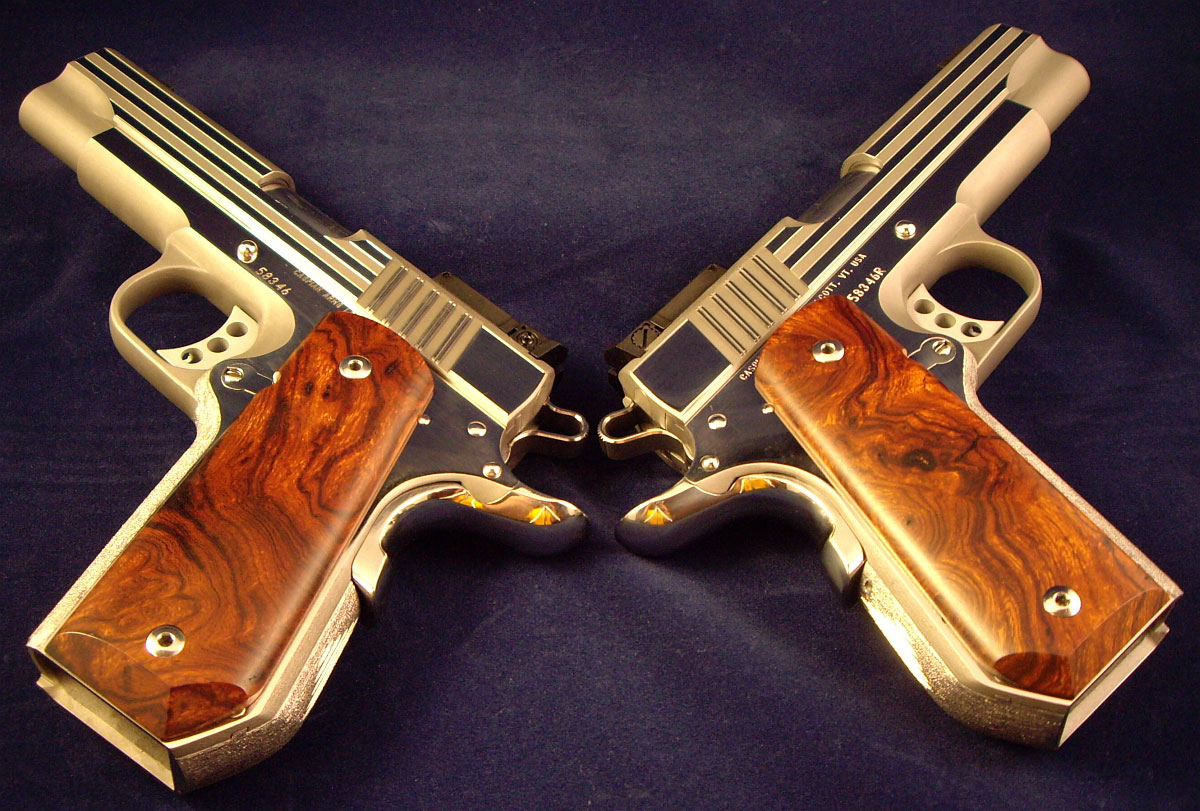
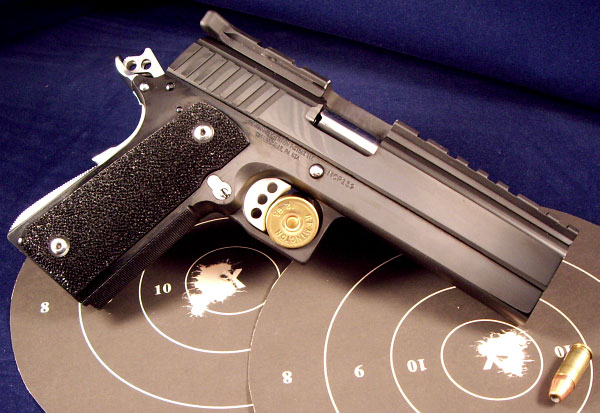
Ace gunsmith Joe Chambers (aka Joe C), who is best known for his custom pistols, recently joined our Shooters’ Forum. Guns built by Joe have been used to win 49 class championships at the NRA Camp Perry National Championships, as well as many regional, state and local matches. He has built guns for collectors, concealed carry and action pistol competitors as well. Joe’s custom pistols have been featured in American Handgunner Magazine. Chambers’ guns are noted for their outstanding reliability and accuracy. He has built 1911s chambered in .38 Super that will put ten (10) shoots in under 1.00″ at fifty (50) yards. (We’ve seen some factory rifles that can’t do that!)
You can view impressive Chambers-built customs on Joe’s website ChambersCustom.com. Here are some samples:
Chambers Gains Precision Rifle Knowledge Through Forum
While the AccurateShooter Forum’s main focus is on precision rifles, it’s good to know that someone with Joe’s skills and abilities can help forum members who have questions about 1911 pistols and custom pistol-smithing. In return, we invite our experienced rifle shooters to share their long-gun knowledge with Joe. A budding interest in long-range and F-Class rifle shooting drew Chambers to our Forum. He came to the right place. Many of the nation’s top F-Class shooters (both F-TR and F-Open) frequent our board. No doubt Joe will advance his knowledge of rifle shooting through participation in our Forum. Welcome aboard Joe — we are pleased to include you in our community of precision shooters!
Story tip by Tanner F. (aka Flybuster). We welcome reader submissions.
Here’s smart new product for someone who wants to keep a handgun safely secured, but quickly accessible under a desk at home or at a business. The new SpeedVault (from GunVault) is a drop-down safe that can be mounted under a desk or in various concealed locations. The handgun is cradled in a a holster-like protective foam lined interior. The SpeedVault offers a combination of covert placement and fast, reliable access.
The SpeedVault is constructed of tamper-proof, 18-gauge steel and available in digital lock or biometric finger print scanner. An activation button triggers a spring-loaded door that not only has a high-strength lock mechanism, but also performs reliably, time after time. Foolproof security is ensured with an audio and LED low battery indicator to help guard against direct tampering and unexpected power loss. Mounting hardware is included. The SpeedVault comes in two models, the SV 500 (with standard lock) for $199.99, and the SVB 500 (with fingerprint lock system) for $319.99. Dimensions are the same for both units: Width: 3.5″ W x 6.5″ front to back x 13″ top to bottom.
Fingerprint-Reading Biometrics (SVB Model Only)
The higher-priced SpeedVault Bio handgun safe uses biometrics, specifically fingerprint recognition, to access the safe contents rapidly. A high-performance algorithm is used to achieve speedy identification of enrolled fingerprints and at the same time has a very low False Reject Rate (FRR). The self-learning algorithm adds new details to the fingerprint templates each time a user touches the fingerprint sensor, reducing the chance of FRR. The system can handle up to 120 fingerprint templates.
In the future, Virginians will enjoy the restored freedom to purchase multiple handguns within a 30-day period. The Commonwealth is repealing provisions of § 18.2-308.2:2 of the Code of Virginia restricting handgun purchases to one-a-month. After passing the Virginia Senate (21-19), legislation (HB940, SB323) overturning Virginia’s present one-handgun-a-month restriction is now on its way to the desk of Virginia Governor Bob McDonnell. As Gov. McDonnell has said he will sign this legislation into law, we can expect the one-gun restriction to soon be a thing of the past in the Commonwealth of Virginia.
“We are pleased that the Virginia Senate and House of Delegates have recognized the importance of repealing one-gun-a-month, legislation that rationed the Second Amendment rights of law-abiding Virginians,” said NSSF Senior Vice President and General Counsel Lawrence G. Keane. “We look forward to Gov. McDonnell’s signature on this very important bill.”


 Imagine this — your “home security” handgun is stored safely and securely near your bedside. But with the simple swipe of a keyfob, card, or wristband, you have instant access to the gun. Sound like science fiction? Well, this is real. Hornady’s new RAPID Safe uses RFID (Radio Frequency Identification) technology to allow instantaneous access to a firearm using either a special card, an RFID bracelet, or a special keyfob. In addition, the safe can be opened using a programmed keypad or a traditional key lock.


 If you have a laser fitted to one of your firearms, here’s a training gizmo that can help you practice your aiming and target acquisition. The LaserLyte Laser Trainer Target can register and display “hits” on its large bullseye display using 62 laser-activated LED lights. Under normal conditions, this laser-activated target can register shots up to 50 yards away. The $140.00 (street price) Laser Trainer Target is good for about 6,000 “shots”, drawing power from three (3) AA batteries. The unit is fully independent — there is no hook-up to a computer or separate processing pack.
 Fun to use and easy to deploy, the LaserLyte Trainer Target was named a 2012 Golden Bullseye Award Winner by American Rifleman magazine. MSRP is $219.95 but “street price” is WAY lower. These units sell at
 The
The 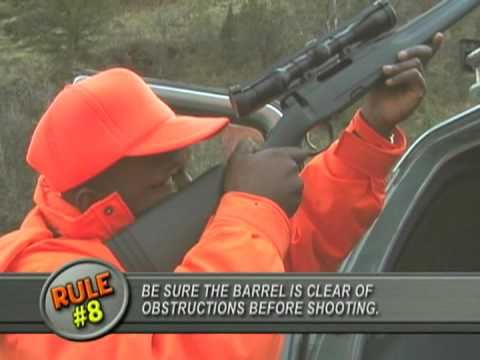
 Need help with your handgunning? Check out the NRA’s
  Ace gunsmith Joe Chambers (aka Joe C), who is best known for his custom pistols, recently joined our

 Here’s smart new product for someone who wants to keep a handgun safely secured, but quickly accessible under a desk at home or at a business. The new
  In the future, Virginians will enjoy the restored freedom to purchase multiple handguns within a 30-day period. The Commonwealth is repealing provisions of § 18.2-308.2:2 of the Code of Virginia restricting handgun purchases to one-a-month. After passing the Virginia Senate (21-19), legislation (


