This report was first published in 2011. Due to numerous requests, we are republishing the story. The time is right because the Giraud Annealer is currently on display on vendors’ row at Camp Perry. Doug Giraud will be at Perry through the morning of August 4th.
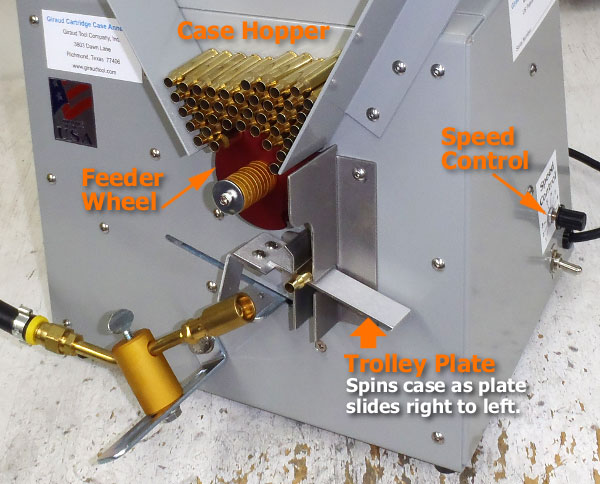
Doug Giraud of Giraud Tool Company has created a new bulk Cartridge Annealing Machine that uses an innovative vertical hopper feed. Giraud’s patent-pending design allows the machine to process as many as 700 .223 Rem cases with no hand-feeding required. The new Giraud Cartridge Case Annealer, using a single propane torch, will anneal most cases in 6-8 seconds (that dwell time will melt 750° Tempilaq inside the neck). Annealing dwell times can be adjusted using a simple rotary knob on the right side of the machine. During annealing, each case is rotated in the flame through the motion of a Trolley Plate which moves right to left under the case. At the left-most limit of Trolley Plate movement, each case drops vertically down for air cooling. CLICK HERE for Giraud Annealer Users’ Manual (PDF)
The Giraud annealer uses a large, V-shaped hopper to hold up to 700 .223 Rem cases or 450 .308 Win cases for annealing. You can switch from small cases to larger cases by swapping out the rotary Feeder Wheel below the hopper. Changing Feeder Wheels takes a couple minutes. Five available Feeder Wheels (with different size cartridge slots) let you anneal pretty much any size cartridge — from .17 Remington all the way up to .50 BMG. The common .223 Rem and .308-sized cases used by High Power shooters are served by the Red Feeder Wheel and Blue Feeder Wheel respectively. The Blue Wheel will also work with 6mmBR, .243 Win, and .30-06 cases. The three other Feeder Wheels are: Black (.300 Win Mag); Purple (WSM, RUM, RSAUM, Lapua and Norma Mags); and Green (.50 BMG). For the large mags you also need to switch to a wider Trolley Plate.
Watch Video to See Giraud Annealer in Action
Giraud Annealer Can Process Hundreds of Cases in One Session
The biggest advantage of this machine is its ability to run with minimal user “intervention”. Once you’ve determined the right dwell time for your cartridge type, you can stack hundreds of cases in the V-shaped hopper, turn on the torch and let the machine do its thing. With a typical 8-second dwell time, the Giraud annealing will process about 450 cases an hour. While other multi-torch annealing machines may be faster, Giraud prefers the single-torch design: “With a single torch, you can control total heat input over a longer time. You don’t over-cook the case in a half-second — you have a lot more leeway with a 6-9 second dwell time.”
Yes the case spins in the flame — the Trolley Plate running under the case rotates it. The user may wish to experiment with the speed control knob on the right side panel near the power switch. Typical annealing operations will require the cartridge cases to be positioned in the torch flame for between 6 and 9 seconds.
Much smart thinking went into the Giraud Annealer design. Doug Giraud tells us: “We went through a couple different ideas. Our key goal was to vertically stack a large quantity of cases that would self-feed. The automatic feeding capability of the machine means that the operator can perform another task while the machine is running. The user doesn’t have to load cases one by one. I would caution, however, that you don’t want to turn on the annealer and just walk out of the room… but you can be doing some other reloading task while the annealer is running nearby.”
Giraud wanted a machine that could process lots of cases cheaply and efficiently. The machine’s single torch is optimized to run on inexpensive propane gas. Doug says: “You can process 15,000 cases on a single $2.00 disposable propane bottle.” If the user wants faster processing, the torch is rated for MAP gas, but Doug cautions that, “with more heat, you’ll have to adjust the dwell time accordingly.”
Giraud Annealer Impresses High Power Shooters
The new Giraud Cartridge Case Annealer has already attracted considerable interest. Doug took some early production models to Camp Perry in 2011, and he immediately got orders for 50 machines. Doug told us: “The response from the High Power guys was amazing. There was a pent-up demand for a simple, robust annealer that can process hundreds of cases without having to feed them one by one, and that’s what we created. We’re selling these units as fast as we can build them.”
Giraud Annealers Cost $435.00 — Delivery in Six Weeks from Order Date
Doug has components for 100 more machines, and he’s producing them at a rate of 15 units per week. He’s been back-ordered, but if you order soon, Doug believes he can ship the Annealing machines in about six weeks from date of order. The basic price, with one Feeder Wheel and one Trolley Plate, is $435.00. Additional Feeder Wheels cost $20.00 while extra Trolley Plates are $10.00. For more information, visit GiraudTool.com. To place orders, call (281) 238-0844 Monday through Friday between 9am and 5pm CST. You can also email doug [at] giraudtool.com.
Giraud Tool Company, Inc.
3803 Dawn Lane
Richmond, Texas 77406
281-238-0844 (orders)
281-232-0987 (fax)
Website: www.GiraudTool.com
The 2012 National Rifle and Pistol Championships begin July 9 at Camp Perry in Port Clinton, Ohio. A tradition at Camp Perry since 1907, the championships are divided into five separate phases: Pistol, Smallbore 3-Position, Smallbore Prone, High Power and Long Range.
The National Matches begin in early July with the First Shot Ceremony and conclude in August with the Long Range High Power Championship. This year, Nosler returns as title sponsor for the High Power Rifle Championships. NRA President David A. Keene said “The NRA, CMP and the Ohio National Guard work together and will continue to do so to make the National Championships the most prestigious matches in the world.
The 2012 National Championships calendar is as follows:
July 9: First Shot Ceremony
July 10-14: NRA National Pistol Championships
July 18-21: NRA National Smallbore Rifle Position Championships
July 22-26: NRA National Smallbore Rifle Prone Championships
August 5: NRA/Springfield M1A Match
August 6-10: NRA National High Power Rifle Championships
August 11-15: NRA Long Range Championship
You can follow the 2012 Championships with profiles, photos and scoring updates at www.nrablog.com. For more on the National Rifle and Pistol Championships at Camp Perry visit www.nrahq.org/compete or call 1-877-672-6282. On the Online Registration page, you can enter the various competitions. To enter the NRA/M1A Springfield match, please use the NRA High Power Rifle Championship option.
The NRA/Springfield M1A Match takes place August 5, 2012 at Camp Perry, Ohio. This special M1A match revives interest in the M14, and its modern derivatives. (Springfield’s M1A is a commercially-produced, semi-auto version of the M14.) At one time, M14-based match rifles dominated Service Rifle matches, but that’s history. Now M16/AR15 platform rule the roost in the Service Rifle game. But many shooters loved the old wood, .30-caliber rifles, leading to the creation of a special National Match just for M1A rifles. Renewed interest in the M1A, coupled with big-money sponsorship from Springfield Armory, led to the the first dedicated Camp Perry M1A match in 2008. That first-ever match proved a huge success, drawing over 500 shooters. Hundreds of M1A shooter are expected again this year.
Nick Till in 2009 M1A Match. Nick was the 2007 Service Rifle Nat’l Champion. Photo courtesy NRA Blog.
Over $27,000 Worth of Prizes for 2012 M1A Match
This year’s M1A Match will be the richest ever — with over $27,000 in cash and merchandise up for grabs. Springfield Armory has kicked in additional sponsorship to provide more payouts and prizes. The top three civilians receive prizes of $2,500, $1,500 and a M1A Rifle respectively. High Military, Woman and Senior receive $500 and a Springfield pistol each. The High Junior also receives $500 and an additional $500 is donated to their Junior Club. For everyone else who hasn’t already won a prize, $200 will be given out to 25 competitors using Lewis Class scoring. In addition, four Springfield pistols and two Springfield rifles will be awarded through prize drawings held during the match. No expert marksmanship needed for these — names are drawn out of a hat, all competitors have a chance to win.
M1A Match Course of Fire
Equipment rules allow pretty much all types/grades of M1As in the match. The one-day course of fire consists of 50 shots at 300 yards on the NRA MR-65F target, as follows: 5 sighters; 20 shots slow-fire prone; 10 shots rapid-fire prone; 10 shots rapid-fire, kneeling or sitting; and 10 shots slow-fire standing.
Video of 2009 M1A match at Camp Perry (NOTE: Loud wind noise — turn down speakers.)
Story based on reports by Kyle Jillson in the NRA Blog.
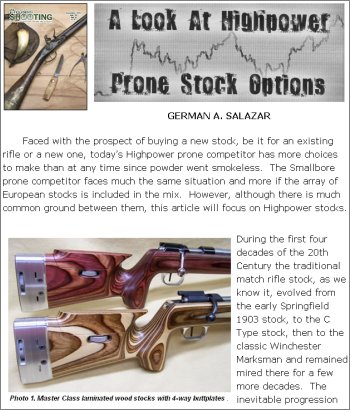
German Salazar, a top prone shooter and “head honcho” of the fine RifllemansJournal.com website, has crafted an excellent new article on stock design. Writing for Precision Shooting magazine, German compares traditional stocks, such as the MasterClass Prone, with more modern, modular designs, such as the Eliseo TubeGun and Ross Precision stock. German, who shoots match rifles built with each type of stock, explains the pros and cons of the different designs, and explains how to optimize the stocks’ adjustments for best fit and function. German also explains the best methods to attach and bed an action to each of the designs.
For a limited time, German’s excellent article is available online, courtesy of Precision Shooting Magazine. If you’re a High Power shooter, or you are interested in the design, construction, and engineering of modern competition stocks, this article is a “must-read”.
David Tubb’s impressive 2-disc DVD, “The Art & Technique of the Modern Match Rifle”, is a great resource for any position shooter. This 2-disc DVD provides over 4.5 hours of instruction and shooting demonstrations. We’ve watched the entire video and can assure you that it is excellent. Novice High Power and prone shooters who apply David’s methods should definitely improve their scores.
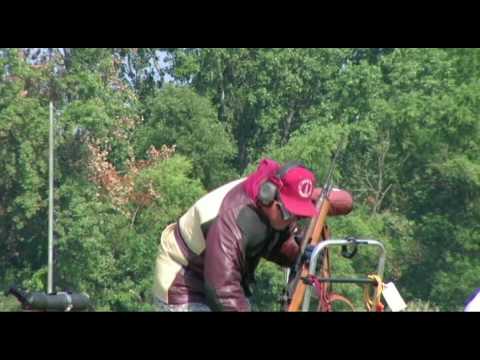
David has included highlights from that DVD in a shorter promo video. While the shorter video is a sales tool, it’s very informative in its own right. Watch the video and you’ll learn a great deal just by watching how David shoulders his rifle, and how he adjusts and maintains his shooting position. David shows examples of prone, sitting, and standing positions. In the short “trailer”, David also provides helpful tips on adjusting sights, and placing the spotting scope.
If you shoot Service Rifle, High Power, or prone, you can benefit from watching this short sampler video embedded above. The full 2-disc DVD is available for $49.95 from Creedmoor Sports or DavidTubb.com. With over 4.5 hours of content, the DVD covers all the across-the-course positions, the set-up and use of aperture sights and diopters, High Power and long range targets, the approach method in offhand, proper placement and use of spotting scopes. The DVD includes bonus footage of David shooting strings in all of the across-the-course positions. (NOTE: Creedmoor Sports is running a February DVD Special for a few more days — Buy two (2) DVDs and get a third for 10% off.)
$24.95 DVD Shows How to Set-Up and Maintain Tubb 2000 Rifle
If you want a High Power match rifle that works brilliantly for all positions, definitely consider the Tubb 2000, aka the T2K. Yes it’s very expensive, but since the year 2000, when the T2K was introduced, this design has won more High Power National Championships than any other bolt-action rifle. The video below showcases features of the T2K that allow it to perform so well in all High Power disciplines. With the T2K’s inline, low-profile action, the shooter can cycle the bolt without raising his head off the stock. That’s a huge benefit for the competitor, particularly in rapid-fire stage. Other tubeguns, such those built on Eliseo (CSS) chassis kits, share this quality, but the T2K also has an extremely easy-to-manipulate bolt (and a superb Anschütz trigger). Watch how quickly and easily David can cycle his T2K without upsetting his shooting position.
David has created an informative DVD about the Tubb 2000 rifle that shows how to assemble/disassemble the Tubb 2000 rifle, how to custom-fit the T2K to the shooter, and how to set up the adjustable buttstock for different shooting positions. This Tubb 2000 (T2K) DVD is available for $24.95 from DavidTubb.com.
Rodrigo Rosa is a rising star in the world of High Power shooting. Though he’s been shooting competitively for only four years, he is already a top contender at the national level. In 2011, the young marksman, who now lives and works in New Hampshire, was right up with the leaders at the NRA National High Power Championships. At Perry, Rodrigo finished second in the Across-the-Course phase and finished third in the Long Range National Championship. He was also on the winning 2d Amendment match team with Norm Houle. Over the last couple of years, Rodrigo has lead the field at New England High Power events. He was New Hampshire State Champ in 2010 and 2011, Massachusetts State Champ in 2011, and Mid-Range (and Across-The-Course) Vermont State Champion in 2009. Rosa is also a two-time NE Regional Across-the-Course Champion, winning titles in 2008 and 2011. That’s an impressive shooting resume for a young man who shot his first High Power match in 2008, and had to borrow money to get his first real match rifle.
Rodrigo tells us: “I had a good year in Camp Perry in 2011. My goal was only to perform well in the across-the-course event, so taking second place after Carl Bernosky by only 3 points and taking third place in the Long Range event was a real treat.”
What was the “secret” of Rosa’s meteoric rise from rookie shooter to podium performer at Camp Perry? Rodrigo replied: “Key factors? I would have to say dry-fire practice, and working on consistency and the ‘mental game’. I spent many hours dry-firing last winter, particularly working on my off-hand position. Despite such training my technique was still flawed at the beginning of the year. I could dry-fire very well but the results did not show on target. I believe that my ability to finally build a mental sequence that allows me to perform the same movements time-and-time again, on demand, made the greatest difference on my results.”
Interview with Rodrigo Rosa — Born to Shoot
We had the opportunity to chat with Rodrigo. He told us how he got started in competitive shooting. He then discussed his shooting techniques and his reloading methods. At our request, Rodrigo offers some tips for new sling-shooters. Rosa also revealed his preferences in hardware and shooting gear.
AccurateShooter: Rodrigo, tell us about your background. How did you get involved in shooting?
Rosa: I grew up on a farm in Brazil. When I was about 11 years old my mom bought me an air rifle, and I later inherited my grandpa’s Winchester .22LR. I hunted many rabbits and ducks with that rifle until I was 17 years old when my studies became more important. I traveled to the USA in late 2004 to finish my Veterinary clinical training at Cornell University, where I met my wife-to-be. We got married in 2005 and moved to California for internships. It wasn’t until early 2007 when I decided to buy a rifle and join a gun club. All I could afford was a simple .308 hunting rifle. With the .308, I tried (with limited success) to hit small metal silhouettes at 600 yards. Despite my limited success I decided to educate myself about the shooting sports, predominantly by reading books by David Tubb and Nancy Tompkins, as well as foreign publications.
My wife Kate and I moved to New Hampshire in 2007, when I decided to take a personal loan to buy a better rifle, suited for High Power competition. I joined the Nashua NH Fish and Game Association and started to work on my skills. In late 2010 I met Norm Houle who became a good friend and gave me extra motivation to stay in the game.
AccurateShooter: What are your strengths and what are the areas where you need improvement. What training methods do you use to improve those weak points?
Rosa: My strengths are my ability to concentrate, attention to detail and perseverance. The areas I tend to work on the most are my mental systems. I know I am able to shoot a perfect score in any yard line and shooting position, so I spend most of my time coming up with ways to make my shooting sequence as meticulous and repetitive as possible. I believe I still have a lot of work to do….
AccurateShooter: What are the best and worst things about competing at Perry?
Rosa: 2011 was my second year competing in Perry (I also started the match in 2009 but had to leave early for a family issue). I had one of the best weeks of my life! Perry is a wonderfully beautiful and challenging range, and the friends I had the pleasure to share my time with were the highlight of the trip. From previous experience, I would say that the heat and humidity are the worst things
about Perry, but 2011 gifted the competitors with amazingly pleasant weather.
AccurateShooter: Rodrigo, do you have any tips for novice High Power shooters?
Rosa: Start by investing in good equipment — buy quality and you will buy it only once. Seek the advice of successful shooters. All truly good shooters will be glad to share their “secrets”, for it is only worth winning when all competitors can shoot their best. Develop a safe, reasonably good load for your cartridge and quit messing with it! If you already have an accurate rifle your time is much better spent working on your hold than on developing loads. Be ready! Develop checklists, plans, mental sequences. The less you can worry about, and the more prepared you are for adverse situations at the firing line, the better your chances will be.
AccurateShooter: Speaking of load development, tell us what load you shoot, and what methods you use to create accurate ammo.
Rosa: I shoot the 6mmXC cartridge Across-the-Course and Long-Range (except for Palma, of course). I use Federal 210M primers, Norma brass, Hodgdon 4350 powder, Sierra 70gr bullets for 200 yards and DTAC 115gr bullets from 300 to 1000 yards. My loads are: 39.5 grains H4350 with the Sierra 70gr; 37.5 grains H4350 with DTAC 115gr for 300 yards; and lastly, for Mid-Range and Long-Range, I use a stout H4350 load with the DTAC 115s. (Editor: Start at 37.0 grains H4350 and work up with the 115s; Rodrigo’s long-range load is near max).
The most important steps of my reloading are accurate load weighing (I weigh ALL loads) and bullet selection. I select all the bullets I shoot from 600 to 1000 yards by bearing surface and length. I do not spend any time doing elaborate load testing (and re-testing). All I care about is having a reasonably accurate load that functions smoothly in my rifle.
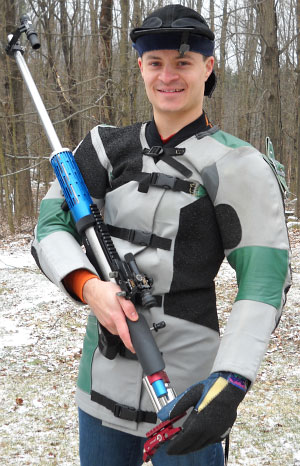
AccurateShooter: Tell us about your shooting coat and sling. Do you have any advice concerning coat fit and sling adjustment?
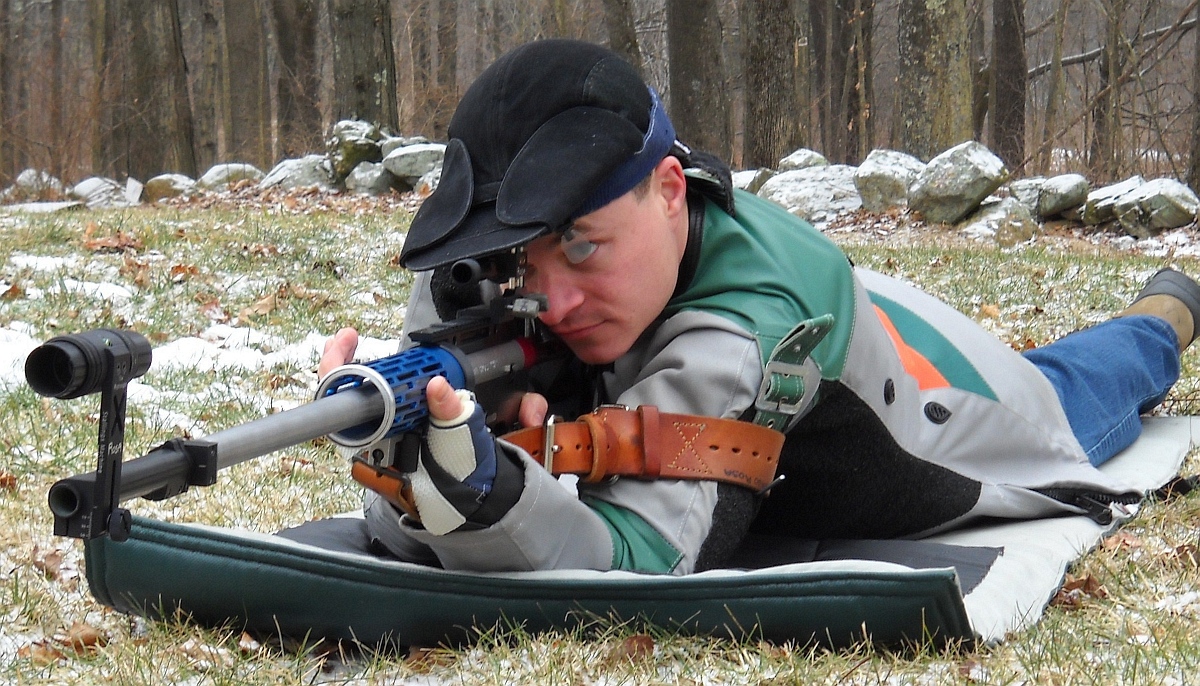
Rosa: I currently wear a Monard shooting coat. Proper fit is fundamental for anyone who wishes to be competitive in any category of position rifle shooting, and the folks at Monard certainly have got that down. My advice to anyone who is going to invest hard-earned money in a coat is to make sure that the maker uses at least 15 different measurements of his/her body. Anything less than that is not acceptable in my opinion. I also prefer the stiffness and coolness of canvas over leather. Leather tends to mold better to ones body but softens and shrinks when wet. Since High Power shooters must often shoot in the rain I believe that canvas is a more durable and stable material. For a sling I always used the Superior Shooting Systems Heart Breaker Sling. This is an extremely well-made sling crafted to last many decades. It is important to cut the new sling to fit one’s arm diameter so that the “hinge” is located between the arm and the hand. I did not know this important “trick” for the longest time until David Tubb called my attention to it at Perry last year.
AccurateShooter: You shoot a Tubb 2000 match rifle. Tell us the features of the T2K you really like, and explain how you set up the sights and buttstock for different positions.
Rosa: The Tubb 2000 rifle is the only rifle I have ever shot Across-the-Course. It is an extremely user-friendly gun that truly allows the shooter to extract all that a competitive target rifle can offer. I used to have only one buttstock and was therefore forced to make adjustments between shooting positions. Now I have three buttstocks individually set up for each position — a major asset in my opinion. My off-hand buttstock is probably the least orthodox of the three. It has a good deal of added weight to help balance the gun and a very narrow buttplate. I like the narrow buttplate because it fits my small shoulder better. This plate is, however, kept mostly flat (very shallow curvature) in order to comply with NRA rules (less than 1/2 inch depth).
Canting — I truly enjoy the ability to cant the T2K rifle to fit my body. Anyone who watches me shooting seated will notice that I use a great amount of canting in that seated position. Canting is a major asset and can greatly improve most shooter’s position by increasing comfort. The key thing with canting is you must be consistent with the amount of cant you use (hint: learn how to use a bubble level).
Forearm — I have shortened the tubular handguard/fore-end of my rifle in order to improve balance as well. People occasionally ask me: Didn’t you get nervous about cutting such an expensive rifle? (I had taken a loan to buy the rifle and it wasn’t even paid for yet). My answer was “Not at all!” My philosophy is that if something does not fit you or does not do the job for which it was intended, then you MUST act on it. It is pointless to have a rather costly piece of machinery if it does not lead to 10s and Xs.
Sights — I use a Warner #1 rear sight and a “Right Sight” in the front. I currently use the “Houle Tube” sight extension tube (bloop tube) made by Norm Houle. This bloop tube has been a major improvement. It lets me have a short, balanced gun for off-hand and a long gun for sling-supported positions. I must admit that I did not believe these extension devices would repeat zero until I tried one. The Houle Tubes are incredible. These extensions come in 2″, 4″ and 6″ lengths and repeat zero flawlessly every time.
Gunsmithing — Dick Beaudoin from Derry, NH has done most of the customization work on my rifle. I want to give him credit. His patience and attention to detail has made all the difference.
Editor’s Comment: We thank Forum member Rodrigo Rosa for taking the time to share his knowledge with our readers. He is a very talented, yet humble young shooter who works diligently on his game. We have no doubt that one day we will see Rodrigo standing on top of the podium at Camp Perry. Boa sorte Rodrigo, we wish you 10s and Xs and continued success…
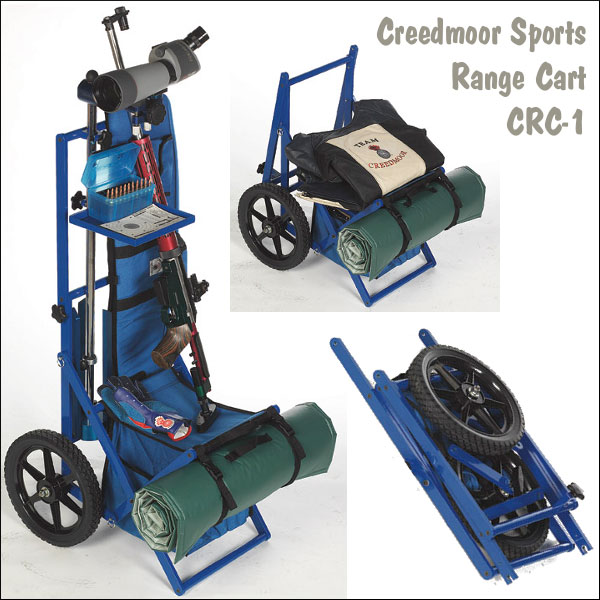
Some High Power shooters on the Forum asked about carts for carrying their gear to the range. You can certainly purchase a factory-made, purpose-built cart that folds up and has all the bells and whistles. The Creedmoor Sports CRC-1 (photo right) is a proven, quality product that works great. You’ll find these used by top shooters at Camp Perry. But the Creedmoor CRC-1 cart costs $499.95.
For a tenth that price ($49.99), plus a few dollars more for do-it-yourself enhancements, you can have a heavy-duty cart that will haul all your gear just fine, though it doesn’t fold up.
Check out the Harbor Freight Welding Cart, item #65939. This cart is ON SALE right now for just $49.99. Overall size is 29-1/2″ L x 20″ W x 49″ H, and width between side rails is 18″. The wheels (with tires) are 20 3/4″ in diameter for smooth rolling. Consider that, if you made your own cart from scratch you could easily pay $30.00 or more just for the large-diameter wheels and axle. Do note — this cart has air-filled tires. Be sure to inflate before you go to the Range!
As sold, the Harbor Freight Welding Cart isn’t quite ready for range use. But it’s easy to add plastic side-panels on the bottom unit, and fit a barrel-holding system on the cross-tube. I also suggest bolting/welding on extra spacers on the most forward underside edge of the bottom so that, at rest, the cart tilts slightly back. This ensures rifles and gear won’t flop forward. (A bit of extra lift also keeps the bottom plate out of the dirt and gravel.)
How to Upgrade Welding Cart for Range Use
Get a block of hard foam rubber. Cut keyhole slots in the rubber to grip the barrel and umbrella/scope stands. Mount the rubber block to the cross piece with self-tapping screws, or drill a horizontal channel in the rubber so the whole block fits over the cross-tube. On the lowest leading edge of the welding cart box (at ground level, front), fit a block of wood 2″ high (you can also fabricate metal extensions). This will make the cart lean back a little more, which helps stabilize the contents on sloping terrain.
You’ll want to enclose the sides of the bottom box area so small items don’t fall out. You can tack-weld aluminum side-plates if you want a fancy appearance. I prefer to just cut sheet plastic from a home improvement store. These plastic panels can be attached with screws or even zip-ties around tubing.
Run the plastic side panels up high enough that stuff like hats and muffs don’t fall out. After transport you can transfer ammo boxes and small items to the upper box (attached to the back side of the cross-tube).
The hardest component to find may be the hard rubber blocks for the barrel keeper, but you can also make a barrel-holding block out of wood, with some carpet to protect the barrels. The nice thing about the rubber is that it can be cut to snap over the barrels so you don’t need straps. Likewise, you can drill a hole transversely through the rubber, then slot it from the bottom and it will slide over the horizontal tubing with no fasteners needed.
Comment: This cart is heavy and it takes up a lot of space. You’ll need a station wagon, SUV or pickup truck to haul it around. But it’s cheap. The money you save on a range cart could pay for a new Krieger or Bartlein barrel, AND some new brass. Those things (new barrel and brass) will likely improve your scores more than having a fancy $500.00 range cart.
Rule 2.11:
Sets residency and “paid-up” membership requirements for Club Team shooters. Different standards for (a) Local Club Teams; and (b) Open Club Teams.
Rule 3.3.2 NRA Any Sight Match Rifle/Tactical Rifle
Part (c) now reads: “Competitors may use a service rifle equipped with optic sights to compete under this rule. Competitors using service rifles described in Rules 3.1(c) and 3.1(d) may remove the carry handle to allow mounting of the optic sight.”
Rule 7.22 F-Class Long Range National Championships
This section now reads:
“Any match sponsor that wishes to conduct the F-Class Long Range National Championships shall use the following courses of fire:
Day 1, 3-15 shot 1,000 yard individual matches.
Day 2, 3-15 shot 1,000 yard individual matches.
Day 3, 2, 4-person team matches, 20 shots per individual plus the aggregate of the 2 team matches.
Day 4, 2-20 shot 1,000 yard matches.”
Rule 14.18 Signal Systems for Scoring Targets
The Visual Signaling System described below will be used in all high power rifle tournaments:
(a) Slow Fire: Value spotters are placed as indicated on the target frame, all of a highly visible color such as fluorescent orange or black. The shooter may request the color they can best see.
X ………………………….……Center Right side
10 ……………………………..Bottom right corner
9 ………………………………..Bottom center
8 ……………………….……….Bottom left corner
7 ………………….…………….Center left side
6……………….……… Center right side (same as X)
5 ……………..…….Bottom right corner (same as 10)
Miss ……………….Both bottom Left corner
……………………..and bottom Right corner
Currently, the NRA Blog is featuring “Top Stories of 2011″. Among these stories is an account of how Carl Bernosky earned his NINTH High Power National Championship. We believe Carl’s latest National Championship title, and his amazing skills with a rifle, deserve more ink. So, here, from the NRA Blog, is the story of Carl’s 2011 victory at Camp Perry.
Bernosky Gets His 9th Nat’l HP Title
This past August, Carl R. Bernosky of Ashland, Pennsylvania, shot his way to his 9th NRA National High Power Rifle Championship at the NRA National Rifle & Pistol Championhips at Camp Perry. A National Guard training facility on the shores of Lake Erie, near Port Clinton, Ohio, Camp Perry has been home to NRA’s national championships for 102 years. The matches, which take place during July and August, have become notorious for their harsh gusts of wind, sweltering heat and storms that come off the lake with little warning.
2393-160X out of 2400
This year, during the NRA High Power Rifle Championship, Bernosky posted a 2393-160x out of a possible perfect score of 2400, Bernosky took first place and won the prestigious Mumma Trophy. In addition to winning the overall high power rifle championship, Bernosky was also the NRA Match Rifle Champion. He won top honors in eight of the eighteen matches that make up the championship and placed within the top three in five others.
“It’s just a matter of getting your mind ready to shoot the shot when it’s there and just tweaking everything a little bit”, Bernosky said when I asked him how he prepares for each match. “You don’t have to be thinking about what you’re doing, it just happens.”
During his title run this year, Bernosky tied the National Record for slow fire standing from 200 yards — an extremely impressive accomplishment. The record, a 200-15x, was originally set by Gary Anderson in 1971 during the Navy Cup.
“When I shot that 200 with 15 standing, that was discipline. I didn’t shoot a bad shot”, Bernosky told me. “That was the best target I’ve ever shot, including practice”. Bernosky tied the record during the Crescent Cup, which has the same course of fire as the Navy Cup, and finally let us know that the record had been on his mind for a very long time. “Every time I shoot a standing, whether in practice or in a match, I'm thinking about that record. I always thought I could shoot that well”, Bernosky said. “It’s tough to do and it’s a great feeling to have done that”.
The record-tying match couldn’t have come at a better time. Tied for first, Bernosky was looking for a boost to have a great day of shooting and take sole possession of the lead. The Crescent Cup was the first of the final day’s three matches and Bernosky couldn’t have asked for a better boost. “When you enter the final day and you’re tied and you just stand up there and shoot a 200-15x, it doesn’t get any better than that…”, Bernosky said.
Having grabbed the lead after the excellent performance, Bernosky held on for the last two matches and won by three points — close. Congratulated by his friends and fellow competitors as he packed up, Bernosky left the firing line a champion.
Range Requirements for NRA Comps
If you’re planning to add new competition programs at your shooting range or club, you need to know what disciplines can be conducted given your facilities. What are the requirements for firing stations, target locations, berm placements and so on? That’s where the folks from NRA’s Competitive Shooting Department come in.
A new FREE Range Distance Guide explains what competitions can be shot given the layout of your range. You may be surprised at how many disciplines can be offered even in a relatively short-distance facility: 3-Position BB Rifle at 5 meters, Tyro Course Action Pistol at 15 yards, Light Standing Smallbore rifle at 50 feet, High Power Rifle (reduced) at 100 yards and more.
With information for events from 5 meters to 1000 yards, this pamphlet is a helpful reference for any club offering NRA matches. Of course, if you decide to add new discipline(s) to your club’s agenda, you’ll need a rule book, scorecards, and scoring aids. Get these from the NRA Program Materials center by calling 1-800-7402 or visiting http://materials.nraqh.org.
In addition, clubs can sign up for a updates and E-news from the NRA Competitive Shooting department regarding new programs, rule changes, and other related subjects.


 The 2012 National Rifle and Pistol Championships begin July 9 at Camp Perry in Port Clinton, Ohio. A tradition at Camp Perry since 1907, the championships are divided into five separate phases: Pistol, Smallbore 3-Position, Smallbore Prone, High Power and Long Range.
 Nick Till in 2009 M1A Match. Nick was the 2007 Service Rifle Nat’l Champion. Photo courtesy


 David Tubb’s impressive 2-disc DVD, “The Art & Technique of the Modern Match Rifle”, is a great resource for any position shooter. This 2-disc DVD provides over 4.5 hours of instruction and shooting demonstrations. We’ve watched the entire video and can assure you that it is excellent. Novice High Power and prone shooters who apply David’s methods should definitely improve their scores.
 Rodrigo Rosa is a rising star in the world of High Power shooting. Though he’s been shooting competitively for only four years, he is already a top contender at the national level. In 2011, the young marksman, who now lives and works in New Hampshire, was right up with the leaders at the NRA National High Power Championships. At Perry, Rodrigo finished second in the Across-the-Course phase and finished third in the Long Range National Championship. He was also on the winning 2d Amendment match team with Norm Houle. Over the last couple of years, Rodrigo has lead the field at New England High Power events. He was New Hampshire State Champ in 2010 and 2011, Massachusetts State Champ in 2011, and Mid-Range (and Across-The-Course) Vermont State Champion in 2009. Rosa is also a two-time NE Regional Across-the-Course Champion, winning titles in 2008 and 2011. That’s an impressive shooting resume for a young man who shot his first High Power match in 2008, and had to borrow money to get his first real match rifle.


 AccurateShooter: Tell us about your shooting coat and sling. Do you have any advice concerning coat fit and sling adjustment?
 Some High Power shooters on the Forum asked about carts for carrying their gear to the range. You can certainly purchase a factory-made, purpose-built cart that folds up and has all the bells and whistles. The
  Check out the
  You’ll want to enclose the sides of the bottom box area so small items don’t fall out. You can tack-weld aluminum side-plates if you want a fancy appearance. I prefer to just cut sheet plastic from a home improvement store. These plastic panels can be attached with screws or even zip-ties around tubing.
 (a) Slow Fire: Value spotters are placed as indicated on the target frame, all of a highly visible color such as fluorescent orange or black. The shooter may request the color they can best see.
 Bernosky Gets His 9th Nat’l HP Title
 During his title run this year, Bernosky tied the National Record for slow fire standing from 200 yards — an extremely impressive accomplishment. The record, a 200-15x, was originally set by Gary Anderson in 1971 during the Navy Cup.
  Range Requirements for NRA Comps


