Congrats to Lester Bruno, overall winner of the 2021 Cactus Classic Benchrest Match. This popular NBRSA match is held every year at the Ben Avery Range outside Phoenix, Arizona. Lester shot brilliantly, particularly at 200 yards, to win the Two-Gun convincingly with an 0.2099 Overall Aggregate. Ed Adams was second with a 0.2303 Two-Gun Agg, with Durward Wofford in third place with 0.2655. Along the way Lester nailed a remarkable 0.1742 200-yard Heavy Varmint Agg. That’s mighty impressive.
Click Image Below for full-screen Panorama Image:
Paul Parosky reported: “So the Cactus Classic COVID Edition of 2021 has come to an end. Lester Bruno won with some amazing shooting at the LV and HV 200 yards. Myself? I need some more time behind the rifle and at 200 yards. We came across some nasty mirage that basically it was really hard to see the bullet hole. I still was able to finish in the middle of the pack 29th in the 2-Gun Aggregate, which is OK with me. But most of all had super great time, meeting new people and also putting faces to the FB friends from the group. The referees, Matthew Schwartzkopf and his crew [plus] the Wickenburg School volunteers did a wonderful job keeping the match going flawlessly.”
2021 Cactus Classic Top 25 Two-Gun Overall Results:
In 100/200 yard Group Benchrest, most top competitors load at the range, tuning their loads for the conditions. Here you can see the portable powder measure (left) and a compact ARKCO Hood Press (right). That blue combo press can both size cases with a screw-in die and seat bullets using a Wilson Seater die (placed on left side). The vast majority of short-range benchrest-for-group competitors run the 6PPC cartridge with fast-burning powders such as Vihtavuori N133.
Capstone Precision Group (Berger Bullets, Lapua, SK, Vihtavuori) provided many valuable prizes to competitors at the 2021 Cactus Classic.
Editor’s NOTE: Shelley Davidson passed away in 2008 after a courageous battle with cancer. He was one of the great innovators in benchrest rifle design. This article, written before Shelley died, showcases Shelley’s creative talents at their best. His “Tinker Toy” design will always be a tribute to Shelley’s fabricating skills and imagination.
Shelley Davidson — a brilliant innovator. R.I.P. Shelley — you will not be forgotten.
Shelley Davidson’s peers called his radical rifle the “Tinker Toy” gun. We call it revolutionary. Even now, 14 years after its creation, there’s nothing quite like it. This innovative, skeleton design threw conventional wisdom to the winds. Shelley readily concedes he “broke the rules” of benchrest rifle building. But this was inspired rule-breaking, because Davidson’s rifle shot like a house on fire. The Tinker Toy gun won its first matches, both for Score AND for Group. And this rifle also delivered many “zero groups” in Gene Begg’s Texas Tunnel. Hats off to Shelley for conceiving and building a truly radical rifle that was also wicked accurate and successful in competition.
Tinker Toy 30 BR — Radical As It Gets
Report by Shelley Davidson
Although I’m not big on naming rifles, my shooting buddies have christened the gun “Tinker Toy.” I can live with that as it does kind of look as if it was made with a Tinker Toy set.
Origins of the Project
This project began with some wild ideas I had in the fall of 2006 about using magnets to tune a barrel. My idea was to use one magnet on the barrel and another on the stock so they pushed against each other to counter gravity-induced barrel sag (and possibly) tame barrel vibration in a beneficial manner. The only way to test these ideas was to build the device and mount it on a gun. That meant I had to build a new rifle because there was no place to mount a magnet on the stock of a conventional benchrest rig. I had a Kelbly-stocked heavy varmint stock with a Michael Kavanaugh paint job on it. I didn’t think Kav would ever forgive me if I started drilling holes in one of his works of art. My light varmint was in a carbon fiber Scoville stock that costs about a grand. Drilling into the Scoville for an experiment just smacked of bad judgment. So, the magnet thing was my first motivation for designing a new stock. As long as I was building from scratch I decided to offset the barrel and action 0.75″ to the right to counteract the spin/torque from the bullet.
Although there’s nothing new here, my second motivation was to build a 30BR that could shoot in the 10.5 lb light varmint class in NBRSA. The magnetic tuner will automatically make this gun illegal in the IBS. The IBS has declared all barrel attachments un-safe and have outlawed them. I personally feel that the IBS really outlawed all barrel attachments to prevent experimentation and innovation. But at least we have NBRSA matches.
Designing the New Gun — Thinking “Outside the Box”
Once I’d decided to build a lightweight stock that could support experimental devices out near the muzzle, I started drawing up some rough plans. I also took a trip to Jerry Stiller’s shop in Wylie, Texas for a brainstorming session with Jerry, the maker of Viper and other Benchrest actions. Jerry is a school-trained mechanical engineer and thinks differently than I do. I came away from Stiller’s shop with my design roughed out and sketched on paper. The design violated several covenants of conventional wisdom for building competition BR rifles. For instance, two-piece stocks stress the action. Stress reduction is why most BR rifles are glued into the stock. Another myth is that metal stocks vibrate too much so wood or foam-filled fiberglass or carbon fiber are used.
Tinker Toy Rifle DESIGN FEATURES
Shelly Davidson’s Rifle was so innovative, that almost every feature, except the bare action, is very different than you’ll find on most Benchrest rigs. Accordingly we felt it would be useful to isolate and describe the key design features, from stem to stern. Click thumbnails to view FULL-SIZE PHOTOS.
Front Bracket with Magnetic Tuner
The tuner consists of one rare earth magnet attached to the stock and another attached to a barrel sleeve with the magnets oriented so as to make the magnetic force repel each other. The purpose is to counter “barrel droop” and, hopefully, dampen barrel vibration. The lower magnet is carried on a threaded shaft (with lock ring), allowing the magnet to be raised up and down to adjust the “up push” on the barrel.
Tubular Fore-Arm Supported by Brackets
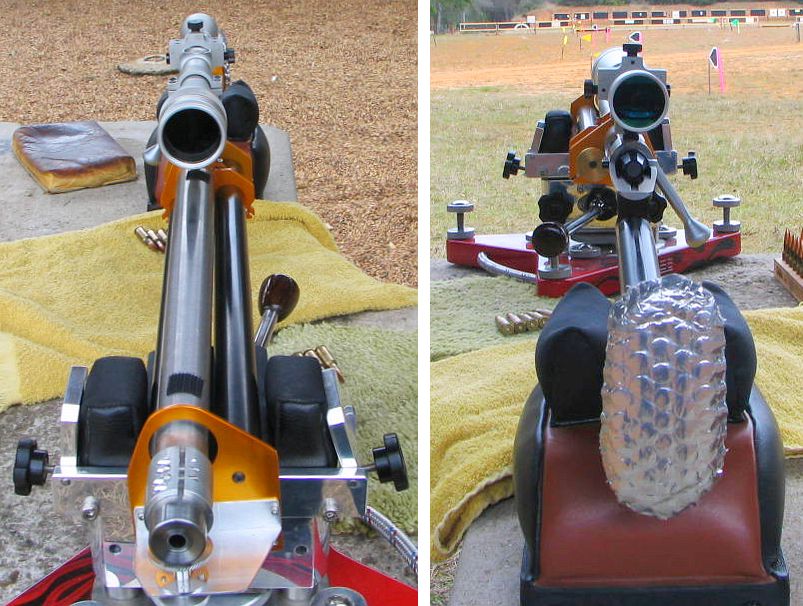
Three brackets support two tubes, one on either side of the barrel. The rear-most bracket is sandwiched between the barrel and the action. Four inches forward (max distance allowed for barrel blocks) a second bracket grips the barrel. Near the muzzle a third bracket secures the ends of the tubes and holds the magnetic tuner. To allow barrel offset, the left tube is 1″ diameter tube while the right tube is 5/8″ diameter.
Offset Barrel The rifle rests on a 3″ wide plate attached to the underside of the two fore-end tubes. With the plate centered in the front sandbag, the barreled action is actually offset 0.75″ to the right (looking forward from the breech). The purpose of this offset is to keep more weight on the right side to counter the tendency of the rifle to torque counter-clockwise. Two different diameter tubes allow for the built-in offset.
Floating Action without Sub-Support or Bedding
On the Tinker Toy gun, the action serves as a load-bearing assembly, holding the barrel in the front, and the skeleton buttstock (or “keel”) in the rear. Shelley was told that accuracy would suffer if you stressed a benchrest action in this manner but that proved untrue. It is a very simple solution to building a rifle, and it eliminates the need to bed the action. The forearm attaches to the action via a bracket installed like a recoil lug.
Skeleton Rear “Keel” Affixed Directly to Action
Davidson’s Tinker Toy does not have a conventional rear buttstock. Instead there is low-profile, v-shaped metal “keel”, as Davidson calls it, that rides the rear bag. The keel is supported by a tubular backbone that attaches at the rear of the Diamondback action. At the butt end is an aluminum plate covered with bubble wrap that serves as a butt pad. The skeletonized rear section helps the rifle maintain a very low center of gravity.
Locked Scope with External Windage and Elevation Adjustment
Shelley ran an older Leupold 36X Benchrest Scope with front-adjusting objective. To eliminate slop or loose tolerances in the erector mechanism that could cause changes in point of impact, the internals have been locked up by Jackie Schmidt. To move the cross-hairs relative to the bore axis, Shelley has a special Jewell/Foster rear ring that allows a limited amount of lateral and vertical movement of the entire scope body.
TINKER TOY SPECIFICATIONS
Action: Stiller SS Diamondback Drop-Port (1/2″ short), with .308 Bolt Face.
Barrel: Shilen .308 caliber, 17-twist, HV.
Chambering: 30BR, .330″ neck, Pacific Tool & Gauge Robinett Reamer.
Stock: Davidson Custom Tubular Stock with 0.75″ Offset Barreled Action.
Tube Construction: 6061 Aluminum, 1″ diameter (left), 5/8″ diameter (right).
Load: H4198 powder and 118gr Ronnie Cheek bullets. Loaded to 2980 fps.
Trigger: Jewell, 2 ounce BR.
Tuner: Custom, Adjustable with Opposing Magnets.
Optics: Leupold 36X (locked by J. Schmidt).
Rings: Jewell Foster External Adjusting Rings.
Stiller Diamondback Action and Shilen 17-Twist Barrel
I had wanted to use an aluminum Stiller Cobra drop port with a 6mmBR bolt face but Jerry had none in stock and he estimated it would be a year before one was available. Although I’ve waited for up to a year for an action in the past, I wanted to build this rifle during the fall of 2006 while the weather was pleasant enough to work in my unheated and un-air-conditioned garage shop. Jerry did have a 1/2″ short stainless steel Diamondback in stock so I purchased it even though it would add 3 ounces to the gun compared to the aluminum Cobra. Three ounces is a lot of weight when you’re working with a 10.5-lb limit. I had a heavy varmint contour Shilen 17-twist barrel that would work nicely and I had a Jewell trigger on a rifle that I wasn’t using at the time. I also decided to use my Leupold 36X (locked-up by Jackie Schmidt) with the Jewell/Foster adjustable rings.
Building the Tube Fore-Arm and Brackets
I took a wild guess as to tubing thickness and settled on .035″ for the 1″ left fore-arm tube and .058″ for the 5/8″ right fore-arm tube. All of the flat stock and tubes are 6061 Aluminum. I did the lathe work and the mill work and every evening I’d put the parts together and think about the proper way to proceed.
When the parts were mostly made, I started thinking that this was a truly ugly rifle. I thought about painting it but that wasn’t a good option as many of the parts are designed to slide over others and glue together. Anodizing was the best answer so while looking on the Internet for local anodizing shops I Googled “Home Anodizing”. Sure enough there were a few sites that told about how to anodize at home. I picked up some battery acid from NAPA Auto Supply, some Rit Clothes Dye from Wal-Mart, and a bunch of distilled water from the grocery store. Using an old battery charger as my dc power supply I started anodizing and dying the eighteen parts that went into the stock. Although I had to strip and re-anodize some of the parts, the work turned out acceptable.
Putting it All Together–Lug-Mounting the Fore-Arm and Lots of Epoxy
The barrel contour had to be modified to work with the stock which attaches by way of a rear plate which mounts like a recoil lug and a plate that ties the barrel and the stock tubes together 4″ forward of the bolt face. The four-inch maximum distance is a NBRSA rule concerning barrel blocks.
The recoil lug-style stock mount is probably the only truly innovative thing I did other than the opposing-magnet tuner. Basically, the rear bracket is sandwiched between the receiver face and the barrel shoulder–positioned where a conventional recoil lug would go. I also added a brass ring (visible in photo) between the anodized bracket and the barrel. This was done to distribute loads over a wider surface area. (I was concerned that the bracket material was fairly soft and I didn’t want to crush it as I torqued the barrel in place.) After fitting the barrel and plates I glued the entire gun together using epoxy and various LocTite adhesives. The rest of the parts were assembled but I did not Loctite the scope bases since I thought I’d be disassembling the rifle for re-work after the first trials. That came back to bite me during later testing when the gun started shooting erratically and I went down a couple of blind alleys before finding the loose bases.
Range Testing–Results Are Very Positive
The first range session was a real shocker. Even though the wind was up to 10mph and twitchy, the rifle showed promise from the very first shot. I really didn’t expect that kind of performance without, at least, some rework. After sighting in, I shot five, 5-shot groups that, when averaged together, measured .223″. That’s good enough to win some benchrest group matches. But I wasn’t finished with the gun yet–I still wanted to try out my magnetic tuner concept.
The Magnetic Tuner
Next, I built the magnetic tuner. The tuner consists of one rare earth magnet attached to the stock and another attached to a barrel sleeve with the magnets oriented so the magnetic forces repel each other. In order to test the magnets and to determine if the rifle really shot as well as it seemed to, I took it to Gene Beggs’s shooting tunnel in Odessa, Texas. I spent two days at the tunnel testing loads and then installed the magnetic tuner. The gun shoots well with the magnets and shoots well without them. I suppose I can’t make any claims as to how much, if any, improvement the magnets make. Gene said that my gun was the most accurate rifle to be tested at his one-year-old shooting facility: “Shelley Davidson brought one of the most unusual rifles I had ever seen; he called it his ‘Tube Gun.’ And boy, did it ever shoot! It still holds the record in the tunnel as the rifle that shot more zeros than any other to date.” I definitely recommend Gene’s facility for testing and refining shooting techniques and loads.
Competition — Tinker Toy Won Both Score and Group Matches
Finally the big day arrived when I’d shoot the first match with my new gun. The North Texas Shooters Association was holding its first club match of the 2007 season. At the Denton, Texas matches we shoot a Score Match in the morning and a Group Match in the afternoon. The March event was at 100 yards and the April match will be at 200 yards and so on alternating throughout the benchrest season.
Match One–Tinker Toy Wins Score with a 250 – 17X
Since the gun is chambered in 30BR and that chambering is almost immune to tuning woes, I preloaded 130 rounds with H4198 powder and 118gr Cheek bullets. I used my SEB front rest and rear bag which are made by Sebastian Lambang in Indonesia. Everything came together, and Tinker Toy demonstrated that the accuracy it showed in the tunnel was no fluke. The gun shot great and I won the morning match with a 250, 17X. The day was quite windy and the next best shooter scored a 250, 15X. So I’d chalked up my first win.
Match Two–Tinker Toy Wins Group with a .2282″ Agg Tinker Toy won the afternoon group match I entered with a five-group Aggregate of .2282″. (The second place score was .2568″.) My groups were .149″, .197″, .243″, .302″ (oops), and .250″. You know how some folks say a 30BR can’t be competitive with a PPC? Well that .2282″ Agg won’t break any records, but it is good enough to win some regional registered BR matches. So this rifle has demonstrated an ability to win in both Score and Group matches. Obviously I have a very good Shilen barrel, great Cheek bullets and the rest of the components are doing their jobs as well. But, the stock is also working well.
Score Shooting vs. Group Shooting–The Rules
In a score match, the shooter shoots one bullet at each of five record targets, which are clustered on one target sheet. The Aggregate score of five of these targets determines the winner. If the shooter touches the 10 ring on all of his 25 targets he can score a “clean” 250 score. Usually there will be more than one shooter who scores a 250 so the winner is determined by the X-count. The 1/2″ 10-point ring has a 1/16″ dot in its center. Touching the X dot adds to the shooters X count. In short-range group matches, the shooter must try to put five bullets through the same hole. At each distance (100 or 200), five, 5-shot matches are scored, the group sizes are added together (MOA equivalent at 200) and the total is divided by five to arrive at an Aggregate score.
Barrel-maker Dan Lilja’s website has an excellent FAQ page that contains a wealth of useful information. On the Lilja FAQ Page as you’ll find informed answers to many commonly-asked questions. For example, Dan’s FAQ addresses the question of barrel life. Dan looks at factors that affect barrel longevity, and provides some predictions for barrel life, based on caliber, chambering, and intended use.
NOTE: This article was very well-received when it was first published last year. We are reprising it for the benefit of readers who missed it the first time.
Dan cautions that “Predicting barrel life is a complicated, highly variable subject — there is not a simple answer. Signs of accurate barrel life on the wane are increased copper fouling, lengthened throat depth, and decreased accuracy.” Dan also notes that barrels can wear prematurely from heat: “Any fast varmint-type cartridge can burn out a barrel in just a few hundred rounds if those rounds are shot one after another without letting the barrel cool between groups.”
Q. What Barrel Life, in number of rounds fired, can I expect from my new barrel?
A: That is a good question, asked often by our customers. But again there is not a simple answer. In my opinion there are two distinct types of barrel life. Accurate barrel life is probably the type most of us are referencing when we ask the question. But there is also absolute barrel life too. That is the point where a barrel will no longer stabilize a bullet and accuracy is wild. The benchrest shooter and to a lesser extent other target shooters are looking at accurate barrel life only when asking this question. To a benchrest shooter firing in matches where group size is the only measure of precision, accuracy is everything. But to a score shooter firing at a target, or bull, that is larger than the potential group size of the rifle, it is less important. And to the varmint hunter shooting prairie dog-size animals, the difference between a .25 MOA rifle or one that has dropped in accuracy to .5 MOA may not be noticeable in the field.
The big enemy to barrel life is heat. A barrel looses most of its accuracy due to erosion of the throat area of the barrel. Although wear on the crown from cleaning can cause problems too. The throat erosion is accelerated by heat. Any fast varmint-type cartridge can burn out a barrel in just a few hundred rounds if those rounds are shot one after another without letting the barrel cool between groups. A cartridge burning less powder will last longer or increasing the bore size for a given powder volume helps too. For example a .243 Winchester and a .308 Winchester both are based on the same case but the .308 will last longer because it has a larger bore.
And stainless steel barrels will last longer than chrome-moly barrels. This is due to the ability of stainless steel to resist heat erosion better than the chrome-moly steel.
Barrel Life Guidelines by Caliber and Cartridge Type
As a very rough rule of thumb I would say that with cartridges of .222 Remington size you could expect an accurate barrel life of 3000-4000 rounds. And varmint-type accuracy should be quite a bit longer than this.
For medium-size cartridges, such as the .308 Winchester, 7×57 and even the 25-06, 2000-3000 rounds of accurate life is reasonable.
Hot .224 caliber-type cartridges will not do as well, and 1000-2500 rounds is to be expected.
Bigger magnum hunting-type rounds will shoot from 1500-3000 accurate rounds. But the bigger 30-378 Weatherby types won’t do as well, being closer to the 1500-round figure.
These numbers are based on the use of stainless steel barrels. For chrome-moly barrels I would reduce these by roughly 20%.
The .17 and .50 calibers are rules unto themselves and I’m pressed to predict a figure.
The best life can be expected from the 22 long rifle (.22 LR) barrels with 5000-10,000 accurate rounds to be expected. We have in our shop one our drop-in Anschutz barrels that has 200,000 rounds through it and the shooter, a competitive small-bore shooter reported that it had just quit shooting.
Remember that predicting barrel life is a complicated, highly variable subject. You are the best judge of this with your particular barrel. Signs of accurate barrel life on the wane are increased copper fouling, lengthened throat depth, and decreased accuracy.
Benchrest Barrel Life — You May Be Surprised
I thought it might be interesting to point out a few exceptional Aggregates that I’ve fired with 6PPC benchrest rifles with barrels that had thousands of rounds through them. I know benchrest shooters that would never fire barrels with over 1500 shots fired in them in registered benchrest matches.
I fired my smallest 100-yard 5-shot Aggregate ever in 1992 at a registered benchrest match in Lewiston, Idaho. It was a .1558″ aggregate fired in the Heavy Varmint class. And that barrel had about 2100 rounds through it at the time.
Another good aggregate was fired at the 1997 NBRSA Nationals in Phoenix, Arizona during the 200-yard Light Varmint event. I placed second at this yardage with a 6PPC barrel that had over 2700 rounds through it at the time. I retired this barrel after that match because it had started to copper-foul quite a bit. But accuracy was still good.
Wind effects are complex. In trying to access wind speeds and angles, you’ll want to watch multiple indicators — mirage, dust, wind-flags, grass movement, and more. You’ll also need to be concerned about wind cycles. In the video below, Bryan Litz talks about variable wind speed along a bullet’s flight path. A respected ballistics guru, Bryan is the founder of Applied Ballistics and a designer of Berger’s Hybrid Match projectiles. He is also a past F-TR National Champion and a High Master Palma ace.
In this video, Bryan discusses how wind effects can vary in intensity at different points along the bullet’s flight path to the target. Sometimes the firing line is sheltered, and the strongest winds come into effect in the middle of the trajectory. Bryan concludes: “Wind matters everywhere … but the best thing you can do is try to get a handle on the wind [velocity and angle] where you are. That may or may not represent the wind down-range — that’s when you have to look downrange and make a judgment[.]”
Litz Competition Tip: Select your wind shooting strategy carefully. For beginners and veterans, most points are typically lost to wind. Successful shooters put a lot of thought into their approach to wind shooting. Sometimes it’s best to shoot fast and minimize the changes you’ll have to navigate. Other times it’s best to wait out a condition which may take several minutes. Develop a comfortable rest position so you have an easier time waiting when you should be waiting.
More Wind Tips from Wind Wizard Emil Praslick
In these two short videos, Emil Praslick III, former coach of the USAMU and USA National long range teams, explains how to find the wind direction and how to confirm your no-wind zero. Praslick is widely considered to be one of the best wind coaches in the USA.
When Winds Are EXTREME — Near Gale Force at Ben Avery
This video shows INSANE winds at NBRSA 100/200 Benchrest Nationals. This was filmed at the Ben Avery Range in Phoenix, AZ during the recent NBRSA 100/200 yard National Championships. Extreme to say the least. Based on what we’re seeing here, there are 20-25 mph crosswinds, with gusts to 35 mph — near Gale Force. Video by Hall-of-Fame Benchrest competitor Gene Bukys.
Texas gunsmith Mike Bryant reports: “This video shows the Unlimited Class 200 at the Nationals in Phoenix. I had three 10-shot groups in the low 2″ range with a 2.228″ being my big group and was glad they weren’t bigger. Thursday and Friday were the worst of the windy days. Unfortunately those were the days for the UL 200 and it was about as windy through most all of the Sporter 200.”
Excellent Wind Reading Resource
The Wind Book for Rifle Shooters covers techniques and tactics used by expert wind-readers. The authors provide a wind-reading “toolbox” for calculating wind speed, direction, deflection and drift. They explain how to read flags and mirage, record and interpret your observations, and time your shots to compensate for wind. Here are two reviews:
This is a must-have book if you are a long-range sport shooter. I compete in F-Class Open and when read it from cover to cover, it helped me understand wind reading and making accurate scope corrections. Buy this book, read it, put into practice what it tells you, you will not be disappointed. — P. Janzso
If you have one book for wind reading, this should be it. It covers how to get wind speed/direction from flags, mirage, and natural phenomenon. This is the best book for learning to read wind speed and direction. — Muddler
This would be an amazing group at 100 yards. But this 5-shot bughole was shot at TWO HUNDRED yards in competition by Bart Sauter of Bart’s Custom Bullets. And he did it with a borrowed barrel!
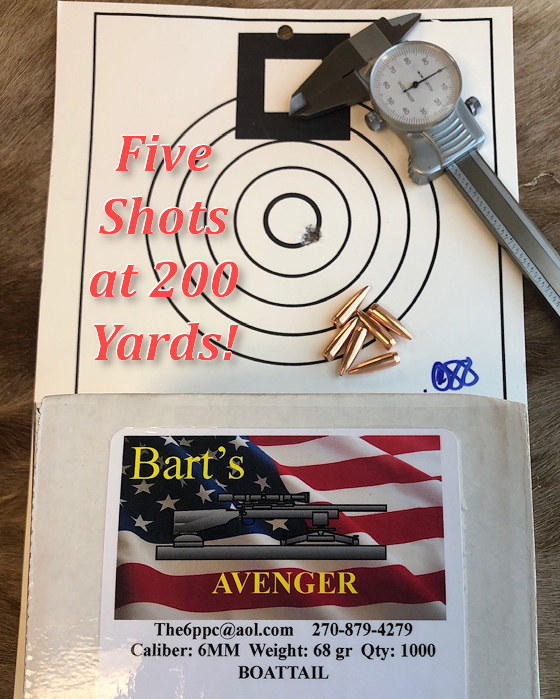
Be amazed. This five-shot group was shot at 200 yards in competition by bullet-maker Bart Sauter. Bart shot this astounding group with his 10.5-lb Light Varmint benchrest rifle at the recent East-West Match in St. Louis, Missouri. Had Bart been shooting an IBS match, this would have been a new IBS World Record, beating the .091″ by David Farrar in 2006. This .088″ group missed the NBRSA 200-yard 5-shot group record by a whisker — .013″ (thirteen thousandths). The listed NBRSA LV 200-yard Group record is 0.075″ shot by Johnnie Stewart a decade ago.
New record or not, this is one remarkably impressive group, shot by one very talented shooter and bullet-maker. Bart tells us he initially “held center” for the first three shots in the group. Then, watching his wind flags he noticed slight increase in the left-to-right condition, so he held 0.200″ to the left on shot 4 and it worked. Before shot 5, Bart detected another slight change, so he held 0.300″ left for the fifth and final shot. He explained: “If I had not held off for those last two shots, this group would have been about a flat four (0.400″).” Well done Bart!
“First three … bang bang bang … all went in one hole. Then I held left on shot 4 and it worked. On the last shot I held a little more, got lucky and it went in.” — Bart Sauter
In our Shooter’s Forum, Bart posted “This is my personal best-ever 5-shot group at 200 yards. I knew it was small, but was shocked to see it was a Zero! This will be a range record and record for the East/West match. Last group of the day! A nice way to end the match!”
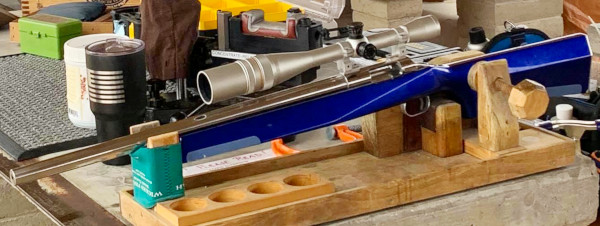
Here is the 6PPC LV rifle that shot the .088″ group. Yes that’s a concrete shooting bench inside a pretty nice cabin with hunting trophies on the walls. Bart explained: “We reload and shoot out of the Monkey Hut, especially during the winter. Most of the time we shoot outside at 100/200 from a a three-bench range.
Amazing Group Shot with Borrowed Krieger Barrel!
There’s a very interesting side-note to this story. You see Bart doesn’t even own the Krieger barrel that delivered this amazing .088″ 200-yard group. That’s right this superb barrel was a “loaner” — borrowed from Bart’s buddy Gary Sullivan. [Editor: Oh that we could all be so lucky with borrowed components.] With Sullivan’s blessing, Bart has since loaned the barrel yet again to ace Billy Stevens, who will be using it at the World Benchrest Championship in Canada, July 14-21, 2019.
This photo shots Bart on the right and his good friend Billy Stevens on the left. Bart notes: “Billy is a 2-time Super Shoot Winner and 3-time USA World Benchrest Team member!”
Bart Sauter’s LV 6PPC Rifle Specifications
Chambering/Caliber: 6PPC
Gunsmith: Stevens Accuracy
Action: BAT DS RBLP Right Eject
Trigger: Jewell
Stock: Scarborough Carbon Fiber over Wood Skeleton
Barrel: Krieger — and it was borrowed!
Tuner: Bukys TSI Tuner
Optic: 40x45mm IOR-Valdada 30mm tube
Rings: Benchsource Double Rings
Front Rest: Farley Joystick
Rear Bag: Edgewood Bunny Ear, very soft, gray leather — special order from Bruno’s.
Front Bag: Edgewood — same soft gray leather.
Here is Bart’s target with a bullet removed. Bart was shooting his own 6mm 68gr Avenger bullets, a double-radius ogive design. The Avengers were seated about .004″ away from the lands: “I tried going into the lands and that didn’t seem to work, then I backed it off four thousandths [from contact] and the rifle liked that.” Bart drove those 68gr Avengers with a stout load of Accurate LT30 powder running 3407 FPS.
Bart’s Comments on His Components and Accessories
OPTICS — Bart likes his new 40x45mm IOR-Valdada Benchrest Scope. He says that, so far, it has proved very reliable and holds zero exceptionally well. This new design features a worm drive side-focus, oversized ocular with true +/- diopter adjustment, long eye relief, and fast-focusing reticle. The 40X Valdada also boasts superb HD “double-compressed” Schott glass from Germany.
TUNER — Bart says the Bukys TSI Tuner definitely helps. He notes that once he finds the “sweet spot” for his barrel he can normally leave it alone: “With that type of tuner, I have to be in a very dire straight to move it. Normally I will set it for the lifetime of the barrel.”
REAR BAG — Bart’s rear bag is an unusual Edgewood with softer gray leather. He says this was a special order by Bruno Shooters Supply. Bart likes how the rear bag works with his carbon-stocked 10.5-lb rifle: “With PPCs we ‘ride on the ears’ — this older bag just seems to work really well for that style.”
SUPER FEET — Bart told us he uses Benchsource Super Feet for his front rest: “The bench tops at St Louis are very slick. Before I set up I’ll use a spray bottle with water and wet the bench where the Super feet and rear bag will go. This really helps to keep things from sliding around!”
Firing line at 2019 Super Shoot. Photo courtesy Armeria Regina.
What components do world-class, short-range group benchrest shooters use? BAT actions, Krieger barrels, and Bix’n Andy triggers (and Jewells) are the components of choice. And barrel tuners are now widely used by the top shooters. As for powder, Vitavuori N133 is still the choice of virtually all top competitors. And yes the 6PPC definitely rules the roost. Every Top 20 shooter at the 2019 Super Shoot shot a 6PPC. Every one. Read on to learn more about the Top 20 Equipment used at this year’s Super Shoot.
We recently reviewed the Top 20 Equipment List for the 2019 Super Shoot at the Kelbly’s Range in Ohio. This Top 20 List reveals the gear choices for the 13.5-lb Heavy Varmint Class and the 10.5-lb Light Varmint/Sporter Class (20 entries for each division). Here are notable gear choices for Top 20 Competitors (both divisions) at the 2019 Super Shoot:
Actions: 14 of 20 HV and 16 of 20 LV/SP shooters used BAT actions. So there were 75% BATs for both classes combined. Barrels: 10 of 13 listed HV barrels and 9 of 12 listed LV/SP barrels were Kriegers. Overall, of the barrels identified in the Top 20 Equipment lists, 76% were Krieger. That’s dominance! [Note: We have been informed that entries with no barrel-maker listed may have been Bartlein barrels.] Triggers: Notably 10 of 20 HV triggers were Bix’n Andy — 50%. For the other class, 7 of 19 listed triggers were Bix ‘N Andy. All others were Jewells. Tuners: In HV Class, 12 of 20 shooters used tuners, mostly Bukys. 11 of 20 LV/SP shooters had tuners. Overall that is 57.5% tuner usage for both classes combined.
Cartridge: For both classes, every single Top 20 competitor shot the 6PPC. ‘Nuf said. Powders: 19 of 20 HV Shooters used Vihtavuori N133. Likewise 19 of 20 LV/SP shooters used VV N133, with one not reporting. That is total dominance for N133.
Bullets: There was a wide selection of bullets used in both classes. Custom bullets by “boutique” bullet makers were certainly favored by Top 20 shooters. Sta Moy 65s were popular, as were Hottenstein 68s and Bart’s bullets among others.
One of our Forum members, Jason Peterson, pulled off a remarkable accomplishment at an NBRSA 600-yard match last fall. Last October, at the Rogue Valley SSA range in Oregon, Jason set no less than FOUR new NBSRA Score Records: Light Gun 6-Target Score (30 shots), Heavy Gun 6-Target Score (60 shots), Two-Gun 6-Target Score (45 shots), and Two-Gun 12-Target Score (90 shots).
Jason was shooting a 6 BRA (6mmBR Ackley) Light Gun with Borden BRM action, LBR stock, and 1:8″-twist Krieger barrel. Bedding was done by Alex Wheeler. Notably, Jason’s father chambered the Krieger barrel — Thanks Dad! The load consisted of 108gr Bergers pushed by Hodgdon H4895. Writing in the NBRSA Magazine, Bill Johnston observed: “If my memory serve me right, this is the first time in Long Range History that 4 records were set at one match by the same shooter.”
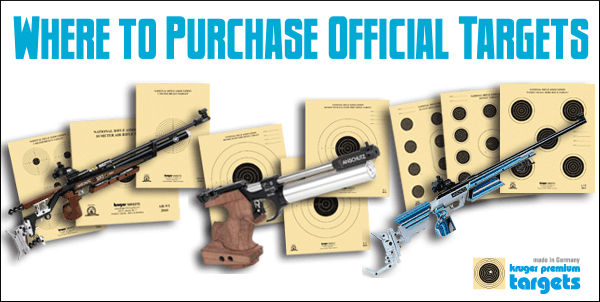
AccurateShooter.com offers dozens of FREE, printable targets for target practice, load development, and fun shooting. We also offer a few of the most popular NRA Bullseye targets. One or more of these printable targets should work for most training purposes. However, some readers have asked: “Where can we get the real targets… exactly like the ones used in NRA, IBS, and NBRSA shooting matches?”
All these vendors carry nearly all the NRA High Power and Smallbore targets, including the new, smaller F-Class targets. Germany’s Kruger Targets sells all the important NRA targets, and international (ISSF) air rifle and smallbore targets too.
Orrville Printing currently sells IBS targets for rimfire (50 yard) benchrest, short-range centerfire Benchrest (100, 200, 300 yards), Hunter BR Rifle (100, 200, 300 yards), plus the official 600-yard and 1000-yard IBS targets. National Target Company also has most of the IBS targets. NBRSA short-range, 600-yard, and 1000-yard benchrest targets are available directly from the NBRSA Business Office. Call (307) 655-7415 to order for the season.
At Western CMP Games, veteran rifle competitors Leon Rutherford, left, and Don Rutherford, demonstrate how to score targets at the GSM new shooter clinic. Note the use of a separate Target Center, which is available from many of the vendors listed above.
.009″ — The Record That Stood for 40 Years.
In 1973 Mac McMillan shot an amazing 100-yard, .009″ five-shot group in a benchrest match. The .009″ group was measured with a 60x microscope for verification. Mac McMillan shot the group using a handbuilt prototype McMillan rifle with an early McMillan stock.
Mac’s .009″ group was the “Holy Grail” of rifle accuracy. This .009″ record was considered by many to be unbreakable, a record that would “stand for all time”. Well, it took 40 years, but someone finally broke Mac’s record with an even smaller group. In 2013, Mike Stinnett shot a .0077″ five-shot group using a 30 Stewart, a .30 caliber wildcat based on the 6.5 Grendel. Stinnett’s .0077″ group now stands as the smallest 100-yard group ever shot in registered benchrest competition.* Read About .0077″ group HERE.
Stinnett’s success doesn’t diminish the significance of Mac McMillan’s .009″ group in the history of benchrest competition. For four decades Mac’s group stood as the ultimate standard of rifle accuracy*. For those of you who have never seen Mac McMillan’s .009″ group, here it is, along with the NBRSA World Record certificate. The target now hangs in the McMillan Family Museum.
*Somebody else might claim a smaller group, but unless moving backers or electronic targets were used, it cannot be verified. Moving target backers are used at registered benchrest matches to ensure that five (5) shots are actually fired in each group. That eliminates any doubt.
We first ran this story in 2014, when Angelina was just ten years old. A Forum member recently asked if she was still shooting benchrest, and we can say the answer is yes — under the guidance of her grandfather Lou Murdica. So we are repeating the story today, to inspire all the other granddads who might encourage a little lady to take up the sport…
You have to love this story, supplied by our friend Lou Murdica. It seems that a petite little 10-year-old school girl finished fourth in a 100-Yard Benchrest match in Phoenix, beating some of the best in the business, including many Benchrest Hall of Famers. That’s right, shooting a remarkable 0.1612 Aggregate, little Angelina G. put a whupping on some very big names in the Benchrest game, including Lou Murdica himself. Angelina finished just .008 behind Hall of Famer Gary Ocock, beating other Benchrest superstars such as Bob Brackney, Lester Bruno, and Tom Libby. Angelina also beat legendary bullet-maker Walt Berger, but we’ll cut Walt some slack. Now in his 80s, Walt deserves praise for doing so well at the opposite end of the age spectrum.
Congratulations to Angelina on some great shooting in the Unlimited Class. Her five groups measured: 0.186, 0.172, 0.173, 0.121, 0.155. That’s impressive consistency. You go girl!
Point to ponder: If Angelina was shooting a Rail Gun, her rifle probably weighed more than she did.
Check out the big names who finished behind little Angelina.






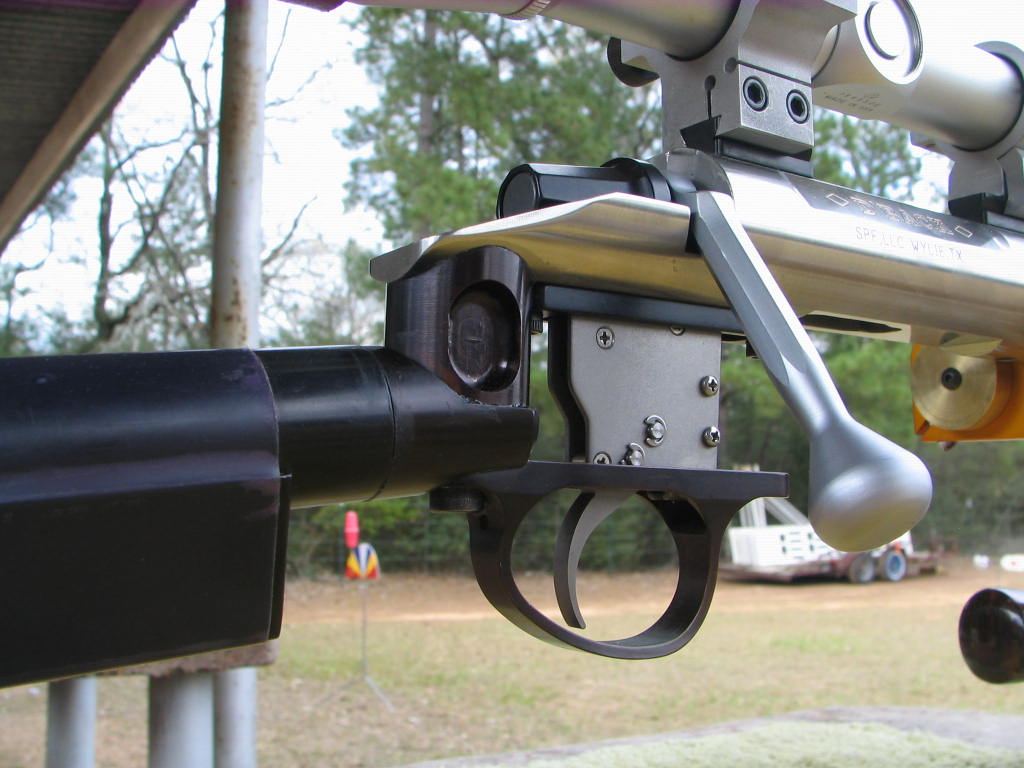


 The recoil lug-style stock mount is probably the only truly innovative thing I did other than the opposing-magnet tuner. Basically, the rear bracket is sandwiched between the receiver face and the barrel shoulder–positioned where a conventional recoil lug would go. I also added a brass ring (visible in photo) between the anodized bracket and the barrel. This was done to distribute loads over a wider surface area. (I was concerned that the bracket material was fairly soft and I didn’t want to crush it as I torqued the barrel in place.) After fitting the barrel and plates I glued the entire gun together using epoxy and various LocTite adhesives. The rest of the parts were assembled but I did not Loctite the scope bases since I thought I’d be disassembling the rifle for re-work after the first trials. That came back to bite me during later testing when the gun started shooting erratically and I went down a couple of blind alleys before finding the loose bases.

 Match One–Tinker Toy Wins Score with a 250 – 17X








 .009″ — The Record That Stood for 40 Years.

 You have to love this story, supplied by our friend Lou Murdica. It seems that a petite little 10-year-old school girl finished fourth in a 100-Yard Benchrest match in Phoenix, beating some of the best in the business, including many Benchrest Hall of Famers. That’s right, shooting a remarkable 0.1612 Aggregate, little Angelina G. put a whupping on some very big names in the Benchrest game, including Lou Murdica himself. Angelina finished just .008 behind Hall of Famer Gary Ocock, beating other Benchrest superstars such as Bob Brackney, Lester Bruno, and Tom Libby. Angelina also beat legendary bullet-maker Walt Berger, but we’ll cut Walt some slack. Now in his 80s, Walt deserves praise for doing so well at the opposite end of the age spectrum.


