Looking for an affordable PRS Factory Class rifle? Savage has released an updated version of its model 110 that may fit the bill. The new Savage 110 Tactical comes in Grey or Desert Tan in three popular chamberings: 6mm Creedmoor, 6.5 Creedmoor, and .308 Win. Street price is under $630.00. The 110 Tactical features a user-configurable stock with internal sub-chassis. It also features a suppressor-ready threaded barrel, a one-piece +20 MOA scope rail, and 10-round detachable box magazine. The Savage Accutrigger is adjustable.
Competitors will want to know about barrel configurations. All 110 Tacticals have medium-heavy contour barrels with threaded muzzles (and thread cap). 6.5mm Creedmoor versions sport a 24″ barrel. The 6mm Creedmoor version has a 26″ barrel, while the .308 Win is offered with either 20″ or 24″.
This video tests the 6.5 Creedmoor Model 110 Tactical with multiple ammo types:
Four types of factory ammo were tested in above video: Hornady American Whitetail 129gr, American Eagle 140gr, Hornady Match 140gr ELD, S&B Tactical 140gr FMJ. Three sets of handloads were also tested. These used 130gr Hornady ELD, 130gr Nosler RDF, and 122 Lehigh CC bullets in Hornady brass. All handloads used H4350 powder and Federal primers. Accuracy was not bad with handloads.
Savage AccuFit System for Comb and LOP Adjustments
The 110 Tactical’s AccuFit system lets you customize comb height and length-of-pull with different comb risers and stock spacers that install easily. The AccuStock sub-chassis secures the action three-dimensionally along its entire length. This aids accuracy and shot-to-shot consistency.
Key Features
• AccuFit system for comb height and length-of-pull
• Detachable 10-round Magpul AICS magazine
• Threaded heavy barrel with end cap
• 20 MOA EGW rail
• Gray or Desert Tan synthetic stock
• Tactical oversized bolt handle
Left-Hand Version in .308 Win Only
Savage will offer a left-hand .308 Win version of the 110 Tactical. Sorry southpaw 6mm and 6.5 Creedmoor shooters — for now, only right-hand options are offered for those chamberings.
Report by Craig Arnzen, Area419.com
It’s easy to think about shooting your first precision rifle match and worry about all of the gear and trinkets that you may need to make it through. In reality, the old rules apply — keep it simple.
We wanted to put together for you a no-nonsense list of the Top Five Gear Items you need for your first match. This list focuses on the “must-have” items you’ll need for PRS-Style competitions.
1. A Rifle (That is Reliable and Sub-MOA Accurate)
Your rifle is the most obvious piece of kit, but we can give you a little more information. Most of the guys you’ll find out there are shooting 6.5 Creedmoor. Yeah, there are guys using .308 Wins and 6mm Dashers, but the 6.5 Creedmoor makes up more than half of the rounds shot in PRS competition, when looking at both national and club matches. Your comp rig needs to be mag-fed and shoot better than 1 MOA. It DOESN’T need to be better than 0.5 MOA (half-MOA). With most targets being 2-3 MOA in size, a half-MOA gun will do just fine. More accuracy is better of course, but you don’t need an exotic quarter-MOA rig to win.
[Editor’s NOTE: PRS does offer a Gas Gun division, but most guys start out with a bolt-action rifle, which will be less maintenance-intensive than an AR-platform rig.]
Muzzle brakes, like our Area 419 Hellfire, are also very popular as much of the PRS game is recoil management. If you can’t see your misses, you’re sure to have more of them.
The rifle also needs an optic with repeatable clicks and a reticle with Mil- or MOA-based hashmarks. The clicks can be either Mil system or MOA system (Mil is more common), so long as the click values match the reticle (i.e. you don’t want 1/4-moa clicks with a Mil-marked reticle). How much power do you need? Anything that zooms in the mid-teens will suffice. I could shoot a match with a fixed 12X scope and not feel disadvantaged. We love the Kahles K624i, if you’re looking for a suggestion.
Oh, and you’ll want a bipod — but the choice in bipod deserves a whole separate article by itself. Nothing wrong with starting out with a Harris swivel. Then you might look at different bipods on other competitors’ rifles for comparison.
2. Ammunition — Factory Ammo and Hand-loads
Good ammo is important, but as we discuss above, 0.5 MOA is good enough. Also, speed is great but it matters FAR less than you’d think. Drop can be calculated with precision, and distances are normally known, so a slightly flatter trajectory doesn’t really matter. Wind matters, but the difference you’ll find when eeking out that last 50 fps is very, very small.
Federal, Hornady, and Prime all make quality ammo that is widely used by shooters from local to national matches. Facebook photo by CReece.
Precision Handloads
If you want to run down the rabbit hole of finding that perfect ammo that shoots in the “twos” (0.2 MOA), get yourself an AutoTrickler and some of our billet aluminum accessories — you’ll love the setup.
3. A Versatile Support Bag
There are countless bag options. But there is ONE bag you’ll see everywhere, and for good reason. The Game-Changer from Armageddon Gear is aptly named. Many shooters use it as a barricade bag as well as a rear bag, meaning a guy could get away with using only this bag for an entire match. If you need another bag when you get there, ask someone in your squad, they’ll share. I promise.
4. DOPE (Reliable Ballistics Info)
We’re not talking the kind of Dope you may find in a match outside Denver — we are talking about the kind that feeds you ballistic solutions. The software-enabled Kestrel is a very common item on the range, but you’ll also see lots of guys using mobile Apps such as Shooter or Applied Ballistics Mobile, and they have great results.
It’s also handy to have an armband or an item like the Hawk Hill data card holder for stages with various targets at differing ranges. Once the RO says “engage” and your mind stops working, you’ll appreciate having it written down.
5. Hearing Protection
PRS Competitors shoot with brakes and sometimes in enclosed spaces. That’s why you need serious hearing protection. We recommend NRR 33 earplugs, doubled up with Electronic Muffs to hear range commands. I have used the 33 dB NRR Mack’s foamies at matches for most of the last year, and the Howard Leight NRR 33 Max-1s are also very effective. The budget-priced (under $50) Howard Leight Impact Sport Electronic muffs work well, but premium electronic muffs may be more comfortable.
Growing in popularity are high-tech, in-ear digital units like the ESP Stealth. I have a set of linked ESP Steaths on the way and hope to evaluate them soon. These are supposed to be very good, but the ESP Stealths cost $2100.00 per pair!
Think we missed something? Have more questions? Let us know.
The Colt Kit does NOT include barrel, bolt carrier group, charging handle, or magazine.
Thinking of building an AR-platform rifle for varmint hunts or PRS Gas Gun Matches? Here is an interesting option from Colt — a value-priced kit with upper, complete lower, handguard, and Magpul stock. To this, add your choice of barrel and optic. We like this option because the barrel is so important to accuracy and overall performance. This Colt package costs $599.99. Add a match-grade, finish-chambered barrel from Criterion or Krieger, plus bolt carrier group, and you’re in business.
There are some very nice features on this Colt Comp Kit. The Magpul PRS stock features a quick-adjustable cheek-piece and butt-plate — allowing you to easily adapt head position and LOP for your discipline of the day. (You may want a different LOP for prone shooting vs. bench shooting). The Magpul stock works well in a rear bag. In addition the handguard comes complete with Picatinny rails on top and on both sides, affording lots of options. We might move one of the rails to the bottom, however, so it could be used for a bipod mount. The upper receiver has an integral Picatinny rail for optics.
We like the Blackhawk grip which is more comfortable than the typical grips supplied by most black rifle makers. The lower includes a trigger group, but you can later upgrade to a Timney, Geissele, or other aftermarket trigger system.
Add Your Favorite Premium Barrel:
NOTE: This Colt Kit features a Sadlak Low Profile .750 Gas Block and carbine-length gas tube. With longer barrels you may need to adapt a longer tube, but that is an easy change.
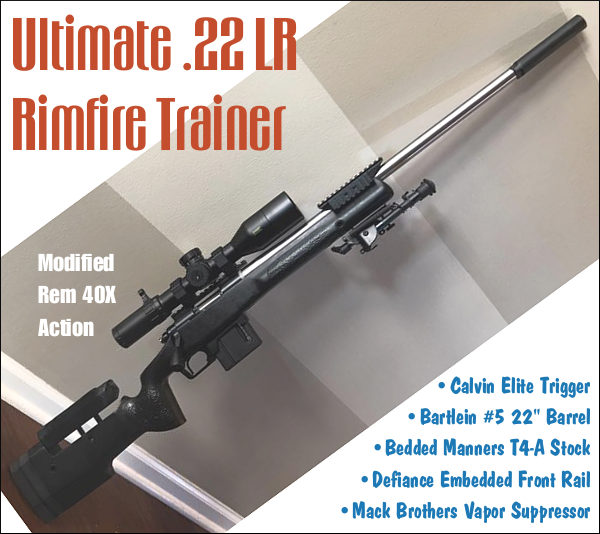
Brian, a gunsmith at GA Precision, built this rimfire rig with GAP colleague Anthony Soukup.
We’re seeing great interest in .22 LR rimfire tactical cross-training. With a rimfire rig, you can practice regularly for a fraction of the cost of centerfire training. That way you can build your skill set without breaking the bank. Decent rimfire ammo can be had for five cents a round. Compare that to fifty cents (or more) for handloads and maybe $1.00 per round for factory ammo.
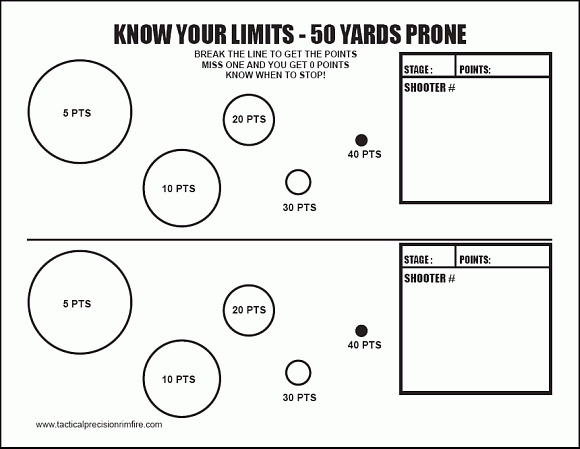
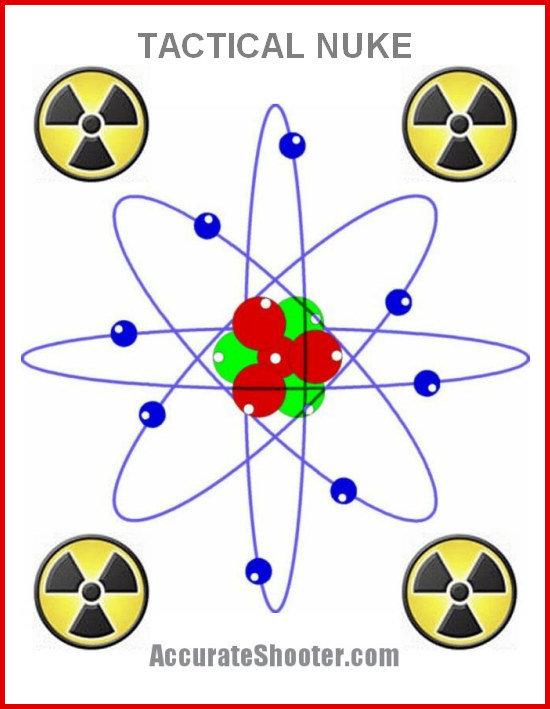
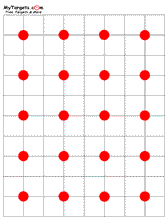
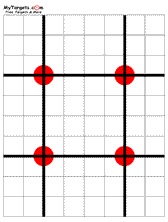
To help with rimfire cross-training, here are some of our favorite rimfire tactical targets, all in easy-to-print PDF format. Click each target image to download the FREE target. You’ll find more free targets for load development, precision practice, and fun shooting on our AccurateShooter FREE Targets Page
Aim Small, Miss Small
At 25 yards, this is a fun rimfire plinking target. At longer distances it can actually be a great training target for precision centerfire shooters.
Targets for Rimfire Training and Fun Matches
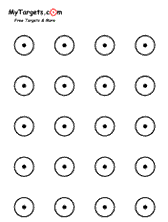
Here’s a rimfire training target with “big to small” target circles. Start with the largest circles, then move to the smaller ones in sequence. This systematic drill provides increasing challenge shot-by-shot. Novices often are quite surprised to see their accuracy improve as they move from bigger to smaller aiming points. That provides positive feedback — always a good thing.
Right Click and “Save as” to download printable PDF versions of target.
Rimfire Practice Targets
SPECIAL BONUS–Rimfire Tactical Precision Targets
These FREE targets by DesertFrog are offered in Adobe Acrobat format for easy printing. CLICK HERE to download all six targets as a .ZIP archive.
Vudoo V-22 State-of-the-Art Tactical Trainer
Some of the most talked-about .22 LR tactical trainers are being produced by Vudoo Gun Works. These rimfire rigs offer the size, weight and feel of real PRS rifles, though they shoot affordable .22 LR ammo. The 40X-style Vudoo V-22 action also feels and operates more like a full-size centerfire action than a typical skinny, rimfire receiver. This helps competitors translate rimfire practice to centerfire success.
The Vudoo Gun Works V-22 rimfire repeater action, arguably one of the best tactical rimfire actions available, owes its lineage to the respected Remington 40X action. Many rimfire matches have been won with 40X actions, so we understand why Vudoo chose that design for a starting point. Vudoo then added some important enhancements.
More Free Targets…
These and many other free targets are available at MyTargets.com.
The new Grayboe Ridgeback stock is made from a proprietary fiberglass/epoxy compound. MSRP is $599.00 with options for Rem 700/Rem Clone Short Action or Rem 700 Long Action.
Grayboe now offers the Ridgeback stock with both DBM (Detachable Box Magazine) or BDL inlet options. We like the design of this stock. In the rear is a nice adjustable cheekpiece and the toe (underside) has a long straight run which works well in the bags. Length of Pull is adjustable with spacers. The stock is offered for both long and short Rem 700/Rem clone actions, and the DBM version fits AICS magazines. The new Ridgeback Stock is available through the Grayboe network of dealers or direct from the Grayboe website.
The Grayboe Ridgeback blends qualities of traditional fiberglass stocks with modern features pioneered in chassis systems. The Ridgeback is constructed of proprietary Fiberglass / Epoxy compound formed under high pressure and heat. This creates a precise, low void, homogeneous stock that maintains dimensional stability and strength in all weather and shooting conditions. The Ridgeback features a vertical pistol grip, adjustable cheek piece, and handy M-LOK built into the fore-end. This allows easy customized placement of accessories. Finally the Ridgeback even includes a built-in bubble level — that’s clever and handy.
Grayboe Ridgeback Stock Features:
– Adjustable Cheek-piece
– Adjustable Length of Pull
– Fore-End includes built-in M-LOK
The GAP Grind is one of the most popular tactical matches on the planet. So popular, in fact, that this 3-day Pro-Am event will likely “sell out” this year — with more interested shooters than available slots. To ensure you get a spot at the 2018 GAP Grind, which runs October 5-7, 2018, register early. GAP Grind Registration opens June 1st, 2018 at 9:00 am CST. The 2018 Grind will take place at the K&M Precision Rifle Training Shooting Complex in Finger, Tennessee.
If you haven’t experienced major PRS Pro-Am event like the Grind, with hundreds of talented shooters, check out this video from ShootingUSA. Show host John Scoutten provides a competitor’s perspective.
Lots of Action, with 20+ Stages
The GAP Grind is a notoriously challenging, “high tempo” match with minimal down-time between stages. Over the course of 20+ stages, competitors will fire 200+ shots at a variety of steel, paper, moving, and reactive targets out to 1,200 yards. Targets vary in size/difficulty based on the shooter’s position, distance, and time allotted. Most stages include “stressors” — i.e. time limits or required movement(s).
Josh Temnnen Facebook photo
The GAP Grind is held at the impressive K&M Shooting Complex in Tennessee:
GAP Grind Hardware Shelley Giddings, a skilled shooter of both firearms and cameras, snapped these images of state-of-the-art tactical rifles at the 2014 GAP Grind. See more firearms images on Shelley’s Facebook Page.
Nosler’s line of RDF™ (Reduced Drag Factor) bullets feature very high Ballistic Coefficients, hybrid-type ogives, and tight, factory-closed meplats. Nosler’s RDF bullets were designed to be very competitive match projectiles for their respective bullet weights. Now offered in four calibers, Nosler RDF bullets genuinely deliver excellent performance for the price. Shooters, particular PRS competitors, have found the RDFs deliver the flat trajectory and high BC necessary to reach the podium.
Nosler is proud of its RDF bullets, which feature tight, uniform meplats: “Nosler knows what gives competitive shooters an edge, isn’t an edge at all. It’s a point. With the highest in-class Ballistic Coefficient and smallest, most consistent meplat, RDF is the flattest-shooting match bullet in its class. Now available in more calibers and weights, the RDF’s meticulously-optimized compound ogive and long, drag-reducing boat-tail make achieving peak accuracy a snap”.
Experience RDF, the Flattest-Shooting Match Bullet:
RDF bullets are also available in Nosler factory ammunition in a variety of popular cartridge types. Nosler factory ammo lets you spend more time at the range and less at your reloading bench. Look for RDF bullets loaded in Nosler’s “Match Grade” Ammunition. Below is the .264-caliber, 140 grain RDF loaded in 6.5 Creedmoor, a popular chambering for PRS and tactical shooters.
Did you know you can damage your hearing even if you are wearing the best hearing protection available? Well, have you ever heard of concussion (or concussive) hearing loss? There is no amount of anything you can put in or over your ears to protect you from concussion loss. My audiologist explained to me the concussion comes through the facial bone structure and damages the ear’s tiny bones.
Editor’s NOTE: This may be the most important tech article we’ve run all year. It explains how you can suffer inner ear damage and hearing loss even if you use earplugs or muffs. Read that again — hearing loss even with typical hearing protection. This kind of concussive hearing loss can result from shooting with muzzle brakes in confined spaces. Using a suppressor (aka sound moderator) can reduce the risk of concussive hearing loss. You may not have the ability to use a suppressor, but this article explains how you should be more mindful of your hearing.
Why I Use a Suppressor (Preventing Concussive Hearing Loss)
It must have been the road noise. I thought I was having a hard time hearing my five year old daughter speaking to me on my cell phone because of the road noise. That old SUV was kind of loud inside. Until I switched the phone to my left ear and suddenly I could hear her just fine. Wait, what just happened? I moved the phone back to the right ear and there was that muffled voice again. That’s when I knew I had a problem.
“What?” Lots of us in the shooting community have lost some hearing along the way due to our time on the range or in the field. Those of us who hunt have certainly discharged a firearm or three without ear protection and without concern for our hearing. After all, it’s just one shot, right? How much can it hurt?
Actually, that one shot DOES hurt your hearing. Any sound over 140 dB is immediate hearing loss. It just happens to be killing a small amount of our hearing so most of us continued the practice without a care. Living with hearing loss now makes me wish I could go back 20 years and better protect my hearing. I can’t change what I did in the past, but going forward I can certainly do the most to protect the hearing I still have.
I decided to shoot about a year’s worth of matches with just braked rifles. That year is when I lost significant hearing in my right ear and some in the left. I’ve gone back to shooting only suppressed rifles whenever possible.
I shot my first suppressed firearm, a .22 LR pistol, in 2003. After a few rounds I wondered why everyone (who can do so legally) didn’t shoot suppressed? No one drives without a muffler. Why would you? Point is I immediately appreciated the hearing protection benefits of suppressors. That passion got me into the business of selling suppressors and it wasn’t long before I was one of the biggest retailers for companies like AAC, SWR, SilencerCo, Ops Inc. and others. [Editor: The author’s business, Accurate Ordnance, no longer sells suppressors. So this article is NOT a sales pitch. Mark just wanted to share his experience so others might protect their hearing.]
Did you know you can damage your hearing even if you are wearing the best hearing protection available? You’ve heard guys say, “I’ll wear plugs and muffs, so I’ll be just fine shooting that .50 BMG!” Well, ever heard of concussion (or concussive) hearing loss? Yeah, I hadn’t either. I’ll sum it up the way the last audiologist I spoke with about my hearing loss did – there is no amount of anything you can put in or over your ears to protect you from concussion loss.
A hand grenade went off right next to a buddy of mine. He lost some hearing as a result of the blast. No one is really surprised by that. I mean it is an EXPLOSION. It’s loud. Duh. But I had no idea the blast from a muzzle brake could basically hurt my hearing the same way. The doctor explained to me the concussion comes through the facial bone structure and damages the ear’s tiny bones. Same thing as what can happen through any TBI (traumatic brain injury).
I’ve owned quite a few different suppressors over the years and have shot just about everything out there. I’m still as big a fan as ever. However, I wanted to see if using a suppressor in PRS (Precision Rifle Series) and similar matches was actually a hindrance. Some people feel the added length and weight of a suppressor can make getting into some shooting positions slower or problematic. So I decided to shoot about a year with a muzzle brake instead of a suppressor. I sure regret that decision…
Getting Headaches at PRS Matches Was Warning Sign
It is fairly common in PRS matches to shoot through pipes, vehicles, inside “shoot houses” and around other obstacles that echo a rifle’s blast. I noticed I was starting to get headaches about halfway through a day of PRS match shooting. I knew the issue wasn’t hydration. I mean look, if you are peeing every other stage down at the amazing CORE range facility in mid-summer you are NOT dehydrated. So, what was causing the headaches? It wasn’t until I went back to shooting suppressed in those same environments that it became clear the little mini concussions from that muzzle brake was causing my headaches. And of course the doctors confirmed that.
Let me stop here and say I am NOT anti-brake. Muzzle brakes are useful tools and for some situations are the best tools. An aggressive brake can be more effective at reducing recoil than a good suppressor. A suppressor does add some recoil reduction, just not as much as most quality brakes. Don’t forget to factor other variables, such as caliber and rifle weight, into the equation though. For example, a 15-lb 6mm Creedmoor rifle doesn’t need much recoil reduction in the first place.
So, I started shooting matches long before the PRS even existed and always shot suppressed in those days. The suppressors made communication with a partner or RO easier and it was just a more pleasant shooting experience. On the recommendations of a few people I decided to shoot about a year’s worth of matches with just braked rifles. That year is when I lost significant hearing in my right ear and some in the left. I’ve gone back to shooting only suppressed rifles whenever possible and especially at matches. I’ve only once or twice found the extra length of the suppressor made it a little more inconvenient to run a stage, but not by much. Trust me, the points I missed were not because I took two extra seconds getting the muzzle in a port or window.
My hearing is something I value and will do everything to protect from this point forward. You’ll never again see me on a match field with an un-suppressed rifle. To me the minimal gains of running a braked rifle aren’t worth losing more hearing.
Choosing a Suppressor — What to Consider
Okay, so I have hearing loss that I can’t get back and realize I need to go back to shooting matches with a suppressor. But which one? I’ll still be shooting matches with custom fit plugs so I just need something to add a little recoil reduction and kill that concussion.
At our shop, Accurate Ordnance, we generally recommend direct-thread suppressor solutions to our customers. The main reason for that is all the problems we’ve seen with other fast-attach muzzle devices. It doesn’t take much tolerance stacking to result in accuracy issues. There are a few exceptions for us and the Rugged Suppressors products top the list. Since the Razor 762 uses a muzzle brake adapter on the rifle to attach the suppressor, I can use the same suppressor on my .223 Rem training rifle. My primary match rifles are chambered in 6mm Creedmoor and 6.5 Creedmoor and the muzzle threads on those is a standard 5/8×24. My .223 Rem training rifle has .5×28 threads on the muzzle, which is standard for that caliber. Thus, the muzzle adapter interface lets me share the suppressors between all the rifles. And on that .223 Rem training rifle I have the option of switching the end cap on any of the Rugged products to a .223 aperture size, which makes the suppressors slightly more sound efficient (meaning quieter).
So many options… How do you select the shooting discipline that’s best for you? Of course, “Fun is number one”. But you also need to consider cost — the “bang for the buck”. Or in more scientific parlance, the “Fun to Cost Ratio”. Yes, shooting a .50 BMG is fun, but you could be spending as much as $5.00 per round for factory loads! By contrast, your cost per shot in a rimfire fun match might be well under ten cents, as decent ammo can be easily found for under $5.00 per 50-count box. Five bucks per box (of fifty) sure beats five bucks per round!
We believe in the benefits of rimfire cross-training. With a rimfire rifle that has the same ergonomics and “feel” as your centerfire rig, you can practice more often and more affordably. You can get decent rimfire ammo now for as little as seven cents per round*. Compare that to centerfire factory ammo at $1.40/round or handloads for about $0.70 (bullet, primer, powder, and brass depreciation). So even your handloads could cost TEN times as much as pretty good rimfire ammo. That’s an order of magnitude boys and girls.
For a tactical cross-trainer, you want a rimfire rig that feels like your centerfire rifle. McMillan now offers a stock that fits the bill. McMillan’s new A5-22 stock shares the same look and feel as McMillan’s popular A5 centerfire stock. The A5-22 is able to accommodate 10/22 type actions including KIDD 10-22 models with rear tang attachments. McMillan says: “The A5-22 is dimensionally the same as our standard A5 with some minor changes in the tang and floor plate areas. It is available in a fixed comb configuration or with an adjustable saddle-type cheek piece.”
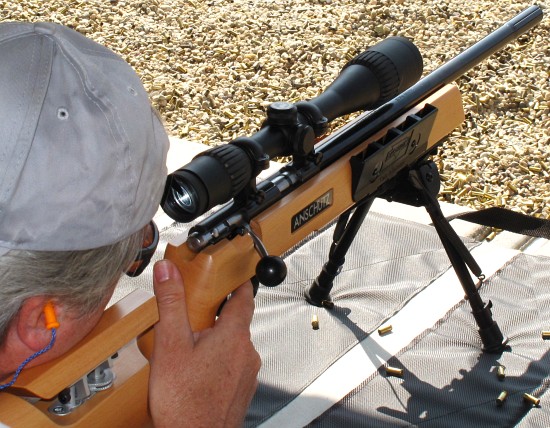
A used Biathlon trainer works great for rimfire practical matches. This is the Anschutz Model 64-R. Note magazine caddy on forearm. This rifle was a dream to shoot.
Targets for Rimfire Training and Fun Matches
Here’s a rimfire training target with “big to small” target circles. Start with the largest circles, then move to the smaller ones in sequence. This systematic drill provides increasing challenge shot-by-shot. Novices often are quite surprised to see their accuracy improve as they move from bigger to smaller aiming points. That provides positive feedback — always a good thing.
Right Click and “Save as” to download printable PDF versions of target.
Rimfire Practice Targets
SPECIAL BONUS–Rimfire Tactical Precision Targets
These FREE targets by DesertFrog are offered in Adobe Acrobat format for easy printing. CLICK HERE to download all six targets as a .ZIP archive.
Game Theme Commercial Targets — Fun and Colorful
Here are some colorful commercial fun targets, well-suited for rimfire practice. These game-theme targets from Champion should be very popular with kids. You can blast aerial drones, hunt dinosaurs, play a game of “H-O-R-S-E”, or shoot ducks in a Carnival Shooting Gallery. These targets, which cost $5.45-$5.95 per 12-pack, are ideal for younger shooters in your family (and fun for grown-ups too).
* We recently scored 1500 rounds of Norma Match-22 ammo for $99.99 from MidwayUSA. That’s 6.6 cents per round! That deal is gone, but there are other bargains to be found. Use WikiArms.com to find .22LR rimfire ammo bargains.
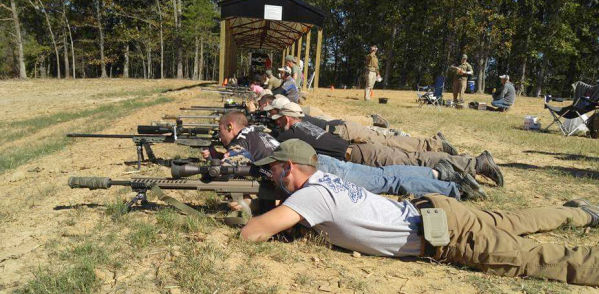
Practical/Tactical shooting disciplines such as the Precision Rifle Series are today’s fastest-growing forms of rifle shooting competition. More and more shooters are enjoying the fun of tactical-style matches shot “on the clock” from a host of challenging positions. PRS competitors must rapidly engage a number of reactive and steel targets, while shooting offhand, prone, behind barricades, off tripods, and from a wide range of other positions.
The popularity of the original centerfire PRS format, which now draws hundreds of competitors at major matches, spawned a PRS spin-off for rimfire shooters. A year ago, the Precision Rimfire Challenge (PRC) was launched. Modeled on centerfire PRS competition, the PRC is a new .22 LR rimfire shooting game. Call it “PRS Lite” — a practical-style, multi-stage match shot with .22 LR bolt-action and self-loading rimfire rifles.
With the success of rimfire tac comps, the PRS has decided it’s time for air-gunners to join the fun. Starting in May 2018, the PRS will offer airgun side-matches at the most popular PRS events, including the High Mountain Shootout (June), Heatstroke Open (July), and GAP Grind (October). Sponsored by AirGun WareHouse, the new PRS airgun side-matches will be run as a new, season-long Precision Rifle AirSoft Series (PRASS). Competitors can use a variety of pneumatic airguns from makers such as Beretta, Crosman, FN Airsoft, and KWA Airsoft.
“The Precision Rifle AirSoft Series (PRASS) is perfect for newcomers to the tactical game who want to start with a low-cost, ultra-safe competitive experience that still offers the look and feel of the PRS tactical lifestyle. It’s great for young people as well as individuals who may be wary of real firearms. This may prove ideal for Millenials.” — PRS Competition Committee
If PRS (PR-“Es”) costs too much, try PRASS (PR-“Ass”), the AirSoft version. With AirSoft rifles costing less than $150.00, PRASS is way more affordable!
PRS Marketing VP Jeff Wilson expects the AirSoft Series to be a huge success: “We know that most purchasers of tactical-style rifles rarely, if ever, actually shoot their guns because it takes too much time to train, and the cost of ammo is prohibitive. In addition, many new shooters are sensitive to the noise and recoil of actual firearms. And, let’s face it, some guys want to look tough, but they’re really just weenies. Our AirSoft Series addresses all those concerns. The guns are inexpensive, the ‘ammo’ costs pennies, and the air is always free!” Wilson also noted that airguns provide an ideal introduction to the shooting sports for newcomers: “Airguns are easy to shoot, and they can be purchased without background checks or waiting periods. They are great starter tools for new shooters. You can experience our full PRS tactical lifestyle at a fraction of the price. While these days PRS is just too costly for many, PRASS will be affordable for all!”
The AGM MK96 AirSoft Rifle looks just like the real thing. Yet it costs just $131.95 with optic. That’s less than 5% of what a good centerfire PRS rig would cost! CLICK HERE to order — No FFL Required!
The Precision Rifle AirSoft Series (PRASS) Offers Low-Cost Tactical Fun: