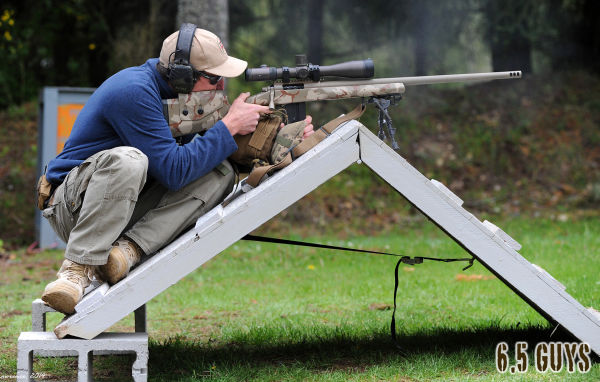
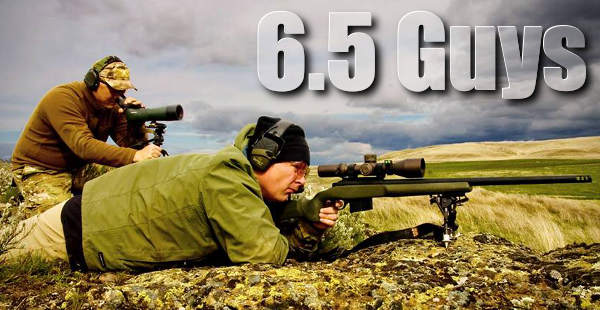
Gearlocker.nz, a New Zealand outdoor sports website, recently interviewed our friends Ed and Steve, aka the “6.5 Guys”. In this Gearlocker Video Interview, Ed and Steve cover many topics including Precision Rifle Series matches, gear selection, and effective hand-loading techniques. Kerry, the creator of Gearlocker.nz, writes: “The 6.5 Guys are Steve and Ed, two guys who decided to start documenting their progress in long-range practical precision shooting. They have built a dedicated following on YouTube and Facebook. Consistently putting out high-quality content [covering] their equipment choices and use, the 6.5 Guys have created a fantastic resource for anyone involved in shooting.”
Click image below to watch 6.5 Guys interview on Gearlocker.nz:
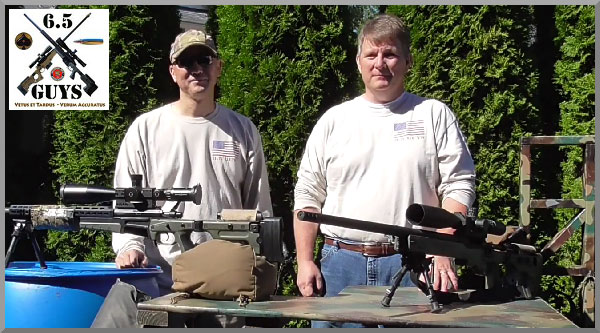
Who are the 6.5 Guys? They are Steve (left) and Ed (right), a pair of avid shooters based in the Pacific Northwest. They have released dozens of helpful videos on the 6.5 Guys YouTube Channel.
You can check out the 6.5 Guys’ website at www.65Guys.com. Below is a sample from one of the 6.5 Guys’ best articles — Five Tips on getting started in practical/tactical matches.
We often meet people who are new to long range precision shooting, and want to improve their knowledge and skill level. However, they aren’t sure if they are ready to sign up to compete in a match. They often ask, “What knowledge or skills [and gear] are necessary to compete in a match?”
TIP ONE: Make Plans and Commit to Go
First you need to start by finding a match to attend. We recommend starting with any match that may be within a reasonable driving distance. This may likely be a local “club” match, many of which are held on a regular basis. Once you decide on the match you want to attend, do your homework. This means finding out if you need to pre-register or pre-pay the match fee. Commit to going by registering for the match and putting it on your schedule.
The Ruger Precision Rifle (RPR) has been a big hit. Since its introduction in 2015, this modular rifle has become the top-selling, tactical-style bolt gun in the USA. And now RPR owners have a new trigger option for their rifles. Timney Triggers has just released an affordable drop-in, two-stage RPR trigger. We expect many RPR owners will choose to upgrade their rifles with this new trigger, priced at $219.95 MSRP for either curved or straight trigger shoe. The trigger comes pre-set with a 1.5-lb total pull with one pound in the second stage. Timney is now taking orders for the RPR trigger via TimneyTriggers.com.
These triggers are crafted with advanced production methods. For example, the sear is wire EDM-cut and then Teflon-nickel coated.
Here is Timney’s Product Description for the New RPR Trigger:
The new Timney RPR trigger is a self-contained, 100% drop-in trigger ready to install in your Ruger Precision Rifle for an exceptionally smooth, crisp, two-stage trigger pull. No gunsmithing, fitting, or adjusting required.
The pull weight is factory-calibrated for a half-pound first stage and a one-pound second stage. The first stage is user-adjustable from 1/2 pound to one pound and the second stage is user-adjustable from 1/2 pound to two pounds. The trigger is offered in straight and curved trigger shoe models.
The trigger housing is constructed of military-grade, 6061 T6 alloy that is CNC-machined using state-of-the-art robotics and is anodized for superior durability. The trigger is also CNC-machined, heat-treated and coated. The sear is wire EDM cut, heat-treated to 58-60 Rockwell and Teflon-nickel coated for lubricity and dependable, long-lasting service life.
Timney RPR Trigger Review on Shwat.com
The folks at the Shwat.com blog got their hands on an early-model Timney RPR trigger. In a detailed review, Shwat.com’s testers showed how to install and adjust the new trigger, and then put it through its paces. Timney’s new RPR trigger earned high praise: “The Ruger Precsion Rifle … factory trigger is excellent and well-suited to most uses. But if you are accustomed to the feel of a more traditional trigger, this Timney is your ticket. Excellent, reliable, consistent and repeatable — it has the same precision feel and operation you expect from Timney. Installation is simple and easy with no special tools needed.”
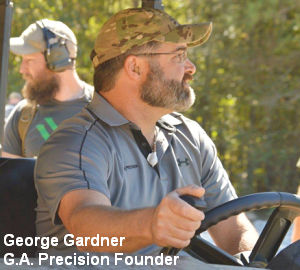
The 2016 GAP Grind, the biggest Precision Rifle Series event in history, was a huge success. Pro Class winner Jim See reports: “What a weekend! The GAP Grind was one of the best-run matches I have ever shot. George Gardner, Shannon Kay, and some of the best ROs in the sport ran 236 shooters [firing 200+ rounds of ammo each] in about 18 hours over two days. Bushnell Sports Optics and G.A. Precision were the title sponsors. Thank you for your efforts to host matches like the Pro-AM. Congrats to Nick Steder and Matthew Saban for the win on the Team portion of the event. I competed against many friends at this match, some shined and some struggled. All of them are top notch. Thanks guys for the help and support through-out the year.”
Ramia Whitecotton Facebook photo.
Jim See reports: “Day 2 had every shooter on his own point scoring, with the Amateurs getting coaching from their PRO — that’s such a great match format for learning. My Surgeon Rifle in 6.5×47 Lapua ran flawlessly with my Gen 2 Vortex Razor allowing Berger Bullets to find their mark. My new friend Clifton Reasor brought some of the new Game Changer bags to the match and I snagged one Saturday night. Great product and aptly named — this thing has earned a permanent place in my pack.”
Josh Temnnen Facebook photo
Charles R. added: “Shannon Kay & George Gardner did an outstanding job running the largest PRS match in history. The ROs and support staff were exceptional. So much greatness in this match…”
One stage required the use of “human support” by one’s team-mate. Here Shooting USA’s John Scoutten provides a strong shoulder for a female competitor. Ramia Whitecotton Facebook photo.
LITTLE GIRLS GRIND TOO
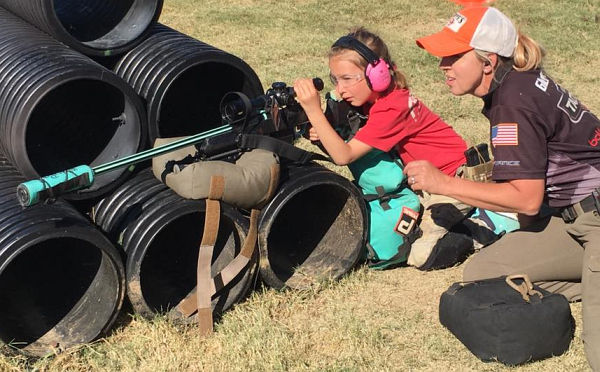
There were some very young and very talented junior lady competitors at this year’s GAP Grind. These school-girls had fun and showed the big boys a thing or two.
George Gardner says this little lady (above) can shoot: “300-yard positional mover, 9 years old, 4 hits! This is what it’s all about people — GAP Grind Pro-Am!”
Mike R. says: “I couldn’t be more proud of my daughter (above) shooting the GAP Grind. She had a great time and did pretty well for her first huge match flying solo. The good news is she really likes shooting, the bad news is she really likes shooting! I’m looking forward to taking her to many more matches. Thanks Shannon Kay and George Gardner for letting her shoot the Grind. Thanks Alison T. for being her partner. She had a blast!” (photo by Mike R.)
2016 GAP GRIND Gallery
Enjoy the images from the 2016 GAP Grind. Photos, unless otherwise indicated, come from Ramia Whitecotton’s GAP GRIND 2016 photo album.
Here’s a “Dawn Patrol” shot from Bryan Sikes. He mastered this stage: “6:00 am cold bore…..nailed it!”
The Pipeline Stage was claustrophobic…
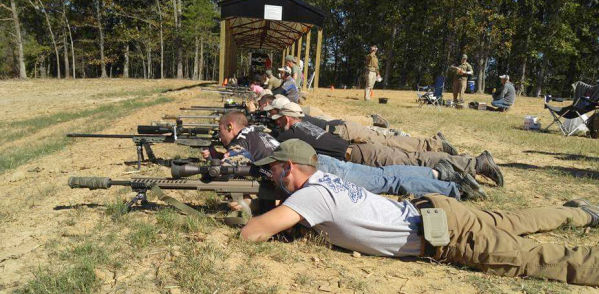
With 236 competitors, the firing lines at the 2016 GAP Grind were full.
The shooting platform offered a double-decker challenge…
Editor’s Comment: It’s great to see such a well-attended and well-run event. Many participants reported that this was probably the “best GAP Grind ever”. That said, we notice from the photos that many competitors did not use eye protection. For myriad reasons that should be obvious, we strongly encourage all competitive shooters, no matter what their discipline, to use quality eye protection whenever shooting firearms.
Bryan Litz, 2016 F-TR National Mid-Range Champion, tried his hand at a new discipline recently — tactical shooting. Bryan competed in the Guardian Match, a PRS-type competition hosted by the Marksmanship Training Center in Lake City, Michigan. Though the course of fire was new to Bryan, he did very well indeed, finishing second overall in his first-ever Tactical Match.
Bryan said PRS-type tactical shooting is “totally different” than F-TR competition: “I think the biggest difference (from F-TR) are the time constraints. The time pressure’s totally different. We had just 25 seconds to do one short-range stage, and other stages are 90 seconds, 120 seconds….”
Bryan added: “You’ve got to know your dope for the first shot — no sighters. F-TR is more deliberate, precision-based. This [tactical game] is about accuracy to be sure, but there’s even athleticism — if you’re not flexible, you’re just straight up not going to be able to aim at some of these targets.”
Bryan, who first achieved great success in sling-shooting disciplines, said that tactical matches, with their multiple “on the clock” stages, offer new challenges: “This was a way different experience than I’m used to, mostly due to time pressure and awkward shooting positions. But I enjoyed the problem- solving element. Fellow shooters were very helpful and generous with advice.” Posting on Facebook, former USAMU coach Emil Praslick offered this sarcastic advice: “You need more Velcro and camouflage. That is what is preventing you from winning.”
During his match Brian shot in multiple locations, with a variety of target types, including steel and IPSC movers. There were some unusual challenges including a “Tree-Stand Hunter” stage, and a stage that required moving “Around, Over, and Under a Vehicle” as you can see…
Before the match, Bryan practiced from a tripod, but he wasn’t sure about the best technique: “Seriously, what kind of groups are considered ‘good’ from a position like this? Does 2 MOA suck?” Here’s the recommended technique (from Gunny N.): “Anchor the sling to the front of the rifle but not the back. Wrap sling around leg or center post of the tripod. Place your off hand on the wrap and twist it to tighten up. That will apply down pressure on the forearm. Your shoulder will apply down pressure on butt stock. You’ll tighten groups 25-50%.”
Weatherby has a new modular rifle for PRS comps and other tactical disciplines. Called the Vanguard® Modular Chassis (VMC), this rifle features a Modular Driven Technologies (MDT) aluminum stock, Luth AR MBA-1 buttstock, and 22″ heavy barrel. The Weatherby Vanguard action is fitted with an adjustable 2-stage trigger. Priced at $1519.00 MSRP, this rifle can be campaigned in the PRS “Production Class”, which limits complete rifles to $2000.00 without optics. The rifle is offered in three chamberings: .223 Rem, 6.5 Creedmoor, and .308 Winchester.
Weatherby says its Vanguard Modular Chassis tactical rifle is very accurate. To back that claim, Weatherby offers a SUB-MOA accuracy guarantee — Weatherby guarantees the rifle will shoot .99” or smaller 3-shot groups at 100 yards when used with Weatherby® factory or premium ammunition.
Near Half-MOA Accuracy with Factory Ammo
It turns out Weatherby’s accuracy claims are conservative. This tactical rifle is closer to a half-MOA rig than a 1-MOA gun. American Rifleman recently tested a .308 Win version of this rifle and recorded really stellar accuracy — close to half-MOA. What’s more, this rifle is not fussy — with a 1:10″-twist barrel it proved very accurate with six different types of factory ammo.
In fact, the rifle delivered near-half-inch 5-shot groups with two types of Hornady factory ammo, and the worst group (of six ammo types) was 0.76″, still very impressive for factory fodder. With good hand-loads this gun could go well under half-MOA (for five shots).
Vanguard Modular Chassis FIVE-SHOT Test Groups with Factory Ammo:
0.53 inches | Hornady 168gr Match BTHP (2718 fps)
0.55 inches | Hornady 155gr Steel Match (2612 fps)
0.57 inches | Black Hills 168gr BTHP (2608 fps)
0.66 inches | Federal Premium 168gr MatchKing BTHP (2659 fps)
0.70 inches | Hornady 155gr American Gunner (2697 fps)
0.76 inches | Black Hills 175gr BTHP (2603 fps)
NOTE: Group sizes are for 5-shot groups shot from bench at 100 yards with Caldwell pedestal rest and rear sandbag. Pentax Lightseeker 6-24x50mm scope. Velocities in FPS from PACT Chronograph.
The accuracy testing was done by gunwriter Mike Detty, who notes: “My single best group was fired with Hornady’s Match 168-gr. BTHP ammunition. Five shots measured just slightly more than a half-inch. Hornady’s 155-gr. Steel Match ammo wasn’t far behind with a group of .55″. Also accounting for the small groups is the VMC’s wonderful trigger. It is a two-stage affair and the first stage has about 3/8” take up with about a pound of pressure until it reaches the second stage where another 1 ¾ lbs. was required to break the shot.”
PRS Production Class Cost Limits
Production Division combined rifle and scope MSRP as listed on the company’s website shall not exceed $3,000 USD, the rifle shall not exceed $2,000 USD and the optic not exceed $2,000 USD. [Editor: For example, you could have a $2,000 rifle with a $1000.00 scope or vice-versa. The total system cannot exceed $3000. Rifle alone cannot exceed $2000.00 retail sale price.]
Production Division rifles are not permitted to be altered or improved in any way from the original factory configuration.
Clear skies and calm winds welcomed 85 of the nation’s best Precision Rifle Series (PRS) shooters to the PRSID Shootout at the Snake River Sportsmen range in Vale, Oregon. Held on August 27-28, this sold-out event was hosted by the Precision Rifle Shooters of Idaho (PRSID). Finishing first was Jake Vibbert of Washington state with a 163.500 score, followed by Oregonian Jon Pynch with 156.500. In third place was Ben Cleland of Georgia with 152.500.
Over the two-day event, competitors shot 20 challenging stages such as ‘MGM Spin Cycle’, ‘Run through the Rocks’, and ‘MGM Spinner Chicken Dinner’. The course of fire featured many reactive targets. The “instant feedback” offered by reactive targets is a major “fun factor” contributing to the rapid growth of PRS shooting. Shooters engaged MGM targets on 19 of the 20 stages at distances from 300 yards to 1160 yards with MGM Flash Targets on all engagements past 300 yards. The Flash Target Systems made impacts easy to see for both shooters and spotters.
Light React LED Hit Sensors were also used to help confirm hits on the two long-range stages with engagements out to 1160 yards. In the past couple of years the PRS has emerged as a very popular competitive shooting discipline. PRS specializes in tactical-style target shooting “on the clock” with challenging scenarios and targets placed at distances out to 1200 yards. More typical, however, are PRS stages with targets placed from 200 to 500 yards.
Event organizers commented afterward: “A big thanks to Travis Gibson and MGM Targets for backing our club and for making targets that show clear impacts, it made it easy on the spotters. [The] Max light react system ran flawlessly on the long range in combination with MGM flashers. There was never any guessing whether you had an impact or not.”
Can a budget-priced Savage shoot like a Sako TRG 22? Well, adding a custom “pre-fit” barrel and a state-of-the-art chassis system can transform a “Plain Jane” Savage into a serious tactical rifle. And now Kinetic Research Group (KRG) offers a new fully-adjustable chassis that’s just the ticket for a Savage tactical conversion. Just get a used Savage action, spin on a Criterion, Pac-Nor, or Shilen pre-fit barrel, and add the new 180-Alpha Chassis from KRG.
KRG offers 180-Alpha Chassis for Savage rifles. This fully-adjustable, light-weight (3.5 lbs) chassis fits Savage short action rifles with 4.4″ action bolt spacing. The 180-Alpha features tool-less cheek-piece height adjustment, spacer Length-of-Pull (LOP) adjustment, buttpad height adjustment, and plenty of accessory mounting positions. Suggested retail price for the 180-Alpha starts at $768.00 for the side bolt-release version. A bottom-release model is slightly more.
Compare KRG’s 180-Alpha Chassis to the hardware on the real deal — a Sako TRG 22 with adjustable, folding stock (model JRSM416, shown below). This SAKO TRG22 rifle in .308 Winchester retails for $5,198.00. With KRG’s 180-Alpha chassis you can put together an ergonomically-similar tactical rifle for thousands less.
Using the KRG Chassis, a take-off Savage action, and a premium pre-fit barrel, you can build a similar system for around $1540.00. Here’s how we get that figure: $370.00 for Criterion pre-fit barrel, $400.00 for action (YMMV), and $768.00 for stock (Total $1538.00).
KRG produces other adjustable, modular chassis systems for bolt-action rifles. KRG’s popular Whiskey 3 Chassis system fits the Tikka T3, Remington® 700™, Sako M995, Badger M2008, and 700 Long Action. The KRG X-RAY Chassis fits the Rem 700 Short Action, and Tikka T3, and the 180 X-RAY fits the CZ-455, Howa 1500, and Weatherby Vanguard platforms.
Product Tip by EdLongrange. We welcome reader submissions.
Here’s an item for tactical and Precision Rifle Series (PRS) shooters. Howa is releasing a new rifle with a modular metal chassis. The new Howa HCR (Howa Chassis Rifle) combines a Howa 1500 barreled action with a modern, fully-adjustable aluminum chassis. The Howa’s MSRP is $1299.00, so the HCR is directly competitive with the Ruger Precision Rifle (RPR). Available chamberings are: .223 Remington, .243 Winchester, 6.5 Creedmoor, and .308 Winchester.
Mounted on an AR-style buffer tube system, the Howa HCR utilizes the fully adjustable LUTH-AR MBA-3 stock. Length of Pull is adjustable form 12.5″ to 16.75″. Comb height is also adjustable to fine tune for scope height-over-bore. Weight with a 24″ barrel is 10.2 pounds (before optics), so this Howa HCR is lighter that some similar rifles on the market.
Howa HCR Features
• Howa 1500 Barreled Action with 20″ and 24″ Heavy Barrel options
• Black 6061-T6 Aluminum Chassis with Free-Float M-LOK Forend
• LUTH AR Buttstock with LOP Adjustment (12.5″ to 16.75″) and Adjustable Comb
• 10-RD ACCURATE Detachable, Teflon-coated Steel Magazine
• Two-Stage H.A.C.T. Trigger
• 3 Position Safety
The HOWA HCR features an adjustable, two-stage HACT trigger, set for about 3 pounds (combined stages). Crisp and repeatable, this is an excellent trigger for a factory gun. In our opinion, the HACT trigger is clearly superior to the trigger on the Ruger RPR, as well as the Savage AccuTrigger. And there is no annoying Glock-style safety lever in the middle of the trigger blade.
Available in .223 Rem, .243 Win, 6.5 Creedmoor and .308 Win chamberings.
NOTE: For all chamberings, 24″ barrels are offered, with 20″ options for the .223 Rem and .308 Win as well. Twist rates are 1:9″ for .223 Rem, 1:10″ for .243 Win, 1:8″ for 6.5 Creedmoor, and 1:10″ for .308 Win. We think .243 Win shooters will NOT be happy with the 1:10″ twist. We would prefer to see a 1:8″-twist for the .243 Win so it can shoot the 105-115 grain 6mm bullets. Most competitive 6mm shooters will want a true 8-twist or even a 1:7.5″.
Here’s good news for Precision Rifle Series (PRS) competitors. Tikka will offer a new, modular T3-based Precision Rifle for the PRS Production Rifle Class. This new, sub-$2000 Precision Rifle is a joint project between Beretta U.S.A. and McRees Precision. Tikka’s new, limited edition TSR-1 Precision Rifle combines the barrel and action of the Tikka T3 Compact Tactical Rifle with a modular aluminum chassis from McRees Precision. Tikka TSR-1 production will be limited to 400 pieces and will have a $1995.00 MSRP. Initially, chamberings will be .260 Remington or .308 Winchester.
According to RecoilWeb.com: “The TSR-1 features a McRee’s Precision G10 folding rifle stock with an M-LOK compatible fore end, adjustable LOP and cheek riser, McRee’s M-LEV integrated cant indicator, upper and lower Picatinny rails, QD sling swivel sockets, and a sniper grey Cerakote finish.” The T3 action is fitted with a +20 MOA Mountain Tactical Scope rail, and the barrel comes with a 5/8×24 threaded muzzle. Beretta even includes one of McRee’s Rear Stock Packs.
Phillip Jones, Beretta’s Product Manager for Rifles, says: “Combining the … Tikka T3 Compact Tactical Rifle with McRee’s combat-tested chassis offers the long distance and precision shooting enthusiast an accurate and reliable rifle that is priced aggressively to be eligible for the Production Division of the PRS Series.” Under PRS rules, Production Class rifles may cost no more than $2000.00 (without optic):
PRS Production Class Cost Limits
Production Division combined rifle and scope MSRP as listed on the company’s website shall not exceed $3,000 USD, the rifle shall not exceed $2,000 USD and the optic not exceed $2,000 USD. [Editor: For example, you could have a $2,000 rifle with a $1000.00 scope or vice-versa. The total system cannot exceed $3000. Rifle alone cannot exceed $2000.00 retail sale price.]
Production Division rifles are not permitted to be altered or improved in any way from the original factory configuration”
In developing the Tikka TSR-1, Beretta was no doubt inspired by the huge success of the Ruger Precision Rifle, which sold out its initial production run. Scott McRee, owner of McRees Precision, is enthusiastic about how the market will respond to new Tikka TSR-1: “I am confident that the sport shooting, tactical run and gun competitor, as well as the law enforcement community will enjoy this offering. It’s an honor to be working with Beretta U.S.A. and to be helping them provide another superb product to the American market.”
Have you been bitten by the PRS Bug? Our friends, Ed Mobley and Steve Lawrence, aka the “6.5 Guys”, have written an excellent article on getting started in practical/tactical competition. If you are new to the game, these tips can help you save money, progress faster, and have more fun. Here are article highlights, but we recommend you read the full story,5 Tips for Attending Your First Precision Rifle Match, onwww.65guys.com.
We often meet people who are new to long range precision shooting, and want to improve their knowledge and skill level. However, they aren’t sure if they are ready to sign up to compete in a match. They often ask, “What knowledge or skills are necessary to compete in a match?” Others may state, “I need to purchase this gear or that gear before I can attend a match”. For those guys who have a strong interest in precision rifle shooting, and who wish to check out a precision rifle match, below are Five Tips to make it a positive experience.
TIP ONE: Make Plans and Commit to Go
First you need to start by finding a match to attend. This may entail a little bit of research and investigative work on your part to find what matches are scheduled in the next few months. We recommend starting with any match that may be within a reasonable driving distance. This may likely be a local “club” match, many of which are held on a regular basis. These make great venues because it will provide an opportunity to meet some of the regular attendees as well as shooters that are from your geographic area. Additionally, most of the smaller matches are a little more relaxed in terms of level of competitiveness.
Once you decide on the match you want to attend, do your homework. This means finding out if you need to pre-register or pre-pay the match fee. Commit to going by registering for the match and putting it on your schedule. Be sure to find other useful information for questions such as:
— What time should I arrive?
— Is there a mandatory safety briefing for new shooters at that venue?
— What is the travel time required to get to the match site?
— How many stages will there be?
— Is there a description of the stages available before the match?
— How many rounds should you bring?
— Are there special equipment requirements? (E.g. do you need chamber flags, is there a pistol stage?)
TIP TWO: Bring What You Have
(Don’t Spend a Fortune at the Start)
Some new shooters often assume they need a custom match rifle or all of the miscellaneous shooting gear associated with long range precision shooting to compete in match. While having a Kestrel weather meter and a high quality laser range finder and other shooting accoutrements are invaluable kit, you will find other shooters at your first match that will provide you with the information and coaching you need to get on target.
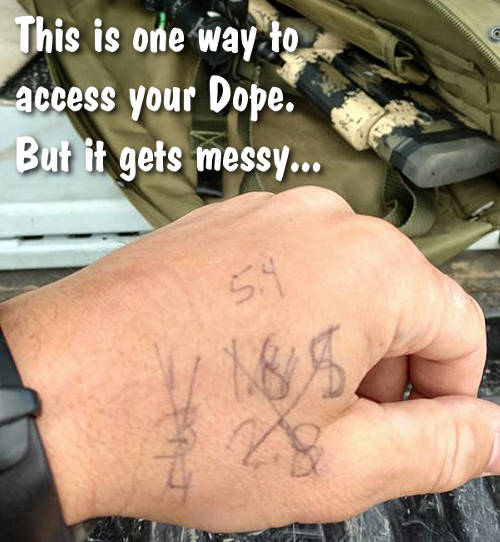
In fact, the only gear you really need to bring is a scoped rifle with a bipod and ammo capable of consistently shooting within one MOA. Also, be sure to know the ballistic drops or have a ballistic drop table prepared for your rifle/ammo to dial the correct DOPE on your scope for different target ranges. Many of the other participants at the match will be willing to let you borrow a support bag, bipod, tripod or other gear if you need one — just ask. Don’t use the excuse of not having the right gear to delay getting out to a match!
One reason not to make a big initial investment in a new rifle and assorted gear before competing, is we’ve seen a number of people come into the sport and try it for a year and then make the decision to move on to something else.
TIP THREE: Be Prepared to Learn
As a new shooter at a match, there is no better opportunity to learn. We often look to our local club matches as a group ‘training’ session to prepare for the bigger matches. You will find competitors at all levels of skill and many of your fellow shooters will enthusiastically provide helpful advice once they learn you are new to the sport. Take advantage of the opportunity to ask questions if you would like ideas for how to engage a stage, but also be sure to do more listening than talking as you receive guidance and tips from more experienced competitors.
Watch and observe other shooters and how they approach and ‘game’ a specific stage or course of fire. You’ll begin to recognize which shooting positions work best for different scenarios, and maybe even come up with some new ones that no one has thought of before.
Seeing what the better shooters do is an invaluable instructional tool. You can use your smart phone’s video camera to record other shooters (with their permission). When you’re ready to shoot, ask another shooter to record your performance. Watching yourself will point out needed areas of improvement.
After each match conduct an informal after action review and summarize for yourself the things that went well and what you should continue to do. You should also identify the specific shooting skills you should develop and make a plan to integrate the appropriate practice drills into your practice sessions. Finally, if you maintain a shooter’s data book or journal you’ll want to note things such as:
After Action Review – How you did, what went well, things you need to work on in practice. Stage Observations – Successful methods used for specific courses of fire. Note barricades, positions used, specific gear used for stages. Gear Observations – How your rifle/gear performed, what new items you should add to your “buy list”.
TIP FOUR: Be Safe and Have Fun
You’ve all heard a parent or teacher say, “It’s all fun and games until someone loses an eye.” The same can be said of the shooting sports. Safe handling of firearms is the number one rule at any match, and comes before the FUN part in terms of importance.
Before all matches start there will always be some form of a mandatory safety briefing. Make sure you know, understand, and follow any unique safety protocols for the match you attend. Some matches require all rifles have chamber flags inserted and are stowed in bags/cases while not on the firing line — other matches may not. If you run afoul of any safety rules, you risk the chance of being disqualified from a stage or worse, the entire match.
The second rule is simply have fun. This starts with having a good attitude throughout the day. Keep in mind that as a new competitor you should think of a match as a solid day of practice and training. If you blow a stage, use it as an opportunity to diagnose what you could have done differently or what you need to improve on — then smile and drive on.
Any day at the range or shooting is a good day. A match is an opportunity to hang out with like-minded people who are passionate about shooting and impacting targets far-far away. Life is great when you are doing what you enjoy!
TIP FIVE: Make Friends
There is no better way to meet lots of precision rifle shooters and make friends than at a match. The people that attend the tactical precision matches on a regular basis are those that have ‘fallen into the deep end of the pool’ and are really into the sport. As a result, they have become part of the local precision shooting community. As you strike up conversations at the match, find out if your new-found friends visit specific forum boards or social media outlets, or if there are other matches they attend.
Precision shooters tend to congregate and share information in different corners of the Internet. It will serve you well to meet some of the guys in person at matches and be able to connect a face to a screen name. As you develop your friendships and develop a level of trust, you will find opportunities become available to shoot with others in your local area, or get ‘read-in’ on a secret honey-hole of a spot to shoot long distance. Additionally, the local shooting community will often find it more convenient to sell or trade gear and equipment locally than deal with buyers/sellers that are out of state.





 The
The 






 The HOWA HCR features an adjustable, two-stage HACT trigger, set for about 3 pounds (combined stages). Crisp and repeatable, this is an excellent trigger for a factory gun. In our opinion, the HACT trigger is clearly superior to the trigger on the Ruger RPR, as well as the Savage AccuTrigger. And there is no annoying Glock-style safety lever in the middle of the trigger blade.