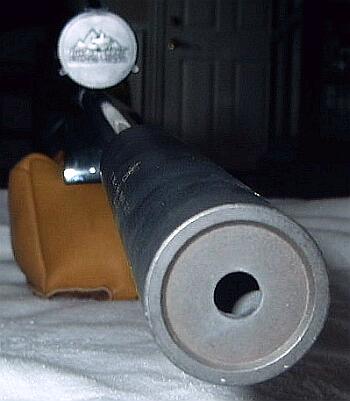
If you are considering purchasing a sound moderator (aka “suppressor” or “can”) for one or more of your rifles, a video from Surefire explains the many benefits of modern suppressors. Sound moderators not only reduce the audible sound coming from a firearm, but they also reduce flash signature, dust signature, and recoil.
In the video below, Surefire highlights the features and benefits of its line of quick-attach suppressors. These are crafted from special alloys that are “stronger at 1000° F than stainless steel is cold.” While the video focuses on the use of suppressors by military and police personnel, these devices are also beneficial for hunters and competitive tactical shooters.
Noise Reduction
A shot from a .308 Win rifle can be as loud as 167 db to the shooter. Notably, the noise level can be just as great to someone positioned one meter away (Source: 1999 Finish Suppressor Trials). What’s worse is that popular muzzle brakes can INCREASE shooters’ noise exposure by 5 to 10 db. The noise level at which hearing damage can occur is about 140 db. A quality modern suppressor can reduce .308 Win rifle shot noise levels to 130 db or less.
Flash Signature Reduction
For a varminter, a quality suppressor can reduce the visible muzzle flash from a rifle by 90% or more. That’s important when hunting at night. The bright flash can both spook game and temporarily degrade the hunters’ night vision. Using a suppressor can help the shooter maintain his night-adapted vision.
Recoil Reduction
Recoil reduction is a real benefit. In 1992, Finland’s National Board of Labor Protection tested a variety of suppressors on both bolt-action hunting rifles and select-fire military rifles. The study concluded that recoil reduction was significant: “Suppressors reduced recoil energy by 20 to 30 percent, or about as must as muzzle brakes, making powerful bolt-action hunting rifles considerably less painful to shoot (especially repeated shots in training).”
Dust Signature
When firing prone, a rifle with a muzzle brake kicks up a large cloud of dust. (Watch video at 3:00). In a military situation, this dust signature can reveal the shooter’s position — with potentially disastrous consequences. For a tactical competitor, the dust may prevent recognition of a hit while impeding a rapid second-shot. For the varminter, the dust cloud is a nuisance that may prevent him from seeing his hits, while sending critters scurrying back into cover.
Message to Politicians — Suppressors Will Save Tax Dollars
Here is an interesting finding from the 1992 Finland Suppressor Project: “The unit price of a mass-produced suppressor may be reduced to $50 to $70 (1992 prices). [This low cost] will make cost-effectiveness of the suppressor far better than that of any shooting range [sound-proofing]… and, actually, also better than the cost-effectiveness of hearing protection, especially when several persons are present while just one of them is shooting at a time.” Too bad most politicians can’t seem to understand these points. They still view suppressors as evil tools employed by gangsters, rather than proven safety devices that will reduce noise pollution.
Is the “price of noise” something we really need to consider from a public policy standpoint? Absolutely. In 2004 the Veterans Administration paid out $633.8 million in compensation to 378,982 vets whose main disability is hearing loss. Only a small fraction of those vets saw combat; most damaged their hearing during weapons training activities.
Approximately 27,000 suppressors, also called “silencers” or “sound moderators”, are sold in the United States every year. That may surprise you because the main-stream media often incorrectly report that suppressors are illegal. In fact, suppressors are legal to own in 39 states, provided that the devices are acquired in compliance with federal and state laws (which are explained below). In most of those 39 states, owners of legally-acquired suppressors may use their “cans” for hunting. The American Silencer Institute (ASA) has created a graphic showing where suppressors are legal to own, and where they may be used for hunting. Take a look:
SILENCER LEGALITY AND OWNERSHIP
Silencers are regulated under the National Firearms Act (NFA) of 1934, under the oversight of the Bureau of Alcohol, Tobacco, Firearms and Explosives (BATFE). To legally purchase/possess a silencer you must:
Be at least 21 years of age to purchase a silencer from a dealer.
Be at least 18 years of age to purchase a silencer from an individual on a Form 4 to Form 4 transfer (contingent on state laws).
Be at least 18 years of age to possess a silencer as a beneficiary of a trust or as a member of a corporation (contingent on state laws).
Be a resident of the United States.
Be legally eligible to purchase a firearm.
Pass a BATFE background check with a typical process time of 60-120 days.
Pay a one-time $200 Transfer Tax.
Reside in one of the 39 states that currently allows civilian ownership of silencers.
NOTE: In addition to these basic Federal rules regarding silencers, particular states may have additional registration requirements or other regulations. Check with a knowledgeable firearms attorney in your jurisdiction before beginning the process of buying a suppressor.
BENEFITS OF SILENCERS
NOISE REDUCTION
According to OSHA, the threshold for a hearing safe impulse noise is 140 dB. Without hearing protection, exposure to any impulse noise over 140dB causes varying degrees of permanent noise induced hearing loss, which can also lead to tinnitus. Most well-engineered silencers take the dB level of their host firearm well below 140 dB, making those silencers effective primary hearing safety devices. You should always still wear hearing protection (muffs or plugs) when using suppressors.
RECOIL REDUCTION
By containing the explosion at the muzzle, suppressors significantly reduce perceived recoil energy, reduce the rifle’s rearward movement on recoil, and reduce rifle torquing and muzzle flip. The reduction of recoil (and rifle torquing/hopping) lessens shooter fatigue and helps the shooter get his sight picture back on target rapidly after firing. With smaller calibers, a suppressor may enable the shooter to maintain a nearly-continuous sight picture, following the shot into the target. In addition, by reducing felt recoil (and muzzle blast), a suppressor can help inexperienced shooters avoid flinching.
Are sound suppressors useful in competition shooting? In some disciplines, and in venues where sound “moderators” are permitted, the answer is “yes”. In the November edition of Shooting Sports USA eZine, you’ll find an interesting article about the use of sound suppressors (aka “cans”). The article explores the use of suppressors in Europe and in tactical matches in North America. You’ll also find an explanation of the rules and regulations governing suppressor ownership and use in the United States.
Shooting Sports Editor Chip Lohman tests three rifles from the bench and found that sound suppressors did not harm accuracy. In fact, all three test rifles (one each in .223 Rem, .308 Win, and .338 Lapua Magnum), shot slightly better 5-shot groups at 200 yards when a suppressor was fitted to the barrel. However, the suppressors did alter point of impact. Interestingly, velocity standard deviation (SD) values were lower with suppressors in place for all three test rifles. This observation calls for further study.*
So the use of suppressors in competition could be a good thing. However, in the United States, current NRA High Power rules prohibit the use of sound suppressors. NRA Rule 3.16.1 subsection (a) states: “Sound Suppressors are not authorized for use in High Power competition.” In addition, there are some practical problems with suppressors — the heat rising off of a naked suppressor can create mirage problems (that’s why some shooters wrap their cans with a cover).
Despite such issues, we are starting to see moderators on rifles used in non-NRA-sanctioned tactical matches. For example, many competitors in the popular Steel Safari field challenge match use suppressors. The photo below shows our friend Zak Smith competing in the Steel Safari with his suppressed Accuracy International rifle.
*The article cautions that one should not extrapolate too much from the SD numbers, given the low number of test shots. Chronograph-maker Ken Oehler, when asked to comment on the SD values stated: “[You should] report the observed SDs, but draw no conclusions until… you can do more testing with larger sample sizes.”
SOCOM, the U.S. Special Operations Command, is going silent in a big way — purchasing $23.3 million worth of suppressors (and adapters) from Surefire, LLC of Fountain Valley, California. The huge contract, for an indefinite quantity of sound suppressors, suppressor adapters, blank firing adapters and training adapters, was awarded by officials of the Naval Surface Warfare Center — the primary solicitation center for U.S. Special Operations Command — as part of the Family of Muzzle Brake Suppressors (FMBS) contract.
This is good news for SureFire, which has expanded its product line from durable, high-output lamps to a wide variety of tactical hardware. It was a major coup for SureFire to secure a large part of the FMBS contract. According to Surefire: “The FMBS solicitation was the most comprehensive modern suppressor evaluation conducted by the U.S. military to date. [Suppressor systems were] subjected to prolonged testing on a variety of firearms platforms. SureFire suppressors were chosen based on test criteria such as: Reliability, Sound Reduction, Accuracy, Point of Impact Shift, Endurance/Durability, and Operational Suitability. While these requirements reflect the suppression needs for firearms including the MK13 sniper rifle, the United States Marine Corps is already employing SureFire’s FA762SS suppressor system on every M40A5 sniper rifle.”
Watch Video to View SureFire Fast-Attach Suppressors in Action
In our recent story on the 2010 Steel Safari in New Mexico we included photos of tactical rifles fitted with suppressors (sound moderators). Whenever we show photos of suppressor-equipped rifles, some readers ask: “Why did you show silencers in that article — aren’t they illegal?”
J. Holdsworth ranges a target at the 2010 Steel Safari. Holdsworth finished 3rd overall in the main match.
In fact, sound moderators, also known as “suppressors”, “silencers”, or “cans”, are legal to own in most of the fifty U.S. States. You have to pay a special tax, fill out some official paperwork, and submit fingerprints. And the suppressor must be transferred through a Class III SOT Federal Firearms License-holder (FFL). In this article, tactical shooter Zak Smith explains the basic regulations concerning suppressors. Zak, whose company Thunder Beast Arms Corp., makes a line of advanced sound moderators, also explains the many benefits of modern suppressors.
What You Need to Know about Suppressors by Zak Smith
Despite common perceptions, silencers are not illegal in the United States. That is, unless you live in CA, DE, HI, MA, MI, MN, MO*, NJ, NY, RI, or VT. If you live in one of those states you’re out of luck. Sorry! Try to elect better politicians.
For the rest of us in the Free United States, sound suppressors — also called silencers — can be owned legally by private citizens provided a little extra paperwork is filled out and approved by the ATF. Silencers (and other NFA items) are transferred to individuals on an ATF Form 4, which requires a $200 stamp tax, a chief law enforcement sign-off, and a set of fingerprints to be submitted to the ATF. In some cases a “corporate” transfer can be done that bypasses the requirements for fingerprints and the local chief law-enforcement sign-off. It usually takes between 3 and 6 months for a Form 4 to be approved by the ATF. At that point you can take possession of your shiny new suppressor. The suppressor itself is the NFA item; you can place it on any firearm (that is otherwise legal to own in your jurisdiction).
Silencers, along with other National Firearms Act (NFA) items, must be transferred only by Class 3 SOT (Special Occupation Tax) license holders, which is an additional license on top of a regular FFL. To buy a suppressor, you can choose one your local Class 3 dealer has in stock, or you can have him order it for you from the manufacturer. A manufacturer-to-dealer transfer is done on an ATF Form 3, and typically takes 10 days to 3 weeks.
“But I don’t plan to be a sniper so why would I want a silencer anyway?” If you hear a shooter say that, you can bet your beer money that they haven’t shot a modern suppressor. Modern suppressors allow the use of full-power ammunition, do not reduce the muzzle velocity, do not contact the bullet during flight, and often aid accuracy. On high-power rifles, a suppressor acts like a muzzle brake and reduces recoil, and of course, the “ka-BOOM” report of the shot is reduced 25-30 dB, yielding a sound not unlike high-pressure gas escaping from an air hose being disconnected.
I have been shooting high-power, bolt-action rifles at long range in competition since 2004. The same year, I had the opportunity to try a modern suppressor on a long-range rifle and there was no going back. Since 2005, my long-range shooting is done almost exclusively suppressed — the only exceptions being F-class (which prohibits their use) and for comparative testing with brakes or bare muzzles.
If you take an accurate bolt-action rifle in .260 Remington or .308 Winchester and fit a suppressor, the recoil will be noticeably reduced and the report will be more similar to a .22 WMR. Most premium .30 caliber suppressors will reduce the report by 25-30 dB — a very substantial sound attenuation. While I do recommend wearing ear protection when using suppressors because hearing damage is subtle but cumulative, the entire experience is more pleasant with a suppressed rifle.
Modern Suppressors Are Superior to Older Designs — And May IMPROVE Your Accuracy
Historically, suppressors had rubber baffles that slowed down the bullets and ruined accuracy. Modern suppressors don’t have any of these drawbacks. While you’ll find competing viewpoints as to whether a suppressor-equipped rifle is more inherently accurate than a rifle with a bare muzzle (or muzzle brake), in practice many shooters shoot better with a suppressed rifle due to psychological and physiological factors — call it “shootability”. With less noise, less barrel hop, and less felt recoil — thanks to the suppressor — many shooters can achieve greater accuracy, shot after shot.
In the last few years, the use of suppressors by competitors has gone from an oddity to being commonplace. At recent matches such as the 2010 Steel Safari, as many as half of the top ten competitors used suppressors.
Suppressors from Thunder Beast Arms Corp.
Several years ago two fellow long-range shooters and I had the opportunity to start a suppressor manufacturing company. We all shared a passion for long-range shooting, had a history of competition, and were convinced that shooting suppressed was the way to go. Thunder Beast Arms Corp., based in Cheyenne, Wyoming, was formed to produce the best suppressors for practical long-range rifle shooting. Our “cans”, as they are sometimes called informally, are designed for accuracy, durability, and light weight, while maintaining best-in-class sound suppression levels. Many of our suppressors are made from Titanium for ultra-light weight and superior corrosion resistance.
Although I am proud of our products, there are many good brands of suppressors on the market right now. A suppressor buyer can dial in the performance, application, and amount he wants to pay very precisely — there will almost certainly be a suppressor on the market that meets his requirements. If you have a chance, see if you can get a suppressor demo lined up — I guarantee you’ll be impressed.
*In Missouri, suppressors may be legally acquired, but only by the military, by law enforcement personnel (acting officially), and by certain Federal Firearms License Holders (including C&R). See: http://www.moga.mo.gov/statutes/C500-599/5710000020.HTM .
Reflecting increased awareness among shooters of the benefits of firearms noise reduction, suppressor sales in the USA rose 9% in the past year (10/1/2009-9/30/2010) compared to the previous 12 months. This is based on BATFE records of NFA transfer stamps issued through state Form 4s. According to a report from the National Shooting Sports Foundation, suppressors (also called silencers, sound moderators, or ‘cans’) are becoming increasingly popular as more shooters learn the proper procedures for lawful suppressor ownership.
Texas is #1 in Suppressor Ownership
The three top states for BATFE-approved suppressor sales are Texas (3,621 sales), Florida (2,053 sales) and Georgia (1,153 sales). Ironically, in some of the most “eco-conscious” states, such as California, suppressor ownership by regular citizens is still prohibited. But we may see further liberalization of state laws on suppressors, as the public perception of firearms sound moderators evolves.
Well-informed American legislators have taken note that suppressors are legal (and widely used) in many European countries. In fact, in some European nations, the use of a suppressor is mandatory if you want to shoot or hunt near populated areas. The Europeans understand that sound moderators provide important safety protection for shooters while reducing “noise pollution” affecting the general populace. For both shooters and non-shooters, the benefits of suppressors far outweigh the problems associated with the use of silencers by criminals. Unfortunately, there are still many states where anti-gun decision-makers continue to block private suppressor ownership, even where that conflicts with health and safety rules. Ammoland.com reports that: “In the states where [suppressors] are still illegal the Laws and Regulations on Noise Pollution, Health & Safety at Work etc. are in direct conflict with Firearms Legislation outlawing the use of Suppressors on Firearms.”
Remington Arms Company has entered into an agreement to acquire Advanced Armament Corp. (AAC), a leading manufacturer of suppressors (silencers), muzzle brakes, and other shooting accessories. Located in Norcross, Georgia, AAC is a leading supplier of noise reduction and flash reduction devices for the military, government, and commercial markets. AAC will report to the Remington Military Products Division, but AAC will continue day-to-day operations in Georgia under company founder Kevin Brittingham.
The following was posted by AAC’s Tom Beckstrand in the AAC Blog:
“Remington has introduced new products in the sniper rifle space with the Modular Sniper Rifle (MSR) and the carbine/sub-compact weapon space with the Adaptive Combat Rifle (ACR) to compete for emerging US government special operations and conventional force requirements. As it currently stands, the majority of small arms produced for the American military come from companies headquartered overseas.
Remington’s decision to purchase AAC stems from recognition that future military weapons selections will almost unilaterally require sound and/or signature reduction. Our military has been at war for over eight years now and experience shows that there are significant tactical advantages associated with suppressor use….”
AAC has experienced substantial growth due to the military’s demand for suppressors. AAC was the provider of silencers and flash hiders for the SOF Combat Assault Rifle (SCAR) program. Civilian sales have increased also. AAC notes that suppressor ownership is legal in 34 U.S. states. The merger of Remington with AAC will enable AAC to take advantage of Remington’s larger production capabilities[.]
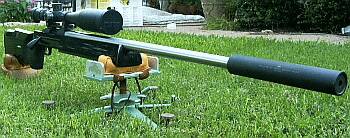
What’s better than a 6BR? A 6BR that produces a LOT less noise and less than half the recoil of a bare-muzzled gun. Our friend USMA89 has a 6BR “Texas Tackdriver” with a trued Rem 700 action and Robertson Composites F-Class stock. Smithed by GA Precision, it has delivered tiny groups at 200 yards with 107 Sierra MKs. With sound suppressor in place, USMA89 tells us, it’s like shooting a 22 mag rimfire: “Shooting with a suppressor or can is a great experience. In fact, once you start shooting with one, it is hard to go back to normal shooting. The recoil reduction is amazing, cutting perceived recoil by as much as 70%. Think of a suppressor as the ultimate muzzle break that reduces sound to boot.”
The cost of a good suppressor ranges from $600-$1000, and then there is the $200 to Uncle Sam for the tax stamp and the 3-6 month wait. (Currently, 33 states allow citizens to own suppressors in accordance with Federal regulations.) The suppressor on this gun is considered one of the best, a SWR Omega. USMA89 adds: “I also use a SRT suppressor and am very pleased with it as well. The SRT costs about $300-$400 less than the SWR and you get the same amount of sound reduction.” With a quality suppressor you can get from 33 to 36 db worth of sound suppression.
Once you have gone though the hoops the government has put in your way (check your state laws also!), mounting is easy. Get a good gunsmith to thread your barrel (5/8×24 is the normal class 3 thread) and screw it on. In general suppressed guns barrels are cut shorter for balance. USMA89 explains: “I went with a 28″ barrel and with the can it is a little front-heavy, but the stock’s wide fore-end compensates for this. If this were a ‘tactical’ weapon, I would have the barrel cut down to at least 22″, maybe less. Most people that use suppressors will tell you that they shoot better groups with a can than without. This is because there is less recoil, less ‘dirty air’ behind the bullet, and (in many cases) you get improved barrel harmonics.”


 Flash Signature Reduction


 SOCOM, the U.S. Special Operations Command, is going silent in a big way — purchasing $23.3 million worth of suppressors (and adapters) from

 What You Need to Know about Suppressors
 Silencers, along with other National Firearms Act (NFA) items, must be transferred only by Class 3 SOT (Special Occupation Tax) license holders, which is an additional license on top of a regular FFL. To buy a suppressor, you can choose one your local Class 3 dealer has in stock, or you can have him order it for you from the manufacturer. A manufacturer-to-dealer transfer is done on an ATF Form 3, and typically takes 10 days to 3 weeks.