Another massive, data-driven field test has been completed by our friend, Cal Zant, over at PrecisionRifleBlog.com. The past few months, Cal has tested 20+ muzzle brakes designed for 6mm, 6.5mm, and .30-caliber precision rifles. Hundreds of hours have gone into this research, and it provides a lot of new insight and empirical data for several aspects of muzzle devices. Cal put a huge amount of labor/engineering into these tests and his findings deserve to be widely read.
Recoil Reduction
Cal created a system to directly measure the entire recoil force signature of each muzzle brake using high-speed sensors. Although the recoil cycle happens very quickly (around 1/100th of a second), his test equipment could record up to 1,000 force data points during a single recoil cycle! He fired over 1,000 rounds of match-grade ammo through four different rifles: 6XC, 6.5 Creedmoor, .308 Win, and the monster .300 Norma Magnum. He literally spent thousands of dollars on this part of the test, to ensure he got it right.
Cartridge Types Tested: 6XC, 6.5 Creedmoor, .308 Win, and .300 Norma Magnum
Ability To Stay On Target
David Tubb helped Cal develop this part of the test, because David believes this is the most important aspect of a muzzle brake. Using a laser and high-speed camera, Cal was able to objectively quantify how well each design helped you stay on target.
Noise Level
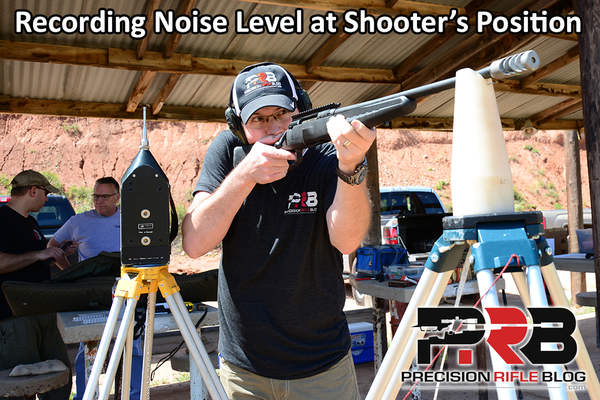
Muzzle brakes are loud, but some are louder than others … three to four times as loud. Cal enlisted the help of an expert from the suppressor industry to precisely measure how much louder each muzzle brake made a rifle. Each brake was tested in accordance with MIL-STD-1474D using calibrated military-approved equipment, and the noise level was also tested at the shooter’s position. This produced some interesting results.
Zant also includes high-res photos of each brake, and plans to publish other info about each model (including price, whether it requires gunsmithing, what calibers it is available in, etc.) to make it easy to compare them side-by-side.
Cal recently started publishing the results of these tests, and there is already a lot of interesting info. The data might surprise a few people and even dispel a few myths. Particularly interesting is Zant’s comparison of recoil reduction with a suppressor compared to muzzle brakes. How do you think the suppressor performed compared to the brakes? You may be surprised.
The National Shooting Sports Foundation (NSSF) this week learned that United Parcel Service (UPS) has apparently changed its policy regarding the shipment of firearms suppressors. According to the NSSF, a new policy is in effect at UPS facilities nationwide. This new policy states that UPS will no longer ship suppressors, even between Federal licensees.
NSSF representatives are now trying to find out why UPS has changed its shipping policies:
“NSSF is working with UPS executives to determine what prompted the enforcement of this unwarranted policy. We are unaware of any thefts or losses that would explain the shipping company’s sudden decision to enforce a prohibition against shipment. NSSF will keep you apprised of developments. Separately, NSSF is also working with the U.S. State Department to achieve a change of policy to allow export of suppressors.”
Our friend Robert Whitley of ARX Enterprises LLC has learned, through careful measurement and testing, that some barrels threaded 5/8″ x 24 tpi at the muzzle may not deliver optimal accuracy. The reason is that the end of the barrel can bell out slightly, like a trombone, because too much steel has been removed. This is particularly true with .30-caliber barrels, but it can also be a problem with smaller caliber barrels (even 6mm). Robert demonstrates this phenomenon in the video below. All gunsmiths, and anyone considering threading a barrel, should watch the video. At 1:00 – 1:30 Robert gauges a 5/8″ x 24-threaded .30-Caliber barrel. You can see the belling effect clear as day.
“When setting up a commercial barrel in the lathe, we noticed that the maximum-sized bushing that would fit in the bore at the chamber end was almost .0015” smaller [than what would fit] at the muzzle. That precipitated my pin-gauging of a number of different commercial barrels that were threaded for 5/8” x 24 tpi. What I found is what’s shown on the video.” – R. Whitley
Solve Problem with a Larger Thread Diameter
If 5/8″ x 24 threading is potentially harmful to accuracy, is there a solution? Yes, you simply need to leave a little more steel on the barrel. (See Video starting at 02:40.) Frank Green of Bartlein barrels states: “We get these questions all the time. I say run the largest thread diameter that is possible.” Robert Whitley has found that a 3/4″ x 28 tpi threading does not cause the “belling effect”. Accordingly Robert recommends 3/4″ x 28 if you need to thread your barrel for a muzzle brake or suppressor. Robert explains: “We only make 3/4” x 28 tpi muzzle brakes and that’s what we recommend to customers.”
“See how much meatier the 3/4″ threading is vs. the 5/8″. The 3/4″ threading offers a lot more metal around the bore. There’s a lot less opportunity for the bore to become bell-mouthed…” – Robert Whitley
Barrel Threading Diameter — What’s Important to Know By Robert Whitley
In truth, the 5/8” x 24 tpi threading never came out of any accuracy-based think tank or set-up, it’s a military .30-Cal threading for barrels that someone has to carry around (they needed to keep the barrel weight down so it was smaller in diameter and the threading had to work with that situation). People have somehow assumed because the military uses that threading for certain things that it must mean that it’s also fine for a highly accurate rifle too, but that’s not really correct.
I don’t think there is any better and realistic option than the 3/4” muzzle threading, and we also do it so there is no relief cut behind the threads on the barrel (i.e. put the relief cut on the brake or jam nut, don’t chop down on the muzzle of the barrel). For some reason many have a hard time grasping that the metal at the muzzle end of a rifle is “sacred” and you should not cut it down any more than absolutely necessary. A little threaded pencil diameter nub on the end of a barrel is not ideal for accuracy especially if it’s threaded and you need to torque on it. I cringe when I see a barrel with something like an MTU or Heavy Varmint contour, only to have an itty-bitty pencil thin threaded nub right at the muzzle so someone can “screw on a can” or a muzzle brake.
Lessons Learned Over the Years
A number of years ago I did a 30BR rifle project with Craig Kostyshyn who was big in the 30BR game and he made some of the best 30BR rifle barrels for benchrest competition. When I did the project I wanted a medium-heavy Palma type contour barrel I could use and also have a muzzle turndown for a front sight band. When he found out I was going to have the muzzle turned down he said “whoa, I need to provide for that when I make the barrel because if you turn the front down later you’ll be shooting a trombone” (i.e. the muzzle bore dimension would open up).
What he did was rough contour the barrel with the turndown (about .010” oversize) before he lapped the barrel, then when he lapped the barrel he took it easy in the muzzle area and worked the back of the barrel more. I thought he was a little bit excessive in his concerns but the barrel shot great and I wasn’t going to argue with him, after all he was shooting groups in the ones. I kind of just filed that away and never thought about it until recently when I went to have Fred from Sabreco do some chamber re-work on a commercial .30-caliber barrel I had. When setting up the barrel in the lathe and indicating things Fred noticed that the maximum-sized bushing that would fit in the bore at the chamber end was almost .0015” smaller [than what would fit] at the muzzle and he mentioned it to me. That precipitated my pin- gauging of a number of different commercial barrels I had that were threaded for 5/8” x 24 tpi. What I found is what’s shown on the video.
NOTE: This is a copyrighted article. Do not reproduce or re-link more than 75 words without written permission from AccurateShooter.com.
Are you looking for a .22 LR Rimfire rifle that has the look and feel of a centerfire rig? Then check out the CZ 455 rimfire rifle featuring a black-finished, laminated wood stock. This gun, dubbed the “Varmint Tacticool” by CZ-USA, features a 5-round detachable magazine and adjustable trigger. And recently CZ added a Suppressor-Ready version fitted with a 16.5″ barrel and threaded muzzle.
The original CZ-455 Varmint Tacticool was built as an affordable tactical trainer with the ergonomics and stock profile of a full-size centerfire tactical rig. The Tacticool’s stock looks similar to the Manners Composites stock on CZ’s 455 Varmint Precision Trainer, but the wood-stocked ‘Tacticool’ version is much less expensive. The CZ 455 with Manners stock retails at $940.00 MSRP while the latest suppressor-ready ‘Tacticool’ model lists for $549.00 MSRP. The $391.00 you save will buy a lot of ammo (or a scope).
We like the looks of the CZ-455 ‘Tacticool’, and the stock has some nice features. The butt-hook stock has ambidextrous palm swells on the grip and a raised comb to provide a comfortable cheek weld for shooting with a scope. The fore-end features a wide, beavertail swell for greater stability on a front sandbag. There are two (2) sling swivel studs so you can attach both a sling and a bipod.
In her latest video, Kirsten Joy Weiss shows off the 300 AAC Blackout, a popular .30-caliber cartridge for AR-platform rifles. Kirsten explains the advantages for the 300 BLK for hunters as well as those using an AR for self-defense. The 300 BLK is popular with suppressor owners because it works well with heavy bullets launched at subsonic velocities.
Reasons to Shoot a 300 AAC Blackout:
— You can use your current AR Bolt, Bolt Carrier, Buffer, and Magazine. The only part you need to change is the barrel.
— 300 BLK conforms to state hunting regulations which may require a cartridge larger than .22 Caliber. The 300 BLK shoots .308 caliber bullets.
— Lapua now sells 300 AAC Blackout brass so no case-forming is required. Just load and shoot.
— You can shoot light bullets supersonic or heavier bullets subsonic. The subsonic capabilities of the 300 BLK make it ideal for use with a suppressed AR.
— With a .30-caliber bore and a modest powder charge, barrel life is outstanding with the 300 BLK.
— You can make 300 BLK cartridges from fired .223 Rem brass, which is plentiful and cheap.
— The .300 BLK performs well with some very accurate powders, such as Hodgdon H4198 and IMR 4227.
The 300 AAC Blackout was created by Advanced Armament Corp. and Remington primarily for the military as a way to shoot .30-caliber bullets from the M4/AR15 platform while using standard magazines. As explained by Robert Silvers, AAC’s R&D Director: “Now there is a way to shoot 30 caliber from your AR while still using normal magazines with full capacity. Even the bolt stays the same, and all that changes is the barrel.” For more information visit www.300aacblackout.com and download the 300 BLK Cartridge Information Guide (PDF).
SAAMI, the industry standards organization, adopted and standardized the AAC 300 Blackout in 2010. The SAAMI diagram for the 300 BLK is shown above. Lapua now makes 300 BLK cartridge brass.
300 BLK for 3-Gun Competition
The 300 AAC Blackout has been touted as an important new hunting round, but we see it more as a specialized “rule-beater” 30-cal option that lets 3-Gun competitors “make major” with a low-recoil cartridge that also offers long barrel life. For those who need to run a .30-caliber cartridge from a standard AR15 platform (as opposed to the AR10), the 300 AAC Blackout makes some sense. But for hunters using a bolt gun, there are any number of tried and true options, such as the 7.62×39, .30-30, and, of course, the .308 Winchester (7.62×51 NATO).
Our friends Ed and Steve, aka the 6.5 Guys, were prolific last week in Las Vegas, visiting dozens of vendors at SHOT Show. Here are Ed and Steve’s video reports for Ashbury Precision Ordnance (APO), Vortex Optics, and Thunderbeast Arms. (If you’re thinking about buying a suppressor definitely check out the new Ultra series from Thunderbeast, featured in the third video below). You can see more SHOT Show videos by Ed and Steve at 6.5Guys.com.
Ashbury Precision Ordnance
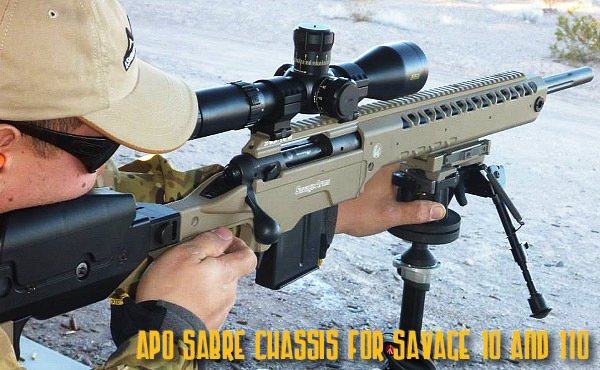
Here Precision Rifle Series (PRS) Competitor Melissa Gilliland talks about the modular chassis systems offered by Ashbury Precision Ordnance (APO). With adjustable buttplate, cheekpiece, and grip, these systems can be adapted for a variety of shooting disciplines. APO even offers a modular chassis for Savage barreled actions. Melissa shoots a tricked-out 6.5 Creedmoor rig with a Titanium APO action.
New Precision Rifle from APO
SABRE Chassis System for Savage Actions
Vortex Optics
Vortex continues to grab a larger share of the tactical and long-range hunting markets. This video features the Vortex Razor HD Gen II 4.5-27x56mm and 3-18x50mm scopes. These Gen II Razors feature apochromatic objective lenses, rugged 34mm single-piece aluminum main tubes, and versatile 6X zoom range. Both MOA-based and Milrad-based reticles are offered. Vortex scopes have large, user-friendly controls, and a good feature set for the price.
Thunder Beast Arms
Thunder Beast Arms’s suppressors, built by shooters for shooters, are tough yet light. Thunder Beast developed a strong following for its titanium cans that offered excellent performance with light weight. In this video, Thunder Beast unveils its new “Ultra” series of suppressors. Compared to Thunder Beast’s previous CB-series suppressors (of like size), these Ultras are 4 to 5 ounces lighter, yet provide 4 to 5 decibels of additional noise reduction. That represents a major gain in suppressor performance.
Many of us would like to outfit one (or more) of our rifles with a suppressor, but the cost and red tape involved can be daunting. Some states prohibit private individuals from owning suppressors. However, most U.S. states DO allow suppressor ownership. That’s the good news. On the other hand, suppressors are not inexpensive and the process of obtaining governmental approval is time-consuming. Then there is the cost of the tax stamp itself — $200.00 for each silencer you own.
Nonetheless, suppressors are fun, and they serve an important function. Along with protecting your hearing, suppressors can tame recoil and dramatically reduce muzzle flash. Noise reduction of up to 35 decibels is possible with a .223 Rem. When shooting any firearm, you should still wear hearing protection of course, but suppressors can help reduce the risk of permanent hearing damage.
Benefits of a Suppressor — Why Suppressors Make Sense:
Is It Legal For You To Own A Silencer?
The vast majority of the 50 states permit citizens to own silencers. Currently, the following states allow private ownership of suppressors: AL, AR, AK, AZ, CO, CT, FL, GA, ID, IN, KS, KY, LA, ME, MD, MI, MO, MS, MT, ND, NE, NV, NH, NM, NC, OH, OK, OR, PA, SC, SD, TN, TX, UT, VA, WA, WI, WV, and WY. Even if you live in one of these states, you should verify that owning a suppressor is legal in your city/county.
If you live in a state where suppressor ownership is legal, and you can legally own a firearm, then you can buy a suppressor. However, you need to obtain ATF permission and pay a tax.
If you are interested in getting a suppressor, thankfully there is a source that can help you select the right product, and fill out all the paperwork required. The Silencer Shop specializes in sound moderators for pistols, rimfire rifles, centerfire rifles, and yes, even shotguns. The Silencer Shop maintains a large selection of suppressors for sale, and the shop can guide you through the NFA permitting process from start to finish.
How to Buy a Silencer, Part One:
Based on hundreds of successful applications for its customers, the Silencer Shop has streamlined the National Firearms Act (NFA) Registration process for suppressor ownership. Having submitted more silencer NFA Forms than any other dealer, these guys know the ropes: “We’re at the leading edge of making the NFA process as fast and easy as possible. From our famous ‘Black Packets’ to the latest electronic submissions and Silencer Shop Direct, we have a history of innovation in this area”. The Silencer Shop also works with knowledgeable attorneys who can help you set up an NFA trust to own suppressors and other NFA items. CLICK HERE to Learn How to Register a Suppressor to a Trust.
“How do silencers work?” We hear that question often. Now, thanks to Silencerco.com, we can answer that question. Here’s a helpful infographic that illustrates the features of a suppressor (aka “silencer”, “can”, or “sound moderator”). Silencers reduce gunshot noise by providing a contained space where hot gases can dissipate and cool before exiting. Silencers are typically divided into multiple, internal expansion chambers. A quality suppressor can reduce gunshot noise by 30 decibels (db) or more. See the chart for comparative firearm noise levels (suppressed vs. un-suppressed).
In the United States, suppressors have become much more popular in recent years. In fact, the number of licensed silencers has doubled since 2011. Over 571,750 suppressors are now lawfully registered in the USA. Firearm sound moderators can now be purchased legally in 39 states, provided one obtains the requisite Federal tax stamp. (Texas is the leading suppressor state.) Seven European countries also allow suppressor ownership.
Suppressors Featured in Modern Shooter
Legal for private ownership in 39 states, suppressors are more popular than ever (though many gun owners are still not aware that silencers can be acquired without much difficulty). The Fall 2014 issue of Modern Shooter focuses on the popularity of today’s suppressors and sound-moderating technology available for handguns, rifles, and shotguns. This entire issue is dedicated to suppressors and their benefits. This comprehensive guide explains how suppressors work and how gun owners can easily (and lawfully) purchase them. The issue includes a detailed history of the suppressor, which was first patented in 1909 by the son of the inventor of the machine gun. There is also a feature story on hunting with suppressors in Europe. Modern Shooter is available on newsstands and as a digital download at GunDigestStore.com.
The GAP Grind is a hugely popular tactical match held annually at the K&M Precision Rifle Training facility in Florida. Sponsored by G.A. Precision and Bushnell, the GAP Grind attracts top tactical shooters from around the country. Held 29 – 31 August, the 2014 GAP Grind saw 164 shooters and 82 teams battle it out. Watch the video from the 2013 Grind to see what all the fuss is about….
Watch GAP Grind 2013 Video
GAP Grind Guns by Giddings
Shelley Giddings, a skilled shooter of both firearms and cameras, attended the 2014 GAP Grind last week. While there, Shelley snapped some cool images of state-of-the-art tactical rifles. Here is a Giddings Gallery of Grind Guns. You can find more GAP Grind pix on Shelly’s Facebook Page.
Click any photo below to see a full-screen version.
AR this, AR that… sometimes it seems the gun world has gone AR crazy. There is even a book specifically dedicated to reloading for AR-platform rifles. This may seem superfluous when there are so many other reloading manuals on the market. However, there are some special factors to consider when reloading for ARs and other semi-automatic rifles. Cases should be full-length sized, with adequate shoulder bump and neck clearance (more than you might run with a bolt gun). Cartridge pressures must be appropriate for the AR platform, and you want to select powders that minimize fouling. Also, when loading for an AR you may want to experiment with cannelured bullets and crimping. And of course, rounds must be loaded to mag-length. Lastly, with the advent of the 300 AAC Blackout (and similar cartridges), many AR shooters now are experimenting with heavy 30-cal bullets in subsonic applications. AR owners will experience a “reloading learning curve” when moving from .223 Rem to the more exotic, subsonic 30-caliber cartridges.
These and other concerns are covered in Lyman’s new AR Reloading Handbook. This comprehensive reloading guide provides the AR shooter with reloading data for nearly all popular AR-platform chamberings. In addition to data for the standard .223 Rem, the following cartridges are also covered: 6.8 Rem, 300 AAC Blackout, 7.62×39, 450 Bushmaster, 50 Beowulf and others.
Lyman touts its new book: “Reloaders will appreciate the wealth of AR-specific reloading data [for] all popular brands of bullets and powders. Specialty cast bullet and sub-sonic data further expand the usefulness of the handbook. Interesting articles by well known and popular firearms journalists are also included. These cover such areas as ‘Reloading for Suppressors’ and ‘Cartridge Interchangeability”. Finally all this AR data is presented in a full size, easy-to-use 8 1/2″ x 11″ format.”






 Suppressors Featured in Modern Shooter


