"Negative Image" Targets for Better Long-Range Viewing
 At long range, small bullet holes are much easier to see in the white than in the black. When you’re practicing at long range on high power targets, one way to enhance your ability to see your bullet holes is to print a “negative” version of the regulation bullseye target. Forum member Watercam has a new Pentax PF-80ED. With the Pentax he can see 6mm bullet holes in the white at 600 yards, but holes in the black are only visible out to 400 yards or so. Accordingly, Watercam uses a modified “reversed” black-to-white target for 600-yard practice. Watercam writes:
“I just received my Pentax PF-80ED-A angled spotting scope the other day and it is awesome. Great quality. I traded a straight Kowa 77mm fluorite for it through SWFA.com. Eye relief with the Pentax 10-60 power zoom is 18-22mm (much more than the Kowa zoom), so I can use glasses with no problem. The view through the Pentax is very sharp and contrasty with great color.
With my 6mm and limited mirage I’m seeing defined, 6mm holes in the white out to 600. In the black, I can see bullets holes at about 400 with my eyes. I am printing reverse-color targets for training without a pit partner at the 600-yard line.”

If you’re not concerned with official scoring rings, you can use an all-white target with a bright, fluorescent target dot in the middle. A 2″- or 3″-diameter stick-on target dot is highly visible at 600 yards. Birchwood Casey Target Spots® assortment #33928-TSA offers neon orange target dots in 1″, 2″, and 3″ diameters.

 Our own Asst. Editor, Jason Baney, runs a popular “postal match” called
 Here’s a good deal if you’re looking for reliable, fixed-focal length optic for benchrest competition.
 One of the easiest ways to build a portable target stand is to use PVC pipe and connectors. Utah .308 Shooter “Cheese” has created a simple yet sturdy target frame, and he’s shared his design so you can build a similar frame easily and at low cost. The components are wood furring strips, 2″-diameter PVC pipes (and connections), and a 2’x3′ sheet of cardboard. The PVC base can be glued together, or, for easier transport and storage, you can leave some or all of the connections free. “Cheese” tells us: “I didn’t glue any of it together so I could disassemble it, shove it in a bag and take it anywhere.”
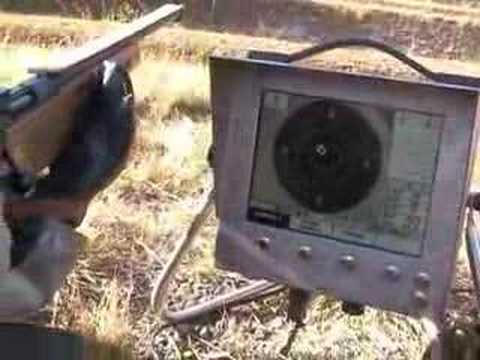
 We live in a digital, electronic era. The very story you’re reading right now consists of digital data packets transmitted electronically around the globe. Because of cost factors, 99+% of shooting matches in the USA still rely on old-fashioned manual scoring methods. However, target scoring can be done faster and more precisely with electronic scoring systems. Olympic and international CISM shooting competitions now employ electronic target systems. And electronic scoring is widely used in Europe already.