Congratulations to Team Lapua-Brux-Borden (“Team Lapua”) winning the F-Open Grand Aggregate Team Award at the 2023 F-Class Long-Range Championships with a superb score of 1593-95X. Team Lapua members are Tod Hendricks, Ted Wedell, Jeremy Smith, David Christian, and Jay Christopherson, with Bob Sebold as coach and Erik Cortina as Team Captain.
In Match 1 of the F-Open Team Championship, Team Lapua also set a new National record of 800-53X, breaking the previous record by 11 Xs (set by Team Long Shots in 2014). In the 2023 Match 1 four Team Lapua members fired 20 rounds for record at 1000 yards, not dropping a single point.
“We noticed in the forecast that the wind conditions were going to be mild, and there was a chance to set a new National record”, commented Team Captain Erik Cortina. “The previous record was an 800-42X, so we knew we all had to shoot perfect scores to claim the record. It felt great when the 80th shot came up an X! We managed to score 800-53X, beating the old record by 11 Xs.”
Additionally, team members Jay Christopherson, David Christian, and Erik Cortina finished in the top 10 of the individual F-Open LR championship. Along with its record-breaking Long Range 2023 win, Team Lapua finished 3rd place overall in the Mid-Range F-Open team championships, adding an exclamation point to Lapua’s dominating results.
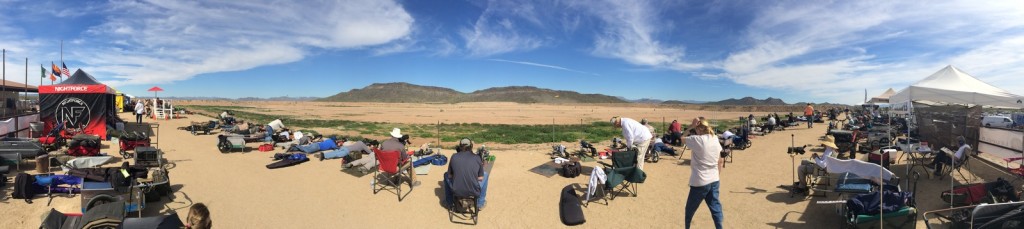
The 2023 United States F-Class Long Range National Championships were hosted by the Desert Sharpshooters and held November 1-5, 2023 at the Ben Avery Shooting Facility in Phoenix, Arizona. The Long Range National Team Championship consists of eight (8) 20-shot strings fired at 1000 yards. There are 160 shots total with a max score of 10-1X per shot.
About Lapua
For 100 years, Lapua has been producing superb small caliber cartridges and components for civilian and professional use. Lapua is a part of the Capstone Precision Group, exclusive U.S. distributor for Berger, Lapua, Vihtavuori and SK-Rimfire products. For more information, visit Lapua.com
Share the post "Team Lapua Brux Borden Wins 2023 F-Open LR National Title"
Philip Hemphill, Pistol Champion, Has Left the Range
We are sad to announce that champion pistol shooter and Team Lapua member, Philip Wayne Hemphill, has passed away at age 71 at his home in Meridian, Mississippi. Hemphill was one of the greatest-ever American pistol shooters. Hemphill was a 10-time National Police Pistol Combat Champion and two-time NRA Precision Pistol Champion. Above is Hemphill after winning the .22 LR Rimfire pistol championships at Camp Perry in 2019.
Philip Hemphill served 30+ years with the Mississippi Highway Patrol before retiring as a Captain in 2011. The Shooting Wire recounted his remarkable history with the National Police Pistol Combat (PPC) series: “Hemphill shot his first PPC in 1985 in Des Moines, Iowa. He competed every year [except 2005] until he served as a referee in 2008. In 2008, he returned to the range in Albuquerque as a shooter to compete one final time, and captured his tenth title. [In his competition career] Hemphill represented Lapua, Team Zero, Rock River Arms, and AimPoint. He remained one of the few people who drew the attention of competitors, fellow vendors, and spectators at shooting events.”
Funeral services for Mr. Philip Wayne Hemphill will begin at 11:00 am Monday, October 16, 2023 at Cross Mountain Ministries in Porterville, Mississippi. Online condolences may be expressed at robertbarhamffh.com which hosts the Philip Hemphill obituary and photo collection.
Philip enjoyed squirrel hunting and turkey hunting. He enjoyed traveling and spending time with his grandsons, who lovingly referred to him as Papaw. He was a friend to all who knew him, with friendships spanning all over the world.
Here is an NRA-TV interview with Philip Hemphill from 2016. Hemphill has been a 10-Time NRA National Police Pistol Champion, and has won multiple National Pistol Championships:
Share the post "In Memoriam: Philip Hemphill, Champion Pistol Shooter"
Guys — honestly, if you do anything today on this site, watch this video. You won’t be disappointed. Guaranteed. This is a very informative (and surprisingly entertaining) video. Every serious hand-loader should watch this video to see how cartridge cases and loaded ammo are made. Your Editor has watched the video multiple times and I still find it fascinating. The camera work and editing are excellent — there are many close-ups revealing key processes such as annealing and head-stamping.
VERY Informative Video Show Cartridge Brass and Ammunition Production:
Norma has released a fascinating video showing how bullet, brass, and ammunition are produced at the Norma Precision AB factory which first opened in 1902. You can see how cartridges are made starting with brass disks, then formed into shape through a series of processes, including “hitting [the cup] with a 30-ton hammer”. After annealing (shown at 0:08″), samples from every batch of brass are analyzed (at multiple points along the case length) to check metal grain structure and hardness. Before packing, each case is visually inspected by a human being (3:27″ time-mark).
The video also shows how bullets are made from jackets and lead cores. Finally, you can watch the loading machines that fill cases with powder, seat the bullets, and then transport the loaded rounds to the packing system. In his enthusiasm, the reporter/narrator does sometimes confuse the term “bullets” and “rounds” (5:00″), but you can figure out what he means. We definitely recommend watching this video. It’s fascinating to see 110-year-old sorting devices on the assembly line right next to state-of-the art, digitally-controlled production machinery.
Video tip by EdLongrange. We welcome reader submissions.
Share the post "GREAT Video on Making Brass and Precision Ammo — Watch Now"
Precision Benchrest and F-Class shooters favor premium brass from Lapua, Norma, Peterson, or RWS. (Lake City also makes quality brass in military calibers.) Premium brass delivers better accuracy, more consistent velocities, and longer life. Shooters understand the importance of good brass, but many of us have no idea how cartridge cases are actually made. Here’s how it’s done.
The process starts with a brass disk stamped from strips of metal. Then, through a series of stages, the brass is extruded or drawn into a cylindrical shape. In the extrusion process the brass is squeezed through a die under tremendous pressure. This is repeated two or three times typically. In the more traditional “draw” process, the case is progressively stretched longer, in 3 to 5 stages, using a series of high-pressure rams forcing the brass into a form die. While extrusion may be more common today, RWS, which makes some of the most uniform brass in the world, still uses the draw process: “It starts with cup drawing after the bands have been punched out. RWS cases are drawn in three ‘stages’ and after each draw they are annealed, pickled, rinsed and subjected to further quality improvement measures. This achieves specific hardening of the brass cases and increases their resistance to extraordinary stresses.” FYI, Lapua also uses a traditional draw process to manufacture most of its cartridge brass (although Lapua employs some proprietary steps that are different from RWS’s methods).
After the cases are extruded or drawn to max length, the cases are trimmed and the neck/shoulder are formed. Then the extractor groove (on rimless cases) is formed or machined, and the primer pocket is created in the base. One way to form the primer pocket is to use a hardened steel plug called a “bunter”. In the photos below you see the stages for forming a 20mm cannon case (courtesy OldAmmo.com), along with bunters used for Lake City rifle brass. This illustrates the draw process (as opposed to extrusion). The process of draw-forming rifle brass is that same as for this 20mm shell, just on a smaller scale.
River Valley Ordnance explains: “When a case is being made, it is drawn to its final draw length, with the diameter being slightly smaller than needed. At this point in its life, the head of the draw is slightly rounded, and there are no provisions for a primer. So the final drawn cases are trimmed to length, then run into the head bunter. A punch, ground to the intended contours for the inside of the case, pushes the draw into a cylindrical die and holds it in place while another punch rams into the case from the other end, mashing the bottom flat. That secondary ram holds the headstamp bunter punch.
This video employs DEFORM-2D software to show the draw process for brass casings.
The headstamp bunter punch has a protrusion on the end to make the primer pocket, and has raised lettering around the face to form the headstamp writing. This is, of course, all a mirror image of the finished case head. Small cases, such as 5.56×45, can be headed with a single strike. Larger cases, like 7.62×51 and 50 BMG, need to be struck once to form a dent for the primer pocket, then a second strike to finish the pocket, flatten the head, and imprint the writing. This second strike works the brass to harden it so it will support the pressure of firing.”
Thanks to Guy Hildebrand, of the Cartridge Collectors’ Exchange, OldAmmo.com, for providing this 20mm Draw Set photo. Bunter photo from River Valley Ordnance.
Share the post "How Cartridge Brass Is Crafted — Production Process Revealed"
NOTE: Respected Shooting USA host Jim Scoutten passed away yesterday, 7/18/2023. We were saddened to learn of his passing. Jim was a great defender of the Second Amendment and supporter of the shooting sports. The Shooting Wire Blog noted: “Scoutten has been a well-known and respected figure in the shooting industry, serving as the longtime host of Shooting USA. As managing editor of Tier One Media, LLC, he created two of the most successful cable television shows on the Outdoor Channel.”
The 2022 PRS Pro Series Finale was held November 5-6 at the K&M Precision Rifle Training Complex in Finger, Tennessee. The Finale brings together the best of the best within the PRS Pro Series to crown the annual champion. Competitors qualify through regional events to attend the Finale based on previous match results through the season. The 2022 PRS Finale is the headline feature on Shooting USA TV today.
Shooting USA SHOW TIMES: This Shooting USA Episode airs Wednesday, July 19, 2023 at 9:00 PM Eastern and Pacific; 8:00 PM Central. If you miss the regular broadcast, you can stream the show online at any time on Vimeo for $0.99 per episode.
The Precision Rifle Series (PRS) is the leading organization running Precision Rifle (tactical-style) competition. In ten years, PRS has grown exponentially, not only in the USA but also internationally. The PRS records results from local and regional competitions to establish a world leader board to invite the top competitors to the Finale at the K & M Precision Complex in Tennessee.
Great K&M Complex video — overhead and action shots — Click II pause button to halt:
PRS Finale Hardware
You’ll find the latest and greatest PRS hardware at the PRS Finale. Notable in recent seasons was the fact that many top competitors moved down from the 6.5/6mm Creedmoor to the smaller, more efficient 6mm Dasher, 6BRA, 6GT and other 6mm cartridges. The 6mm Dasher offers excellent accuracy with less recoil than the 6.5 Creedmoor. New magazine designs allow very reliable feeding with the shorter cartridges.
Allison Zane Takes Top Honors among Lady PRS Competitors
Congratulations to Team Lapua’s Allison Zane for winning overall Top Lady for the 2022 Precision Rifle Series (PRS). Zane, who scored a 169 at the PRS Pro Series Finale, clinched the Top Lady title for the third consecutive year. That’s an impressive “Three-Peat” for the Ladies’ title. Out of 260 competitors, Zane finished Top Lady and placed 27th overall.
Zane competed at the worlds with a 6mm Creedmoor rifle shooting Lapua brass and Berger 109gr LRHT bullets. Her precision rifle was built by Short Action Customs using a Defiance Machine Ruckus Tactical action, Modular Driven Technologies (MDT) ACC chassis system, Vortex Razor HD Gen III 6-36×56 scope, Hawk Hill Custom Marksman Contour barrel with MDT brake, and Huber two-stage trigger.
Precision Rifle Series (PRS) Finale
Attendance at the PRS Finale is by invitation. The Precision Rifle Series collects scoring information/results from regional competitions to compile a ranked world leader board over the course of an annual season. The top competitors from the season are thereby qualified for the Finale at the state-of-the-art K & M Training complex in Tennessee — one of the best precision shooting facilities in the world.
Share the post "Precision Rifle Series (PRS) Finale on Shooting USA TV Today"
Congratulations to Erik Cortina winning the 2023 South African F-Open Target Rifle Championship with a Grand Aggregate score of 687-65X. This match was the domestic South African F-Class Championship, which preceded the 2023 F-Class World Championships which conclude on April 1, 2023.
The 86th South African Open Target Rifle Championships were held March 10-18th at the Genl De Wet Shooting Range in Bloemfontein, South Africa. The multi-day individual match had some tough conditions with twitchy, strong winds and rain delays.
Cortina, fresh off his first-place finish at the Southwest Nationals, used Lapua 6.5 PRC cases necked up to 7mm in his 7mm PRCW. He also took second in the President’s Cup, fourth in the Jack Mitchely Cup, and 11th in the Dalrymple Cup. Cortina is sponsored by Lapua.
“Traveling ten thousand miles and competing on an unfamiliar range is always nerve racking, but it’s comforting when the preparation pays off and things fall into place,” said Erik Cortina.
Cortina is currently in South Africa with the U.S. F-Class team competing in the 2023 F-Class World Championships. Eric Cortina finished 14th in the F-Open Division at the Worlds, which was won by B.J. Engelbrecht of South Africa. Visit 2021fcwc.com/fcwc-2023-results to stay up-to-date on Team USA’s accomplishments in the two divisions. The Team competition concludes tomorrow, April 1, 2023.
Team USA during practice day at F-Class World Championships in South Africa.
World F-Class Championships
The 2023 World F-Class Championships began on March 26, 2023 (after the South African Championships). The individual F-TR and F-0pen competitions are now complete. Team competition continues.
Shown below are the Individual F-Open and F-TR Grand Aggregate scores for the World F-Class Championships. There are links to the full results, along with tables of the Top 20 for each division. There were 116 F-Open competitors and 131 F-TR shooters. South African marksmen dominated the event.
While many AccurateShooter.com readers load their own competition centerfire rifle ammunition, we all still need factory ammo for our rimfire rifles in .17 and .22 calibers. And most of the 60+ million American handgun owners rely on factory-made ammunition for their pistols and revolvers.
Today’s video collection showcases state-of-the-art ammunition factories in Europe and the United States. You can see the extremely accurate Lapua .22 LR ammo being produced, as well as excellent centerfire ammunition being made by Norma, Remington, Sellier & Bellot and other makers.
From the creation of lead bullet cores to the final packing of ammunition, you can see it all in these videos. Watch primers being made, brass being annealed, bullets being jacketed, tips being inserted, and every phase of production. Weighing and testing procedures are also revealed.
Modern Ammo Production in Multiple Facilities
This 11.5-minute video shows highly automated bullet and ammunition production in multiple facilities in Europe and the USA. You can see bullets produced from start to finish beginning with lead smelting. Then watch pistol and rifle cartridges being made on modern, computer-controlled assembly lines. Watch from start to finish. Here are some notable highlights:
00:10 — Lead Melting Pots and Billet Caster
01:20 — Lead made into strings and then formed into bullets
01:50 — Brass alloy sheets fed into machine and then punched (2:10-2:35).
03:35 — Lead pistol cores being produced
04:15 — Pistol ammo being packaged
06:15 — Ammo loaded into belts
07:15 — Completed primers being shuttled then loaded into brass (Second factory)
07:20 — Bullets being seating into rifle ammunition
07:32 — Cartridge case-neck treatment
07:42 — Robot arm loads finishes cartridges into boxes
08:04 — Cups being pressed (Third Factory S&B)
08:45 — Cartridge case draw
09:06 — Priming pistol cases
09:20 — Bullet production and weight control (10:02)
10:08 — Cartridge assembly and cartridge sealing (10:38)
11:00 — Pistol ammo packaging
Lapua Rimfire Ammunition Production in Germany
This video shows Lapua rimfire ammo production in Schönebeck, Germany. The video shows quantities of the excellent X-ACT .22 LR ammunition being produced and packaged. Starting at the one-minute mark, you can see the ammo being inspected with advanced scanning machines. Then at 1:16 time-mark you can see the ammo accuracy-tested in a tunnel, with results displayed on a computer screen (1:27).
Norma Ammunition Production in Sweden
In this video, the RecoilTV team lead by EIC Iain Harrison ventures to Sweden to visit the Norma ammunition production plant in Huvudentré, Sweden. Demand for Norma ammo has risen dramatically. A Norma marketing manager notes that production has doubled in the last three years.
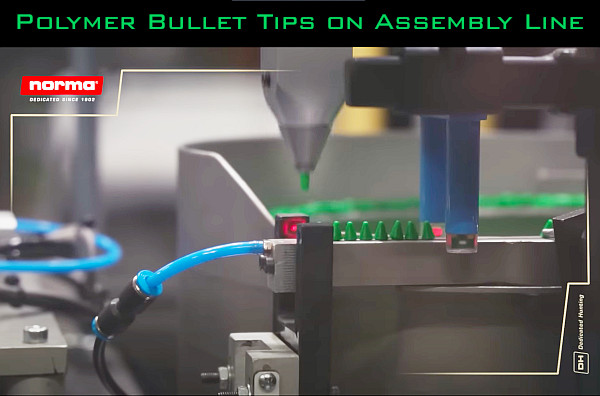
This second Norma ammunition video shows close-ups of the production process and the machinery used for centerfire ammo. This was filmed at the Norma factory in Åmotfors, Sweden, which has operated continuously for over 120 years. Among the many interesting highlight is a sequence showing how polymer bullet tips are inserted. See 6:50 time-mark.
Sellier & Bellot Ammunition Factory in Czech Republic
In this video, Larry Vickers of Vickers Tactical tours a Sellier & Bellot ammunition plant in the Czech Republic. This video shows details of primer production as well as bullet-making, brass-making, and production-line cartridge manufacturing.
Remington Ammunition Plant Re-Opened by Vista Outdoors
This video shows ammo production at the re-opened Remington ammunition plant in Lonoke, Arkansas. “This is one of the largest ammunition manufacturing plants in the world” said Mark Keefe, NRA Publications editorial director. “It was set up in 1969 by DuPont, who owned Remington at the time. They do it all here. Cases, bullets, centerfire rifle, centerfire pistol, rimfire and shotshell.” It’s great to see this plant back in production after Remington Ammunition filed for bankruptcy in 2020 and the assets of the Remington conglomerate were auctioned off. Ultimately, Vista Outdoor, owner of Federal, CCI and Speer, purchased the assets of Remington Ammunition and got the Lonoke plant running again, better than ever.
This article is Copyright 2023 AccurateShooter.com. Republication on any other site gives rise to statutory penalties and compensatory damages.
Share the post "Saturday Movies: Inside Look at Modern Ammunition Factories"
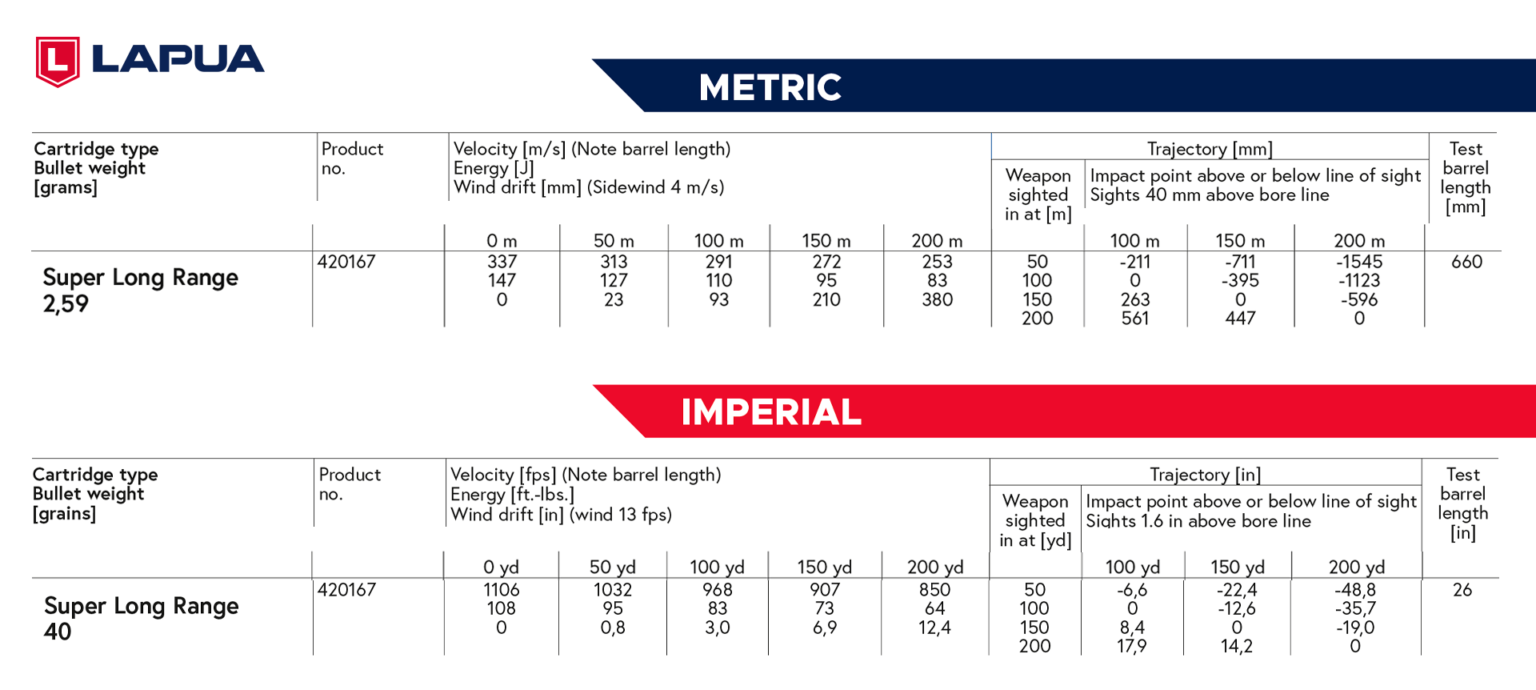
Lapua just introduced two new Long Range Rimfire ammo offerings. New for 2023, Lapua’s Super Long Range and Long Range rimfire ammunition are optimized for long range accuracy and consistency. The goal was to have extremely low extreme spread (ES) and standard deviation (SD), to yield the highest precision down range. Shooters competing in disciplines such as NRL22X and Rimfire ELR where targets are routinely placed beyond 250 yards, will benefit from Lapua’s new ultra-consistent Long Range rimfire ammo. Both the new Long Range and the Super Long Range have a 1106 FPS muzzle velocity (from 26″ barrel) and a 0.172 G1 Ballistic Coefficient.*
Introducing Lapua Super Long Range and Long Range .22 LR Ammo
Lapua’s two new .22 LR cartridges are designed for use at distances of 100 yards and beyond. The result of extensive product development and extremely advanced production processes, Lapua Super Long Range and Long Range rimfire ammunition offer ultra-consistent velocities and BC values for every shot. These new ammo types are designed for those competing in .22 LR rimfire disciplines at longer ranges. Those disciplines include: NRL22X, PRS 22, Rimfire Long Range, rimfire benchrest, and Field Target shooting. These new ammo types provide excellent performance on targets at 100 yards and beyond. With a 1106 FPS muzzle velocity, Lapua Long Range and Super Long Range provide a flat trajectory and improved wind performance. Both rimfire ammo types bring a competitive advantage with the Super Long Range offering the very best group accuracy.
Lapua states: “With a flat trajectory and improved wind performance, Lapua Super Long Range provides the very best accuracy for any top .22 LR shooter looking to beat the competition at longer distances.” The new Lapua Long Range ammo offers similar performance with the same 1106 FPS MV.
“Lapua’s new Long Range offerings are a game-changer for shooters seeking a competitive advantage in today’s most popular rimfire disciplines”, stated Jeff Knowles, Lapua U.S. Sales Director. “Lapua’s product innovation and manufacturing capabilities are unprecedented”.
Ammo Availability: Lapua’s new Long Range rimfire offerings will soon be available at authorized Lapua retailers for delivery by the end of the first quarter of 2023. Learn more about new Lapua Long Range rimfire ammunition at Lapua.com.
About Lapua: For 100 years, Lapua has been producing the highest-quality small caliber cartridges and components for civilian and professional use. Lapua is a part of the Capstone Precision Group, exclusive U.S. distributor for Berger, Lapua, Vihtavuori and SK-Rimfire products.
*Ballistic coefficients are calculated by Quick Target Unlimited Lapua Edition from V0 to V75 BC. G1 BC for all rimfire .22 LR bullets = 0.172.
Share the post "Lapua Offers New Long Range .22 LR Ammo with Tight ES/SD"
Lapua, producer of premium-quality bullets, brass, and ammo, has released a very impressive new mobile App for hunters. The FREE Lapua Hunt App is available now for Android and iOS (Apple) smartphones and tablets. This Hunt App can be downloaded for FREE via Google Play and the Apple iOS iStore.
The App provides ballistics plus mapping and weather reporting. Lapua Hunt really combines the features of other popular hunting Apps with a very sophisticated 6DOF ballistics programs. Lapua Hunt incorporates the product data and advanced ballistics calculator from the excellent Lapua Ballistics App. Lapua states: “Lapua Hunt is the new digital solver for hunters that appreciate ethical hunting, accuracy, and safety. Add your own rifle and reticle, select the best ammo and game category, and you are ready to enjoy your hunting success harvesting game of all sizes.” The basic Hunt App is FREE with all essential functionality. However, additional bonus features are offered for “In-App” purchase.
In Lapua Hunt’s basic calculator view, you can log the wind speed and direction (red needle in the circle), the shooting angle, and the distance to target/prey. In addition, you can easily log weather information including temperature, air pressure, and relative humidity (enter manually or get info from nearby weather station). Additional paid features allow cartography/map view, and the ability to setup a hunting team.
Key Features of Lapua Hunt App
– Utilizes 6DOF, the most accurate ballistics calculation method*
– Includes the latest Lapua cartridge and bullet information
– Maximum target distance 300 meters / 320 yards
– Choose metric or imperial values
– Several result outputs available depending on your needs: map, numerical, reticle, and table views
– Create your own teams and see the location of members on the map
– Compass helps to set the wind direction
– Measure distances in map view**
– Get the weather parameters from nearest weather station
– Safety elements: map view, own location, team member location, compass, maximum and current range for selected ammo
* 6DOF tracks both the pitch, yaw and roll as well as the up/down, left/right, and forwards/backwards movement of the bullet.
** In the map view, it is also possible to measure distances, verify the current and optimal maximum range and sweep area, and view the current and forecasted scent direction in the area.
Create and maintain your own profiles for Game, Rifle, Cartridges:
– Select game category
– Create profiles for your hunting rifles, with scope/reticle info, and ammunition types
– Define custom cartridges (calculations based on G1 or G7 BC and Siacci method)
– Access and share your data from multiple devices.
The Lapua Ballistics App is available for Android and iOS smart phones and mobile devices free of charge. For more info, visit www.lapua.com/support/lapua-hunt-app.
Bonus Feature Set Available as In-App purchases
Basic Hunter: All free features + the ability to create custom cartridges. Basic Hunter+: All free features + the ability to create custom cartridges, plus Ballistic map view. Advanced Hunter: All free features + the ability to create custom cartridges; Ballistic map and Advanced map views; 5 day wind direction. Pro Hunter: All free features + the ability to create custom cartridges; Ballistic map and Advanced map views; 5 day wind direction; Teams feature.
Share the post "New Lapua Hunt App Now Available for FREE Download"
Congratulations to Lapua’s Chris Simmons, who won the 2022 Precision Rifle Series (PRS) Rimfire season with a total score of 689.803.
Simmons was crowned the 2022 Champion this past weekend at the PRS Rimfire Finale hosted by the TX Precision Matches in Navasota, Texas. Competing with Lapua Center-X .22 LR ammunition, Simmons had three podium finishes in the series this year. He took first place at the July-Alabama Precision Rimfire Challenge, first at the Caroline Shooters Group PRS rimfire Series, and second place at the Atlantic Coast Regional Rimfire Finale. In addition to his recent PRS overall rimfire championship, Simmons won the NRLX22 Rimfire National Championship title for the second consecutive year. Having won BOTH both the PRS Rimfire title AND the NRLX22 crown in the same year, Chris is arguably the world’s most successful rimfire tactical competitor.
“The PRS Rimfire Series is a year-long marathon of single matches that comes down to two days of shooting against the best shooters in the country,” commented Simmons. “Consistency wins championships and using Lapua products helps me achieve success with consistency.”
Simmons’ Lapua Center-X .22 LR ammunition is matched to his firearms at Lapua’s Rimfire Performance Center. Specific lots of ammunition are tested at 50 and 100 meters simultaneously, identifying the best performing ammunition in a particular rifle. This service is available to any shooter who wishes to gain a competitive advantage. You can schedule testing at Lapua’s Rimfire Performance Centers. There are two testing facilities — one in Mesa, Arizona, and the other in Marengo, Ohio.
About Lapua
Lapua produces high-quality rimfire and centerfire cartridges and components for civilian and professional use. Lapua is a part of the Capstone Precision Group, exclusive U.S. distributor for Berger, Lapua, Vihtavuori and SK-Rimfire products. For more information, visit Lapua.com.
Share the post "Lapua’s Chris Simmons Wins 2022 PRS Rimfire Championship"
Precision Benchrest and F-Class shooters favor premium brass from Lapua, Norma, Peterson, or RWS. (Lake City also makes quality brass in military calibers.) Premium brass delivers better accuracy, more consistent velocities, and longer life. Shooters understand the importance of good brass, but many of us have no idea how cartridge cases are actually made. Here’s how it’s done.
The process starts with a brass disk stamped from strips of metal. Then, through a series of stages, the brass is extruded or drawn into a cylindrical shape. In the extrusion process the brass is squeezed through a die under tremendous pressure. This is repeated two or three times typically. In the more traditional “draw” process, the case is progressively stretched longer, in 3 to 5 stages, using a series of high-pressure rams forcing the brass into a form die. While extrusion may be more common today, RWS, which makes some of the most uniform brass in the world, still uses the draw process: “It starts with cup drawing after the bands have been punched out. RWS cases are drawn in three ‘stages’ and after each draw they are annealed, pickled, rinsed and subjected to further quality improvement measures. This achieves specific hardening of the brass cases and increases their resistance to extraordinary stresses.” FYI, Lapua also uses a traditional draw process to manufacture most of its cartridge brass (although Lapua employs some proprietary steps that are different from RWS’s methods).
After the cases are extruded or drawn to max length, the cases are trimmed and the neck/shoulder are formed. Then the extractor groove (on rimless cases) is formed or machined, and the primer pocket is created in the base. One way to form the primer pocket is to use a hardened steel plug called a “bunter”. In the photos below you see the stages for forming a 20mm cannon case (courtesy OldAmmo.com), along with bunters used for Lake City rifle brass. This illustrates the draw process (as opposed to extrusion). The process of draw-forming rifle brass is that same as for this 20mm shell, just on a smaller scale.
River Valley Ordnance explains: “When a case is being made, it is drawn to its final draw length, with the diameter being slightly smaller than needed. At this point in its life, the head of the draw is slightly rounded, and there are no provisions for a primer. So the final drawn cases are trimmed to length, then run into the head bunter. A punch, ground to the intended contours for the inside of the case, pushes the draw into a cylindrical die and holds it in place while another punch rams into the case from the other end, mashing the bottom flat. That secondary ram holds the headstamp bunter punch.
The headstamp bunter punch has a protrusion on the end to make the primer pocket, and has raised lettering around the face to form the headstamp writing. This is, of course, all a mirror image of the finished case head. Small cases, such as 5.56×45, can be headed with a single strike. Larger cases, like 7.62×51 and 50 BMG, need to be struck once to form a dent for the primer pocket, then a second strike to finish the pocket, flatten the head, and imprint the writing. This second strike works the brass to harden it so it will support the pressure of firing.”
Thanks to Guy Hildebrand, of the Cartridge Collectors’ Exchange, OldAmmo.com, for providing this 20mm Draw Set photo. Bunter photo from River Valley Ordnance.
Share the post "Making of Cartridge Brass — Production Process Revealed"
This week’s featured firearm belongs to John “SnakeEye” Seibel, founder of the VarmintsForFun website. In recent years, John has become a “true believer” in the little 20-Caliber cartridges. He says this light-recoiling 20 PPC, Rampro-actioned pistol is perfect for a quick shot on a critter, taken from the front seat of his truck. John tells us: “A long-range pistol is an ideal truck gun in my opinion. It stows in a small area and doesn’t take up the room a rifle does. Just keep ear protection near by at all times! I’ve taken varmints as far as 400+ yards with this 20 PPC pistol, so why would you need a rifle?”
Perspectives on Pistols for the Varmint Hunter
by John Seibel
I decided to try my hand at shooting varmints with a pistol one day when I grew tired of wrestling a rifle around in the truck for a quick shot. Many times when traveling around on the farm you’ll spy a groundhog or fox that usually isn’t more than 200 yards away. A single-shot pistol like the Thompson Contender could fit the bill. With its compact length, around 20 inches, a long-barrel pistol can lay on the truck’s passenger seat for easy access. I usually keep my two leather brick-style sandbags laying beside the console and seat. I have a box made from hard rubber that I lay across the top of the door. I then lay the two bags on top. This makes a nice platform to rest the pistol’s forearm. I like to use a forearm that is at least two inches wide. That lets the gun lay steady—almost like you are shooting from a bench rest. For the shooting hand, I prefer a pistol grip with finger grooves and a slight overhang or flare for the web of your hand.
As for optics, I tried long-eye-relief pistol scopes but they lacked the magnification you need for long-range target shooting or varminting. Those pistol scopes have really long eye-relief because they are designed to work with the pistol held at arm’s length. When shooting at the bench or from a truck that’s not what you want. By the time you find the target and get your eye in the exact location, the varmint has moved on or died of old age! After much fiddling around with pistol-type scopes, I finally decided to use rifle scopes on my long-range pistols. The minimum I use is a 4.5-14×40. Eye relief on a Leupold 4.5-14x40mm is about 3.5 inches at 4.5 power. Field of view is better with rifle scopes too and it’s easier to acquire your target. For this type of shooting a light-recoiling caliber is essential or you will have scope-eye bad! I currently have three long-range pistols and use them to shoot 17M4, 20 PPC, 22 BR, and .223 Rem. The featured gun may be the most accurate of my pistols, and your editor thinks it’s the most handsome of the three.
The Rampro Pistol Project — Working with John Illum
A couple of years ago I called John Illum of Rampro about building the ultimate long-range pistol. It just so happens that John was a big time long-range pistol shooter. I told him that I wanted a gun that didn’t recoil badly and wouldn’t torque when fired. As I am a quadriplegic, with no grip in my hands, the gun had to handle well under recoil so I didn’t drop it. Recoil had to be straight back–no twisting.
Well Illum listened to me and came up with a gun that performs just the way I wanted. Illum suggested a rear grip stock of his own design. It has a 2.25″ wide forearm and a rear grip with a slight palm swell that fits your hand perfectly. Another nice feature is the finger grips. It has an extended overhang or “beavertail” that fits comfortably in the web of your hand. Of course it had to be walnut! I chose Rampro’s STP small action with a PPC bolt. His bolt uses a Sako-type extractor. The action is a single-shot. Being right-handed, I chose a right bolt, left port configuration. This works really well in a pistol. You can load with your left hand and see the round laying in the action–that’s what you want in a pistol without a safety.
Gun Specifications John Illum’s Rampro actions are chrome-moly steel. Commonly you’d see them blued, but I had him put a brushed nickel finish on the action and rings. From a few feet away it looks like stainless. The trigger is Illum’s own design set at 8 ounces, and there’s no creep that I can detect. The action has Remington barrel threads and will accept Remington type triggers. One neat thing is that the action was milled with an integral recoil lug (much like the current Surgeon Action). And the bolt is milled all in one piece–no soldered-on handles. My only gripe with this bolt handle is that it could be a tad longer, but it still is manageable for a single-shot. You’ll also note how slick and streamlined the scope rings are. Illum made those as well. His rings mount to the action via two screws from the inside of the ring, a very elegant set-up for sure. (I currently have a 6.5-20x40mm Nikon scope on this gun. If I had to do this project over again the only thing I would change would be installing a 30mm scope because I like ‘em!).
The barrel is a PacNor Super-Match heavy taper with flutes milled by John Illum, who did all the gunsmithing on this pistol. Twist rate is 1 in 12 inches, with an 11° crown, polished to a mirror finish. The barrel was bead-blasted on the exterior to cut glare. I had Illum cut a 20 PPC minimum-spec chamber, with a .237″ neck. That way I don’t have to turn necks on the Lapua Brass (220 Russian necked down to .204). This is a varmint gun–there’s no need for turned necks. [Editor’s Note: Rampro is no longer in business. However, John tells us “I haven’t had any problems with the action so far. If I did, most competent gunsmiths could fix them easily.”]
Handgun Handling Tips
If you want to shoot a long-range pistol but have never have shot this kind of gun before, try to find a mentor — someone with a gun like this who can school you a bit in the correct technique. The first thing you notice is that you have no comb or cheek piece to help align your head and neck. And getting used to the optics takes some practice. Most people fit a pistol-type (long eye-relief) scope, but these can be awkward to use, and somewhat frustrating at first — the field of view is very restricted. Move your head very slightly and you can lose the sight picture completely. You can solve that problem by using a standard rifle scope, but that will put your head very close to the eye-piece — just three to four inches. With that arrangement, if you don’t hold the gun correctly … POW instant scope-eye!
Now once you get the hang of shooting a long-range pistol you will find it can be just as accurate as a rifle. But there is a trick to shooting them. Shooting a long-range pistol is a whole new world — you need to hold it just right. If you don’t let the gun roll back a little (i.e. if you grip too hard) you will get vertical stringing. I hold my hand against the back of the grip to guide the gun but let it almost free recoil. Looking at how compact the pistol is, you might think “Hey, this would make an ideal ‘walking-around’ varminter.” Well, that’s not really the case. For real precision shooting a solid benchrest type set-up is a must. You can attach a bipod to a long-range pistol, but you would need a flat surface. A fence-post top would work pretty well without a bipod if you carry a small light bag. Overall though, this type of pistol works best as a sandbag gun. For a walking-around gun, you’d be happier with a rifle I think.
Load Development and Accuracy
When I built this gun, Hornady had just released the 32gr V-Max (see footnote), a good match for my barrel’s 1:12″ twist. I choose the 20 PPC because of the very good Lapua brass (220 Russian parent case). I figured teaming Lapua brass with the little .204 bullet would offer excellent accuracy combined with very low recoil. My expectations were fulfilled. The brass proved to be excellent and the PacNor loved the little V-Max pills.
I tried quite a few different loads and most powders that I tried worked very well. These included: H322, Benchmark, AA 2460, and Reloader 7. Amazingly, with just 14″ of barrel, all of these powders delivered impressive velocities–ranging from 3914 to 4074 fps. I settled on 48 Harrell’s clicks of Accurate Arms (AA) 2460, which drives the 32gr V-Maxs to 3995 fps.
With AA 2460 the gun will shoot in the low 3s at 100 yards consistently — as long as I steer the gun right, which takes some practice. I think groups in the low 0.3″ range is excellent for a non-benchrest factory bullet. Despite having no buttstock to grab, recoil on my 20 PPC pistol is very minimal — it just rocks back into your hand. The main problem is to keep the scope from smacking you, since I used a rifle scope with short eye-relief. Muzzle flash and noise are tolerable but DO NOT shoot one of these without good ear protection. Your ears are very close to the muzzle.
I also have a 20 PPC rifle built on a BAT action with a Richard’s #008 laminated stock cut down in size. That gun’s 1:9″-twist Lilja barrel lets me shoot the Berger 50gr LTB bullets. In the wind, these perform quite a bit better than the 32s. My two favorite loads for the 50 grainers are: a) 26.0gr VV N135, CCI 450 primers, 3615 fps; and b) 27.3gr Hodgdon Varget, CCI 450s, 3595 fps. The BAT 20 PPC also shoots really well with the 40gr V-Max, pushed by N135 and Fed 205M primers.
Pistol Action Legal Issues
One important thing to remember if you build a pistol is to make sure the receiver came from the factory as a pistol and was titled as a pistol. Rifle actions are illegal to use as a pistol. Yes, that’s a nonsensical law, but it’s still on the books. You can use factory pistol actions such as the XP 100.
If you want a new custom action such as a BAT (my favorite), you can order it as a pistol action and when you get it, register it as a pistol. Note, in some states there may be additional fees, waiting periods, or restrictions for pistol actions (as opposed to rifle actions). Check your local laws before ordering the action.
Future Trends in Varmint Hunting — Plenty of Twenties
I think these sub-caliber rounds, both 20s and the 17s, are the future of recreational varminting, at least out to medium distances. The Twenties offer low recoil, excellent accuracy, and components keep getting better and better. The bullet-makers are finally making high-quality bullets in appropriate weights. Compared to something like a 22-250, I’ve noticed that my 20 PPC rifle has a lot less noise, a plus when you want to be quiet around other people and varmints.
The flat trajectory is another big advantage in the field. With the 20 PPC, zeroed at 100 yards, I can pretty much hold dead center and get hits out to 300 yards or so without touching the scope to add elevation. [Editor: The same is true with the 20 Practical cartridge, basically a .223 Rem necked down to .20 Caliber. It has proven very accurate and easy to tune.]
The 20-Caliber cartridges we have now, in particular the 20 PPC and 20 BR, are very well-refined. You don’t have to do a lot of tuning or tinkering to have a very accurate, effective varmint-slayer. In fact, if I could dream up a signature “20 VFF” (Varmints For Fun) cartridge it would basically be the 20 PPC. In truth, nearly any of the popular 17- or 20-Caliber cartridges will perform well if you start with top-quality brass. The sub-calibers have less recoil and burn less powder, and there are very good components for most varmint and target-shooting applications. To me it seems that these small calibers work so well because of good components, low recoil, and efficient cartridge designs (particularly in the VarTarg and PPC cases).
WARNING: For your own safety, ALWAYS reduce all starting charges by 10% and work up carefully! Ambient temperature changes, powder lot variations, and differences in barrel friction can result in significantly increased pressures.
20 PPC LOAD MAP
Bullet GR
Maker
Powder
Charge
Primer
Case
Velocity fps
Barrel Twist
Comments
32
Hornady V-Max
H322
27.6
Rem 7½
Lapua
4000
Lilja 1:12
WarrenB Form Load
32
Hornady V-Max
AA 2460
29.5
Rem 7½
Lapua
3995
PacNor 1:12
SnakeEye Pistol Load
32
Hornady V-Max
H4198
25.1
CCI BR4
Lapua
4222
PacNor 1:12
A. Boyechko Load
39
Sierra BlitzKing
H322
26.0
Rem 7½
Lapua
3700
Lilja 1:12
WarrenB Load
39
Sierra BlitzKing
VV N540
28.8
CCI BR4
SAKO
4064
PacNor 1:12
D.Moore, Low 2s
40
Hornady V-Max
VV N135
27.8
Fed 205m
Lapua
3950
Lilja 1:9
SnakeEye Load
50
Berger LTB
VV N135
26.0
CCI 450
Lapua
3615
Lilja 1:9
SnakeEye Load
50
Berger LTB
Varget
27.3
CCI 450
Lapua
3595
Lilja 1:9
SnakeEye Load
Footnote: When first manufactured, the small Hornady 20-Caliber V-Max bullet was actually 33 grains, not 32 grains as sold currently. I still have some of the 33-grainers. I’ve observed no functional difference between the 33s and the current 32-grainers.
Share the post "Sunday Gunday: 20 PPC Pistol — Great for Varmint Adventures"



 Philip Hemphill served 30+ years with the Mississippi Highway Patrol before retiring as a Captain in 2011. The
 Norma has released a fascinating video showing how bullet, brass, and ammunition are produced at the
 Precision Benchrest and F-Class shooters favor premium brass from


 The headstamp bunter punch has a protrusion on the end to make the primer pocket, and has raised lettering around the face to form the headstamp writing. This is, of course, all a mirror image of the finished case head. Small cases, such as 5.56×45, can be headed with a single strike. Larger cases, like 7.62×51 and 50 BMG, need to be struck once to form a dent for the primer pocket, then a second strike to finish the pocket, flatten the head, and imprint the writing. This second strike works the brass to harden it so it will support the pressure of firing.”



 Lapua just introduced two new



 Precision Benchrest and F-Class shooters favor premium brass from


 John Illum’s Rampro actions are chrome-moly steel. Commonly you’d see them blued, but I had him put a brushed nickel finish on the action and rings. From a few feet away it looks like stainless. The trigger is Illum’s own design set at 8 ounces, and there’s no creep that I can detect. The action has Remington barrel threads and will accept Remington type triggers. One neat thing is that the action was milled with an integral recoil lug (much like the current Surgeon Action). And the bolt is milled all in one piece–no soldered-on handles. My only gripe with this bolt handle is that it could be a tad longer, but it still is manageable for a single-shot. You’ll also note how slick and streamlined the scope rings are. Illum made those as well. His rings mount to the action via two screws from the inside of the ring, a very elegant set-up for sure. (I currently have a 6.5-20x40mm Nikon scope on this gun. If I had to do this project over again the only thing I would change would be installing a 30mm scope because I like ‘em!).
 Handgun Handling Tips
 Load Development and Accuracy
 Pistol Action Legal Issues
 I think these sub-caliber rounds, both 20s and the 17s, are the future of recreational varminting, at least out to medium distances. The Twenties offer low recoil, excellent accuracy, and components keep getting better and better. The bullet-makers are finally making high-quality bullets in appropriate weights. Compared to something like a 22-250, I’ve noticed that my 20 PPC rifle has a lot less noise, a plus when you want to be quiet around other people and varmints.


