Thursday was Team Day at the Berger SWN. The rules called for four shooters. But one Aussie Team had a special mascot shooter to add team spirit.
Today, Friday, marks the third day of competition at the Berger Southwest Nationals (SWN), with individual matches on the schedule. Today’s match will have a Palma format, with shooters competing individually at three yardages: 800, 900, and 1000. This is when it really gets tough — no wind coaches. Each shooter is on his or her own. Yesterday, Thursday, was a Team Day at Ben Avery, with four-person teams shooting at 800, 900, and 1000. We saw some familiar squads on the firing line, such as Team Berger Bullets, The X-Men, and Da Bulls, as well as new squads.
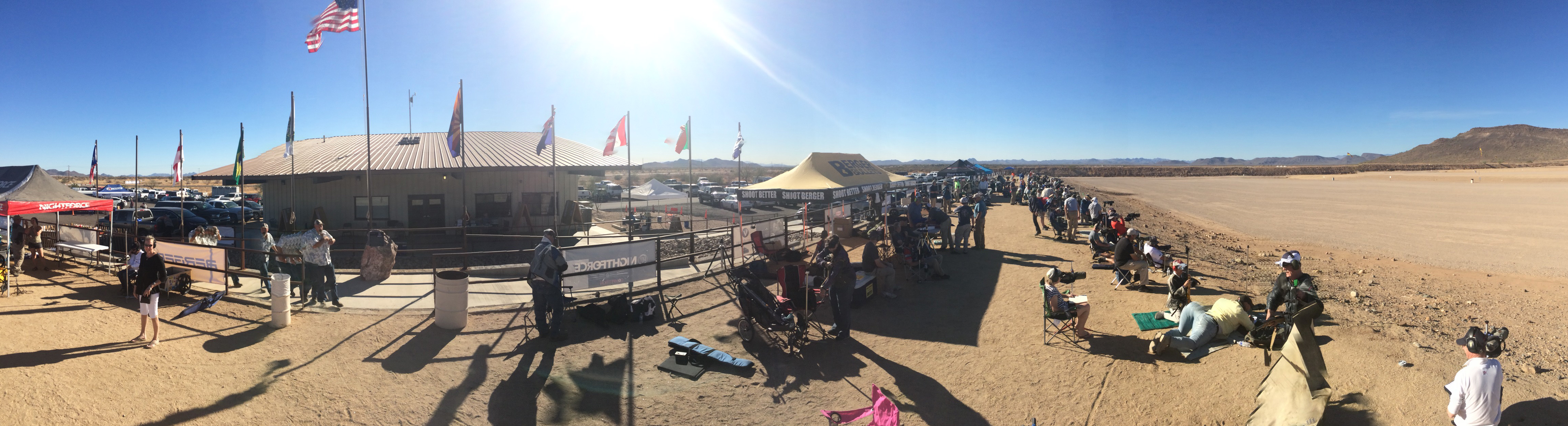
Individual Long-Range Competition starts today, Friday, at the Berger Southwest Nationals. The firing line is full — this match “sold out” early. Photo by Sherri Jo Gallagher.
Click Image to see full-screen Panorama of 1000-yard firing line at Ben Avery.
Thursday’s conditions were much calmer than the Wednesday (when winds were howling in the afternoon). It was very calm in the early morning but then the wind increased gradually during the day, becoming switchy. Many shooters told us the mirage was difficult to read. The sling division was tightly fought, with Scottish HPS Team and U.S. National Mrnak Team tied on points at 1779 at day’s end. The Scots finished first by X-count, 92 to 85. Finishing third was U.S.A. National Hayes Team, 1776-114X.
In F-Open, the “Old Gentlemen” of Team Berger lead the way on Thursday, with a score of 1784-92X, followed by Team Lapua/Brux/Borden in second with 1782-101X. Tied on points in third place, but with fewer Xs, was Team Defiance at 1782-82X. This was a bit of a family affair as Scott Harris coached wife Christine and son Adrian, along with shooters John Moreali and Ben Steinsholdt. Larry Bartholome had top individual score, not dropping a point to finish “clean” at 450-21X. Next best was AccurateShooter’s own Jay Christopherson, with 449-31X.
In F-TR, Team “Da Bulls” topped the field with 1762-66X, barely edging second-place Team McMillan which scored 1762-64X. The McMillan team was a powerhouse including current F-TR World Champion Derek Rodgers, and, as coach, former USA F-TR Team Captain Ray Gross.
The powerhouse Team McMillan F-TR squads featured serious talent. Left to right here, in their red jerseys, are Captain Paul Phillips, Derek Rodgers, and Coach Ray Gross.
One team featured a Father-Daughter Duo, with father Scott coaching Morgan, his talented daughter. Morgan tells us that competitive shooting has unlocked a new world for her. She has traveled to South Africa with her father to shoot in international matches. Shooting at the SWN is a highlight of her year: “I love the warm weather here — It’s snowing back home in New York”.
SWN VIDEO: Father coaches daughter in Thursday’s Team Match:
View from the pits at the Mid Tompkins Range at Ben Avery. Photo by Sherri Jo Gallagher.
Kelly McMillan showed us a new F-Open competition stock, the Kestros with “Z-Rail”. This features a box-section aluminum extension on the fore-end. This allows a longer “wheelbase” on the stock, as well as a lower center of gravity. Kelly says his company is working may adapting this extension to include an bipod attachment rail. That way you could shoot the same stock in both F-TR and F-Open divisions.
SWN VIDEO: Kelly McMillan talks about new McMillan and MCubed (M3) stocks in this video. Kelly plans to host his Taking Stock Radio Show on Friday, February 9, live from the Berger SWN. CLICK HERE for Kelly McMillan’s SWN Radio Show.
Rekindle Old Friendships and Meet New Friends
Some shooters come to to the SW Nationals for the swag (the prize table is amazing). Others come for the sunshine (think warm 80-85° weather). And even more folks come to try out their shiny new toys and to test their skills against the nation’s best shooters.
But we’d say the number one reason most folks make the pilgrimage to Ben Avery every year is the camaraderie — the chance to connect with friends, rekindling connections that may go back decades. Fundamentally, then, the Berger SWN is about the people. For many of us, this is the only time of the year when we get a chance to meet fellow shooters from distant corners of the USA (and other nations).
Old Guys Rule — Team Berger topped the F-Open field in Thursday Team competition. NOTE: this photo shows 2017 team members.
An accurate, self-loading .22 LR rifle, such as this Volquartsen, is our gun of choice for speed shooting with rimfire reactive targets.
Reactive targets offer “instant gratification” — with every hit your target moves, spins, or falls. Shooting reactive targets with a rimfire rifle is fun AND affordable. Times are a-changin’ — rimfire ammo prices have dropped dramatically, so you can now get very good rimfire ammunition for just four bucks a box, such as Norma Tac-22. That works out to a mere eight cents a round. At that price, you can afford to shoot every weekend.
Rimfire Biathlon Target — Tons of Fun RimfireSteel.com offers the unique Rimfire Steel Biathlon Target, a scaled-down Biathlon target designed for use at 50 feet for training and recreational shooting. This is one of our favorite rimfire targets. You can increase the level of challenge by moving it to 25 yards! Watch the video — it shows how to reset the five plates remotely with a lanyard.
Make Your Own Shooting Gallery with Reactive Rimfire Targets
For .22 LR fans, the folks at Action Target have created a whole series of steel rimfire targets. Much lighter than their centerfire counterparts, these rimfire targets are easier to transport and easier to set up. With this wide selection of reactive targets, you can create your own shooting gallery.
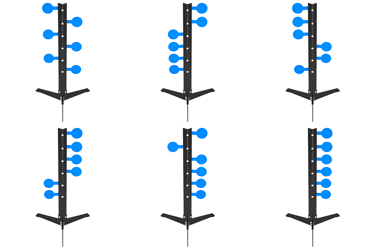
Rimfire Dueling Tree
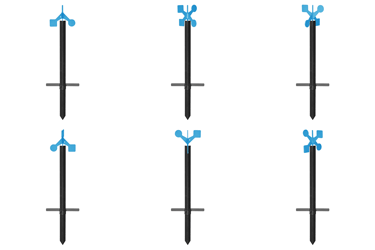
Rimfire Spinning Jack
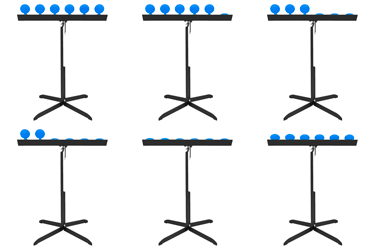
Rimfire Plate Rack
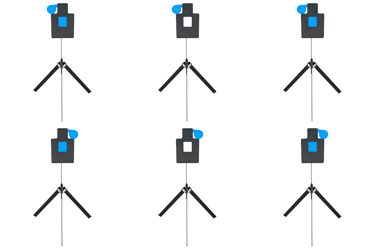
Rimfire Buffalo
In this video, Michael Bane reviews Action Target’s line of rimfire targets, which includes plate racks, spinners, dueling trees, and more. As Michael explains: “This line of targets is very well thought out. For example — dueling trees are a lot of fun. But a centerfire dueling tree weighs a lot, it’s hard to cart it around. A rimfire dueling tree is easy to set up, easy to carry around.”
New PT Target “Walks” When Hit
Action Target has just released a new reactive target that doesn’t even need a stand or base. The patent-pending PT Twist rests on the ground, and flops over or “walks” when hit. Constructed from a single piece of 3/16″-thick A514B steel, the PT Twist has no welds or bolts to break or ricochet. Watch the PT Twist in action:
Riflescopes are mechanical contraptions. One of the sad realities about precision shooting is that, sooner or later, you will experience a scope failure. If you’re lucky it won’t happen in the middle of a National-level competition. And hopefully the failure will be dramatic and unmistakable so you won’t spend months trying to isolate the issue. Unfortunately, scope problems can be erratic or hard to diagnose. You may find yourself with unexplained flyers or a slight degradation of accuracy and you won’t know how to diagnose the problem. And when a 1/8th-MOA-click scope starts failing, it may be hard to recognize the fault immediately, because the POI change may be slight.
When An Expensive Scope Goes Bad
A few seasons back, this editor had a major-brand 8-25x50mm scope go bad. How did I know I had a problem? Well the first sign was a wild “drop-down” flyer at a 600-yard match. After shooting a two-target relay, I took a look at my targets. My first 5-shot group had five shots, fairly well centered, in about 2.2″. Pretty good. Everything was operating fine. Then I looked at the second target. My eye was drawn to four shots, all centered in the 10 Ring, measuring about 2.4″. But then I saw the fifth shot. It was a good 18″ low, straight down from the X. And I really mean straight down — if you drew a plumb line down from the center of the X, it would pass almost through the fifth shot.
Is My Scope Actually Malfunctioning or Is This Driver Error?
That was disconcerting, but since I had never had any trouble with this scope before, I assumed it was a load problem (too little powder?), or simple driver error (maybe I flinched or yanked the trigger?). Accordingly, I didn’t do anything about the scope, figuring the problem was me or the load.
Even expensive scopes can fail, or start to perform erratically — and that can happen without warning, or for no apparent reason. Here are some signs that you may be having scope issues.
1. Click count has changed signficantly from established zero at known range.
2. Noticeably different click “feel” as you rotate turrets, or turrets feel wobbly.
3. Inability to set Adjustable Objective or side focus to get sharp target image.
4. Shot Point of Impact is completely different than click value after elevation/windage change. For example, when you dial 2 MOA “up” but you observe a 6 MOA rise in POI.
Problems Reappear — Huge POI Swings Affirm This Scope is Toast
But, at the next range session, things went downhill fast. In three shots, I did manage to get on steel at 600, with my normal come-up for that distance. Everything seemed fine. So then I switched to paper. We had a buddy in the pits with a walkie-talkie and he radioed that he couldn’t see any bullet holes in the paper after five shots. My spotter said he thought the bullets were impacting in the dirt, just below the paper. OK, I thought, we’ll add 3 MOA up (12 clicks), and that should raise POI 18″ and I should be on paper, near center. That didn’t work — now the bullets were impacting in the berm ABOVE the target frame. The POI had changed over 48″ (8 MOA). (And no I didn’t click too far — I clicked slowly, counting each click out loud as I adjusted the elevation.) OK, to compensate now I took off 8 clicks which should be 2 MOA or 12″. No joy. The POI dropped about 24″ (4 MOA) and the POI also moved moved 18″ right, to the edge of the target.
For the next 20 shots, we kept “chasing center” trying to get the gun zeroed at 600 yards. We never did. After burning a lot of ammo, we gave up. Before stowing the gun for the trip home, I dialed back to my 100-yard zero, which is my normal practice (it’s 47 clicks down from 600-yard zero). I immediately noticed that the “feel” of the elevation knob didn’t seem right. Even though I was pretty much in the center of my elevation (I have a +20 MOA scope mount), the clicks felt really tight — as they do when you’re at the very limit of travel. There was a lot of resistance in the clicks and they didn’t seem to move the right amount. And it seemed that I’d have four or five clicks that were “bunched up” with a lot of resistance, and then the next click would have almost no resistance and seem to jump. It’s hard to describe, but it was like winding a spring that erratically moved from tight to very loose.
At this point I announced to my shooting buddies: “I think the scope has taken a dump.” I let one buddy work the elevation knob a bit. “That feels weird,” he said: “the clicks aren’t consistent… first it doesn’t want to move, then the clicks jump too easily.”
Convinced that I had a real problem, the scope was packed up and shipped to the manufacturer. So, was I hallucinating? Was my problem really just driver error? I’ve heard plenty of stories about guys who sent scopes in for repair, only to receive their optics back with a terse note saying: “Scope passed inspection and function test 100%. No repairs needed”. So, was my scope really FUBAR? You bet it was. When the scope came back from the factory, the Repair Record stated that nearly all the internal mechanicals had been replaced or fixed: “Replaced Adjustment Elevation; Replaced Adjustment Windage; Reworked Erector System; Reworked Selector; Reworked Parallax Control.”
How to Diagnose Scope Problems
When you see your groups open up, there’s a very good chance this is due to poor wind-reading, or other “driver error”. But my experience showed me that sometimes scopes do go bad. When your accuracy degrades without any other reasonable explanation, the cause of the problem may well be your optics. Here are some of the “symptoms” of scope troubles:
1. Large shot-to-shot variance in Point of Impact with known accurate loads.
2. Uneven tracking (either vertical or horizontal).
3. Change of Point of Impact does not correspond to click inputs.
4. Inability to zero in reasonable number of shots.
5. Unexpected changes in needed click values (compared to previous come-ups).
6. Visible shift in reticle from center of view.
7. Changed “feel” or resistance when clicking; or uneven click-to-click “feel”.
8. Inability to set parallax to achieve sharpness.
9. Turrets or other controls feel wobbly or loose.
10. Internal scope components rattle when gun is moved.
Source of Problem Unknown, but I Have a Theory
Although my scope came with a slightly canted reticle from the factory, it had otherwise functioned without a hitch for many years. I was able to go back and forth between 100-yard zero and 600-yard zero with perfect repeatability for over five years. I had confidence in that scope. Why did it fail when it did? My theory is side-loading on the turrets. I used to carry the gun in a thick soft case. I recently switched to an aluminum-sided hard case that has pretty dense egg-crate foam inside. I noticed it took some effort to close the case, though it was more than big enough, width-wise, to hold the gun. My thinking is that the foam wasn’t compressing enough, resulting in a side-load on the windage turret when the case was clamped shut. This is just my best guess; it may not be the real source of the problem. Remember, as I explained in the beginning of this story, sometimes scopes — just like any mechanical system — simply stop working for no apparent reason.
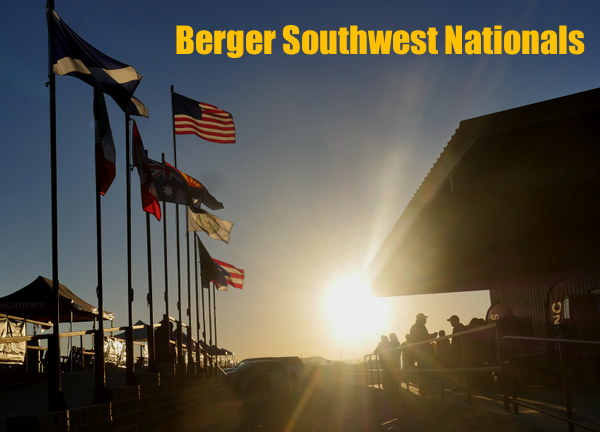
The Berger Southwest Nationals (SWN) is the biggest and best long-range shooting event west of the Mississippi, and the best mid-winter event by far. And because it includes both F-Class and Sling (Palma) disciplines, the SWN attracts more top shooters than even the F-Class Nationals. You will find multiple National and even World Champions on the firing line. Combine the level of competition with warm Arizona weather and a massive prize table and you have a stellar event that is the highlight of any long-range shooter’s season.
This year’s Berger SWN is even more notable because Berger Bullets has relocated to Mesa, Arizona, so this is truly Berger’s “home match”. Berger moved to Arizona after the company was acquired by the Nammo Lapua group. Berger bullets are now distributed in the USA by the Missouri-based Capstone Precision Group, which also markets Lapua brass, bullets and ammo, SK Rimfire ammunition, and Vihtavuori powder.
Sling Shooters and F-Classers compete on the same firing line at the Berger SW Nationals. Sling competitors are on the left with F-TR and F-Open shooters on the right.
The Berger SWN has amazing awards. Here is one of the Native American-themed perpetual trophies.
This year, as usual, the Berger SWN started off with a Shooters’ Clinic on Monday and Tuesday. Experts provided instruction on wind reading, match strategies, shooting technique and more. This initial clinic also affords SWN participants a chance to check out the Mid Tompkins Range at the Ben Avery Shooting Facility north of Phoenix, Arizona. This range can be challenging, no doubt, but the typical calm morning conditions have allowed records to be set here.
Yesterday, Wednesday, February 7, the 2018 SW Nationals competition phase began with the Mid-Range Match. F-Classers and sling shooters set-up on the firing line with targets 600 yards away. Wednesday turned out to be very tough, with very strong, gusty winds. Still there were some impressive performances. Mastering the tough conditions, Christine Harris shot 598-31X to win the F-Open division, beating all the male shooters, including many past National Champions. You Go Girl!
Here is the firing line for Wednesday’s 600-yard Match. Photo by Sherri Jo Gallagher.
Full Results for Wednesday’s Mid-Range Match are published on the McMillan Facebook Page.
From here on it gets even tougher. Today, Thursday, there’s a four-man Team match with with 15 shots for record each at 800, 900 and 1000 yards. There will be three classes: Palma, F-Open (shot from rest), and F-TR (.223 Rem and .308 Win shot from bipod)
Here is AccurateShooter.com’s System Admin, who shot F-Open with Team Lapua/Brux/Borden on Thursday.
Warm Arizona Weather
Wonder warm weather is predicted for the whole week, It was 79° on Wednesday and temps in the low 80s are predicted for the rest of the week. We didn’t hear any complaints from the Canadians who fled ice and snow to shoot the match. It was sunny and warm in Arizona as promised. This is a great location for a shooting holiday, and you can even book a “dawn patrol” balloon ride near the Ben Avery range.
2018 Berger SWN Schedule of Events
Monday and Tueday, 5 and 6 February, 2018, 9:00 AM
Shooting Clinic: Clinic will include instruction in both classroom and live fire settings. Check in starts by 7:00 AM and instruction will start at 9:00 AM.
Wednesday, 7 February, 2018, 9:00 AM
Mid-Range Match – Three 20 shot matches at 600 yards. (Divisions: Palma, Any Rifle-Any Sight, F-Open, F-TR)
Thursday, 8 February 2018, 9:00 AM
4-Man Palma Team Match – 15 shots for record at each of 800, 900 and 1000 yards. (Divisions: Palma, F-Open, F-TR). NOTE: Practice available to those not shooting with a team.
Friday, 9 February 2018, 8:30 AM – Start of Grand Agg
Individual Palma Match – 15 shots for record at each of 800, 900 and 1000 yards. (Divisions: Palma, F-Open, F-TR). BONUS: Swap Meet – after conclusion of fire at 1000 yard line.
Saturday, 10 February 2018, 8:30 AM
Individual 1000 Yard Matches – Two 20 shots matches at 1000 yards. Any Rifle-Iron Sight (Any sight for F-Class shooters). (Divisions: Palma, Any Rifle-Iron Sight, F-Open, F-TR)
4 Man Team Match – 20 shots at 1000 yards. Any Rifle-Iron Sight (Any sight for F-Class shooters). (Divisions – Palma, Any Rifle-Iron Sight, F-Open, F-TR)
— Banquet Dinner – Approximately 5:00 pm at Indoor Range.
Sunday, 11 February 2018, 8:30 AM
Individual 1000 Yard Matches – Two 20 shots matches at 1000 yards. Any Rifle-Any Sight (Any sight for F-Class shooters). (Divisions – Palma, Any Rifle-Any Sight, F-Open, F-TR)
— Awards Ceremony at the Indoor Range.
To help competitors at the Berger SW Nationals, here are some smart tips from Bryan Litz. Bryan knows the Ben Avery range well. He won the Mid-Range and Long-Range F-TR National Championships there in 2015. And twice he has won the sling division at the Southwest Nationals. Here are wise words from Bryan:
Competition TIP ONE. Improving your scores in long range competition is a constant process of self-assessment. After each match, carefully analyze how you lost points and make a plan to improve. Beginning shooters will lose a lot of points to fundamental things like sight alignment and trigger control. Veteran shooters will lose far fewer points to a smaller list of mistakes. At every step along the way, always ask yourself why you’re losing points and address the issues. Sometimes the weak links that you need to work on aren’t your favorite thing to do, and success will take work in these areas as well.
Competition TIP TWO. Select your wind shooting strategy carefully. For beginners and veterans, most points are typically lost to wind. Successful shooters put a lot of thought into their approach to wind shooting. Sometimes it’s best to shoot fast and minimize the changes you’ll have to navigate. Other times it’s best to wait out a condition which may take several minutes. Develop a comfortable rest position so you have an easier time waiting when you should be waiting.
Competition TIP THREE. Actively avoid major train wrecks. Sounds obvious but it happens a lot. Select equipment that is reliable, get comfortable with it and have back-ups for important things. Don’t load on the verge of max pressure, don’t go to an important match with a barrel that’s near shot out, physically check tightness of all important screws prior to shooting each string. Observe what train wrecks you and others experience, and put measures in place to avoid them.
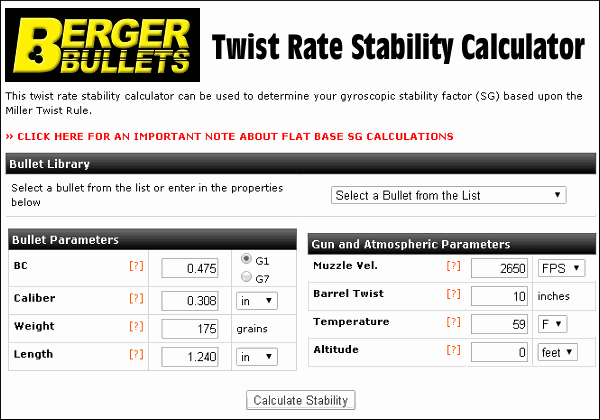
With the Berger Southwest Nationals underway this week, we thought we’d steer our readers to a very useful resource, courtesy Berger Bullets. This online Stability Calculator helps shooters determine the optimal twist rate for their choice of projectiles.
Berger Twist-Rate Stability Calculator
On the Berger Bullets website you’ll find a handy Twist-Rate Stability Calculator that predicts your gyroscopic stability factor (SG) based on mulitiple variables: velocity, bullet length, bullet weight, barrel twist rate, ambient temperature, and altitude. This cool tool tells you if your chosen bullet will really stabilize in your barrel.
How to Use Berger’s Twist Rate Calculator
Using the Twist Rate Calculator is simple. Just enter the bullet DIAMETER (e.g. .264), bullet WEIGHT (in grains), and bullet overall LENGTH (in inches). On its website, Berger conveniently provides this info for all its bullet types. For other brands, we suggest you weigh three examples of your chosen bullet, and also measure the length on three samples. Then use the average weight and length of the three. To calculate bullet stability, simply enter your bullet data (along with observed Muzzle Velocity, outside Temperature, and Altitude) and click “Calculate SG”. Try different twist rate numbers (and recalculate) until you get an SG value of 1.4 (or higher).
Gyroscopic Stability (SG) and Twist Rate
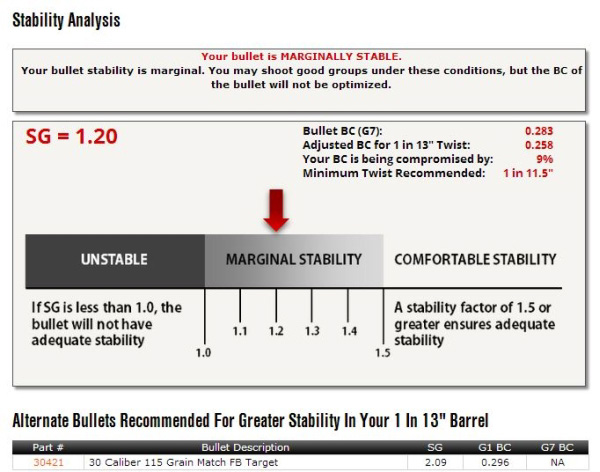
Berger’s Twist Rate Calculator provides a predicted stability value called “SG” (for “Gyroscopic Stability”). This indicates the Gyroscopic Stability applied to the bullet by spin. This number is derived from the basic equation: SG = (rigidity of the spinning mass)/(overturning aerodynamic torque).
If you have an SG under 1.0, your bullet is predicted not to stabilize. If you have between 1.0 and 1.1 SG, your bullet may or may not stabilize. If you have an SG greater than 1.1, your bullet should stabilize under optimal conditions, but stabilization might not be adequate when temperature, altitude, or other variables are less-than-optimal. That’s why Berger normally recommends at least 1.5 SG to get out of the “Marginal Stability” zone.
In his book Applied Ballistics For Long-Range Shooting, Bryan Litz (Berger Ballistician) recommends at least a 1.4 SG rating when selecting a barrel twist for a particular bullet. This gives you a safety margin for shooting under various conditions, such as higher or lower altitudes or temperatures.
Story idea from EdLongrange. We welcome reader submissions.
Most bolt-action rifle shooters work the bolt with their trigger-pulling hand. This is because most rifles sold to right-handed shooters come with right-side bolts, while “lefty” rifles come with left-side bolts. This “standard” configuration requires the shooter to take his dominant, trigger-pulling hand off the stock to cycle the bolt, then re-position his hand on the stock, and “re-claim” the trigger. Often the shooter must lift or move his head to work the bolt, and that also requires him to re-establish his cheek weld after each and every shot. Not good.
This really doesn’t make much sense for precision shooting with fore-end support*. There is a better way. If you leave your trigger hand in position and work the bolt (and feed rounds) with the opposite hand, then you don’t need to shift grip and head position with each shot. All this requires is a weakside-placed bolt, i.e. a left bolt for a right-handed shooter or a right bolt for a left-handed shooter. The video below shows a “Lefty” working a right bolt. Note how efficient this is:
As our friend Boyd Allen explains: “If you think about it, if you are going to work with a factory action where your options are left bolt and left port or right bolt and right port, and you are building a rifle that will only be shot from a rest, using the left/left for a RH shooter or using a right/right for a LH shooter works better than the conventional configuration”.
Shoot Like a Champ and Work the Bolt with Your Weakside Hand
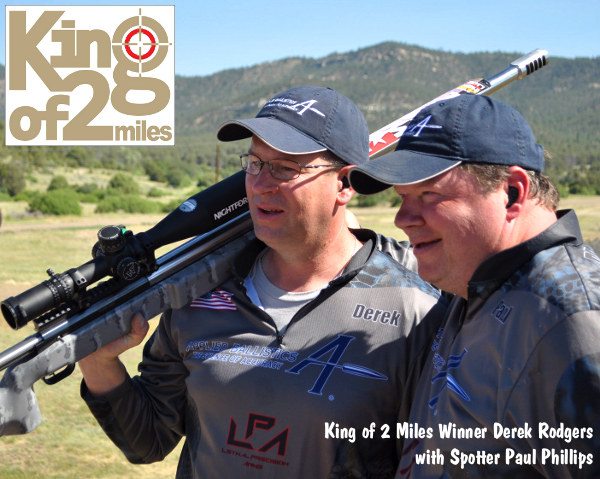
Derek Rodgers, the current F-TR World Champion, the reigning King of 2 Miles, and the only person to have won BOTH F-Open and F-TR U.S. National Championships, runs this kind of “opposite” bolt set-up. Yep, Derek shoots right-handed with a left bolt. Though Derek is a right-hander, he shoots with a Left Bolt/Left Port (LBLP) action. He pulls the trigger with his right index finger, while working the left-side bolt with his left (weakside) hand. This allows him to stay in position, and maintain his cheekweld. He places his right hand on the grip, while manipulating the bolt (and feeding rounds) with his non-trigger-pulling hand.
Current King of 2 Miles (and F-TR World Champion) Derek Rodgers
This is the rifle with which Derek won the 2013 F-TR National Championship.
*For true standing, off-hand shooting (whether in competition or on a hunt), a conventional strongside bolt placement makes sense, since the non-dominant arm must support the front of the rifle all the time. When shooting from bipod or rest, it’s a different story.
In recent months, Sierra has unveiled four very serious, ultra-high-BC MatchKing bullets in .224, .264 (6.5 mm), and .308 calibers. And just last week Sierra has released initial load data for these four new projectiles. CLICK HERE to get the latest official load data for these four new bullets.
High-BC MatchKings Tipped at Factory
Sierra recently released a new-for-2018, 95-grain .224 projectile, Sierra product #1396, with a claimed G1 BC of 0.600 — mighty impressive for a .22-caliber bullet. Next up is the new 6.5mm (.264 caliber) 150-grainer with an 0.713 G1 BC. This could be a game-changer for the 6.5-284 and new 6.5 PRC short magnum. There are also two new .308-caliber MatchKings, a 200-grainer with 0.715 G1 BC, and a new 230-grainer with a stunning 0.800 G1 BC. Many of these New Generation MatchKings now come “tipped” from the factory for more uniform BC.
Sierra Bullets has LOAD DATA for these four new bullets. If you handload for .223 Remington, 22-250, 6.5 x284 Norma, .308 Winchester, or .300 Winchester Magnum, check out this new reloading data.
At the request of our readers, we provide select “Deals of the Week”. Every Monday morning we offer our Best Bargain selections. Here are some of the best deals on firearms, hardware, reloading components, optics, and shooting accessories. Be aware that sale prices are subject to change, and once clearance inventory is sold, it’s gone for good. You snooze you lose.
1. AmmoFast — Federal .22 LR 40gr Rimfire Ammo, $1.99/box
The good ol’ days of inexpensive rimfire ammo are back! We’ve seen .22 LR prices drop significantly in the last 12 months. And now we can report a new low — the lowest price in years for American-made, name-brand .22 LR ammo. Right now you can buy 50-round boxes of Federal .22 LR ammo for just $1.99! You read that right — under two bucks for fifty rounds of Federal .22 LR 40gr LRN. That works out to four cents per round. This offer is limited to 10 boxes per customer. Check Wikiarms.com for other great .22 LR ammo deals.
2. CDNN — Winchester XPR Hunting Rifle, $264.99 After Rebate
We like the Winchester XPR as an affordable, entry-level hunting rifle. The three-lug bolt has a short throw, the mags seat easily and a wide range of chamberings are available. Right now CDNN is offering the XPR for just $339.99. That’s a great price, but it gets even better. Winchester is offering a $75.00 factory rebate, lowering your net cost to just $264.99. That’s less than you’ll pay for a new custom barrel! The $75 Rebate applies to any NEW Winchester XPR rifle purchased from February 1 through March 31, 2018. For more info, visit rebates.winchesterguns.com.
Here’s an excellent promo from our friends at Grafs.com. Hornady’s versatile Lock-N-Load Auto Charge™ Powder Scale and Dispenser is on sale for $149.99. The Auto Charge is accurate to 0.1 grains of powder and can hold up to 1000 grains of powder in its hopper. This is a very good value compared to other popular powder scale/dispensers on the market such as the RCBS ChargeMaster Lite, currently $213.49 at Amazon.com
4. Grafs.com — Caldwell Rock Front Rest, $119.99
The Caldwell Rock BR Front Rest is sturdy and stable. It ships with two front bags, a wide tri-lobe plus a conventional bag (shown above). The latter works quite well for rifles with narrow forearms — such as hunting rigs or ARs. This is a good option for a young shooter or someone getting started on a tight budget. We’ve used this rest on a varmint hunt and it worked well. Use the Mariner wheel for gross elevation changes and “fine tune” elevation by squeezing your rear sand bag. This same rest costs $138.93 at Amazon. Save $20.00 by purchasing through Grafs.com which also offers a single, flat $7.95 handling fee per order — no extra shipping charge.
Bushnell’s highly-regarded Elite 4500 Series scopes offer good performance and reliability for the price. Here’s a great deal on a Demo Bushnell 8-32x40mm Elite 4500 with Multi-X Reticle and 1″-diameter main tube. This would be a good choice for an F-Class or long-range varmint rifle. We’ve used this scope in a 600-yard Benchrest match and it worked well, though we would prefer a reticle with MOA-based hold-off marks. We do like the 1/8-MOA clicks for precision target work. NOTE: Natchez also has 6-24x40mm Bushnell 4500 Elite zoom scopes on sale now for just $329.99 (with Multi-X Reticle). That’s a crazy low price for an optic this good.
6. Amazon — Neiko Digital Calipers, $16.85
Even if you have a good set of calipers, you may want to get one of these Neiko 01407A Digital Calipers. The #1 best-selling digital caliper on Amazon.com, this Neiko tool features a large LCD Screen and measures up to 6.0 inches. With over 3000 customer reviews, this product has earned an overall rating of 4.4 out of 5 stars. It’s hard to go wrong for $16.85, even if you just use these as a spare set for measuring group sizes and case trim lengths.
7. Amazon — Plano 52″ Double Rifle Case with Wheels, $107.74
This Plano Double Scoped Rifle Case is an Amazon Best Seller for good reason. It offers the functionality and durability of an SKB-type hard case for HALF the money. This is under $110.00, while the equivalent SKB is around $240.00, so you can buy two Planos for the price of one SKB. The 51.5″ interior will fit most scoped competition rifles up to about 29″ barrels (measure your own rifle to make sure). If you separate the barreled action from the stock you can transport even ultra-long ELR rifles. The handles are convenient and beefy and the wheels make this case easy to move through airports and parking lots. This is a very tough, roomy case for the money (plus there’s Free Shipping for Amazon Prime members).
Exterior Dimensions: 54.625″ x 15.5″ x 6″
Interior Dimensions: 51.5″ x 12.63″ x 5.25″
Pluckable Interior Dimensions: 46″ x 10″
Features: Wheels, Secure Draw-Down Latches, O-Ring Seal, Pressure Relief Valve, Customizable Foam
We use 1″-diameter Target Spots for sight-in and practice at 100-300 yards. These bright red/orange self-adhesive dots are easy to see. At 100 yards the high-contrast black diamond centers provide precise aiming points. We found this 10-pack of target spots on Amazon at a rock-bottom price. You get 630 total stick-on dots for just $9.65 with FREE Shipping. You can also get 360 Birchwood Casey 1″ dots from Midsouth for just $3.15, but shipping is extra. If you’re already ordering something from Midsouth, you may want to add the dots to your order.
9. MidwayUSA — Packable Shooting Mat, $12.01
Here’s a heck of a deal on a good light-weight shooting mat. MidwayUSA has slashed the price on its Packable Shooting Mat. This 67″ Long x 31″ Wide Olive Drab padded mat is currently clearance priced at just $12.01. This Packable Mat has some nice features, such as 12″ front flap, elbow pads, 0.15″ thick padding, and six staking grommets. It’s easy to transport, rolling up to a 9″ x 4.5″ package, secured with a heavy strap. If you need a low-cost, basic shooting mat, check out this deal. Weighing just 1.5 pounds, this a good, light-weight mat to keep in a vehicle or to use on a “walk-around” varminting hunt.
Here is beautiful F-Open rig crafted by Forum member CigarCop of KW Precision LLC. It features a laminated wood stock with stunning figured walnut on the outside.
One of the most popular items in our Shooters’ Forum is the ongoing “Pride and Joy” thread. Since 2009, Forum members have posted photos and descriptions of their most prized rifles. Here are some of the most recent “Pride and Joy” rifles showcased in our Forum. Do you have a gun you’d like to see featured there? Just Register for the Forum and you can add your favorite gun to the list.
New 600/1000 Benchrest Light Gun for Richard Schatz in 6 BRA
This blue benchrest rig was crafted by Alex Wheeler for ace benchrest competitor Richard Schatz, a past 600-yard IBS Shooter of the Year. Richard’s new 600/1000-yard Light Gun features a Krieger barrel chambered in 6 BRA (40° Ackley version of 6mmBR Norma). That Krieger is mated to a 1.550″ BAT B action, ignition-timed for smooth bolt close and increased accuracy. The trigger is the sophisticated Bix’n Andy. Schatz’s BAT is glued and screwed into a Wheeler LRB stock, with aluminum rails and adjustable metal “tracking rudder” on the toe of the stock. The rudder can be adjusted side to side to ensure optimal tracking, while the rudder’s vertical angle can be adjusted slightly with shims.
Hand-Crafted Thumbhole-Stocked Rifle Chambered in 6 PPC
Forum Member Grimstod offered this handsome 6 PPC custom with a beautiful, hand-made thumbhole stock: “This was fully accurized with Premier Accuracy recoil lug installed. Really makes these shoot a lot better. It features a Kelbly Panda action with Hart barrel and glass bedding. Trigger fall was perfect to start and we have to give Ian Kelbly big thumbs up for making every action perfectly timed.” On top is a March competition scope. See more photos at www.premieraccuracy.com.
A Wicked Accurate Big Dawg in 28 Nosler
This 28 Nosler Benchrest rifle looks good and shoots even better — check out that 20-shot target shot at 200 yards! You can’t argue with that…
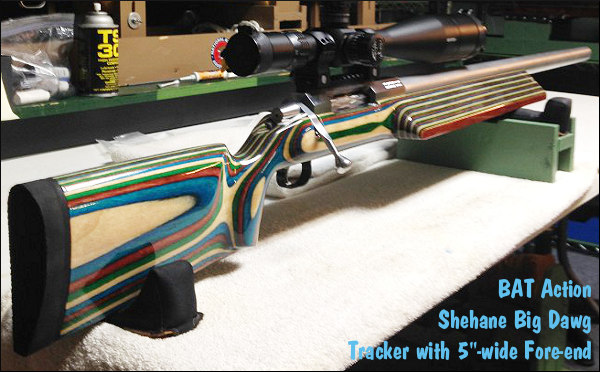
Belonging to Forum member LA50Shooter, this rig is chambered in 28 Nosler, with metal work by Gre-Tan Rifles. The action is a BAT Model “L” 1.650 Octagon with a 30 MOA scope rail, running a Jewell BR Trigger. The stock, from D&B Supply, is a Shehane Big Dawg Tracker with 5″ fore-end. Color scheme is “Field & Stream” Rutland laminate. This big rig boasts FOUR 34″ Benchmark barrels (1.5″ for seven inches tapering to 1.225″ at muzzle).
A Pair of Score Benchrest Beauties
Forum member JimPag showcased two new Benchrest-for-Score rifles. The rig on the left, smithed by Dwight Scott, features a Farley Black Widow RBLPRE (with Bix’n Andy trigger). It features Pistachio and Carbon Terry Leonard stock glued and screwed by Sid Goodling. The barrel is a Krieger 23.5″ chambered in 30BR with a Mike Ezell tuner. It’s topped with a Goodling-built 1-piece Davidson base and a Nightforce 42X Comp scope. The rifle on the right, smithed by Sid Goodling, features a Marsh Saguaro RBLPRE Action with Bix’n Andy trigger, and March 36-55X scope. This rifle boasts a rare Screwbean Mesquite and carbon stock by Terry Leonard. The 23″ Lilja bbl is chambered in 30 Thrasher with a Goodling tuner. (30 Thrasher is longer 30 BR case developed by Joe Entrekin). Jim also has two other barrels for this action in 30 BR and 6 BRAI. On top is a Sid Goodling-built one-piece Davidson base with a March 36-55X scope.
Rem 700 in Manners Stock — .284 Winchester for Hunting
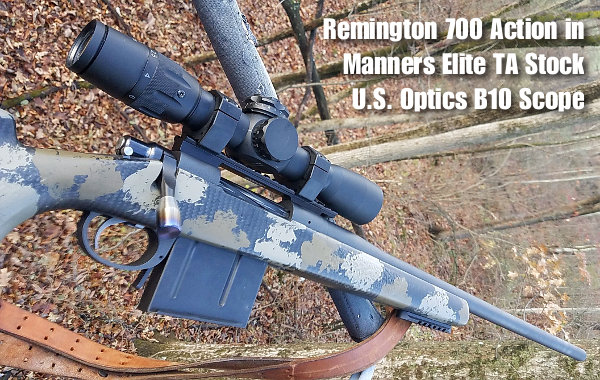
Here’s a Rem 700 enhanced with a Manners Elite TA stock and other upgrades. Forum Member NickB1075 says: “Here is a rifle I finished for hunting this year. It’s a bit heavy for New York woods carry but it just shoots great. Maybe I will have to get one of those fancy Proof Research barrels to lighten it up a bit.” Nick is running a Benchmark 1:8.5″-twist barrel chambered in .284 Win with 0.315 neck for shooting 150gr Barnes bullets. Nick added a Jewell trigger and on top is a U.S. Optics B10 Scope.
When Only the Biggest and Boldest Will Do — .50 BMG
No “Pride and Joy” feature would be complete without a Big Boomer. This impressive .50 BMG, “61 inches of big bore goodness”, weighs a whopping 49 pounds (95 lbs. complete with case and accessories). This rifle’s proud owner, forum member 6MT, says everything on this black beast is jumbo-sized: “Yes, I can stick my finger clear through the ports in the muzzle brake!” The rifle boasts a U.S. Ordnance 31″ heavy-contour barrel fitted to Barnard GP action. The stock is a “Big Mac” from McMillan. No optics yet — 6MT says he is “looking at an ATACR 7-35x56mm with a Spuhr mount… As soon as my wallet recovers!”
In this video, gunsmith Alex Wheeler explains how to ensure that your full-length sizing dies fit your brass properly. With many cartridge types, it’s not unusual for factory dies to be slightly large in the bottom section. When the diameter of a FL-sizing die is too large near the base, this can leave the bottom section of fired cases “unsized”, with the result that you can have extraction issues and stiff bolt lift, or what Alex calls “clickers”. At the same time, it’s not unusual for dies to over-size fired cases at the shoulder (i.e. reduce the shoulder diameter by .004″ or more).
We strongly recommend that all hand-loaders watch this video, particularly if you load cases 6+ times with relatively high-pressure loads.
Alex explains that a key dimension is the diameter of a fired case 0.200″ above the case head. If your die does not size your fired cases at this point, you should get a FL die that does. This could be a custom die ground to fit your chamber, or it could be a “small-base” die specifically designed to “hit” the bottom section of the case. Alex also notes that some FL dies have an inside chamfer at the mouth of the die, right at the very bottom. (See video at 3:55). This can leave the section of the case right above the extractor groove unsized, which can also lead to “clickers” and stiff bolt lift.
Paint Your Brass to Find Problem Areas
If you are having stiff bolt lift or extraction issues, Alex explains that you can “paint” your brass with magic marker (or dye-chem), and then place the case in your chamber. On the “hot spots” where the case contacts the chamber wall, the marking will rub off, allowing the brass metal to shine through in the problem area(s). This will illustrate where you need better sizing from your die.
“You can ink up the case with some magic marker or dye-chem. If you are getting clickers, go ahead and mark up the case and chamber it and see where it’s wearing. This will help you diagnose [whether the problem] is coming from the base, is it coming maybe from a score in the chamber… it can even happen at the shoulder although that’s pretty rare. Usually the dies size enough at that point.”
Did you find this video helpful? View more informative Tech Tip Videos on WheelerAccuracy.com.
Video Tip from Boyd Allen. We welcome reader submissions.






 For the next 20 shots, we kept “chasing center” trying to get the gun zeroed at 600 yards. We never did. After burning a lot of ammo, we gave up. Before stowing the gun for the trip home, I dialed back to my 100-yard zero, which is my normal practice (it’s 47 clicks down from 600-yard zero). I immediately noticed that the “feel” of the elevation knob didn’t seem right. Even though I was pretty much in the center of my elevation (I have a +20 MOA scope mount), the clicks felt really tight — as they do when you’re at the very limit of travel. There was a lot of resistance in the clicks and they didn’t seem to move the right amount. And it seemed that I’d have four or five clicks that were “bunched up” with a lot of resistance, and then the next click would have almost no resistance and seem to jump. It’s hard to describe, but it was like winding a spring that erratically moved from tight to very loose.