COVID-19 stay-at-home orders have created abundant free time at home for millions of Americans. To fill otherwise empty hours, we know many readers have been reloading ammo — LOTS of ammo. And quite a few of you folks are thinking of getting a progressive press to increase output. Because multiple operations take place with a single pull of a lever, a progressive press can produce way more ammo in a given period of time than any single stage press. With a progressive, on the ram up-stroke, the multiple stations can simultaneously remove spent primer, full-length size case, drop powder, seat bullet, and crimp (if desired). Most progressives are also set up to prime cases with the ram in the lower position — though some guys prefer to prime manually.
Progressive presses aren’t just for high-output pistol ammo or bulk rifle ammunition. Good progressives can be adapted to do certain reloading tasks for top-on-the line match ammo. You might use a progressive for decapping, priming, and sizing, then throw powder and/or seat bullets separately. Some Champion shooters do use progressives to load their match ammo! For example 5-Time National Long Range Champion John Whidden and 2020 Berger SWN F-Open Champion Jay Christopherson both use progessive presses for some (but not all) operations.
To help you get started with progressive presses, here are five videos from UltimateReloader.com that cover six popular machines, from the elite Mark 7 Evolution to the inexpensive Lee Pro 1000. With many of these machines you can add separate vertical bullet feeder systems that further increase loading efficiency.
Mark 7 Evolution Press — Distributed by Lyman
Dillon XL-650 vs. Dillon XL-750
RCBS Pro Chucker 7 with Bullet Feeder
Dillon 550C with 6mm Creedmoor and 9x19mm
Lee Pro 1000 Features and Operation
Better Safe Than Sorry — the RCBS Lock-Out Die
RCBS Makes a “Lock-Out Die” that senses the powder charge. This will halt the Progressive press if you have a double charge, or an undercharge. Your Editor has the Lock-Out Die on his RCBS Pro 2000. It has “saved his bacon” a half-dozen times over the years. It can be used on Dillon and Hornady progressives as well as RCBS machines.
Turn on your TVs and break out the popcorn — it’s a big week on Shooting USA. A full hour of SHOT Show coverage runs tonight (5/6/20) at 9:00 pm ET. This episode provides a “first look” at the new guns, optics, and gear introduced for 2020. Shooting USA’s team looks at over 65 new products.
2020 SHOT Show Highlights: Colt Python, Hornady A-Tip bullets, Manners PRS Stock, Volquartsen Summit .17 WSM, Ruger-57 Pistol, Pinnacle Precision Rifle, HK SP5, Impact Sport Muffs, Laugo Arms Alien Pistol, Vortex 1-10X Scope, Glock 44 Pistol, Hornady Rapid Safe and more.
This SHOT Show 2020 episode airs on the Outdoor Channel Wednesday, May 6 at 9:00 pm ET and Thursday, May 7 at 3:00 pm ET. If you miss those broadcasts, you can watch this and ALL episodes of Shooting USA on Vimeo.com by subscription. The SHOT Show 2020 edition is just $0.99.
Great Shooting USA Episodes
For our Bulletin followers, here are two of our favorite full-length Shooting USA episodes, and well as two excellent instructional segments, one with past NRA High Power Champion SGT Sherri Jo Gallagher.
Texas Varmint Silhouette Match — 200 Meters to 750 Yards
We love shooting reactive targets. This Texas varmint silhouette match features multiple target shapes, 10 at each distance: Tiny Prairie Dogs at 200m, 3″x3″ Armadillos at 300m; 3″x5″ Coyotes at 385m; 5″x4″ Hogs at 500m; Chickens (on swingers) at 600 yards; and Pigs (on Swingers) at 750 yards. Competitors are allowed 10 rounds and 10 minutes to hit each set of targets.
EDITOR: We strongly recommend you take the time to watch this Shooting USA feature — it shows some top-flight benchrest rifles, and also covers the origins of benchrest varmint silhouette in Pennsylvania. There are even some AccurateShooter Forum members on screen. John Scoutten also does a nice job explaining the challenges of shooting this discipline with a PRS rig. We think any benchrest or tactical shooter will really enjoy this video.
Travis Frazier of Field & Cave Outfitters says shooters love the reactive targets: “The most exciting thing is seeing your hits — these [targets] really go airborne”. Yep, that’s the best thing about Varmint Silhouette matches — hits deliver instant gratification. Travis designs and produces these steel targets.
Vintage Sniper Match and GAP Grind PRS Match
Historic Rifles are on the firing line! It’s the Vintage Sniper Match in Talladega for collectors competing with classic rifles and historically accurate optics from the two World Wars. A team from the U.S. Army Marksmanship Unit also takes the challenge with a reproduction 03A4.
Plus, John Scoutten welcomes a new shooter to Precision Rifle (PRS) Competition. The two team up to take on 25 grueling stages at the Bushnell GAP Grind in Tennessee. With a special Pro/Am format, the GAP Grind is one of the most popular tactical matches in the country
Reading the Wind — SGT Sherri Jo Gallager (USAMU)
This segment, created when Sherri Jo was shooting with the USAMU team, explains how to evaluate wind conditions and adjust your hold for long range.
Minute of Angle (MOA) Defined with Jim Scoutten
Minute of Angle (MOA) — what does it actually mean? And what do you get when a rifle manufacturer guarantees one-half MOA accuracy? Jim Scoutten answers these questions and explains MOA basics. One MOA is an angular measurement equivalent to 1.047″ at 100 yards.
Leveling your scope can be a time-consuming and tedious process. The Fix It Sticks folks have changed that with the introduction of the Scope Jack. This simple unit levels a scope through contact with the flat on the bottom of the scope (opposite the elevation knob). You can do this quickly, with one hand, leaving the other free to tighten your rings once the scope is aligned. This really is a clever, effective, easy-to-use tool, as you can see in this video:
You attach the Scope Jack to the Picatinny rail on your rifle, then lossen the rings so the scope can rotate. Then simply elevate the Scope Jack with a quick twist, using a 1/4″ driver. The Scope Jack’s horizontal roller will contact the scope’s bottom flat, rotating the scope it into proper alignment, square to the rail.
Operating Instructions from Manufacturer Fix It Sticks
The Scope Jack works with any 1/4 inch driver to quickly and easily level your scope to your rail. Just mount the scope jack to the pic rail under your scope and turn the drive handle until the lifting arm engages with the flat section under your turrets. Once the scope is level, maintain pressure while tightening your ring screws to keep optic level throughout the process.
Requirements:
1. Scope much have a central flat section under turrets
2. Needs a minimum of 1/4″ clearance between rail and scope
3. Picatinny Rail must be accessible under optic
TECH TIP: You Still Must Check the Reticle Orientation INSIDE Your Scope
The Scope Jack works fast, but it is NOT the “final solution”. Why? Some scopes have a reticle that is not perfectly aligned with the turrets and/or bottom flat. We have seen scopes with vertical reticle line off as much as three degrees (3 °) from true plumb. With such a scope, you CAN set the reticle square, but then your turrets will be canted relative to the receiver. That creates issues when shooting at long range. Accordingly, if your scope has a badly canted reticle, you should send it back to the manufacture for warranty repair. Three degrees may not sound like much, but it is actually quite noticeable:
For all scopes, AFTER using the Scope Jack, we recommend you test your reticle with a plumb line. You can hang this line from a door or ceiling fixture with a weight on the bottom. Important — when using a plumb line make sure your rifle is 100% level or your results may be off. We recommend using a bubble level to help align your rifle properly.
SHOT Show 2020 Hour-Long Special Episode
This week, Shooting USA features a full hour of SHOT Show coverage. If you watch just one episode of Shooting USA this year, it should be the SHOT Show 2020 Special which runs Wednesday, March 6th at 9:00 pm Eastern/8:00 pm Central on the Outdoor Channel. This episode provides a “first look” at the new guns, optics, and gear introduced for 2020. Shooting USA’s team looks at over 65 new products. Click HERE to learn more about this week’s 2020 SHOT Show episode.
2020 SHOT Show Highlights: Colt Python, Hornady A-Tip bullets, Manners PRS Stock, Volquartsen Summit .17 WSM, Ruger-57 Pistol, Pinnacle Precision Rifle, HK SP5, Impact Sport Muffs, Laugo Arms Alien Pistol, Vortex 1-10X Scope, Glock 44 Pistol, Hornady Rapid Safe and more.
Shooting USA’s SHOT Show 2020 episode airs on the Outdoor Channel Wednesday, March 6 at 9:00 pm ET and Thursday, March 7 at 3:00 pm ET. Look for Shooting USA on the Outdoor Channel. In addition, you can watch all episodes of Shooting USA on the VIMEO channel by subscription. The SHOT Show 2020 edition is just $0.99.
Here are some of the 50+ new products featured on the SHOT Show Special. Click Images for detailed product information.
Report by Jay Christopherson
2020 Berger SW Nationals F-Open Champion Team Member, Team Lapua-Brux-Borden
I’ve been shooting F-Class for about 9 years now. In fact, I shot my very first match, a 600-yard mid-range match, using a 6mm Dasher, on March 19, 2011. My first relay was a 188-4X and my overall score was 582-19X. I remember shooting a really nice group in the 9-ring, because I dialed the scope the wrong way and I shot lots of “verification” shots before making adjustments. I also remember wondering if that was a good score for that range in those mostly calm conditions (it wasn’t). I’ve tracked every match I’ve ever shot and I’ve come a long way since then. I’ve always been a competitive person and F-Class gave me an outlet to indulge both my competitiveness and my fondness for details. In what other individual sport does a thousandth of an inch (or less!) become important? Or a tenth of a grain?
Some of my greatest pleasures in this sport come not necessarily from winning a match (though I won’t turn that down), but in identifying something small in what I am doing that has a material effect on paper. Maybe it’s a tiny change in seating depth. Maybe it’s a slightly modified strategy for making wind calls. Maybe it’s a tiny position or hold change. Whatever it is, when it works, there’s no better feeling.
I have a full-time job to go with this hobby, so finding the time for productive training is difficult. You have to really plan ahead to maximize the time you spend reloading, developing loads, and training at the range. To that end, I invest a lot of time in reducing the things that I do at the loading bench. I load ammo on a progressive press, though modified to produce ammo to my standards. I don’t clean brass. I don’t do a lot of things that most shooters would call traditional in the loading room. Because frankly, I don’t have the time between family, work, and other interests.
If it doesn’t make a difference on paper, I mostly don’t do it. Still, there are one or two loading habits I’m trying to get rid of. I also pre-seat all my ammo for matches — whatever I show up at the match with, is what I have. I don’t clean my rifle between days at the match. I had well over 200 rounds without cleaning by the time the last shot was fired at the 2020 SWN. It took a lot of time for me to get comfortable with that. That works for what I do, but I wouldn’t dare try it with any other loads or rifles, at least, not without a lot of testing to be comfortable. My original 6MM Dasher shooting Reloder 15 couldn’t go that many rounds without cleaning and building up a carbon ring. Unfortunately, I learned a tough lesson on that one my first year.
I do all my own gunsmithing, including chambering, bedding, and stock work. I’m no Keith Weil, Alex Wheeler, or some of those other guys, but I feel pretty good about the work I do. I know that when there’s a mistake or imperfection, it’s MY mistake and I can live with that. I like to keep things as minimal as possible, so I shoot off a SEB Mini (no mods) and SEB rear bag.
I also shoot with a spotting scope at Long Range, using a Kowa TSN-663 with 25X LER eyepiece and a relatively new spotting scope stand by Rod Brakhage who is a fine F-Class shooter himself. I really like how smooth and adjustable it is on the ground compared to some other rigs I’ve used.
The 284 Wheeler — Slightly Modified .284 Win
This year at the SWN, I shot a 284 Wheeler, which is a straight .284 Win that has some small modifications designed by Alex Wheeler. I think that the work and experimentation that Alex does with reamer design really shows up on paper. In 2019 I was testing the reamer in a couple barrels, looking for the right load. I shot some great relays and team practices with it that year, but this was the first time I brought enough ammo to shoot the entire week with it. Coupled with Berger’s 7MM 180 grain Hybrid Target bullets which I point to increase BC consistency, and Lapua brass, it’s an effective combination. In particular, the brass has lasted me for 13 firings with no signs of fatigue, so I expect I’ll be able to use it at Worlds in 2021 and beyond.
I also shot the entire 2020 SWN with a Vortex Golden Eagle 15-60x52mm scope, my preferred scope for individual matches. It’s a rock-solid reliable scope in my experience, with a great eye box, reliable and repeatable mechanical controls. The Vortex ECR-1 reticle has quickly become my favorite reticle. All four of my Open rifles are built on Borden BRMXD actions, Brux barrels, and sitting in X-Ring F-Open stocks, which are Robertson clones (more on that below). I’ve tried to make each of my rifles as much of an identical clone as possible.
I am not sponsored by anyone as an individual shooter, only through team sponsorship with Lapua-Brux-Borden. Which means that for individual matches, I am free to use what I think gives me the best opportunity to win for individual matches. In practice, the only difference tends to be the scope that I use, as mentioned above.
Jay Christopherson F-Open Rifle Specifications:
Cartridge: 284 Wheeler (variant of .284 Winchester)
Optics: Vortex Golden Eagle 15-60x52mm
Stock: X-Ring F-Open Stock with R.A.D.
Barrel: Brux 1:9″-twist, 32″-long barrel
Action: Borden BRMXD action
Trigger: Flavio Fare
Q: What was your biggest challenge at the 2020 Berger SWN?
Jay: The biggest challenge for me at this year’s SWN was purely mental. At past SWN matches where I had done well, I was trying to focus on not thinking about the different things going on around me. Where I was ranked on the score sheet. How well other shooters were doing. How many points or Xs I was ahead (or behind). Being worried about conditions or whether my ammo would hold up. And so on. And sooner or later, I think those things break your focus.
Going into a relay calculating the points or Xs that you can’t afford to drop is a recipe for losing. It’s like trying NOT to picture a pink elephant with purple dots when somebody challenges you try to not think of a pink elephant with purple dots. In previous SWN events, I came up just short three times in a row, for one reason or another. So, in 2020 I went in with a mental game plan.
Mental Game Plan — Envisioning Success
I pictured what it would take to be successful and what winning would feel like. First relays, then days, and then the match. I started that process months before the match actually happened. I thought about who I was shooting against and how much pressure there was to make every shot count. I thought about how I had performed or reacted in similar situations in the past. And I planned out what I would do and how I would handle those things. I strived to be neither negative nor positive — I wanted to be neutral. I wanted to be ready to win, instead of being surprised by it.
Q: What gear/hardware items give you an edge over the competition?
Jay: There’s no single piece of gear that I can think of that gives someone an edge over somebody else. It all sort of works — it’s more about being consistent with whatever hardware you have. But one piece of new gear that I tried out at the SWN was a single-piece scope mount called the Alphamount (photo below), by Richard Near of NEAR Manufacturing.
I think scope mounts are the most overlooked piece of equipment in F-Class right now — whether they be improperly aligned, improperly torqued, or just plain junk. I think people put a lot of blame on their scopes that can be traced back to mounts. The Alphamount (and single-piece mounts in general) are something that I believe in now, having done a lot of testing. It worked out OK for me at the SWN.
Action for Back-Up Rifle Is Glued and Screwed into Stock
One of the new things I am trying this year is a “glue and screw” action set-up. At the 2019 US F-Class Nationals in Raton, we got rained on a little and when I pulled my rifle apart, I found water between the bedding and action (the bedding is about 2 years old). At the SWN, I found that something had moved enough that I could torque the front action screw and bind the bolt. Not good, but luckily this was my backup rifle that I shot for Mid-Range (badly) and not my lead rifle. There could have been stock movement or other factors as well, but there was no question the bedding had shrunk when I stuck a dial indicator on it and found that my pillars were now standing proud.
Some people had been goading me to try a “glue-and-screw” procedure. Since I had nothing better to do during the COVID-19 lockdown, I pulled out the Dremel, scuffed up the action and bedding, removed the recoil lug, and glued the action into the stock. I’ve had it out a couple times since and it seems to be shooting well, but we’ll see how it holds up and what sort of difference it might make as time goes on.
Q: What is your advice to newcomers in F-Class and Long Range competition?
Jay: Find a nemesis. Someone local who puts in the same effort that you do and is as competitive as you are. Be friends, share info, but work your behind off to make sure you win on match day. I guarantee you someone reading this knows what I’m talking about. The best thing you can do is have someone who pushes you to perform better each time out. You love to win against them, but not as much as you hate to lose to them.
Q: What do you like most about Long Range and F-Class competition?
Jay: I like the challenge of F-Class — it’s a nice blend of working to get the most out of your equipment and the most out of yourself as a shooter. You can have the greatest shooting rifle in the world and it won’t matter a bit if you can’t be consistent pulling the trigger or making good wind calls. By the same token, you can be the greatest wind caller and most consistent trigger puller in the world — but it won’t matter a bit if you can’t wring the best possible performance out of your rifle for that tiny little target at 1000 yards. I like Long Range because everything is magnified — there are rarely easy shots.
Q: What do you prefer, individual events or team matches?
Jay: Team matches. No contest. Most of the reason I travel to matches is for the team events. But just throwing together a team of great individual shooters is not enough to consistently win. You have to operate as a team, which at times means subsuming your own individual goals for the good of the team. I’ve gone into big matches knowing that my team rifle is my best rifle by a mile — but knowing that the best thing for the team’s current and future success is for me to not burn that barrel out (or burning up known good components) in the individual events. And that’s fine with me. Being part of a team of shooters with the same goal, with the same drive, the same focus on team rather than individual — and able to deliver the goods — that’s the reason why I do this.
Q: What kind of stock do you use and how does it behave?
Jay: I use an X-Ring Open stock, which is basically a Robertson clone. I’ve been using X-Ring for about 4 years now. I’ve been through a lot of different stocks to find the one that fits me and the way I like to shoot, and X-Ring has done that for me. There’s a lot of focus recently on lowering the center of gravity and extending the stock length through various methods to solve problems like torque, jump, etc. — those are just problems that I don’t experience or, at least, that don’t bother me while I’m shooting. So, I don’t tend to worry about them. The X-Ring fits nicely and runs very well in the bags that I use. I do think that you have to spend some time finding the right bag setup for the stock you are using. I have at least 9 different rear bags that I have tested at one time or another until I settled on my current bag.
Q: Do you have any specific Gun Handling Tips for F-Open shooters?
Jay: As for gun handling, I prefer a light hold — my cheek indexes off the stock with a very light touch and my trigger hand indexes off the stock also with a light touch so that I have a consistent trigger finger position. What I do is in the style of “free recoil”, but is NOT fully “free recoil”, since I DO lightly touch the stock. For the butt, I run the R.A.D. recoil reducer at its lowest setting, which means that I can barely touch off for indexing purposes and still not interrupt the recoil pulse because the R.A.D. absorbs it. This was a suggestion that Will McCloskey made to me a couple years ago in place of leaving space.
This video, from a past Berger SWN, illustrates Jay Christopherson’s shooting style. He employs a very light touch on the gun. The front rest is a SEB Mini. If this Facebook video doesn’t load,CLICK HERE.
My hold for F-Class has evolved over time into what it is now. There are lots of successful shooters that are using varying degrees of holds, from light to hard. Again, It all sort of works — the most important part is that whatever you do is consistent and repeatable, hence my touch points that ensure my head, shoulder, and trigger finger are in the same position every time. There are shooters out there that will rant about “the fundamentals of shooting” and insist that your legs have to be a certain way, your cheek has to be a certain way, your breathing has to be done a certain way. I’m sure that’s valid for what they do and I’m fine with them looking down on me for it, but I do what produces results for me. For certain, my position and hold when shooting sling is completely different. All it means is that you have to be prepared to adapt.
PARTING SHOT — Have Guns, Will Travel
Here is one of Jay’s other F-Open Rifles. When traveling he separates the stock from the barreled action. He uses a custom-cut foam piece that holds the components very securely. Note the separate slots for barreled action, stock, scope (in rings), bolt assembly, and spotting scope.
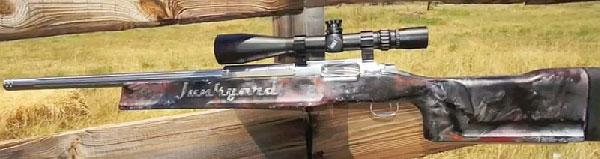
Benchrest shooter Ronnie Smith had the folks at S&S Precision craft a barrel block benchrest gun with a McMillan 50 LBR stock. While the metal work (and block installation) is impressive, the rig’s jaw-dropping feature is an amazing paint job applied by artist David Tidwell of Dallas Airbrush.
Ronnie wanted a stock that didn’t look like anything else you’ve ever seen. Working from Ronnie’s concept of a junkyard-sourced rifle, Tidwell created a masterpiece of airbrushing. The finished stock looks like it was hammered from old beat-up metal, complete with dents, grind marks, hollows, Bondo, and wire-mesh patches. Watch the video below to see how this amazing paint job was applied, from start to finish. (Definitely worth watching!)
If you have a stock you’d like painted by David Tidwell, visit DallasAirbrush.com, call 214-529-4410 or email: david [at] dallasairbrush.com. Dallas Airbrush currently sprays out of Texas Body Works, 2415 Midway Rd Suite 111, Plano, TX 75025.
Serious shooters know Bill Gravatt. He served as President/co-owner of Sinclair Int’l, worked with Creedmoor Sports for many years, then became President of the Capstone Precision Group (Berger, Lapua, SK, Vihtavuori). Bill guided Capstone through the successful acquisition of Berger Bullets by the Lapua Group, introducing new products and increasing product availability. His time at Capstone was marked by one success after another. Now that Bill has achieved his goals with Capstone (which he may continue to serve as a board member), he is returning to Creedmoor Sports in the role of Managing Director.
As the Managing Director of Creedmoor Sports, Bill will direct all operational and marketing activities for the company. Gravatt had worked for Creedmoor Sports as a consultant several years ago before taking over as Capstone President. Previously, Bill was President/Co-owner of Sinclair International, now owned by Brownells. Gravatt has over 27 years of experience in the shooting industry.
“I’m excited to re-join the customer-focused and talented team at Creedmoor Sports. Having served them as a supplier for three years, it’s good to be back in retail to directly serve our precision shooting customers”, said Gravatt.
“The entire staff at Creedmoor Sports is extremely excited to have Bill back! Bill’s leadership skills and commitment to customer satisfaction is second to none. Creedmoor Sports is committed to continuing our quest to be the leader in the precision shooting market and Bill is the right person for this journey”, said Greg Kantorovich, President of Creedmoor Sports.
Watch for Bill Gravatt Interview Soon
Last week AccurateShooter’s Editor conducted a wide-ranging interview with Bill Gravatt, covering numerous topics. We discussed trends in competitive shooting, development of new products and new cartridges, how to grow the shooting sports, and Bill’s goals at Creedmoor Sports. We hope to present this interview in early May. Stay tuned.
Would you like to visit the Walther factory in Germany, and learn all about this German arms-maker? Panteo Productions crafted a 23-minute Walther Factory Tour Video. Panteao Productions takes you to the Walther Arms factory in Ulm, Germany. Product Manager Peter Dallhammer talks about the long history of Walther Arms. Hosted by Larry Vickers, this video showcases Walther products that have influenced modern firearms design. Click arrow on screen below to view.
Watch Other Panteo Videos for 10% Off
Panteo offers a series of high-quality, long-format gun training videos. If you want to subscribe to Panteao’s training videos, you can get 10% off streaming video subscriptions with discount CODE ammoland.
Walther Competition Rifles
Along with rimfire and centerfire handguns, Walther makes competition smallbore and air rifles. Look carefully below — this Walther LG400 Alutec air rifle is different than any gun you’ve ever shot — it has an ELECTRONIC trigger. The LG400’s sophisticated, battery-powered trigger offers a precise, super-light release that is more a “touch” than a “pull”. For top-level Olympic and World Cup competitors, the electronic trigger offers a competitive advantage.
This Walther KK500-E Anatomic .22 LR Smallbore 3P Match Rifle also features an electronic trigger.
Modern Walther Defensive and Sport Pistols
Walther Value 9mm — The Walther Creed at $269.99
While Walther makes premium pistols, such as the steel-frame Q5 shown above, Walther also makes good reliable pistols that cost much less than a Glock or Sig polymer pistol. The Walther Creed offers excellent ergonomics, good accuracy, and well-designed controls for just $269.99 at CDNN Sports. This gun, designed to be a value-leader, emulates Walther’s more expensive PPQ model (MSRP $649.00) at a much lower price. The Creed’s frame size and shape is the same as the PPQ, but the Creed lacks interchangeable backstraps. Slide and trigger are very similar.
About Walther Carl Walther and his son, Fritz, created the first blow-back semi-automatic pistol in 1908. Today, Walther’s innovative spirit continues with the PPK, PPQ, PPS, and Q5 Match Steel Frame series. Military, Police, and other government security groups worldwide utilize Walther firarms. Service and quality continue to be benchmarks of Walther success. For more information, visit www.WaltherArms.com.
Problem: NRA Meetings cancelled due to COVID-19 | Solution: RECOIL’s NRA ROADSHOW
RECOIL Magazine has collected dozens of new product videos on its website. This product showcase features many products that were to be unveiled at the 2020 NRA Convention. Right now there are 45 videos on RECOIL’s 2020 Product Showcase, and we expect many more to be added. You’ll find Rifles, Pistols, Optics, Holsters, Ammo, Hearing Protection, and much more. Noteworthy products include the AMP Annealing System, Timney Triggers, Trijicon Optics, and Alien holsters.
Here is one of the Featured Videos, showcasing AMP Annealers…
RECOIL has created a channel on RECOIL-TV to showcase products originally intended to be featured at the 2020 NRA Annual Meetings & Exhibits in Nashville. Unfortunately the NRA event was cancelled due to the Coronavirus Pandemic. RECOIL-TV’s NRA ROADSHOW channel is currently presenting 45 different new product videos from one to four minutes in length. This should provides some firearms-focused entertainment for our readers stuck at home under Executive health orders.
Kelbly makes outstanding actions, including the Stolle Pandas. In the past 20 years, Pandas have probably won more benchrest matches than any other action (though BATs and Bordens are increasingly in the winning circle). Recently gunsmith Alex Wheeler of Wheeler Accuracy worked his magic on an aluminum Panda, optimizing the “ignition timing” of the action. This involves many small mods to bolt, camming surfaces, trigger, and firing pin: “The whole cam helix and detent shelf is re-cut. The firing pin and cocking piece are modified as well.” When executed properly, Ignition Timing has a number of benefits, including a smoother bolt opening/closing, improved firing pin fall, and enhanced accuracy (though the accuracy improvements can be subtle).
BEFORE Action Timing — Stiff and Clunky
Alex reports: “Normally Panda actions have plenty of firing pin fall. For one reason or another this one was very low. Before timing, firing pin fall was .210 with a Bix’N Andy (BNA) trigger. After trigger timing firing pin fall is .244 with zero cock on close.” Here is how the action functioned before timing work:
CLICK Photo to start VIDEO
Alex notes: “As you can see, after the cocking piece rides out of the detent notch it thenfalls to the trigger and is then re-cocked. This is normal on most un-timed actions.”
AFTER Action Timing — Smooth and Refined
Alex explains the modifications he made for this Panda action: “Moving the trigger back adds cock on close. The whole cam helix and detent shelf is re-cut. The firing pin and cocking piece are modified as well. I do love a timed Panda. In fact, I like aluminum actions, I think there is something to them. But yes, I also recommend Borden as my first choice.’
CLICK Photo to start VIDEO
Fix for Right-Bolt Actions Only
After seeing these videos on Facebook, one poster asked: “I do like my Panda but this is exactly why I bought a Borden action and I love it. It’s good to know you can make a Panda better. Alex, can you time a left bolt Panda?”
Alex replied: “No, the tooling I built is all for right hand actions sorry….”


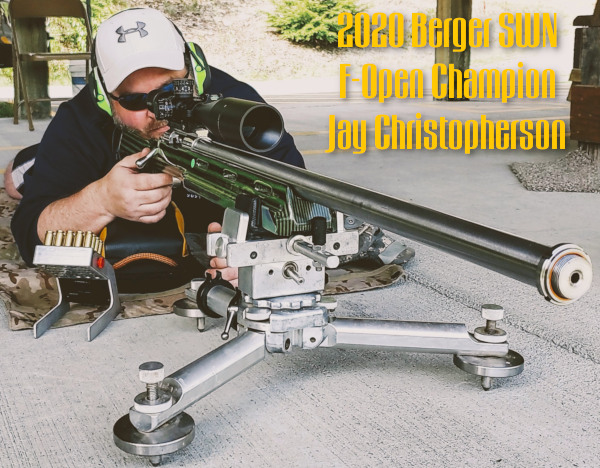

 I do all my own gunsmithing, including chambering, bedding, and stock work. I’m no Keith Weil, Alex Wheeler, or some of those other guys, but I feel pretty good about the work I do. I know that when there’s a mistake or imperfection, it’s MY mistake and I can live with that. I like to keep things as minimal as possible, so I shoot off a SEB Mini (no mods) and SEB rear bag.




 Carl Walther and his son, Fritz, created the first blow-back semi-automatic pistol in 1908. Today, Walther’s innovative spirit continues with the PPK, PPQ, PPS, and Q5 Match Steel Frame series. Military, Police, and other government security groups worldwide utilize Walther firarms. Service and quality continue to be benchmarks of Walther success. For more information, visit


