August is National Shooting Sports Month. The National Shooting Sports Foundation (NSSF), encourages every avid shooter to take one new person to a shooting range this month. Let that newcomer experience the fun of pistol, rifle, or shotgun shooting. The NSSF states: “One trip to the range can be all it takes to create a new recreational shooter. Share your passion and invite a friend on your next trip to the range.”
The +One Movement is intended to expand the number of participants in the shooting sports — something we need if we want to preserve our rights, which are under attack now from politicians in Washington.
Find Shooting Sports Events Near You
The NSSF’s ShootingSportsMonth.org website offers a comprehensive, searchable database. This lets you search by state, to find ranges, events, and sales promotions near you. Visit the NSSF online database of NSSM shooting events to find matches, clinics, training sessions, special sales — and much more.
Many of our readers have been interested in learning how modern bullets are made. While a “boutique” bullet-maker, supplied with appropriate cores and jackets, can craft bullets using relatively simple hand dies and manual presses, factory production is different. The major bullet-makers, such as Barnes, employ huge, complex machines to craft their projectiles on an assembly line.
Modern hunting bullets are made with a variety of sophisticated (and expensive) machines, such as Computer Numerical Control (CNC) lathes, giant multi-stage presses, and hydraulic extruding machines that draw lead ingots into lead wire. Barnes offers an “inside look” at the bullet production process in a series of videos filmed at its Mona, UT factory. We’ve embedded four videos from the series here. These videos can also be viewed on the Barnes Bullets YouTube Channel.
Milling Slots in TSX All-Copper Bullet
This video shows how the slots (between the drive bands) in the TSX all-copper bullet are cut. The slots reduce the bearing surface that contacts the rifling. This helps reduce friction and heat, extending the life of barrels used with all-metal, drive-band bullets:
Varminator Bullets Produced in Jumbo Transfer Press
Here is the transfer press used in the production of Varminator and MPG Bullets. The process begins with a giant spool of flat copper material. The copper is stamped into jackets and eventually the formed Varminator bullets are ejected one by one into a bucket.
CNC Lathe Turns Bullets Automatically
In the video below, a Bar-Feed CNC crafts mono-bloc bullets from metal bar stock. Barnes uses a small CNC lathe to turn .50-caliber bullets from brass bar stock. We’re not sure which bullet is being made in this video. The material looks to be sintered metal. In the close-ups you can gold-colored shavings from when the machine was previously used for CNC-turned brass bullets.
Accuracy Testing in 100-yard Tunnel
Barnes regularly tests bullet samples for accuracy. In the video below, a Barnes technician loads sample rounds and tests them for accuracy in a 100-yard tunnel. The rounds are shot through a special fixture — basically a barreled action connected to parallel rods on either side. This allows the testing fixture to slide straight back on recoil (see it move back at 1:07-08 minute mark).
Upside-Down Trigger — Application for Unlimited Benchrest Competition?
Note how the tester actuates the trigger, which points UPWARDS, just the opposite of a normal rifle. The technician lightly taps the upward-pointing trigger shoe with a metal rod. Could this upside-down trigger work in benchrest shooting — perhaps with railguns? It could make for an interesting experiment.
Story suggestion by EdLongrange. We welcome reader submissions.
Jeff Hansen of Utah now holds Distinguished Rifleman Badge #2561. Jeff’s journey to Distinguished status began with a box filled with his grandfather’s old shooting medals, which led him to the Camp Perry National Matches in Ohio.
Though he had no intention of shooting competitively, only arriving to see the ghosts of his grandfather and uncles, he was so moved by the ambiance of Perry that he began his own marksmanship career — eventually leading him to a prestigious Distinguished Badge.
At the 2022 National Matches, Jeff fired his best scores yet. In the National Trophy Individual (NTI) Match, he reached an overall score of 487-9X for 52nd overall out of nearly 790 competitors. And at the 600-yard line he shot an outstanding 199-5X out of a 200 possible.
“He was on the range with me shooting that 199″, Jeff said of his grandfather. “I felt like he was right there when I finished up. I just hope other people see this and see what I’ve tried to do – if I can do this, they can do this”, he said. “Chase that dream”.
Left to Right: Alvin Hansen, Ray Hansen, and Jeff’s Grandfather Lou Hansen at Camp Perry.
Inspired by My Grandfather to Become a Distinguished Marksman
Jeff Hansen earned his Distinguished Rifleman Badge in 2022 – a journey which began with his Grandpa’s own marksmanship tales from the 1920s and 1930s.
As early as I can remember, my grandfather, Lou, was a huge influence in my life. He was a great marksman. My dad, Ed Hansen, would tell me about the hunting trips they would go on and how Grandpa would make incredibly long shots to get an amazing bull elk or mule deer, only taking one shot to do so. He was always taking me hunting and fishing and shooting – lots of sleepovers where I didn’t actually sleep much, if any, because I would be so excited for the adventures that were going to happen with him the next day.
Whether it was hunting ducks, pheasants, chukars or just shooting, it didn’t matter. It was always an awesome experience with him. Life was great. Then, we got some tough news – my grandfather had leukemia. He fought a courageous battle with it for a couple of years, then in 1978, when I was 8, he passed away. Needless to say, I was devastated.
Inspired by Grandfather’s Shooting Medals
Not too long after he passed away, my dad brought home a box from Grandpa’s. It was full of medals. He carefully removed them and told me they were from when my grandfather competed in rifle matches with his brothers (Alvin Hansen, a U.S. Army veteran of World War I in France, Ray Hansen, and Oscar Hansen) at Camp Perry, Ohio, in the late 1920s to 1937.
Shooting medals from 1920s and 1930s with picture of Lou Hansen and his brothers.
My Grandpa was really humble – never said much about his trips to Camp Perry or his accomplishments there. Seeing the contents of the box, my grandfather became an even bigger hero to me. The medals he earned that impressed me the most were the three President’s Hundred brassards from 1935, 1936 and 1937 – along with many others.
I grew up looking at those medals thinking I wish I could do that maybe, someday. My life moved forward. My dad, a U.S Air Force veteran, and I both loved hunting, fishing, and shooting and still went as often as we could. Later, I got married and now have three daughters and one son. As my family grew up, we also enjoyed hunting, fishing, and shooting together.
Then, life threw some blows. My dad passed away suddenly in November 2014, and my mom fought a fierce battle with cancer for a few years before passing away in March 2018. Not long after she passed away, I found myself hanging [my grandpa’s] medals on the wall in my own home. Seeing them there got me thinking about how awesome it would be to go to Ohio and watch the President’s Match – not shoot, just watch.
In July 2018, I went. I’ve got to admit there were a few tears in my eyes driving between the two iconic lighthouses at the entrance to Camp Perry. I loved it.
The year I came happened to be the year SFC Brandon Green of the U.S. Army Marksmanship Unit cleaned the President’s Match — a record that still holds today. I got to talking to one of the Army Reserve team guys, asking him questions about competing, and he couldn’t believe I was there just to watch. I showed him some pictures of my grandfather’s medals, scorebook, and of Camp Perry in the 1930s. Matt Goad and Jon Arcularius of the Army Reserve team came over to look at them.
They said, “Hey, you can’t come all the way out here with a family history like that and not shoot here!”
They offered to sign me up for the NTI match the following day and even said they would get a rifle, ammo, and anything else I would need. That was so awesome, but I couldn’t make it work – I was flying back home the next day. Although I didn’t shoot, they did get me all the information I needed to get started.
I loved every minute of my first Camp Perry trip. It was because of the people there, showing me such kindness and taking me under their wings, that I thought, “I’ve shot all my life and hunted, and I’ve always liked marksmanship. This is something I can do.”
When I got home, I ordered a White Oak upper and started changing parts on my AR-15 to make it ready for matches. I was ready in the spring of 2019 and started shooting mostly small matches.
Grandpa Lou was humble and never talked about his achievements at Camp Perry.
At first, all I wanted to do with my rifling career was get a President’s Medal — following in my Grandpa’s footsteps. I didn’t know what “going Distinguished” was all about. I got a Silver Achievement Medal in the first match I went to, then started to go to more matches. Through that, I caught wind that winning President’s is one thing, but you’ll get to President’s if you excel your skills and go Distinguished. So, that became the new goal.
By summer, I was traveling to EIC matches and earned my first points at Nampa, Idaho, on July 21, 2019. After that, it was time to head back to Perry for the President’s and the NTI.
I didn’t do as well as I wanted, but it was an amazing experience to be competing where my grandfather had. I struggled the rest of the year and didn’t earn any more points until 2020. It was tough trying to find matches during COVID, but I ended up earning 12 more points by the end of the year. I missed a hard leg at Twentynine Palms, California, by X-Count, and things got tough after that.
I figured I needed to step up the way I was practicing, so I got a Shot Marker electronic target system and some wind flags so I could practice full distance. I’m very lucky that I can practice 30 minutes from home any time I want on public land.
At the 2022 National Matches, Jeff fired a superb 199-5X at the 600-yard line.
Starting in the first part of December, I had some extremely hard things going on in my personal life, and I didn’t feel like practicing. I didn’t even pick up my rifle for two months. I missed the first EIC in Phoenix in January, and before I knew it, February was half gone. Then, one of my friends talked me into going to the Western CMP Games in Phoenix in March.
Practice was tough, and sometimes I wondered why I was even trying. Tons of things were going wrong, and I was about DONE. I wanted to quit, many times. [But then] Western Games was fun, and I did well, but gained no points.
Navy Matches were coming around at the end of April, so I practiced as much as I could and made the trip. With several friends going, it would be great getting together after the matches and have a good time. I shot well the first day as well as on that Saturday. I even shot my personal best National Match Course score. Then Sunday, May 1, was the real test – the EIC match.
I struggled in standing and dropped a few more points than usual. Sitting was the same – rapid prone was good. Slow prone went well. The wind had some fairly big changes, but I worked through it and ended up with 477-11X. I figured there’s no way I’m making the cut for a hard leg this time and headed to the pits to finish out the match. We finished and waited for the results.
When the results were posted, I couldn’t believe it – I FINALLY GOT THAT HARD LEG! I did it. On top of earning my goal at last, it’s awesome to have my friend Jeff Lovat (#2383) be the one to present me with my Distinguished pin. (That President’s Hundred medal is still out there – maybe next year!)
The Honor of Earning the Distinguished Marksman Badge
Though I certainly enjoy earning my Distinguished Badge, the greatest thing I have gained from accomplishing this is without a doubt all the friends and people I have gotten to know along the way. To all my shooting friends, thanks for not letting me quit – part of this accomplishment is yours too.
To all of you that are working toward that goal, don’t ever quit. Keep practicing, and your day will come. Never quit until you reach your goals.
No matter what, I do know one thing. When I walk that stage at Perry at the 2022 National Matches and get my Distinguished Badge officially presented to me — well my father, my grandfather and his brothers will be walking it with me.
About the Distinguished Badge Program
To earn a Distinguished Badge, a competitor must earn 30 Excellence-In-Competition (EIC) points or more in a qualifying competition. Individuals earn the 6, 8 or 10 “leg” points based on score and a percentage of match participation, with at least one “hard” leg, worth 8 or 10 points. Currently, the CMP administers Distinguished Badges for:
Service Rifle
Service Pistol
.22 Rimfire Pistol
Junior Air Rifle
Smallbore Rifle
International Shooter
Distinguished Marksman Badge
Distinguished Air Rifle and Air Pistol
Distinguished Service Revolver Badge
There are many tactical-style video producers on YouTube. Many of these guys, to be honest, aren’t very knowledgeable about firearms, nor are they particularly good shooters. By contrast, videos hosted by Tactical Hyve regularly feature top Action Pistol, PRS and 3-gun competitors as well as military SPECOPS veterans. The vets include SEAL team members who really know their stuff. The Tactical Hyve YouTube channel currently hosts over 560 videos! Here are seven of our favorite Tactical Hyve videos featuring highly-skilled instructors.
1. How to Aim a Pistol with Iron Sights or Red Dot
We recommend this video for persons training for a CCW permit, or who are getting started in pistol shooting competition. The video shows proper technique for using iron sights. In addition, it offers some important advice for shooting with Red Dots. Shooting with Red Dot sights can be easier than with iron sights because you only have to put the dot on the target, rather than align front blade with rear notch. But it does take some familiarization to get things right. And persons with astigmatism can have challenges with Red Dot sights.
2. Five Most Common Pistol Shooting Mistakes
In this video, Myles, the founder of Tactical Hyve, talks about the five most common pistol shooting mistakes he sees in classes and how to correct them. Many folks begin pistol shooting without a qualified instructor. Or they try to imitate what they see on TV. This can lead to new pistol shooters forming bad habits. This video helps handgunners correct those bad habits. This popular video has 1.9 million views.
3. Dry-Fire Techniques with Pistol Master Champion J.J. Ricaza
Released on 8/4/22, this is the latest video from the Tactical Hyve YouTube channel. The featured shooter, J.J. Ricaza, a multi-time Steel Challenge champion, is one of the top 10 action pistol shooters in the country. Racaza show how to dry fire like a grandmaster in this video. Dry-firing lets you polish your technique at home, and improve your skills without the cost of live ammunition.
4. Reticle Types Reviewed — MOA and MilRAD
In this video, Billy Leahy, former USCG Precision Marksmanship Instructor, talks about the common optics reticles you’ll encounter. This is a good video to watch if you are shopping for a new scope and are considering a variety of reticle types, both MilRAD (Milliradian) and MOA, SFP and FFP. In this video, Leahy covers the following reticles:
Standard Mil Dot
Leupold TMR
Nightforce Mil-XT
Horus Tremor3
Vortex EBR-7C (MRAD)
Vortex EBR-2C (MRAD)
Vortex EBR-4 (MOA)
5. Use of Tripods for Precision Rifle Competitions
In this video, retired Green Beret and nationally-ranked precision rifle shooter, Scott Satterlee, shares precision rifle tripod shooting tips. This is a “must-watch” video for PRS/NRL shooters who may use tripods in competition. This video can also benefit hunters who might use a tripod in the field.
6. Pistol and Rifle Methods for CROSS-Dominant Shooters
What is “Cross Dominance” and how do you adjust for it? Those questions are answered in this video. If your dominant eye is opposite your dominant hand, then you are cross-dominant. For example, this Editor is right-handed but my LEFT eye is dominant. So I am cross-dominant. This video starts with a simple exercise to determine your dominant eye. Then the video shows how to hold a pistol correctly if you are cross-dominant. Finally, the video shows techniques that benefit cross-dominant rifle shooters.
7. Setting Up an AR-15 for Home Defense
In this video, retired Navy SEAL Mark “Coch” Cochiolo shares how his primary AR for home defense is set up. Coch reviews various optics choices and he also explains how to mount a lamp on your home defense rifle(s). The AR-15 set-ups of ten other tactical experts are revealed in a Tactical Hyve web article. See:
You may have heard the phrase “blueprinting an action”, but do you know what that really means? Do you know what operations are done to an action during the blueprinting process? To help you understand, gunsmith Bill Marr of RifleShooter.com has created a helpful article showing a Rem 700 blueprinting job start to finish. This article spotlights how the procedures can be done with manual tools. Bill, who runs 782 Custom Gunworks Ltd., can also perform many of these operations with modern automated machinery. In fact, Bill has written a follow-up article on Truing a Rem 700 receiver with a Lathe.
Bill explains: “Blue-printing, or truing a rifle action, ensures the receiver face, threads, lugs, bolt lugs, and bolt face are square to the center line of the receiver.” In Bill’s informative article, Bill shows how he blueprints a Remington 700 short action receiver with .308 Win bolt face. He covers the following procedures step by step:
Action Disassembly
Ream Minor Diameter of Receiver Threads
Square the Receiver Lugs
Square the Face of the Receiver
Lap the Bolt Lugs
Square the Bolt Face
We use the bushings to guide the receiver tap. This chases the threads and ensures they are square.
2. Truing the Receiver Face
Using the receiver facing tool, the front of the receiver is trued. The tool is placed over the tap and turned by hand. We used Do Drill to lubricate it.
3. Lapping the Lugs
The bolt lapping tool screws into the front of the action and applies rearward pressure on the bolt face. A little bit of lapping compound is placed on the front of the receiver lugs. The bolt handle is then raised and lowered repeatedly. Note — it is critical that we do not get any lapping compound on any other surfaces.
4. Truing the Bolt Face
On this bolt, the central part of the bolt face was low. After the truing operation, this Rem 700 bolt face is now completely square to the action.
IMPORTANT: Rifleshooter.com states: “This article highlights our project and is presented for information purposes only. This provides an overview of the process and should not be attempted without the guidance and supervision of an experienced gunsmith“.
This week, as part of the annual Sturgis Motorcycle Rally, there will be shooting range demo days — the inaugural GUNFEST 2022 presented by GunBroker.com. This 3-day event at the Buffalo Chip Shooting Complex gives visitors the opportunity to test out the latest firearm products, ammunition, accessories and more in a supervised, controlled environment.
Participating companies include: AMMO Inc., Bellmark, Boss Bullets, GunBroker, IWI, KelTec, Kimber, SIG Sauer, Silencer Central, Springfield Armory, Umarex, and Walther.
GUNFEST 2022 offers visitors the chance to try out live ammunition, thermal optics, air guns, shotguns, rifles, and handguns in private shooting lanes. The event is free and open to the public — but shooters must purchase the ammunition they use.
GUNFEST is a three-day shooting event held August 5th, 6th, and 7th at the Sturgis Buffalo Chip Shooting Complex. General admission is free but shooters must pay for ammo. Attendees will have the opportunity to try out new firearms and suppressors. The event runs from 8:30 am to 3:00 pm on Friday, Saturday, and Sunday, August 5-7, 2022.
Location: Buffalo Chip Shooting Complex – 20622 Fort Meade Way, Sturgis, South Dakota
Guidelines for Participation at GUNFEST
Participants must first register with valid ID. Those who want to test firearms must then purchase an “ammunition punchcard” offering 25, 50, 75, or 100-round ammunition “round experiences”.
The event website explains: “When you decide what firearm you’d like to experience you will let the Sponsor booth’s representative know what you’d like to shoot. The Sponsor booth’s representative will then have their assigned GUNFEST RANGE OFFICER escort you and the firearm you’ve selected to experience into 1 of the Sponsor’s private shooting lanes.
It is here, AND ONLY HERE, ammunition will be provided to the participant to shoot at the various steel targets down range within the assigned range lane. NO ammunition will leave the range firing line and NO REFUNDS on ammunition purchases.”
This Video was filmed in 2017 at the Sturgis Shooting Complex during Rally Week:
Watch this video to see how a sound suppressor (aka “silencer”, “moderator”, or “can”) is constructed, start to finish. It’s more complicated than you might expect — there are quite a few stages in the process. The video below shows the fabrication of a SilencerCo Octane 45 suppressor:
SilencerCo writes: “What, exactly, goes into making a silencer? It may be more than you’d expect. From cutting metal to chemical baths, to extensive quality control every step of the way, our streamlined process is more than just a few steps. Watch our newest video, HOW IT’S MADE: Octane 45, to catch a glimpse behind SilencerCo’s doors.”
How Loud Are Unsuppressed Rifles?
Firearms Are Loud — 140 dB to 175 dB. ASHA explains: “Almost all firearms create noise that is over the 140-dB level. Exposure to noise greater than 140 dB can permanently damage hearing. A small .22-caliber rifle can produce noise around 140 dB, while big-bore rifles and pistols can produce sound over 175 dB. Firing guns in a place where sounds can reverberate, or bounce off walls and other structures, can make noises louder and increase the risk of hearing loss. Also, adding muzzle brakes or other modifications can make the firearm louder. People who do not wear hearing protection while shooting can suffer a severe hearing loss with as little as one shot[.]” Source: ASHA, Recreational Firearm Noise Exposure.
How Much Does a Good Suppressor Really Reduce Firearm Sound Levels?
That depends on the rifle, the cartridge, and the effectiveness of the suppressor. American Hunter explains: “Suppressors retard the speed of propellant gases from the cartridge that rapidly expand and rush out of the barrel. It’s these gases that produce the loud boom that’s heard for miles. A suppressor’s series of internal baffles slows these gases so they are not all released at once, thereby muffling the sound.” Many good commercial suppressors can achieve 30-35 dB sound suppression. However, Zak Smith of Thunder Beast Arms says: “There are a bunch of manufacturers who publish values that are not reproducible, or use an ad-hoc test instead of a mil-spec test. In many cases we’ve tested the exact same suppressors they’ve advertised with 30-40 dB reductions and found they are actually in the high 20s instead.”
Again, for this reason, we recommend that hunters use ear protection, such as electronic muffs, even when shooting suppressed.
Summer 2022 is speeding along. Today is the first day of August, and that means it’s National Shooting Sports Month (NSSM). To help grow the ranks of shooters, the National Shooting Sports Foundation (NSSF) asks you to bring a new shooter to the range in August. That’s a good mission — adding to the ranks of shooters is the best way to preserve our Second Amendment rights.
This coast-to-coast celebration spotlights the fun and enjoyment of target shooting. Newcomers can take their first shots, and experienced shooters can invite someone new to the range or help an erstwhile shooter rediscover the fun of target shooting. This month-long event involves all the shooting sports — rifle, pistol, and shotgun.
Find Shooting Sports Events Near You
The NSSF’s ShootingSportsMonth.org website offers a comprehensive, searchable database. This lets you search by state, to find ranges, events, and sales promotions near you. Visit the NSSF online database of NSSM shooting events to find matches, clinics, training sessions, special sales — and much more.
Great FREE Targets for Fun at the Range
To promote National Shooting Sports Month, the NSSF offers 17 FREE Downloadable Targets. There are regular bullseyes, as well as Darts, Golf, and more. We really like the Billiards target and kids love the Water Balloons target. You can download all 17 targets for free, and then print them out, ideally with a color printer. Below are six of our favorite targets. Click HERE to download these six targets (3.5 mb ZIP).
What Shooters Can Do to Promote National Shooting Sports Month:
The NSSF says: “As shooters, you serve a critical role in the continued growth of gun ownership and shooting sports participation. We urge you to join us this August for National Shooting Sports Month.” There are a variety of ways you can help this August:
— Introduce a family member, friend, or group of friends to the shooting sports by taking them to a local range that’s hosting an event.
— Spread the word to family/friends and encourage them to get out to the range in August.
— Encourage the ranges and retailers near you to host an event this August and add them to the official events calendar at www.ShootingSportsMonth.org.
It’s easy to lust for those rare showpiece rifles at high-end auctions, but the author cautions readers to target the best deals, stick to your plan, and honor your monetary limits.
Buying at Gun Auctions — Be Crazy, Crazy Good
By Dave Buffington
“They’re crazy!” — You hear that all the time about live gun auctions. People love to rant about how people pay too much money for too many guns at too many auctions. It’s natural. And wrong.
I’ve been attending live gun auctions regularly for more than a decade — as many as 40 a year. I’ve learned that for every item that sells for a silly price, several sell for fair money and some — more than a few — have turned out to be great buys.
Two years ago, I bought a competition-grade STI 1911 in excellent condition for $670 at a live auction. And at the height of the gun-buying frenzy a while back, I scored a highly desirable, rarely-found Anschütz 54.18 MSR in new-in-box condition for just $1,800. I then flipped that Anschütz for $3,000 just two weeks later. That $1200 gain represents a 66% profit — not bad for a little savvy shopping at an auction.
This beautiful SAKO L461 Vixen was a great auction buy … and it is half-MOA accurate as well.
Sweet SAKO L461 Score at Auction
Can you score an awesome deal at a live auction? Absolutely. Above is a .222 Rem SAKO L461 Vixen I got at auction for $1500.00 including Leupold Vari-X II 3-9x40mm scope. Note the highly-figured stock. My SAKO L461 is the “deluxe” model with rosewood forearm tip and grip cap. A similar .222 Rem SAKO L46 (below) with fairly plain wood (and no scope) is selling for $3995.95 at the Custom Shop, a Montana purveyor of fine firearms.* I got my SAKO for 38% of the Custom Shop price! SAKO fans will note that the L461 has an internal top-loading 5-shot magazine while the older L46 has a 3-round removable clip. And most folks believe that the newer L461 model (like mine) has a better trigger.
Compare the author’s $1500 Auction-purchased SAKO L461 (above) with this $3995.00 Custom Shop Inc. SAKO L46. This is proof that live auctions can deliver some impressive bargains:
Can you make a mistake? Yes, I’ve bought junk and paid too much for it. But I’ve learned that knowledge is the best vaccine against gun buying mistakes. That’s our next topic.
Know The Auctions
Finding live auctions takes a bit of research, especially during the pandemic. But estates still need to be settled, collections still need to be shrunk and so, guns still need to be sold. Read your local newspaper and shoppers guides. Use online auction search services like AuctionZip.com.
And once you’ve found an auction, know the auctioneer’s rules. Some do background checks. Some don’t. Some charge sales tax. Some don’t. Some charge a “buyer’s premium”. Some don’t. If you’re not sure, ask.
Know Your Targets — Stick to Your List and Avoid Impulse Buys
Especially at the all-gun auctions, it’s easy to be entranced by all the handsome-looking hardware, but some of my worst gun buys have been the impulse buys made at auctions.
So start with a list of guns you want — for target shooting, collecting, whatever — and stick to it. Get to know those guns, research them and for goodness sake, know the potential pitfalls. Some Winchester 52s are prone to the “crack of death”. Certain Brownings from the late 60s and early 70s are afflicted with “salt wood”. You need to know which ones.
Know The Bidding Process
Auction newbies tend to worry a lot about how to bid. I know I did. But don’t. Remember, it’s the job of the auctioneer to get your bid, and once a good auctioneer spots you as a bidder, believe me, he won’t lose you.
The key is to get spotted. So don’t be shy. The auctioneer will likely start the bidding at some reasonable number. As a matter of theater, he’ll then start going down until someone actually bids. Then he’ll start going up again. When you’re ready to jump in, raise your hand and make sure the auctioneer spots you. If you’re not sure, shout something. (“Here!” works fine.) After that, don’t fuss about technique. Just nod yes or no the next time the auctioneer looks at you. (Ziegler Auction photo by Nathan Merkel)
Do understand one small but important detail: The price the auctioneer calls is the price he is looking for, not the price he has. For example, if you’ve bid $250, you’ll then hear him calling for the next increment up — such as “$300, $300, do I hear $300?”.
Misunderstanding that process can lead you to bid against yourself. 99% of auctioneers won’t let it happen, but as I can attest, it’s still embarrassing.
Know Your Price Limits
Auction fever is much like buck fever. You’re struggling to be still while you’re heart is doing its best rendition of “Wipe Out”. So you must, absolutely must, agree with yourself on the maximum price you’ll bid for a gun before the bidding starts. And be sure that maximum price reflects the true purchase cost, including sales tax, background check fees, and the buyer’s premium, if any.
Sticking to that limit is critical. First, because you don’t want to end up spending the mortgage money, but also, because there’s always another opportunity around the corner.
For example, on a cold, damp day last fall, I went to a small outdoor auction in hopes of getting a good buy on a Mauser-made, numbers-matching K98k. Ha! Despite the fact there were fewer than 50 bidders braving the drizzle, the gun sold for a whopping $3,200. (I bailed at $1,500.)
Is this the K98k that sold for $1,200? Or $3,200? The Karabiner 98 kurz (German for “carbine 98 short”), often abbreviated Kar98k or K98k, is a bolt-action rifle chambered for the 7.92×57mm Mauser cartridge.
But just two weeks later, I went to a warm, dry indoor auction with more than 200 bidders in the building. Yet I still managed to get a Mauser-made, numbers-matching K98k for just $1,200, a difference of a whopping $2,000. Crazy? Yes… Crazy good.
*Custom Shop, Inc. is featured on the Outdoor Channel’s “The Gunfather” TV Show. Located in Hamilton, Montana, Custom Shop has hundreds of rare and collectible guns — high-end rifles, pistols, and shotguns. In addition to used guns, Custom Shop, Inc., is also an Authorized Colt Dealer.
Story by Paula Crenshaw
SFC Brandon Green of the U.S. Army Marksmanship Unit completely dominated the recent NRA Long Range Rifle Championships at Camp Atterbury, Indiana. Green finished as the 2022 Overall LR Champion, AND he won every other major individual Long Range Trophy — something that has NEVER been done before. With this truly dominant Long Range performance, along with his three previous National High Power Championships, Green has established himself, without a doubt, as one of the greatest American marksmen who has ever lived.
With this article, you can learn from SFC Green — sharing in his knowledge and amazing skill set. Today we feature a set of USAMU videos hosted by Brandon, with input from other top USAMU shooters. Watch, learn, and improve your game!
Marksmanship Video Training with SFC Brandon Green
The U.S. Army Marksmanship Unit (USAMU) has produced an excellent series of videos covering the Basic Rifleman’s Course. If you are getting started in High Power shooting, or want to improve your position shooting skills, this series is well worth watching. And these videos are not just for service rifle shooters — even bench shooters can benefit from these videos, particularly Part 5, which explains how to estimate wind speed and direction. The lead instructor for these videos is SFC Brandon Green, three-time National High Power Champion, and 2017 Service Rifle Champion. When SFC Green talks, you should listen.
SFC Brandon Green is a shooting superstar. Green won the National Long Range Championship this summer at Camp Atterbury, Indiana, winning every major trophy. Back in 2018, Green won his third NRA National High Power Rifle Championship in 2018, also at Camp Atterbury Brandon dominated the HP Championship cycle, finishing eight points and ten Xs ahead of his nearest competitor. Brandon also won High Power National Championships in 2015 and 2013. One of the greatest marksmen in the nation’s history, SFC Green excels at all positions, both rapid-fire and slow-fire.
Part 5 — Wind and Weather Estimation (Very Useful for All Shooters)
Note: This video includes a hit location “target analysis” in the first 6 minutes.
Part 4 — Minute of Angle Explained
Part 3 — Ballistics and Zeroing
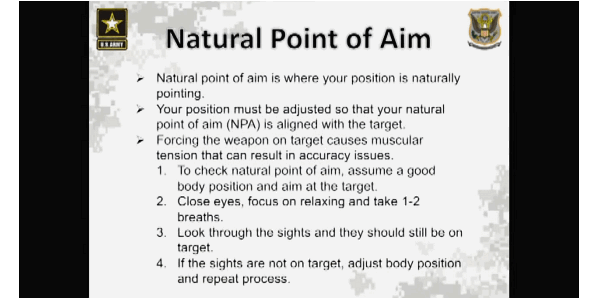
Part 2 — Positions, Sight Alignment, and Natural Point of Aim (Very Useful)
Part 1 — Aiming and Sight Picture
SFC Brandon Green (left above) has set multiple National Records at Camp Perry.


 Many of our readers have been interested in learning how modern bullets are made. While a “boutique” bullet-maker, supplied with appropriate cores and jackets, can craft bullets using relatively simple hand dies and manual presses, factory production is different. The major bullet-makers, such as




 Know The Bidding Process
 Know Your Price Limits