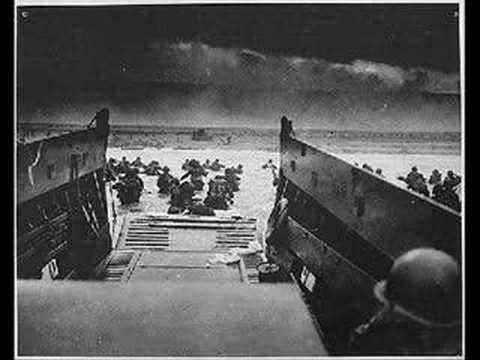
On the 11th hour, of the 11th day, of the 11th month of 1918, bugle calls signaled the ‘cease fire’ ending the First World War. (The official Armistice was signed earlier that morning.) To those who endured it, WWI was the “Great War”, “the War to End All Wars.” Tragically, an even greater conflict consumed the world just two decades later.
Today, 94 years after the end of WWI, Americans mark the anniversary of the WWI Armistice as “Veterans Day”. In Canada it is known as Remembrance Day. On this solemn occasion we honor all those who have served in the military in times of war and peace.
While more WWII veterans pass away each year, there are still over 23 million veterans in the United States. Take time today to honor those soldiers, sailors, and airmen who have served their nation with pride. Today we remember that… “All gave some, and some gave all.”
Former Secretary of Veterans Affairs Dr. James Peake asked Americans to recognize the nation’s 23.4 million living veterans and the generations before them who fought to protect freedom and democracy: “While our foremost thoughts are with those in distant war zones today, Veterans Day is an opportunity for Americans to pay their respects to all who answered the nation’s call to military service.” Major Veterans Day observances are scheduled at more than 50 sites in 29 states.
On Veterans Day we especially need to remember the seriously wounded combat veterans. These men and women summon great courage every day to overcome the lasting injuries they suffered in battle. CLICK HERE for inspirational profiles of wounded vets who, through courage and determination, have learned to adapt to their disabilities. Some of these soldiers have lost limbs, yet volunteered to return to combat duty. That is dedication beyond measure.
National Veterans Day Ceremony
The Veterans Day National Ceremony is held each year on November 11th at Arlington National Cemetery. The ceremony commences precisely at 11:00 a.m. with a wreath laying at the Tomb of the Unknowns and continues inside the Memorial Amphitheater with a parade of colors by veterans’ organizations and remarks from dignitaries. The ceremony is intended to honor and thank all who served in the United States Armed Forces. Major regional ceremonies are also held throughout the country. CLICK HERE for list of regional Veterans’ Day events.
Today marks the 237th anniversary of the founding of the U.S. Marine Corps. At Tun Tavern in Philadelphia on November 10, 1775, the Marine Corps was formed. “For 235 years, at sea and ashore, Marines have succeeded in every clime and place where hardship and adversity have often been the common thread.” said Gen. James F. Amos, commandant of the Marine Corps in this year’s birthday message. “Today, in the rugged mountains and valleys of Afghanistan – and recently in the earthquake damaged Haiti, in flood-ravaged Pakistan, or off the coast of Africa, we continue to protect our nation, just as we did 60 years ago in Korea.”
The National Shooting Sports Foundation (NSSF) has produced a GUN SAFETY Video that presents 10 fundamental rules of safe gun use. The video covers basic safe gun handling procedures, and it also explains how to transport guns safely, and how to secure them properly at home.
We know this stuff is familiar to most of our readers, but we recommend you watch the video as a refresher. Segments show how to safely unload different types of handguns and shotguns. That’s helpful for a rifle guy who may not have much familiarity with other types of arms. The video also explains how you can keep a handgun safe from kids and guests in the home, while still having quick access in an emergency. This video won’t win an Oscar, but it provides good, logical safety advice. If you help run a shooting club, you may want to embed the video into your club’s webpage.
Forum member Mark Dalzell (aka “MDSlammer”) is an avid long-range shooter and talented movie-maker. Some months ago, he produced a great video about shooting his Savage 110 BA at 1200 yards. That video was a hit with readers, and now Mark has come up with a new video, with the range pushed out to 2300 yards (that’s 1.3 miles!). Mark and his compatriots Dale Jorgensen and Gio Valdez headed out to their “secret spot” in the high desert, near Jean, Nevada, armed with a pair of 7mm RSAUMs and Mark’s .338 Lapua Magnum Savage 110 BA. Given the degree of difficulty, it’s not surprising that Mark’s gang had more misses than hits this time out, but they did produce an entertaining video that shows the challenges of shooting at Extreme Long Range.
Watch HD Video — Extreme Long-Range Shooting at 2300 Yards
Shooting 2300 Yards with the 7mm RSAUM and .338 Lapua Magnum
Target Cam Spotter: Wally Krusee
Film By Mark Dalzell – Sin City Productions / All Rights Reserved, Copyright 2012
Mark was shooting a Savage 110 BA .338 Lapua Magnum, the same gun he used for his previous 1200-yard high desert shooting safari. The elevation required to get on target at 2300 yards was mind-boggling. Elevation for Mark’s .338 LM was 96.5 MOA (on top of a +40MOA rail). Mark’s buddy Dale was running a full 30.5 MILs of elevation with his 7mm RSAUM with milrad optic.
Mark set up a wireless remote camera near the target, so you can see where the shots impacted. A second camera was behind the trigger-pullers, giving a “shooters’-eye view”. The target was a full-sized steel silhouette with an orange square painted in the middle.
Mark reports: “I was out this past Monday with a couple of buddies. We tried our luck shooting at 2300 yards. I had one hit out of 30. Very poor marksmanship. But I did learn a few things about shooting at this distance for the next time. I have nothing but admiration for those shooters who are consistent at this distance. [It was] pretty amazing.”
Equipment List and Load Specifications
Mark Dalzell
Dale Jorgensen
Gio Valdez
Savage BA110 .338 Lapua Magnum Murphy +40MOA Titanium Rail Harris bipod Nightforce 5.5-22x50mm NXS Speed Turret
7mm RSAUM Krieger 30″, 1:8.75″ twist Barrel with Ross Brake McRees Folder Chassis Harris Bipod Bushnell HDMR Scope
7mm RSAUM Krieger 28″, 1:9″ twist 5R Barrel with Ross Brake McRees Folder Chassis GG&G Bipod Bushnell H2DMR Scope
Today is election day. This election may be as important as any in our nation’s recent history. Big issues are at stake — the economy, taxation, health care, foreign policy, Second Amendment Rights, and the role of the Federal government. Whatever your political views, make your voice heard by voting. We don’t care how you do it — drive, bike, walk, share a ride… whatever it takes, but get to the polls today and Vote! If you think your vote doesn’t matter… watch the video below. Remember what Dwight D. Eisenhower said: “The future of this Republic is in the hands of the American voter.”
Finding Your Polling Place
If you don’t know your designated polling place, visit Google’s Polling Place Locator Page. This webpage accesses polling place venues nationwide, based on street address and zip code. Type in your home address (with zip code), and the Polling Place Locator finds your exact polling place, complete with a street map. This webpage includes a “Ballot Summary” so you can preview the candidates and ballot measures in your location.
Democracy is the only system that persists in asking the powers that be whether they are the powers that ought to be. — Sydney J. Harris
The ballot is stronger than the bullet. — Abraham Lincoln
One who does not vote has no right to complain. — Louis L’Amour
David, a hunter and wilderness skills teacher from Scotland, has created an informative 9-minute video that should interest varmint hunters and fans of Tikka rifles. In the video, David demonstrates the features (and remarkable accuracy) of a factory Tikka T3, chambered in .223 Remington. With David’s handloads, this rifle has grouped just over an inch at 250 yards, as shown near the end of the video.
You’ll notice that David’s rifle is equipped with a sound moderator (aka “suppressor”), a common hunting accessory in Europe. (Someday, hopefully, American shooters in all states will be able to employ sound suppressors without misguided, restrictive laws or prohibitive taxation.) David explains that a suppressor has many benefits. In addition to protecting the shooter’s hearing, the suppressor reduces the report of the shot, so there’s much less chance of spooking the game. A good suppressor also reduces recoil substantially.
David uses his rifle primarily for fox-hunting, often done at night. He employs a variable-power scope with an illuminated reticle to target his night-time prey. David offers many useful tips for predator hunters. He prefers an extra-high Harris bipod. With the bipod’s legs fully extended, he can assume a comfortable and solid sitting position. The rifle is supported on his shoulder and on the bipod, leaving both of his hands free. Being able to support the rifle without gripping it is a major advantage, David explains. This frees his hands to search for animals with binoculars or scan distances with his rangefinder. Additionally, he shows how to call in foxes, blowing on his cupped hands to make an very realistic distress call. This guy doesn’t need an electronic boom box with recorded sounds to effectively call in a fox.
We think you’ll enjoy the video, even if it is a bit grainy and David’s accent may be a bit hard for Americans to understand. He offers a lot of good, solid advice, and he certainly demonstrates the capabilities of the Tikka rifle. Above, check out the three-shot, 250-yard group David shoots. We’d say that’s better than minute-of-varmint accuracy. Tikka T3s have a reputation for excellent accuracy and smooth-working actions. Current street price for a stainless T3 Lite (like David’s), with synthetic stock, is about $580.00, but we’ve seen them as low as $540.00 on sale (price without scope).
When you’re practicing or developing loads at long range, it can be a challenge to see your bullet holes on the target, even with a premium spotting scope. Yes, when viewing conditions are perfect, a top spotting scope such as the 88mm Kowa Prominar can resolve 6mm bullet holes at 600 yards and beyond. However, when there is dust or mist in the air, or when the mirage gets thick and heavy, even the best spotting scope may be unable to resolve bullet holes clearly at just 300 yards.
That’s why, if you do much long-range shooting, you should consider getting a wireless target-cam system. This combines a video camera placed near the target with a monitor on your shooting bench. The image from the camera is sent wirelessly to a receiver hooked up to your monitor. With a good camera and quality electronics, a target-cam system can provide sharp images out to 1000 yards.
Until recently, good “turnkey” target-cam systems have been expensive — $1400.00 and up. Guys who couldn’t afford this investment have tried cobbling together systems from various parts. Sometimes the “home-built” systems work, but sometimes they are disappointing.
Turnkey Target-Cam Systems Starting at $725.00
Now Target-Sight.com offers complete Target-Cam systems starting at $725.00 (for 600-yard system). This includes everything you need: 27X Sony Video Camera, transmitter, receiver, color monitor, three Li-Ion batteries, AC adapters/battery chargers, and even the tripod. Or $800.00 buys Target-Sight’s complete 1000-yard system. It includes the same package of components, but with extended range.
Dan Norgrove, the man behind Target-Sight.com, has been able to source quality electronic components at very good prices. Accordingly, you may be able to buy a complete, field-tested Target-Sight system, for not much more than the cost of buying the hardware yourself. And if you put together a bunch of miscellaneous parts, you can’t be confident that they will all work together optimally. The Target-Sight systems work, have good battery life, and everything arrives in one box — delivered with free shipping.
We know that folks considering target-cam systems are justifiably cautious before they shell out hundreds of bucks. You want to be assured that the system is easy to set-up, functions right, and that the image on the monitor is sharp and clear. To satisfy those concerns, Dan Norgrove has created a video showing his Target-Sight system in use in the field. This video shows the actual image on the Monitor from a target-cam placed 300 yards away. (Please note this video is slow in sections because the field test is an uninterrupted “single take”. That way you can be confident there were no tricks done during the editing. What you see is what you get.)
Tonight’s Episode of Shooting USA TV features the 2012 International Revolver Championship (IRC) from the Hogue Action Shooting Range in Morrow Bay, California. You can see another winning performance by Jerry Miculek, considered by many the greatest living revolver shooter.
The IRC, held in June, was the highlight of the 2012 revolver shooting season. More than 240 of the world’s top revolver shooters negotiated their way through 12 stages of fire putting more than 70,000 rounds down range.
Impossible Shots Tonight
Also tonight, Shooting USA’s “Impossible Shots” TV Show features more wheelgun action. Cisko puts a new twist on an old favorite, the El Presidente, but doing it with two six-guns. The challenge is to turn, fire twelve rounds, six double taps, with a gun exchange, in less than six seconds. Plus Jerry Miculek shows what he can do with two guns at the same time.
Shooting USA airs at 3:30 pm, 8:30 pm, 12:00 Midnight Eastern Time on the Outdoor Channel.
Impossible Shots airs at 3:00 PM, 10:30 PM, 2:00 AM Eastern time on the Outdoor Channel
The folks at Desert Tactical Arms (DTA) in Utah recently held a Halloween “fun shoot”. How does an arms manufacturer celebrate Halloween? The same way they celebrate every other holiday–shooting stuff! The DTA crew figured the perfect Halloween event would include Precision Rifles, Superheroes, and Exploding Pumpkins.
Accordingly, DTA hosted its first ever Pumpkin Shoot at the Sniper Country range in Northern Utah. Shooters (all dressed as Superheroes) had three (3) rounds to engage targets at different distances, racking up points based on target distance (the farther the target, the higher the points). Participants included Batman, Spiderman, Iron Man, Captain America (after a few too many doughnuts), and Nacho Libre (still in superhero training). The DTA crew reports this Halloween Superhero shoot “was a great way to enjoy some fall air and pay homage to the all-benevolent pumpkin.” Take a look:
To add spice to the Halloween shoot, the DTA guys set up a few Tannerite reactive targets on the range. When hit, these produced impressive explosions — as the next video reveals:
If you enjoyed these Desert Tactical Arms Videos, check out the Halloween Pumpkin Shoot Out-takes featuring the full cast of Superhero characters (plus one very ‘dazed and confused’ coyote hunter who wandered on to the scene during filming).
Video find by EdLongrange. We welcome reader submissions.
Kowa Sporting Optics now offers a DigiScoping adapter for the iPhone 4 and 4S models. Kowa’s TSN-IP4S iPhone adapter comes with two standard rings, one for the 880/770 series scopes and one for the BD/SV/YF series of binoculars. Similar in design to Meopta’s Digiscoping adapter released last year, the Kowa product holds an iPhone securely and attaches to the rear ocular of a spotting scope (or binoculars) using a cylindrical sleeve (aka lens ring). Crafted from aluminum, the precision-fit Kowa lens rings are coated with a soft material so they won’t mar your eyepiece(s).
The Kowa adapter comes with two standard rings, one for the 88/77 series scopes and one for the BD/SV/YF series of binoculars. Additional adapter rings for the Genesis 33 and 44 series of binoculars and TSN 660/600/82SV spotting scope eyepieces (except long eye-relief eyepieces) and 21x, 32x, and 50x High Lander eyepieces may be purchased separately. The lightweight adapter is made of an epoxy resin material that will not damage the finish of your iPhone.
For more information, visit the Kowa’s Digiscoping Webpage. Watch the video below to see how the Adapter holds the iPhone on spotting scopes.


 On the 11th hour, of the 11th day, of the 11th month of 1918, bugle calls signaled the ‘cease fire’ ending the First World War. (The official Armistice was signed earlier that morning.) To those who endured it, WWI was the “Great War”, “the War to End All Wars.” Tragically, an even greater conflict consumed the world just two decades later.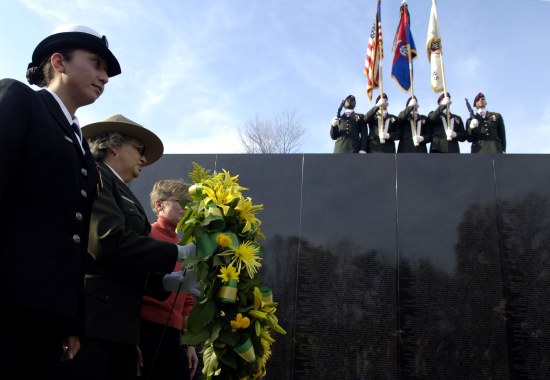


 The
The 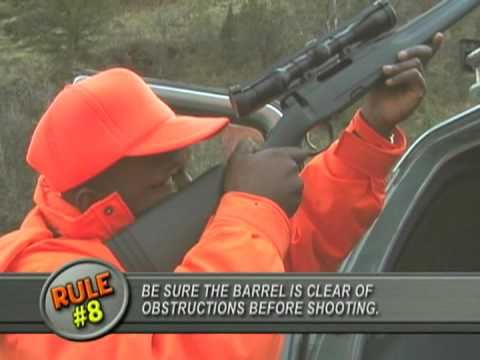

 Mark was shooting a Savage 110 BA .338 Lapua Magnum, the same gun he used for his previous 1200-yard high desert shooting safari. The elevation required to get on target at 2300 yards was mind-boggling. Elevation for Mark’s .338 LM was 96.5 MOA (on top of a +40MOA rail). Mark’s buddy Dale was running a full 30.5 MILs of elevation with his 7mm RSAUM with milrad optic.


 Tonight’s Episode of
  The folks at

 The Kowa adapter comes with two standard rings, one for the 88/77 series scopes and one for the BD/SV/YF series of binoculars. Additional adapter rings for the Genesis 33 and 44 series of binoculars and TSN 660/600/82SV spotting scope eyepieces (except long eye-relief eyepieces) and 21x, 32x, and 50x High Lander eyepieces may be purchased separately. The lightweight adapter is made of an epoxy resin material that will not damage the finish of your iPhone.


