All shooters, even rimfire enthusiasts, should always wear ear protection when at the range. A typical rifle gunshot is very loud — in the region of 140 to 170 decibels (the pain threshold is 130-140 db). Without ear protection, you can permanently damage your hearing during a single shooting session. We all know older shooters who are partially deaf, or who suffer from Tinnitus, because they didn’t use earplugs or muffs when they were younger.
How Humans Hear Sounds — Amazing Video Reveals All
The human sense of hearing involves multiple delicate internal membranes, bones, organs, and nerves. Shooters understand the importance of protecting their hearing, but they may not understand the bio-mechanics of human hearing. We hear sounds through Auditory Transduction. Sound waves vibrate the ear drum (tympanic membrane), but that is only the beginning. These vibrations are passed along via tiny rocker-arm-like bones to be “processed” in a spiral chamber, the cochlea.
This remarkable VIDEO explains how humans hear sounds. We strongly recommend you take the time to watch and learn. The hearing you save may be your own!
Click Speaker Icon to turn on the video’s soundtrack.
Vibrations moving through the cochlea are separated into frequencies and then sent as neural messages to the brain. It is an astonishingly complex process, one that truly seems miraculous when you examine the bio-engineering involved. In the video above, the process of human Auditory Transduction is explained and illustrated with 3D animation. You really should watch this amazing video. By the end you will have a new-found appreciation for your ability to hear.
Every shooter should own a pair of Electronic muffs, even if you prefer shooting with earplugs and/or standard muffs. Electronic muffs are great when you are spotting for other shooters or are working near the firing line. They let you hear ordinary conversations while still providing vital hearing protection. You can also wear ear-plugs under muffs for extra sound attenuation.
Plugs PLUS Ear-Muffs — Benefits of “Doubling-Up” Hearing Protection
According to OHS Online: “The combined attenuation of an ear plug and an ear muff is not simply the algebraic sum of the performance of each individual protector. This is due to an acoustic and vibratory interaction between the ear muff and the ear plug that causes them to behave together as a system rather than as independent hearing protectors.
Generally speaking, when you combine two hearing protectors, with muffs over ear plugs, you can expect a Noise Reduction Rating improvement from 3 and 10 dB compared to the higher-rated hearing protector by itself. OSHA [now advises] 5 dB as the [typical] benefit offered by combining hearing protectors.” Source: OHSonline.com
Want to improve your understanding of Ballistics, Bullet Design, Bullet Pointing, and other shooting-related tech topics? Well here’s a treasure trove of gun expertise. Applied Ballistics offers dozens of FREE tech articles on its website. Curious about Coriolis? — You’ll find answers. Want to understand the difference between G1 and G7 BC? — There’s an article about that.
“Doc” Beech, technical support specialist at Applied Ballistics says these articles can help shooters working with ballistics programs: “One of the biggest issues I have seen is the misunderstanding… about a bullet’s ballistic coefficient (BC) and what it really means. Several papers on ballistic coefficient are available for shooters to review on the website.”
Credit Shooting Sports USA Editor John Parker for finding this great resource. John writes: “Our friends at Applied Ballistics have a real gold mine of articles on the science of accurate shooting on their website. This is a fantastic source for precision shooting information[.] Topics presented are wide-ranging — from ballistic coefficients to bullet analysis.”
Here are six (6) of our favorite Applied Ballistics articles, available for FREE to read online. There are dozens more, all available on the Applied Ballistics Education Webpage. After Clicking link, select Plus (+) Symbol for “White Papers”, then find the article(s) you want in the list. For each selection, then click “Download” in the right column. This will send a PDF version to your device.
To help serve America’s many millions of new gun owners, Winchester has created a new online information site for first-time ammunition and firearms buyers as well as those just getting started in the shooting sports and hunting. Winchester’s New Shooters Site has many helpful articles plus a series of videos.
Winchester’s New Shooters Site also incorporates the NSSF’s WHERE-To-SHOOT Resource, the internet’s most comprehensive listing of gun ranges. The Where-to-Shoot section makes finding a local range easy. Simply input your location and max desired distance, and the site will generate a list of nearby indoor and outdoor ranges with a Google map.
“More than 12 million people since the beginning of 2020 purchased a firearm for the first time, and that is in addition to the more than 56 million people in the U.S. who currently target shoot,” said Matt Campbell, vice president of sales and marketing for Winchester Ammunition. “As an industry leader, we are committed to helping educate people about the many topics surrounding firearms, ammunition, safety and more. More and more people want to participate in the shooting sports and hunting. Our audience is diverse and growing, and this platform will be an excellent resource.”
— Skill-level filtering, allowing new shooters to find the most relevant content
— New video series and blog posts with entry-level topics
— Product recommendations for firearms and ammunition
— Tips and training (shooting fundamentals)
— Safety and storage
About Winchester Ammunition
Winchester was founded in 1866, 155 years ago. Winchester is now the largest small caliber ammunition enterprise in the world providing a huge variety of pistol, rifle, and shotgun ammunition. Learn more about Winchester by visiting Winchester.com or Winchester’s Facebook Page.
Legal Heat, a major firearms training firm*, has released the 2021 Edition of the 50 State Guide to Firearm Laws and Regulations. For each state, this $20 book covers key firearms laws, lists prohibited areas, and provides key statutory references for further research. With over 20,000 gun laws nationwide affecting concealed carry permit holders, Legal Heat’s 50 State Guide helps gun owners stay informed about important gun statutes and regulations.
The Legal Heat 50 State Guide is an authoritative reference guide on concealed carry and transport laws with concise synopses, including legal citations. Written and edited by attorneys and firearms instructors. This full-color, $20 book provides a comprehensive overview of state and Federal gun laws, serving as a quick reference guide for travelers.
GET FREE Legal Heat APP for Android or Apple
Along with the $20 print book, there is a FREE Legal Heat APP that provides the same information at no cost to you. Just download the App to your smartphone or tablet. CLICK HERE to learn more about the FREE 50-State Law App. There are FREE versions for both Android (Google) and iOS (Apple). This is the only APP with comprehensive Concealed and Open Carry Law summaries written by attorneys.
Key Topics Covered in Dedicated Sections
The Legal Heat 50 State Guide has specific sections dedicated to important topics, such as Gun Transport at Airports, Police Stops, Inter-State Travel, and Purchasing/Selling. Having these and other key topics clearly outlined is one of the compelling reasons to buy the book. Here are the Key Topics:
- Airports
– Police Encounters
– State-to-State Firearms Transport in Vehicle
– Purchasing/Selling A Firearm
– Castle Doctrines
– AMTRAK
- U.S. Army Corps Of Engineers Land
– National Parks And Monuments
– BLM Land
– Indian Reservations
– May Issue Vs. Shall Issue States
– Contact Info For Attorney Generals
State by State Law Summaries
For every one of the 50 U.S. STATES, there is a dedicated summary covering:
1. All Prohibited Areas for Firearms
This Section Is Essential Knowledge For All Concealed Firearm Permit Holders. 2. Self-Defense and Firearms Laws 3. Reciprocity (Recognition of Other State’s Permits)
This lists ALL firearm permits from other states that are recognized. 4. Self Defense And Firearm Laws Statutory References (For Additional Research) 5. Ratings of Each State for “Friendliness” to gun owners.
Video Summary of 50 State Firearms Guide
This video covers the highlights of the Legal Heat 50 State Guidebook. This shows the 2018 Edition, but the latest 2021 Edition contains all those elements, updated with current law changes.
* With over 250,000 certified students, Legal Heat claims to be the nation’s largest firearms training company. Legal Heat provides in-person as well as online training, and works with major gun retailers including Cabela’s, Bass Pro Shops, and Sportsman’s Warehouse. CLICK HERE for more information on Legal Heat Training Programs.
The Biden State Department has banned imports of Russian-made firearms and ammunition. Russian firearms and ammo importation will be blocked for a minimum of 12 months starting September 7, 2021. The State Department Notice states:
New sanctions imposed today under the CBW Act include:
Restrictions on the permanent imports of certain Russian firearms. New and pending permit applications for the permanent importation of firearms and ammunition manufactured or located in Russia will be subject to a policy of denial.
Action Will Harm U.S. Firearms Owners
The Gun Owners of America (GOA) criticized the action, stating it will NOT achieve its stated purpose, but will only harm American hunters, shooters, and gun owners:
“It is clear to us that the intention is not to harm Russia but rather to hinder the acquisition of firearms and ammunition by American citizens.
Once again, the Biden Administration’s actions are misplaced. Ending imports by licensed importers will not stop drug dealers, murderers, and other assorted street criminals. It will, however, harm legitimate U.S. businesses while driving up the cost of other ammunition due to more buyers chasing a smaller supply.
We recognize the devastating implications these sanctions would have on individual gun owners amidst a national ammunition shortage. We are currently exploring administrative, congressional, and legal avenues to respond to these new sanctions.”
Ammo Shortages Will Worsen Dean Weingarten cautions that the new ban will lead to more ammo shortages:
“This is the second round of sanctions imposed on Russia by the United States over the Aleksey Navalny incident. The first round of sanctions did not ban the importation of Russian ammunition or firearms.
It is unclear how long supplies in the pipeline will last. The announcement is likely to rekindle the ammunition bubble for calibers commonly imported from Russia, such as 7.62×54, 7.62×39, 5.45×39, 5.56×45, and even match grade .22 ammunition.”
Over the past 18 months, popular ammo types, such as .223 Rem and 9mm, have been hard to find at reasonable prices. The high cost of .223 Rem centerfire ammo has driven more folks to shooting .22 LR rimfire ammo, both for fun and practice. This Sunday we look at a smart solution that allows you to shoot .22 LR ammo from your existing .223/5.56 AR-15 platform rifle. This is great because it allows low-cost training with no change in rifle balance, ergonomics, and/or optics.
The CMMG Bravo .22 LR Conversion Kit provides a replacement bolt/bolt carrier along with three 25-round magazines with special .22 LR-fitted followers and ammo slots. This allows you to shoot rimfire ammo from any AR-15 chambered for the .223 Rem (5.56×45). The CMMG Bravo has an integrated extension that fits into your current chamber. The rimfire bullet passes through this extension and then enters the barrel.
The CMMG Bravo conversion Kit comes with blowback-operated .22 LR bolt carrier, rubber protector for bolt carrier tip, and three 25-round polymer magazines. To use, simply replace the rifle’s .223 Rem bolt and carrier with the Bravo .22 LR conversion unit and load up the included magazine(s) with rimfire ammo.
To use the CMMG Kit, simply remove the centerfire bolt/bolt carrier, and replace it with the CMMG silver colored bolt shown above. CMMG states: “For best performance use a round-style hammer as notched hammers can cause function issues.” Testers have stated that high-velocity .22 LR ammo works best, and CMMG notes that “36gr plated-nose bullets have proven to be the best choice for function.” The copper-plated bullets help reduce fouling.
Ultimate Reloader Tests CMMG .22 LR Conversion Kit
Our friend Gavin Gear of UltimateReloader.com recently tested the CMMG .22 LR AR Conversion Kit. He observed that installation was very straight-forward and the CMMG magazines worked well. He and fellow tester Travis Fox shot the unit both slow-fire and rapid-fire successfully.
Gavin and Travis found the CMMG Kit easy to install and fun to use. With an AR that can shoot both .223 Rem and .22 LR, it’s like having “two guns in one”. Travis was impressed with the ease of use: “It is so simple to change over to the CMMG .22 LR AR kit! It took me about 68 seconds the very first time I tried. Each time after that it took me about 40 seconds — it’s that simple. It takes longer to fully load one of the mags than it does to switch over from .223/5.56 to .22 LR and back.”
The AR shot very well with the higher-velocity ammo types. 100% functioning was achieved with both 40gr Federal Game Shok ammo and American Eagle High Velocity 38gr Copper-plated HP ammo. NOTE: CMMG does recommend high-velocity Copper-plated rimfire ammunition.
Maintenance Tip — After converting back to your centerfire .223 Rem (5.56), Travis says “make sure to clean the gas tube and components as .22 LR tends to run dirty”. READ Full Test on UltimateReloader.com.
CMMG Bravo Conversion Kit Gets Thumbs Up from Gavin and Travis
“Does this conversion kit get the Ultimate Reloader stamp of approval? Absolutely! In these times of ammunition/component scarcity this gives options to shooters. Finding bulk .22 LR can sometimes be easier than 223/5.56. This kit gives that option at a great price. Any chance to keep skills up and familiarize new shooters to a platform is a good thing. Basically two rifles for a lot less than another rifle.”
How to Install CMMG Bravo .22 LR Conversion Kit
The Brownells video below shows the installation process step-by-step:
In this instructional video, a Brownells gunsmith demonstrates (step by step) how to install, disassemble, clean, lubricate, and reassemble the CMMG AR-15 .22 LR Conversion Kits. Clear the rifle and make safe before you start the conversion. Separate the upper and lower, remove the standard bolt carrier group. You then install the conversion bolt and connect the upper and lower as normal.
Details of CMMG .22 LR Conversion Kit
“For years I’ve had a CMMG conversion kit. It’s a drop-in system that’s … very reliable and it’s accurate. The [CMMG conversion] has lower recoil [and is] great for training. Even though ammo prices have gone through the roof, .22 LR is still cheaper to shoot than anything else.” — SootchGear
This SootchGear video shows how to install the CMMG Bravo unit. The video also compares the original CMMG .22 LR bolt assembly with the latest integrated CMMG Bravo at 2:00-3:50. The older unit had a brass adapter and separate chamber insert. The host also tests a CMMG-equipped AR with various types of ammo. Watch a rapid-fire sequence starting at 1:48 time-mark.
Field Test with Two ARs — Rapid Fire .22 LR Testing
The video below demonstrates rapid-fire .22 LR performance with two different ARs using CCI Mini-Mag ammo. The CMMG conversion is fast and easy: “In a matter of seconds you go from 5.56 to .22 LR”. Watch rapid-fire at 5:40 with CCI Mini-Mags in red/black rifle. Then the tester shoots a variety of ammo in a .223 Wylde-chambered all-black AR, starting at 9:40. The Mini-Mags worked flawlessly, but there were a couple fail-to-cycle sequences in extreme rapid-fire with cheaper “bulk” ammo. The lesson here is use good quality, high-velocity ammo.
NOTE: This 2018 video shows an earlier CMMG .22 LR conversion bolt that features a brass adapter and separate chamber insert. The current CMMG Kit has unitized bolt without a separate adapter or insert.
Interestingly, the Mini-Mag .22 LR ammo shot fine in the .223 Wylde-chambered AR. However, CMMG cautions: “Since .223 WYLDE is NOT a mil-spec chamber, we cannot guarantee fit or function with our 22LR conversion kits.”
Reviews from CMMG Bravo .22 LR Rimfire Conversion Kit Purchasers:
“Get it. Bought this for my Rock River AR. Bolt system goes in [easily] and fits perfectly. Took it to the range and put over 150 rounds through, only failing to feed/fire two rounds. I most definitely recommend this product to anyone looking to shoot their standard AR-15 .223 rifle on a budget.” — Pew P.
“I got this just yesterday and in two days time I have put a couple thousand rounds through it and no hick-ups. I have no complaints.” — Seth
“Best buy for anyone during this ammo crisis. Ammo is extremely expensive and hard to find. It was a ‘no-brainer’ once I found this kit. Ran 200 rounds to break it in for about $20 and had maybe 3 failures. Accurate up to 50 yards (I haven’t tried further) without optic adjustments.” — Joshua M.
“Purchased one of these in January. Took it to the range shortly after for my daughters to try out. We have three ARs and this thing functioned flawlessly. We practiced swapping out the 5.56 carrier with this back and forth, flawless. Enjoyed it so much now I’m purchasing another one.” — J.B.
“Great product. I bought this due to the high cost of ammo. I wanted to still shoot my AR and this was an alternative. This thing works great… works flawless with different types of .22 LR, from premium CCI to the cheap stuff. I recommend this to anyone thinking about getting one.” — Thom
* You can get also CMMG Conversion Kits from Brownells with one (1) 25rd mag for $219.99, or with three (3) 25rd mags for $249.99. There is also a CMMG kit with three (3) 10-rd mags for $249.99 for areas with capacity restriction.
Dennis DeMille shows a young competitor at the CMP Western Games how to adjust his leather sling.
The NRA High Power Over-the-Course (OTC) National Championship will be held at Camp Atterbury over the next 7 days. Firing will be done in multiple positions — prone, sitting/kneeling, and standing. Proper support and adjustment of the sling is vital for successful High Power competition. In this short article, Dennis DeMille, a past Service Rifle Champion, explains how to set-up a sling on match rifles.
Setting-Up a Leather Service Rifle Sling for Competition
So you made the mistake of disassembling your leather service rifle sling, or are intimidated about how to use one? In this Creedmoor Sports InfoZone video, Dennis DeMille (past Creedmoor G.M.) explains how to set up and use a sling. The covers the basics — Dennis starts with a totally disassembled leather service rifle sling and shows you how to set it up properly.
Tip: “Many shooters shy away from using a leather sling because they have never been taught how to use one. That’s unfortunate. In my opinion a leather sling offers more support than a web sling, which is important when competiting with the heavier than normal rifles.”
Configuring the Sling for the Standing (Offhand) Position
In this second in a series of Creedmoor InfoZone videos on the setup and use of the leather service rifle sling, Dennis DeMille details how to configure and best utilize the leather service rifle sling while shooting from the standing position.
Tip: “Putting the Frogs in different hole will change the amount of added elevation a sling provides.”
Looking at Sling Types — Comparing the Features
In this video Dennis showcases a large variety of shooting slings. He explains the strong points of each type so you can choose the sling best suited to your discipline and shooting style.
The Benefits of Dry-Fire Training
Once you know how to set up your sling properly, you’ll want to practice. Dennis DeMille stresses the importance of dry-fire practice with sling and shooting coat. Dry-Fire training is essential to the sling disciplines. Dennis DeMille, a national Service Rifle Champion, told us that, for every minute he spent in actual competition, he would spend hours practicing without ammunition. While in the USMC, Dennis would practice in the barracks, working on his hold and dry-firing:
“The most important thing is to spend time off the range practicing. Most of what I learned as a High Power shooter I learned without ammunition — just spending time dry firing and doing holding exercises. Holding exercises will really identify the weak parts of your position. The primary purpose of dry firing is to get you used to shooting an empty rifle. If you can shoot a loaded rifle the same way you shoot an empty rifle then eventually you will become a High Master.”
Here is a cool video that shows the entire production process for a SilencerCo Octane pistol suppressor start to finish. Beginning with the raw materials, this video shows a wide variety of cutting, milling, drilling, burnishing, fitting, metal bathing, surface finishing, and laser etching processes.
If you have any interest in production methods you’ll want to watch this video all the way through, and maybe a second time.
SilencerCo states: “From cutting metal to chemical baths, to extensive quality control every step of the way, our streamlined process is more than just a few steps.” We think you may be surprised by how many steps are involved in producing this silencer (aka “suppressor”).
The Octane is a user-maintainable, multi-caliber centerfire pistol silencer featuring a modular mounting system for use across a wide range of hosts. High strength, stainless steel CTA™ (Click Together Assembly) baffles are easily disassembled for cleaning. This design makes the Octane one of the most durable small-caliber suppressors on the market.
In its Octane 45 review, SilencerShop notes: “When it comes to ease of maintenance, the Octane 45 is probably the simplest .45 suppressor on the market. It uses the new click-together baffle system from Silencerco/SWR – which allows the suppressor to come apart like a monocore suppressor, while providing performance that is closer to a K-Baffle design.””
Wouldn’t it be great if you could put up one BIG target that would handle a myriad of important tasks at the range: Zeroing, Load Development, Click Value Verification, and Click Tracking Repeatability Tests. Well the team at Box to Bench Precision (B2B) has developed what may be the most versatile (and biggest) precision targets ever developed. With ultra-accurate grid geometry, and razor-sharp printing, B2B’s targets set a new standard for target precision.
Click Tracking Grid Target The best procedure for checked the true value of your scope click values is to use a tall target that can dial in at least 25 MOA of “up”, and check where your cross-hairs air compared to exact pre-measured reference lins. B2B developed an advanced target just for that task. The 30″ tall by 23.5″ wide Rex Grid Target (shown below) provides a highly precise grid for testing elevation and windage clicks. The unique grid design has small tics denoting 1/4 MOA, 1/2 MOA, and 3/4 MOA. 1 MOA is marked with a “+” and the 5, 10, 15, 20, & 25 MOA elevation lines are bolded for better visibility. There are aiming points at 5 MOA intervals over the full grid.
This same target can also be used for “Box Tests” that verify click values and repeatability. with a box test you start in one corner with the initial shot (we recommend doing this with a warm barrel after a couple foulers). They you add “up” clicks to go straight up and take a second shot. Next add horizontal clicks to go across for the third shot. Then click down (the same number of cliks you went up) for the fourth shot. As a last step you reverse your horizontal clicks and take a fifth shot. If you have a good rifle and the scope clicks are repeatable, your fifth and final shot will be touching the first shot.
B2D’s Rex Grid Target can be used for Box Tests, as can B2B’s popularhttps://bit.ly/2BBe1jYLoad Development and Scope Tracking Target (left below) and B2B’s Sniper’s Hide 100-yard Target (right below).
B2B’s 100 Yard Long Range Load Development and Scope Tracking Target will perform many functions. This big, 30″ x 23.5″ target has specific aiming points for various tasks. In the upper left, there are 11 small orange circles for precision load testing. Over on the upper right are 7 more small, orange circles for doing a Seating Depth Comparison test.
The bottom half of the target has larger black-on-white circles that serve multiple functions. Use the corner circles to do a “Box Test” to confirm scope tracking. There’s another great feature on this target — running up the center of the target is a tall line that shows elevation in both MILs and MOA. That helps you confirm the TRUE click values of your optic. You’d be surprised how many scopes are slightly off — not exactly 1/4 MOA, 1/8 MOA, or 1/10 Mil as advertised. That’s why Long Range shooters absolutely need to verify their click values.
Buyers Praise the B2B Targets
We’ve handled the B2B Targets, which are printed on high-quality, tear-resistant card stock. We can attest the printing is very precise — with accurate elevation and windage values. These aren’t your ordinary targets — they are LARGE — nearly three feet tall. Verified buyers praise these targets:
“Thank you for talking to me about the MIL and MOA markers on your targets. They are very accurate. While using the Long Range 100-Yard Load Development/Scope Tracking target and my new scope, it helped me realize that my scope wasn’t tracking correctly (both turrets). So, I sent the scope to the manufacturer. When it came back, and using your target as my known constant… the scope is now ‘spot-on’ accurate. These targets are a great tool to gain a better understanding of your rifle, scope, turrets etc., all on one sheet.” — Stan, 2018
“Almost too nice to put holes in. I was in the printing industry for 35 years and these are really well done. Quality paper and precise printing … able to see bullet holes easily with these!” — Dan, 2018
IBS 1000-Yard National Championship
The IBS 1000-Yard Benchrest National Championship took place this past weekend, August 14-15, at the scenic Deep Creek Shooting Range outside Missoula, Montana. The Match was well attended, with 66 shooters in the Light Gun (LG) division, and 62 in Heavy Gun (HG). The venue was beautiful (as always), but conditions were challenging at times. One shooter noted: “The wind was brutal the last relay. Many shooters DQ’d”.*
Despite the tough conditions, there were some very impressive performances. Jason Walker took the Overall title, based on combined LG and HG standings. Shooting well in both classes, Jason (aka “LRPV” in our Shooters’ Forum) finished 3rd in LG and 6th in HG. Jason’s LG group size Agg was an impressive 4.357″. Nick Howlett was second Overall. Steve Simons won the LG division while James Bradley topped the HG field.
Jason Walker
Nick Howlett
James Bradley
Richard Jette
Dave Way
Top Five LG Overall
Steve Simons
David Torgerson
Jason Walker
Todd Zaun
Richard Jette
Top Five HG Overall
James Bradley
Jason Walker
Nick Howlett
Jason Peterson
Tom Mousel
Winners photo courtesy Jason Walker, 2021 IBS 1000-Yard Two-Gun Champion.
Gunsmith Alex Wheeler, who built many of the top-finishing rifles, noted: “Congratulations to the winners, you pulled your way to the top in some pretty tricky conditions. It was good to see every one again as well as meeting some in person for the first time.”
Equipment Used by Light Gun and Heavy Gun Competitors
The equipment lists, for both Light Gun and Heavy Gun, were heavily dominated by Krieger barrels. The Overall Winner and both LG and HG class winners used Kriegers. There were also many Bartlein barrels and Lilja barrels. But surprisingly, the equipment lists only showed 5 Brux barrels in Light Gun and 3 Brux barrels in Heavy Gun. BAT actions were the most common in both divisions, followed by Borden actions.
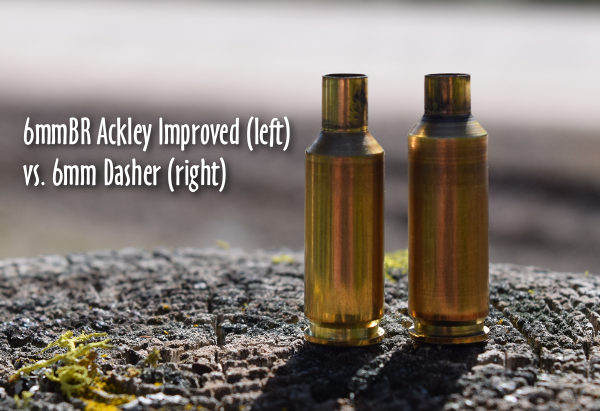
The vast majority of the shooters ran a 6mm cartridge in both Light Gun and Heavy Gun divisions. These were overwhelmingly 6mm Dashers and 6 BRAs. The 6 BRA (aka 6mmBR Ackley Improved) has a 40-degree shoulder like the Dasher, but with a longer neck. There were a half-dozen .300 WSMs in Heavy Gun division, and a couple 7mm RSAUMs, but the 6 Dashers and 6 BRAs dominated the field, even in HG.
Overall Winner Jason Walker was shooting two 6mm Dasher rifles. Both guns had BAT actions, Krieger barrels, and Nightforce scopes. Jason’s Heavy Gun had a Maxi-Tracker stock while his Light Gun had a PR&T LowBoy stock. In both rifles, he ran a 6mm Dasher loaded with Vapor Trail bullets pushed by Hodgdon Varget powder and CCI BR4 primers. Jay Cutright did the barrel work while Gordy Gritters worked on the PR&T stock. (NOTE: Jason changed to the LowBoy stock after the LG equipment list was submitted.)
Light Gun Overall winner Steve Simons was running a 6 BRA in Light Gun. Steve’s LG, smithed by Alex Wheeler, had a BAT action, Krieger barrel, Wheeler LRB stock, and Vortex scope. He loaded his 6 BRA cases with Vapor Trail bullets, Hodgdon H4895 powder, and CCI 450 Primers.
Heavy Gun Overall winner James Bradley was also running a 6 BRA in Heavy Gun. Again this had a BAT Action, Krieger barrel, Wheeler LRB stock, and Vortex scope. The rig was smithed by North Ridge Rifles. James shot Vapor Trail bullets, H4895 powder, and Federal 205M primers.
Looking back at the firing line from the target berm.
Deep Creek Range
The Deep Creek Range in Missoula, MT is one of the nicest places to shoot in the Intermountain West region. The range is located in the mountains within a few minutes drive of Missoula, and there is camping on-site. When conditions are good at Deep Creek, records get broken. To learn more about shooting at Deep Creek, contact Jamey Williams at jameydan[at]gmail.com.
Here is an aerial view of the Deep Creek Range (Drone video by David Gosnell):
* One shooter at the match reported that: “Our last HV gun relay of the Match produced 11 DQs out of 13 competitors.” We have not confirmed this, but even if there were just a handful of DQs is is unfortunate for those HG competitors.
** This is the Heavy Gun Overall, as designated on the right top. However, the columns are erroneously titled “Light Gun”. If you compare the two linked results pages, you will see that they are NOT the same.


 All shooters, even rimfire enthusiasts, should always wear ear protection when at the range. A typical rifle gunshot is very loud — in the region of 140 to 170 decibels (the pain threshold is 130-140 db). Without ear protection, you can permanently damage your hearing during a single shooting session. We all know older shooters who are partially deaf, or who suffer from Tinnitus, because they didn’t use earplugs or muffs when they were younger.
 Plugs PLUS Ear-Muffs — Benefits of “Doubling-Up” Hearing Protection


 The Benefits of Dry-Fire Training


 The best procedure for checked the true value of your scope click values is to use a tall target that can dial in at least 25 MOA of “up”, and check where your cross-hairs air compared to exact pre-measured reference lins. B2B developed an advanced target just for that task. The 30″ tall by 23.5″ wide Rex Grid Target (shown below) provides a highly precise grid for testing elevation and windage clicks. The unique grid design has small tics denoting 1/4 MOA, 1/2 MOA, and 3/4 MOA. 1 MOA is marked with a “+” and the 5, 10, 15, 20, & 25 MOA elevation lines are bolded for better visibility. There are aiming points at 5 MOA intervals over the full grid.


 IBS 1000-Yard National Championship