Are you looking to get started in PRS and NRL practical precision rifle competition? Or perhaps you’d like to advance your skill set so you can place higher in big matches (and get your hands on some of those prize table items)? Of course there is no substitute for trigger time in the field, but there ARE some great print resources. These four books can help you select the right equipment, improve your shooting skills, make better wind calls, increase your fitness level, and develop a more efficient between-match training program.
1. IMPACT! — Training and Preparing for Precision Rifle Matches
Rodney Maze, $19.99 Paperback, $4.99 Kindle
Impact!, by PRS competitor Rodney Maze, is an entry/intermediate level guide to preparing yourself and your equipment to compete in precision rifle type matches. It will also benefit anyone looking to learn about practical-style long range and precision shooting. We recommend you check it out for yourself — there are 20 Pages of free sample content on Amazon. Topics covered include:
— Rifle, optic, and equipment selection
— Setting up your rifle, bags, tripods for PRS/NRL matches
— Understanding ballistics and how to record and use ballistic data
— Techniques for using holdovers for multi-target stages
— Gun skills, rapid fire techniques, clearing malfunctions
— Shooting off of barricades, and specialty stages
— Effects of wind and how to improve your wind calls
— Tips for live fire and dry fire practice
— Preparing yourself and your equipment for a match
— Mental strategies and techniques
Impact! is illustrated with plenty of photographs. Topics are divided logically, and concepts are explained in clear language. Also included is an extensive glossary of terms used in precision shooting and a list of additional resources you can use to further pursue your precision shooting knowledge. This book also includes a handy Appendix with formatted pages for recording data about your rifle, scope, and ammunition. There is also a Wind table for recording your rifle “dope” and wind hold-offs. Lastly, Impact! has a useful table of unit conversions.
2. Practical Shooter’s Guide
Marcus Blanchard, $19.99 Paperback, $9.99 Kindle
Thinking of getting started in the Practical/Tactical shooting game? Looking for ways to be more stable when shooting from unconventional positions? Then you may want to read Marcus Blanchard’s Practical Shooter’s Guide (A How-To Approach for Unconventional Firing Positions and Training). Unlike almost every “how to shoot” book on the market, Blanchard’s work focuses on the shooting skills and positions you need to succeed in PRS matches and similar tactical competitions. Blanchard provides clear advice on shooting from barricades, from roof-tops, from steep angles. Blanchard says you need to train for these types of challenges: “I believe the largest factor in the improvement of the average shooter isn’t necessarily the gear; it’s the way the shooter approaches obstacles and how they properly train for them.”
3. Long Range Shooting Handbook
Ryan Cleckner, $19.85 Paperback, $9.99 Kindle
Ryan Cleckner’s Long Range Shooting Handbook is the best-selling modern book on practical rifle skills. A former U.S. Army sniper instructor, Cleckner is knowledgeable, and his text is well-organized and chock full of good information. You can view Sample Chapters on Amazon.com.
Ryan Cleckner’s highly-regarded Long Range Shooting Handbook is designed as an intro to important fundamental concepts such as MOA vs. Mils, External Ballistics, and Environmental Effects. Included are personal tips and advice based on Cleckner’s years of experience as a sniper instructor and special operations sniper.
The Long Range Shooting Handbook is divided into three main categories: What It Is/How It Works, Fundamentals, and How to Use It. “What It Is/How It Works” covers equipment, terminology, and basic principles. “Fundamentals” covers the theory of long range shooting. “How to Use It” gives practical advice on implementing what you’ve learned, so you can progress as a skilled, long range shooter. This book will benefit any long-range shooter, not just PRS/NRL competitors.
4. Official U.S. Army Sniper Training and Operations Manual
From U.S. Army Sources, $17.59 paperback.
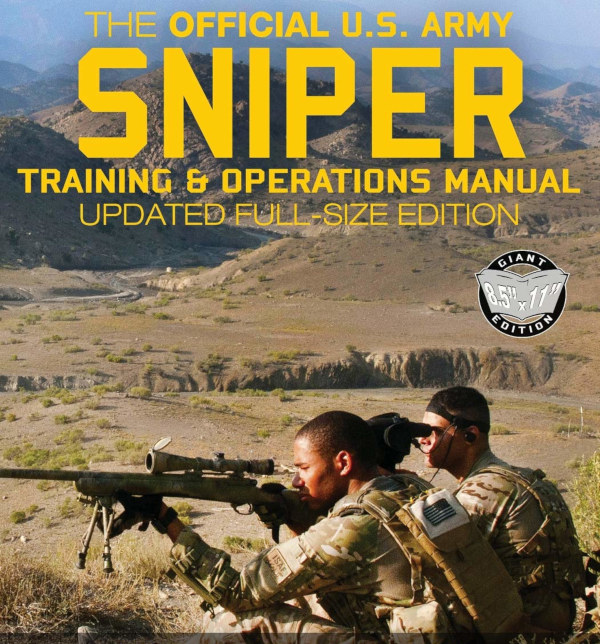
This U.S. Army Sniper Training Manual is a very comprehensive resource, with over 450 pages of information in a large 8.5″x11″ format. NOTE: Unlike other editions on Amazon, this is NOT the basic, outdated FM 23-10. This is the completely-overhauled 450+ page edition (FM 3-22.10). Heavily illustrated, this is a very useful resource for tactical/practical precision shooter. Employed as the “textbook” for the U.S. Army Sniper School at Fort Benning, GA, this big manual explains ranging methods, rifle handling, optics selection and operation, and rifle maintenance.
There is also extensive discussion of ballistics, wind reading, and weather effects. Practical competitors will appreciate the discussions of moving targets, range estimation, and range safety procedures. One reviewer explains: “This book contains the distilled wisdom of the Sniper School’s instructors and expert marksmen, giving you over 450 pages of unique insight into the long range combat shooter’s art.”
With the civil disorder, rioting, and looting happening in major U.S. cities, many Americans are getting very serious about armed self-defense. But if you own defensive firearms, you definitely need to train with them. Indoor ranges are most convenient for those who live near urban centers, where the biggest threats to public safety currently exist. This article talks about indoor firearms training and the proper procedures you should follow at indoor ranges.
This Video Covers Basic Gun Range Safety Rules and Etiquette
FIVE IMPORTANT SAFETY PROCEDURES for Indoor Ranges
1. Follow the Three Fundamental Rules for Safe Gun Handling
ALWAYS keep the gun pointed in a safe direction. ALWAYS keep your finger off the trigger until ready to shoot. ALWAYS keep the gun unloaded until ready to use.
2. Follow ALL Range Officer Instructions
ROs are the first and final authority on any range and their decisions are generally final. Arguing with a Range Officer may just get you thrown out.
3. Don’t Bother Others or Touch Their Guns
Respect other shooters’ privacy unless a safety issue arises. Do NOT engage other shooters to correct a perceived safety violation unless absolutely necessary – inform the RO instead. NEVER handle or touch another shooter’s firearm without their permission!
4. Know Your Range’s Rules
Review and understand any and all range rules and requirements/expectations. For example, what is the range’s maximum rate of fire? Are you allowed to collect your brass?
5. Know What To Do During a Cease Fire
IMMEDIATELY set down your firearm, pointed downrange, and STEP AWAY from the shooting booth (or bench). Range Officers do not want shooters trying to “secure/unload” their firearms in a cease fire situation — they want the shooters separated from their guns instantly.
BAD RANGE BEHAVIOR — Five Things NOT to Do at the Range
Here are the five worst behaviors we’ve seen at indoor ranges. These behaviors are both dangerous and inconsiderate. Any one of these behaviors can get you permanently banned from an indoor range.
1. Sweeping other individuals after loading a weapon behind the firing line is very bad. All your weapons should be empty until you reach your shooting station.
2. Turning the handgun sideways while trying to clear a malfunction or insert/remove a magazine. This will point the muzzle at a fellow shooter. Or, after shooting a gun, the shooter fails to clear the weapon and then places the gun somewhere near the shooting station with the muzzle in an unsafe position.
3. Reacting unpredictably when firing a high recoil handgun. We’ve seen people take a second shot by accident with the muzzle way off target.
4. Not obeying range commands — in particular continuing to shoot during called cease-fires.
5. Poorly aimed shooting that hits target frames or carriers, causing ricochets.
Double-Up on Hearing Protection When Shooting Indoors
When shooting indoors we recommend quality muffs with earplugs underneath, offering double protection. When inside an enclosed range, with other shooters blasting away right next to you, you really need effective hearing protection. But you also need to hear range commands and be able to communicate. That’s why we recommend electronic muffs with plugs underneath.
For pistol shooting, we like the latest Howard Leight Impact Pro Muffs. These offer an impressive 30 dB Noise Reduction Rating (NRR). In addition, these muffs are pretty comfortable and offer Headphone Functionality so you can connect to your smartphone, MP3 player, or other audio device. These muffs are a good value. They are currently offered for $39.50 on ALLMAX.
CCRKAB Hopes Millions of New Gun Owners Can Aid Second Amendment Battle
First concern over the COVID-19 pandemic spurred a huge increase in gun purchases. And the civil unrest, rioting, and looting that followed the death of George Floyd caused countless citizens to seek armed self-protection. COVID-19 and the riots convinced millions of Americans to become gun owners for the first time. These citizens wanted to protect their families, homes, and businesses. The Citizens Committee for the Right to Keep and Bear Arms (CCRKBA.org) hopes that these new gun owners may aid the fight to preserve the Second Amendment and gun rights in the USA.
“Look at all of the new people who suddenly decided to exercise their Second Amendment rights to keep and bear arms”, observed CCRKBA Chairman Alan Gottlieb. “We’ve witnessed something that is nothing short of a sea change… about gun ownership. We’ve heard anecdotal reports from all over the country about people flocking to gun shops who had never before owned a firearm. Now that they are gun owners, we expect them to be very protective of their rights”.
March, April, and May 2020 saw record numbers of background checks, according to FBI data and information from industry sources. For example in April 2017, gun sales set an all-time record — up 71% from the pervious year.
Gottlieb added: “We welcome all of these new gun owners to the firearms community… many of them are minorities, especially black and female citizens … from all age groups. They can… gain a new understanding of our efforts to protect the one fundamental right that actually protects all of the other rights.”
“This new wave of gun owners could become a formidable force during this year’s election,” Gottlieb noted. “From now on, we expect millions of new gun owners to pay closer attention to candidates, and reject those who would trample on their Second Amendment rights. With legions of new gun owners ready to protect these newly-discovered rights, it could be a pretty scrappy election year…”
Each Wednesday, the U.S. Army Marksmanship Unit publishes a reloading “how-to” article on the USAMU Facebook page. A while back, the USAMU’s reloading gurus looked at the subject of case lubrication. Tasked with producing thousands of rounds of ammo for team members, the USAMU’s reloading staff has developed very efficient procedures for lubricating large quantities of cases. This article reveals the USAMU’s clever “big-batch” lube methods. For other helpful hand-loading tips, visit the USAMU Facebook page on upcoming Wednesdays.
Rapid, High-Volume Case Lubrication
Today’s topic covers methods for quickly applying spray lube to cartridge cases prior to sizing. A typical order for this shop may be 25,000 rounds, so [speeding up] the lubrication process can be a real time-saver. While your ammunition lots probably aren’t this large, the efficient methods discussed here may help save a considerable amount of time over your handloading career. Our case lubrication rates range from 1500-1600 cases per hour, to 2400-2500 cases per hour, depending on caliber.
This shop uses virgin brass, whereas most home handloaders use fired brass, which necessitates some small changes at times. These will be discussed as they arise. Begin with fired brass that has been tumbled clean.
Ensure as much tumbling media as possible is removed from the brass, as when it gets into a size die, it can dent cases significantly. This is a good time to round out dents in the case mouths using a tapered tool to prevent damage from the decapping stem.
First, dump the clean cases into a large box or reloading bin. Shake the bin back and forth so that many cases are oriented with the mouths up. Next, pick up as many cases as is convenient with the mouths “up”, from natural clusters of correctly-oriented cases. With 7.62mm-size cases, this is usually 3-4, and with 5.56mm cases, this can be up to 8-10. Place the cases into the rack slots, mouth-up. Doing this in groups rather than singly saves considerable time. Once these clusters have been depleted, it will be time to re-shake the bin to orient more cases “up.”.
This photo shows a case lubrication rack made by a USAMU staffer.
Naturally, adjust the spacing to best fit the calibers you reload. We have found this size … convenient for handling through the various phases of case lubrication/transfer to progressive case feeders for processing. Note that the 1/2-inch angle does not cover much of the critical case area at the base, just forward of the extractor groove, where most re-sizing force will be exerted. As the USAMU uses virgin brass, less lubrication is required for our brass than would be needed for Full Length (FL) sizing of previously-fired brass.
NOTE: The amount applied using our rack is easily enough for our purpose. If using fired brass, be sure to adequately lube this base area to avoid having cases stick in the full-length sizing die.
Using a spray lube, coat the cases adequately, but not excessively, from all sides. Be sure to get some lube into the case mouths/necks, in order to reduce expander ball drag and case stretching/headspace changes. The spray lube this shop uses does not harm primers or powder, and does not require tumbling to remove after lubing.*
Take a close look at the photo above. The USAMU shop uses a common kitchen turntable, which allows the rack to be rotated easily. We place this in a custom-made box which prevents over-spray on to floors and walls.
Angled Box Method for Smaller Cases to be Neck-Sized
A refinement of the above method which especially speeds processing of 5.56x45mm cases is as follows. A small cardboard box which holds about 100 cases is fitted with an angled “floor” secured by tape. With the smaller 5.56mm cases, usually about 8-10 cases per handful can be picked up, already correctly-oriented, and placed into the box together. This prevents having to place them into the rack slots, saving time.
HOWEVER, note that this does not allow nearly as much lube access to the case bodies as does the rack. For our purposes — neck-sizing and setting neck tension on new brass, this works well. If using this procedure with fired brass, take steps to ensure adequate lube to prevent stuck cases.
As always, we hope this will help our fellow handloaders. Good luck, and good shooting!
*A two-part test performed here involved spraying primed cases heavily, while getting more lube into the case mouth/body than even a careless handloader would likely apply. The second part of the test involved literally spraying considerable quantities of the lube directly into the cases, drenching the primers. After a several-day wait to allow the lube to penetrate the primers, they were then fired in a test barrel. All fired normally; no unusual reports were noted. This bolstered confidence that normal amounts of the lube would not adversely affect our ammunition, and we have been pleased with the results over several years.
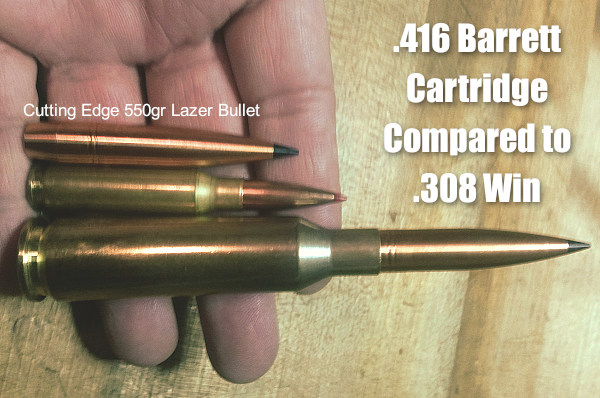
In the ELR game, particularly the King of 2 Miles (KO2M), it’s “go big or go home”. The top shooters run large-capacity cartridges that push large-caliber, ultra-high BC bullets at very high velocities. Bullets launched by cartridges such as the .416 Barrett can sustain supersonic velocities at Extreme Long Ranges — and that’s what it takes to win. The .416 Barrett can launch a 550-grain solid bullet at 3000+ FPS.
Photo from ELR Competitor Corbin Shell.
2018 and 2019 Kings of 2 Miles Loaded on RCBS Presses
So how do you load jumbo cartridges such as the .416 Barrett? It takes a big, heavy, super-strong reloading press. We’ve learned that the last two Kings of 2 Miles, Paul Phillips (2019) and Robert Brantley (2019) both loaded their KO2M ammo on RCBS AmmoMaster .50 BMG presses. Phillips loaded .416 Barrett ammo, while Brantley loaded custom .416 MCS rounds.
In 2018, Robert Brantley topped the field using his custom .416 MCS loads perfected on the AmmoMaster .50 BMG Press. This year, Brantley took a close second to 2019 KO2M winner Paul Phillips. Both Phillips and Brantley use the AmmoMaster .50 BMG single stage press kit and RCBS .416 Barrett dies to hand-load for extreme long-range. “My ammo has been much more consistent after switching to the RCBS press and dies,” remarked Phillips, who runs the Global Precision Group. Brantley said he uses RCBS products for most of his reloading needs — from the dies and AmmoMaster, to the ChargeMaster and Brass Boss. His custom .416 MCS loads launch a 550-grain bullet more than 3,100 fps.
The 6.5 Creedmoor is now one of the most popular cartridges chambered in factory rifles. It found favor among hunters and PRS competitors, but then its little brother the 6mm Creedmoor became widely adopted because the 6mm version delivered less recoil, equivalent or better ballistics, and lower bullet cost.
Now there’s a new Creedmoor kid on the block, the 22 Creedmoor. While this certainly can be used for PRS and tactical competition, the 22 Creedmoor seems to be ideally suited as a high velocity varmint round — something to replace the 22-250. You get 22-250 class velocities with a more modern cartridge design, and high-quality brass.
LEARN MORE about the 22 Creedmoor
There is an excellent write-up in the GunsAmerica Digest about the 22 Creedmoor cartridge. Reviewer Jeff Cramblit built a 22 Creedmoor rifle and tested it with a variety of bullet weights. He concluded it worked best as a varminter, but could also do PRS duty, provided it is loaded under the 3200 fps velocity limit common in PRS matches. CLICK HERE to read full GunsAmerica 22 Creedmoor test report.
Since there is not yet a SAAMI spec for the 22 Creedmoor, the cartridge is officially still a wildcat. However some ammo-makers are producing 22 Creedmoor loaded ammo right now: Copper Creek, Gunwerks, and Spark Munitions. We expect Hornady and possibly Federal might also produce loaded ammo in the near future. Currently Cooper Creek has the most 22 Creedmoor loaded ammo varieties, with 17 different bullet options from 60 grains to 95 grains. Copper Creek also offers load development packs with either Alpha or Hornady brass. Here are five Cooper Creek options with Sierra and Berger bullets:
In addition, multiple companies are now selling 22 Creedmoor cartridge brass: Alpha Munitions, Atlas ADG, Hornady, and Peterson Cartridge. The Peterson 22 Creedmoor brass is excellent.
Of course you can neck down high-quality Lapua 6mm Creedmoor brass. Lapua brass has outstanding consistency and durability. Choose from large primer or small primer types. Necking down is a simple one-step operation with a neck-sizing or full-length sizing die.
22 Creedmoor Brass from Peterson Cartridge
According to Derek Peterson, President of Peterson Cartridge, “We decided to build the tooling to make our .22 Creedmoor brass in response to the uptick in long-distance predator and varmint hunting. Plus the round is just straight-up fun to shoot. It is a low-recoil, flat shooting, wind-bucking round [that is] deadly accurate up to 800 yards.”
“When we designed the tooling for the .22 Creedmoor we set out to make casings with improved features”, Peterson added. “And we were successful. We increased the head hardness to tolerate higher pressures. And we increased our internal volume slightly to work better with the slow-burning powders [such as Reloder 26 or H1000].”
22 Creedmoor for Varmints — Video from the Varmint Fields of Eastern Oregon
Bullet Choices for 22 Creedmoor
If you have an appropriate twist-rate barrel, you can load the 22 Creedmoor with heavy 85-95 grain bullets. However, we think that the cartridge is better suited for lighter 65-80 grain bullets. This yields high velocities that provide explosive impacts on small varmints.
This GunsAmerica photo shows, L to R, 90gr Sierra MK, Hornady 88gr, 80gr, and 75gr .224 caliber bullets.
What is the Best Role for the 22 Creedmoor?
GunsAmerica tester Jeff Cramblit favors the 22 Creedmoor as a varmint round: “The performance of the 22 Creedmoor with 75-80 grain bullets makes it an outstanding varmint cartridge. I’ve seen claims of 80 grain Bergers at 3500 fps out of 26″ barrels, which would be devastating on any varmint. Loaded ammunition is available with bullets in the 70-75 range leaving 24” barrels at velocities around 3400+ fps, a bit more conservative than personal hand-loading, but still making it a very flat shooting, low recoiling round delivering impressive results.”
Jeff says the 22 Creedmoor will also work for PRS with heavier bullets: “I built the 22 CM to be a dual-purpose gun, or actually a 3-purpose gun. The first was for the coyotes and varmints previously mentioned. The second was for shooting PRS (Precision Rifle Series) style matches on occasion, and the third was for hunting deer-sized game. As with any multi-purpose tool there tends to be compromises.”
Many of our readers use AR-type rifles for Service Rifle matches, varmint hunting, 3-Gun competition, or defensive use. AR-platform rifles can be configured in a multitude of ways to suit the application. But if you plan to put together your own purpose-built AR rifle, how do you get started?
For AR Do-It-Yourselfers, we suggest reading Glen Zedicker’s book, the Competitive AR-15 Builders Guide. Following on Zedicker’s The Competitive AR15: Ultimate Technical Guide, the Builders Guide provides step-by-step instructions that will help non-professional “home builders” assemble a competitive match or varmint rifle. This book isn’t for everyone — you need some basic gun assembly experience and an aptitude for tools. But the AR-15 Builders’ Guide provides a complete list of the tools you’ll need for the job, and Zedicker outlines all the procedures to build an AR-15 from start to finish.
One of our Forum members who purchased the AR-15 Builders Guide confirms it is a great resource: “Much like any of the books Mr. Zediker puts out this one is well thought-out and is a no nonsense approach to AR building. I can not stress how helpful this book is from beginner to expert level.”
Along with assembly methods, this book covers parts selection and preparation, not just hammers and pins. Creedmoor Sports explains: “Knowing how to get what you want, and be happy with the result, is truly the focus of this book. Doing it yourself gives you a huge advantage. The build will honestly have been done right, and you’ll know it! Little problems will have been fixed, function and performance enhancements will have been made, and the result is you’ll have a custom-grade rifle without paying custom-builder prices.” Other good resources for AR projects is Gunsmithing the AR: The Bench Manual, and the Building Your AR from Scratch DVD.
Trigger images from PrimaryArms.com, which sells all the triggers reviewed here: Geissele, Elftmann, Timney, and ALG Defense.
Are you thinking of upgrading the trigger system for your AR-platform rifle? There are dozens of options available, from $45 up to $300. Thankfully, Brownells has created video reviews of some of the more popular AR trigger options from Timney, Geissele, and ALG Defense. And we included a video review of the highly-regarded Elftmann Match Trigger. If you want the best solution for Service Rifle competition, you might favor the Geisselle. For ease of installation, it’s hard to beat the Timney, a “drop-in” module. Like the Timney, the super-smooth Elftman is a drop-in module. At $249.00 it’s pricey, but it is one of the best AR triggers out there. If you’re on a tight budget, the best “bang for your buck” may be the “Perfected Mil-Spec” ALG which starts at around $45.00.
Geissele Enhanced Two-Stage Trigger
Geissele makes a variety of quality AR trigger sets both single-stage and two-stage. Many High Power competitors like the two-stage Geissele trigger. This delivers a repeatable, controlled pull through the first stage with a very clean break in the second stage. The Super Dynamic Enhanced Trigger, shown above, features a distinctive, trigger blade. Reviewer Thomas Conroy says: “The flat surface is very easy to press against. Both stages are light and very distinct.”
Elftmann Drop-In Match Trigger
Though pricey ($249.00 at PrimaryArms.com), we really like the Elftmann AR trigger. It combines the best of both worlds — the precision and smoothness of the Geissele with the Timney’s ease of installation. This single stage trigger is user-adjustable from 2.75 to 4 pounds pull weight. It is offered with either straight or curved trigger blade. Primary Arms says: “The amazingly short take-up, glass-rod crisp break and [near-zero] over-travel can be compared to the finest custom 1911 triggers.” The above video shows the installation process start to finish. There is also a “mil-spec” version for $162.00 at Primary Arms.
Timney Drop-In Trigger Module
This trigger module is available for both the AR15 and the AR10 platform (as covered in the above video). Timney triggers are easy to install and come with multiple pin size and pull-weight options. Reviewer Thomas Conroy confirms that the single-stage Timney “breaks cleanly and crisply. This trigger is modular, meaning that the trigger, sear, hammer, and spring are all encased in a bright, shiny yellow aluminum housing.”
ALG Defense Trigger — Higher-Quality Basic AR Trigger
According to Thomas Conroy, ALG triggers “are the perfected version of the standard, non-adjustable mil-spec original trigger. They have the same geometry, but are made to higher quality standards, and come with … hardened and smoothed-out sear contact surface to eliminate all grittiness.” These are also offered in a nickle-boron coated version. Available for under $50.00, the ALG is a well-made, low-cost option for shooters who want a better factory-type trigger system.
GET MORE INFO about AR-Platfrom Triggers
Learn more about Geissele, Timney and ALG triggers, plus two more AR trigger options (CMMG and Rock River Arms) in a Trigger Comparison Review by Thomas Conroy on Ammoland.com. And here is a very current (April 2020) review of 10 popular AR triggers:
NRA Media offers a series of informative videos about the Science of Shooting, covering a wide range of topics, from eye dominance to long-range ballistics. These videos feature high production values, with super-slow motion segments, as well as helpful computer graphics to illustrate the principles covered.
The videos are narrated by Jessie Duff, a top action pistol shooter (and the first women ever to achieve USPSA Grand Master status). Jessie is assisted by talented shooters such as Top Shot Season 4 Champion Chris Cheng. There are over forty videos in the Firearm Science Video Series. Here are five NRA videos, with links to others below. You’ll find all NRA Firearm Science Videos HERE
BULLET TRAJECTORY — Factors at Play and Zeroing Strategies
Host Jessie Duff and Veteran Air Force Sniper and Long Range Expert George Reinas help us understand the factors behind bullet trajectory. NOTE: There are some exaggerations in the graphics in the videos, and inconsistent terminology use, but it’s still a helpful basic primer on the subject of trajectories.
Olympic Gold Medalist Jamie Gray demonstrates the four positions used by competition shooters: Prone, Standing, Sitting, and Kneeling. Helpful overlay graphics show how the human skeleton aligns in each of these positions. This video should help hunters as well as competitive position shooters. If you shoot silhouette, definitely watch this video!
ZEROING RIFLES for Long Range — Tech Tips
The process of zeroing rifles for long range is covered in this Firearm Science video featuring George Reinas, a veteran Air Force sniper. George demonstrates how to adjust his scope to compensate for bullet drop at long range. Our friend Dennis Santiago was involved in the making of this video, which was filmed at the Burbank Rifle & Revolver Club in Southern California.
CHRONOGRAPHS — Calculating the Speed of a Bullet
This video shows a conventional chronograph with front and rear light sensors. The bullet first trips the front sensor and then the rear sensor as it flies over the unit. The difference in sensor time is used to calculate bullet speed. This is not the only kind of chrono in common use today. The popular MagnetoSpeed chrono works by tracking the bullet as it passes over two magnetic sensors mounted on a bayonet-style fixture on the barrel.
The high-tech LabRadar chronograph employs Doppler Radar to measure the speed of a bullet without the need to send the round directly over sensors. No need to set up tripods down-range. Just set the unit near your rifle’s muzzle, on the side. There is also an inertial trigger accessory for LabRadars. Interestingly, this video also explains how, in the days before electric lamps, digital processors, and radar, scientists used a mechanical “Ballistic Pendulum” to calculate bullet velocity using Newtonian physics. The Ballistic Pendulum (shown at right) was first used in the mid 1700s.
EYE DOMINANCE — How to Determine Which Eye is Dominant
Host Jessie Duff and longtime shooter Krystie Messenger demonstrate how eye dominance affects aim and teach you how to determine your dominant eye in this edition of Firearm Science. There are very simple tests you can do to determine your eye dominance. This Editor is right-handed but left-eye dominant. All competitive shooters should check for eye dominance. If you are cross-dominant, you can alter your head position or put a paper patch on one frame of your shooting glasses.
Hoppe’s has added another new video to its “How to Clean” Series, which provides step-by-step cleaning instructions on some of today’s most popular firearms. The 15-part video series can be seen on YouTube, Hoppes.com, and Hoppe’s Facebook page. There will eventually be 15 videos in the series. Currently, there are 8 Hoppe’s How-to-Clean videos live on Youtube.
Developed to provide effective, yet easy-to-follow cleaning instructions for a variety of different firearms, the Hoppe’s video series is a very helpful resource for first time gun owners. The “How to Clean” series also serves as a valuable refresher course for any firearms enthusiast. In the videos, host Luke Williams (Outdoors By Luke), covers recommended cleaning procedures for numerous popular rifles, pistols and shotguns. Below we link four videos from the series: Remington 700, MSR-15, Mossberg 500, and Smith & Wesson M&P Shield.
How to Clean Remington 700 Rifle
IMPORTANT NOTE: Here at AccurateShooter.com, with our custom match rifles, we may use different methods than shown above. Our preferred cleaning procedures may employ both different tools and different cleaning solvents/supplies. For example we like to use Wipe-Out foaming bore cleaner with two applications while the barrel is still warm. With every new barrel, we recommend cleaning conservatively until you learn what works best for your particular barrel and shooting style. Long strings of rapid-fire shooting can create tough barrel-fouling issues that may not arise when shooting slow-fire and cleaning every 40-50 rounds. In addition, some powder types foul much worse than others.
How to Clean AR-Platform MSR-15 Rifle
How to Clean Mossberg 500 Shotgun
How to Clean Smith & Wesson M&P Shield Pistol
These Videos Are Particularly Useful for New Gun Owners
“As the industry welcomes more first time firearms owners than ever before, the need to provide helpful cleaning instructions has never been greater”, said Eliza Graves, Sr. Brand Manager for Hoppe’s. “Through our instructional video series, longtime and novice gun owners alike can easily find helpful tips that will keep their firearms running like new”.









 Many of our readers use AR-type rifles for Service Rifle matches, varmint hunting, 3-Gun competition, or defensive use. AR-platform rifles can be configured in a multitude of ways to suit the application. But if you plan to put together your own purpose-built AR rifle, how do you get started?
 Trigger images from
 This video shows a conventional chronograph with front and rear light sensors. The bullet first trips the front sensor and then the rear sensor as it flies over the unit. The difference in sensor time is used to calculate bullet speed. This is not the only kind of chrono in common use today. The popular


