SHOT Show 2020 kicked off Tuesday, with tens of thousands of exhibitors, media members, and invitees streaming into the Sands EXPO Center in Las Vegas. This firearms industry trade show just gets bigger every year. We visited many of our favorite vendors including Capstone Precision Group (Berger, Lapua, SK, Vihtavuori), ATK Outdoors (Alliant, Federal, RCBS, Bushnell etc.), Hornady, Leica, SIG Sauer, and Smith & Wesson.
Here are some quick highlights from Day One of SHOT Show, a little bit of everything: Rifles, Pistols, Reloading Tools, and new optics.
Capstone Precision Group: Berger, Lapua, SK and Vihtavuori
Capstone Precision Group showcased new products from its four companies: Berger Bullets, Lapua, SK, and Vihtavuori. The big news was the arrival of new Berger Long Range Hybrid Target (LRHT) bullets and hunting bullets and a new Vihtavuori powder N533.
Berger now offers some seriously big LRHT Bullet. Before the show, Berger annouced the 7mm 190gr LRHT. At SHOT on Tuesday Berger showcased two new High-BC .30-Caliber LRHTs — the new 208gr and 220gr projectiles. All these LRHTs feature formed meplats for ultra-consistent BCs. In addition Berger unveiled two new heavy-for-caliber hunting bullets: The 6.5mm 156gr EOL Elite hunter and the .30 Cal 245gr EOL Elite hunter. In this video, Emil Praslick III explains the features of the new LRHT projectiles.
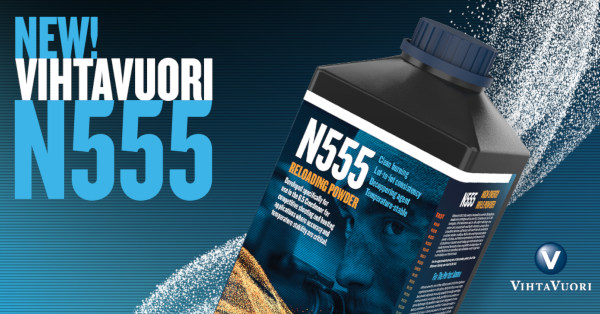
The other big news from Capstone was Vihtavuori’s new N555 powder, an advanced new propellent in the same relative burn range as H4350/RL16. Along with having a suitable burn rate for popular accuracy cartridges such as 6.5 Creedmoor and .284 Winchester, Vihtavuori’s new N555 is formulated for “clean burning characteristics and insensitivity in extreme weather conditions”. Complementing its temp stability, N555 includes an anti-fouling agent to keep barrels cleaner. Initial testing has been VERY promising. If you are shooting H4350 now, you should try N555.
From SIG Sauer — New Cross Rifle and New .277 Fury Cartridge
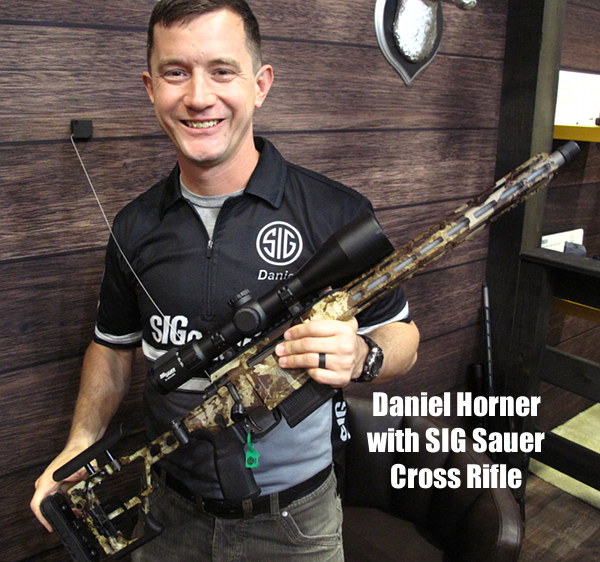
We visited the SIG Sauer booth and talked with top 3-gun ace Daniel Horner, formerly of the USAMU. Dan showed us the new SIG Sauer Cross bolt-action rifle. This is a chassis rifle that has many advanced features yet weighs under 7 lbs. before optics, making is suitable for hunting as well as tactical competitions. The Cross was very impressive, with nice balance and a very good adjustable trigger.
The .277 Fury, developed for the U.S. Military, used a hybrid case with a brass body and harder alloy metal case head. This design allows the cartridge to run very high pressures. Horner told us it would be SAAMI-rated to 80,000 PSI. Dan said “When the handloaders get hold of this brass, it will be a game-changer for sure.” We envision this cartridge could be necked down to 6.5 mm and it would dramatically out-perform the 6.5 Creedmoor.
Big Rifle for Little Lady
At the Walther booth, Top Shot’s Gabby Franco showed the Walther KK500 3-position .22 LR smallbore rifle. With its long barrel, the KK500 dwarfed the petite Ms. Franco. Also at the Walther booth we noted the new Walther Monotec competition Air Rifle. This features a free-floating action — a block connects the chassis to the barrel forward of the action.
New Savage 110 Ultralite Hunting Rifle
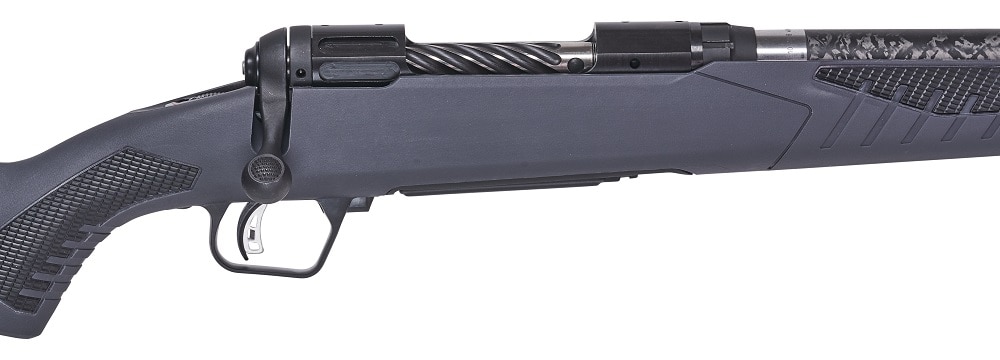
There were plenty of new hunting rifles on display at SHOT 2020. Savage showcased a new 5.8-lb Model 110 Ultralite rig. This features a Proof Research carbon-wrapped barrel. CLICK HERE for a full Guns.com review of the new Savage 110 Ultralite.
NEW Reloading Presses, Powder Dispensers, and Tools
RCBS had two notable new products on display. First, RCBS has a new single-stage press, called the Rebel. This looks similar to the venerable Rock Chucker, but it has a larger base and taller arch. The most important change is that this new Rebel Press ejects primers straight down the ram — just put a waste bin under the press to collect all your spend primers. However — take note — the Rebel has NO PRIMING function. You need to prime your cases separately.
RCBS also showcased its impressive new MatchMaster Power Scale/Dispenser. This features twin dispensing tubes, and can be set to deliver 1- or 2-kernel precision in the slower, more precise “Match Mode”. This is an impressive new machine, but it represents a significant investment. MSRP for the MatchMaster is $1123.95 with street price around $899.00 (MidwayUSA).
Hornady unveiled a new Auto Charge Pro Powder Dispenser, along with a Precision Measurement Station. The new powder measure features a touch-screen ABOVE the powder tray. We’re not sure if that enhances usability, but it does allow for a smaller footprint on your reloading bench. This Auto Charge Pro offers customizable trickle speeds for different powders. Hornady claims the unit is “accurate to within 0.1 grain”.
Handguns from Walther, Smith & Wesson, and Ruger
Huge 25-foot high displays were promoting Walther’s steel-framed Q4 pistols. These handguns balanced well and the trigger was nicer than you’ll get on most semi-autos these days.
Wheelguns and more from Smith & Wesson
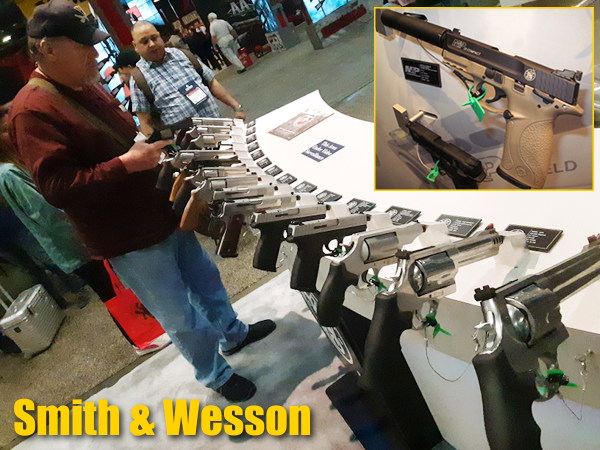
Smith and Wesson hand a big display of revolvers and carry pistols. We liked a new .22 LR semi-auto on display with a suppressor.
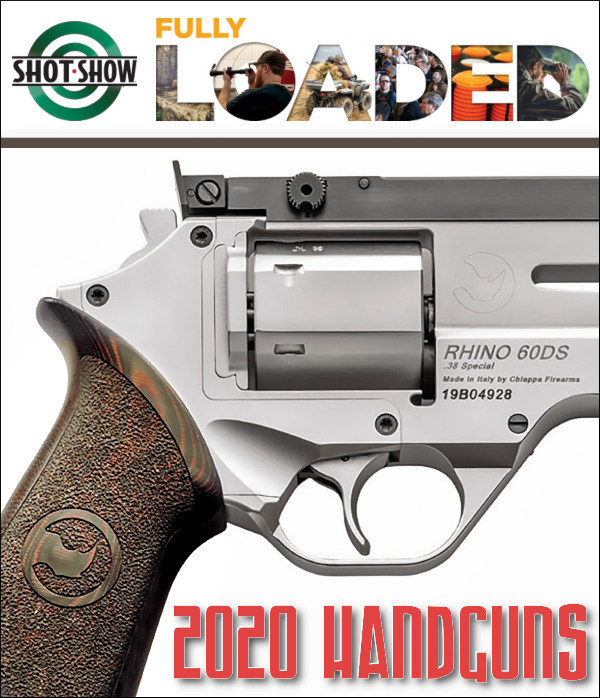
Ruger Super GP100 Revolver in 9mm Luger (9x19mm)
Ruger adapted its existing Super Redhawk frame for this Super GP100 9mm Luger (9x19mm) revolver, which features a stubby 8-round PVD-coated cylinder to better fit the 9x19mm round. According to Guns.com the 9mm GP100 “uses a cylinder and extractor cut for moon clips to speed up reloading [and] sports a 6-inch half-lug sleeved and shrouded barrel with an 11-degree target crown[.]”
DAY ONE Parting Shot Photo
This is a side view of an Action Target Vortex Bullet Trap.
by Glen Zediker
Most good shooters use mirage as their leading indicator to spot changes in the wind. With well-designed stand, the scope can be set it up where you can see the wind with the left eye and see the sight with the right without anything more than a visual focus shift. That gets the shooter back on the trigger with the least chance of missing another change. In the photo below e you can see 11-time National High Power Champion David Tubb using a spotting scope set up for his left eye.
David Tubb sets up his spotting scope so he can easily see through it with his LEFT eye, without shifting his head and body position.
There are resources that give clues or evidence of wind direction and strength: wind flags, observation of grass and trees, and mirage.
Almost always I use mirage as my leading indicator. Mirage (heat waves) is always present but you’ll need a scope to read it. For 600 yards I focus my scope about halfway to the target. Mirage flows just like water and the currents can be read with respect to wind speed as well, but it’s not clearly accurate beyond maybe a 15 mph speed. The thing is that mirage shows changes, increases or decreases, and also direction shifts, really well.
A couple more things about mirage flow: when mirage “boils,” that is appears to rise straight up, either there’s no wind or the scope is dead in-line with wind direction. And that’s a quick and accurate means to determine wind direction, by the way, move the scope until you see the boil and note the scope body angle. Here’s another tip — the boil can predict when a “fishtail” wind is about to change, a boil precedes a shift.
You don’t need to spend big bucks for an effective spotting scope to view mirage. You can get the Vortex 20-60x60mm Diamondback angled spotting scope for just $399.99 from Midsouth. That’s complete with 20-60X zoom eyepiece. Though inexpensive, the Vortex Diamondback is popular with many competitive shooters and hunters. No, it doesn’t offer the sharpness of an 80mm Kowa Prominar or Swarovski spotting scope, but you’ll pay $2400+ just for the body of those high-end optics.
Choice of EyePiece — Wide-Angle LERs Work Well
I use a long-eye-relief 20X to 25X wide-angle eyepiece. That setup shows the flow best. And pay attention to where the wind is coming from! See what’s headed your way, because what’s passed no longer matters. That’s true for any indicator. Right to left wind? Read off the right side of the range.
Once I get on target then all I am doing is watching for changes. It’s really uncommon to make a big adjustment between shots. The fewer condition changes you are enduring, the easier it is to keep everything on center. That’s why I shoot fast, and why I start at the low point in a wind cycle.
Making Corrections with Limited Sighters
Here’s a Tip for NRA High Power matches where only two sighters are allowed: “Make a full correction off the first sighting shot location! Even if there are minor changes afoot, that’s how to know how well you assessed condition influence pre-shot. Don’t second-guess. After the second sighter you should be on target and then simply watching for changes. Pay attention, correlate visible cues to the results of prior shots, and if in doubt, click into the wind.”
Information in this article was adapted from material in several books published by Glen Zediker and Zediker Publishing. Glen is an NRA High Master who earned that classification in NRA High Power Rifle using an AR15 Service Rifle. For more information and articles visitZedikerPublishing.com.
This Sunday we feature the German-crafted Merkel RX Helix with straight-pull bolt. We shot the Helix a few years back during Media Day at the Range. One notable difference between the German Merkel and the Austrian Strasser, another straight-pull rifle, is the bolt travel. During cycling, the Merkel bolt stays completely inside the action (see video below at 00:30). By contrast the Strasser bolt moves pretty far back, outside the action. For some folks that makes the Helix better for fast follow-up shots. All we can say is that Merkles and Strassers BOTH cycle way faster than conventional bolt-action rifles.
Merkel RX Helix Range Report
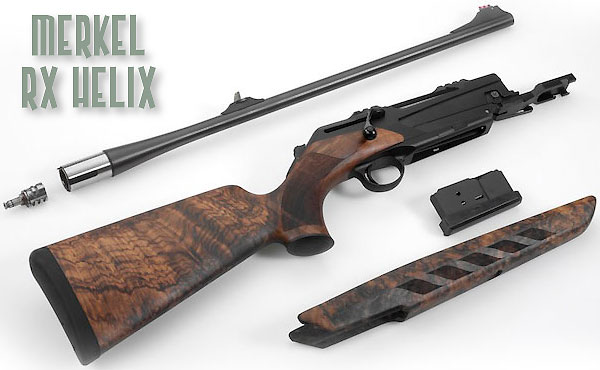
One of the most innovative rifles we have ever shot was the Merkel RX Helix, a very impressive piece of rifle engineering. Merkel claims the RX Helix is the fastest-cycling centerfire bolt action in the world. We can’t confirm that claim, but the Helix certainly cycles faster than any other centerfire bolt-gun this Editor has ever tried. (Yes, a Fortner biathlon action can be worked more rapidly, but that’s a rimfire). Both Jason and I really liked Merkel’s RX Helix. It balances well, the action is smooth, the wood is gorgeous, and the overall design thinking that went into this German-engineered take-down rifle is very impressive. The Helix’s universal-sized action lets you shoot anything from a .222 Rem to a .300 Win Mag with the same gun. And — get this — you can really swap barrels (and change bolt heads) in a couple of minutes with no tools, employing a dead-simple bolt-release lever concealed under the push-button-released removable forearm. (Watch VIDEO BELOW to see Barrel Swap procedure).
Rotary 7-Lug Bolt
While the RX Helix is a straight-pull rifle, it retains the strength and safety of a rotary bolt head with seven locking lugs that seat in a barrel extension. Unlike a Blaser, the RX Helix has a fully-enclosed action housing. That’s an important safety feature. Moreover, since the RX Helix employs a closed action, the bolt body doesn’t travel outside that action. This means the shooter can maintain his cheekweld with an eye on the target as he cycles the bolt.
The RX Helix’s linear (back and forth) bolt-handle motion is transmitted to the bolt head through a 1:2 ratio “transmission” gearing system. This allows smooth and fast cycling without the rotational or tipping movement found on other straight-pull, bolt-action rifles, such as the Blaser.
The Merkel linear-movement action cycles exceptionally fast, which allows for faster follow-up shots — a good thing if you’re hunting dangerous game. The RX Helix features a manual cocking lever on the tang and a direct trigger system. And here’s good news for southpaws — though Merkel does not make a dedicated left-hand version, lefties can very easily use their right hand to work the bolt while maintaining cheekweld. That may sound awkward, but with practice, it’s actually pretty efficient.
Fast, Easy Disassembly and Barrel Exchanges
The video below shows how the Helix can be disassembled (for cleaning or transport) in a matter of seconds WITHOUT TOOLS. The forearm slips off with the push of a button. A short lever on the left side of the action holds the barrel. Simply rotate the lever and the barrel (with bolt head) slips off. That’s it — in 30 seconds the rifle is apart, and you don’t even need an allen wrench as with a Blaser.
The RX Helix has a universal action length that covers calibers from .222 Rem to .300 Win Mag. Changing calibers (or chamberings) takes less than a minute with the appropriate barrel, bolt-head and magazine. Weaver rails are integrated into the action, and iron sights with three-dot rear and one-dot front fiber-optic inserts are standard.
The RX Helix is available with a standard black finish as well as four levels of design — Arabesque, Wild Boar, Spirit, and Deluxe. An all-carbon-fiber version was also available either with or without a carbon-wrapped barrel. The RX Helix comes in a wide range of calibers including .222 Rem, .223 Rem, .243 Win, 6.5×55 SE, .270 Win, 7×64, .308 Win, .30-06 Sprg., 8×57 IS, 9.3×62, 7mm Rem Mag and .300 Win Mag. Barrel lengths vary according to caliber, and barrels, bolt-heads and magazines are available for caliber changes. EuroOptic sells the Merkel RX Helix, but most models are back-ordered.
Are you planning to purchase or sell a gun? Or perhaps you want to give one to a family member. Maybe you want to transfer a gun to a friend out of state. These are all situations that demand you understand the law before you buy, sell, or transfer a gun. Thankfully the NRA Blog has a series of helpful articles that can guide you through firearms transfers and transactions. Do note that laws on private transfers vary from state to state.
Here are five articles providing key facts you need to know.
Click each title to read the specific article.
Turn a Rough Factory Rifle into an Accurate Hunting Rig
Kiwi Nathan Foster has produced a good video for hunters with “under-performing” Remington Model 700 rifles. In this video, Nathan helps a client turn a badly-behaving Rem 700 into a reliable tack-driver. A customer had sent Nathan this rifle to rectify stubborn copper fouling. After bedding the rifle, the customer discovered that the rifle produced terrible groups due to the stubborn bore.
Nathan told us: “This was a grand opportunity to study what can go wrong with the M700 rifle with regards to both do-it-yourself work and flaws within rifle production. To help structure the video, we used the chapters of our Accurizing Book as reference steps for the video. This footage also works in conjunction with our free Remington bedding tutorials on YouTube.
Those who have watched the full M700 Troubleshooting video say this is one of the most helpful videos yet released on problem-solving with a factory hunting rifle. This video is especially helpful for those just getting into the accuracy game, as it walks the viewer through the basics of rifle tuning, then proceeds to more advanced methods of improving a badly-behaving rifle.
This video focuses on the Remington M700 and Rem clones, such as the Bergara rifle. However the lessons and techniques in the video can apply to any type of bolt-action rifle suffering heavy copper fouling. The video features detailed footage of barrel break-in and barrel-lapping procedures. These procedures may be beneficial for rough factory barrels. IMPORTANT! AccurateShooter.com recommends different break-in and maintenance regimes for custom, hand-lapped premium barrels — be conservative with fine custom barrels. Our best custom barrels have all shot superbly with minimal break-in and zero use of abrasives during break-in.
Troubleshooting the Remington 700 Rifle with Nathan Foster
NOTE: This is a free 70-second trailer video. The FULL Remington Troubleshooting Video is 1 hour, 16 minutes long and can be streamed through Vimeo-on-Demand for $12.00. Access Full Video HERE.
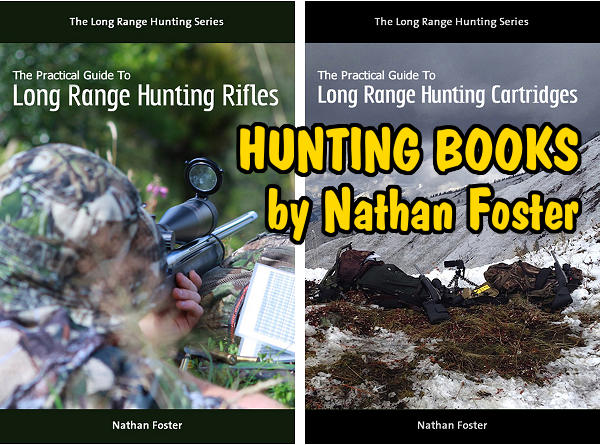
Nathan Foster of Terminal Ballistics Research in New Zealand, is a expert hunter and highly-respected author of a series of hunting and long range shooting books. Nathan’s first book, The Practical Guide to Long Range Hunting Rifles, is a classic — one of the best treatises ever written on choosing and using a hunting rifle.
The Remington 700 is the most popular bolt-action rifle in America, according to Gunbroker.com sales figures for new and “previously-owned” rifles. So, chances are that you (or a family member) have a Rem 700 of some vintage sitting in the gunsafe. Click the link above for a PDF version of the Remington 700 Owner’s Manual (also covers models Seven, and 673).
Forum member Keith W. (aka “Cigarcop”) of KW Precision LLC is a talented riflesmith whose projects display outstanding finish work and attention to detail. Keith does some of the best bedding work we’ve ever seen. Back in 2018, Keith built a stunning F-Class rig for a shooter in Delaware. It’s a beauty, that’s for sure. Keith has posted more details about this rifle in a Shooters’ Forum Thread.
This handsome rifle features a polished Stolle (Kelbly) Panda Action, and two (2) Brux barrels, both chambered for the .284 Winchester cartridge. The real eye-catching component of this rifle is the stunning Cerus F-Open stock. This features multiple laminations with highly-figured Walnut on the sides. This certainly ain’t your “off-the-shelf” laminated stock. This just shows the beauty that can be achieved with carefully-chosen lamination layers (plus 12 coats of clear).
This beautiful F-Open rig features a laminated wood stock with stunning figured walnut on the outside.
Keith of KW Precision LLC is renowned for his bedding work, and this rifle shows why. Keith takes great pride in his work, and his attention to detail is second to none. This bedding job is as good as it gets.
Bringing out the figure in the wood requires multiple finish coats (and careful sanding between coats). But the results are worth it. Shown below is the Cerus stock, BEFORE the finish coats were applied. It took time and effort to transform the “naked” Cerus stock into a true stunner. Keith applied twelve (12) coats of PPG Automotive Clear with wet sanding between each coat.
And Another Beauty — This One Built for Capstone’s Boss
CigarCop recently completed a handsome rifle for Bill Gravatt, President of the Capstone Precision Group, distributor for Berger, Lapua, Vihtavuori, and SK products. This F-TR rig is another example of beautiful craftsmanship. Look at that bedding job in the lower photo! To learn more about this rifle, which features a black Borden Rimrock BRM action (with fluted bolt), read this Shooters’ Forum Thread.
This article is part of Sinclair Int’l Step-By-Step Reloading Series. Most of the products mentioned in this article are sold through Brownells.com.
by Roy Hill, Brownells/Sinclair Copywriter
Making your own precision handloads is a meticulous journey with many steps, many important matters to consider, and many sets of measurements to calculate. For those who pursue the perfect group, the highest score, the really long accurate shot, the rewards more than outweigh the effort. Choosing the right cases, deburring the flash holes, making the primer pockets uniform, trimming the cases, and lubricating them are all familiar – and critical – steps along the journey. And now that your brass preparation is complete, you are at last ready to start running the cases through your press and fill them with primers, powder, and bullets. The very first die the brass encounters is the sizing die. You insert the case, work the press’s lever to return the case to its correct pre-fired dimensions – and the journey continues.
There are three types of sizing dies to think about: neck, full-length, and small base. All three have specific benefits and potential drawbacks, and you should choose the type of die you use by thinking very carefully about what kind of shooting you plan to do with your handloads. No matter which type you select, most sizing dies will also punch out the old spent primer with some sort of decapper assembly that uses a hardened steel rod. Many types of sizing dies use an expander ball inside the die to make sure the neck of the case will accommodate a bullet after being sized. With some size dies, the expanders are easily removable and interchangeable, letting you get exactly the neck tension you want. If you are reloading for pistol cartridges, carbide sizing dies allow you to quickly resize without applying any lube to the case. But rifle cases always need lube.
Neck-Sizing Dies Neck-sizing dies resize only the neck of the case. The benefit of sizing only the neck is that the brass is “worked” very little, letting you reuse the same cases many times over. Also, cases that have already been fired in your rifle are perfectly fireformed to fit that rifle’s chamber, which can help accuracy. However, neck-sized cases will fit only the specific rifle they were originally fired in, and may still require a little extra force to chamber or extract.
Sinclair recommends that neck-sized-only cartridges should not be used any in other rifle besides the one they were originally fired from [unless they are also FL-sized], or in any action other than a bolt-action. Neck-sized-only rounds are great for the target range or the benchrest but should not be used in critical situations like military or police operations, or hunting. And if you fire them enough times, neck-sized cases will still need to be full-length sized periodically for you to keep using them.
Full-Length Sizing Dies Full-length sizing dies do exactly what their name says: resize the full length of the case, not just the neck. Full-length sizing helps create handloads that will function in any rifle, not just the one from which the cases were originally fired. The potential downside of full-length sizing is that it may shorten case life because it works the brass more than neck sizing. But it’s possible to “tune” today’s full-length sizing dies so they barely work the brass at all, as this article by Sinclair Reloading Tech Ron Dague shows.
Illustration Shows How a Full-Length Sizing Die Works
Another way to reap the benefits of full-length sizing is to use Redding’s full-length bushing dies, which size the full length of the case but use a system of interchangeable bushings that enable you give the case neck the bare minimum of resizing needed. To see how finely adjustable bushing dies are, and how they resize the case while fully supported, CLICK HERE for Video. The neck bushing helps you precisely control the neck tension to help increase the consistency and accuracy of your handloads.
Small Base Dies
A Small Base Die is just another type of full-length sizing die, but one that is typically used when reloading for semi-automatic rifles, like the AR-15, M14, or AR-style .308 rifles. (It may also work well for bolt guns that need extra sizing on the lower section of the case.) A small base die works exactly like a full-length sizing die, only it compresses the brass just a bit more, usually about .001″ more, and may even push the case shoulder back just a hair. Small base dies give that extra bit of compression to the brass to help make sure the case will properly extract from a semi-automatic firearm. The upside is that you get precision handloads that should work flawlessly in your semi-automatic. The downside is case life is really shortened, especially compared to brass used only in one bolt-action rifle, because the brass is worked more.
Shoulder Bump Gauges
A handy tool for setting up your full-length sizing dies as close as possible to your rifle’s chamber is the Sinclair bump gauge. The bump gauge lets you resize the case as little as possible, to extend case life and help your handloads fit your rifle almost like a neck-sized only die. You use deprimed cases fired in your rifle and bump gauge inserts to help you set up the die so it resizes the case only about .001″ to .004″, depending on what type of rifle you’re shooting.
Video shows how to use a shoulder bump gauge to set up your full-length dies
Article Find by EdLongrange. We welcome reader submissions
Scary stuff — AK-74 after firing corrosive ammo and not being cleaned for a week.
Image courtesy ADCOFirearms.com.
No doubt you’ve heard the term “corrosive” used with respect to ammunition. But what exactly is “corrosive ammunition” (and how does it different from non-corrosive ammo)? What is the chemistry that leads to corrosion, and what cleaning procedures should you follow if you shoot corrosive ammunition? Brownells has come up with answers to these and other questions in a helpful TECH TIP video about corrosive ammo.
In this informative video, Brownells gun tech Steve Ostrem explains the primer-related chemistry that makes some ammo corrosive. The video then reviews suggested cleaning procedures you should follow after you have fired corrosive ammo through any firearms.
What Is “Corrosive” Ammunition?
What makes ammo “corrosive”? Generally speaking, primers are the problem. When corrosive ammunition is fired, the ignited primers leave a residue of corrosive salts. Typically these primers contain potassium chlorate, or sodium petrochlorate which, when burned, change into potassium chloride or sodium chloride. Sodium chloride is also known as common table salt.
Potassium chloride and sodium chloride are both very hygroscopic (i.e. they attract water). Because of that, these alkalis are rust generators. When exposed to the hydrogen and oxygen in the air (and moisture) potassium chloride and sodium chloride can form an acid that quickly causes metal rifle parts to rust and pit.
Given a choice, you may wish to avoid corrosive ammo altogether. However, for some types of fire-arms, particularly older military-style rifles, the most affordable ammunition may be corrosive. If you choose to use corrosive ammo, it is important to clean the gun thoroughly after use. After firing, you want to use an element that will neutralize the primer salts. Brownells suggests a water soak (see video above). Alternatively, Windex with ammonia can help neutralize the salts, but that doesn’t finish the job. After the salts have been neutralized and flushed away, basic anti-corrosion protectant (such as Eezox or other gun oil) should be applied to all metal parts.
This video ahows the effects of Corrosive Ammo after one month without cleaning:
To learn more about the proper procedures for cleaning rifles exposed to corrosive ammo, we suggest an article by Paul Markel on Ammoland.com. Markel, host of the popular Student of the Gun TV series, states that: “Windex (with ammonia) is the Corrosive Ammo shooter’s best friend. After you are done shooting your corrosive ammunition for the day, squirt the window cleaner liberally from the chamber down the barrel. Pull the bolt / bolt carrier / op rod if there is one and douse them as well. A couple of old cotton t-shirts will come in handy. A cotton barrel swab is a nice accessory but you can make do with patches. Some folks will rinse all of the ammonia and loosened corrosive salts off with hot water. Others prefer to wipe it all down and let the ammonia evaporate. Either way, once the corrosive salts have been tackled with the window cleaner, it is time for an all-purpose brush (old toothbrush) and some gun oil.” READ Full Article by Paul Markel.
Video Tip from EdLongrange. We welcome reader submissions.
Buell’s Beast with Massive 35 Inch Barrel
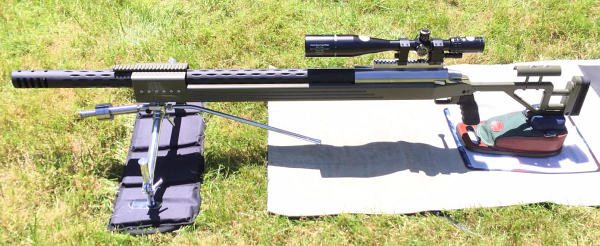
A few seasons back, Our friend Darrell Buell built a new Beast — a monster 64-inch-long .375 CheyTac that weighs more than 70 pounds! Designed for ultra-long-range shooting (two miles and beyond), this beast represents the state-of-the-art in extreme long-range rifles. NOTE: to see more details, click the two images above to open Full-Screen Photos.
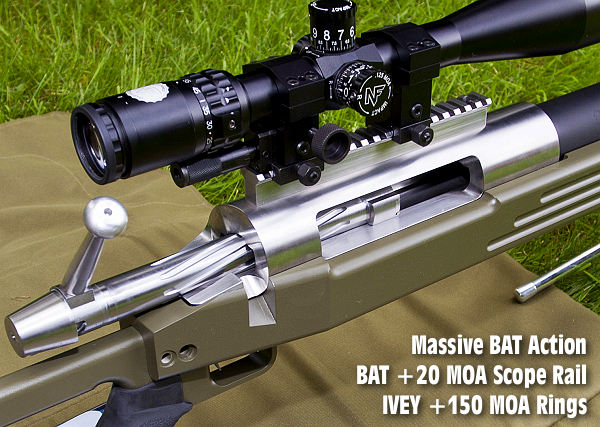
Darrell reports: “This rifle is pretty much purpose-built to shoot 2+ miles extremely accurately. It is a .375 CheyTac (lengthened) built on a BAT 2.5″ action. The custom 35″, 1:10″-twist Brux barrel is a fat, 2″-diameter ‘straight taper’ with fluting. A custom 5″-long muzzle brake is fitted at the end. All barreled action work was done by R.W. Snyder Custom Rifles. The stock was created to fit the build by PDC Custom, and the massive muzzle brake as well.” The “bridge” at the end may look like a barrel block, but it’s not — the barrel completely free-floats. (The Picatinny rail on top of the bridge allows use of an overhanging bipod as an alternative to the JoyPod).
Darrell has lots of elevation on tap: “With 150 MOA in the Ivey rings, another 20 MOA in the scope rail, 55 MOA in the Nightforce Competition scope, and 10 MOA in the FCR-1 reticle, there’s an impressive +235 MOA available.”
Counter-Weighted SEB Joy-Pod Up Front
The bipod Darrell will be using for his ELR sessions and the ‘King of 2 Miles’ match is a custom counter-weighted JoyPod crafted by Seb Lambang. With the counter-weight, Darrell says his monster 70-lb gun “adjusts as smoothly as an F-T/R rig”. The glass is a Nightforce 15-55x52mm Competition scope carried in Ivey +150 MOA rings, which in turn are mounted to a +20 MOA BAT scope rail. Darrell says: “It’s been a heck of a couple months, getting this monster built in time, thanks particularly to Southern Cerakote, which turned it around in less than 24 hours.”
Buell’s Beast runs 350gr solid bullets at approximately 3250 fps. Check out the massive .375 CheyTac cartridge compared to a .308 Winchester:
This one-of-a-kind “JoyPod” was produced by Seb Lambang specifically for Buell’s big .375 CheyTac rifle. Darrell needed a JoyPod that wouldn’t sink under a heavy load. Seb explains: “This is the world’s first JoyPod equipped with an adjustable counterweight, to balance his 75-lb gun. I did some experiments and put some weights ranging up to 60+ lbs on the top, and I found that the joystick action works like a regular one….it’s smooth, light, and precise. In addition, the counterweight can be bent down to not interfere with the bottom of the barrel. The counterweight is secured into the front center shaft by a thumb screw, and there is a tightly fitted pivotal joint on the counterweight to allow angle adjustment.”
Darrell is happy with his customized coaxial bipod: “In addition to the adjustable counterweight system on the front, this JoyPod comes with a longer, solid joystick. These additions will make for extremely smooth, precise adjustments, even if the rifle weighs in at 75 pounds or more. Not including the counterweight, the actual structure of this bipod weighs in at a mere 1.09 pounds — exactly what the standard JoyPod weighs. It is extremely strong, however. Seb has pictures of himself standing on the pod … and he weighs 150 pounds!”
When covering SHOT Show 2020 our reporters will focus primarily on rifles, optics, and reloading equipment, because this website is dedicated to rifle accuracy. However we know many of our readers are interested in semi-auto pistols and revolvers, and we bet the majority of our Forum members own handguns. This Editor has competed in various pistol disciplines and I still love my semi-autos and wheelguns. So, for you fellow pistoleros out there, here’s our “Pick Six” — a half-dozen new handguns (both semi-auto pistols and revolvers) — all new for 2020.
1. Korth (Nighthawk Custom) — Korth Ranger
The new German-made Korth Ranger revolver is one of the most impressive wheelguns you can buy — at any price. Sold in the USA by Nighthawk Custom, Korth revolvers feature best-in-the-world workmanship, superb triggers, and outstanding accuracy. Designed for revolver match shooting, the Korth Ranger features a top Picatinny rail for Red Dot optics. The barrel shroud has lightening cuts which reveal a Lothar Walther match barrel with target crown.
2. Ruger 57 — New Competition Pistol for 5.7×28 Cartridge
The all-new Ruger 57 is an impressive full-size pistol with 4.94″ barrel. This looks like it will be a hoot to shoot. The 5.7×28 cartridge is a high-velocity, low recoil round — sort of a 22 WMR on steroids. Expect to get close to 1700 fps from a 40gr cartridge. We expect this long-slide pistol will be used mostly for gun games, but with a 20-round magazine, it certainly can handle self-defense duties too. According to a recent VIDEO REVIEW by 22Plinkster, the new Ruger 57 performs well. READ Ruger 57 Field Test.
3. Colt Python for 2020 — Stainless with 4.25″ or 6″ Barrels
The 4.25″ barrel Python is 9.75″ long and 42 ounces. The 6″ model is 11.5″ long and 46 ounces.
The Snake is back baby! For 2020, Colt’s Manufacturing Co. LLC will offer a refined and upgraded Colt Python with a hefty $1499.00 MSRP. The legendary double-action revolver, which originally debuted in 1955, returns in stainless steel in 4.25″ and 6″ barrel lengths. It is designed to be stronger than before. Numerous improvements were made to reinforce the revolver, including the use of stronger stainless steel alloys and a re-designed rear sight which allows for a 30% increase in the cross-sectional area of the top strap — meaning more steel for a stronger revolver.
4. Keltec P17 — New Compact, Budget-Priced .22 LR Pistol
Keltec’s new P17 rimfire pistol is lightweight, easy to handle, and features a fiber optic front sight and an adjustable rear. Priced at just $199.95 MSRP, the .22 LR P17 has 16+1 round capacity and ships with three, 16-round magazines. This is a small pistol — it weight just 14 ounces and OAL is 6.65″. Keltec states: “The new, affordable P17 pistol makes range days a lot less expensive and far more fun.” With low cost .22 LR ammo and a 16+1 capacity, this should be fun to shoot.
5. Ruger Super GP100 Revolver in 9mm Luger (9x19mm)
The 9×19mm Parabellum (aka 9mm Luger) cartridge was introduced in 1902 by German weapons manufacturer Deutsche Waffen und Munitionsfabriken (DWM) for the Luger semi-auto pistol. Now 118 years later, Ruger is bringing us a sturdy, 6″-barrel revolver for this popular cartridge. Ruger adapted its existing Super Redhawk frame for this Super GP100 9mm revolver, which features a rather short 8-round PVD-coated cylinder to better fit the 9x19mm round. According to Guns.com the 9mm GP100 “uses a cylinder and extractor cut for moon clips to speed up reloading [and] sports a 6-inch half-lug sleeved and shrouded barrel with an 11-degree target crown[.]”
6. Wilson Combat — Experior Series 1911 Pistols
Wilson Combat’s new Experior handguns feature match-grade components, sweet triggers, and accuracy guarantees. Wilson states that “The Experior lineup [is] the most fully-loaded package we offer, showcasing nearly every tactical, functional and cosmetic option as a standard feature. They are a unique blend of classic 1911 design, paired with modern-day reliability and ergonomic enhancements[.]” Experiors will be offered in both 9mm and .45 ACP in a variety of barrel lengths. There will be both single-stack and double-stack Experior models.
MORE HANDGUNS HERE: You’ll find 18 other new-for-2020 pistols featured on the Guns Holsters & Gear (GHG), Shot Show 2020 Preview Page
BONUS — Upgraded for 2020
Smith & Wesson M&P M2.0 C.O.R.E. Pro Series Pistols
Smith & Wesson M&P 2.0 pistols were introduced back in 2017, so they aren’t new. But for 2020, S&W is offering Performance Center variants with cool new features. The New M&P M2.0 Performance Center pistols include porting and Competition Optics Ready (C.O.R.E.) slides. Chambered in 9mm and .40 S&W, the new Performance Center M&P M2.0 pistols are available with either a 4.25″ or 5″ barrel. Features may include ported barrels and slides and fiber optic sights. For those looking to mount an optic without custom work, the new C.O.R.E. pistols have slides cut for optics straight from the factory. These will support the majority of popular pistol reflex sights.








 Making Corrections with Limited Sighters


 Rotary 7-Lug Bolt





 No doubt you’ve heard the term “corrosive” used with respect to ammunition. But what exactly is “corrosive ammunition” (and how does it different from non-corrosive ammo)? What is the chemistry that leads to corrosion, and what cleaning procedures should you follow if you shoot corrosive ammunition? Brownells has come up with answers to these and other questions in a helpful TECH TIP video about corrosive ammo.