|
|
May 3rd, 2014
 On German Salazar’s Rifleman’s Journal website, you’ll find an excellent 5-Part Series on barrel chambering. The Series, entitled The Voyeur’s Guide to Barrel Chambering, is not intended to be a “how-to” instructional treatise for gunsmiths. Instead, German’s 5-Part Guide is aimed at the end user — the shooter. German explains: “This Series isn’t intended for anyone who owns a lathe; instead it is for those of us who send an action off to get a new barrel installed. Those who have the equipment know what to do and how to do it and I have nothing to teach them. On the other hand, if you’ve ever wondered just what goes into barrel fitting, this is it.” On German Salazar’s Rifleman’s Journal website, you’ll find an excellent 5-Part Series on barrel chambering. The Series, entitled The Voyeur’s Guide to Barrel Chambering, is not intended to be a “how-to” instructional treatise for gunsmiths. Instead, German’s 5-Part Guide is aimed at the end user — the shooter. German explains: “This Series isn’t intended for anyone who owns a lathe; instead it is for those of us who send an action off to get a new barrel installed. Those who have the equipment know what to do and how to do it and I have nothing to teach them. On the other hand, if you’ve ever wondered just what goes into barrel fitting, this is it.”
PART I | PART II | PART III | PART IV | PART V

With well-written text and dozens of very high-quality images, German takes you through the chambering, threading, shoulder-fitting, and crowning processes from start to finish. The idea is to give the “barrel consumer” a clear idea of the processes involved when a barrel blank is converted into functional form, complete with chamber, threaded tenon, fitted breech, and crown.

We highly recommend German’s 5-Part Voyeur’s Guide to Barrel Chambering. German, with the aid of John Lowther (who ran the machines), did a great job. The series has already drawn much attention from our Forum members, along with praise. After reading the articles, John C. from Australia wrote: “Your Chambering articles… really are excellent [and] informative for those of us too scared to watch our gunsmith chamber one of our barrels lest we distract him at a crucial moment!”


We know you’ll learn something from reading through German’s 5-Part Series. And if you see a photo on German’s website that intrigues you, simply click on it to see a larger, higher-resolution version. All the images in the Voyeur Series on RiflemansJournal.com can be zoomed to larger formats.
May 2nd, 2014
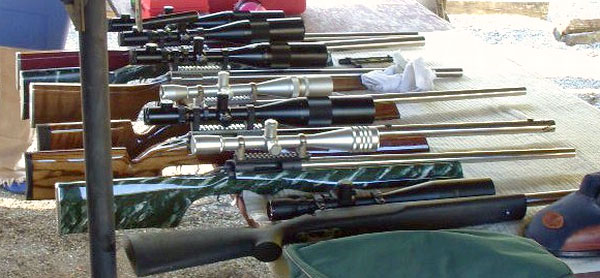
 With all the talk about Dashers, 6.5×47 Lapuas, or the big 7mms, it’s worth remembering that the “plain Jane” 6mmBR Norma really is a superb mid-range cartridge. That was demonstrated recently at the 2014 Roanoke Egg Shoot, a clay-bustin’ multi-distance match with targets at 330, 425, and 500 yards. At Roanoke, the 6mmBR (aka 6BR) was the most popular chambering. In fact, 25 out of 43 rifles (58%) were 6BRs. And this little cartridge did most of the winning. In Factory Class, seven of the Top 10 were 6BRs, including first and second place. In Open Class, eight of the Top 10 were 6BRs, including second and third place. And the Open Class winner, a 6BRX piloted by Forum member Mark Schronce, was a 6BR Improved, formed from 6mmBR parent brass. With all the talk about Dashers, 6.5×47 Lapuas, or the big 7mms, it’s worth remembering that the “plain Jane” 6mmBR Norma really is a superb mid-range cartridge. That was demonstrated recently at the 2014 Roanoke Egg Shoot, a clay-bustin’ multi-distance match with targets at 330, 425, and 500 yards. At Roanoke, the 6mmBR (aka 6BR) was the most popular chambering. In fact, 25 out of 43 rifles (58%) were 6BRs. And this little cartridge did most of the winning. In Factory Class, seven of the Top 10 were 6BRs, including first and second place. In Open Class, eight of the Top 10 were 6BRs, including second and third place. And the Open Class winner, a 6BRX piloted by Forum member Mark Schronce, was a 6BR Improved, formed from 6mmBR parent brass.
Mark tells us the conditions were great this year: “We had eleven clean scores [of 15] in Open class. One of the 15s was shot by 8-year-old Cash Brown. Watch out for this young man, he is a shooter!”. With so many cleans there were many shoot-offs to determine the Top Three in each class. Mark explains: “We shoot one round each, no sighter at 500 yards, on 3.5″ clays, until one guy wins.”

*Mark also shot a 15 with his second rifle, chambered in 6mmBR Norma. Mark’s Open Class-winning 6BRX rifle featured a Bat B action and Mike Davis-chambered 26″ Krieger 1:8.5″-twist barrel. Mark loaded Berger 105gr VLDs, pushed by Varget and Fed 205M primers.
Young Guns Shine at Roanoke
Forum member Greg M., (aka Coleridge), also attended the Roanoke Match: “I made it into the Open Class Shoot-Off with two separate guns (6BR and 6-6.5x47L) … only to get whipped by both of the two youngest shooters there (one with my own gun!).” Greg noted that: “the Open Class Second Place finisher was also a youngster, Blake, my 15-year-old son. It won’t be long before Blake and [8-year-old] Cash are whipping us way too often. I’m just glad neither one of them was shooting in factory class!”

Course of Fire
The main match at Roanoke encompasses three yardages. All guns engage 15 clay targets: five 2.5″ clays at 330 yards, five 3.5″ clays at 425 yards, and five 4.5″ clays at 500 yards. Shooters are allowed TWENTY rounds, (no separate sighters). All rounds must be shot in one setting, with a 10-minute time limit. Shooters can shoot targets in any order.
Class Rules
In the primary clays-shooting competition, there are two (2) classes, Open and Factory. In the Open class there is a 30-lb weight limit and no rail guns are permitted. Beyond that, pretty much “anything goes”. The Factory Class is more tightly controlled — this is a true factory class, no customs allowed, not even Coopers. The only upgrades allowed are bedding and trigger job/replacement.
 Egg Shoot Is Challenging Egg Shoot Is Challenging
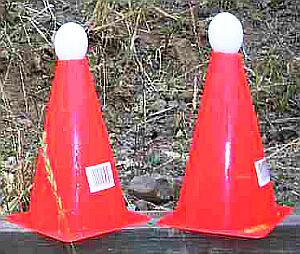
In addition to the main clays-shooting match, there is an actual Egg Shoot, conducted separately. For the Egg Shoot, there are no classes — competitors pick their best rifle. After a five-minute warm-up, competitors get two shots to hit one egg at 500 yards. It costs two bucks for each entry — and you can shoot until your money or ammo runs out. All competitors who hit an egg then go into a Shoot-Off for glory and cash awards. Jonathan Dunn, shooting a 6BRX, won the Egg Shoot scoring 3 of 4 hits on eggs in the Shoot-Off stage.
April 26th, 2014
 To succeed in long-range shooting matches, given the high level of competition these days, you’ll need solid wind-reading abilities. We’ve found an article by SFC Emil Praslick III, USAMU Service Rifle coach, that can help you make better wind calls in competition. To succeed in long-range shooting matches, given the high level of competition these days, you’ll need solid wind-reading abilities. We’ve found an article by SFC Emil Praslick III, USAMU Service Rifle coach, that can help you make better wind calls in competition.
SFC Praslick is considered one of the best wind gurus in the United States, if not the world. He has authored an excellent two-part article on wind reading that is available on the CMP (Civilian Marksmanship Program) website. Both articles contain helpful illustrations, and are “must-read” resources for any long-range shooter–not just Service Rifle and Highpower competitors.
Click to Read Articles:
Reading the Wind (Part One) | Reading the Wind (Part Two)
 Part One covers basic principles, tactics, and strategies, with a focus on the 200-yard stages. Emil writes: “There are as many dimensions to ‘wind reading’ as there are stages to High Power competition. Your tactical mindset, or philosophy, must be different for the 200 and 300 yard rapid-fire stages than it would be for the 600 yard slow-fire. In the slow-fire stages you have the ability to adjust windage from shot to shot, utilizing the location of the previous shot as an indicator. Additionally, a change to the existing conditions can be identified and adjusted for prior to shooting the next shot.” Part One covers basic principles, tactics, and strategies, with a focus on the 200-yard stages. Emil writes: “There are as many dimensions to ‘wind reading’ as there are stages to High Power competition. Your tactical mindset, or philosophy, must be different for the 200 and 300 yard rapid-fire stages than it would be for the 600 yard slow-fire. In the slow-fire stages you have the ability to adjust windage from shot to shot, utilizing the location of the previous shot as an indicator. Additionally, a change to the existing conditions can be identified and adjusted for prior to shooting the next shot.”
In Part Two, Praslick provides more detailed explanations of the key principles of wind zeros, wind reading, and the “Clock System” for determining wind values: “The Value of the wind is as important as its speed when deciding the proper windage to place on the rifle. A 10 MPH wind from ’12 o-clock’ has No Value, hence it will not effect the flight of the bullet. A 10 MPH wind from ‘3 o’clock’, however, would be classified as Full Value. Failure to correct for a Full Value wind will surely result in a less than desirable result.”

Praslick also explains how to identify and evaluate mirage:
Determine the accuracy of the mirage. Mirage is the reflection of light through layers of air that have different temperatures than the ground. These layers are blown by the wind and can be monitored to detect wind direction and speed.
Focus your scope midway between yourself and the target, this will make mirage appear more prominent. I must emphasize the importance of experience when using mirage as a wind-reading tool. The best way to become proficient in the use of mirage is to correlate its appearance to a known condition. Using this as a baseline, changes in mirage can be equated to changes in the value of the wind. Above all, you must practice this skill!
Click HERE for more excellent instructional articles by Emil Praslick and other USAMU Coaches and shooters.
April 22nd, 2014
 Our IT guy, Jay (aka JayChris in the Forum), was having some issues with his .260 AI. A load with known accuracy had suddenly and mysteriously stopped shooting well. Jay couldn’t figure out what was going wrong. Then he remembered he had cleaned his brass using a powerful ultrasonic machine. Our IT guy, Jay (aka JayChris in the Forum), was having some issues with his .260 AI. A load with known accuracy had suddenly and mysteriously stopped shooting well. Jay couldn’t figure out what was going wrong. Then he remembered he had cleaned his brass using a powerful ultrasonic machine.
He inspected his brass carefully and saw that the ultrasonically-cleaned necks were so “squeaky clean” that he was actually scratching the jackets on his bullets when seating them. As well, Jay noticed that it took more force to seat the bullets and the seating force became less uniform case to case. Jay solved the problem by applying NECO Moly dry-lube inside the necks of his brass before seating the bullets.
The Perils of Ultrasonic Brass Cleaning by JayChris
I rotate my brass so that I can keep track of each firing, so I keep a “clean/ready to load” bin and a “fired” bin. I have 400 pieces of .260 AI brass. So, all of it was on its first firing (after doing a Cream of Wheat fire-forming) until I hit the 400-round mark. To my surprise, things went south at the 500-round mark. The first time I noticed it (according to my range log) was at a match last year, when I dropped several points and had some vertical stringing issues. After that match, I had 400 rounds through the barrel and all of my brass had a single firing on it. So, it was time to clean.
 I have used an ultrasonic cleaner for a while now. I recently got a more powerful Ultrasonic cleaner, although I don’t know if that makes a difference. My brass comes out dry and squeaky. Emphasis on the “squeaky”. I have used an ultrasonic cleaner for a while now. I recently got a more powerful Ultrasonic cleaner, although I don’t know if that makes a difference. My brass comes out dry and squeaky. Emphasis on the “squeaky”.
I found that my new US machine may have been getting the necks TOO clean. After ultrasonically cleaning my brass, I had noticed that it required a little more force to seat the bullets, but I didn’t really think too much about it. But then, after going over my ordeal with a shooting buddy and going over my process in minutiae, we had an “AH HA” moment when it came to cleaning (he uses good ol’ vibratory cleaning).
So, I used some moly dry-lube to pre-lube the case necks and took some rounds out to test at 200 yards. I used my last known good load and sure enough, the vertical flyers disappeared! I shot two, 10-rounds groups with .335 and .353 MOA vertical dispersion, which is consistent with the results I was originally getting.
Other folks have suggested necks may get “too clean” after ultrasonic cleaning. It was pretty sobering to actually witness, first hand, what can happen when brass is “too clean”. I had read some discussions of issues with neck friction/bullet seating after ultrasonic cleaning, but, frankly, I dismissed the idea. Now I understand. The “too clean” effect doesn’t seem to affect my Dasher at all (perhaps because Dasher necks are very short), but on the bigger .260 AI, it definitely does.
Close-Up Photos of Case-Necks
Here are photos Jay took with a microscope. You can see the difference between tumbled brass and ultrasonically-cleaned brass. Jay says: “Here, in sequence, are the Ultrasound-squeaky-clean case neck, a case neck after treatment with NECO moly dry-lube (you can see the particles that will help coat the neck during seating), and, finally, the neck from a case cleaned with corncob media in a vibratory tumbler. You can clearly see how much smoother the inside of the tumbled neck is. Yes, it’s dirty, but it’s also very, very smooth.


Close-Up of Scratched Bullet
Here is a close-up of a bullet that was seated in an ultrasonically-cleaned (“squeaky clean”) neck, with no lubrication. You can clearly see the damage done to the jacket — in fact, in a couple spots you can see the lead core through the scratches! Jay also observed that quite a bit more seating force was required to seat the bullet in a “squeaky clean” neck.

NOTE: The bullet jacket is naked — NOT coated in any way. It looks a little dark because of the shadow from the microscope lens, and the high contrast.
April 17th, 2014
 Gun, guns, and more guns — that’s what you’ll find in the May issue of Shooting Illustrated. This special edition, Shooting Illustrated’s largest-ever issue, features more than 100 new firearms. Novel features, technical specifications, and MSRP are included for all 100+ new firearms in the spotlight. From Alexander Arms to Yankee Hill Machine Company, if it’s a new handgun, rifle or shotgun introduced in 2014, chances are Shooting Illustrated has it covered this month. Gun, guns, and more guns — that’s what you’ll find in the May issue of Shooting Illustrated. This special edition, Shooting Illustrated’s largest-ever issue, features more than 100 new firearms. Novel features, technical specifications, and MSRP are included for all 100+ new firearms in the spotlight. From Alexander Arms to Yankee Hill Machine Company, if it’s a new handgun, rifle or shotgun introduced in 2014, chances are Shooting Illustrated has it covered this month.
In addition to covering 100+ new guns for 2014, this issue also includes Shooting Illustrated’s “best of the best” selections from 2013. The Golden Bullseye Award is given to the most innovative, practical and affordable products introduced last year. Also in the May issue is a detailed review of Ruger’s new SR-762 semi-automatic rifle, a piston-driven .308 Win, AR-platform rifle. Look for these articles and more in the May issue of Shooting Illustrated. For more information, visit Shooting Illustrated.com.
April 10th, 2014
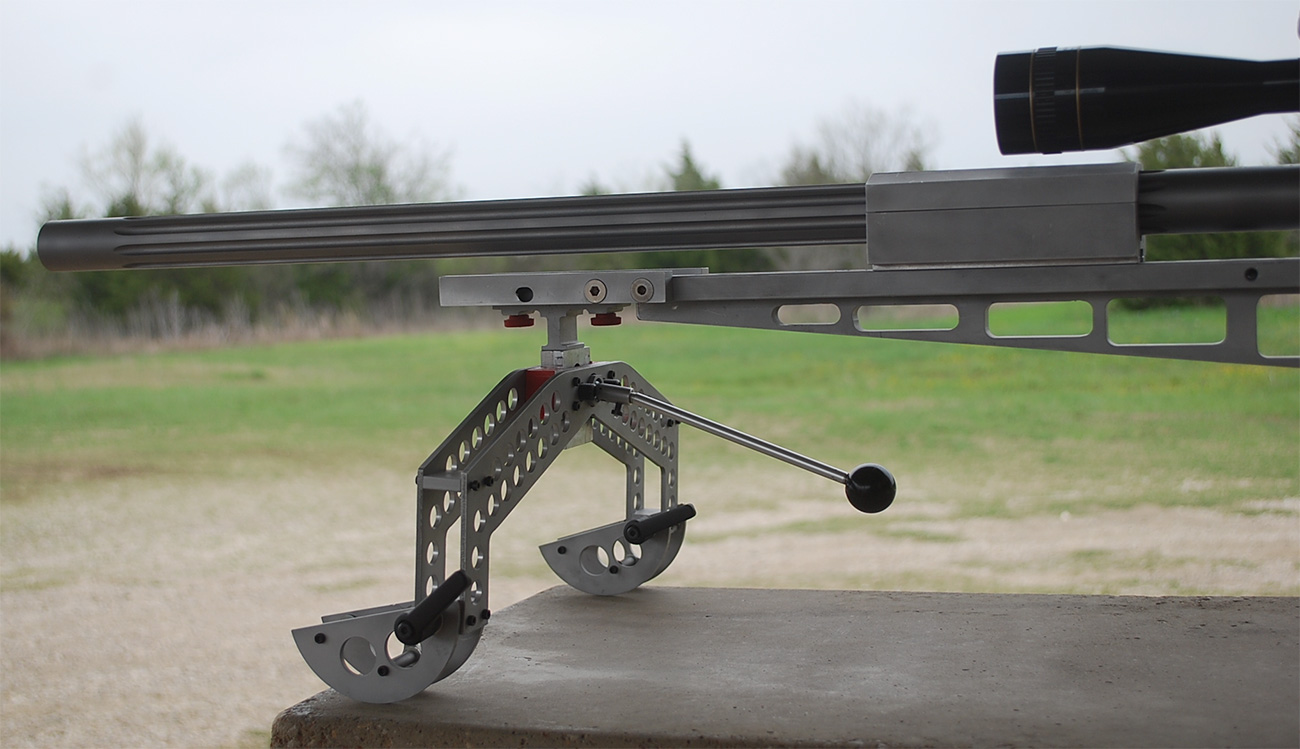
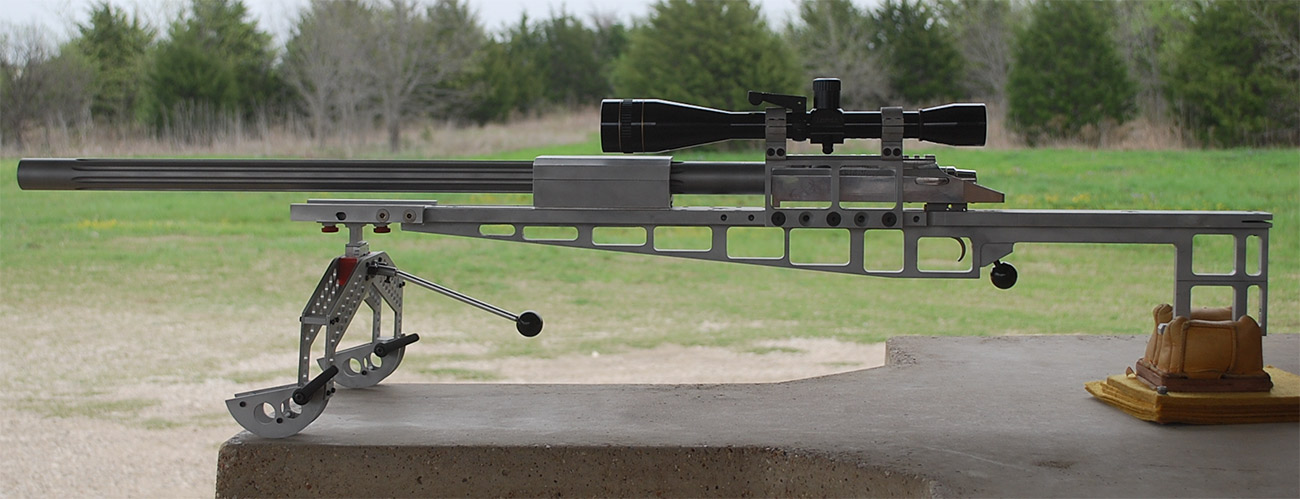
We know you guys like exotic hardware, so today we pulled something very exotic from our featured rifle archives. We doubt that you have ever seen anything quite like this before. Gun-builder Richard King says: “I thought you might like to see my latest project. This is my personal gun, built the way I wanted it. I know it’s radical and some may not care for it. But it works.”


Report by Richard King (King’s Armory, Texas; ‘Kings X’ on our Forum)
This is pretty much an all-aluminum rifle. The action is a Kelbly F-Class with a Shilen stainless steel competition trigger. The scope is a 1″-tube Leupold 36X with a Tucker Conversion set in Jewell spherical bearing rings. The .223 barrel is Pac-Nor 3-groove, 1:6.5″-twist mounted in a “V”-type barrel block. The bipod has vertical adjustment only via a dovetail slide activated by a stick handle. It works like a joy-stick, but for vertical only. I adjust for windage by moving the rear sandbag.
The 30″ barrel is 1.250″ in diameter. With the barrel block forward, the vibrations should be at a low frequency. Instead of one long rod whipping, I now have two short rods (barrel haves) being dampened. This is my fourth barrel block gun. They work, but so does a good pillar-bedded action. I just do stuff a little different.

The vertical “keel” down the bottom of the stock stops the “spring” of a flat-bar stock. There is little, if any, noticeable flex before or during recoil. The long length of the stock, the fat barrel, and the forward-mounted barrel block work together to keep the gun from rising off the ground. BUT, remember this is a .223 Rem rifle. A .308 Win version might act very differently. I may try a .308-barreled action soon, just to see what happens. But I will stick with the .223 Rem as my choice for match shooting.
 The offset scope idea came from a benchrest “rail” gun. In truth, the whole concept came from a rail gun — just adapted to being shot off a bipod. Sure it isn’t directly over the bore. It is about 1.5″ over to the left. So if you want the scope to be zeroed on the center of the target, you have to adjust for the offset. At 100 yards that is 1.5 MOA. But at 300 it is only 0.5 MOA, at 600 only a ¼-MOA, and at 1000 about 1 click on my scope. The offset scope idea came from a benchrest “rail” gun. In truth, the whole concept came from a rail gun — just adapted to being shot off a bipod. Sure it isn’t directly over the bore. It is about 1.5″ over to the left. So if you want the scope to be zeroed on the center of the target, you have to adjust for the offset. At 100 yards that is 1.5 MOA. But at 300 it is only 0.5 MOA, at 600 only a ¼-MOA, and at 1000 about 1 click on my scope.
What the offset DOES do for me is eliminate any cheek pressure. My cheek never touches the stock. Since this is only a .223 Rem, I don’t put and shoulder pressure behind it. And I don’t have a pistol grip to hang on to, but I do put my thumb behind the trigger guard and “pinch” the two-ounce trigger.
The offset scope placement could interfere with loading a dual-port action from the left. That’s not a problem for me as I set my spotting scope up on the left side very close to the rifle. I have plenty of time to reload from the right side while the target is in the pits being scored.
Again — this is my rifle. It is designed for my style of shooting. It is not meant to be a universal “fit all” for the general public. However, I will say the design is adaptable. I can easily convert the system to run in F-Open Class. I would drop a big-bore barreled action into the “V” block, slide on a heavier pre-zeroed scope and rings, add plates on the sides up front to bring the width to 3”, and maybe a recoil pad. It might be interesting to offset the wings up from to counter torque of the big bullets. But I would also have to offset the rear bag rider to get the gun to recoil straight back.
How the Gun Performs
I have had “T” to the range only twice for load development. It groups like my present barrel-blocked 223 F-TR gun. But it’s much easier to shoot and it only moves about 3/4” — straight back. I tried to build am omni-directional joy-stick bipod but I could not get all the side-to-side wiggle out of it. So I have set it up so it only moves up and down (horizontal movement is locked-out). As it works now, the joystick on the bipod lets me set elevation on the target quickly (with up/down adjustment). Then, to adjust for windage, I slide my rear bag side-to-side as needed. Once set, I just tickle the trigger and smile.
Gun Handling — Shoot It Like a Bench-Gun
I basically shoot the gun with no cheek or body contact. I don’t grip it, other than maybe a pinch on the trigger guard. The scope was offset to the left to help the shooter move off the gun and avoid the possibility of head/cheek contact with the stock.
[haiku url=”http://accurateshooter.net/Video/RichKingTalks.mp3″ Title=”Richard King Talks”]
|
VOICE FILE: Richard King Explains How He Shoots his ‘Texas-T’ Rifle: |
CLICK PHOTOS to See Big Size
April 5th, 2014
 On the Norma website, in the products area, you’ll find dozens of illustrated cartridge profiles. Many of these have been augmented with “Caliber Histories” providing background information, both historical and practical. These entries will benefit those interested in the origins and development of popular hunting and match cartridges. Many of the “Caliber Histories” also include information on bullets and twist rates. On the Norma website, in the products area, you’ll find dozens of illustrated cartridge profiles. Many of these have been augmented with “Caliber Histories” providing background information, both historical and practical. These entries will benefit those interested in the origins and development of popular hunting and match cartridges. Many of the “Caliber Histories” also include information on bullets and twist rates.
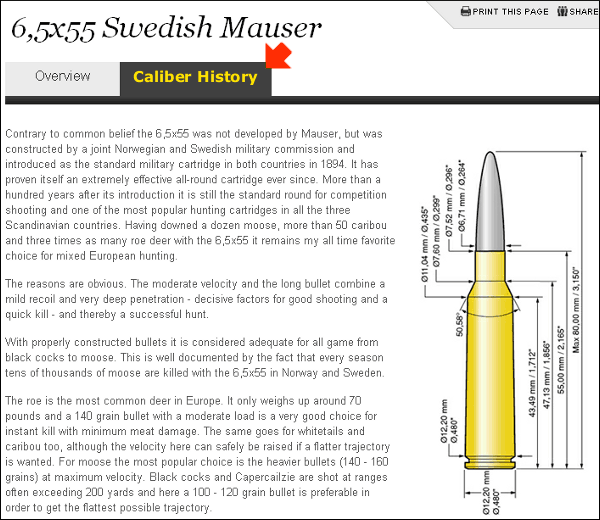
CLICK HERE to access the Hunting Products page on Norma’s website. There, on the left, you’ll see a vertical list of 58 different cartridges. Click on any cartridge name and you’ll see an illustrated “overview”. For most (but not all) listed cartridges, there is also a gray tab labeled “Caliber History”. Click that tab to see a cartridge diagram and a few paragraphs explaining the cartridge’s lineage and design features. For example, the .280 Remington Caliber History explains: “This cartridge was constructed in 1957 for Remington’s model 740 Autoloader. It is basically a .30-06 necked down to accept 7mm bullets, but the shoulder was moved forward a little in order to prevent the cartridge from being loaded into .270 Win. rifles by mistake.” Many of the Caliber History entries offer recommended bullet weights and barrel twist rates. Shown below is the 6.5×55 Swede’s Caliber History:

Article tip by EdLongrange. We welcome reader submissions.
April 1st, 2014
 Here’s big (and small) news for reloaders — get ready for smaller powder containers. The U.S. Department of Transportation (DOT) recently approved new smaller containers for shipment of smokeless powder. The new containers are designed to hold 1000 grains, exactly one-seventh of a pound. That works out to 2.29 ounces of powder — quite a bit less than you are getting currently with one-pound (16 oz.) containers. Here’s big (and small) news for reloaders — get ready for smaller powder containers. The U.S. Department of Transportation (DOT) recently approved new smaller containers for shipment of smokeless powder. The new containers are designed to hold 1000 grains, exactly one-seventh of a pound. That works out to 2.29 ounces of powder — quite a bit less than you are getting currently with one-pound (16 oz.) containers.
Here how it works out:
7000 grains = 1 pound = 16 ounces
1000 grains = 0.143 pounds = 2.29 ounces
Many products — from cereal boxes to Snickers bars — have been down-sized in recent years. Now downsizing has come to the powder marketplace. The strategy behind the smaller containers is simple. In a market where demand vastly outstrips available supply, the smaller containers allow powder-makers to generate more revenue with a given amount of powder inventory. Will consumers accept the smaller powder containers? Probably so — 1000 grains is enough to load 20-22 rounds of .308 Winchester. In the current marketplace (with many powders virtually impossible to find), most consumers would probably prefer to get 2.3 ounces of their favorite powder, rather than nothing at all. (NOTE: The major powder suppliers will continue to offer popular powders in 1-lb, and 8-lb containers. The new 1000-grain containers will be phased-in over time, as an alternative to the larger containers).

Why the small bottles? One industry spokesman (who asked not to be named) explained: “We’ve had a severe shortage of smokeless powder for nearly two years. The powder production plants are running at full capacity, but there’s only so much finished product to go around. By moving to smaller containers, we can ensure that our customers at least get some powder, even if it’s not as much as they want.”
Why are the new containers 2.3 ounces rather than 8 ounces (half a pound) or 4 ounces (one-quarter pound)? One of the engineers who helped develop the new DOT-approved container explained: “We looked at various sizes. We knew we had to reduce the volume significantly to achieve our unit quantity sales goals. Some of our marketing guys liked the four-ounce option — the ‘Quarter-Pounder’. That had a nice ring to it, but ultimately we decided on the 1000 grain capacity. To the average consumer, one thousand grains sounds like a large amount of powder, even if it’s really only 2.3 ounces. This size also made it much easier to bundle the powder in six-packs. We think the six-packs will be a big hit. You get nearly a pound of powder, but you can mix and match with a variety of different propellants.”
Less Bang for Your Buck?
We’re told the new 2.3-ounce powder bottles will retail for around $8.50, i.e. about $3.70 per ounce. At that price, it may seem like you’re getting less bang for your buck. Currently, when you can find it, high-quality reloading powder typically sells for $25-$30 per pound (in 1-lb containers). At $30 per pound, you’re paying $1.88 per ounce. That means that the new mini-containers will be roughly twice as expensive, ounce-for-ounce, as current one-pounders ($3.70 per ounce vs. $1.88 per ounce).
 Why is the DOT getting involved in powder packaging? Well, powders are considered hazardous materials, subject to many rules and regulations. Before a powder manufacturer or distributor can ship any propellant, all the hazmat packaging has to be first approved by the DOT to ensure safe shipping. Why is the DOT getting involved in powder packaging? Well, powders are considered hazardous materials, subject to many rules and regulations. Before a powder manufacturer or distributor can ship any propellant, all the hazmat packaging has to be first approved by the DOT to ensure safe shipping.
Along with the 2.3-ounce containers, the DOT has approved “six-pack” consolidated delivery units that will hold six, 1000-grain containers. Some manufacturers plan to offer “variety packs” with a selection of various powders in the 1000-grain bottles. Wouldn’t it be cool to have a six-pack with H322, H4895, Varget, H4350, H4831sc, and Retumbo?
March 28th, 2014
Serious shooters spend lots of time in the reloading room. If you want to produce great ammo, start with a good, solid bench with a very rigid working surface and plenty of storage space. Here we present three sets of FREE workbench plans. Any one of these bench designs can be a good summer do-it-yourself project for those with basic word-working skills.
Easy-to-Build Basic Bench
Simpson, maker of Strong-Tie fasteners, offers FREE Workbench Plans for a sturdy, 48″-wide bench with a pegboard backing and both upper and lower shelves. A complete list of fasteners and cut lengths is provided. For use as a loading bench with mounted presses, double-up the bench-top for extra ridigity. Without much difficulty, the plans can be adapted to build a wider bench if you prefer. The same downloadable document also contains plans for an 80″-high 6-shelf unit, a 72″-high heavy-duty shelving unit (with 4 shelves), and a 48″-wide heavy-duty table.

FREE Strongtie Bench Plans (.pdf file).
Corner Bench with Swinging Doors
The next design is rather unique — a corner bench with swing-out cabinets. This reloading bench is based on plans by M. L. McPherson as published in the October 1993 American Rifleman. The compact footprint that makes good use of corner space that is usually poorly utilized. This set of plans originally came from Ray-Vin.com. The folks who started Ray-Vin have retired.
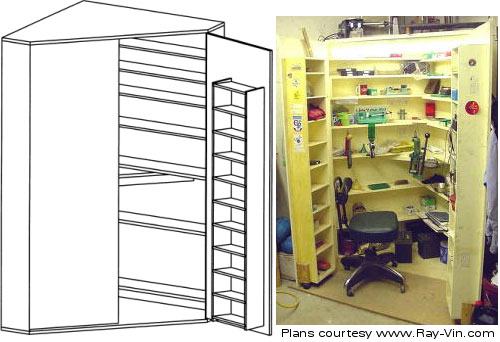
FREE Corner Bench Plans (330kb .pdf file)
Classic NRMA Bench with Cabinets
The last bench design is a large, versatile bench with a full set of enclosed overhead cabinets. A National Reloading Manufacturers Association (NRMA) design, this bench requires many hours to build, but it will house all your reloading gear and provide a very stable platform for your presses.This bench was designed to be as versatile as possible to meet the needs of most reloaders. However, the bench design can easily be customized. For instance, it can be made larger or smaller to meet space requirements or quantities of equipment and components. As it is currently designed, the work area is about waist-high for a 6’2″ person. This can be adjusted to fit your height simply by making the legs longer or shorter.

FREE NRMA Reloading Bench Plans (2.42 megabyte .pdf file).
March 14th, 2014
 If you have always dreamed about making a living writing about guns, here’s your chance. The NRA’s flagship publication, American Rifleman, is looking for an Assistant Editor. This is a full-time gig. You get to test guns, write, edit, and even travel around the country a bit. What’s the catch? Well you may have to pull up stakes and move. This position is based at NRA Headquarters in Fairfax, Virginia. You can’t work remotely or tele-commute. If you have always dreamed about making a living writing about guns, here’s your chance. The NRA’s flagship publication, American Rifleman, is looking for an Assistant Editor. This is a full-time gig. You get to test guns, write, edit, and even travel around the country a bit. What’s the catch? Well you may have to pull up stakes and move. This position is based at NRA Headquarters in Fairfax, Virginia. You can’t work remotely or tele-commute.
American Rifleman Seeks Assistant Editor
American Rifleman, the National Rifle Association’s original Official Journal, is seeking qualified candidates for the position of Assistant Editor.
Job Duties: Provides editorial support essential to produce American Rifleman magazine, the American Rifleman Television Show and American Rifleman digital edition accurately, punctually, and in accordance with established standards and policies. Handles editorial preparation and production of monthly departments and daily web content as assigned, including: reviewing manuscripts, fact-checking, copy editing, assembling photo packages, writing captions and headlines, and proofreading. Proofreads departments, features and web content during each stage of editorial production, including checking links and page proofs of digital version of American Rifleman. Assists in compilation and production of monthly “Lock, Stock & Barrel”, “Opening Shot,” “Product Reviews”, and other monthly features. Coordinates “Official Journal” sections in multiple magazines. Sources photographs to be used in various media; writes photo captions; and may do assignment photography.
 The Position requires a BA in English, Journalism or Communications and 1-2 years experience on newspaper or magazine editorial staff. Shooting experience and knowledge are required, as is a broad interest in firearms and Second Amendment issues. The selected candidate must be eligible under Federal law to have access to firearms and ammunition. Working knowledge of electronic publishing is required. Basic photography skills are necessary. Extended hours and business travel are required. The Position requires a BA in English, Journalism or Communications and 1-2 years experience on newspaper or magazine editorial staff. Shooting experience and knowledge are required, as is a broad interest in firearms and Second Amendment issues. The selected candidate must be eligible under Federal law to have access to firearms and ammunition. Working knowledge of electronic publishing is required. Basic photography skills are necessary. Extended hours and business travel are required.
CLICK Here for Full Job Requirements and to Submit a Resume.
Note, if you have production experience in the publishing industry, the NRA is also seeking a Managing Editor for Shooting Illustrated magazine. This job is also based at NRA Headquarters in Fairfax, Virginia.
|