Precision Benchrest and F-Class shooters favor premium brass from Lapua, Norma, Peterson, or RWS. (Lake City also makes quality brass in military calibers.) Premium brass delivers better accuracy, more consistent velocities, and longer life. Shooters understand the importance of good brass, but many of us have no idea how cartridge cases are actually made. Here’s how it’s done.
The process starts with a brass disk stamped from strips of metal. Then, through a series of stages, the brass is extruded or drawn into a cylindrical shape. In the extrusion process the brass is squeezed through a die under tremendous pressure. This is repeated two or three times typically. In the more traditional “draw” process, the case is progressively stretched longer, in 3 to 5 stages, using a series of high-pressure rams forcing the brass into a form die. While extrusion may be more common today, RWS, which makes some of the most uniform brass in the world, still uses the draw process: “It starts with cup drawing after the bands have been punched out. RWS cases are drawn in three ‘stages’ and after each draw they are annealed, pickled, rinsed and subjected to further quality improvement measures. This achieves specific hardening of the brass cases and increases their resistance to extraordinary stresses.” FYI, Lapua also uses a traditional draw process to manufacture most of its cartridge brass (although Lapua employs some proprietary steps that are different from RWS’s methods).
After the cases are extruded or drawn to max length, the cases are trimmed and the neck/shoulder are formed. Then the extractor groove (on rimless cases) is formed or machined, and the primer pocket is created in the base. One way to form the primer pocket is to use a hardened steel plug called a “bunter”. In the photos below you see the stages for forming a 20mm cannon case (courtesy OldAmmo.com), along with bunters used for Lake City rifle brass. This illustrates the draw process (as opposed to extrusion). The process of draw-forming rifle brass is that same as for this 20mm shell, just on a smaller scale.
River Valley Ordnance explains: “When a case is being made, it is drawn to its final draw length, with the diameter being slightly smaller than needed. At this point in its life, the head of the draw is slightly rounded, and there are no provisions for a primer. So the final drawn cases are trimmed to length, then run into the head bunter. A punch, ground to the intended contours for the inside of the case, pushes the draw into a cylindrical die and holds it in place while another punch rams into the case from the other end, mashing the bottom flat. That secondary ram holds the headstamp bunter punch.
This video employs DEFORM-2D software to show the draw process for brass casings.
The headstamp bunter punch has a protrusion on the end to make the primer pocket, and has raised lettering around the face to form the headstamp writing. This is, of course, all a mirror image of the finished case head. Small cases, such as 5.56×45, can be headed with a single strike. Larger cases, like 7.62×51 and 50 BMG, need to be struck once to form a dent for the primer pocket, then a second strike to finish the pocket, flatten the head, and imprint the writing. This second strike works the brass to harden it so it will support the pressure of firing.”
Thanks to Guy Hildebrand, of the Cartridge Collectors’ Exchange, OldAmmo.com, for providing this 20mm Draw Set photo. Bunter photo from River Valley Ordnance.
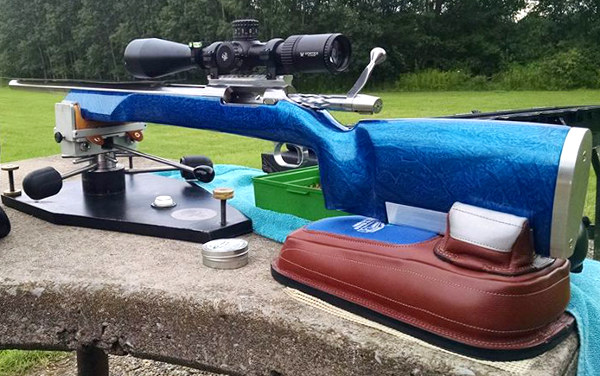
Today’s featured rifle comes from the land Down Under — Australia. This impressive .300 WSM F-Open rig has top-tier components/accessories from multiple countries. From the USA comes the Borden BRMXD action, Krieger barrel, McMillan Kestros ZR stock, and R.A.D. 2 recoil system. The 10-60x56mm March scope comes from Japan. The Lenzi rear bag is from Italy, and the SEB front rest is from Indonesia, with a Rodzilla top from America. This rifle proved very accurate from the get-go, winning its first match, emerging with the top 600m Aggregate. This .300 WSM F-Open beast is definitely a winner.
Impressive .300 WSM F-Open Rifle from Australia
This rifle belongs to Kris Wilson, aka “Willow” on our AccurateShooter Forum. Just last week Kris posted in the Pride and Joy Rifle thread: “Got my latest build up and running — a .300 WSM F-Open rifle. Never shot a .300 WSM (Winchester Short Magnum) before today and I have to say that, while the recoil is on the sharp side, it’s entirely manageable thanks to the stock design and front rest.” Kris resides in Sydney, New South Wales, Australia and shoots at the Hornsby RSL Rifle Club. He has been his club’s F-Open Champion, even with some very tough competition — his club boasts two Australian F-Open championship-winning club members. Kris loves the F-Class game: “I started rifle shooting in 2015 when I was introduced to the world of F-class through shopping for a riflescope. Once I saw what F-class was all about, I was hooked.”
Kris produced this video on December 5, 2020. He reports: “Here is my first real outing with my new .300 WSM. I had previously sighted in at 50 meters at an indoor range to establish a wind zero. Had a rough idea of velocity so I threw together two loads to run at 600 meters. Our Aussie targets have a max numerical ring value of 6 (equivalent to “10” on USA targets). On Stage One I shot a 60.8X (60.10X max possible), grouping about 3.7 inches. On Stage Two, shown in this video, I shot a a 66.9X (66.11X max possible) with a 3-inch grouping. I took first place in both stages and won the overall Aggregate for the day. That earned me a Christmas ham and turkey for my trouble!”
.300 WSM Rifle Hardware, Cartridge Choice, and Reloading
Report by Kris Wilson, NSW, Australia
Stock: McMillan Kestros ZR with R.A.D. 2 system. 70% black, 15% grey, 15% red.
Action: Borden Rimrock BRMXD, left bolt, right port, left eject. The action is fully DLC coated and fitted with a +20 MOA rail
Trigger: TriggerTech Diamond
Barrel: Krieger 1:10″-twist, 4 groove finished at 31″ and fitted with an Ezell tuner.
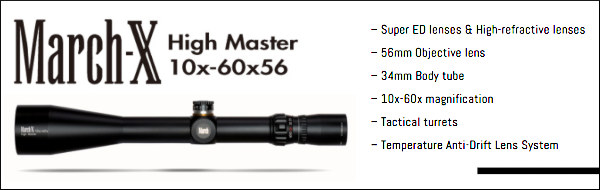
Scope: March High Master 10-60x56mm with MTR-1 reticle, illuminated
Rings: ARC M10 High Rings
Front Rest: SEB Mini Rest, with Rodzilla Rest Top system
Rest Feet: Bryan Blake (F-Class Products) adjustable stainless feet
Rear Support: Lenzi (Italy) LR Rear bag, with custom metal base plate
Cartridge Selection — Why the .300 WSM Was Chosen over a 7mm Cartridge
I set out with the goal of building my ultimate F-Open rifle. Now “ultimate” is of course subjective, but I did not want to leave any stone unturned when it came to building a .300 WSM. When researching the equipment for my new build I had a couple of ideas in mind. I was already shooting a 7mm, in the form of a 280AI which had served me well, but I already had plans to switch to a .284 Shehane with the introduction of Peterson .284 Win brass, coupled with the fact Norma stopped making 280AI brass (Note: Peterson now makes 280AI brass). While I was reasonably well-covered with my .284 Shehane, I wanted something with a bit more horsepower to hold up at long range in choppy conditions. A lot of the top guys here shoot 7mm SAUMs but I wasn’t keen on going down that path. Why? For every accurate SAUM I’ve seen, I’ve seen others struggle and given that the 7mm SAUM seems to be particularly hard on barrels, I wanted something that could match the 7mm SAUM ballistically, but have better barrel life.
After plenty of research on AccurateShooter.com, and speaking with some shooters, both locally and in the USA, I decided to give the .300 WSM a go. This cartridge is not particularly popular in Australia for F-Open, primarily because most states enforce muzzle energy restrictions, so pushing the .300 WSM to its potential simply isn’t viable for many shooters here. It IS viable in my home state however, along with the ACT, so I can at least use it in major competitions in two Australian states without having to run at lower nodes where it would otherwise be trumped by the 7 SAUM shooters. I was also attracted to the cartridge through its general design, having a 35-degree shoulder angle similar to the inherently accurate .284 Winchester. I also think the .300 WSM resembles a super-sized Dasher, another devastatingly accurate cartridge. Most .300 WSM shooters report ease of tuning, another key factor I considered.
Choice of Stock, Action, and Barrel
My gunsmith, Matt Paroz (aka MattP on the AccurateShooter Forum) is one of Australia’s top gunsmiths as well as one of Australia’s top F-Open shooters. He knows what it takes to build match-winning rifles. Matt is also an agent for McMillan stocks and I was sold on the Kestros ZR after seeing how it well it tracked — the lower center of gravity it offers cannot be underestimated once you start stepping up in caliber size. I had previously seen a couple of rifles that Matt built for an Australian F-Open team member and I was blown away not only by the quality of the builds, but how well the components worked with one another. I already own a Barnard action, a match-winning action in its own right, but I was desperate to get my hands on a Borden. I liked the fact that Jim Borden times his actions as they leave his factory, so I ordered a BRMXD, left bolt, right port, left eject. I ordered my BRMXD fully DLC-coated, for both longevity and aesthetics.
I opted for a TriggerTech Diamond trigger which has been timed to the action and offers a level of crispness the factory Barnard trigger cannot replicate. The synergy between action and trigger is just superb. I managed to get my hands on a 10-twist, 4-groove Krieger barrel that looks like a winner so far. Finished at 31″, this barrel has been super-easy to tune so far, with Berger 215gr hybrids showing very good promise. NOTE — Overall the rifle comes in 500 grams (1.1 lbs.) below F-Open max weight, so the next barrel will probably finish at 32″.
The barrel sports an Ezell tuner. I don’t touch the tuner until I’ve sorted my load and bullet seating depth. The tuner just affords me that extra flexibility in tightening up an already good grouping. At the end of the day, like any competitive shooter, I’m chasing tight vertical and horizontal, something which will run inside 1 MOA at 1000 yards. If I drop a shot, I want it to be my fault, not the rifle’s.
About my optics choice — when the chance to own a March High Master came up, I didn’t think twice. I have used March previously and got a sneak peek through an original High Master prototype which was doing the rounds in Australia. With superb image quality, it left a lasting impression. March has built up an excellent following and reputation in Australia, and so far I have to say it was money well spent. The March is held in place with a set of beefy ARC M10 rings.
The rest of my F-Open setup includes a modified SEB Mini up front, with a Rodzilla Rest top and Bryan Blake adjustable feet. I chose the SEB Mini because it has a wide, stable footprint but relatively light weight. That makes the Mini easier to transport. At the rear I use an extremely well-crafted Lenzi LR bag which sits on a custom rear plate. This heavy combination keeps things nice and planted. That aids in straight tracking.
Reloading for the .300 WSM — Process and Die Choice
When it comes to reloading, I keep it simple and don’t over-think things. I use Norma .300 WSM brass. I ensure case mouths are always deburred on the inside and out but I do not neck turn. I am set up to turn necks with a 21st Century unit, but after neck turning previously for a 6mm SLR, I just didn’t see a noticeable benefit in doing so. I always full length re-size after firing and prefer bushings, generally opting for .002″ of neck tension on anything I shoot. So far it seems to be working. With my .300 WSM I run a Redding Type-S full-length bushing die with a .335 bushing. A loaded round comes in at 0.337″ across the neck and I opted for a no-neck turn reamer which comes in at 0.343″, so there’s plenty of clearance. I use a Forster micrometer seating die. I prefer the feel of the Forster and I use Redding dry lube media to assist in smooth bullet seating.
Reloading room with MEC single-stage press on left and AutoTrickler with Force Restoration Scale on right. Note there are plenty of bullets — Kris got his supplies before the shortage.
I use an AMP Annealer and anneal after every firing. Powder charges are measured and dropped with a V3 AutoTrickler and A&D FZ500i scale. The 215gr Berger Hybrid seemed like a pretty good place to start as far as bullet selection. I point them with a Whidden bullet pointing die. Powder options can sometimes be a contentious choice and if you’re lucky you’ll get a couple of powders which will work well in any given barrel. For my .300 WSM I use Alliant Reloder 23. It is very temp-stable. My primer of choice is S&B Standard Large Rifle Primers. How does it all come together? The first nine shots through the barrel while zeroing the scope resulted in an ES of 17 and SD of 6 — promising signs for a light initial load of 63 grains.
Kris has been impressed with his .300 WSM beast: “Suffice to say I was very pleased with how things turned out! Despite the bigger bang this rifle makes, the Kestros ZR and R.A.D. 2 system made it remarkably compliant. The recoil is sharp but the R.A.D. system just takes all the sting out of it — it reminded me of shooting my old 280AI in terms of felt recoil. I was able to get back on target with a minimum of fuss and didn’t find the rifle fatiguing at all, so it gets a massive thumbs up from me.”
CONCLUSION — The .300 WSM is Very Effective for F-Open
With recent trends in F-Open equipment, such as rifle stock technology making a lower center of gravity possible, bigger F-Open options such as the .300 WSM are now quite manageable. That’s not to say this caliber is a pussy cat — it definitely kicks more than the .284s out there. But with my choice of components, the recoil is manageable and the R.A.D. 2 system takes the sting out, so I’m not left nursing a sore shoulder at the end of a stage. The rifle is off to a very positive start so far but I know it’s capable of more. The lead up to Christmas will keep me busy fine-tuning a load in time for the NSW State Title match to be held in late January 2021. With COVID-19 halting most competitive shooting in Australia in 2020, this 2021 NSW competition is sure to prove popular. I intend to have my .300 WSM rifle humming in time for it.
Kris Wilson (NSW, Australia) Talks About Competitive Shooting
When I was introduced to F-Class shooting, I was fascinated with the level of accuracy shooters were obtaining with their rifles and it was something that just drew me in. Since then it has been a gradual learning curve, not to mention the fact everyone I have met has been super friendly and willing to share their knowledge. The shooting fraternity is a great community to be part of…. Mixing it with Australia’s best is what drives me right now.
I’ve been working hard to maintain my skills and the new rifle is motivation. As reloading equipment and rifle components continue to improve, it’s a great sport which encourages learning and provides many opportunities to keep improving your shooting.
The U.S. Supreme Court has issued a unanimous 9-0 decision holding that the Protection of Lawful Commerce in Arms Act (PCLAA) bars Mexico’s claims that firearm manufacturers “aided and abetted” illegal firearms trafficking to narco-terrorist drug cartels in Mexico. In the case of Smith & Wesson Brands, Inc. v. Estados Unidos Mexicanos, Mexico sought $10 billion in damages against several U.S. firearm manufacturers and distributors.
In its unanimous decision the Supreme Court stated: “Recall that Congress enacted the [PCLAA] statute to halt a flurry of lawsuits attempting to make gun manufacturers pay for the downstream harms resulting from misuse of their products. In a ‘findings’ and ‘purposes’ section, Congress explained that PLCAA was meant to stop those suits — to prevent manufacturers (and sellers) from being held ‘liable for the harm caused by those who criminally or unlawfully misuse firearm[s].’ Mexico’s suit closely resembles the ones Congress had in mind: It seeks to recover from American firearms manufacturers for the downstream damage Mexican cartel members wreak with their guns.”
Smith & Wesson Pres./CEO Mark Smith posted: “Today’s unanimous Supreme Court decision… represents not only a big win for Smith & Wesson, but our industry, American sovereignty and, most importantly, every American who wishes to exercise his or her Second Amendment rights. This suit, brought by Mexico in collaboration with U.S.-based anti-Second Amendment activist groups, was an affront to our nation’s sovereignty and a direct attack on the Constitutional rights of law-abiding Americans. It [was] a blatant abuse of our legal system to advance their anti-Constitutional agenda.”
NSSF filed an amicus brief supporting Smith & Wesson in its petition to dismiss Mexico’s claim for $10 billion in damages. NSSF’s Lawrence G. Keane, Senior V.P. and General Counsel stated: “This is a tremendous victory for the firearm industry and the rule of law. For too long, gun control activists have attempted to twist basic tort law to malign the highly-regulated U.S. firearm industry with the criminal actions of violent organized crime, both here in the United States and abroad. The firearm industry is sympathetic to plight of those in Mexico who are victims of rampant and uncontrolled violence at the hands of narco-terrorist drug cartels. The firearm industry works closely with the Bureau of Alcohol, Tobacco, Firearms and Explosives (ATF) to prevent the illegal straw purchasing of firearms and the illegal transnational smuggling of firearms. This unequivocal decision by the Supreme Court that PLCAA applies and there is no evidence whatsoever that U.S. manufacturers are in any way responsible is verification of commitment to responsible firearm ownership.”
The NRA also filed an amicus brief urging the Court to take the case and then filed a subsequent brief arguing for the outcome decided by the Court. Doug Hamlin, NRA Executive V.P. and CEO, stated: “The U.S. Supreme Court correctly renounced the tactics Mexico and its American collaborators used to try to extort and impoverish America’s firearms industry. The Protection of Lawful Commerce in Arms Act is clear – firearm manufacturers are not liable for the criminal misuse of their products, and this doesn’t change just because gun control activists disapprove of their lawful business practices and products. PLCAA is the law of the land today due to the work of NRA-ILA and NRA members in the early 2000s.”
Mexico filed its claim in a U.S. District Court in Boston in 2021, which was dismissed by that district court based on the bipartisan PLCAA that prohibits frivolous lawsuits against the firearm industry for the criminal misuse by remote third parties.
Mexico appealed to the U.S. Court of Appeals for the First Circuit, which revived the lawsuit holding that Mexico’s “aiding and abetting” theory fit within one of the PLCAA’s narrow exceptions. Smith & Wesson Brands, Inc., et al., successfully petitioned the Supreme Court last year. The case was argued before the Supreme Court in March of this year.
An Important Anniversary Eighty-one years ago today, Allied forces crossed the English Channel and began the assault of Europe that meant the end of Nazi occupation and the end of WWII in the European Theatre. There are few of those assaulters left today, but we all owe them a debt of gratitude. They’re part of that “Greatest Generation” that preserved freedom in its time of greatest peril. And we thank them all. — The Shooting Wire
Back in 2014, Forum member Robert Chombart posted this message from his home in Normandy, France: “On the occasion of the 70th anniversary of D-Day, I … salute the memory of the thousands of American soldiers who sacrificed their youth to liberate France, with … particular [respect] for those who rest in Normandy ground.” Today, 80 years after that historic invasion day, it is important we never forget the sacrifice of those who gave their lives on the beaches of Normandy.
Today we should remember those who crossed the Channel to begin the liberation of Europe. Thousands of soldiers, sailors, and aviators gave their lives on June 6, 1944. Their sacrifice on “The Longest Day”, allowed people throughout Europe to enjoy freedom. We should remember those brave warriors, and never forget that freedom is not free — it requires continuing vigilance and sacrifice.
This week, June 1-7, is Gun Storage Check Week. Be sure you store your firearms safely and securely. This article provides information on the two primary types of gun safe locking systems — keypad and rotary lock. If you are considering buying a safe you will want to think carefully about your lock choice. Some safes actually offer both systems, but you’ll want to test that dual system before ordering it. For speed of opening, electronic systems are definitely faster. But high-quality mechanical locks can last for a century or more, with no battery changes required.
Electronic (Keypad) Lock vs. Manual (Rotary) Lock
Smart gun owners know they need a good, solid gun safe. But when choosing a gun safe, what kind of lock should you select — electronic or mechanical? Both types have their advantages and disadvantages. This article will help you make the right choice for your needs and also get the most reliable performance from either type.
Gunsafes can be fitted with either an electronic keypad-style lock, or a conventional dial lock. In our Gunsafe Buyer’s Guide, we explain the important features of both dial and electronic lock systems. Many safe-makers will tell you that consumers prefer electronic locks for convenience. On the other hand, most of the locksmiths we’ve polled believe that the “old-fashioned” dial locks, such as the Sargent & Greenleaf model 6730, will be more reliable in the long run. CLICK HERE to learn more about the Pros and Cons of Mechanical (dial) Lock vs. Electronic (keypad) safe locking systems.
One safe supplier, The Safe Keeper, notes that mechanical (dial) locks tend to be more reliable over long periods: “When it comes to reliability, a mechanical lock is the way to go. Anything electronic is designed to fail sooner or later. For every 20 broken electronic locks we will get one mechanical. Bottom line is, it’s not that complicated to input a combination on a mechanical lock. Those extra 7 seconds just might save you from being locked out and having your safe drilled opened.”
This Liberty Safe video compares Mechanical (dial or key) vs. Electronic (keypad) safe locking systems.
Here is the opinion of RFB from Michigan. He is a professional locksmith with over two decades of experience servicing locks and safes of all brands and types:
What a Professional Locksmith Says:
For the convenience of quick opening, the electronic locks can’t be beat. However, for endurance and years of trouble-free use, the electronics can’t compare with the dial lock.
I’ve earned my living, the past 22 years, servicing locks of all types. This includes opening safes that can’t otherwise be opened. I do warranty work for several safe manufacturers (including Liberty). What I’ve learned in all those years is that manual dial locks have very few problems. The most common is a loose dial ring which can shift either left or right, which will result in the index point being in the wrong place for proper tumbler alignment. This is simple to fix.
Electronic locks, however, can have all kinds of issues, and none (except bad key-pad) are easy to fix, and when one goes bad, it must be drilled into to open it. IMO, it’s not a matter of ‘if’ an electronic lock will ultimately fail, but a matter of ‘when’ it will fail. Over the past 10 years or so, since electronics have become more and more prevalent, I’ve had to drill open bad electronic locks vs. bad manual dial locks on a ratio of about 20-1.
My professional opinion is to get the manual dial lock, unless you’ve got a good friend who is a locksmith/safecracker.
How Secure is Your Lock?
RFB tells us that both dial and electronic locks offer good security, provided it’s a good quality lock made by LaGard, Sargent & Greenleaf, Amsec, or Kaba/Ilco. However, RFB warns that “Some of the ‘cheaper’ locks (both manual and electronic) however, are very simple to bypass.
An electronic lock that’s glued or ‘stuck’ to the door with double-sided tape, and has its ‘brain’ on the outside of the lock in the same housing as the keypad, and merely sends power to an inner solenoid via a pair of wires through the door, is a thief’s best friend. The good ones have the brain inside the safe, inaccessible from the outside.
No amateur can ‘manipulate’ either a good manual or electronic lock. Both give you a theoretical one million possible combinations. I say ‘theoretical’ because there are many combinations that cannot, or should not, be used. You wouldn’t set your combo on a dial lock to 01-01-01 etc., nor would you set an electronic to 1-1-1-1-1-1, or 1-2-3-4-5-6.”
Tips for Dial Locks
RFB notes that “The speed, and ease of use, of a manual dial lock can be improved upon, simply by having your combo reset using certain guidelines. Avoid high numbers above 50. Having a 1st number in the 40s, 2nd number anywhere from 0-25, and 3rd number between 25 and 35 will cut dialing time in half, without compromising security. (For mechanical reasons I won’t get into here, the 3rd number of a good manual dial lock cannot — or should not — be set to any number between 95 & 20).”
Tips for Electronic Locks
Electronic locks can have the combination changed by the user much more easily than dial locks. That should be a good thing. However, RFB explains: “That can be a double-edged sword. More than a few times I’ve had to drill open a safe with an electronic lock that has had the combo changed incorrectly by the user, resulting in an unknown number that nobody can determine. Also, don’t forget that electronic locks have a ‘wrong-number lock-out’. I would NOT rely on the normal quickness of an electronic 6-number combo in an emergency situation. If for any reason (panic etc.) you punch in the wrong number several times, the lock will shut down for a 5-minute ‘penalty’.
Replace Electronic Lock Batteries Every Year
To get the most life out of any electronic (keypad Lock), you should always change the battery at least once a year, whether it needs it or not. With some systems you should replace every 6 months! Low voltage won’t necessarily shut down the lock, but using it in a low voltage situation is bad for the electronics, and eventually will cause lock failure. So, If you do nothing else to maintain your digital-lock safe, replace the battery every year.
And get a fresh battery (with a release date) from the store — don’t just pull a battery out of a storage bin, even if it’s never been used. Old batteries can lose “juice” and physically degrade, even when in storage.
This article is Copyright 2025 AccurateShooter.com. No reproduction on any other website is authorized without payment of licensing fees or liquidated damages.
Summer is almost here (Summer Solstice is June 20, 2025). That means many of our readers will be on the road traveling to matches or holiday destinations. LawShield, America’s largest provider of Legal Defense for Self Defense® coverage, offers a National Travel Guide for Gun Owners and state-specific Travel Guides for Gun Owners. These guides feature practical information for people traveling through nearly every state in the USA.
State-Specific Travel Guides — Access for FREE
State-specific Travel Guides and a National Travel Guide for Gun Owners can be accessed for FREE on the the U.S. LawShield website. For planning future travel, bookmark Resources.uslawshield.com/travel-guide.
According to Kirk Evans, President of U.S. LawShield, “Because there are so many details for people to understand before they leave home, we developed state-specific guides to help folks stay on the right side of the law. Take the time to learn the laws before hitting the road because they are not the same everywhere. Don’t wait until after the fact to plan for your guns when preparing for your trip.”
Travel Guide for Gun Owners Topics:
Permits/licenses recognized by specific states
State laws you should know, including vehicle carry, duty to notify law enforcement, and open and concealed carry laws
Where you can legally carry your gun
Federal laws you should know
Carrying in National Parks
Transfer of firearms
Traveling from state to state and the Safe Passage provision
Flying with a firearm, including TSA requirement warnings and how to pack ammunition
Driving with a firearm
Two Knowledgeable Attorneys Explain State Law Issues When Traveling
In this video U.S. LawShield Independent Program Attorneys Richard Hayes and Emily Taylor provide essential information for traveling with firearms. Discussion includes essential information needed to stay safe and responsible while traveling with firearms.
Know the Laws of Every State You Travel Through
“There is no standardization of gun laws within the 50 individual states, so even if a state recognizes your handgun license or permit, they may have additional restrictions on certain types of firearms, magazines, or ammunition,” said Evans. “In some states, it’s illegal for a non-resident to possess a firearm in the passenger compartment of their vehicle. And, because you are subject to a state’s laws when you are in that state, if you break their laws, you could be committing a crime — whether you think you intentionally broke the law or not,” he added.
“Remember, not knowing the law is not a valid defense,” stated Evans. “Use our Travel Guide for Gun Owners for whatever state you’re traveling through, and learn which states honor your carry license or permit before you go.”
Here’s a simple task you can do that will give your seater die a more perfect fit to your match bullets. You can lap the inside of the seater stem so that it matches the exact profile of the bullet. This spreads out the seating force over a larger area of the bullet jacket. That allows smoother, more consistent seating, without putting dents, creases, or sharp rings in your bullets.
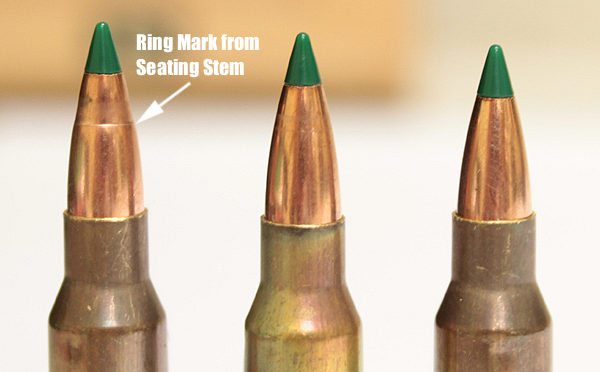
This process is demonstrated here by our friend Erik Cortina of Team Lapua-Brux-Borden. Erik, one of the nation’s top F-Class shooters and a skilled machinist, explains: “Here I’m lapping my new seater die stem with lapping compound. I chuck up a bullet in the lathe and lap the inside of the seating stem. I put lapping compound on the bullet and also in the stem. You can do the same with a hand drill and bore paste. You can see in the piture below how much contact area the stem has on the bullet after being lapped. This bullet is a Berger 7mm 180-grain Hybrid. ”
It can be helpful but it’s not necessary to make your seating stem an exact match to a bullet, particularly if you’re loading hunting or varmint rounds. But it is helpful to do some mild internal stem polishing. This should eliminate any ring (or dent) that forms on the bullet jacket during seating.
Sharp edges on a seating stem can cause a ring to be pressed into the bullet jacket — especially with compressed loads that resist downward bullet movement.
Q2: Is there any down-side to the process?
Not really. However, if you shoot many different bullet types for a particular cartridge, you may not want to conform the stem aggressively to one particular bullet design. Lightly lap the inside of the stem to remove burrs/sharp edges but leave it at that. A light lap will prevent a ring forming when seating bullets.
Photos and Facebook post by Tactical Rifle Shooters
Yet another .300 Blackout disaster. Unfortunately, that .300 Blackout cartridge can fit in a .223 Rem chamber. Shooting a .308-caliber bullet in .223 bore is a recipe for disaster.
The .300 AAC Blackout aka “300 BLK”, is a compact 30-caliber cartridge designed to work in AR-15 rifles. It has a shorter cartridge case to accommodate the bigger 30-caliber bullet while still fitting in a standard AR-15 magazine. Unfortunately, that’s the danger. A careless shooter can toss a .300 Blackout cartridge in with .223 Rem rounds without noting. And because the case-head size is the same as the .223 Rem (5.56×45) the rifle’s bolt assembly will happily chamber and fire the .300 BLK round. Problem is, that forces a .308 diameter bullet down an undersized .223-caliber bore. Not good!
This images were provided by Tactical Rifle Shooters on Facebook. The message was clear: “Don’t try to run 300 Blackout in your .223/5.56mm. It won’t end well. The problem is identical rifles and identical magazines but different calibers.”
Image from Accurate Shooter Forum. Cutaway shows the jammed .30-Cal bullet:
For those who MUST have a .300 Blackout, here are some things you can do:
1. Use different colored magazines for .300 Blackout vs. .223 Rem.
2. Fit all your uppers with caliber-labeled ejection port covers.
3. Mark .223 Rem upper handguards with the caliber in bright paint.
4. Mark all .300 BLK Rounds with heavy black marker.
Comments by Folks Who Viewed these .300 Blackout Disaster Photos:
“The .300 Blackout is simply a badly-designed round. A properly-designed round would have had a feature in the shape that would have prevented cross loading in the first place.” — D. Santiago
“I almost made that mistake… I had a magazine of 300 BLK inserted in my .223/5.56 all night. Fortunately, I never pulled the trigger. Once I realized the mistake, I almost got ill. [After that incident] I no longer own a 300 BLK.” — B. Welch
“Happened to me hog hunting from a helo. Gun exploded in my face.” — B. Hood
“Fire-forming projectiles [is] so wrong in centerfire!” — M. Stres
“Had some dude come into the store the other day wanting .300 Blackout ammo to shoot in his 5.56 AR. It took 15 minutes of explaining for him to understand you got to have a .300 Blackout Upper!” — R. Williams
The summer solstice — the official start of summer — is June 20, 2025. Here we feature some notable guns of summer from our popular, long-running “Pride and Joy” thread in our Shooters’ Forum. Since 2009, Forum members have posted photos and descriptions of their most prized firearms. Here are some of our favorite “Pride and Joy” rifles recently showcased in our Forum. Do you have a gun you’d like to see featured there? Register for the Forum and you can add your favorite gun to the list. The photo above shows multiple wood-stocked Palma rifles belonging to Forum member SParker.
We hope these “pride and joy” rifles may provide inspiration for our readers, whetting their appetite for their next competition, varminting, or hunting rifle project.
Team Vihtavuori F-Open Rifle
Here is a state-of-the-art F-Open competition rifle belonging to Team Vihtavuori member Tim Vaught. This features a BAT M action, Alex Wheeler-Avila WFO stock, Bartlein barrels, Bix’N Andy trigger, and March Majesta scope. This ultra-accurate rifle also has a barrel tuner and an adjustable R.A.D. 2A recoil-reducing system. This tames recoil and allows the buttpad to adjust horizontally (fore/aft), adjust vertically, and rotate. Tim lists three chamberings for his F-Open blue beast: 7-6.5 PRC; 7-300 WSM; and 300 WSM.
22 BR Savage Varminter — Accuracy on a Budget
This 22 BR Savage, with upgrades from Sharpshooter Supply, is the “pride and joy” of Forum member Maynard. Note the heavy-contour custom barrel with brake. That 22 BR cartridge is a very effective choice for varmint work, as the ground hog in the photo proves. The 22 BR and 22 Dasher are capable of outstanding accuracy with a large variety of bullets and powders. A 22 Dasher can rival the ballistics of a 6mmBR out to 500+ yards, but with reduced recoil.
Stockmaker’s New 30BR Pride and Joy
This handsome 30BR competition rifle was crafted by its owner, Forum member WillyTP who runs Todd Payseur Stocks in South Carolina. He posted: “Finally found the time to make myself a new stock and get it finished this time. All work from the rooter to the tooter by yours truly.” This score benchrest rifle features top-end components: BAT SV action, BRUX Barrel, Bix’N Andy trigger, and Nightforce 42x44mm scope.
Daughter’s First Rifle — Built by Dad
Above is a nice field rifle built up by a father for his daughter. Forum member FrankZ explains: “This is my favorite rifle and it will become my daughter’s first centerfire. The action is from the first rifle I purchased with my own money 21 years ago (700VSS).” The rifle now sports a 24″ Brux barrel chambered in 6mm Creedmoor, with aftermarket PT&G Bolt and DBM metal.
6BR Ackley Improved from Alex Wheeler
Here is a 6BR Ackley Improved (6BRA) built by Alex Wheeler. This blue marble-painted beauty features a BAT “B” action timed by Alex, fitted with Jewell trigger, and Borden trigger guard. The barrel is a Hawk Hill HV contour finished at 28 inches. The stock is a Deep Creek Tracker with 4″ forearm and rudder system (the toe of the stock adjusts for angle, allowing better tracking). This scope is a Vortex 15-60x52mm Golden Eagle riding in Burris Signature Zee rings.
F-Open Rifle with Borden Action + McMillan Kestros ZR Stock
This state-of-the-art .284 Shehane F-Open rifle belongs to Forum member Willow. This has a McMillan Kestros ZR stock fitted with a RAD (spring-loaded buttpad) system with custom spring. Other components are: Borden BRMXD LBRP DLC-coated action, Bartlein 32″, 4 groove, 1:8.5″-twist 400MOD steel barrel, and TriggerTech Diamond trigger. On top is a March HM 10-60x56mm scope in March Gen 3 rings. Below is a video by Editor F-Class John, showing the features of the Kestros ZR stock.
6BRX in the Country
Forum member Grimstod posted this nice 6BRX in a scenic setting: “Bill Goad at Premier Accuracy crated this fantastic 6BRX. It shoots better then I do.” The rifle features a single-feed Alpin action, with Hart 26″ 1:8″-twist barrel, chambered for the 6BRX (6mmBR wildcat) with .269 neck. Grimstod currently runs 95gr Berger VLDs in Lapua brass. On top is a Leupold 40x45mm scope on a Picatinny rail that Grimstod machined himself. The stock is an HS Precision painted by Premier Accuracy.
6mm Dasher for Benchrest Silhouette Matches
Here’s a gorgeous green 6mm Dasher. Forum Member Gunnermhr states: “This is my new 12-lb Dasher for the 1000 Yard Benchrest silhouette matches. My good friend at CRS Custom Rifle Stocks in Aaronsburg, PA made and painted the stock. It’s similar to a Tooley MBR with a few modifications. It still supported on a 3″ forearm and is full length. Hard to imagine it still makes weight with a wood stock and a 36 power Leopold. Crossed the scale at 11.7lbs. The rifle features a BAT “B” Action. The paint is Candy Apple Green, the forearm has a white base-coat, center section is gray base coat and the buttstock is black base coat, all covered with five coats of clear. It’s the new pride of the fleet as it shoots as good as it looks. This gun hammers with 105gr Berger Hybrids.”
Two Dashers and a Rimfire for Fun
Courtesy Forum member Dan H., here are two red-stocked Dashers plus an Anschutz 54.30 (Benchrest Stock) to make it a trio. Dan says: “The Anschutz provides good practice in trigger-pulling. It’s amazing what you can learn from a rifle that is as sensitive as this one.”
1917 Enfield Upgraded with Hand-Carved Figured Maple Stock
This impressive rifle features an “antique” 1917 Enfield action chambered for the .338 Win Magnum cartridge. The lovely Maple stock was hand-carved by Forum member Spitfire_ER. He tells us: “I found this piece of wood as a return at a lumber yard about 7-8 years ago. I asked the guy in the yard about it and he said it had been returned because it had too much figure for the job the customer was working on. First thing I thought was, ‘That would make a nice stock’.”
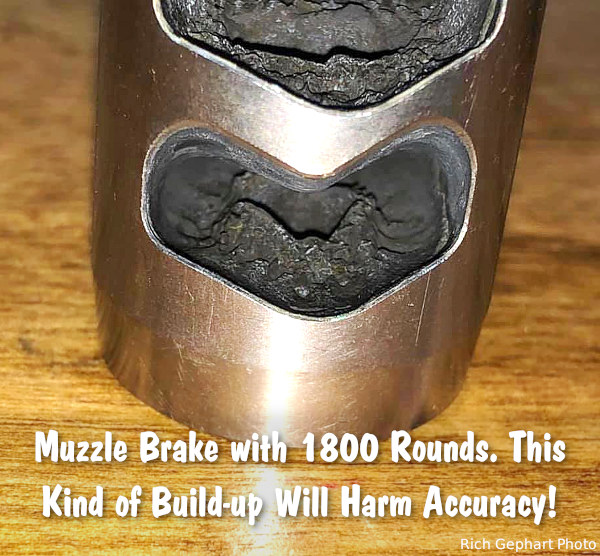
Many hunters and precision rifle competitors use muzzle brakes because these ported devices reduce felt recoil significantly. That make s real difference getting back on target for quick follow-up shots. While many rifle owners appreciate the benefits of muzzle brakes, they may also neglect their brakes, allowing hard carbon and powder residue to build up. Not good. You should regularly clean your muzzle brake to remove fouling and carbon build-up.
As Mark Edgreen posted: “Carbon build up on the crown and in the brake is a recipe for poor accuracy.” And another gunsmith reported that customers complained about guns that “shot out way too early” but they only needed to have the brakes cleaned.
Gunsmith and PRS/NRL competitor Jim See recently reminded his Facebook Fans about the importance of cleaning muzzle brakes: “How many times do I have to say it? You need to maintain your rifles. Clean your muzzle brakes people!”. Jim, who runs Elite Accuracy LLC, notes that hard carbon build-up in brakes can definitely harm accuracy. Look at this example:
Muzzle Brake Cleaning Methods
There are various methods for cleaning a brake, we list a variety of techniques, but we would start with NON-corrosive ultrasound. You’ll want to remove the muzzle device before doing these tasks.
1. Use Ultrasonic Cleaning Machine with cleaning solution. This may be the most efficient method: “I place my brake in the ultrasonic cleaner. Shiney as new.” (Jim Moseley).
2. Spray with commercial Carb Cleaner and brush. Then apply anti-corrosion coating.
3. Soak in half hydrogen peroxide and half vinegar. Suggestion: “Let sit over night and carbon melts off. Brush remaining carbon off, rinse and put the brake back on.” Apply anti-corrosive before mounting.
4. Soak in 50/50 solution of water and white vinegar and brush. (Be sure to apply anti-corrosion coating, such as Eezox, after soaking).
5. Tumble in liquid solution with stainless pins. Comment: “Comes out slightly faded, but perfectly clean on stainless, non-painted brakes though.” Warning — do NOT do this with threaded brakes — tumbling could affect threads of screw-on brakes. Also, tumbling can harm painted or Cerakote finishes.
Gunsmithing Tip: By fitting the muzzle brake so that the barrel crown is slightly forward, it is easier to wipe carbon fouling off the end of the barrel. See photo:


 Precision Benchrest and F-Class shooters favor premium brass from Lapua, Norma, Peterson, or RWS. (Lake City also makes quality brass in military calibers.) Premium brass delivers better accuracy, more consistent velocities, and longer life. Shooters understand the importance of good brass, but many of us have no idea how cartridge cases are actually made. Here’s how it’s done.


 The headstamp bunter punch has a protrusion on the end to make the primer pocket, and has raised lettering around the face to form the headstamp writing. This is, of course, all a mirror image of the finished case head. Small cases, such as 5.56×45, can be headed with a single strike. Larger cases, like 7.62×51 and 50 BMG, need to be struck once to form a dent for the primer pocket, then a second strike to finish the pocket, flatten the head, and imprint the writing. This second strike works the brass to harden it so it will support the pressure of firing.”




 Gunsafes can be fitted with either an electronic keypad-style lock, or a conventional dial lock. In our
  Tips for Dial Locks
 Replace Electronic Lock Batteries Every Year




 The
The