Here is an interesting project by one of our Forum members. Martin C. (aka “Killick”) modified an Anschutz 1411 Match 54 rimfire prone stock to become a comfortable, great-tracking F-Class Open Division Stock. No Killick didn’t sacrifice a perfectly good rimfire rifle for this project — he bought the Anschutz stock by itself on eBay, then transformed it…
Killick explains: “This project started about seven years ago. I bought the Anschutz prone stock on eBay and whittled it a bit into a Palma rifle with a Barnard action and block and a Doan Trevor cheek piece and scope rail. Then about two years ago I decided to re-task the stock/action assembly into an F-Open rig. With more whittling, gluing, sanding, body fillering, sanding, filling, sanding, more sanding…and sanding, forming, priming, sanding, painting, waiting, painting, painting…painting and before you know it, Bob’s your uncle.”
Here is the eBay-sourced Anschutz 1411 stock, with new high-gloss blue finish, as initially modified for use in Killick’s centerfire Palma rifle. Looks nice!
Next step was the addition of a 3″-wide wood fore-end for F-Open duties with front rest:
Almost done here… just needs priming and final painting:
Here is Killick’s completed F-Open rifle with its much-modified Anschutz stock now finished in fire-engine red lacquer. This image shows the detail of the grip and customized cheekpiece.
The Applied Ballistics Facebook Page features great, interesting new content posted multiple times each week. This resource features videos, test results, accuracy tips, and samples from Bryan Litz’s excellent books on ballistics and the three volume series on Modern Advancements in Long Range Shooting. Here are some highlights from Applied Ballistics’ Facebook posts from the past two weeks. Plus there’s a discount code, READ2024, that can save you 25% on Applied Ballistics books purchased in the month of March.
.22 LR Super Slow Motion Video — Watch the Bullet!
Watch .22 LR Rimfire Projectile Exiting Rifle Muzzle
This video, filmed with an ultra-high-speed camera, shows the milliseconds in time as a .22-caliber bullet travels the first 11 inches after leaving a .22 LR rifle barrel. Applied Ballistics states: “Notice that the bullet is fully obturated to the internal bore dimension — the step/rebate that exists on the unfired bullet where it meets the case gets expanded (obturated) and doesn’t exist on the fired bullet.”
How Important is Case Fill Ratio — You May Be Surprised
Conventional reloading practice is to select a powder that gives you a good case fill, meaning 90%-100% fill ratio for the cartridge and bullet you’re using. But why?
Some say that a higher fill ratio is good because it prevents the powder from settling differently in the case (which could lead to inconsistent ignition and greater MV SD). This explanation sounds good, and went unchallenged for a long time. However, Applied Ballistics has done some interesting testing that sheds new light on the density issue.
Modern Advancements in Long Range Shooting – Vol. 2 contains the results of Applied Ballistics tests of five different cartridge types — .223 Rem to .338 Lapua — loaded with different powders to produce fill ratios of 80%, 90%, and 100%. The testers wanted to see if 100% fill ratios actually gave better results (lower MV SDs) than the lower fill ratios.
Results of testing 3 different loads in 5 different cartridges — The highest MV SD was in fact measured in an 80% fill ratio load. However, the lowest MV SD was also measured for a different 80% load! Seems like the more we learn, the more questions we have. An informative Applied Ballistics podcast covers the Fill Ratio test. Visit Thescienceofaccuracy.com to access this and interesting podcasts.
EDITOR’s NOTE: There were multiple comments from Facebook readers stating that fill ratios 90% and above worked more consistently for them. And the reloading manuals warn against very low fill ratios.
Get 25% Off Applied Ballistics Books in March 2024
Applied Ballistics, through its Science of Accuracy webstore, is currently offering big savings on its popular books — considered to be the best print resources about rifle accuracy/ballistics ever published. This month you can save 25% on all six Applied Ballistics book titles by respected expert (and past national champion) Bryan Litz. Use Code READ2024 to get 25% of one or more of these books.
Get 25% OFF Applied Ballistics Books! Use code: READ2024 at checkout.
A few seasons back, Forum member Rick from Louisiana (aka RMulhern) rigged up a fantastic target for long-range shooting. Rick, a long-time competitive Palma shooter, had a large 72″x72″ steel target fabricated with two separate center rings that are equivalent to the official paper Palma/Creedmoor target. He says he’s “shot a lot of Palma on that target, as well as lots of Black Powder Cartridge (BPCR) rounds”. The big steel target works great when Rick shoots his Sharps 45/110 BPCR at 800 to 1000 yards. The large steel background (painted white) helps Rick see and hear his hits. If you understand the high-arching trajectory of 500+ grain projectiles shot from a 45/110, you know it can take a few rounds to get Point of Impact dialed in.
Rick reports: “These are two of my favorite rifles to shoot: a M1874 Shiloh Sharps in caliber 45/110 (2 7/8) made in Big Timber, Montana by Kirk Bryan and family. The other is a 6.5×47 Lapua on a blue-printed M700 action with 1:8.5″-twist Krieger barrel and F5 McMillan Tactical stock. Many of the shooters that take up BPCR have a tendency to get away from their smokeless powder rifles in favor of the blackpowder game. Frankly I have the best of both worlds as I enjoy shooting both (smokeless and BPCR), although I must admit that I probably spend the majority of my time on the range with the Sharps rifles these days.” (Rick’s pretty good with his Sharps by the way — he recently shot a 95, 96, and 100 (clean) for 3×10 shots at 800 yards.)
Gongzilla: $1000 Worth of Steel with Three Plate Layers
Rick tells us: “Here’s the deal — everything is steel! The large plate is 72″x72″ and the black bull is 44″ diameter. The 20″-diameter central white bull is made from 1/2″-thick AR400 bull-dozer plating. That’s the same size as the regulation Palma/Creedmoor paper target. The white square and black bull are 3/8″-thick mild steel. Plates are off-set 2″ from each other. I welded a 2″ length of square tubing to the back of both plates and the bolt slides through and is attached to the large plate. I used 2 3/8″ upset tubing (oil field pipe) for the holder framing.” Rick says he invested about $1000.00 in metal for the target, but that was 15 years ago. Today the steel would be much more expensive.
Rick says the AR400 armor plate in the center bull is very strong: “You can shoot a .338 Lapua Magnum at 200 yards and it won’t damage the center bull”. The mild steel works well for the cast bullets Rick uses with his Sharps 45/110. Also, Rick says the mild steel is rugged enough for 6.5mm and .308 hollowpoint match bullets, if you’re at least 500 yards away. However, Rick told us, “If I would make [the target] again, I would make the black bull AR400 as well. [That way] you would never have to worry about big dents or beating the plate up at any distance. The AR400 is very tough steel. You can shoot a Sierra or Lapua HP bullet and they will just splatter.”
Rick told us: “I built this target with off-set clanger plates. The white clanger is AR400. Bullets just splatter!” Does he worry about hitting the bolt head? Not at all. Rick says: “When I hit the bolt head, I break my arm patting myself on the back!”.
On Friday, March 8, 2024, Smith & Wesson Brands, Inc. (NASDAQ: SWBI) stock had a HUGE increase, with the SWBI stock price rising 29.39%. That’s a massive gain in a single day. Why the huge price spike? S&W sales volumes and revenues were up — WAY up. The latest corporate report revealed big revenue gains in Q3 2024, which dramatically out-paced expectations. Interestingly, S&W’s major revenue gains were from increased long gun sales, not more pistol sales. In addition, experts predict a big increase in overall gun sales during this election year, as buyers fear new restrictive gun laws.
Yahoo Finance reported: “Shares of Smith & Wesson Brands (SWBI) soared on better-than-expected third-quarter results. CEO Mark Smith said … that the company expects ‘the firearm market to experience healthy demand through the 2024 election cycle’. [SWBI] stock was also upgraded to Buy from Hold at Craig-Hallum, which argues the company is entering the election cycle in ‘optimal position’.”
Click Image Below to View Smith & Wesson Stock Price Analysis Video Report:
Yahoo Finance’s Josh Lipton and Julie Hyman discussed the stock’s surge in a 3/8/2024 Yahoo Finance Live webcast. Here is a partial transcript from that Yahoo Finance video:
JOSH LIPTON: We’re going to start here with Smith & Wesson. You could see that stock is skyrocketing in today’s trade.
Net sales, they’re up about 7% to 137.5 million. Gross margins also better than the Street was looking for. And on top of that, we get an upgrade from the team at Craig-Hallum…They take their target to 18… They also, Julie, talk about the upcoming election. They say that should give the company momentum.
JULIE HYMAN: Yeah, we tend to see firearm sales go higher ahead of elections, ahead of Democrats being elected in office because of fear about new gun legislation although that mostly has not come to fruition. But those are the cycles we tend to watch. I thought it was interesting, I was looking through the conference call, handguns are not where the sales activity was from. So handgun sales were actually down. Average selling price of handguns were down.
It was long guns that were higher in both amount of sales and average selling prices. And I don’t know– I mean long guns is a big category. I don’t know if we’re talking about demand from hunting, from sports, from whatever. But whatever it was, they saw an increase.
JOSH LIPTON: Yeah, they didn’t break it down. It is the election. Just to put some more numbers on that, they note that during the 2020 election, which allowed the company, they said, to generate more than a billion in revenue, $4.15 EPS and almost $300 million free cash flow.
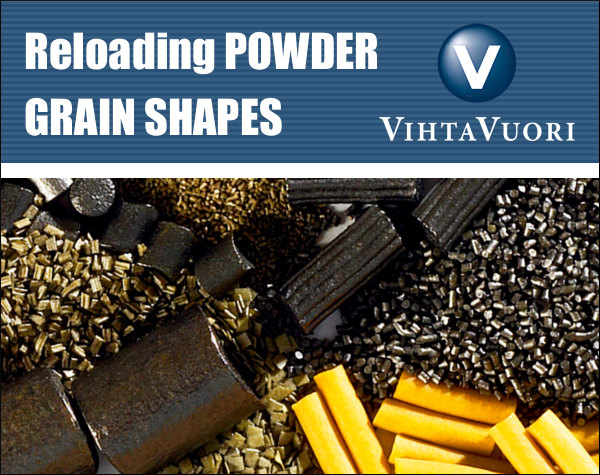
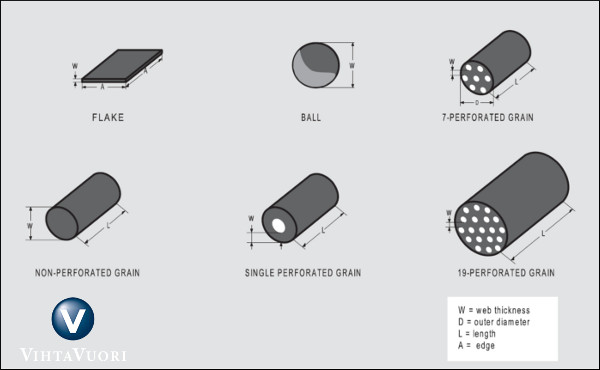
The shape of powder grains has a profound effect on the performance of the powder charge, as it concerns both pressure and velocity. There are multiple powder shapes including flake, ball, and extruded or “stick” (both solid and perforated).
So how does powder grain shape affect pressure and muzzle velocity?
In general, it can be said that powder that burns progressively achieves a desired muzzle velocity at lower maximum pressure than a powder that burns neutrally, not to mention a degressive powder. As grain size increases, the maximum pressure moves towards the muzzle, also increasing muzzle blast. Muzzle velocity and pressure can be adjusted by means of the amount of powder or loading density, i.e. the relationship between the powder mass and the volume available to it. As the loading density increases, maximum pressure grows.
All Vihtavuori reloading powders are of the cylindrical, single-perforated extruded stick type. The differences in burning rate between the powders depend on the size of the grain, the wall thickness of the cylinder, the surface coating and the composition. Cylindrical extruded powders can also have multi-perforated grains. The most common types are the 7- and 19-perforated varieties. A multi-perforated powder grain is naturally of a much larger size than one with a single perforation, and is typically used for large caliber ammunition.
Other types of powder grain shapes include sphere or ball, and flake. The ball grains are typically used in automatic firearms but also in rifles and handguns. The ball grain is less costly to produce, as it is not pressed into shape like cylindrical grains. Flake shaped grains are typically used in shotgun loadings.
Web thickness in gunpowder terminology means the minimum distance that the combustion zones can travel within the powder grain without encountering each other. In spherical powders, this distance is the diameter of the “ball”; in flake powder it is the thickness of the flake; and in multi-perforated extruded powders it is the minimum distance (i.e. wall thickness) between the perforations.
The burning rate of powder composed of grains without any perforations or surface treatment is related to the surface area of the grain available for burning at any given pressure level. The change in the surface area that is burning during combustion is described by a so-called form function. If the surface area increases, the form function does likewise and its behavior is termed progressive. If the form function decreases, its behavior is said to be degressive. If the flame area remains constant throughout the combustion process, we describe it as “neutral” behavior.
The cylindrical, perforated powders are progressive; the burning rate increases as the surface area increases, and the pressure builds up slower, increasing until it reaches its peak and then collapses. Flake and ball grains are degressive; the total powder surface area and pressure are at their peak at ignition, decreasing as the combustion progresses.
Sierra Bullets has released extensive load data for the popular 6.5 Creedmoor cartridge. This medium-sized cartridge has become one of the most popular chamberings for tactical and PRS shooters. The 6.5 Creedmoor combines excellent accuracy, good mag-feeding, good barrel life, moderate recoil, and reasonable component cost. That’s why this cartridge has caught on quickly, and is now one of the most popular chamberings in factory rifles.
Developed in 2007 by Dennis DeMille and Dave Emary, the 6.5 Creedmoor is a shortened and improved 30 TC cartridge case that was inspired by the .308 Winchester design. This short action design was created to maximize case capacity and a wide range of loading lengths, while still fitting in standard short action magazines. With the correct twist barrel, the versatile 6.5 Creedmoor can take advantage of the wide range of bullet weights available in 6.5 mm (i.e. .264 caliber). Reloaders should keep in mind that the 6.5 Creedmoor works best with medium to medium-slow powders such as H4350, Varget, Win 760, and RE-17. The light recoil and adaptability of the efficient 6.5 Creedmoor cartridge has already proven itself in high power, precision rifle series and benchrest competitions. Couple that with respectable barrel life and its intrinsic accuracy potential and you have a recipe for success which should insure its legacy for decades to come.
Here are three tables from the Sierra Bullets Reloading Manual (5th Edition). IMPORTANT — This is just a sample!! Sierra has load data for many other 6.5mm bullet types, including FB, Spitzer, SBT, HPBT, and Tipped MK from 85 grains to 142 grains. To view ALL 6.5 Creedmoor DATA, CLICK HERE.
INDICATES MAXIMUM LOAD – USE CAUTION
LOADS LESS THAN MINIMUM CHARGES SHOWN ARE NOT RECOMMENDED.
INDICATES MAXIMUM LOAD – USE CAUTION
LOADS LESS THAN MINIMUM CHARGES SHOWN ARE NOT RECOMMENDED.
INDICATES MAXIMUM LOAD – USE CAUTION
LOADS LESS THAN MINIMUM CHARGES SHOWN ARE NOT RECOMMENDED.
Two More Great 6.5 Creedmoor Reloading Resources
Want More 6.5 Creedmoor Load Info? View Starline’s 6.5 Creedmoor Guide by Gavin Gear:
PRB 6mm Creedmoor and 6.5 Creedmoor Load Survey
The Precision Rifle Blog compiled Load Data from PRS Competitors, for both 6mm Creedmoor and 6.5 Creedmoor. This is a good place to start. PRB surveyed the match loads for “173 of the top-ranked precision rifle shooters in the country”. CLICK HERE.
New Protecting Privacy in Purchases Act Introduced in Congress
NSSF commends the Protecting Privacy in Purchases Act, proposed legislation introduced by U.S. Rep. Elise Stefanik (R-NY), which would ban the use of a firearm retailer-specific Merchant Category Code (MCC). The legislation would protect firearm and ammunition purchasers from financial service and payment card providers compiling purchase history. This could be used effectively to create a nationwide database of gun users, though a Federal gun registry is explicitly forbidden under Federal law.
We have seen that transactional info from gun and ammo sellers has already been exploited by the federal government for political purposes. And some states are mandating gun-specific MCCs — California enacted legislation last year requiring the use of a firearm retailer-specific MCC and Colorado is considering legislation that would do the same.
Federal Agency Has Already Collected Gun Purchase Info
The U.S. Treasury’s Financial Crimes Enforcement Network (FinCEN) admitted to U.S. Sen. Tim Scott (R-SC) in a letter that it violated the Fourth Amendment rights of law-abiding citizens that protect against illegal search and seizure when it collected the credit card purchase history from banks and credit card companies of individuals who purchased firearms and ammunition in the days surrounding January 6, 2020. Treasury’s FinCEN had no cause, and sought the information without a warrant, to place these law-abiding citizens on a government watchlist only because they exercised their Second Amendment rights to lawfully purchase firearms and ammunition.
Lawrence G. Keane, NSSF Senior VP & General Counsel noted: “The Biden administration has already proven they cannot be trusted to respect the private firearm transactions of law-abiding citizens. Without a warrant, federal agencies collected financial information on private firearm and ammunition transactions to create an illegal government watchlist of gun owners. Representative Elise Stefanik’s legislation would rein in federal overreach to use the private financial transactions of law-abiding citizens against them for political means. No American should be concerned that the federal government is employing this scheme, concocted by gun control cheerleaders, that weaponizes an individual’s finances and their free exercise of Second Amendment rights to wrongly identify them as a criminal-in-waiting.”
NSSF thanks Representative Stefanik for leading the fight against big government lawmakers whose goal it is to monitor and deny lawful transactions by law-abiding Americans.
The need for a federal policy has become necessary since several states have enacted similar legislation to protect the privacy of firearm and ammunition purchasers, including Florida, Idaho, Mississippi, Montana, North Dakota, Texas, and West Virginia. Several additional states are currently considering similar legislation. Unfortunately, some blue states are doing just the opposite — in fact California passed a law requiring the use of firearm retailer-specific Merchant Category Codes. So a Californian could be placed on a gun-owner watch list if he/she bought anything from a listed store, gun-related or not.
For today’s Sunday GunDay we present the merger of artistry and gunsmithing with a selection of elaborately-engraved rifles. These rigs are impressive to say the least. There are hunting rifles as you’d expect, but we even include a one-of-a-kind benchrest rifle with engraved action.
Amazing Double-Barreled Safari Bolt Guns
Here are some of beautifully-engraved safari rifles from Fuchs Fine Guns of Austria. These rifles feature a unique Double-barrel Bolt Action receiver, which is quite unique. Along with stunning wood stocks, the Fuchs rifles boast extensive detailed engraving with gold and jewelled highlights.
On this Fuchs .416 Rem Mag double-barrel rifle, the pistol grip contains a tiger’s eye gemstone set in silver. White gold is used for the tiger’s paws, symbolizing the beast’s formidable strength. The tiger’s paws on the pistol grip cap are surrounded by blue sapphires.
This DBR 48 Fuchs rifle with Celtic-themed engraving is chambered for the .470 Capstick caliber, the largest cartridge Fuchs offers. This rifle’s internal magazine offers a six-shot capacity. This DBR 48 was decorated in a Celtic motif. The bolt handle ends in a ball made of solid sterling silver. The magazine cover displays the Celtic boat symbol which stands for prosperity, wealth and power.
Benchrest Rifle with Engraved Stiller Action
“Ultimate PPC” by Speedy with engraved Stiller Viper action. Titanium Rest by John Loh (R.I.P.).
A Very Unique Viper Action, Two Years in the Making
This is no ordinary Viper action. The full engraving attracts your attention, but there are some slick “performance mods” Jerry Stiller added at Speedy’s request.
First, the action features a plain-Jane unfluted bolt, with a slight taper in the middle, a bit of a wasp-waist. Speedy prefers an unfluted design because it has superior wear characteristics. He’s found, when working with an aluminum action such as the Viper, the sharp flutes on the bolt will wear the inside of the action faster.
In the interest of reduced wear, Speedy also requested a smaller-sized loading/ejection port. This provides for a larger front and rear receiver ring, which enhances bolt bearing surface. More bearing surface reduces point loading for less internal wear.
First-Ever Hornady “Number One” Rifle with Baron Engraving
This “Hornady Number One” rifle was commissioned as the featured 2015 SHOT Show Gun. It was displayed in Las Vegas and auctioned on Gunbroker.com. The action and bottom metal is elaborately engraved by Baron Engraving of Trumbull, Connecticut. Hornady hired Bill Wiseman & Company to craft the barrel and action and Hornady commissioned Lucid Solutions (Clem Boyd) to build the stock. But the Hornady name IS now engraved on the side of a rifle receiver and that does represent a genuine first. This one-of-a-kind rifle, serial number “H-001″, is a bolt-action hunter, chambered for the .300 RCM cartridge.
Savage Rifle Created for Savage ArmsCompany President
This unique Savage 99 rifle was created for Joseph V. Falcon, President of Savage Arms in the 1950s.
Presentation Engraved Savage 99 Rifle
When you run the company, you get some pretty nice stuff — in this case you get what may be the most elegant Savage ever made.
This rifle was created for Joseph V. Falcon, who served as President of Savage Arms in 1956. This highly embellished Savage 99 lever-action rifle is chambered for the .300 Savage cartridge. It features deluxe checkering and gold inlays. This presentation-grade rifle boast deep relief engraving with a golden elk on one side of the receiver and a stalking cougar on the other. This rifle was given to Joseph V. Falcon from his friends at Savage in December of 1967. Falcon later donated the rifle to the NRA. This impressive model 99 is currently showcased at the NRA National Firearms Museum in Fairfax, Virginia.
Savage 99 Quick History
Arthur Savage invented the first “hammerless” lever action rifle with the entire mechanism enclosed in a steel receiver. This rifle featured a rotary magazine with a unique counter that displayed the number of rounds remaining. The Model 99, as it became known, was the gun that launched a company. There is an interesting history of the company’s logo which features an Indian chief in feather head-dress. In 1919, Chief Lame Deer approached Arthur Savage to purchase lever-action rifles for his tribe’s reservation and the two men struck a deal. In return for discounted rifles and support, Savage received the tribe’s endorsement. By virtue of that association, Arthur Savage added the Indian head symbol to the company’s commercial trademark and letterhead.
Jesse Kaufmann — Modern Engraving Master
Jesse Kaufmann, who operates Black Hills Gunstocks and Engraving LLC in South Dakota, is a true master of metal engraving and he also does superb stock checkering. Here is an example of Jesse’s engraving work on a barreled action. Watch the video to see more of Jesse’s artistry.
BONUS — A Stunning Wheelgun
Artistry in metal — Engraving has long been used to decorate fine firearms. Thankfully, engraving is not a lost art. There remain fine craftsman who can engrave beautiful designs into the metal components of rifles, shotguns, and handguns. Above is a spectacular Dragon-engraved Korth revolver from Nighthawk Custom. It has elaborate engraving covering almost the entire surface of the barrel, cylinder, and visible frame. In addition, an elaborate metal dragon’s tail has been embedded in the wood grip.
The U.S. Army Marksmanship Unit (USAMU) fields pistol teams as well as rifle and shotgun competition squads. Consequently the USAMU’s Reloading Shop loads tens of thousands of pistol rounds every year. In this article, the USAMU’s handgun experts talk about reloading for handguns — with smart tips on how to achieve superior accuracy with 100% reliability. This article, which offers important insights on COAL, primers, crimps and more.
Precision Pistol Reloading — Recommended Methods
Optimize the Taper Crimp
One often-overlooked aspect of handloading highly-accurate pistol ammunition is the amount of crimp and its effect on accuracy. Different amounts of taper crimp are used with various handloads to obtain best accuracy. The amount is based on bullet weight, powder burn rate and charge, plus other factors. It is not unusual for our Shop to vary a load’s crimp in degrees of 0.001″ and re-test for finest accuracy.
Use Consistent Brass
Brass is also important to pistol accuracy. While accurate ammunition can be loaded using brass of mixed parentage, that is not conducive to finest results, particularly at 50 yards. It is important for the serious competitor/handloader to use brass of the same headstamp and ideally one lot number, to maximize uniformity. Given the volumes of ammunition consumed by active pistol competitors, using inexpensive, mixed surplus brass for practice, particularly at the “short line” (25 yards), is understandable. However, for the “long line” (50 yards), purchasing and segregating a lot of high-quality brass to be used strictly for slow-fire is a wise idea.
Importance of Uniform COAL
Uniformity of the Case Overall Length (COAL) as it comes from the factory is also important to achieving utmost accuracy. More uniform case lengths (best measured after sizing) contribute to greater consistency of crimp, neck tension, ignition/burn of powder charge, and so on. Cartridge case-length consistency varies from lot to lot, as well as by maker. Some manufacturers are more consistent in this dimension than others. [Editor’s note: It is easy to trim pistol brass to uniform length. Doing this will make your taper crimps much more consistent.]
Primers and Powders — Comparison Test for Accuracy
Pay attention to primer brands, powder types and charges. Evaluating accuracy with a Ransom or other machine rest at 50 yards can quickly reveal the effect of changes made to handload recipes.
This animation showing 1911 Pistol operation has over 30 million YouTube views:
Bullet Selection — FMJ vs. JHP
Bullets are another vital issue. First, there is the question of FMJ vs. JHP. A friend of this writer spent decades making and accuracy-testing rifle and pistol bullets during QC for a major bullet manufacturer. In his experience, making highly-accurate FMJ bullets is much more difficult than making highly-accurate JHPs, in large part due to the way the jackets are formed. Small die changes could affect accuracy of FMJ lots dramatically.
The CMP now allows “safe, jacketed ammunition” in Excellence-in-Competition (EIC) Service Pistol matches, although wadcutter ammunition is prohibited. Thus, the option to use very accurate JHP designs simplifies the life of CMP Service Pistol shooters in pursuit of the Distinguished Pistol Shot badge.
Hopefully, these tips will be helpful to any pistol shooters interested in accurate handloads, not just “Bullseye” shooters. Small tweaks to one’s normal routine can pay big dividends in improved accuracy and make practice and competition more rewarding.
Accurate, modular, and supremely versatile, the AR15 is America’s favorite semi-auto rifle. But let’s face it, the AR is a maintenance hog. The AR’s gas tube blows carbon and soot right into the middle of the bolt assembly where it cakes on to the metal. The AR bolt also has many tiny parts, and small recesses, which must be cleaned regularly. This author has seen numerous ARs fail simply because there was gunk (dried lube, carbon, brass shavings) in the ejector slot or extractor spring recess.
A Clean AR is a Happy AR — Whether You Run ‘Wet’ or ‘Dry’
There are various schools of thought when it comes to maintaining an AR. Some folks prefer to run their AR “dry” with minimal lube on the lugs and friction surfaces. Other shooters prefer to run their ARs “wet”, with lots of lube. But whatever your preference, you need to clean your AR regularly. And nothing is more important than the AR’s bolt/carrier assembly. Because it is involved in feeding, firing, and extracting, the AR-15 bolt/carrier assembly can be considered the most critical portion of the AR-15 from a maintenance standpoint.
Bolt Take-Down Guide on Top Quark Blog
The editor of the Top Quark Blog has created an excellent illustrated AR15 Bolt Take-Down Guide that shows how to disassemble an AR15 bolt and carrier for regular cleaning. Even if you’re an experienced AR15 shooter, you can learn something from this page (sample at right), and you may want to bookmark it for future reference. The photos are large and clear and there are helpful hints for each step of the process.
The author knows his stuff and offers some important insights. For example, he notes that “Extractor springs in most AR15 bolt assemblies are fairly weak, and this can lead to various extraction-related failures. One of the few high points about Colt assemblies is their usage of higher-strength extractor springs. You can tell the difference by looking at the inner plastic insert. ‘Normal’ springs feature a blue plastic insert, Colt strong springs have a black insert.”
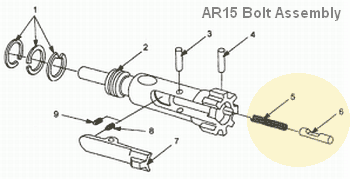
There is one notable oversight on this page — the author doesn’t cover disassembly and cleaning of the ejector assembly. This is actually quite important. A few small brass shavings, combined with carbon and lube in the ejector slot, WILL cause malfunctions. In fact, when this editor is called to diagnose problem ARs, the first things I look at (after swapping magazines) are the ejector recess and the slot for the extractor. Clogged ejectors are responsible for fail-to-ejects and other jams. It is essential that you keep the ejector hole clean. Old, gooey lube residues mixed with carbon and tiny brass shavings in the ejector recess will create all sorts of problems. As shown in the diagram below, it is simple to remove the ejector (#6) and ejector spring (#5), by drifting the ejector retaining pin (#4).
NOTE: The original Quark Blog Article appears to be offline (See Quark LINK.) However, this excellent article has been preserved via the WayBack Machine Internet Archives. CLICK HERE to access the Full Quark Blog Article via WayBack Machine Archive.


 Some say that a higher fill ratio is good because it prevents the powder from settling differently in the case (which could lead to inconsistent ignition and greater MV SD). This explanation sounds good, and went unchallenged for a long time. However, Applied Ballistics has done some interesting testing that sheds new light on the density issue.


 A few seasons back, Forum member Rick from Louisiana (aka RMulhern) rigged up a fantastic target for long-range shooting. Rick, a long-time competitive Palma shooter, had a large 72″x72″ steel target fabricated with two separate center rings that are equivalent to the official paper Palma/Creedmoor target. He says he’s “shot a lot of Palma on that target, as well as lots of Black Powder Cartridge (BPCR) rounds”. The big steel target works great when Rick shoots his Sharps 45/110 BPCR at 800 to 1000 yards. The large steel background (painted white) helps Rick see and hear his hits. If you understand the high-arching trajectory of 500+ grain projectiles shot from a 45/110, you know it can take a few rounds to get Point of Impact dialed in.




 Developed in 2007 by Dennis DeMille and Dave Emary, the 6.5 Creedmoor is a shortened and improved 30 TC cartridge case that was inspired by the .308 Winchester design. This short action design was created to maximize case capacity and a wide range of loading lengths, while still fitting in standard short action magazines. With the correct twist barrel, the versatile 6.5 Creedmoor can take advantage of the wide range of bullet weights available in 6.5 mm (i.e. .264 caliber). Reloaders should keep in mind that the 6.5 Creedmoor works best with medium to medium-slow powders such as H4350, Varget, Win 760, and RE-17. The light recoil and adaptability of the efficient 6.5 Creedmoor cartridge has already proven itself in high power, precision rifle series and benchrest competitions. Couple that with respectable barrel life and its intrinsic accuracy potential and you have a recipe for success which should insure its legacy for decades to come.


 First, the action features a plain-Jane unfluted bolt, with a slight taper in the middle, a bit of a wasp-waist. Speedy prefers an unfluted design because it has superior wear characteristics. He’s found, when working with an aluminum action such as the Viper, the sharp flutes on the bolt will wear the inside of the action faster.


 Presentation Engraved Savage 99 Rifle


 Use Consistent Brass