Left to Right, Sherri Jo Gallagher, Mother Nancy Tompkins, and Michelle Gallagher — All Champions.
Happy Mother’s Day
Today we want to wish Happy Mother’s Day to all the moms around the world. All of us must remember that we literally owe our lives and our well-being to our mothers, who brought us into the world. Without the love, support, caring, and nurturing of our mothers, none of us would be here. So to mothers everywhere, we say:
“Thank you. Bless you. May your lives be filled with happiness today and everyday.”
At the top is a cherished photograph of the one of the greatest moms in the shooting community, Nancy Tompkins, along with her two little girls (who both turned into pretty darn good shooters themselves). On Nancy’s right is Michelle Gallagher, multi-time National Long-Range Championship. On the left is Sherri Jo Gallagher, who was the second woman in history to capture the NRA National High Power Championship at Camp Perry. Who was the first woman ever to accomplish that feat? You guessed it — Nancy Tompkins, Sherri’s mom, was the first-ever female High Power Champion. Nancy is married to another great shooter, Mid Tompkins. This is truly America’s “First Family of shooting”.
Nancy Tompkins is one of the greatest long-range shooters in American history. She has won the National Long Range Championship 5 times (1986, 1997, 1999, 2003, and 2015), the across-the-course National High Power Championship (1998), the Metric Smallbore Nationals (2012), and the Fullbore Nationals (2012). She has also been the Wimbledon Cup winner (1993) and a 7-time Leech Cup winner (1995, 1997, 1999, 2003, 2005, 2011 and 2012). She has won both team and individual medals in the World Championships and has been on 8 Palma Teams (as both a shooter and a coach).
Tompkins’ treatise, Prone and Long Range Rifle Shooting, is a must-read for serious Palma, F-Class, and High Power shooters. The revised Second Edition includes F-Class equipment and techniques, and newly updated information. Topics include Mental and Physical training, Reading Wind and Mirage Shooting Fundamentals, International Competition, and Loading for Long Range.
Team Smith & Wesson shooter Julie Golob has a message for Mother’s Day (Sunday, May 12th). Julie writes: “While some are using Mother’s Day week to push a gun control agenda, I’d like to encourage moms to ‘Take a Moment’. Talk to your kids about firearms safety. Help them learn what to do around firearms and have an open, honest discussion about guns and gun safety.
I truly believe that, no matter if you are pro-gun or anti-gun, everyone should know and understand the basic rules of firearm safety. It is equally important for parents to have the discussion about guns and what to do if your child finds one. Both the NSSF’s Project ChildSafe and the NRA’s Eddie Eagle GunSafe® Program are excellent. They offer resources for parents, educators, and child care providers to help ensure kids stay safe.
In this video, Julie encourages parents to have “the talk” about firearm safety with their kids sooner rather than later, and provides tips for how to have a helpful discussion. Sherra Scott, a mom and a certified NRA instructor, agrees with Julie: “Whether you have firearms in your home or not, if you have children in your life, please watch this video and talk WITH them about firearm safety and what to do if they come into contact with a firearm.”
A few years back, Our friend Grant Guess had a “close encounter” with a bad primer. An apparently defective primer caused part of the casehead on one of his rounds to blow out. This, in turn, allowed high pressure gas to vent through the damaged primer pocket. Take a good look, boys and girls. This is yet another very good reason to wear safety glasses … EVERY time you shoot. The cartridge was a 6.5-06, handloaded in necked-down Winchester-headstamp .270 Win brass. Grant reports:
“I had a blow-through between the primer and the primer pocket today. The action was really smoking and I got a face full of gas. This was a reasonably light charge. Thank God for safety glasses.
I should also mention that it appears there is a 3/64 hole that is halfway between the primer and the primer pocket. Like it burned a small jet hole through both of them.”
Could this happen to you? It just might. On seeing this damaged case, one of Grant’s Facebook friends, Chris D., observed: “Search the internet, you will see a lot of these pin hole ‘in the corner’ failures. Obviously Winchester has some issues with the LR primers.”
Careful Examination Reveals Apparent Primer Defect
After this incident, Grant examined the damaged case: “I [measured] the flash hole and it is not over-sized or under-sized. The primer clearly has an area where it had a defect. At [50,000 CUP], it doesn’t take much of a defect to cause issues. There was a slight bit of pucker-factor on the next shot….”
The shooting season is now in full swing. When you head to the range you’ll want to be prepared. That means collecting all the gear you’ll need at the range. It’s easy to forget small, critical items, so we’ve provided a checklist of the small “extras” you should pack before you head out to the range. In addition to rifle, rests, ammo, targets, and cleaning gear, here are a dozen essentials you should include in your range bag.
• Shell-Holder — If you don’t have calipers, you can use a shell-holder to check for excessive case expansion from hot loads. If a fired case doesn’t slip into the shell-holder easily, your load is definitely TOO HOT.
• Extra Earplugs — Always use ear protection when shooting. We bring a 35mm film canister with extra sets of foam earplugs.
• Hex Wrench or Screwdriver for action screws — Action screws can work loose with time. Always bring the appropriate hex wrench or screwdriver whenever you go to the range.
• Small Wrench for Scope Rings — Check the tension of your scope base and ring fasteners before you go. Bring along a small Torx wrench for the ring screws (or other tool that fits your fasteners).
• Normal and Under-sized Jags — It is often wise to use one-caliber undersize jags when applying solvent with cotton patches. You should have a couple sizes in your range kit.
• Extra Batteries — Bring extra batteries for all your electronic gear — which can include chronograph, windmeter, digital camera, GPS etc.
• Small Notebook and Pen or Pencil — Use the notebook to record chron data, log group sizes, and make notes about wind and weather conditions.
• Adhesive dots — Bring a few sheets of adhesive dots (sold at office supply stores). Use small white or black dots as target pasters. Use larger red or orange dots as aiming points (target centers).
• Folding Chair or Camp Stool — This comes in handy if you’re spotting for another shooter, or if you reload away from the firing line.
• Water Bottle — You can’t shoot well if you’re dehydrated. Bring at least two quarts of water with you and keep a bottle at the bench.
• Surveyors’ Tape and Wood Stakes — You can make inexpensive wind indicators using surveyors’ tape attached to the top of wood stakes.
• Small Plastic Ruler — Use this to measure your group sizes. A transparent (see-through) ruler works best. Rulers are also useful for drawing lines on targets.
This list is not intended to be exclusive. There are many other items you may wish to include. Obviously bring safety glasses, and Sharpie-type pens are always handy to mark targets. We invite our readers to add other “essentials” to the list. The important thing is to plan ahead, packing your key items before you drive to the range.
Detail from Doan Trevor rimfire prone stock (Fiddleback Walnut) with Stiller 2500 X Action.
New Mexico Gunsmith Doan Trever is a true wizard with wood. At Doan Trevor Custom Rifle Building, he crafts stunning figured wood stocks, and also builds complete wood-stocked and fiberglass-stocked rifles that shoot as good as they look. Doan is a true master, with a mind for function and an eye for beauty. The ability to hand-craft wood is becoming a lost art. For this Sunday, we celebrate four projects crafted by Doan: two complete rifle, a special F-Class stock built for multiple actions, and an F-TR stock for a Sako action. Visit DoanTrevor.com to view find dozens of other stunning stocks and complete rifles.
Mausingfield America Rifle with English Walnut Stock
Doan told us: “This is a highly figured piece of English Walnut with burls and flowers. Along the bottom of the stock there’s a burl/flower that looks like an owl and one side looks like the Sandia Mountains. This rifle is in 30 PCR. Doan adds: “The owner is enjoying this rifle immensely.”
Walther KK500 (Twin Trigger), English Walnut Laminate Stock with Fiddleback Accents
About this unique rig Doan notes: “This left-handed rifle has two triggers. It has an electronic trigger AND a mechanical trigger. With the wood stock option, the charging cable needs to be modified modify in order to clear the trigger extension to be able to charge. Also, keeping with aesthetics, I made it able to remove the trigger guard in order to charge more easily. Removing the trigger guard does not change the bedding.”
American Walnut F-Class Stock with Figured English/Claro Walnut Fore-End Inlay
Doan explains: “The owner has three actions with the same barrel block mounting system. He wanted to be able to use one stock. I built a bedding system that would accomplish this task. The two pieces of Claro Walnut on the fore-end are mirror copies.”
F-TR Stock for Sako 85 with Johnny Byer Stock Blank
Here’s a handsome F-TR rig. Doan reports: “The pistol grip cap is a piece of Screw Bean Mesquite Wood from my old front yard in Albuquerque. (I live in Rio Rancho, NM now.) Take a look at the bottom photo with the blue background, the rifle doesn’t have any stippling yet. Sometimes, you have stippling as the last step. There’s no room for error when this order of events is necessary.”
Doan Trevor is a master gunsmith and stock-maker who works in the old style. He still hand-crafts stocks from start to finish, and does all the metal-work on the custom rifles he builds. Starting with highly-figured woods, Doan carves and shapes his stocks largely by hand, with meticulous attention to detail. Each rifle he builds is optimized for its intended discipline, and custom-fitted for the customer.
With photography by Doan’s talented wife Sue, Doan has created a website, DoanTrevor.com, that is a feast for the eyes. You can see beautiful wood-stocked rifles being hand-crafted. Doan also illustrates how he creates custom metal parts, and how he beds barreled actions into the finished stocks.
Definitely visit Doan’s website. Be sure to click on the site’s secondary pages: Rifle Building, Woodworking, and Metalworking. There you’ll find info on wood-working plus hundreds of high-quality photos.
Contact Doan Trevor
Doan Trevor Custom Rifle Building
Website: DoanTrevor.com
Email: doantrevor@gmail.com
Phone: 714-457-5566
Products and Services: Custom rifle building for High Power, F-Class, Long Range, and Smallbore shooters. Fancy Wood and Fiberglass Rifle Stocks, Custom Grips for Rifles, and Offset Sights.
There is a good article on gun safes in SHOT Business, a publication for the NSSF SHOT Show audience. Written by Christopher Cogley, this Safe Spaces Article offers some very important things to consider when purchasing a gun safe. Here are key points from that article:
Safe Security — The security of a gun safe comes down to two main factors: the thickness of the steel and the construction of the safe. When it comes to construction, look for a safe that has continuous welded construction instead of bolts or spot-welding, which are easier for trained gun thieves to cut through with torches or high-power saws.
Lock Options — Traditional combination locks are arguably the simplest choice. The downside, though, is they don’t provide quick access to firearms in an emergency. Electronic and biometric keypads provide quicker access — but be sure to replace the batteries every year.
Fireproof Rating — Aside from theft, the biggest threat to your firearms is fire. Unfortunately, the fireproof rating on gun safes can be confusing because there is no single, “standard” fireproof rating. As a general rule, the fireproof rating states how long a safe can be exposed to a fire of a particular temperature and maintain a temperature inside the safe of no more than 350 degrees F. To put this in context, the average house fire creates temperatures between 800 and 1,200 degrees F.
Where to Place a Gun Safe in Your Home
The Safe Spaces article includes advice from Stephen Hall, CEO of Lock It Up Safes. Hall addressed the question: “Where should I put my safe?”
Hall states: “Ease of installation should NOT be the foremost consideration when making this decision. Putting a safe in the garage has both pros and cons. We see some retailers recommend the garage solely because they don’t have the right team on board to install safes in other locations, and wheeling one into the garage is the easy way out.
Putting a safe in the garage is fine if that is the only place you an put it, but most want the safe in the home, where they can get to it quickly. Temperature and humidity are important considerations as well, and both are more easily controlled in a house rather than in the garage.
One advantage to garage installation is the concrete floor provides a solid base for safe installation. Houses built on concrete slabs also offer a solid anchor on the first level. If the safe needs to go to an upper floor, the weight of the safe and its contents need to be factored in.”
Place Safe Against Outside Wall
Hall recommends placing your gun safe against an outside wall: “In case of fire, the safe will typically last longer as there is not a lot that can burn on one side of the safe, thus keeping it cooler.”
Don’t Make the Mistake of Buying an Undersized Safe
The most common mistake people make when buying a gun safe is getting a safe that’s too small. This video explains why you should probably invest in a bigger safe. First, the rated gun capacity is exaggerated — rifles with mounted optics, long barrels, wide forearms and/or pistol grips take up considerably more space than a small rimfire rifle or a lever gun with iron sights. Second, your gun collection will likely grow in years to come. Third, you may want to store other valuables in the safe — such as vital documents, jewelry, watches, and pricey electronics. In this video the host notes: “Get a much larger safe than you think you’ll need at first. This will guarantee that you will have enough room for future purchases and all the guns and equipment you currently have.”
Recommended Safe Features for Long-Gun Storage
Editor’s Recommendation:
Budget $1200-1500 for a safe from a major maker, with external hinges, and an interior at least 58″ high. That gives you room for 30″-barreled rifles with a top shelf for handguns and other valuables. A rotary rack and slide-out drawers are great additions.
Keypad or Dial? We favor rotary dial locks. With minimal maintenance they will function flawlessly for decades. But the digital locks offer quick-access and convenience. If you go digital, get a commercial-grade unit.
Fire-lining is worth getting, but a thin layer of sheet-rock doesn’t make a safe truly “fire-proof”.
Interior at least 58″ High and 30″ wide Overall Weight 750+ Pounds 8 Gauge or Heavier Wall Thickness Double-Wall, Composite Door with Relockers Minimum UL RSC Rated. TL-15 or TL-30 Rating is Desirable External Hinges
Mechanical UL Group II (or better) Lock with Standard Dial Or UL Type 1 Commercial-Grade Electronic Lock
Custom Interior Suitable for Scoped Guns with Long Barrels On-Door Storage System for Non-scoped Long Guns OR Rotary Gun Rack for Scoped Rifles and ARs
Internal (sandwiched) Insulator, Reinforced if Sheet-rock Palusol? Heat-Activated Expanding Door Seals
Slide-out Drawers for Handguns Fire-lined Inner Safe for Paper and Media
Low Gloss, Rust-resistant External Finish Pre-Drilled holes for Lag Bolts and in Rear for Electric Cord Overhead Fluorescent Lamp and/or LED Mini-lights on Strings
Retro is back — at least in the CMP’s Standard Modern Military Rifle AR class. Though Service Rifle competition has evolved to allow optics and heavy barrel profiles, the Standard Modern Military Rifle (AR category) is truly a “blast from the past”. Overall weight is limited to 7.5 pounds, and the rifle must be equipped with iron sights (Rule 5.2.3). In addition, the rifle must “be based on the M-16 rifle or be based on an AR design” with “exterior configuration similar [to] the original military or military-type rifle”. See Rules.
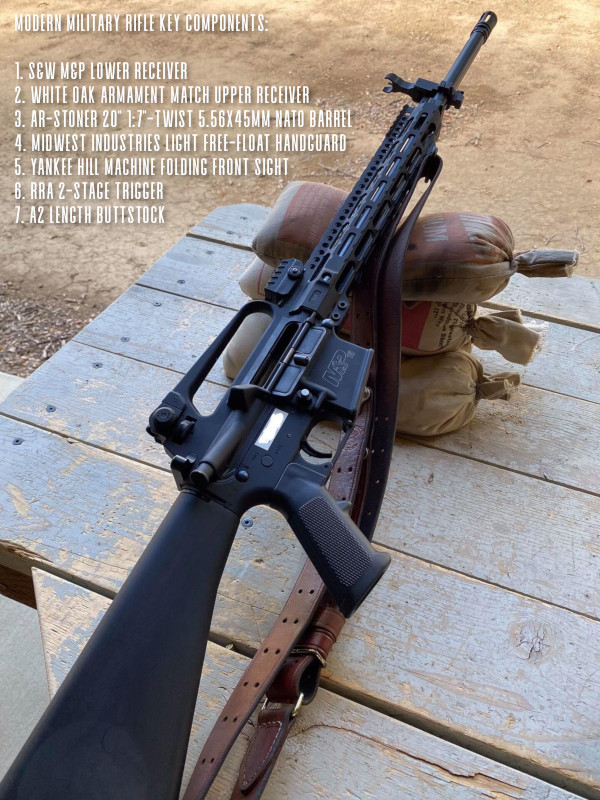
With this in mind our friend Dennis Santiago has put together his own AR-platform Standard Modern Military Rifle for matches run under CMP Games Competition Rules. This is not quite a classic AR, as it has a metal free-float handguard (vs. plastic handguards), but it IS light (7.3 pounds), and it does have iron sights — a key requirement for Standard Modern Military class rifles. CMP Rulebooks — All Classes.
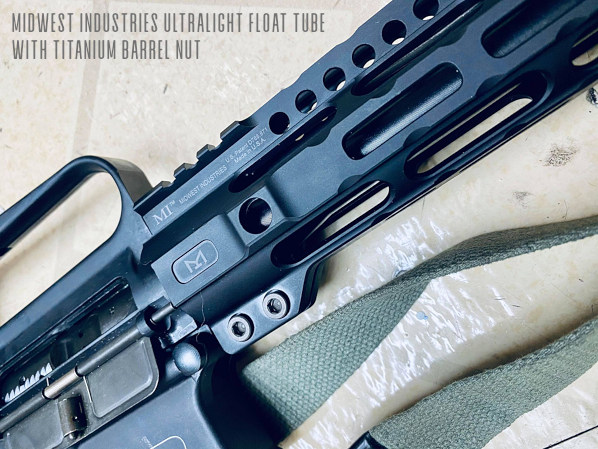
Here is Santiago’s CMP Modern Military Rifle (Standard Class) with an ultralight free float tube that has a titanium barrel nut, and mechanical, center-able front sight. The barrel is an AR-Stoner brand 20″-long 1:7″ Government contour chambered in 5.56×45 NATO. Dennis says: “This makes the 7.5-lb weight limit with a few ounces to spare. We’ll see how well it drives soon enough.”
Dennis explains: “The Standard Modern Military (AR) is a category of military-style rifle that shoots the 200-yard, 30- or 50-shot courses alongside the M1 Garands, Springfields, Vintage, and M1 Carbines. This one boasts a Midwest Industries (MI) ultralight Free-float Handguard and a Yankee Hill folding front sight. Any Government contour or thinner profile rifle-length gas tube barrel with a 0.750″ gas block will work.” Colt makes a suitable Government Contour 20″-long, 1:7″-twist barrel, sold by MidwayUSA.
To test the accuracy of his rifle, Dennis fitted a Mantis-X unit on the top of the float tube. The Mantis-X records the movement of the rifle to interpolate shot placements. Dennis reports: “I spent some extra time at the range grabbing a decent zero for my Modern Military rifle. I stuck a Mantis-X on it to record a few shots shooting offhand at the plates at 200 yards. It drives very easily even with no shooting coat or glove.” The Mantis-X is attached just forward of the carry handle, on top of the MI free-float handguard. The Mantis-X works with live fire as well as dry fire. It communicates via BlueTooth to a smartphone App.
Rifle Shoots Well with 77gr Sierra MatchKings
The gun is presently zeroed with 77gr Sierra MatchKing ammunition. Dennis reports his rifle “can easily hold the X-Ring on an SR target for both 100-yard and 200-yard CMP Modern Military Games matches. And it’s fun to shoot!”
CMP Standard Modern Military Rifle (AR Class)
This rifle is built from carefully selected and fitted parts to conform to the CMP’s 7.5-pound weight limit iron-sighted rifle rule. Officially, this is a CMP Standard Modern Military Rifle, Class “A” (AR type).
1. S&W M&P lower receiver
2. White Oak Armament match upper receiver with 1/4×1/4-MOA pinned rear sights
3. AR-Stoner 20″ 1:7″-twist 5.56x45mm NATO Government contour barrel from MidwayUSA*
4. MidWest Industries ultralight free-float handguard with a Titanium barrel nut
5. Yankee Hill Machine folding front sight with a 0.072″ square front pin
6. RRA 2-stage trigger
7. A2 length buttstock
Easy Rifle Build Using Mostly Existing AR Parts, Plus New Barrel and Free-Float Handguard
Dennis was able to put his Modern Military AR together using components he had collected over the years: “Most of these parts were already in my bin of old AR parts available to be recycled. The barrel and free-float handguard were the only new acquisitions.” And with the AR’s modular format, this was an easy build: “Assembly time was about 30 minutes. I’ve done these parts swaps so many times now.”
Key Rules for Standard Modern Military Rifle (AR Type)
Dennis Santiago’s new AR rifle was built as a “Standard U.S. Modern Military Rifle”, Class A (AR Type), as specified in the CMP Games Competition Rules.
5.2.3 Standard U.S. Modern Military Rifles, Class A
Category A Standard Modern Military Rifles must comply with these requirements:
a) Rifles must be based on the M-16 rifle or be based on an AR design;
b) Rifles must be manufactured by a USA manufacturer;
c) Rifles must be equipped with issue-type metallic front and rear sights; rear sights with adjustments finer than one minute of angle are permitted;
d) Total rifle weight, with sights and without sling, may not exceed 7.5 pounds;
e) Rifles may be fitted with a float tube or free-floating handguard. A nonadjustable sling swivel may be attached to the forward end of the handguard; and…
f) The rifle must be chambered for the 5.56x45mm or .223 Remington cartridge.
Also, from Rule 5.2.2:
a) The exterior configuration of the rifle must be the similar to that of the
original military or military-type rifle;
b) The trigger pull may not be less than 4.5 lbs.;
Comments from other Modern Military Rifle Shooters:
“I built a Modern Military [Standard]. It was tough getting below the 7.5-lb [limit]. I had to carve off a bunch of the 20″ barrel diameter but wanted to stay with it for sight radius (over a 16″). I would just as soon shoot that little iron-sighted rifle at 200 yards as my 15-lb Nightforce-scoped Service Rifle. I love that little rifle.” — Kenneth S.
“I’m building one of these that will make 7.5-lb [Standard Modern Military] weight limit, with the long barrel and long sight radius. This has been on my list this winter.” — Tom K.
“We found that turning down a National Match barrel and taking a few inches off of it made a very accurate rifle.” — Jack A.
“My old (complete) A2 upper has been sitting forlorn on a shelf for a couple of years now. Perhaps I need to do a [Standard Modern Military] build of my own.” — Derek D.
Dennis Santiago replied: “Derek — that’s the reason I was attracted to this. I had bought a brand new WOA A2 pin upper receiver to make a new upper then the scope rule was adopted and it was all flat tops. This gives new purpose to the old parts.”
CMP Rules Defining Modern Military Rifles
Standard vs. Unlimited, Class A vs. Class B
There are actually two different classes of Standard Modern Military Rifles, Class A for AR-type rifles and Class B for other military-style rifles, such as the M1A and FN-FAL. Ok, got that? Now, in addition, there is also a second division for UNLIMITED Modern Military Rifles, again with two classes (Class A — AR-type and Class B — other military rifles). These unlimited rifles can have optics, heavier weights, modern-design adjustable-length stocks, and other upgrades. Here is Rule 5.2.2 from the current CMP Games Rifle and Pistol Competition Rules:
Do you often carry a concealed handgun? Then you can benefit from Beretta’s FREE 15-page e-book, Ten Essential Tips for CCW Holders. This eBook, in handy PDF format, helps gun owners select an appropriate handgun (and holster), understand legal obligations and responsibilities, and train effectively with the firearm. This short PDF eBook offers many useful tips to consider, in particular for gun owners who are contemplating the pros and cons of everyday carry for themselves.
As the Beretta CCW booklet says, “Carrying a concealed handgun requires a certain amount of confidence. You need to be confident in your knowledge of laws and regulations. You have to have confidence in your accuracy, and you need to trust that you can carry a gun effectively, securely and comfortably. If a gun is a burden for you to carry, you probably won’t.”
Surprising Facts About Actual Defensive Handgun Use
You may be surprised to learn when and how handguns are actually used for self-defense. Most defensive uses are at very short range and the incident only lasts a matter of seconds. You need to be prepared, and train to be proficient drawing and aiming your weapon. And remember, shooting is a last resort, when a safe retreat is not available.
55% of gunfights take place in 0-5 feet.
20% of gunfights take place in 5-10 feet.
20% of gunfights take place in 10-21 feet.
95% of gunfights take place in 0-21 feet. (Source: FBI)
The average man can cover 21 feet of ground in 1.5 seconds.
The average gunfight is over in 3-5 seconds.
3 to 4 shots are usually fired.
Most gunfights take place in low-light conditions.
On average, one shot in four strikes someone.
Here are two (2) sample pages from Beretta’s CCW eBook.
Top is a CZ 457 MTR; middle Anschutz with BR stock; bottom is Bergara B14R in DPT Chassis.
With the variety of rimfire disciplines, from cowboy action to Olympic three-position smallbore, there are countless different rimfire designs on the market — bolt guns, lever guns, single-shots, toggle-links and more. These may shoot the same ammo, but they certainly vary in looks and ergonomics. This is testimony to human creativity.
In our Shooters’ Forum, you’ll find a long-running thread showcasing rimfire rifles for plinking, hunting, 3P Target Shooting, Silhouette, Rimfire F-Class, NRL22 and more. Here are some of the notable recently-posted rifles in that Forum thread, with brief build/component details.
ARA Benchrest Rifle with Stiller Action, Shilen Ratchet Barrel
Forum member Peebles24 showcased his cool flame-paint-job .22 LR benchrest rifle against a scenic, snowy background (never too cold to shoot right?). “I had a new rifle built this past fall by Mark Penrod at Penrod Precision. Stiller 2500X action, Shilen ratchet barrel, Jewell trigger, McMillan stock, Harrell’s tuner, Sightron SIII 10-50×60mm glass. I’m shooting it off my Arnold Machine one-piece rest made locally by Cliff Arnold. I visited the Lapua Testing Center East and got a case of Midas+.” For ammo testing results, click photo at right.
In late April the gun competed in its first ARA benchrest match in Wabash, Indiana.
Beautiful MasterClass-Stocked Rifle for Rimfire F-Class
Here is a handsome rifle belonging to Forum member Redd. Set up for prone Rimfire F-Class-style competition, this rig features a Shilen Ratchet barrel with Erik Cortina Tuner fitted to a Stiller 2500X action. It boasts a beautiful MasterClass figured Walnut stock and rides on a SEB Joy-Pod bipod up front. The optic is a Nightforce 40x45mm Competition.
CZ 457 .22 Magnum Transformed with KRG Bravo Stock
Forum member JAS-AS purchased a .22 Magnum CZ which he revived as a training rig with a new stock. He posted: “I use a CZ457 in .22 Magnum mainly as a trainer — bipod and rear bag kind of stuff. It has evolved over the last year or so. Next change will be a Lilja barrel. This because it can shoot brilliantly (at times) but not consistently. And accuracy degrades as it gets minimally dirty. Also, it doesn’t like 40gr rounds — the groups open up to 1.5 MOA. It’s at its best with 30 and 35 grain rounds running at up to 2250 fps. I believe that to be a twist-rate issue.”
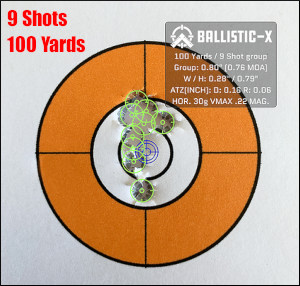
The “Before” photo shows the rifle “as purchased” with a Nikon Monarch 4-16x42mm mildot scope. The “After” image shows the CZ 457 as modified. JAS-AS notes: “I added a bunch of stuff: KRG Bravo stock, Vortex Strike Eagle 5-25x56mm FFP scope, new bipod and Precision Underground bag, trigger spring. With this setup I shoot at 100 yards+ exclusively.” Show at right is a 9-shot group with the rifle at 100 yards. Three-shot groups at 100 have been below half-MOA.
Savage Mark II Squirrel/Field Rifle
This Savage Mark II rifle isn’t fancy, but it has brought much satisfaction to its owner, Forum member “Ohio Varmint Shooter”. He posted: “Just a nice field gun. Less than $200 (without scope). Cheap wooden stock, thin pencil barrel. My squirrel/field gun. There is absolutely nothing special about this… except it’s lefthanded. It shoots fine, preferring CCI standard velocity rounds. I did splurge and put a more-than-needed scope on it. Most scopes with fixed parallax (in this category), have it fixed at 50 yards. I wanted variable parallax so I could set it at 35 yards. I don’t know if it really makes any difference, but I do try to go for accurate head shots. The scope is also a little overkill in magnification, but it does help with the head shots and my aging eyes.”
“As a youth in the 70s, I always dreamed of a left-handed bolt. So getting back into shooting/hunting about 8 years ago, I was delighted to discover this gun. Growing up I had a semi-auto 22, but being a lefty … it would spit powder on my face.” — Ohio Varmint Shooter
Tikka T1x Action in Eliseo Competition Machine Chassis
Here is Gary Eliseo’s personal Rimfire Match Target Rifle with Tikka T1x action. The T1x action is carried in Competition Machine Rimfire Chassis. Gary also posted some recent 100-yard groups, using SK rifle match ammo in this rifle. Gary runs Competition Machine LLC and produces the chassis system for this cool rig, along with outstanding Across-the-Course, High Power, and F-Class chassis systems for rimfire and centerfire rifles.
Vudoo Action Benchrest Rifle with Benchmark 3-Groove Barrel
Here is a classy benchrest rig belonging to Forum member FCJIM. It features a Vudoo LBRP action, Benchmark 3-groove barrel, Harrell’s Precision tuner, NightForce Benchrest scope, and McMillan Edge stock. The stock work was done by Doan Trevor, while FCJIM did the metal work himself, using a Nevius reamer. This rig likes to shoot ELEY Black and Lapua Midas+ ammo.
Last but not least, here is a “blast from the past”. This classic lever-action single shot is crafted by CPS Rifles (Paul Shuttleworth), a boutique gun-maker specializing in single-shot rifles, particularly reproductions of the Stevens 44 1/2. Note the richly-figured wood and the lovely color case-hardening on the receiver. There is a dual Set Trigger system. You pull one trigger through a relatively long stroke until it clicks. The the second trigger breaks the shot (and drops the hammer) with just a few ounces of pull weight. This rig, fitted with MPA Vernier-type tang sights, belongs to Forum member “Mills” from Texas.
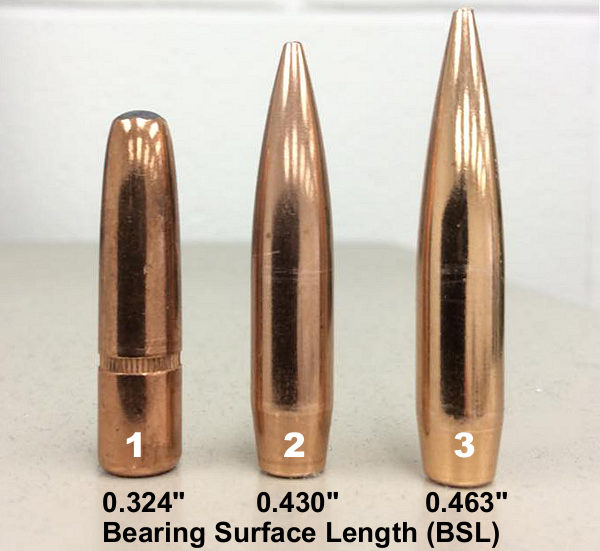
Photo 1: Three Near-Equal-Weight 7mm Bullets with Different Shapes
TECH TIP: Bullets of the same weight (and caliber) can generate very different pressure levels due to variances in Bearing Surface Length (BSL).
This article, from the USAMU Facebook Page, concerns reloading safety. In the relentless quest for more speed and flatter ballistics, some hand-loaders load way too hot, running charges that exceed safe pressure levels. Hint: If you need a mallet to open your bolt, chances are your load is too hot. Stay within safe margins — your equipment will last longer, and you won’t risk an injury caused by over-pressure. In this article, the USAMU explains that you need to account for bullet shape, diameter, and bearing surface when working up a load. Don’t assume that a load which is safe for one bullet will be safe for another even if both bullets are exactly the same weight.
How Bullet Profile and Bearing Surface Affect Pressure Levels
Today, we continue our handloading safety theme, focusing on not inadvertently exceeding the boundaries of known, safe data. Bullet manufacturers’ loading manuals often display three, four, or more similar-weight bullets grouped together with one set of load recipes. The manufacturer has tested these bullets and developed safe data for that group. However, seeing data in this format can tempt loaders — especially new ones — to think that ALL bullets of a given weight and caliber can interchangeably use the same load data. Actually, not so much.
However, bullet designs include many variables such as different bearing surface lengths, hardness, and even slight variations in diameter. In fact, diameters can occasionally range up to 0.001″ by design. Thus, choosing untested bullets of the same weight and caliber, and using them with data not developed for them can yield excess pressures.
This is only one of the countless reasons not to begin at or very near the highest pressure loads during load development. Always begin at the starting load and look for pressure signs as one increases powder charges.
Bullet Bearing Surface and Pressure
Bullet bearing surface length (BSL) is often overlooked when considering maximum safe powder charges and pressures. In Photo 1, note the differences in the bullets’ appearance. All three are 7 mm, and their maximum weight difference is just five grains. Yet, the traditional round nose, flat base design on the left appears to have much more BSL than the sleeker match bullets. All things being equal, based on appearance, the RN/FB bullet seems likely to reach maximum pressure with significantly less powder than the other two designs.
TECH TIP: Bullets of the same weight (and caliber) can generate very different pressure levels due to variances in Bearing Surface Length (BSL).
Bullet 1 (L-R), the RN/FB, has a very slight taper and only reaches its full diameter (0.284 inch) very near the cannelure. This taper is often seen on similar bullets; it helps reduce pressures with good accuracy. The calculated BSL of Bullet 1 was ~0.324″. The BSL of Bullet 2, in the center, was ~0.430″, and Bullet 3’s was ~ 0.463″. Obviously, bullets can be visually deceiving as to BSL!
Some might be tempted to use a bullet ogive comparator (or two) to measure bullets’ true BSL for comparison’s sake. Unfortunately, comparators don’t typically measure maximum bullet diameter and this approach can be deluding.
Note: Due to time constraints, the writer used an approximate, direct measurement approach to assess the bullets’ different BSLs. While fairly repeatable, the results were far from ballistics engineer-grade. Still, they are adequate for this example.
Photo 2: The Perils of Measuring Bearing Surface Length with Comparators
In Photo 2, two 7mm comparators have been installed on a dial caliper in an attempt to measure BSL. Using this approach, the BSLs differed sharply from the original [measurements]. The comparator-measured Bullet 1 BSL was 0.694” vs. 0.324” (original), Bullet 2 was 0.601” (comparator) vs. 0.430” (original), and Bullet 3 (shown in Photo 2) was 0.602” (comparator) vs. 0.463” (original). [Editor’s comment — Note the very large difference for Bullet 1, masking the fact that the true full diameter on this bullet starts very far back. You can use comparators on calipers, but be aware that this method may give you deceptive reading — we’ve seen variances just by reversing the comparators on the calipers, because the comparators, typically, are not perfectly round, nor are they machined to precision tolerances.]
Thanks to the U.S. Army Marksmanship Unit for allowing the reprint of this article.


 Happy Mother’s Day
Nancy Tompkins is one of the greatest long-range shooters in American history. She has won the National Long Range Championship 5 times (1986, 1997, 1999, 2003, and 2015), the across-the-course National High Power Championship (1998), the Metric Smallbore Nationals (2012), and the Fullbore Nationals (2012). She has also been the Wimbledon Cup winner (1993) and a 7-time Leech Cup winner (1995, 1997, 1999, 2003, 2005, 2011 and 2012). She has won both team and individual medals in the World Championships and has been on 8 Palma Teams (as both a shooter and a coach).

 Team Smith & Wesson shooter


 The shooting season is now in full swing. When you head to the range you’ll want to be prepared. That means collecting all the gear you’ll need at the range. It’s easy to forget small, critical items, so we’ve provided a checklist of the small “extras” you should pack before you head out to the range. In addition to rifle, rests, ammo, targets, and cleaning gear, here are a dozen essentials you should include in your range bag.
 • Shell-Holder — If you don’t have calipers, you can use a shell-holder to check for excessive case expansion from hot loads. If a fired case doesn’t slip into the shell-holder easily, your load is definitely TOO HOT.
 • Hex Wrench or Screwdriver for action screws — Action screws can work loose with time. Always bring the appropriate hex wrench or screwdriver whenever you go to the range.
 • Extra Batteries — Bring extra batteries for all your electronic gear — which can include chronograph, windmeter, digital camera, GPS etc.
 • Folding Chair or Camp Stool — This comes in handy if you’re spotting for another shooter, or if you reload away from the firing line.
 • Small Plastic Ruler — Use this to measure your group sizes. A transparent (see-through) ruler works best. Rulers are also useful for drawing lines on targets.
 Detail from Doan Trevor rimfire prone stock (Fiddleback Walnut) with Stiller 2500 X Action.


 Contact Doan Trevor






 Forum member JAS-AS purchased a .22 Magnum CZ which he revived as a training rig with a new stock. He posted: “I use a CZ457 in .22 Magnum mainly as a trainer — bipod and rear bag kind of stuff. It has evolved over the last year or so. Next change will be a Lilja barrel. This because it can shoot brilliantly (at times) but not consistently. And accuracy degrades as it gets minimally dirty. Also, it doesn’t like 40gr rounds — the groups open up to 1.5 MOA. It’s at its best with 30 and 35 grain rounds running at up to 2250 fps. I believe that to be a twist-rate issue.”



 Bullet 1 (L-R), the RN/FB, has a very slight taper and only reaches its full diameter (0.284 inch) very near the cannelure. This taper is often seen on similar bullets; it helps reduce pressures with good accuracy. The calculated BSL of Bullet 1 was ~0.324″. The BSL of Bullet 2, in the center, was ~0.430″, and Bullet 3’s was ~ 0.463″. Obviously, bullets can be visually deceiving as to BSL!


