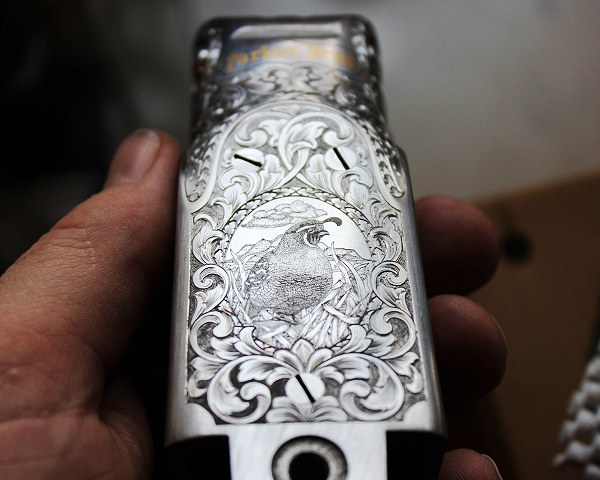
Impressive engraving by Jesse Kaufmann. Note how the scope rings have been engraved to perfectly match the engraving pattern on the Remington 547 action.
Who says fine craftsmanship is dead? There’s a modern day engraving wizard up in South Dakota, Jesse Kaufmann, who produces some of the most handsome engraving we’ve seen. Jesse, who operates Black Hills Gunstocks and Engraving LLC, is a true master at metal engraving and he also does superb stock checkering. Here are some examples of Jesse’s engraving work:
This 14-minute video showcases dozens of Jesse Kaufmann’s Engraving examples:
About Jesse Kaufmann, Master Engraver
Jesse Kaufmann was a professional stockmaker for Dakota Arms for over a decade. In 2009, he was inducted in the American Custom Gunmakers Guild as a checkering specialist. In January 2017, Jesse was awarded his Master Engraver certification by the Firearms Engravers Guild of America. With his broad skill set, Jesse is able to offer his clients a unique and complete package of stock work, finish, checkering, and engraving for a custom package that is all completed under one roof by his own hands.
Jesse Kaufmann’s work has been featured in American Rifleman, American Hunter, FEGA’s The Engraver, Sports Afield, Waidmannsheil Journal of German Gun Collectors Assn., Gun Digest 71st Edition, Modern Custom Guns Volume 2, Dangerous Game Rifles 2d. Edition. For more info, visit BlackHillsgunstocksandengraving.com, email blackhillsgunstocks [at] gmail.com, or call Jesse at (605) 499-9090 after 5:00 pm. SEE Gallery of Work.
Introduction — What You Need in a Security Gun Safe
If you own firearms, you need a gun safe. In some states, such as California, if you don’t own a safe, you face potential liability if your firearms are stolen. Purchasing a safe is no easy decision however. There are dozens of safe manufacturers and countless design options. Sorting out the facts from the marketing claims can be difficult.
Today’s seven Saturday Showcase videos explain the most important qualities you should look for in a safe, and help you with the tough decisions, such as “Should I get a digital lock or a dial lock?”, “What kind of fire-proofing is most effective?”, “How big a safe do I really need?”, and “What interior works best with long-barreled scoped rifles?” You’ll find reviews of full-size safes, modular safes, and smaller handgun safes. Plus you’ll find expert advice on how to install your safe in your home and how to keep the contents free from rust.
Budget $1200-1500 for a safe from a major maker, with external hinges, and an interior at least 58″ high. That gives you room for 30″-barreled rifles with a top shelf for handguns and other valuables. A rotary rack and slide-out drawers are great additions.
Keypad or Dial? We favor rotary dial locks. With minimal maintenance they will function flawlessly for decades. But the digital locks offer quick-access and convenience. If you go digital, get a commercial-grade unit.
Fire-lining is worth getting, but a thin layer of sheet-rock doesn’t make a safe truly “fire-proof”.
Interior at least 58″ High and 30″ wide Overall Weight 750+ Pounds 8 Gauge or Heavier Wall Thickness Double-Wall, Composite Door with Relockers Minimum UL RSC Rated. TL-15 or TL-30 Rating is Desirable External Hinges
Mechanical UL Group II (or better) Lock with Standard Dial Or UL Type 1 Commercial-Grade Electronic Lock
Custom Interior Suitable for Scoped Guns with Long Barrels On-Door Storage System for Non-scoped Long Guns OR Rotary Gun Rack for Scoped Rifles and ARs
Internal (sandwiched) Insulator, Reinforced if Sheet-rock Palusol? Heat-Activated Expanding Door Seals
Slide-out Drawers for Handguns Fire-lined Inner Safe for Paper and Media
Low Gloss, Rust-resistant External Finish Pre-Drilled holes for Lag Bolts and in Rear for Electric Cord Overhead Fluorescent Lamp and/or LED Mini-lights on Strings
Advice for Gun Safe Buyers — Seven Key Things to Consider
This video covers key gun safe features — Seven Things to Consider Before Buying a Gun Safe. Not all gun safes are created equal. There are many variables — fire ratings, burglar ratings, colors, lock choices, internal capacity, door storage, and more. And with the recent controversy involving Liberty Safes, you should check the safe-maker’s policies regarding digital passcodes — you don’t want your passcode revealed without a warrant and/or without your consent.
DOs and DON’Ts of Safe Buying
DO purchase a safe that is bigger than you think you need.
Your gun collection is bound to grow over time. A good safe is more than just a gun locker–it becomes a secure storage device for your family’s other valuables as well. You’ll find you quickly fill up even a large safe. Spend the money for the size, protection, and features you want. Your gun collection may be worth many tens of thousands of dollars. Some people who visit this site wouldn’t hesitate to spend $1300 for a custom action or $1800+ for a competition scope, yet they don’t want to spend more than a few hundred dollars on a safe. That’s not common sense. If you’re on a tight budget, consider a used safe. Unlike many other products, safes don’t really wear out over time. When businesses change locations, you can get a very high quality commercial safe for little more than the cost of removing it.
DO spend more for a safe that offers fire-resistance.
But you have to do your homework–you can spend a lot of money for “fire-proofing” that actually is not very effective. Make sure if sheet-rock is used that it is properly installed. If you have valuable documents and media files, it’s not a bad idea to purchase a smaller, commercial-grade fire safe to put inside the gun safe. This gives you double protection.
DO look at many different brands of safes before you buy.
There ARE significant differences among brands. For example, Browning offers a unique (patent-pending) door-mounted rifle rack. Zanotti offers slide-out drawers and a modular design that is much easier for an owner to move. Ft. Knox uses an advanced method to secure and stabilize its fire-proofing layers within the safe. Brown offers custom exotic wood interior shelving and safes with commercial-grade burglary protection (much thicker steel with heavy composite doors and walls). Amsec offers a proprietary “DryLight” poured concrete-type fire insulation with greater structural strength than typical sheet-rock panels.
DO investigate the safe’s specifications.
Just because a safe is big and heavy doesn’t mean it’s particularly secure. Heavy-gauge steel is much more resistant to cutting and drilling than light 12- or 14-gauge steel. Some safes on the market have walls so thin they can be penetrated with a fire ax. We recommend 10-gauge steel at a minimum, and 8 gauge is much better. The safe should carry a UL RSC (Underwriters Laboratories “Residential Security Container”) or better rating.
DO ask about the safe’s safeguards against tampering.
A quality safe will feature extra armor or devices to defeat drilling. Low-grade safes can be opened in a few minutes with simple, battery-powered hand tools. All safes should have relockers to help ensure the safe remains locked in the case of a burglary. Relockers are hardened pins that are triggered during an attack, and cannot be retracted without hours of drilling. The number of relockers on a safe ranges from 2-10+ depending on the safe’s size and burglary grade.
DON’T store powder in your safe. A tightly-sealed metal box with a large quantity of powder inside is a bomb. Store powder in a separate, lightly-constructed cabinet or plastic box. The main thing for powder is to keep it dry and away from moisture and light.
Don’t Make the Mistake of Buying an Undersized Safe
The most common mistake people make when buying a gun safe is getting a safe that’s too small. This video explains why you should probably invest in a bigger safe. First, the rated gun capacity is exaggerated — rifles with mounted optics, long barrels, wide forearms and/or pistol grips take up considerably more space than a small rimfire rifle or a lever gun with iron sights. Second, your gun collection will likely grow in years to come. Third, you may want to store other valuables in the safe — such as vital documents, jewelry, watches, and pricey electronics. In this video the host notes: “Get a much larger safe than you think you’ll need at first. This will guarantee that you will have enough room for future purchases and all the guns and equipment you currently have.”
What Happens in a Fire and Deluxe Features
This video shows what can happen INSIDE a gun safe during a fire. This Winchester safe did not fare well during a major hourse. That’s why you want to buy a safe with a good fire rating.
This video shows the features of a large Superior Safe Co. gunsafe with internal organizers and door storage for handguns and accessories.
Modular Safes — Smart Option for Easier Moving
This article features a great video showing how to assemble a modular safe in under 30 minutes. This article also explains the benefits of modular gunsafes — primarily easier transport and installation. “Modular safes have been around for a few years now and are becoming more popular. Here’s why: The safe comes delivered to you in panels, so you can bring them into your home one at a time and put it together anywhere you like. This makes it easy to carry up and down stairs, onto elevators or anywhere! Security — Is it as secure as one that comes pre-assembled? The answer is, absolutely.” READ FULL ARTICLE on NRAWomen.com.
Five Good Gun Safes Under $500
We know some readers have a tight budget. This video looks at some recommended lower-cost safes under $500.00 list price. Note, however, that this video was produced in 2022. Now in 2023, with Bidenflation, the actual gun safe prices may be higher. For a full-size safe, we do recommend you spend quite a bit more — the investment in a higher quality safe, with better fire rating, is worth it.
Locking Device–Mechanical Dial vs. Digital Locks Recommendation: UL Group II mechanical dial lock or commercial-grade electronic.
For gun safes, we prefer rotary-combination dial locks, although commercial-grade electronic locks are now very good. While less convenient, and slower to open than electronic locks, combination locks are still more durable and trouble-free than the digital locks found on many low- to medium-cost gun safes. Among the combination locks, the Sargent & Greenleaf model 6730 (UL Group II) remains an industry standard. The director of Sturdy Safes noted: “An S&G 6730 will be working fine when your grandchildren have grandchildren.” For home use, we also recommend the standard, high-visibility “front-read” white on black dial.
Avoid the cheap, imported electronic locks. These are known for failing relatively quickly–the keypad internals just wear out. With some of these designs, if the lock fails while the door is closed, you’ll have to employ a professional gunsmith to drill your safe and replace the locking assembly and keypad. With any electronic lock, re-program your combination now and then so that keypad wear patterns don’t reveal the numbers you push to open the safe. But when you change the combination, be sure to record the new setting.
With a dial lock, choose a design that meets UL Group II (or better) certification. If you choose a digital lock, we strongly recommend that you select a UL Type I, Commercial Grade lock from LaGard, Sargent & Greenleaf, or Kaba Mas. Commercial-grade locks, such as the S&G Comptronic” 6120 or LaGard “SafeGard” are much more robust and are designed to be used 20 times a day or more in retail and banking environments. A good commercial digital keypad lock should give 10 years or more of continuous use before replacement is required. With any digital lock, however, you should replace the battery at least once a year. Normally this can be done without professional assistance.
A rapid-access bedside safe is a great way to keep your pistol secure, but also readily available, close at hand. Not all rapid-access pistol safes are created equal, however. In this video, John of Pew Pew Tactical explains what to look for in a small pistol safe, and points out the pros and cons of the four safes tested:
Fort Knox FTK-PB Simplex Pistol Box
Strong case, reliable no-battery locking system. Very good safe, but expensive ($299.00 on Amazon).
Vaultek Electronic Pistol Safes
Multiple styles, thin profile, 5-button electronic ($159.99 on Amazon), or Biometric VT10i + 5-button ($269.99 on Amazon), both with rechargeable batteries.
GunVault SpeedVault Handgun Safe
Designed for vertical mount under desk on vehicle, One gun only, requires batteries, $142.00 on Amazon.
We first ran this article in 2012, and it was very well received. Since then, many Forum members have requested an explanation of MILS and mildots, so we decided to run this feature again…
1 Milliradian (Milrad or ‘Mil’) = 1/1000th of a radian | 1 Milliradian = 0.0573 degrees.
In this NSSF Video, Ryan Cleckner, a former Sniper Instructor for the 1st Ranger Battalion, defines the term “MilliRadian” (Milrad) and explains how you can use a mildot-type scope to range the distance to your target. It’s pretty simple, once you understand the angular subtension for the reticle stadia dots/lines. Cleckner also explains how you can use the milrad-based reticle markings in your scope for elevation hold-overs and windage hold-offs.
Even if you normally shoot at known distances, the hold-off capability of milrad-reticle scopes can help you shoot more accurately in rapidly-changing wind conditions. And, when you must engage multiple targets quickly, you can use the reticle’s mil markings to move quickly from one target distance to another without having to spin your elevation turrets up and down.
WEB RESOURCES: If you want to learn more about using Milliradians and Mildot scopes, we suggest the excellent Mil-dot Explained article from targettamers.com Guide. This covers the basics you need to know, with clear illustrations.
Also informative is The Truth about Mil Dots by Michael Haugen. Mr. Haugen begins with basic definitions: 360 degrees = 2 x Pi (symbol π) Radians. That means 1 Radian is about 57.3 degrees. 1 Milliradian (Milrad or ‘Mil’) = 1/1000th of a radian. Thus 1 Milliradian = .0573 degrees.
This article originally appeared in the Sierra Bullets Blog.
Sierra Bullets asked a few hand-loaders to reveal their favorite reloading tool or accessory: “What is your favorite ‘don’t know how you ever lived without it’ piece of reloading equipment?” Some of the answers are listed below. We were interested to see some high-tech, micro-processor items mentioned, such as the AMP Annealer, and the AutoTrickler powder dispenser. Old standbys, such as the rugged RCBS Rockchucker and Dillon 650, also made the favorites list.
What Is Your Favorite Piece of Reloading Equipment?
Bill, Editor of Rifleshooter.com, answered: “I have so many favorite reloading tools, it’s hard to pick one. But if I had to, it would be my Forster Co-Ax press. I like the ease [with which] you can change dies and that it doesn’t require traditional shell holders. It’s a great tool to have!”
Sierra Bullets Ballistic Technician Philip Mahin answered: “A comparator gauge to measure from the base of a case to the ogive of the bullet. This bypasses the tip of the bullet, so I can repeat the same seating depth the next time I visit a specific combination.”
Ballistic Technician Carroll Pilant answered: “Dillon 550 and 650 presses.”
Ballistic Technician Rich Machholz answered: “My universal decapping die is as handy as a pocket on a shirt.”
Ballistic Technician Philip Mahin answered: “A comparator gauge to measure from the base of a case to the ogive of the bullet. This bypasses the tip of the bullet, so I can repeat the same seating depth the next time I visit a specific combination.”
Jon Addis answered: “Putting an A&D FX-120i scale with AutoTrickler and Auto-Throw on the bench has changed the way I reload. It’s kernel accurate in about 15 seconds. Saves time and reduces a variable. And of course, the system is made better by the Area 419 Billet Adjustable base for the trickler and Billet Powder Cup.”
This video shows the AutoTrickler V3 System
Ballistic Technician Paul Box answered: “The Lee hand priming tool.”
Former Ballistic Technician Robert Treece answered “My homemade dental pick. I use it to check incipient case-head separations. We all see the ‘bright ring’ down close to the case head, that’s natural, but after several firings could be starting to split apart. If the pick hooks into a crevice — DON’T TRY TO SIZE THE CASE. It will pull apart in your die.”
Dan Blake answered: “My Annealing Made Perfect (AMP) annealer. With consistent neck tension being one of the largest contributions to small Extreme Spread on muzzle velocities, I believe this induction annealer is truly the best on the market.”
This manufacturer-produced video shows how the AMP annealing machine operates:
Process Engineer David Palm answered: “Homemade case lube.”
Plant Engineer Darren Leskiw answered: “Beyond the normal equipment, I’d say my electronic scale. Using the beam balance for the past 9 years was ok, but nowhere as easy as using an electronic scale.”
There were many votes for the classic RCBS Rock Chucker single-stage press:
Ballistician Gary Prisendorf answered “RCBS Rockchucker Press, it’s built like a tank, and it will last me a lifetime.”
Production Manager Chris Hatfield answered: “RCBS single stage reloading press.”
Maintenance & Machine Shop Lead Craig Westermier answered: “RCBS Rock Chucker.”
Production Resource Manager Dan Mahnken answered “RCBS Rock Chucker! Buy one and it lasts a lifetime.”
Sierra Bullets Ballistic Technician Duane Siercks answered: “I don’t know that you would actually call this equipment, but the item that comes to mind would be my reloading room/shoot house. I had always had to squeeze everything into a corner or even an unheated shed. After we bought our current house, I built a garage and placed it so that I had a window looking down a 250-yard range. I built a dedicated room with heat and A/C. It contains my reloading bench and a shooting bench. The shooting bench lets me slide open the window and shoot down the range. It is very handy to not have to load everything up to go to the range. It also makes load development a lot simpler and efficient. I don’t know how I ever got along without it.
I also wonder what I did before I acquired the Lyman 1200 DPS Powder Dispenser. This has made the process so much simpler and much easier. I also have a Lee Precison Universal Decapping Die that I would gladly spend the money on again. This may be a small thing, but it certainly is handy. The Lee would accommodate some very large cases that some of the others were too small for.”
Ever wanted to see how Nosler bullets and cartridges are made? Here’s your opportunity. The Rocky Mountain Elk Foundation (RMEF) has produced a video (“Quality First”) that offers a behind-the-scenes look inside Nosler’s Oregon factory that produces bullets, brass, and ammunition.
Video Showcases Nosler Production Facility and Ballistics Lab
RMEF representatives were provided with unprecedented access into Nosler’s famously-guarded manufacturing plant to show the technology used by Nosler to produce bullets and ammunition. The “Quality First” video showcases Nosler’s complex production processes that include technologically advanced machinery, and stringent quality control measures.
After the intro, this video illustrates Nosler’s bullet construction techniques with a cool animation sequence. The video then showcases the Nosler ballistics lab, inspection room, and packaging line.
The “Quality First” video starts with the history of the company, tracking Nosler’s development from the 1940s. Then the video shows the bullet construction techniques followed by a ‘walk-though’ in the factory, showing the sophisticated machinery used to make bullets, brass, and ammunition. “‘Quality First’ isn’t just a saying that’s printed on our factory walls, it’s the guiding principle that affects every decision we make” says Mason Payer, Senior Marketing Manager at Nosler.
Information Resources — Load Data and Nosler Blog
The enhanced Nosler website also features comprehensive LOAD DATA, plus informative content in the Nosler Blog. The Load Data page works well on smartphones. Go to the Load Data Index Page, then simply scroll down to a caliber. Then select your cartridge type and bullet weight(s). The rifle listings are quite comprehensive, covering .17 caliber up to .458 caliber. Here are examples of Nosler load data for the 6mm Creedmoor with popular 105-107gr bullets, along with the .284 Winchester with 175gr bullets.
About Nosler and Support for Rocky Mtn. Elk Foundation
Founded in 1948, Nosler, Inc. is a family-owned company located in Bend, Oregon. Nosler is most known for hunting bullets such as the Partition®, Ballistic Tip®, AccuBond®, E-Tip® and most recently the AccuBond® LR and RDF. Nosler manufactures premium component bullets, reloading brass, ammunition and semi-custom rifles for domestic and international customers.
A long-time proponent of the Rocky Mountain Elk Foundation, Nosler donates a portion of the proceeds from the sale of five Partition bullets to benefit RMEF’s mission and recently added proceeds from Trophy Grade® and Expansion Tip™ ammunition to increase support.
Video find by ELR Researcher. We welcome reader submissions.
This stunning Westley Richards & Co. shotgun was made for the 1981 nuptials of Lady Diana Spencer and HRH Prince Charles. It is rare, has a unique history of ownership, and is also elaborately decorated.
Jim Supica, Director of the NRA Firearms Museum, has written a trio of articles about gun collecting. If you are thinking of starting your own collection of firearms, you should read Supica’s informative articles. The first talks about the basics of gun collecting, the second explains the five key factors that govern gun values, and the third article explains where to find rare and valuable arms. Today we want to highlight the five factors that contribute most to a gun’s value, according to Supica:
Make and Model, Condition, Rarity, History, Art — These are the five factors that … appeal to collectors and help determine the value of collectible guns.
Make and model tends to be the starting point for evaluating collectible guns for most collectors and will be a basic threshold requirement for those with specialized collections.
Factors here include the quality of a particular manufacturer’s products, the historical usage of the guns in question, and the brand’s aura of romance. As an example of that last (and most intangible) factor, consider that Colt Single Action Army revolvers were for several decades the most prevalent focus for collectors interested in full-size revolvers from the post-Civil War to turn of the 20th Century-era, and there is no question that Colts were widely used during that time. In recent years, there has been a refreshing trend in gun collecting to look at a broader range of guns than the traditional blue chip Colts, Winchesters, and Lugers.
Colt Single Action Army Revolvers remain among the most prized (and collectible) firearm.
2. Condition (and Originality)
Obviously, condition plays a major role in the value of a collectible firearm. The classic advice to new collectors in this regard has always been to hold out for guns in the best condition and pay the extra premium they demand. This condition-emphasis seems to have developed in the 1970s and 1980s. In the early post-WWII years of gun collecting there was more interest in rare variations and history, and fewer collectors to whom a few percentage point difference in remaining original finish was of much concern.
Although the highest-condition guns continue to bring record prices, it seems that the pendulum is beginning to swing back the other way, a trend met with my hearty approval. The appeal of “mint” guns has been largely lost on me, and seems to be more appropriate to coin or stamp collecting than a field in which the possible historic usage of the artifact holds so much interest and significance. There is a definite segment of the collector market that is not overly concerned with perfect condition, so long as the gun is original and has not been messed with in a more recent (and, in my opinion, usually misguided) attempt to enhance its desirability.
3. Rarity
In terms of rarity, the well-worn saying that “just because a gun is rare doesn’t mean it’s valuable” remains true to a certain extent. There may only be five known examples of a particular gun, but if only three people care about it, the market is saturated. However, there does seem to be more interest in cornering the rare variations within established collecting fields. There is a bit of a resurgence of the collecting philosophy of completing a punchlist of models and variations within a specialization, and this lead to vigorous competition for the rarest examples in these fields. In emerging collecting fields, when new research is published revealing the rarity of certain variations there can develop a brisk interest in those guns.
4. History
Individual guns with a known history of ownership by a specific individual or usage in a specific historical event have always captured the fascination of collectors, as well as historians and the general public. This seems to reflect a basic human interest and shows no sign of abatement. A positive trend here seems to be an increase in general understanding of the type of documentation which must accompany a historically attributed firearm to give it the credibility to justify a premium price, and the importance of creating and preserving such documentation.
This Beretta has extra value because it was owned by pilot Chuck Yeager. Photo NRA Museum.
5. Art (Decorative Embellishment)
Fine engraved guns are collected more for their artistic value than for their worth as firearms. Here the market for classic works by the great engravers of the 19th and early 20th Centuries remains strong, as well as for factory-engraved pieces from more recent years. Interest in recent non-factory engraving seems to have diminished, as has… the trend of adding modern engraving to older firearms.
Here is a matching set of three three beautifully engraved pistols by the late Indiana engraving wizard Ben Shostle — a Luger, a Mauser, and a Colt. Photo courtesy Amoskeag Auction Company.
Factory-custom engraving should not be confused with mass-produced, factory-made commemorative firearms, which flooded the market in the 1960s and 1970s. A couple of major manufacturers worked this genre to death, and prices on commemoratives have been stagnant for many years now, although the market for these shows some signs of renewal.
CAUTIONARY WORDS about RESTORATION
With prices for high-condition original finish guns running away from the budgets of many collectors, period-of-use refinished guns and older factory-refinished guns are finding more enthusiastic buyers than they did a few years ago.
The availability of excellent-quality restoration services is another factor that I anticipate may impact collector preferences in the future. The top restoration artists are reworking guns to “as new” condition with such skill that it has become increasingly difficult for even knowledgeable collectors to distinguish mint original finish guns from the best restorations.
When such restoration is disclosed to a prospective buyer (as it ethically should be), the prices the gun will bring are significantly below a similar gun with original finish, and may be less than the original cost of the pre-restoration gun plus the cost of the rework. This creates a mighty incentive for deception by a motivated seller, either by active misrepresentation (a.k.a. “fraud”) or passively by simple failure to mention the modification.
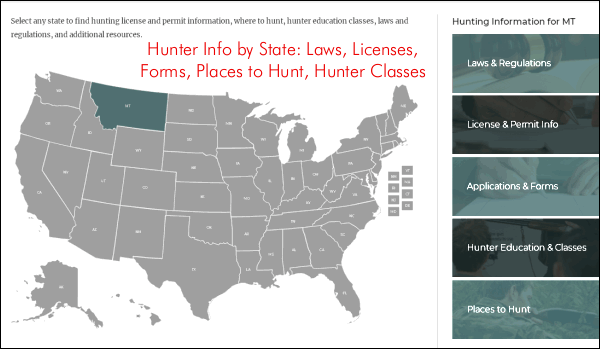
Click Map to launch interactive webpage with info for all 50 states.
Going hunting soon? Need to find out about hunting licenses, deer tags, local regulations, and the best hunting areas? Then visit WheretoHunt.org. This website has an interactive map of the country. Simply click on a state to find the info you need.
For all 50 states, the NSSF provides information about hunting licenses and permits, where to hunt, hunter education classes, laws and regulations and more. For each state you’ll also find a link for required applications and license forms. Have a safe and productive hunt this year.
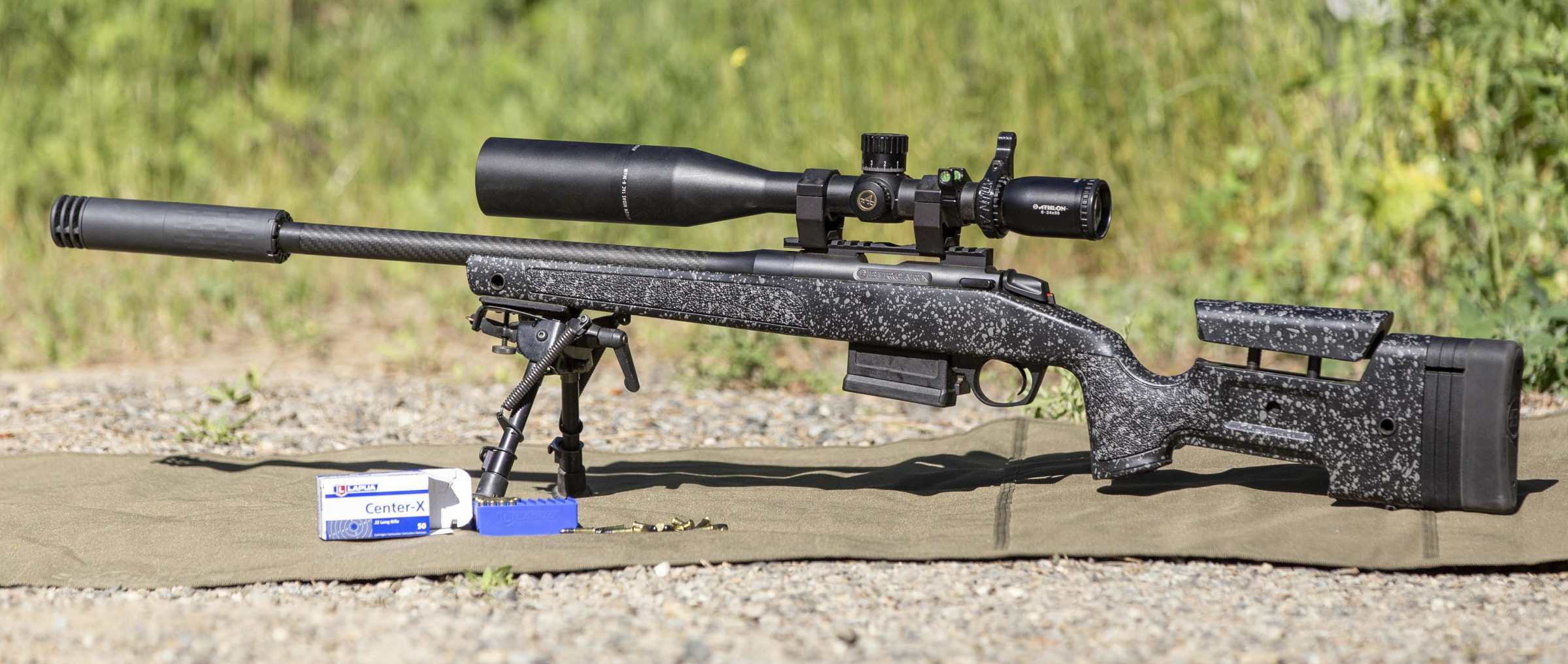
The Bergara B14-R is a high-quality, accurate .22 LR rimfire bolt-action rifle. The rifle’s accuracy and functionality make it a good choice for NRL22 competition. And with stock geometry and ergonomics that duplicate a full-size centerfire rifle, the Bergara B14-R is also an excellent choice for cross-training. By training with a rimfire rifle, you can get essential “trigger time” while saving money. Good centerfire ammo can cost $1.50 per round or more. Decent rimfire ammo can be found for $6.00 per 50rd box. That’s just 12 cents per round.
Click above photo to load full-screen high-rez image.
To find out how well the Bergara B14-R can perform, Gavin Gear of UltimateReloader.com recently tested a B14-R (carbon-covered barrel version) at his private range. Using a variety of Lapua and SK Ammo, this rig delivered impressive results. Watch this video to see the B14-R in action.
“The B14-R is a great shooter, and for me it felt very familiar. Just like shooting one of my centerfire match guns, but without all of the recoil!” — Gavin Gear
Gavin reports: “At the 2020 SHOT Show, Bergara announced the B14-R trainer. The concept? Take the B14 HMR series centerfire rifle formula, and adapt it for rimfire. The result is a .22 LR rifle you can shoot all day long without wearing out your arm or your wallet! It looks/feels like a centerfire long-range precision rifle. And that’s what makes this rifle a GREAT training platform for serious long-range shooters.”
The B14-R comes with a 18″-long 1:16″-twist threaded barrel. The single-stack .22 LR magazine is the same size as a short action AICS mag. The Bergara B14-R shares Rem 700 specs, so it is compatible with Rem 700 stocks and aftermarket triggers. Weight with standard barrel is 9.2 pounds without optics, or 8.1 pounds for the carbon version seen here. MSRP for basic version is $1150.00 and street price is $950.00.
Gavin told us: “I couldn’t wait to get the B14-R out to my new 50-yard ridgeline range to see how it would perform with premium .22 LR ammunition. Once I shot this rifle suppressed, I didn’t want to take off the can. The 18″ barrel really works well with the SilcencerCo suppressor to help keep the overall length reasonable, and balance is spot-on.” NOTE: This rifle has the optional carbon-covered barrel.
As tested, the rifle was equipped with these components:
Athlon Midas TAC 6-14x50mm FFP Scope with MK Machine lever, Lone Star bubble level SilencerCo Omega 300 Suppressor with 1/2×28 direct thread mount Harris S-BRM 6″-9″ Bipod with aftermarket swivel tension lever
Outstanding Accuracy with Lapua and SK .22 LR Ammo
Remarkable accuracy for a factory rifle earned this Bergara its Sunday GunDay selection. Shooting with bipod and rear sandbag, Gavin was able to achieve multiple, sub-half-inch groups at 50 yards. The best group shot with SK Match ammo was a remarkable 0.22″ as measured by Ballistic-X software (see below). That’s an impressive 0.42 MOA at 50 yards. If you watch the video above, starting at 14:40 time-mark, you can watch Gavin shoot that 0.22″ group.
Here are two more groups, both under 0.5″ at 50 yards. Lapua Center-X on left, SK Match on right. Gavin says that “with good conditions, 0.35″ 5-shot groups at 50 yards are easily attainable.”
B14-R Trigger Tested with TriggerScan TS-11
Gavin tested the Bergara’s trigger with the TriggerScan TS-11 from DVORAK Instruments, a very sophisticated, high-tech device. Gavin states: “This trigger works well, and mine was adjustable down to just over 2-lb peak force for pull weight. I ran a 3-scan pass on the B14-R trigger with the pull weight set to minimum [barely over 2 pounds].”
Gavin notes: “You can see how consistent this trigger is by how well the scan graph plots overlap! This trigger is great for an out-of-the-box rifle like this, and it’s great to know that I can always swap out triggers and use the same exact Remington 700-compatible trigger that I’m running in my match guns.”
Gavin Gear’s Closing Thoughts — More to Come
The Bergara B14-R rimfire trainer has been a great rifle to shoot and has exceeded my expectations. The B14-R feels like a full-size PRS rifle, has the same basic features, but is chambered in .22 LR. I have been amazed by the accuracy I’ve achieved with this rifle with Lapua and SK match ammunition — it’s very confidence inspiring.
This rifle feels right and shoots great. I can’t wait to get more steel targets setup, and to go deeper into calculating dope for the ammunition I will shoot with this rifle. Perhaps I’ll think about competing in an NRL22 match at some point. If you are looking for a rimfire trainer, look at the Bergara B14-R for sure. It checks all of my boxes for this type of rifle!
CONGRESS MAKES BIPARTISAN REBUKE of PRESIDENT BIDEN’S HUNTER EDUCATION ATTACKS
The National Shooting Sports Foundation (NSSF) praised the U.S. Congress for the swift and decisive vote to rebuke President Joe Biden’s unprecedented move to defund scholastic hunter education and archery programs available for youths. The U.S. House of Representatives approved H.R. 5110, the Protecting Hunting Heritage and Education Act, in a 424-1 vote and the U.S. Senate hot-lined the legislation, passing it by unanimous consent. The legislation, introduced by U.S. Reps. Mark Green (R-TN) and Richard Hudson (R-NC) is now headed to President Biden’s desk for consideration.
The White House has not signaled whether the president will sign or veto the legislation. However, Congress approved the bill in a rare and overwhelming veto-proof majority. Should the president veto the legislation, Congress could override the president’s veto and enact the law.
“This is a tremendous victory for true and proven firearm safety, as well as a reminder of how Congress can unite to protect the American public from special-interest driven agendas,” said Lawrence G. Keane, NSSF Senior Vice President and General Counsel. “This should have never been an issue. Congress never wrote into the Bipartisan Safer Communities Act that hunter education and archery programs were ineligible for funding. That was a unilateral decision to appease gun control and anti-hunting special interests. It was an unforced error that the Biden administration refused to acknowledge. Congress, as the representatives of the people, has spoken and spoken loudly and clearly.”
The Biden administration wrongly claimed the Bipartisan Safer Communities Act (BSCA) forbid the funding of school-based hunter education and archery programs. That was never in the language or intent of the law. Congress appealed to the Biden administration to reverse course in several bipartisan and bicameral letters. Biden could have resolved the issue by simply reversing the policy to deny funds for the essential scholastic programs by ending the policy put into place by Education Secretary Miguel Cardona.
Congress acted when administration officials refused. Congress passed the Protecting Hunting Heritage and Education Act less than two months after it was introduced. NSSF is deeply grateful to Congressmen Green and Hudson for their leadership to restore hunter education and archery funding for schools, as well as for Congress for setting aside partisan politics to represent the interests of all Americans and true and proven firearm safety programs.
Top Photo Courtesy Montana Fish, Wildlife and Parks.
Gun Owners of America (GOA) and the Gun Owners Foundation (GOF) teamed up with Gun Owners of California (GOC) to file suit challenging portions of SB 2, a bill that anti-gun Governor Gavin Newsom signed into law this week. This unconstitutional legislation was passed in response to the Bruen decision (which ended the state’s draconian “may-issue” policy). As signed by Newsom, California SB 2 will:
— Create vast, restricted “sensitive locations” where concealed carrying would be prohibited, including all private property unless expressly permitted by the owner;
— Require 16 hours of training;
— Significantly increase the costs associated with securing a permit.
This lawsuit challenging SB 2 was filed in the U.S. District Court (Central District South) in Calfornia. The action, entitled May et al v. Bonta specifically goes after the “sensitive locations” provision of the law. Several other anti-gun states have enacted similar unconstitutional legislation in response to the Bruen decision, and GOA and GOF are a part of litigation in several of these cases.
Click image for a list of insurance programs for CCW holders.
Erich Pratt, GOA’s Senior Vice President, issued the following statement:
“This is just the latest assault on our rights in California. Just as concerning, Governor Gavin Newsom has already made his anti-gun intentions quite clear: he wants to effectively repeal the Second Amendment. Sadly, his acknowledgment that doing so would be the only way to enact more gun control did not dissuade him from violating his oath when he signed this law into effect, but we are fully prepared to fight back.”
Sam Paredes, on behalf of the board for GOF and in his role as the Executive Director of Gun Owners of California, added:
“Pro-gun groups in California have had success when pushing back on legislation like this –just look at our victory last week against the state’s magazine ban. And just like in that case, we are confident SB 2 will be overturned. I’ve been warning governors and legislatures across the country since the Bruen decision that these ‘response bills’ will not stand, but unfortunately, many have still been pushed through. That won’t stop us however – states should fall in line, or we will make them.”




 About Jesse Kaufmann, Master Engraver
 For gun safes, we prefer rotary-combination dial locks, although commercial-grade electronic locks are now very good. While less convenient, and slower to open than electronic locks, combination locks are still more durable and trouble-free than the digital locks found on many low- to medium-cost gun safes. Among the combination locks, the Sargent & Greenleaf model 6730 (UL Group II) remains an industry standard. The director of Sturdy Safes noted: “An S&G 6730 will be working fine when your grandchildren have grandchildren.” For home use, we also recommend the standard, high-visibility “front-read” white on black dial.
 In this NSSF Video, Ryan Cleckner, a former Sniper Instructor for the 1st Ranger Battalion, defines the term “MilliRadian” (Milrad) and explains how you can use a mildot-type scope to range the distance to your target. It’s pretty simple, once you understand the angular subtension for the reticle stadia dots/lines. Cleckner also explains how you can use the milrad-based reticle markings in your scope for elevation hold-overs and windage hold-offs.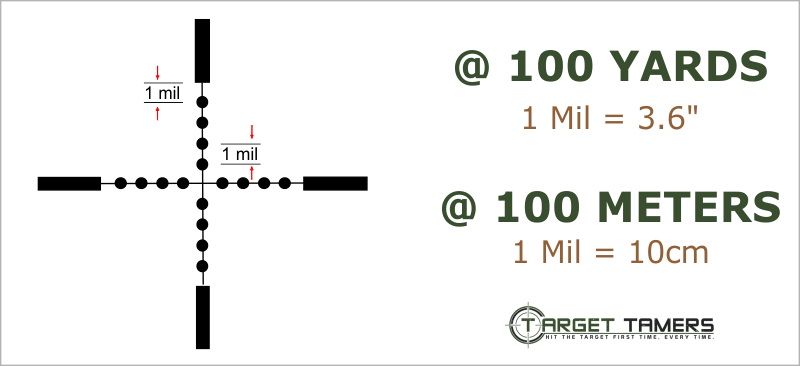


 Plant Engineer Darren Leskiw answered: “Beyond the normal equipment, I’d say my electronic scale. Using the beam balance for the past 9 years was ok, but nowhere as easy as using an electronic scale.”