If you purchased Winchester or Browning 9mm Luger (9x19mm Parabellum) ammunition this year, you should check your lot numbers. Olin Winchester is recalling numerous lots of 9mm Luger 115 grain Full Metal Jacket and 115 grain Jacketed Hollow Point pistol ammunition. The problem is the ammo may yield “squib” loads that could leave a bullet in the barrel. With a subsequent shot, this could be very dangerous. The affected 9mm ammo products have symbols: Q4172, RED9, USA9JHP, USA9MMVP, USA9W, WW9B.
NOTE: The ammunition Lot Number is stamped on the cartons as shown below:
NOTE: Winchester states “If ammunition of the above Symbols was purchased BEFORE March 25, 2021, it is NOT subject to the recall.” This recall notice applies only to the above 9mm Luger 115 FMJ and JHP Symbols with the above Lot Numbers.
Safety Issue Leading to Recall: Winchester has determined the above lots of 9mm Luger 115 FMJ/JHP ammunition may contain propellant that does not properly ignite and burn when the cartridge is fired. Ammunition containing propellant that does not properly ignite and burn may result in a bullet remaining in the barrel (i.e. a bullet-in-bore obstruction). Firing a subsequent bullet into the bore obstruction could cause firearm damage, rendering the firearm inoperable and subjecting the shooter and bystanders to a risk of serious personal injury.
How to Check Your Ammo: To determine if your ammunition is subject to this recall, review the Symbol and Lot Number. If it is any of the above Symbols and Lot Numbers, immediately discontinue use and contact Winchester toll-free at 844-653-8358 for free UPS pick-up of the recalled ammunition. Upon receipt of your recalled ammunition, Winchester will ship replacement ammunition directly to you or issue you a reimbursement check.
If you have any questions concerning this 9mm Luger 115 FMJ / JHP pistol ammunition recall please call toll-free 844-653-8358, write to Winchester (600 Powder Mill Road, East Alton, IL 62024 Attn: 9mm Luger Recall), or visit our website at Winchester.com.
BROWNING 9mm Luger Ammo Recall NOTICE
Along with the Winchester ammo recalled, Browning Ammunition is recalling the following lots of Browning 9mm Luger 115 grain Full Metal Jacket pistol ammunition: Symbol B191800092 with Lot Numbers SC13LD20, or SD10LD20.
The reason for the Browning Recall is the same as for the Winchester 9mm Luger ammunition — possible “squib” loads that could leave a bullet in the barrel of the gun.
DO NOT USE BROWNING 9mm Luger 115 FMJ SYMBOL B191800092 THAT HAS LOT NUMBER SC13LD20 or SD10LD20. The ammunition Lot Number is stamped on the 50-round carton as indicated here:
Browning Ammunition has determined the above lots of 9mm Luger 115 FMJ ammunition may contain propellant that does not properly ignite and burn when the cartridge is fired. Ammunition containing propellant that does not properly ignite and burn may result in a bullet remaining in the barrel (i.e., a bullet-in-bore obstruction). Firing a subsequent bullet into the bore obstruction could cause firearm damage, rendering the firearm inoperable and subjecting the shooter and bystanders to a risk of serious personal injury.
This notice applies only to Symbol B191800092 with Lot Number SC13LD20 or SD10LD20. Other Symbols or Lot Numbers are not subject to this recall. Note: If ammunition was purchased before March 25, 2021, it is NOT subject to the recall.
If you have any questions concerning this 9mm Luger 115 FMJ pistol ammunition recall please call toll-free 844-653-8358, write to Browning Ammunition (600 Powder Mill Road, East Alton, IL 62024 Attn: 9mm Luger Recall), or visit our website at Browningammo.com.
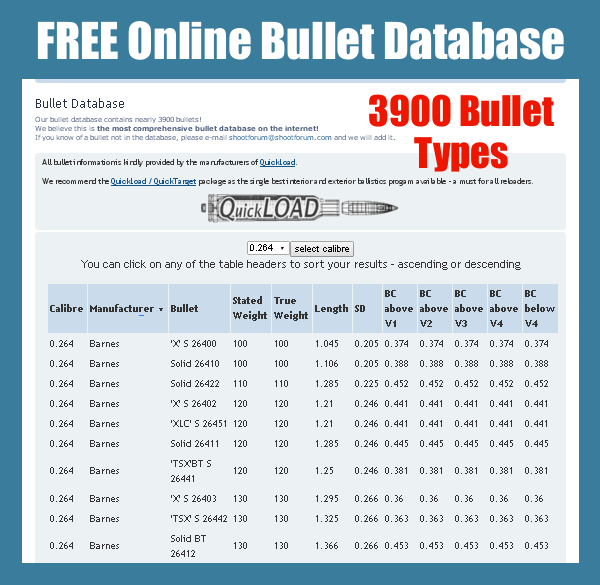
Did you know that there’s a free online resource that provides key data for thousands of bullet designs? The ShootForum Bullet Database provides profiles with weight, length, SD, and Ballistic Coefficient for nearly 3900 bullet types from all the major manufacturers. You can access all this info for free. This is a great place to start when you’re considering bullet options for a new rifle, or a new chambering for an existing rifle. To be fair, not all the latest, greatest match bullets are listed here. Could the database benefit from updates — yes, but it is still a great info source. You should definitely bookmark this resource for easy access in the future.
The massive ShootForum.com Bullet Database includes over 3900 bullet designs in all. We counted nearly 200 different 6mm bullets! The bullet info comes from the makers of QuickLOAD Software. Access to the online database is FREE. Most database entries include Caliber, Manufacturer, Stated Bullet Weight, True Bullet Weight, Length, Sectional Density (SD), and Ballistic Coefficient. In many cases multiple BCs are provided for different velocity ranges. Having bullet length lets you know right away if your cartridge/bullet combo can fit your magazine.
NOTE: This database has not been fully updated for a few years, so it certainly does not include all the latest and greatest projectiles, such as new match bullets from Sierra and Berger, or the Hornady A-Tips. However, as far as we can determine, this is still the largest bullet-database on the internet. Even without recent updates, this remains a hugely valueable resource.
The database is great if you’re looking for an unusual caliber, or you want a non-standard bullet diameter to fit a barrel that is tighter or looser than spec. You’ll find the popular jacketed bullets from major makers, plus solids, plated bullets, and even cast bullets. For those who don’t already own QuickLOAD software, this is a great resource, providing access to a wealth of bullet information.
by Sierra Bullets Ballistic Technician Paul Box
All of us who have been in reloading and shooting for any period of time have read how sectional density has been regarded as a bullet’s ability to penetrate. Back before high velocity came along and modern bullet design, the easiest way to get more “power” and penetration was by increasing the diameter and mass. After all, a bowling ball will hurt more than a golf ball, right?
Let’s take a closer look at sectional density.
The formula for calculating sectional density is pretty simple and straight forward. Take the bullet weight and divide by 7000. This number is then divided by the bullet diameter squared. Two bullets of equal weight and the same diameter will have equal sectional sectional density. No regard is given to the bullet construction. This is where the fly hits the soup in considering sectional density as far as penetration is concerned.
Section Density Formula: (Bullet Weight divided by 7000) divided by Bullet Diameter squared.
Bullet construction is the biggest factor in how it is able to penetrate. The best example I can think of here is to look at the Sierra .224 55 Gr. FMJBT GameKing #1355 compared to the 55 Gr. BlitzKing #1455. Both are .224 and weigh 55 grs. Both have a sectional density of .157. But there is a huge difference in their construction. The FMJ has a thick jacket and is designed to penetrate. The BlitzKing is designed for fast and rapid expansion with little concern for how deep they will penetrate.
The next time you’re choosing a bullet, look at the construction and less at the sectional density number. It’s all about the construction anyway. If you have any questions or would like to discuss sectional density or bullet penetration further, please give us a call at 800-223-8799 or shoot us an email at sierra@sierrabullets.com.
At the request of our readers, we provide select “Deals of the Week”. Every Sunday afternoon or Monday morning we offer our Best Bargain selections. Here are some of the best deals on firearms, hardware, reloading components, optics, and shooting accessories. Be aware that sale prices are subject to change, and once clearance inventory is sold, it’s gone for good. You snooze you lose.
⏺ Nicely equipped semi-auto .22LR — Good for NRL22 matches
Are you looking to get into the NRL22 discipline but don’t have a rifle to do it with? Check out the Thompson Center T/CR22 .22 LR Rimfire Rifle. This features a 17″ barrel (with front and rear sights) and the stock has a handsome Mossy Oak Camo finish. Equipped with a Picatinny Rail, this is ready to mount a scope for competition. This is a good starter rifle for NRL22 and other tactical rimfire games. Plus it can serve for fun plinking and hunting small varmints.
⏺ Save $110-$125 on quality spotters with Big 82mm objectives
Having a quality spotting scope is critical for a successful hunt or for reading wind and mirage at a match. One of the absolute best scope for the money is the Kowa 82sv and right now you can take advantage of the Kowa Scope Specials over at Creedmoor Sports. You can pick up the 82sv along with a cover plus your choice of the 25x LER eyepiece or the 20-60x eye piece and be ready for whatever adventure is next on your list.
3. Bullet Central — Berger 7mm 180gr Hybrid Bullets, $63.99
⏺ Choice of Champions — Get Berger 7mm 180s while you can
One of the most sought-after match bullets right now is the Berger 7mm/.284 180gr Hybrid Match Bullet. Many vendors are sold out. But we found them in-stock at Bullet Central and ready to ship. Considering the demand, we wouldn’t wait long to order and we’d probably order enough for your upcoming matches this year (including the F-Class Nationals).
4. Amazon — Roll-Up Shooting Mat with Bonus Sand Bag, $34.99
⏺ Great value, rolls-up into small format, free support sandbag
Traveling for matches can often mean stripping down to the bare minimum of gear and that usually mean leaving behind large padded shooting mats. A good option instead is a packable shooting mat such as this 78.5″ x 28.5″ Depring folding mat. This mat folds up into a very small footprint making it great for throwing in your checked baggage. FOUR Colors are offered, all priced at $34.99: Tan (shown), OD Green, Black, and Camo. These Depring shooting mats ship with a FREE 6″ x 3.75″ “Unfilled Gun Rest Sand Bag” which can be used for front or rear support.
5. Midsouth — LEE Breech Lock Reloader Press, $41.99
⏺ Great deal on compact press with breech lock quick die changes
Every handloader can benefit from a compact, secondary press for decapping at home and/or seating bullets at the range. Weighing under 2.5 pounds, this LEE Breech Lock Reloader Press is easy to transport. The open front design makes it easy to insert/remove cases. This LEE press offers Breech Lock functionality for rapid die changes. With the Breech Lock bushing in place, you can instantly swap dies with a twist of the wrist. Right now this LEE Reloader Press is on sale for $41.99 at Midsouth
6. Natchez — Federal XM193 5.56×45 Ammo 400rds, $399.99
⏺ Big savings on CCI 9mm ammo and XM193 ammo for ARs and .223 Rem rifles
Natchez is running a special ammo deal right now. You can save on rifle and pistol ammo AND get FREE SHIPPING. Choose one of three bulk packs: CCI Blazer 9mm 500 rounds for $549.99; or Federal XM193 5.56×45 400 rounds in can for $369.99 ($319.99/400 rds if you buy two cans); or Winchester Lake City M193 5.56×45 1000 rounds in box for $779.99. NOTE: The rifle bulk packs are officially 5.56x45mm ammo, but it should also shoot fine in most modern rifles chambered for .223 Remington. The CCI 9mm and Winchester M193 are priced very competitively, so don’t hesitate.
7. Sportsman’s Warehouse — Allen Soft Rifle Case Sale, 20% OFF
⏺ Huge selection of soft-side rifle cases on sale starting at $16
You can never have enough protection for your rifles while transporting them which means having a quality soft case. A great place to start is with the Allen soft case sale over at Sportsman’s Warehouse. You’ll find everything from simple single gun cases to deluxe double rifle cases — all at 20% off.
⏺ Durable, fitted pistol cases for 3 or 6 handguns
Do you find yourself needing to transport several pistols at a time but are tired of having a case for every gun? A handy, affordable solution are the MTM Tactical Pistol Handgun Cases. These fitted cases are offered in different sizes to accommodate 3 to 6 pistols with ease. These can also be locked up to comply with just about any state requirement. They also feature a rubber O-Ring for weather protection.
⏺ Versatile knife for camping and home, sharp stainless blade
Sometimes you just need a simple, no-nonsense knife in the field that doesn’t cost a lot in case it’s lost or broken. We found this Morakniv Craftline Pro S Fixed Blade Utility Knife which fits the bill exactly. It’s stainless steel, comes with a sheath, and is 3.6″ long making it well-suited for a multitude of cutting tasks. It also makes a good marine safety knife.
10. Amazon — MTM 50rd Deluxe Ammo Carry Box, $11.49
⏺ Hinged top, bullet tip protection, secure latches
Carrying 50 rounds of .20 Practical, .222 Rem, .204 Ruger, or .223 Rem/5.56×45 ammunition has never been easier thanks to the MTM H50-RS Deluxe 50-Round Rifle Ammo Case. These stackable MTM ammo boxes feature a strong, durable mechanical hinge. This provides years of use and allows the lid to sit flat. This MTM Deluxe case also has specially designed slots that hold the cartridges in place while protecting the bullet tips. Maximum Overall Cartridge Lenthe is 2.37″ bullet up and 3.45″ bullet down.
Sinclair Internationalhas released an interesting article about Case Concentricity* and bullet “run-out”. This instructional article by Bob Kohl explains the reasons brass can exhibit poor concentricity, and why high bullet run-out can be detrimental to accuracy.
Concentricity, Bullet Alignment, and Accuracyby Bob Kohl
The purpose of loading your own ammo is to minimize all the variables that can affect accuracy and can be controlled with proper and conscientious handloading. Concentricity and bullet run-out are important when you’re loading for accuracy. Ideally, it’s important to strive to make each round the same as the one before it and the one after it. It’s a simple issue of uniformity.
The reason shooters work with tools and gauges to measure and control concentricity is simple: to make sure the bullet starts down the bore consistently in line with the bore. If the case isn’t properly concentric and the bullet isn’t properly aligned down the center of the bore, the bullet will enter the rifling inconsistently. While the bore might force the bullet to align itself with the bore (but normally it doesn’t), the bullet may be damaged or overstressed in the process – if it even it corrects itself in transit. These are issues we strive to remedy by handloading, to maintain the best standard possible for accurate ammunition.
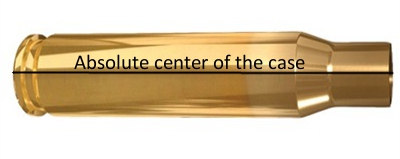
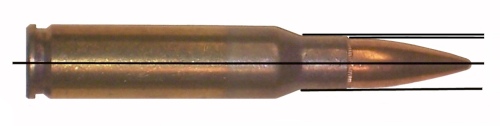
The term “concentricity” is derived from “concentric circle”. In simple terms it’s the issue of having the outside of the cartridge in a concentric circle around the center. That goes from case head and center of the flash hole, to the tip of the bullet.
Factors Affecting Concentricity
The point of using this term is to identify a series of issues that affect accurate ammunition. Ideally this would work best with a straight-walled case; but since most rifle cartridge cases are tapered, it equates to the smallest cross section that can be measured point by point to verify the concentric circle around the center. For the examples below, I’m working with .308 Winchester ammo.
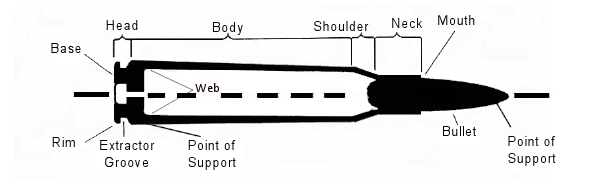
Figure 1: The cartridge.
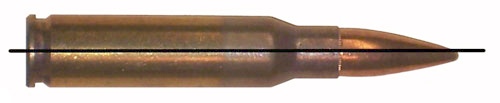
Figure 2: Centerline axis of the case, extending from flash hole to case mouth.
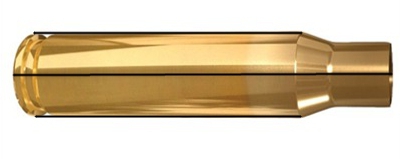
The case walls have to be in perfect alignment with the center, or axis, of that case, even if it’s measured at a thousandth of an inch per segment (in a tapered case).
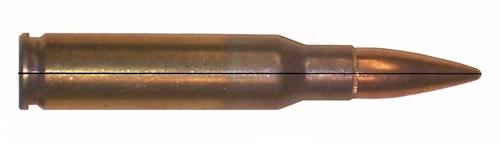
Figure 3: Case body in alignment with its axis, or centerline, even in a tapered case.
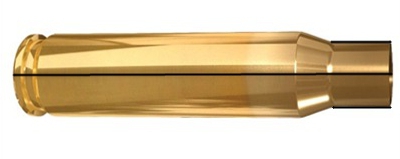
The case neck must also be in alignment with its axis. By not doing so you can have erratic bullet entry into the bore. The case neck wall itself should be as uniform as possible in alignment and in thickness (see the M80 7.62x51mm NATO cartridge in Figure 5) and brass can change its alignment and shape. It’s why we expand the case neck or while some folks ream the inside of the neck and then turn the outside for consistent thickness, which affects the tension on the bullet when seated.
Figure 4: Neck in alignment with center of the case axis.
Figure 5: Variations in case neck wall thickness, especially on some military brass, can cause an offset of the bullet in its alignment. This is an M80 ball round. Note the distinct difference of the neck walls.
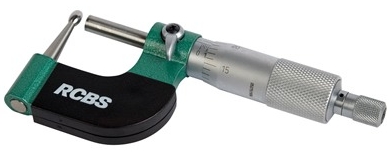
Having a ball micrometer on hand helps, especially with military brass like 7.62x51mm in a semi-auto rifle, where there are limits as to how thin you want the neck walls to be. In the case of 7.62 ball brass you want to keep the wall to .0145″.
Figure 6: A ball micrometer like this RCBS tool (#100-010-268) can measure case neck thickness.
Turning the outside of the neck wall is important with .308 military cases regardless of whether you expand or ream the neck walls. There are several outside neck turning tools from Forster, Hornady, Sinclair, and others. I’ve been using classic Forster case trimming (#100-203-301) and neck turning (#749-012-890) tools for 40 years.
Bullet Run-Out
The cartridge, after being loaded, still needs to be in alignment with the center of the case axis. Figure 7 shows a bad example of this, a round of M80 ball. A tilted bullet is measured for what’s known as bullet “run-out”.
Figure 7: An M80 round with the bullet tilted and not aligned with the axis. This will be a flyer!
Run-out can be affected by several things: (1) improperly indexing your case while sizing, which includes not using the proper shell holder, especially while using a normal expander ball on the sizing die (it also can stretch the brass). (2) The head of a turret press can flex; and (3) improper or sloppy bullet seating. This is also relevant when it comes to using a progressive press when trying to load accuracy ammo.
Mid Tompkins came up with a simple solution for better bullet seating years ago. Seat your bullet half way into the case, back off the seater die and rotate the case 180 degrees before you finish seating the bullet. It cuts down on run-out problems, especially with military brass. You also want to gently ream the inside of the neck mouth to keep from having any brass mar the surface of the bullet jacket and make proper seating easier. A tilted bullet often means a flyer.
Figure 8: Proper alignment from the center of the case head to the tip of the bullet.
(NOTE: This links to a Web Archive of the original Sinclair Int’l article.)
*Actually some folks would say that if we are talking about things being off-center or out-of-round, we are actually talking about “eccentricity”. But the tools we use are called “Concentricity Gauges” and Concentricity is the term most commonly used when discussing this subject.
Story Tip from EdLongrange. We welcome reader submissions.
Gavin Gear, founder of the UltimateReloader.com website, has created a very popular YouTube Channel. Over the past 13 years, Gavin has produced hundreds of videos covering nearly every aspect of reloading, rifle assembly, and gunsmithing. When important new reloading products are released, you’ll often find that the very first, in-depth reviews come from Gavin. He seems to get the new stuff before ANYone else.
And Gavin’s multi-product reviews are legendary, such as his remarkable 14-Press Shootout. That video, in which Gavin set up and operated 14 different single-stage presses, has received over 583,000 views, making it Gavin’s third most popular video of all time. The Single-Stage Shootout video, along with Gavin’s five other most popular videos, are linked below.
Consider this a “Greatest Hits” showcase, with a half-dozen Ultimate Reloader videos that have, collectively, been watched nearly 8.5 million times. We present these videos in descending order of total YouTube views, leading with Gavin’s epic .223 Rem vs. 5.56 video, which has been watched over 5 million times.
.223 Rem vs. 5.56x45mm — 6.3 Million Views
Full Story:https://bit.ly/2neNXAS
This video explains essential facts and corrects common misconceptions related to both .223/5.56 ammunition, as well as .223/5.56 rifles. Gavin provides insight on chamber specs, pressure levels, barrel twist rates, military 5.56 crimped brass, and other important topics. If you are new to the AR world, this video is definitely worth watching. And that’s why it now has garnered over 6.3 MILLION YouTube views, making it one of the most popular gun-related videos ever. Gavin adds: “Don’t forget to check out the full write-up on UltimateReloader.com.”
Lee Loadmaster loading .45 ACP — 1.08 Million Views
The .45 ACP is a classic cartridge, and one of the best for a starting reloader. The case diameter is large enough that you can see the case fill level easily. Also you can pick a powder that won’t allow a mistaken double charge (the case will overflow). In this video, from Gavin’s early days on YouTube, Gavin shows how to run a Lee Loadmaster progressive. Lee should be paying Gavin royalties, as this video have been watched over 1 million times.
AR Handguard Upgrade Step-by-Step — 870,000 Views
The AR15 is truly “America’s rifle”. Along with buttstock replacement, one of the most common upgrades done by AR owners is changing out the front handguard. In this video, Gavin shows how to replace your stock handguard with a modern free-floating system. There can be accuracy improvements with this upgrade, and this also allows you to optimize the ergonomics and weight balance of your black rifle.
Full Story:https://bit.ly/2WS9jE0
This truly may be the “ultimate” reloading press video. Running a full 41 minutes in length, this video shows the features/operation of no less than fourteen (14) modern single-stage presses. No other reloading gear review even come closes to this video in terms of the variety of products covered and the sophistication of the tests. In his full story, Gavin offers comparison charts with sizing force and seating precision comparisons. He also measures ram to press frame fit.
Anyone considering purchasing a single-stage press should watch this video from start to finish. A typical gun magazine review might look at two or three presses, load a few rounds, and then offer some subjective comments. Gavin studied 14 presses, did very thorough testing, and delivered tons of objective data. Listed below are 13 of the presses tested. Click each press name for specific details and test results:
Lee Loadmaster Loading .223 Rem/5.56 NATO — 526,000 Views
Here’s another early video from the Ultimate Reloader YouTube Channel. Gavin shows how to produce .223 Rem/5.56x45mm ammo with an affordable Lee Loadmaster progressive. Gavin explains how to set up the Loadmaster and how to best control priming, case sizing, and powder-dropping operations. For anyone thinking about getting a progressive press, this video is worth watching. Gavin has created many other videos reviewing progressive presses from Dillon, Hornady, and RCBS. And just last year he showcased the amazing Mark 7 Apex 10, a ten-station progressive press marketed by Lyman. Gavin’s Mark 7 Apex 10 was equipped with both case-feeder and bullet feeder, allowing very impressive production rates.
How It’s Made: BAT Custom Rifle Actions — 489,000 Views
Full Story:https://bit.ly/3hD2d11 BAT Machine Co. makes some of the finest custom actions you can buy. Numerous national and world records have been set with BAT actions. To create this 31-minute video, Gavin traveled to Idaho to visit the BAT Machine production center in Post Falls, ID. Gavin talked with BAT’s founder Bruce Thom. The video features extensive footage of advanced CNC machines used to produce the superb BAT actions.
Click Image Below to Visit the Ultimate Reloader YouTube Channel:
The .375 EnABELR cartridge is slightly shorter than a .375 CheyTac so it allows the round to mag-feed. Applied Ballistics is currently using brass made by Peterson. The .375 EnABELR has achieved impressive velocities — 2990 FPS — with prototype Berger 379-grain solid bullets fired from a 1:7″-twist 30″ barrel. Applied Ballistics may also test 1:8″-twist and 1:9″-twist barrels. READ Bullet Testing Report.
The .375 EnABELR cartridge was designed to offer .375 CheyTac performance in a slightly shorter package: “The problem with the .375 CheyTac is that, when loaded with the highest performance .375 caliber bullets (379-407 gr Berger Solids, and the 400-425 grain Cutting Edge Lazers) the round is not magazine feed-able in any action that’s sized for CheyTac cartridges.
“Knowing the .375 CheyTac produced substantial performance, and that it was just too long for magazine feeding, made it easy to converge on a design for the .375 EnABELR. We just had to make the case short enough to achieve magazine length with the desired bullets, while adding a little more diameter to keep the case capacity similar to the .375 CheyTac. The resulting basic shape is quite similar in proportions to the successful .338 Norma Magnum Cartridge which, interestingly, was selected as the cartridge for General Dynamics Lightweight Medium Machine Gun (LWMMG).”
Here is Mitchell Fitzpatrick, shooting the 375 EnABELR in an ELR Competition.
When you make a reloading mistake, you may need to “pull down” assembled ammo. The embedded UltimateReloader.com video demonstrates how to use the Hornady Cam-Lock bullet pulling system.
When Reloading Goes Bad — The Danger of Over-Charging
Our friend Gavin Gear of UltimateReloader.com was recently reloading some 9mm pistol ammo with his Hornady progressive press. As part of his reloading procedure, he visually checks the cases — and he noticed that the charges seemed high. Sure enough, his most recently-produced rounds were about two grains over spec. He diagnosed the issue: “I was using a powder measure without a baffle. What happened was, over the course of the loading session, things settled in, and the charge level increased.”
Not knowing just when his powder measure started delivering too much powder, Gavin decided, for safety’s sake, to pull down all the ammo he had just reloaded. Yes that’s time-consuming, but it’s better than the alternative — having a dangerous Kaboom while shooting. With fast-burning pistol powders, a two-grain over-charge could cause a blown case, damaged firearm, and/or serious injury.
Watch Cam-Lock Bullet Puller Used to Remove Bullets from Loaded Ammo:
Use of Bullet Puller starts 4:00 minutes into video.
Gavin says it is vitally important to perform safety checks during the reloading process: “You’ve got to do it — check every single round to make sure there IS powder, and that there’s not too MUCH powder. Double, Triple, Quadruple check your components… and your powder charges. You can’t be too careful.”
To pull down a loaded round, first place the cartridge in the shellholder on your press ram. Then raise the round up into the bullet puller device installed where a die would go. The Hornady Cam-lock bullet puller works by clamping the bullet in a collet when you flip down the red-coated lever. Then, with the case held by the rim in the shell-holder, the bullet exits the cartridge as the press ram is lowered. It takes time, but it’s pretty fool-proof once you get the hang of it. This entire process is illustrated in Gavin’s video, starting near the four-minute mark.
The Hornady Cam Lock Bullet Puller has four (4) key components: 1. Cam-Lock die body; 2. Cam-Lock lever; 3. Stem; and 4. Collet (Caliber-specific).
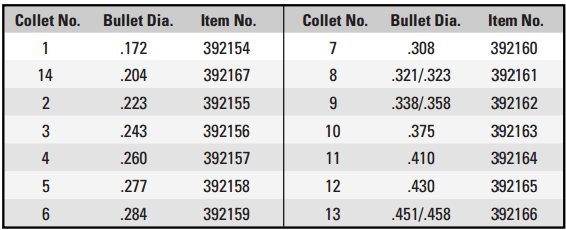
NOTE: In order to use this tool, you’ll need the appropriate collet for each diameter range of bullets you intend to pull. For example use collet #3 for 6mm, collect #6 for 7mm, and collet #7 for .308 Caliber.
RCBS Lock-Out Die
A good safety option for users with progressive presses is the RCBS Lock-Out Die. This has a charge detection rod that dips into each case after powder has dropped. You adjust the die to the proper charge height for your desired load. If the actual dispensed charge is too high or too low, the Lock-Out Die senses the problem and stops the press from advancing to the next case (it does this by preventing the ram/shellplate from fully elevating). We’ve used the Lock-out die with success for both pistol and rifle cartridges. It’s sensitive to about one-half grain with pistol powders.
This Lock-Out Die works with Hornady and Dillon progressives as well as with RCBS progressives. It does take up one die station on the press.
The U.S. Army Marksmanship Unit regularly publishes a reloading “how-to” article on the USAMU Facebook page. One excellent “Handloading Hump Day” post covered preparation of once-fired 5.56x45mm brass. This article, the first in a 3-part series, has many useful tips. If you shoot a rifle chambered in .223 Rem or 5.56x45mm, this article is worth reading.
This week, Handloading Hump-Day will answer a special request from several competitive shooters who asked about procedures for morphing once-fired GI 5.56mm brass into accurate match brass for NRA High Power Rifle use. The USAMU has used virgin Lake City (LC) 5.56 brass to win National Championships and set National Records for many years. In this 3-part series, we’ll share techniques proven to wring match-winning accuracy from combat-grade brass.
GI brass has an excellent attribute, worth noting — it is virtually indestructible. Due to its NATO-spec hardness, the primer pockets last much longer than most commercial brass when using loads at appropriate pressures.
Preparing Once-Fired GI 5.56 Brass for Reloading (Part 1 of 3)
Assuming our readers will be getting brass once-fired as received from surplus dealers, the following steps can help process the low-cost raw material into reliably accurate components.
1. Clean the Brass
First, clean the brass of any dirt/mud/debris, if applicable. Depending on the brass’s condition, washing it in a soap solution followed by a thorough rinsing may help. [This step also extends the life of the tumbling media.] Approaches range from low-tech, using gallon jugs 1/2 full of water/dish soap plus brass and shaking vigorously, to more high-tech, expensive and time-consuming methods.
2. Wet-Tumbling Options (Be Sure to Dry the Brass)
When applying the final cleaning/polish, some use tumblers with liquid cleaning media and stainless steel pins for a brilliant shine inside and out, while others take the traditional vibratory tumbler/ground media approach. Degree of case shine is purely personal preference, but the key issue is simple cleanliness to avoid scratching ones’ dies.
If a liquid cleaner is used, be SURE to dry the cases thoroughly to preclude corrosion inside. One method is to dump the wet brass into an old pillow case, then tilt it left/right so the cases re-orient themselves while shifting from corner to corner. Several repetitions, pausing at each corner until water stops draining, will remove most water. They can then be left to air-dry on a towel, or can be dried in a warm (150° F-200° F max) oven for a few minutes to speed evaporation.
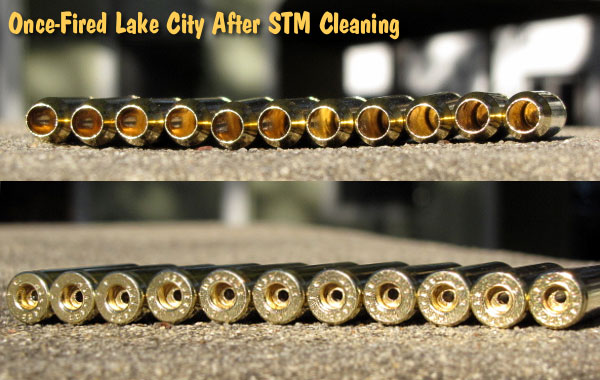
Shown below are Lake City cases after cleaning with Stainless Media (STM). Note: STM Case cleaning was done by a third party, not the USAMU, which does not endorse any particular cleaning method.
3. Inspect Every Case
Once dry, inspect each case for significant deformation (i.e., someone stepped on it), damaged mouths/necks and case head/rim damage. Some rifles’ ejectors actually dig small chunks of brass out of the case head — obviously, not ideal for precision shooting. Similarly, some extractors can bend the case rims so badly that distortion is visible when spinning them in one’s fingers. These can be used for plinking, but our match brass should have straight, undamaged rims.
Dented case mouths are common, and these can easily be rounded using a conical, tapered tool, [such as a .223 expander mandrel. A dummy 7.62 or .30-06 cartridge with a FMJ spitzer can also work.] If most of your brass is of one headstamp, this is a good time to cull out any odd cases.
4. Check the Primers Before Decapping
Your clean, dry and inspected brass is now ready for full-length sizing, decapping and re-priming. Historically, primer crimps on GI brass have caused some head-scratching (and vile language) among handloaders. Our next installment will detail efficient, easy and practical methods to remove primer crimp, plus other useful handloading tips. Until next week, Good Shooting!
NOTE: The USAMU Handloading (HL) Shop does not RE-load fired 5.56 brass. We use virgin LC brass with our chosen primer already staked in place. However, our staff has extensive personal experience reloading GI brass for competition, which will supplement the Shop’s customary steps. In handloading, as in life, there are many ways to accomplish any given task. Our suggestions are note presented as the “only way,” by any means. Time for loading/practicing is always at a premium. Readers who have more efficient, alternative methods that maintain top accuracy are invited to share them here.
Accuracy Potential of Mil-Surp 5.56×45 Brass
So, how accurate can previously-fired GI surplus brass be in a good National Match AR-15? Well, here’s a data point from many years ago that might be of interest. A High Power shooter who wrote for the late Precision Shooting magazine took a Bill Wylde-built AR match rifle to a registered Benchrest match. His first 5-round group ever fired in a BR match was officially measured at 0.231″ at 200 hundred yards. This was fired in front of witnesses, while using a moving target backer that confirmed all five rounds were fired.
He recounted that his ammo was loaded progressively with factory 52gr match bullets and a spherical powder using mixed years of LC brass with no special preparation whatsoever. Obviously, this was “exceptional”. However, he had no difficulty obtaining consistent 0.5-0.6 MOA accuracy at 200 yards using LC brass and a generic “practice” load that was not tuned to his rifle.
Saving Money by Using GI Brass
So, with good commercial brass readily available, why would one go to all the extra steps necessary to process fired GI brass? [Editor: It’s about saving money.]
Economically, it makes great sense. When the author was actively practicing and competing with the service rifle, he had ~3,000 rounds of 5.56mm brass, which allowed him to load during winter and spend most time in the summer practicing. If one were wealthy and wanted to shoot nothing but the finest imported brass, the current cost of 3,000 is ~$1920 (plus shipping.)
Dropping down to good, but less-expensive new, U.S. commercial brass brings the price to a much more realistic ~$720. However, at current rates, the same amount of surplus GI once-fired brass costs between $120 — $150, leaving lots of room in the budget for other expenses. [Editor: that’s less than 10% of the cost of the best imported brass.]
Congratulations to Lapua’s Rimfire Performance Center Manager, Luke Johnson, on winning the Lapua Silhouette Super Shoot. Johnson won the Standard Rifle class with a score of 176 out of a possible 200 and a shot a perfect 40 out of 40 in the Hunter Rifle to win the class with an aggregate score of 185.
With Johnson’s perfect score in Hunter Rifle, he joins the elite 4-member club of registered masters who have shot a perfect score in both Standard and Hunter Rifle silhouette disciplines. Johnson obtained his perfect score in Standard Rifle at the 2017 National Silhouette Championship.
The Lapua Super Shoot took place May 29-30, 2021 at the “Silhouette Capital” of the USA, Ridgway Rifle Club in Ridgway, PA. It consisted of 3 x 120 round relays, all fired from the standing position. For each relay, shooters engage ten chickens at 40 meters, ten pigs at 60 meters, ten turkeys at 77 meters and ten rams at 100 meters.
“This was my 3rd perfect 40/40 of my silhouette career, all have been shot with tested Lapua Center-X,” stated Johnson, “There have only been 10 different competitors to ever fire a perfect score in registered competition. This was a special 40/40 with it being my first in Hunter Rifle class.”
Choosing the Perfect Ammo for His Rifle
Johnson’s Lapua Center-X .22 LR ammunition is matched to his firearms at Lapua’s Rimfire Performance Center indoor facility. Unique lots of ammunition are tested at 50 and 100 meters simultaneously, identifying the best performing ammunition for purchase. This service is available to all shooters who wish to gain a competitive advantage. Readers take note — you can do this type of ammo testing for your own rimfire rifles. CLICK HERE to schedule ammo testing at either of Lapua’s Rimfire Performance Centers located in Mesa, AZ or Marengo, OH.
About Luke Johnson — Past National Silhouette Champion and All-American
Johnson, a native of Marysville, PA, brings a long background of competitive shooting and hunting to Capstone. Johnson is a graduate of the University of Alaska-Fairbanks. While pursuing his Bachelor of Science degree, Luke was a 4-year letterman for the University’s D1 Rifle Team. In addition to his 3P/Prone shooting pedigree, Luke is a High Master rifle silhouette competitor. Highlights of his competitive background include: NRA Smallbore Rifle Silhouette Champion, NCAA & CRCA All-American, USA Junior National Champion (50 meter rifle).
About Lapua Bullets, Brass, and Ammunition
Lapua produces the highest-quality, small-caliber cartridges and components for civilian and professional use. Lapua is a part of the Capstone Precision Group, exclusive U.S. distributor for Berger, Lapua, Vihtavuori and SK-Rimfire products. For more information, visit Lapua.com.




 Traveling for matches can often mean stripping down to the bare minimum of gear and that usually mean leaving behind large padded shooting mats. A good option instead is a


 Carrying 50 rounds of .20 Practical, .222 Rem, .204 Ruger, or .223 Rem/5.56×45 ammunition has never been easier thanks to the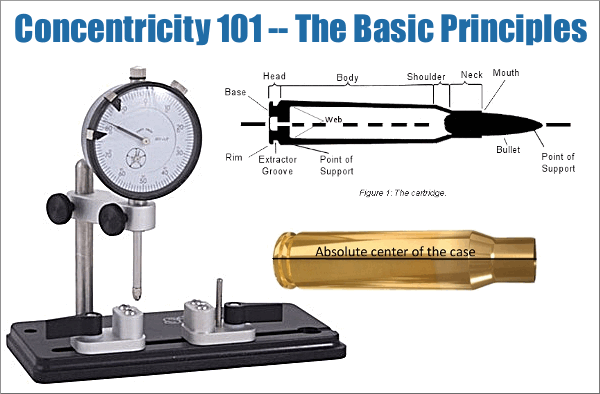



 RCBS Lock-Out Die