This story features a unique, American-designed rimfire rifle, chambered for the potent .17 HMR round. The current generation T-Bolt has a tang-mounted ambidextrous safety, a choice of barrel contours, lengths, and finishes, and a variety of stock options. What sets the T-Bolt apart from other rimfire rifles is the way the action cycles. There is not a conventional bolt that requires four distinct motions (lift bolt handle up/pull back/move forward/rotate handle down). With the T-Bolt you simply pull the handle straight back to extract a round, then return it forward to chamber a new round from the Double Helix magazine. The cocking effort is divided between back pull and forward movement so the effort is relatively light and easy.
Among current rimfire rifles, the Browning T-Bolt ranks high for fit and finish. The bluing is very nice and the T-Bolt even boasts a gold-plated trigger shoe. Many different stock types have been offered in recent years including some very nice AA Maple stock models as shown below (click to zoom). These T-Bolt rifles exhibit very fine craftmanship. Current models are made in Japan under license to Browning.
Click image for full-screen T-Bolt photo with detail.
Browning T-Bolt Sporter AA Maple Model
RECEIVER – Steel; High polished finish; Drilled and tapped for scope mounts
BARREL – Medium Sporter; Blued finish; Free-floating; Semi-match chamber; Recessed crown
ACTION – Straight pull bolt action; Top-tang safety; Adjustable trigger
STOCK – AA Maple; Gloss finish; Checkered
FEATURES – Sling swivel studs installed
PRODUCTION – Limited quantities
T-Bolt Owner Talks about Function and Accuracy
“I have a Browning T-bolt in .17 HMR, but with the maple stock. It is probably my favorite .17 HMR rifle (also the most expensive). The rifle feels smaller than some of my other .17 HMR rifles. I think the length of pull is a little shorter. I do like the light weight and trim handling of the rifle and the straight-pull bolt can be cycled really quickly. Mine is quite accurate and will shoot one-inch groups at 100 yards with both Hornady ammo and the CCI A17 ammo.” — RexRay, Varminter.com Forum member.
Pros and Cons of the Browning T-Bolt
The T-Bolt has a reputation for good accuracy, provided you have a good lot of .17 HMR ammo (we recommend checking for bullet run-out before you shoot for groups). The straight-pull action works as advertised — it is fast, smooth, and easy-to-operate. The Double Helix magazine (covered below) is excellent. It is very compact yet ultra-reliable. Another plus is that the T-Bolt has been produced in many different versions, with a variety of stocks, and even a stainless action version.
What are the negatives? Some of the stocks have a somewhat short length-of-pull, but this is easily solved with spacers. The main complaint is the factory trigger — some owners say it is too heavy at about 4 pounds, though the break is clean. For varmint work, we could live with the stock trigger and put money saved into optics.
If you prefer a very light trigger, JARD makes a T-Bolt replacement trigger. Featuring an aluminum housing, the JARD T-Bolt trigger can be ordered with 12-, 16-, or 20-ounce pull weights. The JARD trigger offers a crisp, clean break significantly lighter than stock. But at $249.99 the JARD trigger is fairly expensive. Additionally there have been a couple complaints about slam fires at the lowest weights so we recommend the 20-ounce. Here is one owner review, from a Rimfire Central thread: “The new Browning T-Bolt is a great rifle in all aspects except for the trigger. In my case when I received my JARD trigger it was an almost drop-in installation with very little adjusting or fooling around. For me it made a decent little rifle a great little rifle.”
Browning Double Helix 10-Round Magazine
The T-Bolt’s patented 10-round rotary Double Helix™ magazine is a unique design that feeds very reliably and is easy to load. The Double Helix magazine uses a torsion drive spring and interlocking gear design to maintain correct timing and exact cartridge alignment for smooth, reliable feeding. The translucent gray body allows for easy verification of the number of remaining cartridges. We like the fact that the Double Helix provides TEN-round capacity while fitting nearly flush with the bottom of the action.
The Browning Double Helix rotary box magazine system is easy to load, easy to carry, and easy to use. The smooth, rounded exterior contours of the Double Helix, along with twin gripping grooves, tapered shape and a slightly extended baseplate design make insertion positive, while the spring-assisted drop-free magazine ejection feature allows for rapid magazine changes. T-bolt owners confirm that feeding and reliability is excellent — the magazine design puts cartridges in perfect alignment with the chamber.
Other Browning T-Bolt Variants
In recent years, Browning has produced T-Bolt rifles in a variety of models, with many different stock types and various barrel lengths/contours. Most of the photos above showcase the AA Maple Sporter T-Bolt, which is currently out of production, though still available from some dealers (if you search). We like the looks of the AA Maple T-Bolt, but there many other stock options including dark brown, Black, Green, and various camouflage finishes. Use the links below to see all the T-Bolt configurations.
Here are 4 other T-Bolt variants, first the new-for-2021 T-Bolt Target with muzzle brake, then the Limited Edition Cerakote T-Bolt Speed model, and two discontinued T-Bolts, a composite-stocked carbon finish model and a Varmint Special with stainless action and thumbhole laminated stock. Current production T-Bolts are offered in three rimfire chamberings: .17 HMR, .22 LR, and .22 WMR. Barrel contours and lengths (from 16.5″ to 22″) vary from model to model.
Do you like the T-Bolt? Well there is a 5% Off Rebate Program available right now that covers the T-Bolt and all other Browning firearms.
.17 HMR Cartridge — Fast and Deadly on Small Varmints
We are big fans of the .17 HMR round. It’s just about perfect for ground squirrels, and is effective on prairie dogs out to about 200 yards. The three main .17 HMR producers have been CCI, Federal, and Hornady. Choose from 17gr or 20gr bullets — both work well in the varmint fields. Norma also makes .17 HMR ammo with 17gr V-Max bullets. This Norma .17 HMR ammo has shown very good accuracy.
CCI .17 HMR TNT offers 2650 FPS Velocity
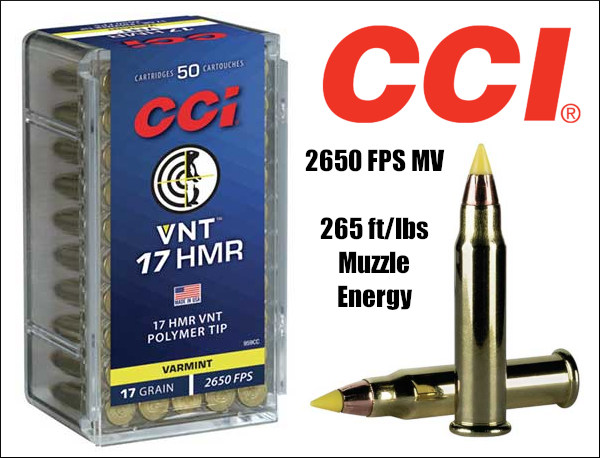
For varmint work we like CCI’s latest .17 HMR VNT ammo. This boasts class-leading 2650 FPS muzzle velocity. Engineered to combine good accuracy with high impact energy, this CCI TNT ammo features a 17gr polymer-tipped bullet designed for rapid expansion. We also like the Norma .17 HMR ammo. “With outstanding accuracy and excellent energy transfer… The .17 HMR has a very loyal following among hunters and target shooters alike”, said Paul Lemke, G.M. for Norma/RUAG.
We all know reloading powder is in VERY short supply these days. And the most popular propellants, such as Varget, H4350, and Reloder 16, are almost impossible to find at reasonable prices. Thankfully, there is a new solution in the works — smaller containers. This should give handloaders a whole new way to source those precious powders needed for a day at the range. And even if the volume is limited, something is ALWAYS better than nothing, right?
The big (and small) news for reloaders is that the major powder suppliers plan to start shipping powders in more compact, easy-to-ship containers. Instead of buying a pound of powder, you will be able to purchase an efficient, handy 1000 grain container. These are light weight (just 1/7th of a pound) so they are convenient to transport and carry. And you’ll never have the problem of over supply. A 1000-grain container with load approximately 33 6mm BR rounds — that should be plenty for a day at the range. We’re blessed to have this new compact powder option thanks to the U.S. Department of Transportation (DOT).
The U.S. Department of Transportation (DOT) recently approved new smaller containers for shipment of smokeless powder. The new containers are designed to hold 1000 grains, exactly one-seventh of a pound. That works out to 2.29 ounces of powder — quite a bit less than you are getting currently with one-pound (16 oz.) containers.
Here how it works out:
7000 grains = 1 pound = 16 ounces
1000 grains = 0.143 pounds = 2.29 ounces
Many products — from cereal boxes to Snickers bars — have been down-sized in recent years. Now downsizing has come to the powder marketplace. The strategy behind the smaller containers is simple. In a market where demand vastly outstrips available supply, the smaller containers allow powder-makers to generate more revenue with a given amount of powder inventory. Will consumers accept the smaller powder containers? Probably so — 1000 grains is enough to load 20-22 rounds of .308 Winchester. In the current marketplace (with many powders virtually impossible to find), most consumers would probably prefer to get 2.3 ounces of their favorite powder, rather than nothing at all. (NOTE: The major powder suppliers will continue to offer popular powders in 1-lb, and 8-lb containers. The new 1000-grain containers will be phased-in over time, as an alternative to the larger containers).
Why the small bottles? One industry spokesman (who asked not to be named) explained: “We’ve had a severe shortage of smokeless powder for nearly two years. The powder production plants are running at full capacity, but there’s only so much finished product to go around. By moving to smaller containers, we can ensure that our customers at least get some powder, even if it’s not as much as they want.”
Why are the new containers 2.3 ounces rather than 8 ounces (half a pound) or 4 ounces (one-quarter pound)? One of the engineers who helped develop the new DOT-approved container explained: “We looked at various sizes. We knew we had to reduce the volume significantly to achieve our unit quantity sales goals. Some of our marketing guys liked the four-ounce option — the ‘Quarter-Pounder’. That had a nice ring to it, but ultimately we decided on the 1000 grain capacity. To the average consumer, one thousand grains sounds like a large amount of powder, even if it’s really only 2.3 ounces. This size also made it much easier to bundle the powder in six-packs. We think the six-packs will be a big hit. You get nearly a pound of powder, but you can mix and match with a variety of different propellants.”
Less Bang for Your Buck?
We’re told the new 2.3-ounce powder bottles will retail for around $11.99, i.e. about $5.21 per ounce. At that price, it may seem like you’re getting less bang for your buck … but hey, something is better than nothing, right?
Currently, when you can find them, quality reloading powders are going for $45-$60 per pound (in 1-lb containers). At $45 per pound, you’re paying $2.81 per ounce. That means that the new mini-containers will be roughly twice as expensive as current one-pounders ($5.21 per ounce vs. $2.81 per ounce).
Along with the 2.3-ounce containers, the DOT has approved “six-pack” consolidated delivery units that will hold six, 1000-grain containers. Some manufacturers plan to offer “variety packs” with a selection of various powders in the 1000-grain bottles. Wouldn’t it be cool to have a six-pack with H322, H4895, Varget, H4350, H4831sc, and Retumbo?
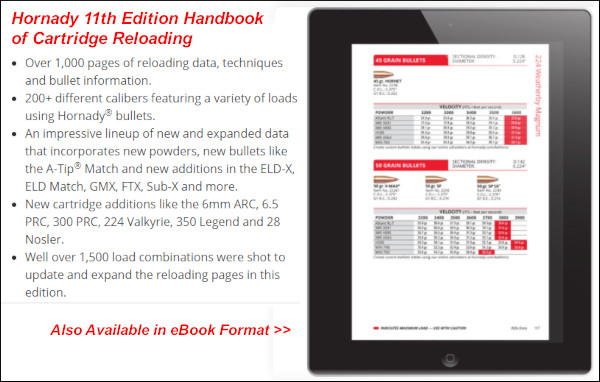
Hornady’s Handbook of Cartridge Reloading (11th Edition) is coming soon. This latest 11th Edition features new bullets, new cartridges, and a significantly expanded range of reloading powders. This is a worthy addition to any hand-loader’s resource collection. You can get a traditional hard-copy bound book, an Apple iBook or an Amazon Kindle version. In addition, the key content in the 11th Edition Handbook will be available in smartphone Apps for both iOS (Apple) and Android.
Along with many hundreds of pages of load data, the 11th Edition Hornady Handbook includes articles on loading techniques and very detailed information on Hornady component bullets. Countless hours of field testing went into this handbook. Hornady says: “Well over 1,500 load combinations were shot to update and expand the reloading pages in this edition.”
New Cartridge Types in 11th Edition
New cartridges covered in the 11th Edition include: 6mm ARC, 6mm Creedmoor, 6.5 PRC, 300 PRC, 224 Valkyrie, 350 Legend, and 28 Nosler. Also added to this edition (for the first time) are the popular 5.45×39, 300 Norma Magnum, and 450 Rigby cartridge types.
New Powders in 11th Edition
Many new or previously not included powders have been added including IMR 4955 & 8133, StaBall 6.5, Shooters World Precision and Tactical Rifle, Vihtavuori N-530, N-565, and N-570, Norma 217, CFE BLK, Accurate No. 11FS, 2200 and 4100, Reloder 16 and Ramshot LRT. Other recent additions like Reloder 23, 26 and 33, Accurate LT-30 and Power Pro 300 MP have been expanded.
New Bullets in 11th Edition
Numerous new bullets make an appearance, including the new A-TIP® Match and new editions in the ELD-X®, ELD® Match, GMX®, FTX®, SUB-X® and more.
Get 11th Edition Handbook as eBook or SmartPhone App
The 11th edition Hornady Handbook of Cartridge Reloading is available as an eBook via the iTunes iBook store as well as a Kindle edition sold through Amazon.com (coming soon). It will also available in App form from the App Store and from Google Play.
“Many unique challenges have arisen between the 10th and 11th edition handbooks. Despite the adversity, our team persisted and after hundreds of hours and thousands of rounds, we are proud to bring you the newest addition to our lineage of reloading handbooks.” said Jason Hornady, Vice President.
At the request of our readers, we provide select “Deals of the Week”. Every Sunday afternoon or Monday morning we offer our Best Bargain selections. Here are some of the best deals on firearms, hardware, reloading components, optics, and shooting accessories. Be aware that sale prices are subject to change, and once clearance inventory is sold, it’s gone for good. You snooze you lose.
1. Sportsman’s Warehouse — Winchester .22 LR Wildcat, $219.99
⏺ Removable lower receiver, Picatinny rails, good trigger, great price
Here is a fun little semi-auto .22 LR rifle at a crazy low price — $219.99 at Sportsman’s Warehouse. The Winchester Wildcat takes Ruger 10/22 mags, and has some great features, such as field-removable lower receiver, ambidextrous controls, integral Picatinny rails and rear barrel access. It has a good trigger and shoots well. In many respects the Wildcat beats the Ruger 10/22 while costing considerably less. The lower receiver assembly is easily removed from the upper assembly by pushing a button — no tools required.
2. Bullet Central & Whidden — Bix’n Andy Dakota Trigger, $199
⏺ Outstanding trigger with safety for hunting or competition
Are you putting together a new build but still can’t decide on a trigger? The Bix’n Andy Dakota trigger is a great choice for both hunting and target applications. Easily adjustable for pull weight, this is one of the crispest triggers on the market. Find these superb triggers IN STOCK now at both Whidden Gunworks or Bullet Central.
⏺ Matched high-quality upper and lower receiver combo
Let’s face it, with Federal gun control looming, it will likely become more difficult to buy/build AR-platform rifle over the next few years. The threat of new AR bans is already leading to a shortage of parts. Here is a nice matched lower + upper receiver combo available in a wide variety of finishes. The Juggernaut Tactical AR-15 Combo Lower and Upper Receiver package comes in 4 different Cerakote and two anodized colors. These combos accept standardized fire control kits in the lower and mil-spec bolt assemblies in the upper.
4. Protektor Model — DR. Rear Shooting Sand Bags
⏺ Great competition rear bag — choose your ear height, spacing, material
Keeping your rifle stable while shooting is critical for accuracy. For benchrest shooting and F-Class, you need a stable rear bag. Among the best rear bags, favored by many top benchrest competitors, are the Protektor Model DR. Rear Bags. These boast a very solid leather base that sits flat. Chose angled or flat top, with or without carry handle. NOTE: These are “semi-custom” products. You can specify ear height, ear spacing, and ear covering type (leather, cordura, slick silver fabric).
5. Midway — Leupold Mark 5HD 5-25x56mm with Rings, $1999.99
Leupold is one of America’s leading scope-makers, and the Mark 5HD is Leupold’s latest flagship optic. If you’re looking for a top-of-the-line First Focal Plane (FFP) scope with 1/10 Mil clicks, check out this killer deal on the Leupold Mark 5HD 5-25x56mm. NOTE: This product includes a set of Leupold’s fine Mark 4 rings. This optic offers great glass, outstanding low-light performance, zero-stop functionality, and plenty of elevation. Plus Leupold offers a superior lifetime warranty. To learn more about the Leupold Mark 5HD series, watch this 7-35x56mm Mark 5HD video review (MOA version).
6. Palmetto SA — SIG BDX Scope + Laser Rangefinder, $699.99
⏺ “Smart” Scope Shows hold-over calculated by linked BDX Rangefinder
Here’s a great set-up for a hunter — a riflescope and rangefinder combo that communicate. This SIG BDX Combo Kit ($699.99) includes a six-power KILO 1400BDX Laser Rangefinder that links to the SIG Sierra 3BDX 3.5-10x42mm scope. The rangefinder’s onboard Applied Ballistics calculator sends ballistic data (via Bluetooth) directly to the Sierra 3BDX’s reticle, providing an illuminated holdover dot. Just put the dot on the target — no turret dialing needed. If you want more magnification, there is also a SIG Combo Kit with SIG 3BDX 4.5-14x44mm Scope and KILO 1800BDX Laser Rangefinder for $899.99.
7. Midsouth — Caldwell BR Rock Rest, $139.99
⏺ Solid, reliable front rest at very good price
Do you need a solid front rest for target shooting or load development, but don’t require instant adjustments or fancy features? For shooters on a tight budget, the Rock Benchrest Competition Front Shooting Rest fits the bill. This easy-to-use rest is solid, stable, and has a large-diameter wheel for precise elevation adjustment. This is a great value at $139.99.
8. Amazon — Bluetooth Digital Anemometer, $39.99
⏺ Measures wind velocity with Bluetooth connection to Smartphone App
To shoot successfully at long range, you need precise wind speed readings. This “smart” Digital Anemometer (windmeter) records Max/Min/Average wind speeds and ambient temperature which display on-screen. Importantly, the unit also outputs wind readings to your smartphone via Bluetooth. This allows you to mount the wind meter downrange and view wind speeds via a smartphone App. The unit’s base is threaded for tripod mounting. This is a pretty impressive system for under forty bucks.
9. Amazon — Vanguard Porta Aim Gun Rest, $44.99
⏺ Handy, ultra-portable rest for casual duties — rifle or pistol
Do you ever find yourself out for a day of shooting or hunting but there’s nothing to rest your rifle on? Worry no more as you can keep the Vanguard Porta Aim Gun Rest easily tucked away in your vehicle or range bag and it’ll always be there for you when you need it. This can be used to support pistols as well.
10. Amazon — MTM 30 Rd Rimfire Ammo Wallet, $5.19
⏺ Convenient case holds rimfire ammo cartridges securely
Yes this MTM Ammo Case holds .17 and .22 caliber rimfire ammo types including .17 HM2, .17 HMR, .22 Short, .22 LR, .22 WMR (but not .17 WSM). Each round is held securely with an individual clasp. The 8.66″ x 6″ box is small and thin enough (0.7″ thick) that you can easily carry it in a coat pocket. Owner review: “Sturdy case, bullets fit tight into it and don’t move around, case is small and fits right in your back pocket.”
This Sunday we feature an impressive .300 WSM Heavy Gun shot by a superb long-range shooter. With this rig, at age 83, Arizona benchrest ace Charles Greer drilled a remarkable 2.862″ 100-10X group, beating all known 1000-Yard HG 10-shot records on the books. If this record is approved (which is likely), Greer’s .300 WSM can rightfully be hailed as the most accurate 1000-yard gun in history.
Story compiled with help from Jason Peterson
This would be an excellent 10-shot NBRSA Heavy Gun group at 600 yards, but this target was shot at 1000 yards by Charles Greer (aka “chuckgreen” on AccurateShooter forum) on February 13, 2021 at an NBRSA Match in Arizona. Chuck was shooting his .300 WSM Heavy Gun with Borden action, Krieger barrel, and Berger 220gr Hybrids. The event was hosted by the Sahuaro 1000 Yard Benchrest Club, at Three Points Range, outside Tucson, Arizona. Though it is pending final approval, it appears this is the smallest 10-shot Heavy Gun group ever shot, anywhere, at 1000 yards, and it was centered for a 10X. That’s doubly impressive when you consider that Charles Greer achieved this at age 83! Yes “Old guys rule”!
Amazing 100-10X 2.642″ (unofficial) 10-Shot Group at 1000 Yards.
This group is perfectly centered for an amazing 100-10X score. The group was range measured at 2.642 inches. For reference, the 1000-yard X-Ring is 3.00″ in diameter. The “X” itself is about 1.2″ tall. Pending final verification, this amazing target should shatter two NBRSA records. This handily beats the current single target HG score record of 100-6X held by Bill Schrader since 2005, and the single target HG group record of 3.650″ held by Tim Height (2019). For comparison, the current IBS 10-Shot 1000-yard HG group record is 2.871″ by Michael Gaizauskas from 2016. So it appears that this may be the smallest 10-shot group ever shot in competition in history. And from what we can determine, this is the first potential HG size record that also has a 100 score with TEN Xs.
Because shots are not marked in this discipline, this stunning group was a surprise to Greer: “I had no idea that I was shooting a world record target until I went back to the pits after my relay. Just as well. If I’d seen nine rounds in the X on the target, staying steady [for the last shot] would have been challenging….”
Forum member “Tom” (2016 IBS 1000-yard Nat’l Champion and holder of several IBS 1000-yard records) unofficially measured Greer’s 1K group at 2.680 inches (0.256 MOA), using Ballistic-X software. Awaiting final group measurement by the NBRSA Long Range Committee, as currently measured, this target is just under existing IBS and Williamsport 10-shot HG 1000-yard records: The current IBS HG 1000-yard group record is 2.871″ held by Michael Gaizauskas. The current Williamsport HG 1000-yard group record is 2.815″ held by Matthew Kline.
Benchrest Shooting — Sport for All Ages Charles Greer reminded us that even senior citizens can succeed in benchrest competition: “One of the benefits of benchrest shooting is that it is a sport accessible to us even as we age. I cannot run and gun anymore like I used to do in IPSC and IDPA but as long as I can get my body and my equipment up to a bench, I can still be very competitive. That is not possible for us old guys in most sports and shooting disciplines. As I am ‘only 83′ I am hoping to squeeze a few more years of competition out of the old body before I have to pack it in for good.”
Charles is thankful for what he has achieved in this sport over many decades: “The Shooting Gods have certainly smiled on me from time to time during my brief shooting career and for that I am incredibly grateful.”
This target may also be the smallest 1K 10-shot group ever shot in competition, in ANY Class. In 2014, Jim Richards fired a 10-shot, 2.6872″ Light Gun group under Williamsport Rules at Deep Creek Range in Montana. However, Jim’s record small group was NOT centered in the 10-ring and it appear that Greer’s group could measure smaller. [Editor: Charles is no stranger when it comes to 1000-yard records. Charles is the current listed holder of two NBRSA 1000-yard score records: 3-Target HG Score: 294-8X (2010); 6-Target 2-Gun Score: 441-13X (2010).]
100-10X at 1000 — This May Be a First
After looking at all the 1000-yard records from different organizations, it appears that Greer’s 100-10X score could well be a first! And it may be many years before another 100-10X score is ever shot in competition.
Arizona’s Three Points Range is known for its windy conditions. So much so that small groups are not common in match reports. 6mm cartridges that are commonly shot at other 1000-yard benchrest competitions are rarely shot at Sahuaro 1K BR Club matches. The bigger calibers dominate here.
Charles Greer NBRSA 1000-Yard Heavy Gun Specifications:
Action: Borden BRMXD drop port
Barrel: Krieger 30″ 4-groove, 1:10″ twist, custom contour 1.35″ tapered to 1.00″
Chambering: .300 Winchester Short Magnum (WSM)
Chamber Specs: .337 neck with .280 freebore
Stock/Weight: McMillan/Wheeler LRB (solid fill) stock at 27 pounds
Gunsmith: Gerald Reisdorff
Optics: Vortex Golden Eagle 15-60x52mm
Front Rest: Sinclair Competition with 4″ Edgewood bag
Rear Rest/Bag: Wahlstrom mechanical rear rest with custom Edgewood bag
Load Details: Norma .300 WSM brass, Alliant Reloder 23 powder, Federal 210M primers, Berger 220gr LR Hybrid bullets at 2800 FPS
Greer has done something clever with his McMillan/Wheeler benchrest stocks. He has flipped over (inverted) the adjustable metal rudder (or keel) that runs on the underside of the buttstock. This provides a wider, flat tracking surface. The inverted rudder runs in a special sandbag on a Walhstrom mechanical rest. NOTE: Mechanical rear rests ARE legal for BOTH Heavy Guns and Light Guns under current NBRSA rules (see page 24). Shown at right is Greer’s Light Gun, but his Heavy Gun has the same system.
Charles explains: “Both my LG and my HG are of the same configuration except for additional weight in the stock of the HG. I decided to do this so that I would not need a separate rest system for each gun which saves on expense and makes it much easier to switch the LG out for the HG during competition. No need to change rest systems and re-align everything. Both of my stocks are McMillan/Wheeler LRB models with the adjustable rudder that can be repositioned horizontally to improve tracking. The rudder has a 3/4 inch-wide base that is usually fit into an Edgewood gator bag with a flat top. I did not like the way the rifle tracked with this set up and wanted something more solid and stable.
So I found that if I turned the rudder upside down and re-installed it that way on the stock, using the same screws and holes, the top of the rudder when turned down provided me with a base 1.5″ wide with a 1/4″ rail on each side. I got a Wahlstrom mechanical rear rest and had a custom Edgewood front bag made for it with a 1.5″ separation between the ears. The rail tracks perfectly in the bag and I can tighten the ears to make it quite solid and steady. I have noticed a huge improvement in tracking with this set up. I am still refining this arrangement but plan to continue using it on both rifles. I have never seen this done and was thinking maybe your readers would be interested.”
Questions & Answers with Charles Greer
Hall of Fame short-range shooter Gary Ocock interviewed Charles Greer. This interesting Q&A dialog covers shooting styles, equipment selection, recoil management and other notable topics.
Q: Tell us about your rifle, accuracy standards, and choice of calibers and bullets for the 1K game.
Greer: I set up two rifles, Light Gun and Heavy Gun. Both will shoot 100-yard 5-shot groups in the high ones and low twos. In Arizona I want a heavy, high-BC bullet in both guns to buck the wind and want to keep the ES under 10 FPS. I’m finding .300 WSM with Berger 220 LRHT bullets and a 4 groove Krieger barrel will provide the performance I need, and I shoot this round in both rifles.
Q: Explain your rest set-up, tracking, and recoil management. And how fast do you typically shoot your strings of fire?
Greer: I am using a Sinclair Competition Front Rest along with a mechanical rear rest, both with Edgewood front bags, to give me the stability necessary to provide consistent tracking even with these relatively high recoil rounds. Almost perfect tracking and consistent return to battery in the same spot is necessary to get a record string off quickly and smoothly. I try to get my strings off in a time of between 6 and 10 seconds per round depending on conditions. Any faster and I get sloppy.
Q: What were conditions like when you shot that amazing 10-shot group?
Greer: On the day I shot the record-pending target I had the first relay. There was wind but it was light, maybe 4-5 mph and seemed steady. The flags were about halfway up to horizontal and seemed to be holding that way. My procedure is to shoot 5 sighter rounds, two to adjust my initial round on paper to the X-Ring and then three more during the last minute to check for changes in the wind. If these last three rounds stay in the Ten Ring it is usually a sign that the wind may be steady enough for me to shoot a good group. On the “record” day the last three sighters were right in or near the X-Ring and when the record target came up I quickly but carefully dumped my 10 rounds holding the scope dot right on the X. The wind apparently held absolutely steady, and I got the result you see on the target.
That is my normal shooting technique. I pretty well know during the last minute of the sighter period whether a good group will be possible. If each of my last three sighters ends up inches away from the X in different directions, I know the wind is shifty and a good group on that target is unlikely. I adjust the last sighter to the X and then dump the string the same way just hoping the wind may hold for a minute or so. Sometimes it does, but often not so much.
During the record strings there is no way to know where the rounds are going. They are not marked, and the holes cannot be seen through the scope at that distance. The 1K flags are big and heavy and not very indicative of minor wind changes so I do not try to hold off or change my point of aim unless a flag completely reverses direction during a string. I’ve found that over the years adjusting my point of aim to the X after the last sighter and then dumping my strings gets the best results overall.
Q: What is your highest shooting accomplishment so far?
Greer: Well, the highest accomplishment (if one can call it that) would have to be this 100-10X target. This may end up being the best 10-shot target ever shot in a sanctioned match. 0f course, there is a tremendous amount of luck involved in this coming together but I certainly am pleased.
I had set four NBRSA world records when I was shooting previously: Light Gun Agg in 2008, and all three possible Highest Three Target Score records in 2010, two of which still stand. The first was probably the most satisfying as was my performance in the 2010 Nationals where I placed high in several categories and was Heavy Gun Champion for Score.
Q: Who do you attend matches with?
Greer: During the last year my son, Brian, has become my match shooting companion. We go out together every month. Brian was able recently to purchase the great 300 Ackley HG that I competed with and set world records with in 2010. I sold the rifle to a friend who never shot it and it found its way back into our family. Brian is now becoming a serious competitor.
Photo Right: Charles Greer with son Brian.
Q: What are your future shooting goals?
Greer: To keep on shooting our local match each month and to try to get to the Nationals once or twice more before I get too damn feeble. And to be able to see my son take my place as a regular winner when I can no longer compete.
Q: Is there any advice you would like to share with new shooters?
Greer: Make a commitment to excel at whichever discipline you choose. Get the best equipment and components that you can afford and consider each match a learning experience. At some point anything that can go wrong will go wrong and one must learn from these mistakes. Most importantly, be patient and keep coming back. In Arizona good shooting conditions are rare. You gotta be “in it to win it”. If you show up at every match you can attend eventually a great condition will appear on your relay and you will have a chance to shoot a spectacular score.
Q: What is your shooting background?
Greer: I started shooting rabbits as a kid in the Mojave Desert, trained on various firearms in the military in the fifties and sixties and over the years hunted birds and large game and played with various handguns. In 2005 I moved to Tucson from Mexico the first time and, looking for an activity, started shooting IDPA and IPSC pistol matches at Pima Pistol Club. Shortly thereafter I bought a .308 Savage tactical rifle and got interested in shooting for accuracy. One thing led to another and before long I bought a better Savage varmint rifle in .300 WSM and started shooting the 1K match at Tucson Rifle Club at Three Points around 2007. I kept upgrading my equipment, started winning matches, set some world records.
After the 2011 NBRSA Long Range Nationals I felt rather burnt out on shooting. I sold all my guns and equipment and headed South looking for perhaps one more adventure. I found some but they did not include shooting as South of the border folks tend to shoot back when they hear anything go bang. I returned to Tucson in May of 2019, built a couple of new rifles, and got involved again in the monthly Sahuaro match where the most recent world record target was shot. I would like to resume shooting the NBRSA Long Range Nationals. Will not be ready this year but probably will in 2022.
Q: Have you tried other disciplines at different ranges?
Greer: I have only competed in Long Range, mostly 1000 yards but 600 yards a few times at the Nationals. I would like to try shooting “Score” and there is a monthly match at our range. May try it if I can get an appropriate rifle.
How have gun sales grown in recent years in the USA? What states have the most new gun owners? How much ammo is produced each year? You’ll find answers to these and other questions in a new infographic produced by Bear Creek Arsenal.
Here Are Some of the Key Findings:
1. Over 21 million NICS Adjusted background checks were done in 2020, a 59.7% increase over 2019 (and 34.3% higher than 2016). NSSF estimates that 40% of 2020 gun sales were to first-time gun buyers who numbered 8.4 million last year.
2. Of all U.S. States, Texas had the most NICS checks in 2020, with 1.8 million, followed by Florida with 1.6 million. Perhaps surprisingly, Democratic Party-controlled California recorded 1.23 million NICS checks.
3. Some “Blue States” have seen huge increases in gun sales, prompted by Leftist- and BLM-sponsored riots and social unrest. For example, Michigan saw a 180% increase in sales, while the District of Columbia saw a 140% increase. That is interesting because DC is definitely not a bastion of conservative Republicans. In fact, the District of Columbia is solid Democratic Party territory. This shows that concerns over personal safety/self-defense cut across party lines.
4. Over NINE BILLION rounds of ammunition were produced in 2020. This represents a total annual ammo value of $21.38 billion. Quote: “A reasonable extrapolation puts the amount of ammunition produced for the United States market [in 2020] at somewhat over 9 billion rounds, of which 5 billion are rimfire and 4 billion are centerfire rifle, pistol, and shotgun rounds.” Source: Dean Weingarten on Ammoland.com
2020 was definitely the year of the gun. Firearm sales were up 95% in the first half of 2020. And, according to the NSSF, there were nearly 8.4 million first-time-ever gun buyers in the USA in 2020. A NSSF dealer survey estimates that 40% of all gun sales were conducted to purchasers who have never previously owned a firearm. Women accounted for 40.2% of all first-time gun purchases. Notably, firearm purchases among African American men and women increased 58% over last year, the largest such increase of any demographic group.
This Armalite AR-50A1 .50 BMG rifle was modified by G.A. Precision.
If you’re a fan of big boomers, and love shooting steel, then definitely watch this Wide Open Magazine video. This covers a .50 BMG build by our friends at G.A. Precision (GAP). The rifle started as an Armalite AR-50A1 ($3359.00 MSRP). Then GAP fluted the barrel and swapped the factory muzzle brake with a more compact brake from American Precision Arms*. Then, as modified, the entire rig was given a rugged Cerakote finish.
The video has nice background music, great aerial drone footage, and of course some serious firepower. Using Hornady .50 BMG ammo, GA Precision’s George Gardner and his Wide Open friends shoot the big Fifty from the bench as well as prone. Enjoy!
About the .50 BMG Cartridge
The .50 Browning Machine Gun (.50 BMG, aka 12.7×99mm NATO or 50 Browning) is a cartridge developed for the Browning .50 caliber machine gun in the late 1910s, entering official service in 1921. Under STANAG 4383, it is a standard cartridge for NATO forces as well as many non-NATO countries.
John Browning had the idea for this round during World War I in response to a need for an anti-aircraft weapon, based on a scaled-up .30-06 Springfield design, used in a machine gun based on a scaled-up M1919/M1917 design that Browning had initially developed around 1900. According to the American Rifleman: “The Browning .50 originated in the Great War. American interest in an armor-piercing cartridge was influenced by the marginal French 11 mm design, prompting U.S. Army Ordnance officers to consult Browning. They wanted a heavy projectile at 2700 FPS, but the ammunition did not exist. Browning pondered the situation and, according to his son John, replied, ‘Well, the cartridge sounds pretty good to start. You make up some cartridges and we’ll do some shooting’.”
* In the video, George mistakenly says “American Patriot Arms”, but the brake is made by Georgia-based American Precision Arms.
We are re-publishing this article at the request of Forum members who found the information very valuable. If you haven’t read this Safety Tip before, take a moment to learn how you can inspect your fired brass to determine if there may be a potential for case separation. A case separation can be dangerous, potentially causing serious injury.
On the respected Riflemans’ Journal blog there was an excellent article about Cartridge Case-Head Separation. In this important article, Journal Editor GS Arizona examined the causes of this serious problem and explained the ways you can inspect your brass to minimize the risk of a case-head separation. As cases get fired multiple times and then resized during reloading, the cases can stretch. Typically, there is a point in the lower section of the case where the case-walls thin out. This is your “danger zone” and you need to watch for tell-tale signs of weakening.
The photo below shows a case sectioned so that you can see where the case wall becomes thinner near the web. You can see a little arrow into the soot inside the case pointing to the thinned area. This case hadn’t split yet, but it most likely would do so after one or two more firings.
Paper Clip Hack for Detecting Problems
The article provided a great, easy tip for detecting potential problems. You can use a bent paper clip to detect potential case wall problems. Slide the paper clip inside your case to check for thin spots. GS Arizona explains: “This simple little tool (bent paper clip) will let you check the inside of cases before you reload them. The thin spot will be immediately apparent as you run the clip up the inside of the case. If you’re seeing a shiny line on the outside and the clip is really hitting a thin spot inside, it’s time to retire the case. If you do this every time you reload, on at least 15% of your cases, you’ll develop a good feel for what the thin spot feels like and how it gets worse as the case is reloaded more times. And if you’re loading the night before a match and feel pressured for time — don’t skip this step!”
In April 2020, the National Rifle Association (NRA) launched NRAWomen.com, a website dedicated to the fastest-growing group of firearm owners — America’s women. This website serves the increasing number of female gun owners, huntresses, and competitive shooters. Female involvement in firearms is growing significantly. Consider these numbers: Statistica estimates that 19% of women in the USA owned firearms in 2020, while 23% of women surveyed in a 2011 Gallup Poll stated they owned a gun.
Here are four videos from the NRAWomen.com website, all worth watching. For each example, click the links to read the related articles on NRAWomen.com.
1. How to Sight-In Your Hunting Rifle
This video and related article offer good basic advice for sighting-in a hunting rifle. There are a series of six points covered. Here’s Tip #1: “Find a safe place to shoot your rifle with a backstop. If possible, use a bench and a rock-solid shooting rest. Sighting-in is all about consistency, so the less human error you have, the better. For safety, be sure to also bring ear and eye protection.” READ FULL ARTICLE on NRAWomen.com.
2. Buying Your First Handgun — Factors to Consider
Buying your first firearm can be overwhelming, with all the choices available. And personal preference/fit are especially important with handguns that may be carried on your person. This video follows two first-time buyers as they select their first handgun. The video explains factors to consider: Ergonomics, Accuracy, Caliber, Concealability, Recoil, Reliability, and Price. RELATED Articles on NRAWomen.com.
3. Cartridge Case Material Varieties — Brass, Nickle-Plated Brass, Aluminum, Steel Alloy
The case of a cartridge holds bullet, powder, and primer. Brass cases are most popular, but nickle-plated brass cases are also common and reloadable (though they generally don’t last as long as plain brass). Major manufacturers produce aluminum-cased pistol ammo, such as CCI Blazer. Aluminum pistol cases can shoot great, but are not (normally) reloadable. Finally, some large manufacturers, mostly foreign, produce steel-cased ammo. All different case types have certain advantages and disadvantages, though conventional brass is definitely the best choice for hand-loaders. This video explains pros and cons of each type of cartridge case construction. RELATED Articles on NRAWomen.com.
4. Modular Safes — Smart Option for Easier Moving
This article features a great video showing how to assemble a modular safe in under 30 minutes. This article also explains the benefits of modular gunsafes — primarily easier transport and installation. “Modular safes have been around for a few years now and are becoming more popular. Here’s why: The safe comes delivered to you in panels, so you can bring them into your home one at a time and put it together anywhere you like. This makes it easy to carry up and down stairs, onto elevators or anywhere! Security — Is it as secure as one that comes pre-assembled? The answer is, absolutely.” READ FULL ARTICLE on NRAWomen.com.
The total economic impact of the firearm and ammunition industry in the United States increased from $19.1 billion in 2008 to $63.5 billion in 2019, a 232% increase, while the total number of full-time equivalent jobs rose from approximately 166,000 to over 342,330, a 106% increase in that period, according to a report released by the National Shooting Sports Foundation, the industry’s trade association.
In just the last year, the industry’s economic impact rose from $60 billion in 2019 to $63.5 billion in 2020. Total jobs increased by 10,000+, from nearly 332,000 to over 342,330. The NSSF states: “The broader impact of the industry throughout the economy supports and generates business for firms seemingly unrelated to firearms, at a time when every job in America counts. These are real people, with real jobs, working in industries as varied as banking, retail, accounting, metalworking, and printing among others.”
The firearms/shooting industries help fund vital public services, by generating billions in Federal and state tax revenues. Since 2008 the gun industry has increased federal tax payments by 170%, state business taxes by 125% and Pittman-Robertson excise taxes that support wildlife conservation by 89%.


 What are the negatives? Some of the stocks have a somewhat short length-of-pull, but this is easily solved with spacers. The main complaint is the factory trigger — some owners say it is too heavy at about 4 pounds, though the break is clean. For varmint work, we could live with the stock trigger and put money saved into optics.

 In recent years, Browning has produced T-Bolt rifles in a variety of models, with many different stock types and various barrel lengths/contours. Most of the photos above showcase the AA Maple Sporter T-Bolt, which is currently out of production, though still available from some dealers (if you search). We like the looks of the AA Maple T-Bolt, but there many other stock options including dark brown, Black, Green, and various camouflage finishes. Use the links below to see all the T-Bolt configurations.



 The U.S. Department of Transportation (DOT) recently approved new smaller containers for shipment of smokeless powder. The new containers are designed to hold 1000 grains, exactly one-seventh of a pound. That works out to 2.29 ounces of powder — quite a bit less than you are getting currently with one-pound (16 oz.) containers.
 Currently, when you can find them, quality reloading powders are going for $45-$60 per pound (in 1-lb containers). At $45 per pound, you’re paying $2.81 per ounce. That means that the new mini-containers will be roughly twice as expensive as current one-pounders ($5.21 per ounce vs. $2.81 per ounce).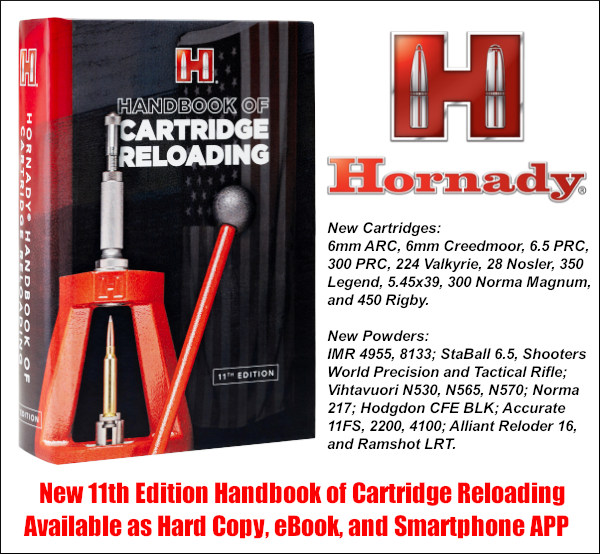


 Charles Greer reminded us that even senior citizens can succeed in benchrest competition: “One of the benefits of benchrest shooting is that it is a sport accessible to us even as we age. I cannot run and gun anymore like I used to do in IPSC and IDPA but as long as I can get my body and my equipment up to a bench, I can still be very competitive. That is not possible for us old guys in most sports and shooting disciplines. As I am ‘only 83′ I am hoping to squeeze a few more years of competition out of the old body before I have to pack it in for good.”


 Greer has done something clever with his McMillan/Wheeler benchrest stocks. He has flipped over (inverted) the adjustable metal rudder (or keel) that runs on the underside of the buttstock. This provides a wider, flat tracking surface. The inverted rudder runs in a special sandbag on a Walhstrom mechanical rest. NOTE: Mechanical rear rests ARE legal for BOTH Heavy Guns and Light Guns under current
  Q: Who do you attend matches with?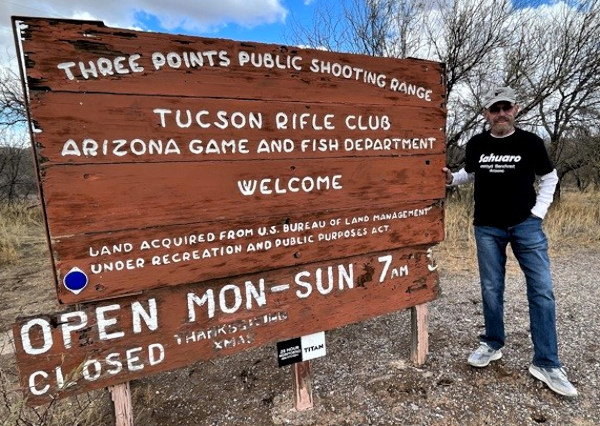


 On the respected Riflemans’ Journal blog there was an excellent article about Cartridge Case-Head Separation. In this important article, Journal Editor GS Arizona examined the causes of this serious problem and explained the ways you can inspect your brass to minimize the risk of a case-head separation. As cases get fired multiple times and then resized during reloading, the cases can stretch. Typically, there is a point in the lower section of the case where the case-walls thin out. This is your “danger zone” and you need to watch for tell-tale signs of weakening.


