Hydro Press and Arbor Press from 21st Century Shooting
Gear Review by F-Class John
Inline dies, used with arbor presses, continue to dominate the world of precision reloading. While arbor presses have remained mostly unchanged, 21st Century Shooting offers the Hydro Bullet Seating Press, a radical departure from your average arbor press. If you are looking for improved “feel” and feedback on bullet seating pressure, you should definitely check out the Hydro Press. This design has been around for a while now but has remained unchallenged since its inception. The 21st Century Hydro Press still remains a category leader (and the choice of many top competitors) for good reason. It is offered for $300.00 or, with a variety of gauge options, for $367.00. You can add an extended base with loading block another $85.00. CLICK HERE for ordering options.
Arbor presses have traditionally worked by using a gear-driven ram operated with a rotating handle. This allows for a compact design but often lacks the tactile feel and smooth operation that many reloaders want. The 21st Century Hydro Bullet Seater works by using simple mechanical leverage coupled with a hydraulic pressure gauge to seat bullets in a smooth motion all while helping you keep track of seating pressures.
Editor: Many top shooters believe they can seat bullets with greater precision using the 21st Century Hydro Press. I personally get more consistent seating, which seems to improve accuracy and even help a bit with lowering ES. The Hydro Press gives you excellent feedback when seating bullets. That has helped me detect a case with too much neck tension, or a case that may have doughnut issues. When the gauge does something odd or spikes, you are alerted to a possible issue.
In this video, John Perkins of 21st Century Shooting Shows how the Hydro Seater functions.
You might be asking why or how simple a simple mechanical lever gives you an advantage over gear driven systems and the answer is simple, leverage. The Hydro Seater is equipped with a long arm that comes straight up and out from the front and uses a set of hinges that connect to the ram. This elongated arm provides lots of leverage allowing easy force modulation. This smoothly applies pressure to the seating die in one fluid motion. This transfer of power helps seat bullets smoothly in even the tightest of necks without any jerky or stuttering movements.
Working at the same time is a hydraulic pressure gauge using internal oil. I found this gauge was incredibly sensitive, accurate, and repeatable compared to spring-driven gauges. The Hydro gauge read-out really gives the user the chance to sort ammo by seating pressure should they choose. In my particular case I only use it to cull out noticeably high or low ones as “blow off” rounds and am perfectly happy if the rest fall within a given pressure range. The nice thing is that the press allows you to be as picky as you want.
Compact 21st Century Standard Arbor Press
Not to be outdone by its big brother, 21st Century offers a Standard Arbor Press as well, in both right-hand and left-hand versions. Affordably priced at $128.00, this small arbor press in made to the same exacting standards as the Hydro Seater and has some nice features of its own compared to other small arbors.
The large, knurled adjustment knob is one of my favorite features. It tightens securely, yet it allows for easy raising or lowering of the head unit without the need for hex wrenches. 21st Century’s basic arbor press also has a slightly canted lever arm which allows the user to apply pressure more easily and consistently compared to some other arbor presses. While this press is small enough to fit many range bags, it can be disassembled quickly with a single Allen wrench.
While I own the 21st Century Hydro Press for use at home, the Standard Arbor Press goes with me to out-of-town events, so I can adjust bullet seating depth at the match. I love using it for this purpose since the little press is so easy to transport, and then set up and use on the road. The seating action is smooth, and there is plenty of leverage.
Seating my bullets long before I travel gives me the ability to set them to adjust for any throat erosion that may occur. This also ensures my bullets are seated correctly, by eliminating any potential bullet weld or problems from the bullets accidentally bouncing in your luggage. I like the confidence of knowing that my bullets are properly seated before a big match, especially when it has been days or weeks since I loaded them.
New Generation Arbor Press from 21st Century
UPDATE: In addition to the Standard Arbor Press, 21st Century now offers a New Generation Arbor Press for $185. This features direct leverage action plus a light-weight return spring that provides enhanced “resistive feedback” when seating bullets. This Editor has used this New Generation Arbor Press and it does have improved seating “feel”. An extended base with loading block is available at extra cost.
21st Century explains: “Our New Generation Arbor Press is the perfect upgrade for shooters looking to get the most out of their hand dies. With many truly unique features… this press features a butter-smooth direct leverage action. The tight tolerances of this design and exclusion of friction-inducing gears ensures that the press exerts consistent pressure through its full range of motion with minimal effort. Leverage is increased through the incorporation of an extra-long press handle, reducing hand and arm fatigue. The return springs are strong enough to reset the press but do not diminish the operator’s ability to feel the resistive feedback generated by neck tension. Press head clearance is adjustable up to 9 inches.”
SUMMARY — 21st Century Makes Great Bullet Seating Presses
Whether you need a premium bullet-seating Press such as the Hydro Bullet Seater or a basic, easy-to-transport Arbor Press, 21st Century Shooting has a excellent option for you. The Hydro Press offers outstanding bullet seating “feel” and consistency, with an ultra-smooth operation. The basic Arbor Press is well-made, compact, and also yields excellent results. Both these presses are built for a lifetime of use, using high-quality materials.
Here’s a very good deal for varminters, service rifle competitors, 3-gun aces, and any other gun guys who shoot large quantities of .223 Remington ammo. Right now Midsouth Shooters Supply is offering 100-count bags of quality, Starline .223 Rem brass for just $34.99 per 100 cases. That works out to just 35 cents per case — a very good deal these days for brand new, highly-consistent cartridge brass.
You may want to grab some of this Starline brass before it sells out. We expect to see high demand for this Starline .223 Rem brass at the bargain $34.99/100 price.
Popular .20 Caliber and 6mm Wildcats Based on .223 Remington
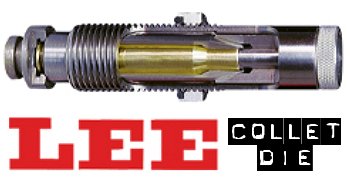
For those who prefer to neck-size their brass (rather than full-length-size), the LEE Collet Die is a popular, inexpensive option. It works by having collet tangs or “fingers” press the neck against a central mandrel. The benefit is that you get a very straight neck, which is sized consistently from top to bottom. Canadian shooter Jerry Teo explains: “LEE Collet Dies produce sized cases with very low runout (measured runout is under .001″ using a Sinclair concentricity gauge). You also don’t get the build-up of brass at the base of the neck, as can happen with bushing neck dies. The neck-shoulder junction stays nice and crisp.”
NOTE: For most handloading, we recommend FULL-LENGTH sizing of cases. You should always have a good Full-length sizing die for your brass. But there are some situations where neck-sizing may be useful. This article explains how to neck-size effectively with a LEE Collet Die.
Here’s a good video that explains how to use a Lee Collet Die to Neck-Size .243 Win brass:
TIP ONE — Adjusting Tension
LEE Collet dies don’t have a specific mechanical adjustment for neck tension. But you CAN easily modify the die to provide more or less tension. If you want to adjust the neck tension using a Lee Collet die, you can simply chuck the mandrel in a drill and reduce the diameter with some sand-paper (to increase neck tension) or you can order a mandrel the next caliber larger and turn it to whatever diameter you want (the larger the mandrel diameter, the less the neck tension). You can also order custom mandrels from Lee sized to any diameter you want.
Regarding neck tension, Boyd Allen makes an important point: “The only way to properly get more neck tension with collet dies is to either reduce the diameter of the mandrel, or order a smaller-diameter mandrel from Lee. I remind folks that adjusting the die position to have more toggle at the top of the ram stroke (not the factory recommended method), or leaning on the press handle with more force than recommended will NOT increase neck tension.”
TIP TWO — Polish and Tune for Easy Case Removal
Some users have complained that their Collet Dies grab the case-neck too firmly, making the case hard to remove. There are solutions to this problem. First inspect the collet fingers and smooth the inner surface up a bit with polishing compound or an extra-fine sanding pad. Second, you can open up the fingers a little bit. LEE recommends that if your Collet Die is sticking, take a steel punch and tap the fingers apart a little bit so that the natural “unloaded” position is wider. Lastly, you should lightly lubricate the outside of the collet fingers (see arrows) before you re-assemble the die. This will ensure they slide smoothly. Also, to prevent the collet fingers from closing too tight, never load up the die with your press without putting a case in place first. Without a case neck between the collet fingers and the mandrel, the collet can clamp itself too tight as you raise the ram.
TIP THREE — Always Have a Case Inside When Operating Collet Die
Our friend Boyd Allen tells us that you need to follow directions and NEVER operate the die without a case inside. Boyd explains: “This is because doing so will spring the quadrants of the collet inward so that they interfere with the insertion of a case, and the user will have to figure out how to undo the damage if the die is to operate properly. This advice would not be needed if everyone read the instructions before using the die…. but many times, they don’t. Another thing that I tell new users is to take the die apart so that they will have a better chance of understanding how it works.”
TIP FOUR — Size Twice and Spin Your Case 1/8th Turn
After reaching fully “down” on your press handle, withdraw the case about an inch and manually rotate it about 1/8th (NOT 1/4 or 1/2) turn while still in the shell-holder, then size again. This will place the die’s collet petals on the four “high spots” of the case neck and will result in a rounder, more evenly-sized neck with slightly more bullet tension. This takes only about one second more per case and is well worth the slight extra effort. (We thank reader Stonecreek for this smart tip).
Get CUSTOM Lee Collet Dies for Your Brass
Yes LEE does make custom collet neck-sizing dies! LEE Precision currently offers Custom Collet Neck-Sizing Dies, made from two of your fired cases. LEE offers custom standard-thread (7/8×14) collet dies for $100.00 (plus S/H) and custom large-thread (1¼x12) collet dies for $300.00 (plus S/H). This is a good option if you run wildcats or have unusual chamber dimensions. CLICK HERE to ORDER.
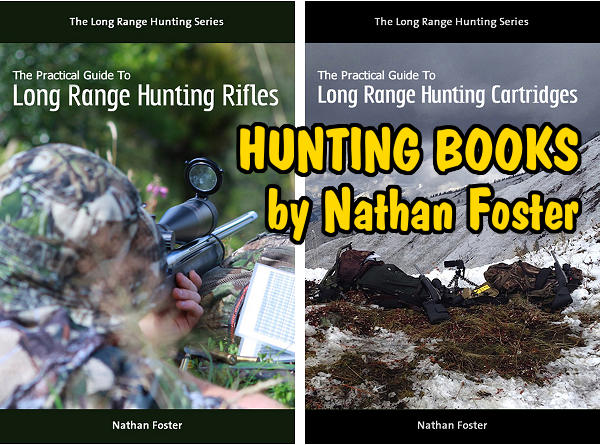
We are now in the thick of the 2022 fall hunting season now. Here are two great books that can help make your fall hunt a success. If you are a serious hunter (or aspire to be) here are two resources you should definitely add to your library. These two excellent books are offered in both print and e-Book formats.
Written by a highly-skilled New Zealand hunter with decades of field experience, the Practical Guide to Hunting Cartridges tells you what you need to know about hunting cartridge performance. In no-nonsense terms, this book reveals how various rounds actually perform in a wide variety of game species. Nathan’s first book, The Practical Guide to Long Range Hunting Rifles, is a classic — one of the best books ever written on choosing and using a hunting rifle. We recommend both books highly. NOTE: You can also save 10% with a two-book bundle.
If you really want to learn about long-range hunting, listen to a pro like Nathan Foster who has spent decades in the wild, harvesting over 7500 head of game. His classic Guide to Hunting Rifles analyzes what you need in a hunting firearm and compares various action/stock/barrel/scope options. This book also provides some practical stalking and shooting tips for hunters. Nathan’s 415-page companion book on Hunting Cartridges guides you through the process of choosing cartridge and projectile(s) for your hunts. Nathan examines the pros and cons of various cartridges so that the reader can select the best cartridge and projectile to get the job done. This book represents years of first-hand research, testing scores of calibers/loads in the field.
Nathan is truly a hunting expert. Nathan has spent thousands of hours in the field and he knows the subject cold. Unlike some outdoor writers, Nathan doesn’t pull punches — he tells the unvarnished truth about what works and what doesn’t. Here’s what Nathan says about these two books:
For several years, I have received two types of email. The first question is which is the right rifle for me? The second question is which is the right cartridge? My first book dealt with the accurate rifle. This second book deals with long range hunting cartridge selection. I firmly believe that there has been a huge gap in education regarding optimal long range hunting cartridge performance. In many instances, both hunters and bullet manufacturers do not understand what’s required to achieve goals. Many times, the wrong tools are used for long range hunting. This book seeks to remedy these problems.
In the Practical Guide to Long Range Hunting Cartridges, I start with the fundamentals of game killing — but from the perspective of the long range hunter (also encountering close range shots). This section is not politically correct in any way, as after the study of anatomy, I explore worst case scenarios in as much depth as ideal shot placement.
The second section of the book is a study of projectile design. I wanted to get right down to the finer details of the long range hunting bullet in this section, exploring manufacturers, manufacturing techniques, and ways in which the end user can perform preliminary testing as well as bullet modifications.
The third section explains how to select a long range hunting cartridge. The system I have used here is based on a selection method I developed over the years to help clients worldwide. This method takes individual circumstances into consideration rather than a one-size-fits-all approach. It is a system that relies on plain common sense based on research. The fourth section of the book is the cartridge section. Cartridge information is presented in a set format with Pro/Con summary tables. In many instances I have included my own load notes.
About the Author: New Zealander Nathan Foster lives and breathes what he teaches. An expert in the field of terminal ballistics, Nathan has taken over 7500 head of game, and has field-tested a vast number of cartridges and projectiles. Nathan’s first book, The Practical Guide to Long Range Hunting Rifles, is widely recognized as one of the best books ever published on the subject. The new book goes into greater detail on specific cartridges. Nathan’s website includes an outstanding online cartridge knowledge base with over 100 detailed cartridge profiles. CLICK HERE for Cartridge INFO.
Nathan runs Terminal Ballistics Research, a small company in Taranaki, New Zealand, that conducts cartridge and projectile performance research. Nathan also operates a long-range shooting school. Nathan is also the creator of MatchGrade Bedding Products.
Have inflation (and supply chain shortages) affected the price of powder? You bet. Probably WAY more than you could imagine. Forum member “Two Time HM LR” posted this interesting photo (above) showing Hodgdon powder prices from 1978, as sold by O.K. Weber in Oregon.
Now the prices — $20 to $44 — may not get your attention at first. But take note that these numbers are for EIGHT pound jugs. Yep eight-pounders were all under $45! For example, H4895 was $44 for 8 pounds back in 1978, 44 years ago. And H335 was $20 for eight pounds — that’s just $2.50 per pound!
These days a single pound of a desirable powder such as H4831 might cost $65 at some stores IF you can find it at all. On Hodgdon’s web site, H4831 powder is priced at $60.99 per pound in October 2022. Using that current $60.99/lb figure, H4831 is now ELEVEN times higher than it was in 1978, when H4831 cost $44 for 8 pounds, i.e. $5.50 per pound.
Here are some comments from our Forum Members:
“Heck those prices are just about the same as current ones, just a little smaller container now.” — Joe
“I’ve got some H4831 in a can marked ‘WWII Surplus Powder’ with a price tag of $2.75. We’ll never see that again either.” Rick in Oregon
“1978 prices and 2022 income would be nice. Unfortunately that doesn’t work. If you compare prices and income, powder cost about the same. You also have to discount the temporary gouging that we are seeing.” — Tmwinds
“So I used to buy gas for 10 cents per gallon and they’d pump it, check the oil, and clean the windshield.” — Pirate Ammo
One comment suggests that the powder price hike actually tracks general U.S. currency inflation over the last four decades. So perhaps powder price increases are not as bad as they seem, when compared to how all prices have risen since 1978:
“Using H4895 as a comparison basis at $58.50 (list price) in 1978 calculates it to $246 in todays money. Looking at Powder Valley prices it looks like around $256 for the same item in todays money, so it really hasn’t gone up. Availability is another issue though and if someone is really needing powder they may well have to pay above suggested retail.” — Drover
The U.S. Army Marksmanship Unit (USAMU) has published a series of reloading “how-to” article on the USAMU Facebook page. In this article, the USAMU’s reloading gurus address a question frequently asked by prospective handloaders: “Should I buy a single-stage press, or a progressive?” The USAMU says the best answer is Solomon-esque in both its wisdom and simplicity: “Get BOTH!” However, there is definitely more to the issue, as the USAMU explains below.
Bottom line, the USAMU recommends that novice handloaders start with a single-stage press. That press will always be useful for many tasks, even if a multi-station progressive is later acquired.
Progressive Press Safety Considerationsby USAMU Staff
Many are the beginning handloaders who have asked a friend about their “setting up” a progressive press for them. The idea is that the newbie could then just feed in components and crank out buckets of practice ammo without needing to really learn much about handloading. Tempting though this might be, that’s simply not how it works. Such an approach might be ok if there were never a malfunction with either press or operator, but that’s unrealistic. Our hypothetical newbie would then lack the knowledge to problem-solve most situations.
Worse yet, several different handloading operations would be occurring at different stations on the progressive press at the same time. It takes an experienced operator to keep track of, and truly understand the significance of, all those potential mini-problems. Loading without this experience is a recipe for potential disaster — such as a double powder charge (especially with pistol cartridges) dropped while the loader was attending to some other function, etc. Progressives are an animal unto themselves, and while they offer many benefits, they do take some getting used to – even by experienced handloaders!
ILLUSTRATIVE HORROR STORY
Here, enter a 40-year veteran handloader who decided to jump onto the progressive bandwagon late in his career, having used only single-stage presses all his life. A High Master NRA High Power Rifle competitor, he had no background in competitive pistol shooting, where historically most progressive presses are found.
Experienced Action Pistol shooters have typically encountered multiple episodes in which shooters “skipped” a powder charge for some reason, leading to a squib round and a bullet possibly lodged in the bore. Thus, at matches, it’s reflexive for them to yell “STOP!” in unison if they see a shooter get a “click” vs. a “bang”, and rack the slide to keep firing. This writer has personally seen several pistols saved in just such scenarios over the years.
Better Safe Than Sorry — the RCBS Lock-Out Die
RCBS Makes a “Lock-Out Die” that senses the powder charge. This will halt the Progressive press if you have a double charge, or an undercharge. Your Editor has the Lock-Out Die on his RCBS Pro 2000. It has “saved his bacon” a half-dozen times over the years. It can be used on Dillon and Hornady progressives as well as RCBS machines.
Click No Bang — What NOT to Do
Our High Master set up a popular progressive press and began turning out .223 Rem 100-yard practice ammo with abandon. He was using a moly-coated 52gr match bullet and an economical, fast-burning surplus powder that gave great accuracy. Once on the range, he began practicing strings of rapid-fire. All was well, until he heard “Click!” rather than “Boom”.
Lacking the above experience or onlookers to halt him, he reflexively operated the charging handle on his expensive, custom NM AR15 Service Rifle, and the next trigger squeeze reportedly registered on seismographs over at least a three-state radius. He sat, uninjured but bewildered, until the hail of expensive bits and pieces quit raining down around him.
When the smoke cleared, he immediately cursed the horrid, evil, demonically-possessed progressive press for this, his first-ever reloading mishap. His $1400 NM upper was ruined, but thankfully, his $800 pre-ban lower… and he had escaped injury.
This tale is told not to discourage the use of progressive presses, but to emphasize the need to EASILY and IMMEDIATELY KNOW what is happening with the press at each station, every time the handle is cranked. Not to do so is, as they say, “bad ju-ju.”
It illustrates why we at the USAMU Handloading Shop agree in recommending that new handloaders should begin with a single-stage press. Once one thoroughly learns the steps in each phase of handloading by repeated experience, then one will be qualified to move on to a progressive press.
The single-stage press will REMAIN virtually indispensable for one’s entire handloading career, even after having purchased a progressive press (or two). There are endless small projects that are best handled on a single-stage press, and a poll of USAMU’s Handloading staff reveals that not one would willingly be without his single-stage press, despite owning at least one progressive.
I have seen it time and time again, shooters on the line wrestling with their rifle trying to get the bolt closed while the wind is switching. They were too focused trying to get their bolt to close and getting their rifle settled back on the bags that they missed the wind switch. Bang… Eight! The straw that broke the camel’s back for me was at the 2017 Canadian Nationals. I was paired up with a young girl and she would try really hard to close the bolt on her rifle. The majority of the time she would get it to close, but often times she could not even get the round to chamber. She was focused on her rifle the entire time rather than on the conditions. When we completed our strings, she had five rounds that did not chamber our of 15! That is way too many!. I told her she needed to think about Full-length sizing with 0.002″ shoulder bump, or Controlled Full-length Sizing like I call it. I told her not to worry about losing accuracy. I told her that I full-length size all my rounds and asked if she noticed how smooth my bolt was and noticed my score. She said yes, they were both great!
Controlled Full-length Sizing Does NOT Harm Accuracy
I have found that Controlled Full-length Sizing does NOT hurt accuracy or shorten brass life. I find that I can focus much more on the conditions when I don’t have to think about chambering a round nor extracting it. It has become second nature. After firing, I keep my head welded to the stock, I open the bolt by placing my thumb on top of stock and rotating hand upwards. I reach in and retrieve spent case, place it back in ammo box, and pick up another loaded round and put in chamber. I verify conditions and when ready, I push the bolt in and close it with my index and middle finger.
With Controlled Full-length Sizing you “bump” the shoulder around .002″ for bolt guns.* Image courtesy Sinclair International which carries a variety of Full-length dies.
Whidden Full-Length Sizing Dies by AccurateShooter.com Editor
For proper Full-length sizing, you want a quality die that’s a very good match to your chamber. For our project rifles we usually turn to Whidden Gunworks which offers both bushing and non-bushing FL dies. And if you want the hot new option, check out Whidden’s patent-pending, click-adjustable FL-sizing die. This gives instant, precise control over shoulder bump. It works great.
*With gas guns, such as the AR10, you may want to increase shoulder bump to .003″ or more. With some benchrest cartridges, .0015″ bump may prove optimal. But .002″ is a good starting point.
We first ran this story a few years back. But it’s still a very interesting subject for benchrest shooters. Shown above, the 30 BR (a 6mmBR necked up to .30 caliber) currently rules the benchrest-for-score game. However, a 30 BR Improved offers some potential advantages, particularly when the winds are strong or tricky. In this article Al Nyhus explains his 30 BRX wildcat. Running Hodgdon H4198, Al says he gets an easy 150 -200 FPS more than the conventional 30 BR. That can translate to less drift in the wind. It also lets you pursue a higher speed node, which can lead to improved accuracy with some barrels.
Forum member Al Nyhus is a top-level score shooter who has competed successfully with the 30 BR cartridge in VFS (Varmint for Score) matches. Al has been working on an “improved” 30 BR cartridge that delivers extra velocity. Al’s 30 BRX cartridge is inspired by the 6mm BRX cartridge, popular in 600-yard benchrest and across-the-course competition. The 6mm BRX cartridge maintains the same sidewall profile and shoulder angle as the parent 6mmBR case. Likewise, the 30 BRX retains the 30° shoulder used on the popular 30 BR cartridge.
Al reports: “Thought you might like to see what I’ll be working with in my VFS gun this season. It’s a true 30 BRX — a 30 BR with the shoulder moved forward 0.100″ with the standard BR shoulder angle. Stan Ware of SGR Custom Rifles built one last season for Steve Grosvenor and I was really impressed by the performance of Steve’s gun. The 30 BR barrel on my VFS gun needed replacing, so the new 30 BRX got the nod.”
30 BRX Delivers 150-200 FPS More Velocity than 30 BR
Al says his 30 BRX gives a solid 150-200 fps speed gain over the 30 BR at the top, while needing just 2.5-3.0 more grains of Hodgdon H4198 to do so. A 30 BR case holds on average 40.8 grains of water, while the 30 BRX holds 42.3 grains (roughly 4% more). So the 30 BRX delivers a 7% increase in velocity with a mere 4% increase in H20 capacity. That’s pretty good efficiency. [Editor’s Note: Assuming 34 grains of H4198 is a typical 30 BR match load, Al’s increase of 2.5-3.0 grains for the 30 BRX represents roughly a 7.5-8.5% increase in actual powder burned. That explains the higher velocities.]
Why did Nyhus decide to try an “improved” 30 BR?
Al explains: “The 30 BRX was created to operate at a [higher] velocity level than can be achieved with the standard 30 BR case, while at the same time keeping the easy-tuning characteristics of the standard 30 BR case. We also wanted to use the same powders currently used with the 30 BR and maintain similar operating pressures.” Is the 30BRX harder to shoot because of the increased velocity? Al doesn’t think so: “In a 13.5-lb HV gun, the 30 BRX case is a pleasure to shoot with just a flea bite of recoil.”
Will the 30 BRX Become Popular in Score Competition?
The 30 BR is already an exceptionally accurate cartridge that dominates short-range Benchrest for Score competition. Will the 30 BRX make the standard 30 BR obsolete? Nyhus doesn’t think so. However, Al believes the 30 BRX offers a small but important edge in some situations: “On any given day, it’s the shooter that hits the flags best and makes the fewest mistakes that ends up on top. No amount of velocity will save you when you press the trigger at the wrong time. Missing a switch or angle change at 200 yards that results in 3/4″ of bullet displacement on the target can’t be compensated for with another 200 fps. That’s the hard fact of benchrest shooting. But on those days when, as Randy Robinett says, ‘our brains are working’, the BRX may offer enough of an advantage to turn a close-but-no-cigar 10 into an ‘X’ at 200 yards. Or turn a just-over-the-line 9 into a beggar 10.” Given the fierce competition in Score matches, an extra 10 or another X can make the difference between a podium finish and also-ran status.
There has been a long, cold winter in many parts of the USA. So if you want to maintain your shooting skills, shooting indoors may be the only convenient option. When shooting indoors you should always be extra careful and follow all key gun safety practices and adhere to proper range “Etiquette”.
The NSSF (NSSF) offers a useful Range Safety and Etiquette video. This 8.5-minute video explains safe practices, especially at indoor ranges. In the video, the moderator list the basic rules of gun safety, before covering key range etiquette topics such as range officer commands, how to uncase your firearm on the range when you first arrive, and what to do if a firearm is accidentally dropped. There are also safety tips specific to handling both semi-automatic handguns and revolvers.
BAD RANGE BEHAVIOR — Five Things NOT to Do at the Range
Here are the five worst behaviors we’ve seen at indoor ranges. These behaviors are both dangerous and inconsiderate. Any one of these behaviors can get you permanently banned from an indoor range.
1. Sweeping other individuals after loading a weapon behind the firing line is very bad. All your weapons should be empty until you reach your shooting station.
2. Turning the handgun sideways while trying to clear a malfunction or insert/remove a magazine. This will point the muzzle at a fellow shooter. Or, after shooting a gun, the shooter fails to clear the weapon and then places the gun somewhere near the shooting station with the muzzle in an unsafe position.
3. Reacting unpredictably when firing a high recoil handgun. We’ve seen people take a second shot by accident with the muzzle way off target.
4. Not obeying range commands — in particular continuing to shoot during called cease-fires.
5. Poorly aimed shooting that hits target frames or carriers, causing ricochets.
Seven Types of People at the Gun Range — HUMOR
This video is satire, but with lots of truth in the characterizations. Laughter guaranteed.
Double-Up on Hearing Protection When Shooting Indoors
When shooting pistols indoors we recommend quality muffs with earplugs underneath, offering double protection. When inside an enclosed range, with other shooters blasting away right next to you, you really need effective hearing protection. But you also need to hear range commands and be able to communicate with your fellow shooters. That’s why we recommend electronic muffs with plugs underneath.
Here’a useful article by Sierra Bullets Media Relations Manager Carroll Pilant. This story, which originally appeared in the Sierra Bullets Blog, covers some of the more common ammo problems that afflict hand-loaders. Some of those issues are: excessive OAL, high primers, and improperly-sized cases. Here Mr. Pilant explains how to avoid these common problems that lead to “headaches at the range.
I had some gentlemen at my house last fall getting rifle zeros for an upcoming elk hunt. One was using one of the .300 short mags and every 3rd or 4th round would not chamber. Examination of the case showed a bulge right at the body/shoulder junction. These were new cases he had loaded for this trip. The seating die had been screwed down until it just touched the shoulder and then backed up just slightly. Some of the cases were apparently slightly longer from the base to the datum line and the shoulder was hitting inside the seating die and putting the bulge on the shoulder. I got to thinking about all the gun malfunctions that I see each week at matches and the biggest percentage stem from improper handloading techniques.
One: Check Your Cases with a Chamber Gage
Since I shoot a lot of 3-gun matches, I see a lot of AR problems which result in the shooter banging the butt stock on the ground or nearest solid object while pulling on the charging handle at the same time. I like my rifles too well to treat them that way (I cringe every time I see someone doing that). When I ask them if they ran the ammo through a chamber gage, I usually get the answer, “No, but I need to get one” or “I didn’t have time to do it” or other excuses. The few minutes it takes to check your ammo can mean the difference between a nightmare and a smooth running firearm.
A Chamber Gauge Quickly Reveals Long or Short Cases
Size Your Cases Properly
Another problem is caused sizing the case itself. If you will lube the inside of the neck, the expander ball will come out a lot easier. If you hear a squeak as the expander ball comes out of a case neck, that expander ball is trying to pull the case neck/shoulder up (sometimes several thousandths). That is enough that if you don’t put a bulge on the shoulder when seating the bullet … it can still jam into the chamber like a big cork. If the rifle is set up correctly, the gun will not go into battery and won’t fire but the round is jammed into the chamber where it won’t extract and they are back to banging it on the ground again (with a loaded round stuck in the chamber). A chamber gage would have caught this also.
Oversizing cases also causes problems because the firing pin doesn’t have the length to reach the primer solid enough to ignite it 100% of the time. When you have one that is oversized, you usually have a bunch, since you usually do several cases at a time on that die setting. If the die isn’t readjusted, the problem will continue on the next batch of cases also. They will either not fire at all or you will have a lot of misfires. In a bolt action, a lot of time the extractor will hold the case against the face of the breech enough that it will fire. The case gets driven forward and the thinner part of the brass expands, holding to the chamber wall and the thicker part of the case doesn’t expand as much and stretches back to the bolt face. If it doesn’t separate that time, it will the next time. When it does separate, it leaves the front portion of the case in the chamber and pulls the case head off. Then when it tries to chamber the next round, you have a nasty jam. Quite often range brass is the culprit of this because you never know how many times it has been fired/sized and in what firearm.’Back to beating it on the ground again till you figure out that you have to get the forward part of the case out.
Just a quick tip — To extract the partial case, an oversized brush on a cleaning rod [inserted] and then pulled backward will often remove the case. The bristles when pushed forward and then pulled back act like barbs inside the case. If you have a bunch of oversized case that have been fired, I would dispose of them to keep from having future problems. There are a few tricks you can use to salvage them if they haven’t been fired though. Once again, a case gage would have helped.
Two: Double Check Your Primers
Another thing I see fairly often is a high primer, backwards primer, or no primer at all. The high primers are bad because you can have either a slam fire or a misfire from the firing pin seating the primer but using up its energy doing so. So, as a precaution to make sure my rifle ammo will work 100% of the time, I check it in a case gage, then put it in an ammo box with the primer up and when the box is full, I run my finger across all the primers to make sure they are all seated to the correct depth and you can visually check to make sure none are in backwards or missing.
Three: Check Your Overall Cartridge Length
Trying to load the ammo as long as possible can cause problems also. Be sure to leave yourself enough clearance between the tip of the bullet and the front of the magazine where the rounds will feed up 100%. Several times over the years, I have heard of hunters getting their rifle ready for a hunt. When they would go to the range to sight in, they loaded each round single shot without putting any ammo in the magazine. On getting to elk or deer camp, they find out the ammo is to long to fit in the magazine. At least they have a single shot, it could be worse. I have had hunters that their buddies loaded the ammo for them and then met them in hunting camp only to find out the ammo wouldn’t chamber from either the bullet seated to long or the case sized improperly, then they just have a club.
Four: Confirm All Cases Contain Powder
No powder in the case doesn’t seem to happen as much in rifle cartridges as in handgun cartridges. This is probably due to more handgun ammo being loaded on progressive presses and usually in larger quantities. There are probably more rifle cartridges that don’t have powder in them than you realize though. Since the pistol case is so much smaller internal capacity, when you try to fire it without powder, it usually dislodges the bullet just enough to stick in the barrel. On a rifle, you have more internal capacity and usually a better grip on the bullet, since it is smaller diameter and longer bearing surface. Like on a .223, often a case without powder won’t dislodge the bullet out of the case and just gets ejected from the rifle, thinking it was a bad primer or some little quirk.
For rifle cases loaded on a single stage press, I put them in a reloading block and always dump my powder in a certain order. Then I do a visual inspection and any case that the powder doesn’t look the same level as the rest, I pull it and the one I charged before and the one I charged after it. I inspect the one case to see if there is anything visual inside. Then I recharge all 3 cases. That way if a case had powder hang up and dump in the next case, you have corrected the problem.
On progressive presses, I try to use a powder that fills the case up to about the base of the bullet. That way you can usually see the powder as the shell rotates and if you might have dumped a partial or double charge, you will notice as you start to seat the bullet if not before. On a progressive, if I don’t load a cartridge in one smooth stroke (say a bullet tipped over sideways and I raised the ram slightly to reset it) Some presses actually back the charge back adding more powder if it has already dumped some so you have a full charge plus a partial charge. When I don’t complete the procedure with one stroke, I pull the case that just had powder dumped into it and check the powder charge or just dump the powder back into the measure and run the case through later.


 Compact 21st Century Standard Arbor Press


 TIP ONE — Adjusting Tension
 TIP TWO — Polish and Tune for Easy Case Removal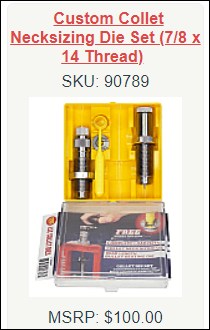

 For several years, I have received two types of email. The first question is which is the right rifle for me? The second question is which is the right cartridge? My first book dealt with the accurate rifle. This second book deals with long range hunting cartridge selection. I firmly believe that there has been a huge gap in education regarding optimal long range hunting cartridge performance. In many instances, both hunters and bullet manufacturers do not understand what’s required to achieve goals. Many times, the wrong tools are used for long range hunting. This book seeks to remedy these problems.
 About the Author: New Zealander Nathan Foster lives and breathes what he teaches. An expert in the field of terminal ballistics, Nathan has taken over 7500 head of game, and has field-tested a vast number of cartridges and projectiles. Nathan’s first book,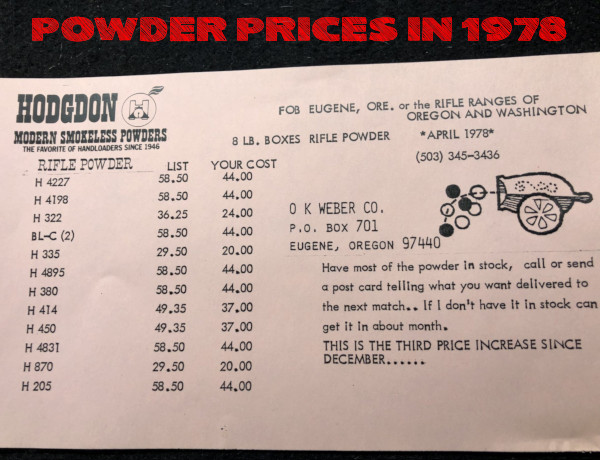




 Forum member Al Nyhus is a top-level score shooter who has competed successfully with the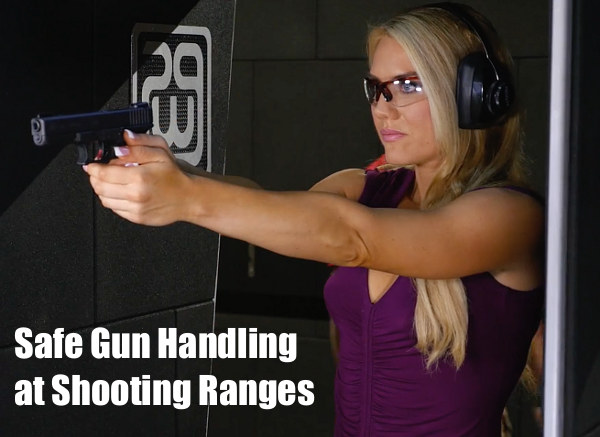


 Oversizing cases also causes problems because the firing pin doesn’t have the length to reach the primer solid enough to ignite it 100% of the time. When you have one that is oversized, you usually have a bunch, since you usually do several cases at a time on that die setting. If the die isn’t readjusted, the problem will continue on the next batch of cases also. They will either not fire at all or you will have a lot of misfires. In a bolt action, a lot of time the extractor will hold the case against the face of the breech enough that it will fire. The case gets driven forward and the thinner part of the brass expands, holding to the chamber wall and the thicker part of the case doesn’t expand as much and stretches back to the bolt face. If it doesn’t separate that time, it will the next time. When it does separate, it leaves the front portion of the case in the chamber and pulls the case head off. Then when it tries to chamber the next round, you have a nasty jam. Quite often range brass is the culprit of this because you never know how many times it has been fired/sized and in what firearm.’Back to beating it on the ground again till you figure out that you have to get the forward part of the case out.


