Turn on your TVs and break out the popcorn — it’s a big week on Shooting USA. A full hour of SHOT Show coverage runs tonight (5/6/20) at 9:00 pm ET. This episode provides a “first look” at the new guns, optics, and gear introduced for 2020. Shooting USA’s team looks at over 65 new products.
2020 SHOT Show Highlights: Colt Python, Hornady A-Tip bullets, Manners PRS Stock, Volquartsen Summit .17 WSM, Ruger-57 Pistol, Pinnacle Precision Rifle, HK SP5, Impact Sport Muffs, Laugo Arms Alien Pistol, Vortex 1-10X Scope, Glock 44 Pistol, Hornady Rapid Safe and more.
This SHOT Show 2020 episode airs on the Outdoor Channel Wednesday, May 6 at 9:00 pm ET and Thursday, May 7 at 3:00 pm ET. If you miss those broadcasts, you can watch this and ALL episodes of Shooting USA on Vimeo.com by subscription. The SHOT Show 2020 edition is just $0.99.
Great Shooting USA Episodes
For our Bulletin followers, here are two of our favorite full-length Shooting USA episodes, and well as two excellent instructional segments, one with past NRA High Power Champion SGT Sherri Jo Gallagher.
Texas Varmint Silhouette Match — 200 Meters to 750 Yards
We love shooting reactive targets. This Texas varmint silhouette match features multiple target shapes, 10 at each distance: Tiny Prairie Dogs at 200m, 3″x3″ Armadillos at 300m; 3″x5″ Coyotes at 385m; 5″x4″ Hogs at 500m; Chickens (on swingers) at 600 yards; and Pigs (on Swingers) at 750 yards. Competitors are allowed 10 rounds and 10 minutes to hit each set of targets.
EDITOR: We strongly recommend you take the time to watch this Shooting USA feature — it shows some top-flight benchrest rifles, and also covers the origins of benchrest varmint silhouette in Pennsylvania. There are even some AccurateShooter Forum members on screen. John Scoutten also does a nice job explaining the challenges of shooting this discipline with a PRS rig. We think any benchrest or tactical shooter will really enjoy this video.
Travis Frazier of Field & Cave Outfitters says shooters love the reactive targets: “The most exciting thing is seeing your hits — these [targets] really go airborne”. Yep, that’s the best thing about Varmint Silhouette matches — hits deliver instant gratification. Travis designs and produces these steel targets.
Vintage Sniper Match and GAP Grind PRS Match
Historic Rifles are on the firing line! It’s the Vintage Sniper Match in Talladega for collectors competing with classic rifles and historically accurate optics from the two World Wars. A team from the U.S. Army Marksmanship Unit also takes the challenge with a reproduction 03A4.
Plus, John Scoutten welcomes a new shooter to Precision Rifle (PRS) Competition. The two team up to take on 25 grueling stages at the Bushnell GAP Grind in Tennessee. With a special Pro/Am format, the GAP Grind is one of the most popular tactical matches in the country
Reading the Wind — SGT Sherri Jo Gallager (USAMU)
This segment, created when Sherri Jo was shooting with the USAMU team, explains how to evaluate wind conditions and adjust your hold for long range.
Minute of Angle (MOA) Defined with Jim Scoutten
Minute of Angle (MOA) — what does it actually mean? And what do you get when a rifle manufacturer guarantees one-half MOA accuracy? Jim Scoutten answers these questions and explains MOA basics. One MOA is an angular measurement equivalent to 1.047″ at 100 yards.
Report by Jay Christopherson
2020 Berger SW Nationals F-Open Champion Team Member, Team Lapua-Brux-Borden
I’ve been shooting F-Class for about 9 years now. In fact, I shot my very first match, a 600-yard mid-range match, using a 6mm Dasher, on March 19, 2011. My first relay was a 188-4X and my overall score was 582-19X. I remember shooting a really nice group in the 9-ring, because I dialed the scope the wrong way and I shot lots of “verification” shots before making adjustments. I also remember wondering if that was a good score for that range in those mostly calm conditions (it wasn’t). I’ve tracked every match I’ve ever shot and I’ve come a long way since then. I’ve always been a competitive person and F-Class gave me an outlet to indulge both my competitiveness and my fondness for details. In what other individual sport does a thousandth of an inch (or less!) become important? Or a tenth of a grain?
Some of my greatest pleasures in this sport come not necessarily from winning a match (though I won’t turn that down), but in identifying something small in what I am doing that has a material effect on paper. Maybe it’s a tiny change in seating depth. Maybe it’s a slightly modified strategy for making wind calls. Maybe it’s a tiny position or hold change. Whatever it is, when it works, there’s no better feeling.
I have a full-time job to go with this hobby, so finding the time for productive training is difficult. You have to really plan ahead to maximize the time you spend reloading, developing loads, and training at the range. To that end, I invest a lot of time in reducing the things that I do at the loading bench. I load ammo on a progressive press, though modified to produce ammo to my standards. I don’t clean brass. I don’t do a lot of things that most shooters would call traditional in the loading room. Because frankly, I don’t have the time between family, work, and other interests.
If it doesn’t make a difference on paper, I mostly don’t do it. Still, there are one or two loading habits I’m trying to get rid of. I also pre-seat all my ammo for matches — whatever I show up at the match with, is what I have. I don’t clean my rifle between days at the match. I had well over 200 rounds without cleaning by the time the last shot was fired at the 2020 SWN. It took a lot of time for me to get comfortable with that. That works for what I do, but I wouldn’t dare try it with any other loads or rifles, at least, not without a lot of testing to be comfortable. My original 6MM Dasher shooting Reloder 15 couldn’t go that many rounds without cleaning and building up a carbon ring. Unfortunately, I learned a tough lesson on that one my first year.
I do all my own gunsmithing, including chambering, bedding, and stock work. I’m no Keith Weil, Alex Wheeler, or some of those other guys, but I feel pretty good about the work I do. I know that when there’s a mistake or imperfection, it’s MY mistake and I can live with that. I like to keep things as minimal as possible, so I shoot off a SEB Mini (no mods) and SEB rear bag.
I also shoot with a spotting scope at Long Range, using a Kowa TSN-663 with 25X LER eyepiece and a relatively new spotting scope stand by Rod Brakhage who is a fine F-Class shooter himself. I really like how smooth and adjustable it is on the ground compared to some other rigs I’ve used.
The 284 Wheeler — Slightly Modified .284 Win
This year at the SWN, I shot a 284 Wheeler, which is a straight .284 Win that has some small modifications designed by Alex Wheeler. I think that the work and experimentation that Alex does with reamer design really shows up on paper. In 2019 I was testing the reamer in a couple barrels, looking for the right load. I shot some great relays and team practices with it that year, but this was the first time I brought enough ammo to shoot the entire week with it. Coupled with Berger’s 7MM 180 grain Hybrid Target bullets which I point to increase BC consistency, and Lapua brass, it’s an effective combination. In particular, the brass has lasted me for 13 firings with no signs of fatigue, so I expect I’ll be able to use it at Worlds in 2021 and beyond.
I also shot the entire 2020 SWN with a Vortex Golden Eagle 15-60x52mm scope, my preferred scope for individual matches. It’s a rock-solid reliable scope in my experience, with a great eye box, reliable and repeatable mechanical controls. The Vortex ECR-1 reticle has quickly become my favorite reticle. All four of my Open rifles are built on Borden BRMXD actions, Brux barrels, and sitting in X-Ring F-Open stocks, which are Robertson clones (more on that below). I’ve tried to make each of my rifles as much of an identical clone as possible.
I am not sponsored by anyone as an individual shooter, only through team sponsorship with Lapua-Brux-Borden. Which means that for individual matches, I am free to use what I think gives me the best opportunity to win for individual matches. In practice, the only difference tends to be the scope that I use, as mentioned above.
Jay Christopherson F-Open Rifle Specifications:
Cartridge: 284 Wheeler (variant of .284 Winchester)
Optics: Vortex Golden Eagle 15-60x52mm
Stock: X-Ring F-Open Stock with R.A.D.
Barrel: Brux 1:9″-twist, 32″-long barrel
Action: Borden BRMXD action
Trigger: Flavio Fare
Q: What was your biggest challenge at the 2020 Berger SWN?
Jay: The biggest challenge for me at this year’s SWN was purely mental. At past SWN matches where I had done well, I was trying to focus on not thinking about the different things going on around me. Where I was ranked on the score sheet. How well other shooters were doing. How many points or Xs I was ahead (or behind). Being worried about conditions or whether my ammo would hold up. And so on. And sooner or later, I think those things break your focus.
Going into a relay calculating the points or Xs that you can’t afford to drop is a recipe for losing. It’s like trying NOT to picture a pink elephant with purple dots when somebody challenges you try to not think of a pink elephant with purple dots. In previous SWN events, I came up just short three times in a row, for one reason or another. So, in 2020 I went in with a mental game plan.
Mental Game Plan — Envisioning Success
I pictured what it would take to be successful and what winning would feel like. First relays, then days, and then the match. I started that process months before the match actually happened. I thought about who I was shooting against and how much pressure there was to make every shot count. I thought about how I had performed or reacted in similar situations in the past. And I planned out what I would do and how I would handle those things. I strived to be neither negative nor positive — I wanted to be neutral. I wanted to be ready to win, instead of being surprised by it.
Q: What gear/hardware items give you an edge over the competition?
Jay: There’s no single piece of gear that I can think of that gives someone an edge over somebody else. It all sort of works — it’s more about being consistent with whatever hardware you have. But one piece of new gear that I tried out at the SWN was a single-piece scope mount called the Alphamount (photo below), by Richard Near of NEAR Manufacturing.
I think scope mounts are the most overlooked piece of equipment in F-Class right now — whether they be improperly aligned, improperly torqued, or just plain junk. I think people put a lot of blame on their scopes that can be traced back to mounts. The Alphamount (and single-piece mounts in general) are something that I believe in now, having done a lot of testing. It worked out OK for me at the SWN.
Action for Back-Up Rifle Is Glued and Screwed into Stock
One of the new things I am trying this year is a “glue and screw” action set-up. At the 2019 US F-Class Nationals in Raton, we got rained on a little and when I pulled my rifle apart, I found water between the bedding and action (the bedding is about 2 years old). At the SWN, I found that something had moved enough that I could torque the front action screw and bind the bolt. Not good, but luckily this was my backup rifle that I shot for Mid-Range (badly) and not my lead rifle. There could have been stock movement or other factors as well, but there was no question the bedding had shrunk when I stuck a dial indicator on it and found that my pillars were now standing proud.
Some people had been goading me to try a “glue-and-screw” procedure. Since I had nothing better to do during the COVID-19 lockdown, I pulled out the Dremel, scuffed up the action and bedding, removed the recoil lug, and glued the action into the stock. I’ve had it out a couple times since and it seems to be shooting well, but we’ll see how it holds up and what sort of difference it might make as time goes on.
Q: What is your advice to newcomers in F-Class and Long Range competition?
Jay: Find a nemesis. Someone local who puts in the same effort that you do and is as competitive as you are. Be friends, share info, but work your behind off to make sure you win on match day. I guarantee you someone reading this knows what I’m talking about. The best thing you can do is have someone who pushes you to perform better each time out. You love to win against them, but not as much as you hate to lose to them.
Q: What do you like most about Long Range and F-Class competition?
Jay: I like the challenge of F-Class — it’s a nice blend of working to get the most out of your equipment and the most out of yourself as a shooter. You can have the greatest shooting rifle in the world and it won’t matter a bit if you can’t be consistent pulling the trigger or making good wind calls. By the same token, you can be the greatest wind caller and most consistent trigger puller in the world — but it won’t matter a bit if you can’t wring the best possible performance out of your rifle for that tiny little target at 1000 yards. I like Long Range because everything is magnified — there are rarely easy shots.
Q: What do you prefer, individual events or team matches?
Jay: Team matches. No contest. Most of the reason I travel to matches is for the team events. But just throwing together a team of great individual shooters is not enough to consistently win. You have to operate as a team, which at times means subsuming your own individual goals for the good of the team. I’ve gone into big matches knowing that my team rifle is my best rifle by a mile — but knowing that the best thing for the team’s current and future success is for me to not burn that barrel out (or burning up known good components) in the individual events. And that’s fine with me. Being part of a team of shooters with the same goal, with the same drive, the same focus on team rather than individual — and able to deliver the goods — that’s the reason why I do this.
Q: What kind of stock do you use and how does it behave?
Jay: I use an X-Ring Open stock, which is basically a Robertson clone. I’ve been using X-Ring for about 4 years now. I’ve been through a lot of different stocks to find the one that fits me and the way I like to shoot, and X-Ring has done that for me. There’s a lot of focus recently on lowering the center of gravity and extending the stock length through various methods to solve problems like torque, jump, etc. — those are just problems that I don’t experience or, at least, that don’t bother me while I’m shooting. So, I don’t tend to worry about them. The X-Ring fits nicely and runs very well in the bags that I use. I do think that you have to spend some time finding the right bag setup for the stock you are using. I have at least 9 different rear bags that I have tested at one time or another until I settled on my current bag.
Q: Do you have any specific Gun Handling Tips for F-Open shooters?
Jay: As for gun handling, I prefer a light hold — my cheek indexes off the stock with a very light touch and my trigger hand indexes off the stock also with a light touch so that I have a consistent trigger finger position. What I do is in the style of “free recoil”, but is NOT fully “free recoil”, since I DO lightly touch the stock. For the butt, I run the R.A.D. recoil reducer at its lowest setting, which means that I can barely touch off for indexing purposes and still not interrupt the recoil pulse because the R.A.D. absorbs it. This was a suggestion that Will McCloskey made to me a couple years ago in place of leaving space.
This video, from a past Berger SWN, illustrates Jay Christopherson’s shooting style. He employs a very light touch on the gun. The front rest is a SEB Mini. If this Facebook video doesn’t load,CLICK HERE.
My hold for F-Class has evolved over time into what it is now. There are lots of successful shooters that are using varying degrees of holds, from light to hard. Again, It all sort of works — the most important part is that whatever you do is consistent and repeatable, hence my touch points that ensure my head, shoulder, and trigger finger are in the same position every time. There are shooters out there that will rant about “the fundamentals of shooting” and insist that your legs have to be a certain way, your cheek has to be a certain way, your breathing has to be done a certain way. I’m sure that’s valid for what they do and I’m fine with them looking down on me for it, but I do what produces results for me. For certain, my position and hold when shooting sling is completely different. All it means is that you have to be prepared to adapt.
PARTING SHOT — Have Guns, Will Travel
Here is one of Jay’s other F-Open Rifles. When traveling he separates the stock from the barreled action. He uses a custom-cut foam piece that holds the components very securely. Note the separate slots for barreled action, stock, scope (in rings), bolt assembly, and spotting scope.
Berger Ballistics Experts in 10-Part Podcast Series
Bryan Litz and Emil Praslick III will be featured guests on a 10-part Sniper’s Hide Podcast series about Ballistics. These 10 Podcasts will be delivered through The Everyday Sniper podcast platform. The series will help listeners learn more about Ballistic Coefficients (BCs), why BC consistency is important, and how BC effects both accuracy and precision.
In this 10-part series, Bryan Litz of Applied Ballistics and Wind Wizard Emil Praslick talk with Sniper’s Hide head honcho Frank Galli. Along with Ballistics, the ten podcasts will cover a variety of shooting-related topics including: long range shooting, precision rifle builds, training, wind effects, industry updates, and more.
The 10-part podcast series begins May 1, 2020. Each podcast is an in-depth discussion of Berger’s bi-weekly “No-BS BCs” ballistics articles, penned by Bryan Litz, Berger’s Chief Ballistician. In Episode One Litz defines BC and its purpose. Episode Two explains how BC can vary with velocity (and why that’s important). As the series continues, examining the key requirements for successful long range shooting, the experts explain why BC consistency is the most important factor in long-range bullet performance. Learn more about “The Everyday Sniper” BC podcast series at NoBSBC.com.
“This is a great opportunity to open up our platform to Berger with Bryan and Emil. Giving people this kind of access through the partnership is a Masterclass opportunity for anyone interested in long range shooting”, stated Frank Galli.
Podcast Schedule and Topics
5/1 What is a Ballistic Coefficient?
5/15 Variation in BC with Velocity
5/29 BC Effect on Accuracy, Short and Long Range
6/12 BC and Performance
6/26 Shot to Shot Consistency – Sources of BC Inconsistency
7/10 BC Effect on Precision, Short and Long Range
7/24 Comparing BCs
8/7 SC of BC, Bell Curve
8/21 Mfg. Effects on BC, Accuracy and Precision
9/4 MV-BC Trade Off and Different Brands
Here are some of the Ballistics Topics available on the Berger Website:
To learn more about Berger’s No-BS BCs and to read Bryan Litz’s bi-weekly articles, visit NoBSBC.com and Bergerbullets.com.
We learned last week that the CMP had closed the Camp Perry CMP Championship Matches. Now the NRA has followed suit, cancelling the Pistol, Smallbore, and High Power National Championships slated for summer 2020 at Camp Perry (Pistol) and Camp Atterbury (Rifle). We know readers will be disappointed. The NRA High Power Championships were slated for mid-August — over three months away. Many shooters were hoping some normalcy would be restored by then. However the potential health risks of having hundreds of shooters in close proximity lead to the cancellation decision. On 4/29/2020, the NRA stated:
Due to the current state of affairs surrounding COVID-19, the uncertainties associated with this pandemic at present, and shutdowns across our country that have impeded vital preparatory work, the National Rifle Association has made the difficult decision to cancel the 2020 NRA Precision Pistol Championships scheduled for July 1-5, 2020), 2020 NRA High Power Championships scheduled for August 9-25, 2020, and the 2020 NRA Smallbore Championships scheduled for July 23-August 4, 2020.
We are trying to make the best of the current situation by moving forward with range construction and other improvements as we look towards the 2021 NRA National Championships season. The NRA is also exploring the feasibility of hosting a variety of new NRA events at Camp Atterbury (if conditions are favorable) [in] the state of Indiana later this year.
We share your disappointment that we had to cancel these competitions. The NRA wishes everyone good health and the best of luck. Stay safe and healthy. For more information, visit Competitions.NRA.org.
The NRA had previously cancelled all sanctioned matches through April 30, 2020. Read story HERE.
The Civilian Marksmanship Program (CMP) issued a statement yesterday, April 22, 2020, announcing the complete cancellation of the 2020 National Matches at Camp Perry — all rifle and pistol matches are cancelled. Sadly, due to the Coronavirus Pandemic, and concerns about ongoing stay-at-home and social distancing orders, the CMP declared that there will be no Camp Perry National Matches in 2020:
Official CMP Statement about 2020 National Matches
After thoughtful consideration and reflection, the Board of Directors of the Civilian Marksmanship Program announces the cancellation of the 2020 National Matches at Camp Perry.
“This decision was not arrived at lightly, but was prompted by restrictions resulting from the COVID-19 pandemic. These matches date back to 1903 and have been held at Camp Perry since 1906,” said Judith Legerski, CMP Board Chairman.
“The health and safety of our competitors, participants, vendors, military support, volunteers and staff members is of the upmost importance — overriding even the historical imperative of maintaining the continuity of the Matches,” agreed Legerski, with Chief Operating Officer Mark Johnson and Programs Chief Christie Sewell.
“We were unable to come up with a manner in which we could safely produce the Matches. Housing and pit duty were amongst the many insurmountable problems faced by the CMP Board,” Legerski explained.
The CMP looks forward to the 2021 National Matches at Camp Perry as the best marksmanship celebration ever! In the meantime, please stay safe and healthy at home, as we prepare for the new normal ahead of us.
All CMP operations have been shut down since mid-March and a full resumption of business remains undetermined. Full refunds will be made to those who have already registered.
Here’s some good news about rifle shooters enjoying an early March competition before Executive Orders forced people to stay at home. We can report that the first-ever springtime CMP Western Games were well-attended. Nearly 300 shooters enjoyed the event, though the High Power matches and clinic phase was cancelled due to official social distancing mandates.
By Ashley Brugnone, CMP Writer
With the first run in its new March time slot, the Civilian Marksmanship Program’s (CMP) annual Western CMP Games and HP Rifle Matches event was met with greatly-increased registration and attendance compared to recent years, despite social distance restrictions that led to a premature end to the event.
Competitors completed the entire schedule of CMP Games rifle events and schools at the Ben Avery Shooting Facility under brilliant Arizona skies and comfortable temperatures. Unfortunately, the 5-day CMP High Power Rifle Matches and clinic, scheduled in the second half of the schedule, were cancelled due to health concerns — “social distancing” mandates for participants and staff.
The Western CMP Games portion of the event held in Phoenix is one of many travel events conducted by the CMP across the country each year. It includes specially designed vintage and modern rifle matches and clinics affording opportunities for marksmanship enthusiasts of all ages and experience levels.
A spike in early registration of 283 participants led to an impressive number of 664 scheduled event entries for the early Spring event in Phoenix. Since its first Arizona appearance in 2008, the Western CMP Games events have been conducted in the month of October. Due to recurring inclement weather at the CMP’s annual Oklahoma Games, the decision was made to trade seasons with those in Arizona beginning in 2020.
Here are some photo highlights from the 2020 CMP Western Games. View hundreds more Western Games images on the CMP Zenfolio Photo Archive.
AR-platform rifles are fun and versatile, but the standard, mil-spec triggers leave much to be desired. They tend to be gritty, with creep and heavy pull weight. One of the easiest, most effective AR upgrades is a trigger group swap. An improved fire control group makes a huge difference. There are many aftermarket trigger options for the AR platform rifles. Choose single-stage or two-stage, either standard trigger assembly or unitized “drop-in” trigger, such as those made by Timney or Triggertech.
When upgraded with a precision trigger and match barrel, AR-platform rigs work great in NRA High Power competitions (Photo from NRA Blog, at Camp Perry).
Two-Stage vs. Single-Stage Triggers
Two-stage triggers have two separate movements. The first stage offers a light, spring-loaded pressure that works against the shooter’s pull until stopping at the second stage – this is called “take-up”. If there is no spring pressure, it is known as “slack”. Should the shooter continue to pull the trigger once he’s arrived at the second stage, the mechanism will operate like a single-stage trigger from there until engaging the sear and firing the gun. Some shooters prefer a two-stage trigger because it allows a mental preparation (first stage) before the final decision to “break the shot”.
Single-stage triggers feature no take-up or slack, as they begin engaging the sear as soon as the shooter begins pulling the trigger. Some competitive shooters prefer the two-stage trigger because of the feedback it provides during its first stage, while other shooters, including those using their rifle in tactical scenarios, may want the surety of a single-stage trigger, ready to engage and fire once their finger is inside the trigger guard. Regardless of preference, a good trigger will feature minimal creep and should be free of grittiness, providing a smooth, even break.
Drop-In Trigger Assembly vs. Standard Trigger Group
Once you decide between a single-stage or two-stage trigger, you can choose between standard and drop-in trigger groups. Standard trigger groups feature all the fire control group parts separated, and need to be pieced together and installed much like a mil-spec trigger, while drop-in trigger are pre-assembled and contained within a casing that simply drops in to the receiver and accepts the pins, hence the name.
After-Market Trigger Comparison
Some shooters prefer drop-in triggers due to the ease of installation, while others opt for standard groups so they can access the components individually for cleaning adjustment or replacement. If one piece of a drop-in trigger fails, you’ll need to either replace the entire unit or send it to the manufacturer for repair, whereas you may be able to simply replace the broken component of a standard trigger without needing a whole new trigger set.
Trigger Terminology — “Creep”, “Stacking”, “Overtravel”
“Creep” or “travel” is the distance the trigger moves between the end of take-up and when the trigger breaks to fire the fun. Too much creep can affect accuracy, but no creep can be unsafe, as the shooter may not be prepared to fire. “Stacking” occurs when the trigger weight actually increases during travel — this shouldn’t happen. Lastly, “overtravel” is the distance the trigger continues moving back after the gun fires.
This article is based on a longer story in the NRA Blog.
Sadly, this year the “Zombie Pandemic” 3-Gun match in Nebraska has been replaced with a true health pandemic, one of the greatest challenges facing the United States since WWII. Due to the public health measures in response to the spread of the Coronavirus. The event organizers issued this statement:
“The Hornady 2020 Zombies in the Heartland 3-Gun Match has been canceled due to the ongoing challenges presented by COVID-19. Although the match wouldn’t have taken place until May 28-31 at the Heartland Public Shooting Park in Grand Island, current health and safety protocols would have precluded preparing the range for the event. Hornady and the Heartland Public Shooting Park plan to resume the battle against the zombie scourge in 2021.
Refunds will be issued by the City of Grand Island to all registered shooters, but please be patient as this will take some time. Hornady is also working with companies to return prizes and cash sponsorships. Should there be any questions, please contact the shooting park directly.”
About the Zombies in the Heartland Match
For many years, Hornady has hosted the popular Zombies in the Heartland event. This “Pandemic” 3-Gun fun match, one of the biggest three-gun shoots in the nation, was to be held at the Heartland Public Shooting Park in Grand Island, Nebraska. The Pandemic traditionally has a rich prize table worth over $150,000. Prizes included pistols, rifles, shotguns, scopes, AR uppers, gun parts, and gear of all kinds.
The Pandemic was a veritable theme park for shootists, with many fun stages and innovative targets. Many unique, reactive zombie targets were developed specifically for this match. The use of paper targets was minimized — so it was mostly “bang and clang”.
Shotguns, rifles, and handguns were used on most stages, which feature handgun targets from 1-15 yards, shotgun targets from 10-20 yards, and rifle targets from 1-200 yards. There were also side matches with full-auto demo firearms, exploding targets, specialty targets.
This video from 2017 offers a Shooter’s POV views of many stages including full auto:
Operated by the Grand Island Parks and Recreation Department, the Heartland Public Shooting Park is the largest and most complete public shooting facility in the Midwest. For more information, call 308-385-5048.
For decades, the Kelbly’s Super Shoot has been one of the premier events for 100/200-yard benchrest shooters. The Super Shoot attracts the top benchrest competitors on the planet, including legends such as Tony Boyer and Wayne Campbell, and many other Hall of Fame PPC pilots. Hundreds of ace shooters from around the world would come to North Lawrence, Ohio each year and compete. There would be a sea of windflags, and scores of top shooters shoulder to shoulder on the long firing line.
Things will be different this year. Due to the Coronavirus Pandemic, the Kelbly family has determined to cancel the 2020 Super Shoot. The next Super Shoot will be held in May 2021. Jim Kelbly issued this statement about the 2020 Event Cancellation:
Super Shoot 2020 Has Been Cancelled — Notice from Kelbly’s
Super Shooters,
After long weekend thinking about the Super Shoot, I have decided to cancel this year’s Super Shoot till May 2021. The new dates will be May 25 through 28, 2021. With COVID-19 turning the world upside down and quite possibly the worst to hit the USA will be in April this year, I think it is best to just cancel for this year. It is very likely that most travel bans both in USA and from foreign countries may still be in place in May. With the last 25 plus years of the Super Shoot being an International event, we would like it to end at Kelbly’s with the foreign shooters being able to attend the last Super Shoot at Kelbly’s.
I do not feel there is a good time this summer or fall to host the event with all other events in Benchrest shooting being postponed to June to October in the United States and in foreign countries as well. If we would hold the event later this year, it could conflict with other postponed matches and I really do not want to affect attendance at other matches. Our sport is struggling these last ten years and we must support all ranges still holding Benchrest matches.
The Next Super Shoot Will Be Held May 25-29, 2021.
I want to thank everyone that has contacted me with their opinions on this situation as it was appreciated and helped in my decision. I know I stated in previous email that I would wait till end of April to make my decision, but I felt a decision now was better for everyone to get travel and hotel arrangements taking care of.
I want to thank Wade Hull for working with me on this decision. Wade has generously decided to wait an extra year before he and his staff will take over Super Shoot. I also want to thank St. Louis Benchrest Club for helping Wade the first few years of hosting the Firearms Industry Super Shoot.
As far as those competitors that are signed up for this year’s event, we will just keep everyone signed up and with the same requests for next year as you had for this year.
As far as the shooters that have equipment here, we will keep your equipment here till end of 2021 if need be. We can help with export or moving the items to St Louis for 2022. For those that are interested in selling your equipment, I would suggest making up flyers for the 2021 Super Shoot to post on the For Sale board with sale pending at end of competition.
We would like to wish everyone a safe shooting season and ask you to support those ranges that are hosting competitions this year as long as you are healthy. Be smart and be safe.
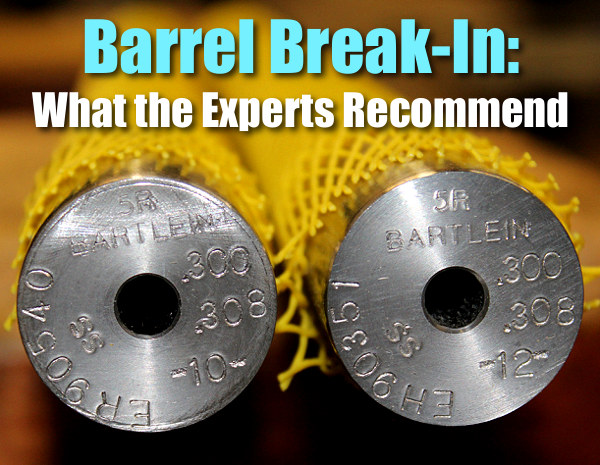
AccurateShooter.com will offer a new FREE service for Forum members and readers — Barrel Break-In. Knowledgeable shooters know that it can take 150 rounds or more for a barrel to achieve peak accuracy during Phase I of break-in. Then you want to do a lengthy Phase II break-in process to smooth the lands and grooves for reduced bullet drag and maximum velocity potential. Overall, the optimal barrel break-in schedule encompasses 500 to 700 rounds of careful firing under match conditions with a precise, cleaning regimen between each shooting cycle.
Very few gun owners have the time (or money) to do a full 500-round barrel break-in. The cost in bullets and powder is significant, not to mention time spent at the range. Thankfully AccurateShooter.com’s talented team of shooters will take that burden off you. You send us those brand new high-dollar match barrels — we do the work, using those barrels in our matches and varmint shoots, all the while carrying out the critical Phase I and II barrel break-in processes start to finish.
Barrel Break-In Carried Out By Champion Shooters
Our barrel break-in procedure is done by some of the nation’s top shooters. Here is AccurateShooter System Admin Jay Christopherson performing barrel break-in on a customer’s barrel during a competition. Jay won the F-Open Division at the 2020 Berger SW Nationals. Put your brand new match barrel in the hands of champions, to have it broken in the right way!
To participate in the Accurate Shooter Barrel Break-In Program (ASBBIP), just send us your chambered Krieger, Bartlein, Brux, Lilja, Douglas or other custom barrel and our testers will shoot it for six months, dutifully logging how the accuracy improves as the careful break-in process takes place over time. We guarantee that when you get your barrel barrel back, it will be thoroughly broken-in and ready to use. Enjoy peak accuracy for many hundreds of rounds! Then you can send us a new chambered barrel and we can do the tedious barrel break-in process for you again. Just pay for the shipping — we do the rest!
NOTE: Program limited to premium match barrels of approved calibers/chamberings and contours. Barrels must be chambered for one of the BAT, Borden, Kelbly, Defiance, and Barnard custom actions used by our shooting team. We reserve the right to retain the barrels for use in Nationals-level shooting matches.


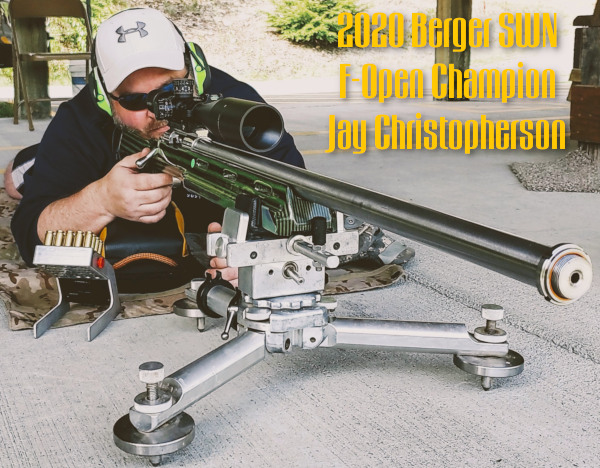

 I do all my own gunsmithing, including chambering, bedding, and stock work. I’m no Keith Weil, Alex Wheeler, or some of those other guys, but I feel pretty good about the work I do. I know that when there’s a mistake or imperfection, it’s MY mistake and I can live with that. I like to keep things as minimal as possible, so I shoot off a SEB Mini (no mods) and SEB rear bag.






 About the Zombies in the Heartland Match