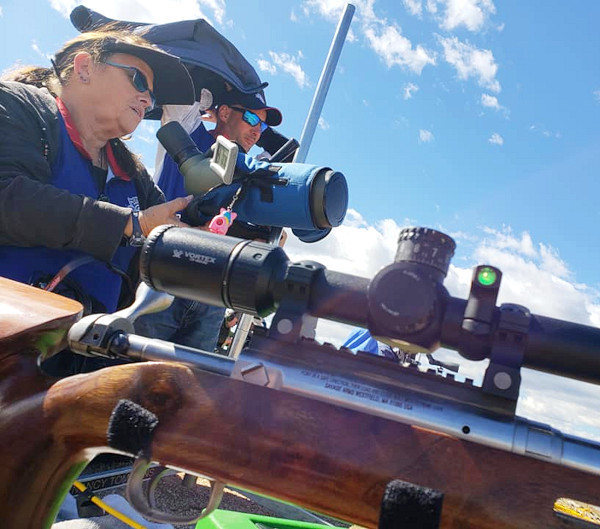
Look carefully at the photo above. That stylish black rear bag doesn’t look anything like an Edgewood or Protektor — it’s a Lenzi bag from Italy. The front Bag-holder on the SEB Neo Rest is also a Lenzi product.
Lenzi Rear Sand Bag
Pat Reagin of PMA Tool offers a really superb rear bag that comes from Italy. Pat tells us: “We are now carrying rear bags made by Italian benchrester Alberto Lenzi. Made in Italy, these Lenzi bags are AWESOME! They are available for short range and one that is slightly taller for long range.” The Lenzi rear bags feature a big, 8″x6″ footprint with a thick, slightly concave base that sits very flat on the bench top. Lenzi bags are very stable with a reassuring “dead” feel on the bench. Guys who have tried this bag really like it. Pat says: “I can’t explain it, but the bag seems to absorb energy/recoil better than other bags — the gun tracks a little better and I get back on target really well.” CLICK HERE for more information: Lenzi Long Range Rear Bag | Lenzi Standard Rear Bag.
– Black leather with Cordura at stock contact points with blue stitching.
– 1/2″ flat between medium ears.
– Heavy 8″x6″ base with built-in “donut”.
– Weight about 15.5 lbs filled with heavy sand in bottom & white sand in ears.
– Bags offered with Nylon Ear Covering OR 3M Slick Ear Fabric.
Lenzi Replacement Top for SEB NEO Front Rest
A common complaint about the SEB NEO rest is the rest top, specifically the three-piece bag. This rest top made by Alberto Lenzi addresses the issue by replacing the entire rest top. The rest top features a more conventional design and includes a traditional style front bag that conforms to IBS and NBRSA rules.
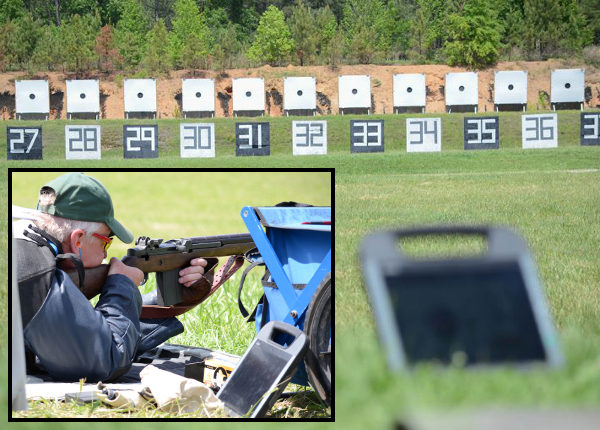
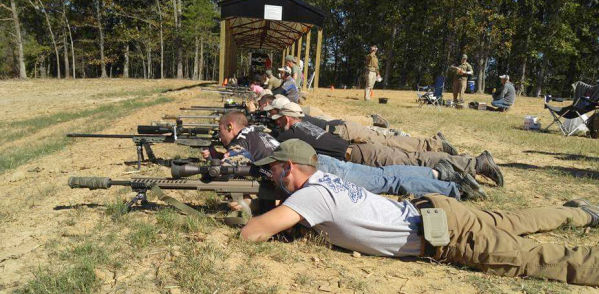
If your local shooting club wants to attract new members, and provide a new form of competition, consider starting a series of groundhog (varmint) matches. These can employ paper targets, metal silhouette-style targets, or both. Groundhog matches are fun events with straight-forward rules and simple scoring. You don’t need to bring windflags or load at the range, so a Groundhog match is more “laid back” than a registered Benchrest match. Normally there will be three or four rifle classes, so you can compete with a “box-stock” factory gun, or a fancy custom, as you prefer. Many clubs limit the caliber or cartridge size allowed in varmint matches, but that’s just to protect reactive targets and keep ammo costs down. In this article, Gene F. (aka “TenRing” in our Forum), provides a basic intro to Groundhog matches, East-Coast style.
Groundhog Matches Are Growing in Popularity
Though Groundhog matches are very popular in many parts of the country, particularly on the east coast, I’ve found that many otherwise knowledgeable “gun guys” don’t know much about this form of competition. A while back, I ordered custom bullets from a small Midwest bullet-maker. He asked what type of competition the bullets would be used for, and I told him “groundhog shoots”. He had not heard of these. It occurs to me that perhaps many others are unfamiliar with this discipline.
Groundhog matches have grown rapidly in popularity. There are numerous clubs hosting them in Pennsylvania, Maryland, and Delaware, as well as other venues. They are usually open to the public. Most Eastern clubs have five to twenty cement benches, and overhead roofs. At this time, there is no central source for match schedules. If you’re interested in going to a groundhog match, post a query in the AccurateShooter Forum Competition Section, and you should get some info on nearby opportunities.
How Matches Are Run — Course of Fire and Scoring
Unlike NRA High Power Matches, there is no nationwide set of standard rules for Groundhog matches. Each club has their own rules, but the basics are pretty similar from club to club. Paper groundhog targets are set at multiple distances. There are normally three yardages in the match. Some clubs place targets at 100, 200, and 300 yards. Other clubs set them at 200, 300, or 400 yards. At my club in Shippensburg, PA, our targets are placed at 200, 300 and 500 meters.
The goal is to score the highest total. The paper targets have concentric scoring rings. The smallest ring is normally worth ten points while the large ring is worth five points. The course of fire varies among the various clubs. Most clubs allow unlimited sighters and five shots on the record target in a given time period. Only those five shots on the scoring rings are counted, so that with three yardages, a perfect score would be 150 points. Tie breakers may be determined by total number of dead center or “X” strikes; or, by smallest group at the farthest distance.
Types of Rifles Used at Groundhog Matches
The same benchrest rigs found at IBS and NBRSA matches can be utilized (though these will typically be put in a ‘custom’ class). Though equipment classes vary from club to club, it is common to separate the hardware into four or five classes. Typical firearm classes can include: factory rifle; deer hunter; light varmint custom (usually a limit of 17 lbs.with scope); and heavy varmint custom (weight unlimited). Some clubs allow barrel tuners, others do not. Scope selection is usually unlimited; however, some restrict hunter class rifle scopes to 20 power. Factory rifles usually cannot be altered in any way.
Good, Simple Fun Shooting — Why Groundhog Shoots Are Popular
Forum member Danny Reever explains the appeal of groundhog matches: “We don’t have a governing organization, or have to pay $50 a year membership just to compete in matches. Sure the rules vary from club to club, but you adapt. If you don’t like one club’s rules, you just don’t shoot there. It’s no big deal.
There are no National records, or Hall of Fame points — just individual range records. If you want to shoot in BIG matches (with big prizes), there is the Hickory Ground Hog Shoot among others. If competition isn’t your bag, many clubs offer mid-week fun matches that you can shoot just for fun. You shoot the same targets but with a more relaxed atmosphere with no time limits.
The best part is you don’t have to shoot perfect at every yardage. You always have a chance because in this sport it really isn’t over until the last shot is fired. Typically ALL the entry money goes to the host club, with much of the cash returned back to the shooters via prizes. Junior shooters often shoot for free, or at a reduced rate. The low entry cost also encourages young guys to get involved who don’t have $4000 custom rifles or the money to buy them.
There isn’t a sea of wind flags to shoot over or to put up and take down. If the range has a couple of flags so much the better, but after all it is a varmint match. No pits to spot shots and slow things down either. If you can’t see your hits through your rifle scope or spotting scope well you are in the same boat as everybody else. That’s what makes it interesting/ sometimes frustrating!
M1 Garand Springfield Armory July 1941 production. Facebook photo by Shinnosuke Tanaka.
Want an authentic surplus M1 Garand? You can get these classic battle rifles from the Civilian Marksmaship Program (CMP) through direct sales as well as auctions. If you are looking to obtain an authentic, safe-to-shoot M1 Garand, the CMP is your best bet. Each M1 Garand rifle sold by the CMP is an genuine U.S. Government rifle that has been inspected, head-spaced, repaired if necessary, and test fired for function. Each rifle is shipped with safety manual, one 8-round clip, and chamber safety flag. CMP operations, warehousing, inspection & repair, test firing, sales order processing and distribution activities are headquartered in Anniston, Alabama.
M1 Garand Manufacturer Codes: SA (Springfield Armory), HRA (Harrington & Richardson Arms), IHC (International Harvester Co.), WRA (Winchester Repeating Arms)
The federal law that established the new CMP authorizes the Corporation to sell surplus .30 and .22 caliber military rifles, parts and ammunition to qualified U.S. citizens “for marksmanship”. Accordingly, the CMP sells government-surplus M1 Garands, .22 caliber target rifles, and small quantities of other rifles to qualified purchasers.
M1 Garands at CMP Retail Store in Anniston, Alabama.
How to Order an M1 Garand from the CMP
To purchase an M1 Garand through the CMP, you must be an adult U.S. Citizen, who is a member of an affiliated organization, and who has participated in a “Marksmanship Activity”*. This basically meas you need to join a a gun club and participate in a clinic or match. Proof of club membership and citizenship is mandatory for all ages. However, the marksmanship requirement is waived for those over 60 years. Garands must be ordered by mail or through official CMP Auctions. Orders are filled on a first-come, first-serve basis. Rifles of all grades are packed for shipment purely by “luck of the draw”. Most orders ship within 2-4 weeks. If price has changed after an order has been received, customers will be notified before new prices are charged. Free Shipping except Puerto Rico and P.O. Boxes. CLICK HERE for ordering information.
Most bolt-action rifle shooters work the bolt with their trigger-pulling hand. This is because most rifles sold to right-handed shooters come with right-side bolts, while “lefty” rifles come with left-side bolts. This “standard” configuration requires the shooter to take his dominant, trigger-pulling hand off the stock to cycle the bolt, then re-position his hand on the stock, and “re-claim” the trigger. Often the shooter must lift or move his head to work the bolt, and that also requires him to re-establish his cheek weld after each and every shot. Not good.
This really doesn’t make much sense for precision shooting with fore-end support*. There is a better way. If you leave your trigger hand in position and work the bolt (and feed rounds) with the opposite hand, then you don’t need to shift grip and head position with each shot. All this requires is a weakside-placed bolt, i.e. a left bolt for a right-handed shooter or a right bolt for a left-handed shooter. The video below shows a “Lefty” working a right bolt. Note how efficient this is:
As our friend Boyd Allen explains: “If you think about it, if you are going to work with a factory action where your options are left bolt and left port or right bolt and right port, and you are building a rifle that will only be shot from a rest, using the left/left for a RH shooter or using a right/right for a LH shooter works better than the conventional configuration”.
Shoot Like a Champ and Work the Bolt with Your Weakside Hand
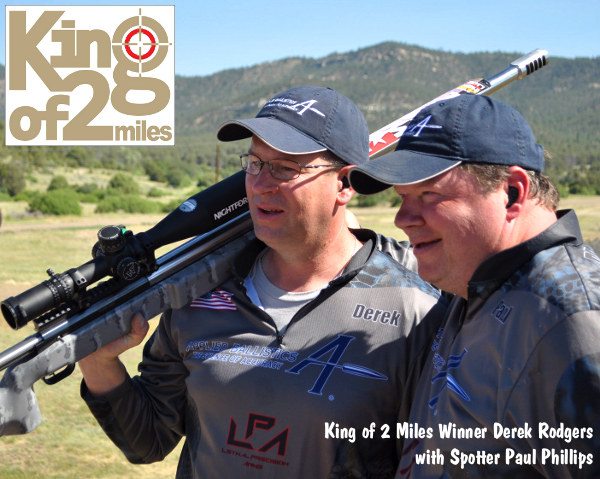
Derek Rodgers, the current F-TR World Champion, the reigning King of 2 Miles, and the only person to have won BOTH F-Open and F-TR U.S. National Championships, runs this kind of “opposite” bolt set-up. Yep, Derek shoots right-handed with a left bolt. Though Derek is a right-hander, he shoots with a Left Bolt/Left Port (LBLP) action. He pulls the trigger with his right index finger, while working the left-side bolt with his left (weakside) hand. This allows him to stay in position, and maintain his cheekweld. He places his right hand on the grip, while manipulating the bolt (and feeding rounds) with his non-trigger-pulling hand.
Current King of 2 Miles (and F-TR World Champion) Derek Rodgers
This is the rifle with which Derek won the 2013 F-TR National Championship.
*For true standing, off-hand shooting (whether in competition or on a hunt), a conventional strongside bolt placement makes sense, since the non-dominant arm must support the front of the rifle all the time. When shooting from bipod or rest, it’s a different story.
Registration is now open for the Civilian Marksmanship Program (CMP) 2019 Travel Games – a variety of rifle and pistol events held around the country throughout the year. The CMP’s Cup Matches, formerly known as the Creedmoor Cup Matches, will now be a fixture at Travel Games events. Cup Matches include a 4-Man Team Match, an EIC Rifle Match, and three days of 80-Shot events.
2019 Travel Games Schedule:
26 April-5 May – Eastern CMP Cup & Games, Camp Butner, NC
7-9 June – Talladega D-Day Matches, Talladega, AL
16-22 September – New England CMP Cup & Games, Jericho, VT
7-13 October – Oklahoma CMP Cup & Games, Oklahoma City, OK
19-24 November – Talladega 600, Talladega, AL
IMPORTANT: The CMP Travel Games 2019 schedule includes major changes! The Western CMP Travel Games event, usually held in Phoenix in October, will NOT be held 2019. However, the Western Games WILL resume in March 2020. For 2019, the Oklahoma CMP Games event will move from its typical April time-frame to October. Additionally, the Talladega 600 Match has been moved up from December to November.
Oklahoma CMP Cup & CMP Games Matches – The Oklahoma Games were moved from April to October in place of the Western CMP Games & CMP Cup Matches, which will return March 13-22, 2020.
Eastern CMP Cup & CMP Games Matches – The Eastern Games will revert back to a schedule used in the past, with CMP Games matches fired first, followed by Cup Matches to conclude the event.
Take Note: There are NO Western Travel Games in 2019 — Western Games Come Back in 2020.
Competition and Small Arms Firing Schools
Events fired at the Travel Games include a mix of modern and vintage military rifle competitions like the John C. Garand, Springfield, Rimfire Sporter, Carbine and Vintage Sniper Matches. The Travel Games also feature a growing field of pistol opportunities, as well as a Small Arms Firing School for new and experienced marksmen. Other informative clinics are conducted throughout the Games Matches by qualified CMP staff members.
Travel Games Will Employ Electronic Targets
E-Targets Means NO PIT DUTY
Rifle competitions will be fired on CMP Targets, a modern electronic target system that instantaneously produces shot placement and eliminates the need for pit duty. This allows quicker matches, with faster relays, and less wasted time. There is also less physical strain for older competitors.
For more information on the CMP Travel Games and/or to register, visit: CMP Travel Games Page.
PRS and NRL fans — and really anyone interested in “move and shoot” type competitions — should definitely watch this video. It’s excellent. No hype folks — this Editor has watched dozens of PRS/tactical videos and this is one of the best filmed and edited. You get a real feel for the competition — the challenges, the gun-handling, the hardware, and, of course, the camaraderie.
GREAT VIDEO — WATCH PRS Finale Down Under in Australia:
NOTE: Click Speaker Icon to play audio.
This video covers the 2018 Vortex Season Finale in Buchan, Victoria, Australia. This was the culmination of the Australia Precision Rifle Series (AUS PRS). To say it looks like fun is an understatement. We wish we could have participated.
More Aussie PRS Matches in 2019 Starting This Month
There are more Aussie Matches in 2019, starting with a Victoria match at the end of this month, on March 29-31, 2019. So far, FIVE matches are locked in for the 2019 season, with another TWO being planned:
March 29th – 31st | SSAA Mildura, VIC
May 10th – 12th | Pracitcal Shooting SA (Monarto, SA)
Shooting USA will broadcast a great episode today, February 27, 2019. There are three segments worth watching. First the TV show spotlights the popular GAP Grind, a Pro-Am PRS event at the K&M Precision complex in Tennessee. Then this episode covers Hornady’s Zombies in the Heartland multi-gun match. This popular event, hosted in Nebraska every year, is one of the biggest three-gun shoots in the nation. Finally there is a historical feature on the 7-barrel Nock Volley gun from the late 1700s.
SHOW TIMES: This Shooting USA Episode airs February 27, 2019 (Wednesday) at 9:00 PM Eastern and Pacific; 8:00 PM Central.
PART ONE: GAP Grind Feature on Shooting USA
Lots of Action, with 20+ Stages
The GAP Grind is a notoriously challenging, “high tempo” match with minimal down-time between stages. Over the course of 20+ stages, competitors will fire 200+ shots at a variety of steel, paper, moving, and reactive targets out to 1,200 yards. Targets vary in size/difficulty based on the shooter’s position, distance, and time allotted. Most stages include “stressors” — i.e. time limits or required movement(s).
The GAP Grind is held at the impressive K&M Shooting Complex:
Lots of Action, with 20+ Stages
The GAP Grind is a notoriously challenging, “high tempo” match with minimal down-time between stages. Over the course of 20+ stages, competitors will fire 200+ shots at a variety of steel, paper, moving, and reactive targets out to 1,200 yards. Targets vary in size/difficulty based on the shooter’s position, distance, and time allotted. Most stages include “stressors” — i.e. time limits or required movement(s).
Josh Temnnen Facebook photo.
GAP Grind Hardware
You’ll find the latest and greatest PRS hardware at the GAP grind. Notable this year was the fact that many top competitors “stepped down” from the 6.5/6mm Creedmoor to the smaller, more efficient 6mm Dasher (and other 6BR Improved) cartridges. The Dasher offers excellent accuracy with less recoil than the 6.5 Creedmoor. Also, many top shooters are now running Kahles optics. Photo by Shelley Giddings.
PART TWO: Zombies in the Heartland
Pandemic: Zombies in the Heartland
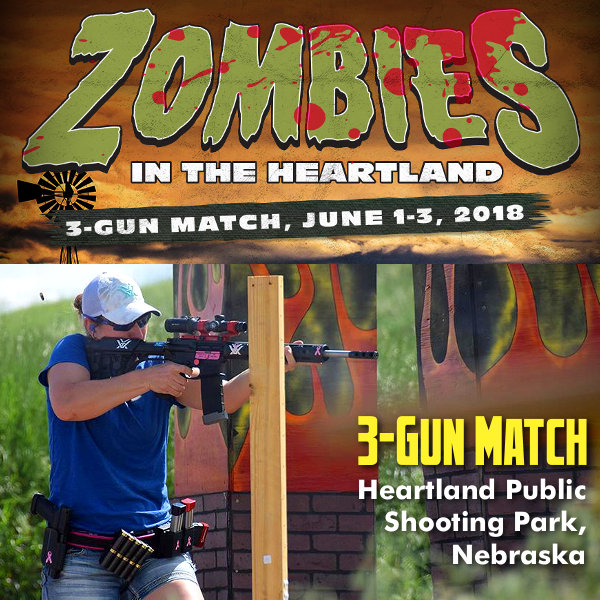
Every year Hornady hosts the very popular Zombies in the Heartland event. This “Pandemic” 3-Gun fun match, one of the biggest three-gun shoots in the nation, was hosted by Hornady this past summer, June 1-3, 2018 at the Heartland Public Shooting Park in Grand Island, Nebraska. The Pandemic featured a rich prize table worth over $150,000. Prizes include pistols, rifles, shotguns, scopes, AR uppers, gun parts, and gear of all kinds.
The Pandemic is a veritable theme park for shootists, with many fun stages and innovative targets. Many unique, reactive zombie targets have been developed specifically for this match. The use of paper targets has been minimized — so it’s mostly “bang and clang”.
There were ten multi-gun stages this past year. Rifles, pistols and shotguns are used on most stages. There were also fun side-matches. We highly recommend you watch the video below to see highlights from a past Pandemic.
2017 Zombies in the Heartland Highlights Video. Guys, this well-made video is WORTH WATCHING! This video offers Shooter’s POV views of many stages including full auto:
The MasterPiece Arms BA Chassis is a leading product choice according to a recent Precision Rifle Blog (PRB) survey of Precision Rifle Series (PRS) and National Rifle League (NRL) competitors. Second were Manners Stocks, and third were Foundation-brand systems. PRB Editor Cal Zant surveyed 150 PRS and NRL precision rifle shooters to determine what gear they run in long range rifle competitions. The MPA BA Competition Chassis ranked #1 with 27% of the PRS and NRL shooters surveyed running this particular modular chassis system. READ Full PRB Stocks and Chassis Survey.
MPA BA Competition Chassis
MPA has several configurations of its highly successful BA Chassis System, with the MPA BA Competition Chassis named the Official Chassis of the 2019 PRS. This competition version includes all the standard features of the original, but includes special enhancements for long range tactical rifle competitions, such as the PRS and related events. There are additional hole locations on the fore-end for locating the rotating barricade stop, which locks the rifle in place when shooting on a variety of barricade designed stages. The spigot mount attaches to the front of the fore-end, giving the shooter additional space to mount their bipod. A bag rider attachment provides better rear bag recoil management (an Enhanced Bag Rider is available for an additional fee).
MPA president Phil Cashin is an active PRS shooter who finished in the top 100 in 2017 and qualified for the finale last year. Cashin, shown in the video below, regularly tests out new ideas and upgrades in actual competition and seeks out feedback from top tactical competitors. “It’s a great honor [for MPA] to be named the most popular brand of chassis/stock systems amongst the top PRS and NRL competitors[.] We look forward to developing even more products with the long-range precision shooter in mind,” said Cashin.
MPA Production Class Rifle
MPA also offers a PRS Production Class Rifle (PCR) using the MPA Chassis system mated to a Savage Model 12 action. Production Class rifles may cost no more than $2000.00 before optics. Designed specifically for the new PRS Production Class, MPA’s PCR Competition Rifle offers many premium features yet stays under the $2,000 Class limit. The Savage action is upgraded with a Rifle Basix 2-lb trigger, and the adjustable, modular chassis offers a bag rider, barricade stop, and built-in bubble level.
How would you like to get marksmanship training from the reigning High Power National Champion? Get yourself to Oregon this June and you can. SFC Brandon Green of the USAMU will be one of the instructors for the CMP Small Arms Firing School in Eagle Creek, Oregon in June. A three-time National High Power Champion, Brandon is one of the greatest marksmen on the planet. Yesterday he posted: “Three of us will be at the SAFS/junior clinic in Oregon. Come check it out!” If you can make it to Oregon June 8-9, we definitely recommend this class. It will be the only SAFS in the Western USA this year.
Along with the June SAFS in Oregon, there will be eight other rifle SAFS programs this year at locations nationwide. Some of these will be held in connection with major matches, such as the Eastern CMP Games in April at Camp Butner.
CMP Rifle SAFS Locations and Dates:
1. Eastern Cup & Games Matches, April 30 | Camp Butner, NC
2. Douglas Ridge Rifle Club, June 8-9 | Eagle Creek, OR (Range Officer Class is Jun 7)
3. Fairfax Rod & Gun Club, June 22-23 | Manassas, VA
4. National Matches, July 27-28 | Camp Perry, Port Clinton, OH
5. Oak Ridge Shooting Assoc., August 24-25 | Oak Ridge, TN
6. Camp Ethan Allen, September 19 | Camp Ethan Allen Training Site, Jericho, VT
7. Fort Hill Rifle & Pistol, September 28-29 | Keyser, WV
8. Oklahoma Cup & Games Matches, October 10 | Oklahoma City Gun Club, OK
9. Talladega 600 Matches, November TBD | CMP Talladega Marksmanship Park, AL
Led by certified military and/or civilian instructors, SAFS programs offers high level training in a safe, supportive setting, with rifles and ammo provided. The school is structured toward teaching new shooters, so no past firearm experience is required, though intermediate and advanced marksmen are also welcome to participate. During the course, students will learn basic instruction and firing practices, competition skills and live range firing, as well as compete in a real M16 EIC Match.
CMP Provides Rifles and Ammo at Small Arms Firing Schools
At each SAFS, equipment, including rifles and ammunition, will be provided. Personal equipment, such as a shooting jacket or glove, will be permitted during the course as well. Participants are required to bring hearing protection and eye protection is strongly encouraged.
For more information or ask additional questions, please contact Amy Cantu at acantu@thecmp.org or (419) 635-2141 ext 602. The Small Arms Firing School (SAFS) has been an instrumental source for individuals to delve into firearm safety and competition technique. The SAFS course has been a staple event in the National Matches at Camp Perry since 1918 and has expanded its outreach to other areas of the country through CMP’s Travel Games matches in recent years.
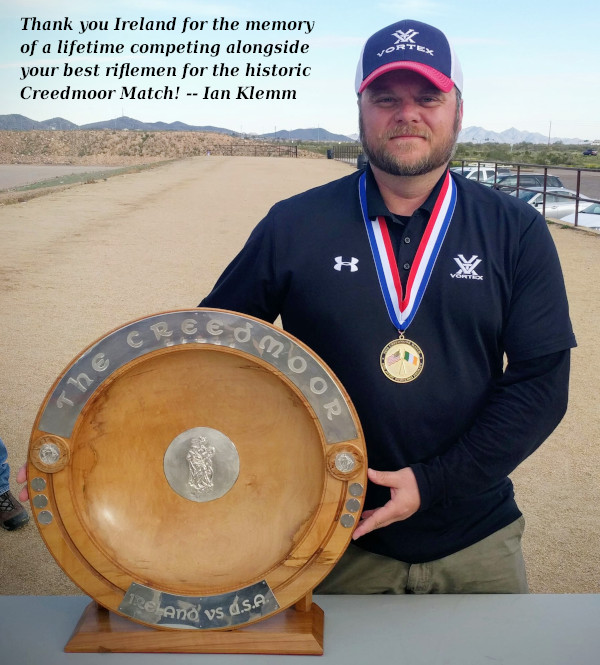
The Creedmoor Cup is an historic challenge match between American and Irish marksmen. The first match was held in in 1874 between American and Irish Teams in Creedmoor, New York. (Read Match History). The Match was revived in 2011 and is now held every four years.
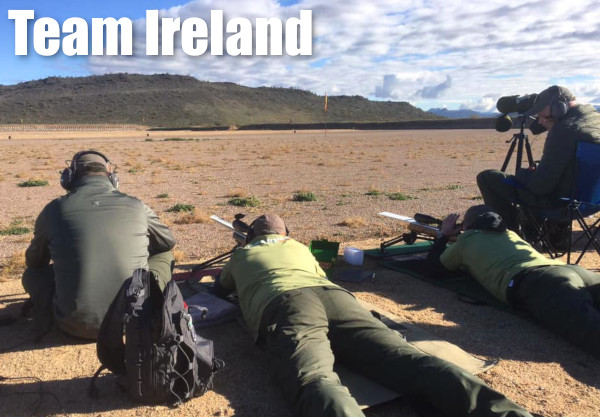
In 2019, the match was held this week at the Ben Avery Range in Arizona, following the Berger Southwest Nationals. It proved to be a great match, with Team USA coming out on top. Erik Cortina stated: “What a great experience this has been. Team USA won the 2019 Creedmoor cup vs Ireland. It had been over 100 years since match was shot in the United States. Glad to see this tradition continue.”
Congrats to the Members of Winning Team USA:
F-TR Riflemen
Alan Barnhart
Ellis Berry
David Conrath
Tracy Hogg
Ian Klemm
Matthew Schwartzkopf
Ed Shelley
Keith Trapp
F-Open Riflemen
Larry Bartholome
Erik Cortina
Ken Dickerman
David Gosnell
Rick Jensen
Jim Murphy
Pat Scully
Keith Weil
Coaches
Kent Reeve (Head Coach)
James Crofts
Scott Fulmer
Bob Seabold
Nancy Tompkins
Team Staff
Captain Phil Kelley
Vice-Captain Dan Bramley
Adjutant Stephen Ireland
Team USA Captain Phil Kelly told us this was a great match: “USA wins the Creedmoor Cup in a great competition with Team Ireland! Two days of cold and windy conditions challenged both 16-shooter teams. Final ceremonies included Native American dancers and great camaraderie among all the competitors. Thank you to all from Team Ireland who made the trip! The best of competitors and friends.” Phil added: “Special thanks to additional Creedmoor Committee members including Michelle Gallagher, Pete Ricci, and Mark Walker. We look forward to the next gathering in four years. Safe travels all.”
Nancy Tompkins looks down-range. With the wind-chill, competitors and coaches dressed warm.
Not Your Typical Warm Arizona Days at Ben Avery
There were variable conditions at the match — first easy, then tough. USA Captain Phil Kelley reported: “On Day 1 of the 2-day match, things started good then got tougher. The morning and 800-yard line saw 34° and light winds leading to high scores.
That changed as the 16-shooter teams made their way to the 900-yard line as sun, moderate wind and building mirage hit the range providing more challenging conditions.
After an excellent lunch both teams were in for a challenge. Winds of 12-16 mph with constant angle changes and surging mirage made communications and coordination among five coaches critical. The wind chill also dropped as teams stayed on the line for the majority of allotted time.”
The First-Ever Creedmoor Challenge Match in 1874
The Irish International Shooting team arrived in New York on the 16th of September and proceeded to “take in the sights”, which was understandable, before some practice at the Creedmoor range. On September 26th they presented themselves for the match with confidence and in high spirits. The crowds that day were reported to be between 5,000 and 10,000 strong, which showed the huge support already growing for the fledgling sport in America.
The course of fire was 15 shots to each man at 800, 900, and 1000 yards. Unfortunately, the details of each mans scores at the individual distances have been lost to time but we do know that the Americans were well ahead after the 800-yard shoot. The Irish then caught up after the 900-yard and finished the 1000-yard shoot ahead by 1 point. The Americans still had one man left to shoot and it came down to his very last shot with which he scored a 4 giving the American team the win over the Irish by 3 points.
Post-Competition Camaraderie and “Craic” at the Pub
“Craic” is an Irish term referring to positive interaction among people through conversation, stories, and music. The Craic was strong after the 2019 Creedmoor Match.
Desert Sharpshooters posted: “The ‘Craic’ is amazing tonight with the Irish rifle team to finish the Creedmoor. Thank you to the USA team members that came out tonight to show the Irish a good time. This is truely what the Creedmoor Cup is about, Friendship and good times.”


 Groundhog Matches Are Growing in Popularity







 Pandemic: Zombies in the Heartland