The 2016 World Speed Shooting Championships (WSSC) were held August 25-27 at the Hogue Action Pistol Range in San Luis Obispo, California. This prestigious U.S. Practical Shooting Association (USPSA) match attracted 125 competitors from around the world, who competed in eight precisely-configured Steel Challenge stages. At the WSSC, it’s all about speed — getting hits on steel in the shortest possible time. And no one on the planet is better at that than Max Michel Jr., King of the Steel Challenge.
This year, Max Michel captured another World Championship title, finishing 0.85 seconds ahead of second place K.C. Eusebio, with B.J. Norris placing third. This was Max’s fourth straight WSSC title and his seventh overall. We’d call that dominance. At this year’s competition, Max logged a best-ever overall score of 74.84, while setting a new world record on the final stage (Outer Limits). Max now owns the overall course world record and seven (of eight) stage world records.
Not to be outdone by Max, Taurus® Team Captain Jessie Duff took her sixth consecutive Ladies Open WSSC Title, and Duff won the Overall Single Stack World Speed Shooting Championship as well. As in years past, Jessie dominated the Women’s Division, but she was most proud of her Single Stack Overall Victory: “To win an overall championship title has been a dream of mine since I started shooting, something I’ve spent all my time working towards. I couldn’t be more proud to win the overall Single Stack title with my Taurus, allowing them to share in this victory with me!”
With a 30-year heritage, the WSSC Steel Challenge Match draws the world’s top speed shooters — both men and women. The three-day match is unique in that competitors shoot different guns each day: Rimfire on Thursday, Iron Sights on Friday, and the full-boogie Open guns on Saturday. The stages are precisely set up with exact Steel Challenge target spacing and distances. That creates an equal playing field at all WSSC events so stage record times can be set at any WSSC venue.
Ruger has created a series of videos showcasing competitive shooting competitions including: Rimfire Challenge, Metallic Silhouette, Biathlon, IDPA, SCSA (Steel Challenge), USPSA, and Cowboy Action shooting events. Log on to Ruger’s Beginner’s Guide to Shooting Competitions webpage to see informative videos for these sports. Rimfire Competition is affordable and fun, Silhouette is a great family sport, and the Steel Challenge is the ultimate pistol speed-shooting event.
INTRO to RUGER RIMFIRE CHALLENGE Matches
INTRO to STEEL CHALLENGE Pistol Competition
Ruger also offers many other cool videos, both on its Video Webpage and on Ruger’s YouTube Channel. On YouTube, you’ll find a great four-part Tactical Carbine video series, hosted by Dave Spaulding, winner of the 2010 Trainer of the Year award by Law Officer Magazine. There are also a number of videos featuring the Ruger Precision Rifle (RPR) a popular (and affordable) rig for Tactical/Practical shooting competitions. The video below explains the RPR’s adjustments:
Emil Kovan is one of the top F-Class shooters in the world. He won the 2014 United States F-Open Championship. Earlier this month Emil finished second in F-Open Division at the 2016 Canadian National F-Class Championship in Ontario. Emil actually tied Open-class winner Shiraz Balolia for overall score AND “V”-count, but Emil was awarded second on the tie-breaker.
“What are the best components for an F-Open class rifle, and why?” That’s a question that I get asked all the time and will try to answer in this article. Two months ago, I was contacted by Duane, a gentleman I met at the 2015 F-Class Nationals. He was interested in building a rifle with the new Master Class Low Profile F-Open Stock, created by Carl Bernosky and Alex Sitman of Master Class Stocks.
I have known Alex Sitman for many years, and use his stocks exclusively, but was not very familiar with his new Low Profile F-Open stock. After a brief conversation with Alex, I placed an order, and had the stock inletted and bedded at my shop in a month. My first impression was “Wow that’s a long stock” — the forearm is significantly longer than on the original Master Class F-Class prone stock. I bolted the barreled action in, and squeezed the end of the forearm and barrel together, the stock flexed a little bit, but not as much as other designs that I have tested. I think that’s due to having “more meat” in the receiver area. The full stock depth continues farther forward that on some other “low profile” designs. That makes the stock stiffer in the vertical plane, reducing the hinging effect forward of the action. The stock was finished in gloss black per the customer’s request. Interestingly, I found that the multiple layers of paint and clearcoat stiffened the stock up quite a bit.
CLICK IMAGE below for full-screen version
Low Center of Gravity Tames Torque
Compared to the original Master Class F-Open stock, the barrel sits about an inch lower. Lower center of gravity equals less torque, and that is very important when shooting heavy bullets in fast twist barrels. Another significant improvement is that the toe of the stock is flat and parallel to the forearm. I added a 3/4″ track rail in the rear, and milled the underside of the fore-end to create two parallel “rails” in the front to help the stock track better.
One of the biggest reasons why I like Master Class stocks, is the pistol grip. I don’t shoot “free recoil” and a comfortable pistol grip is super important to me when selecting a stock. The new Master Class Low Profile stock shares the same grip as the old model. This allows the stock to accommodate either a “hard hold” style or a more free-recoil style of shooting — whatever the rifle’s owner prefers. This design versatility is one reason I recommend Master Class stocks. Shooters may experiment with either shooting style to find what suits them best.
Cartridge Choice — A 40° .284 Win Improved
Duane decided to have the barrel chambered for my 284 KMR IMP (Improved) wildcat. What is .284 KMR IMP and why choose it over the straight .284 Winchester? Improved by definition means “made better”, I took a great cartridge, and modified it to increase capacity, reduce pressure, and increase brass life.
There are many “improved” variants of the original .284 Winchester: 7mm Walker, .284 Shehane, .284 Ackley and so on. My version, the 284 KMR IMP, shares the .010″ blown-out sidewalls of the .284 Shehane, but I have further increased the case capacity by changing the shoulder angle from 35 to 40 degrees. The 284 KMR IMP allows you to almost match magnum cartridge velocity in a standard-bolt-face action. If you want to run 180gr-class 7mm bullets over 2900 FPS, it is cheaper and more convenient to have a barrel chambered in 284 KMR IMP than to spend $650 for a magnum bolt.
Tuning Loads for the .284 Win Improved Cartridges
The 284 KMR IMP seems to have two nodes, one around 2820 fps and other at 2940 fps. My match load clocks at 2935 fps with single-digit ES. Note –I selected that load based on accuracy, NOT raw speed. A lot of novice (or hard-headed) shooters make the mistake to push their cartridges to the max, and disregard more accurate loads at lower velocity.
The sport of F-Class is rapidly growing, and the equipment used is improving constantly. I remember that only few years ago, an F-Open rifle that could shoot sub-one-inch of vertical at 300 yards was considered competitive. Now, we are pursuing sub-one-inch vertical at 600 yards! It takes a great rifle to approach that goal, but it is also up to the shooter to learn and experiment as much as possible in order to achieve success.
Dies for an Improved .284 Win Cartridge
One of the biggest challenges in campaigning a wildcat cartridge has been obtaining great dies. When searching for custom dies, it almost seems like that the odds are stacked against us. The most common problem is wait-time — custom die orders can take months to be completed. Also, most custom die makers want you to send them two or three cases, each fire-formed three times. I find that funny because if could somehow properly size the cases for three fire-forming cycles, I would not need a sizing die.
Custom-made dies should size the case just right, but sometimes the die’s internal dimensions are slightly off, and this leads to problem number two: dies sizing too much (or even worse) too little. I had a one “custom” die that would not size the bottom of the case enough. This made the extraction of fired cases very difficult. I feel that the best option (if available) for shooters interested in wildcat chambers is to have their gunsmiths make the dies. I offer that die-making service in addition to barrel chambering.
BAT Machine “M” Action
Duane decided to use a BAT M action for this rifle, and I think that he could not have made a better choice. We are blessed with many good match-quality receivers: Barnard, BAT, Borden, Kelbly, Nesika, and Stiller just to mention a few. These are all very well-made and suitable for F-Class. Among BAT Machine Co.actions, I like BAT models M, MB, and 3LL best. I prefer these because because of their size (large bedding footprint) smoothness, timing, options available, and last but not least visual appearance.
Trigger: I recommend and use Jewell triggers. Other good options are: Kelbly, CG Jackson (good 2-Stage) Anschutz (best 2-Stage for Bat and Kelbly actions), Bix’N Andy, and David Tubb.
Barrel: Duane made another good choice here. He decided to go with a Brux 1:8.5″-twist, 4-groove cut-rifled barrel. If you look at the F-Class and Long Range benchrest equipment lists, you will see that cut-rifled barrels are currently dominating. Many records have been shot with both button-rifled, and cut-rifled barrels. I have shot both, and prefer cut-rifled barrels. I am not saying that button-rifled barrels are not capable of shooting as well as cut-rifled barrels, but on average, in my experience, four out of five cut-rifled barrels (from top makers) will shoot well, vs. three out of five buttoned barrels. YMMV, but this is what I’ve observed.
Scope: Duane’s rifle was fitted with a Nightforce 15-55x52mm Competition scope with DDR-2 reticle. This optic is ultra clear, reasonably lightweight (28 oz.), super reliable, and has 1/8 MOA clicks — what you want for long range F-Class competition. In this 15-55X NF model, I like the DDR-2 reticle best, because fine cross hairs (FCH) are hard to see in heavy mirage. The DDR-2 has a heavier horizontal line, with a center dot. March scopes are also very popular and very well-made.
Thanks for reading, and keep ‘em in the middle…
Emil Kovan Competition History:
– 2014 F-Class Open National Champion
– 2016 F-Class Open Canadian Championship, Silver Medal (tied for first on score)
– 2015 F-Class Open National Championship, Silver Medal
– F-Class Open National Championship Teams, 2015, 2014, 2013, Shooting Team Member
– Over 15 wins in Regional and State Championships in Palma, F-TR, F-Open
McMillan Fiberglass Stocks is introducing a new F-Class Open Division stock. This offers a low profile fore-end and parallel geometry for improved tracking. This is similar to McMillan’s previous F-Open stock, but with important enhancements. Here is Kelly McMillan’s report:
“Our new Kestro is … made specifically for F-Class Open competition. Notice we have kept the low profile fore-end while increasing the mass and rigidity. The fore-end is not only ‘dead nuts’ in line with the butt stock, but it is also on an exactly parallel plane so when it recoils there is no rise or lateral shift in the cross hairs.
This model comes with an integral adjustable cheek-piece and can have our standard buttplate or our lightweight 3-way adjustable butt plate. My estimation is that this stock will weigh as light as 4.5 pounds fully dressed, or as much as 8 pounds depending on what you need.
We are currently working on the cheek-piece free model for those of you who don’t put your face on the stock. One more thing, this color combination we call a Tiger Stripe Maple.” Editor’s NOTE: Though “maple” is in the stock color name, this is a reinforced fiberglass stock, not wood.
John Whidden of Whidden Gunworks used the .243 Winchester cartridge to win the 2016 NRA Long Range Championship, his fourth LR title at Camp Perry. John selected the .243 Win because it offers excellent ballistics with manageable recoil. John says that, at least for a sling shooter, the .243 Win is hard to beat at long range. Yes, John says, you can get somewhat better ballistics with a .284 Win or .300 WSM, but you’ll pay a heavy price in increased recoil.
.243 Winchester — The Forgotten 6mm Cartridge for Long Range
by John Whidden, 2016 National Long Range Champion
My experience with the .243 cartridge for use as a Long Range High Power cartridge dates back about 10 years or so. After building a .300 WSM, I realized that the recoil was hurting the quality of my shots. The WSM shot great, but I couldn’t always execute good shots when shooting it. From here I built a 6.5-284, and it shot well. I also had a very accurate 6mmBR at the time, and my logic in going to the .243 Win was to get wind performance equal to the 6.5-284 with recoil similar to the 6mmBR. The experiment has worked out well indeed!
Championship-Winning Load: Berger Bullets, Lapua Brass, and Vihtavuori N160
For a load, currently I’m shooting Lapua brass, PMC primers (Russian, similar to Wolf), VihtaVuori N160 single-base powder, and Berger 105 grain Hybrid bullets. I switched to the Hybrid bullets fairly recently at the beginning of the 2015 season. Previously I shot the 105gr Berger hunting VLDs, and in testing I found that the Hybrids were just as accurate without having to seat the bullet into the lands. The velocity of this combination when shot through the excellent Bartlein 5R barrels (32” length) is around 3275 FPS.
For my match ammo, I seat the Berger 105 Hybrids well off the lands — my bullets are “jumping” from .035″-.060″. I only use one seating depth for ammunition for multiple guns (I know some benchrest shooters will stop reading right here!) and the bullets jump further in the worn barrels than in the fresh barrels. The bullets are pointed up in our Bullet Pointing Die System and are moly-coated. The moly (molybdenum disulfide) does extend the cleaning interval a little bit, probably 20% or so. The Lapua .243 Win brass is all neck-turned to .0125″ thickness.
Whidden’s .243 Win Ammo is Loaded on a Dillon
My loading process is different than many people expect. I load my ammo on a Dillon 650 progressive press using our own Whidden Gunworks dies. However powder charges are individually weighed with a stand-alone automated scale/trickler system from AutoTrickler.com (see below). Employing a high-end force restoration scale, this micro-processor controlled system offers single-kernel precision. The weighed charges are then dropped into the cases with a funnel mounted to the Dillon head.
The Lapua .243 Win brass is full-length sized every time, and I run one of our custom-sized expanders in my sizer die. The expander measures .243″ which yields the desired .001″ neck tension. In my experience, the best way to get consistent neck tension is to run an expander in the case neck at some point. When sizing the case neck by a minimal amount such as is the case here, I don’t find any negative points in using an expander in the sizer die.
In my experience, the keys to accurate long range ammo are top quality bullets and the most consistent neck tension you can produce. From these starting points, the use of quality components and accurate powder measurement will finish out the magic.
Great Ballistics with 6mm 105s at 3275 FPS
Running at an impressive 3275 FPS, Berger 6mm 105 grain Hybrids deliver ballistics that are hard to beat, according to John Whidden:
“My .243 Win shoots inside a 6.5-284 with 142-grainers. Nothing out there is really ahead of [the .243], in 1000-yard ballistics unless you get into the short magnums or .284s and those carry a very significant recoil penalty. In the past I did shoot the 6.5-284. I went to the .243 Win because it had similar ballistics but had much less recoil. It doesn’t beat me up as much and is not as fatiguing.
With the .243 Win, there’s no tensing-up, no anticipating. With the reduced recoil (compared to a 7mm or big .308), I can break and shoot very good quality shots. I find I just shoot better shots with the .243 than I ever did with the 6.5-284.”
The Rio Olympics shooting competition has ended, and USA Shooting Team’s medalists are all women. Ginny Thrasher of Virginia got the USA medal count off to a great start by winning the first gold medal of the 2016 Olympic games in Women’s Air Rifle, and Corey Cogdell-Unrein repeated as bronze medalist in Women’s Trap. By winning a bronze medal in skeet last Friday, 37-year-old Kim Rhode became the first female and summer Olympian ever to win medals in six consecutive Olympic Games. Read coverage in the LA Times, USA Today and Associated Press. Kim Rhode’s Olympic Odyssey.
Shooting Sports USA profiled Ginny Thrasher, winner of the very first Gold Medal awarded at the Rio Olympic games:
For 36 hours, Thrasher was the face of Team USA as the lone gold medalist, winning the first medal of the 2016 Olympic Games. The 19-year-old WVU sophomore was propelled into the media spotlight…
Thrasher explained how she coped with the pressures of competing in the most important sporting event on earth:
“I think this competition is one where you can mentally out-think yourself, and that’s the danger. For me, just being very focused. During the match I started out with some struggles, and I had to come off the line and my Olympic coach down there said, ‘Ginny, all you can do is shoot the best you can.’ I got back on the line, and that’s what I did. I shot the best that I could. I had a very bad hold, but it didn’t matter. Once I got into the final, I was very much focused on my breathing, and that was the point where all the training and all the discipline just came through for me. All I did was focus on my breathing and let my body do what it knew how to do.”
John Whidden of Whidden Gunworks won his fourth Long Range National Championship at Camp Perry this month. In this article, the first of a three-part series on Long Range competition, John shares his thoughts on wind strategies and keeping one’s composure in pressure situations. John tells us Camp Perry was very challenging this year: “The 2016 Long Range Championship will go down in my memory as one with quick wind changes that made it very easy to shoot a 9.”
How to Win at Long Range Shooting
(Or at least what worked at the 2016 National Championships)
by John Whidden, 2016 National Long Range Champion
The NRA Long Range National Championships at Camp Perry Ohio are now in the history books and the competitors are home and reflecting on what they could have done to improve their score. I think anyone who has ever competed always knows they could have done even better if they had changed this detail or that aspect. This is the case regardless of where a shooter places in the standings, even for the winners.
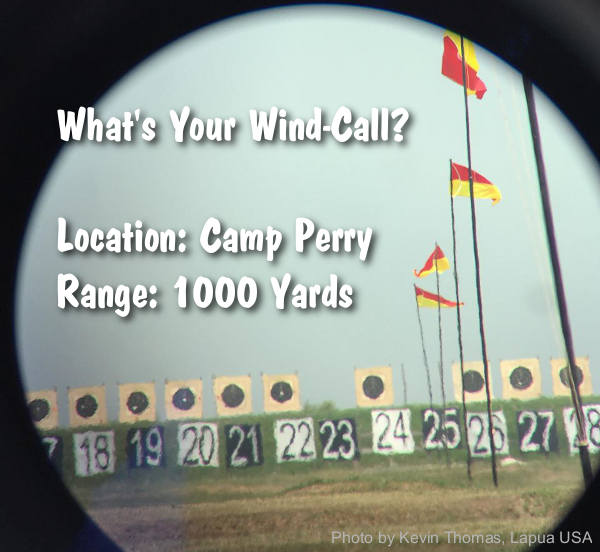
This year the winds were reasonably tough. We mostly have either headwinds or winds from the 2-3 O’clock positions with speeds often in the 9-11 mph range. The changes came quickly and we had to be on our toes. Fortunately the course of fire allows the shooters some options. For the 1000-yard matches, we typically have 33 minutes for preparation, an unlimited number of sighter shots, and then 20 shots for record. Many shooters will shoot about 3-5 sighters and complete the task in about 15 minutes.
The 2016 Long Range Championship was definitely a match where you had to fight for every point during the whole event.
In preparation for shooting by watching the wind, I realized that the quick changes were going to add to the difficulty. Given the conditions, I chose a strategy of choosing only one condition to shoot in and waiting during any changes away from my desired condition. This plan meant that I would have to be very patient and plan to use all of my 33 minutes allotted time if needed.
The sun was shining for most of the matches so we had mirage to look at. There are plenty of flags at Camp Perry and I was glad for them!
As the wind speeds get higher I think a shooter should study the appearance of the flags. Some people look at the flag, and some really LOOK at the flags. The difference is observing things like how many ripples are in the flag, how far the flag stands off the pole, the angle of the flag in a headwind or tailwind, and how high the tip of the flag is relative to where the flag is attached to the pole. These details make all of the difference.
Time Management and Patience
Patience in wind reading can be a virtue. Choosing a condition and being patient has probably yielded more success in my long range wind reading than any other method. It’s not the only way to go, but on a day when you have time available and patience on your side it can yield a win! It should be obvious now that keeping a timer and managing the available time along with the number of shots remaining is an important part of this.
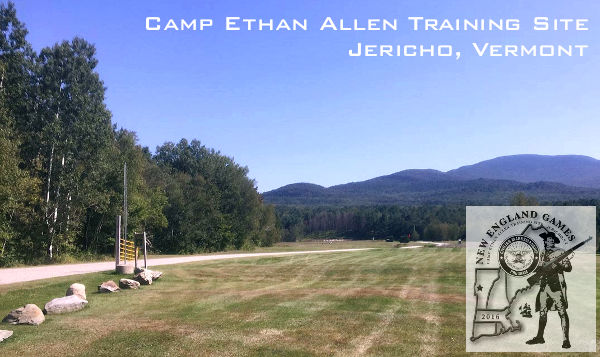
There’s still time to sign up for the inaugural New England CMP Games, held September 14-18, 2016, in Jericho, Vermont. Similar to the Eastern, Western, and Oklahoma CMP Travel Games, the New England Games will take place at Camp Ethan Allen Training Site and is hosted by the Vermont State Rifle and Pistol Association, along with the Burlington Rifle and Pistol Club. CMP Sales will be held at the Games, and on-site barracks accommodation is available.
The 2016 CMP New England Games will begin with Small Arms Firing School (SAFS) and the M16 Match. The event will feature Garand/Springfield/Vintage Military matches and the Modern Military match. Other matches include an EIC Rifle Match, Carbine Match, a Rimfire Sporter Match and the popular Vintage Sniper Match. There will be five pistol matches: CMP .22 Rimfire EIC Pistol Match, EIC Service Pistol Match, Pistol Team Match, Military & Police Pistol Match and CMP As-Issued 1911 Pistol Match.
The New England Games will feature CMP’s signature M1 Garand Match.
Along with the SAFS, a GSM New Shooter Clinic and Garand Maintenance Clinic will also be offered. SAFS training by qualified instructors is geared toward new shooters, so no previous firearm experience is required.
The CMP Sales Trailer will be on-site offering registered competitors a first chance at the CMP goodies on September 14th during the Competitor-Only Sales Event. The CMP will also offer rifle and ammo sales September 15-17 starting at noon each day. Housing will be available on post in the form of transient quarters with a shared bath as well as barracks with large open bays and smaller bays for small groups or families.
To register, visit the New England Games Page on the CMP website. For more info, call Christina Roguski at 419-635-2141 ext. 714, or email competitions@thecmp.org.
Jim Laughland (far left) with Alice Bull, the first Distinguished female (third from left).
Article based on story by Ashley Brugnone, CMP Writer
Jim Laughland, age 77, was the presenter of the Alice Bull Trophy during the 2016 National Trophy Rifle Matches at Camp Perry. To Jim, the Alice Bull Trophy is something very special … it rekindles memories of a cherished friend and mentor, and his many decades at Camp Perry. “I just thought it’d be nice to have the chance to present it because I don’t know if I’m coming back again,” he said. “Otherwise, you might have someone presenting who never knew [Alice Bull] or loved her like I did.”
The first female to earn the Distinguished Rifleman Badge, Alice Bull was an extraordinary individual. A true pioneer, she was the women’s rifle team captain at the University of Washington. Before WWII, Bull competed at the National Matches from 1935 – 1937. In 1949, Alice became the first woman elected to the NRA’s Board of Directors. She went on to become the first female to earn the Army’s Distinguished Rifleman Badge in 1961.
The Alice Bull Trophy, awarded to the highest aggregate civilian competitor during the National Rifle Matches, was first presented in 1991 by the Washington State Rifle and Pistol Association to commemorate this legendary woman and competitive shooter. The trophy features a bronze figure of Alice on top, with two rifles below, one the actual M1 Garand with which Alice earned her Distinguished Rifleman Badge.
Jim first met Alice Bull when he was a young member of the Seattle Rifle & Pistol Club. He had been friends with her son, Lee, and Jim shot with Alice in an indoor smallbore league. She helped him develop his marksmanship skills, including perfecting the cross-ankle sitting position that he still uses. Now, the woman he knew is immortalized in a perpetual trophy.
“I think it’s wonderful. And, incredible that she was a woman,” he said. “I treated her like my mother. She was very kind — a brilliant, wonderful person.”
Sixty Years of Marksmanship Starting at Camp Perry
During his 60 years of marksmanship experience, Jim has traveled all around the country and has competed with many of the most recognized individuals in the world of shooting. And, it all began at Camp Perry. “When I come to Camp Perry, there are a lot of ghosts I know, walking around,” he said.
Jim’s first visited Camp Perry in 1955, when he was just 17 years old. Jim even skipped his first week of high school to attend the National Matches. Jim started out unclassified, but left an Expert Marksman. During his early career, he shot with the Washington State National Guard and the New York National Guard. In 1962, he moved to Baltimore and joined the Maryland State Team which went on to win the Hilton Trophy for the High National Guard Team in the National Trophy Team Match. Later, he earned his Distinguished Rifleman Badge in 1964.
Head to Head with Carlos Hathcock
In August 1965, Laughland shot in one of his most memorable Camp Perry matches — going shoulder-to-shoulder with Carlos Hathcock, famed marksman and Marine Corps sniper in Vietnam. Hathcock won the Wimbledon Cup Match by a single point. “He’s the one who made me famous”, Jim said with a smile.
Jim also notably shot with two-time Olympic gold medalist and Director of Civilian Marksmanship Emeritus, Gary Anderson, in the 1960s while both were members of the All National Guard Team. Shown below are Anderson and Laughland at Camp Perry.
Another memorable match for Jim came in 1977, when he joined the All National Guard National Rifle Team and traveled to Camp Perry with them as only an alternate – or so he thought. On that day, with blustery 30 to 40 mph winds, Jim remembers remarking to his friend, “I’m glad I don’t have to shoot in this wind today!” Soon after, the colonel came up to Jim and told him he’d be shooting. At that point in his career, it had been 10 years since he had shot with the All Guard team. “I looked at my friend, thinking, ‘Should I cheer or cry?’” he joked.
At the end of the match, he and his friend were the high shooters on the team and won the National Trophy Team Match for the National Guard for the first time in 65 years.
“When I think about it, I get teary. It was such an honor,” he said. “I think it was one of the highlights of my shooting. It was like going into the World Series, in the 7th game with bases loaded, 3 runs down with a 3-2 count and hitting a Grand Slam.”
High Master and Three Grand Senior Service Rifle Championships
In 1979, the NRA introduced the High Master Classification, and Laughland became the first on the All Guard team to earn the title. Most recently, Jim won the Grand Senior Service Rifle Championships in 2008, 2009 and 2014 at Camp Perry, saying the desire to win is what keeps him shooting.
“When I found out they had the ‘old folks’ award, I switched to Service Rifle,” he said. “And I figured I’d never win it again, because these younger guys are coming in — you know, who are only 70 or 75. But when I looked and saw my name on the bulletin in 2014, I started to cry.”
Laughland Leaves a Legacy
In 2015, Jim was diagnosed with Parkinson’s disease, which has left him with some ailments that make it difficult to compete at his top level. But, with the reputation that precedes him, he has many friends at the National Matches, both old and new, that are always eager to welcome him back. “I have a hard time coming to Camp Perry and walking around without someone stopping me and asking me to take a picture with them,” he said. “I get choked up.”
“I’d like to leave a legacy,” he said. “When I don’t make it to Camp Perry anymore, it’s the people I’ll miss the most. It’s been my life….”
The Civilian Marksmanship Program is a federally chartered 501 (c) (3) non-profit corporation. It is dedicated to firearm safety and marksmanship training and to the promotion of marksmanship competition for citizens of the United States. For more information about the CMP and its programs, log onto www.TheCMP.org.
Today is an important day for Team USA shooters at the Rio Olympics. American rifle marksmen SFC Michael McPhail and David Higgins will be competing in the smallbore 50m prone event. In addition, 25m Pistol shooters will compete, and the Women’s Skeet Finals will be held this afternoon.
Schedule for the Remaining 2016 Olympic Shooting Events:
Friday, August 12
8:00 am – 50m Rifle Prone Men
8:00 am – Skeet Women
9:30 am – Skeet Men Day 1
10:00 am – Finals 50m Rifle Prone Men
11:15 am – 25m Rapid Fire Pistol Men Stage 1
2:00 pm – Finals Skeet Women
Saturday, August 13
8:00 am – 25m Rapid Fire Pistol Men Stage 2
8:30 am – Skeet Men Day 2
11:30 am – Finals 25m Rapid Fire Pistol Men
2:00 pm – Finals Skeet Men
Sunday, August 14
8:00 am – 50m Rifle 3-Position Men
12:00 pm – Finals 50m Rifle 3-Position Men
SFC Michael McPhail
Hopes are high for McPhail, one of the favorites to win a shooting Gold Medal in Rio. McPhail, ranked number one in the world in men’s 50-meter rifle prone, won the ISSF World Cup Finals in Munich this September. McPhail also won back-to-back gold medals at the ISSF World Cup events at Fort Benning, GA and Munich, Germany, held in May and early June of 2015. This is McPhail’s second Olympic appearance, so he understands what’s at stake: “The Olympics are unlike any other match you’ll ever shoot, the magnitude of it….”
SFC Michael McPhail, shown above, is currently ranked #1 in the world in the smallbore 50m prone rifle discipline. He’s one of the favorites to win Gold today in Rio.
David Higgins
Air Force Academy graduate David Higgins has been a competitive shooter since his early teens. “I was 13 when I first began shooting Rifle competitively, and I immediately knew that I wanted to pursue Rifle as my primary sport,” said Higgins.
Higgins recently graduated from the Air Force Academy and enjoys rock climbing, sailing and surfing in his free time. He now moves on to the next phase of his military career, having cross-commissioned into the Marine Corps upon graduation to become an infantry officer.


 Emil Kovan Competition History:






 The first female to earn the Distinguished Rifleman Badge,


