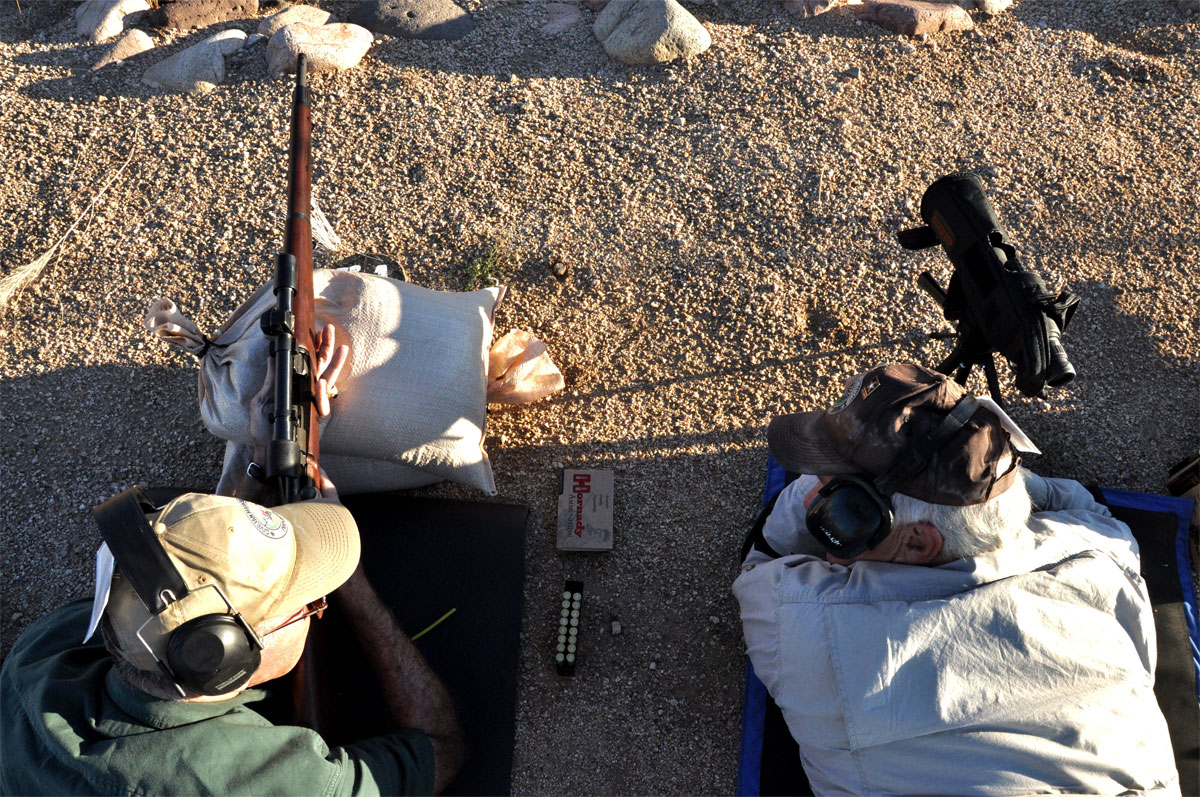
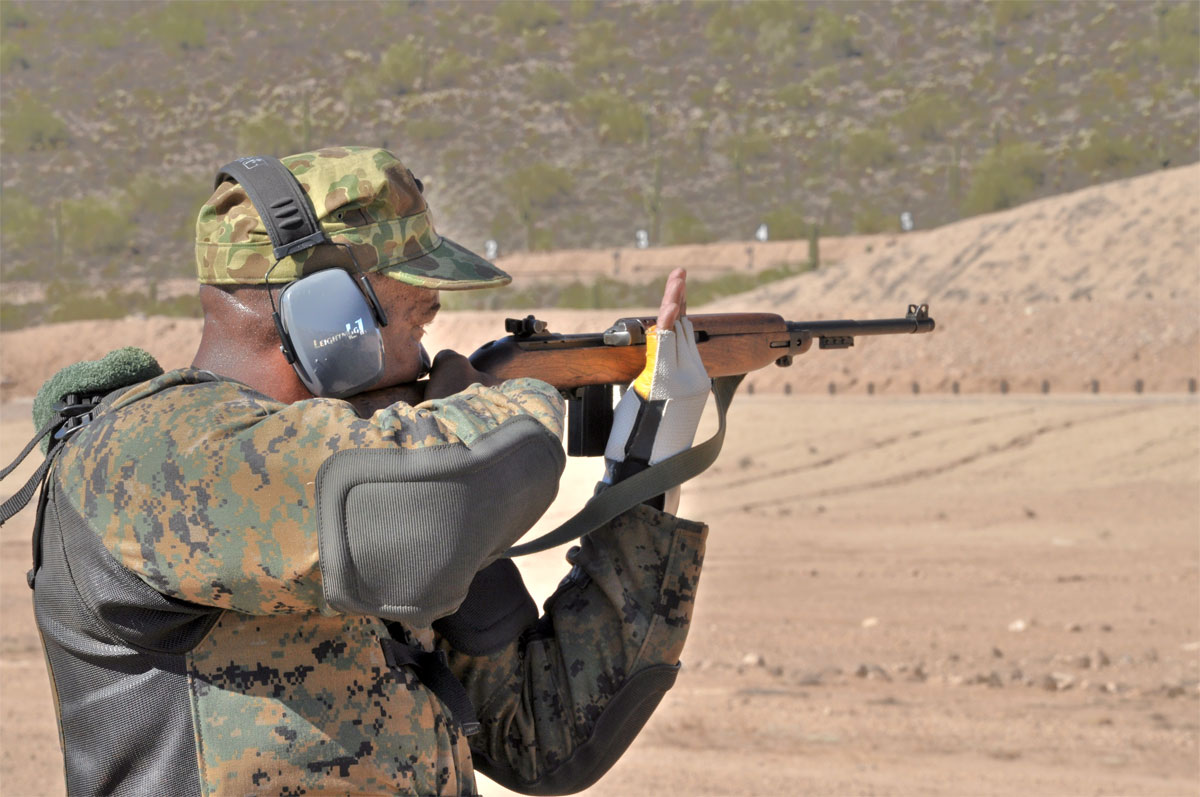
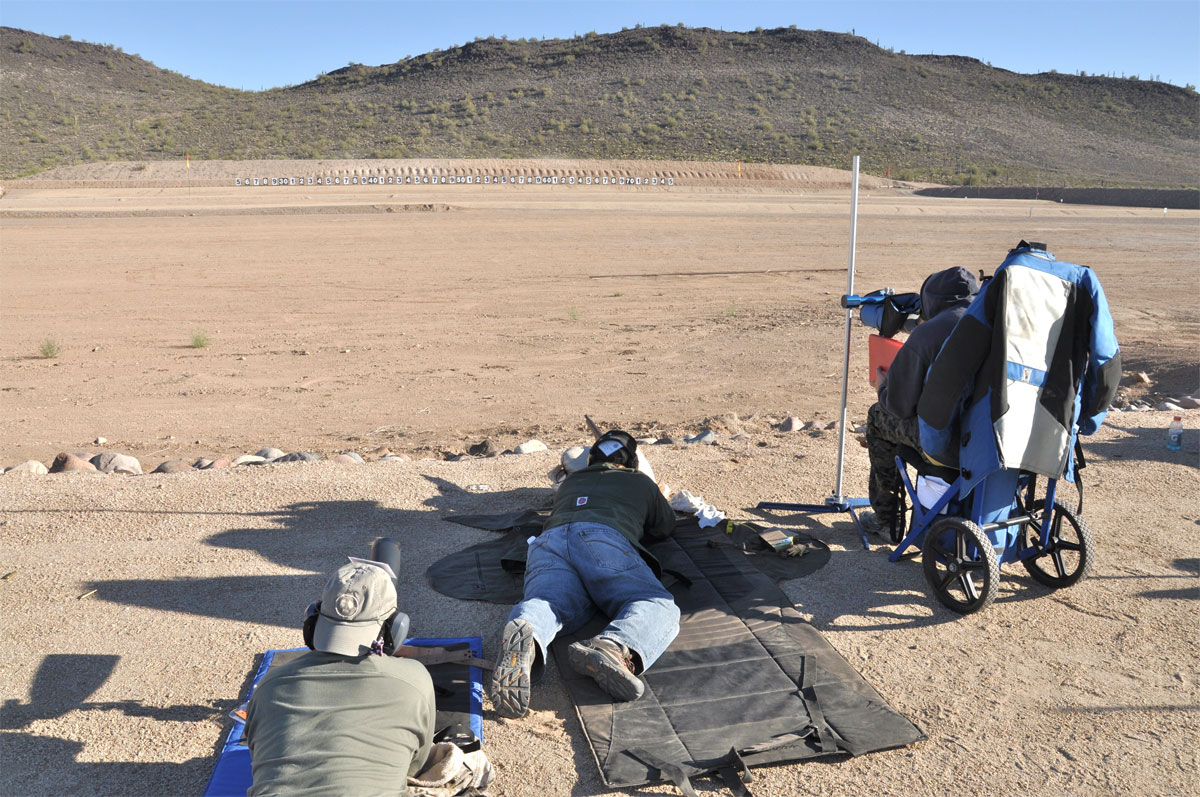
Ready for some action in Arizona? The 13th Annual Western CMP Games and Creedmoor Cup Matches will be held at the Ben Avery Shooting Facility in Phoenix, Arizona. The CMP Games run 7-11 October while the Creedmoor Cup Matches take place 12-16 October. All interested shooters are invited to participate in these prestigious, national-level competitions. NOTE: Registration for the Creedmoor Cup matches must be done online via www.creedmoorsports.com.
The CMP Western Games will include the Garand, Springfield, Vintage Military, Modern Military, Rimfire Sporter, Carbine, and Vintage Sniper matches. Along with the shooting matches, the CMP will offer a special CMP Games Match Clinic plus a Small Arms Firing School (Rifle). These training programs can benefit novices as well as experienced shooters. If you need to buy ammo or hardware, the CMP will operate a Sales Booth at Ben Avery all 4 days of Western Games.
Creedmoor Cup Schedule and Events
The Creedmoor Cup Matches will begin on October 12th and conclude on October 16th. A great Bar-B-Q on Saturday is included with entry. This year’s Creedmoor Cup schedule includes the following events: High Power Rifle Clinic, Creedmoor Cup Match (2400 point aggregate), 4-Man Team Match, and Creedmoor EIC Match. The Special High Power Shooting Clinic will include lectures, demonstrations and dry-fire training by some of the world’s most talented service rifle marksmen.
Western CMP Games Matches
Garand & Springfield Match Clinic
John C. Garand Match
Springfield Match
Vintage Military Rifle Match
Small Arms Firing School/M16 Match
Rimfire Sporter Match
Carbine Match
Vintage Sniper Match
Modern Military Rifle Match
Western Creedmoor Cup Events
High Power Rifle Clinic
Creedmoor Cup (2400 point aggregate)
4-Man Team Match
Creedmoor EIC Match
To see a real pro shooting Service Rifle, check out the above video. That’s former National Champion (now Creedmoor Sports G.M.) Dennis DeMille, shooting 300-yard Rapids from the prone position. This was filmed at the 2010 Berger Southwest Nationals at Ben Avery. You’ll see Dennis adjusts his sights while looking through the spotter. Then watch how calm and steady Dennis stays from shot to shot. That comes with years of practice and training.
The third annual Pyramyd Air Cup attracted nearly 100 amateur and professional shooters from around the nation, making it the best-attended AAFTA Grand Prix Field Target event in the USA this year. Hosted September 9-11 at the Tusco Rifle Club in New Philadelphia, Ohio, the Pyramyd Cup featured multiple airgun shooting disciplines including Field Target, the rapid-fire GunSlynger benchrest event, and the PayDay Challenge. Watch this video to see all the events:
Reigning AAFTA National Champion Ken Hughes stated: “What a weekend! The Field Target courses were challenging, and the wild, rapid-fire style of the Gunslynger event was difficult in its own right. It was great getting to meet new airgun buddies and check out the new gear from the many vendors in attendance. I really enjoyed the PA Cup!”
Field Target Discipline Is Challenging
“Field Target is one of the most difficult shooting disciplines out there,” says Pyramyd Air Cup Match Director, Tyler Patner. “Combine the multiple skills required to rise to the top of your game, with the myriad of factors you take into account at each lane, and you’ve got a challenging sport.”
“Targets are small, metal silhouettes of animals that consist of a kill zone and a colored paddle,” explains Patner. “Placed at unknown distances from between 10 yards to as far as 55 yards, the targets have kill-zones ranging in size from 3/8 inch to 1 1/2 inches. When the pellet passes through the kill zone and hits the paddle, the target falls and you’re awarded a point. It’s a game of precision and practice. You range-find with your scope, dope for distance, take the wind into account, and then you have to execute. There are different restrictions based upon your selected class, but the challenges remain the same. Wind-doping, range-finding, and remaining mentally tough over the entire course of fire are the biggest hurdles competitors face.”
Huge Prize Table for Competitors
Competition prizes were donated by many airgun and optics manufacturers including: AirForce Airguns, Air Arms, Beeman, Crosman, Birchwood Casey, Diana, Feinwerkbau, H&N, Hawke Sport Optics, JSB, Leapers, Plano, Predator, Umarex, UTG, and Walther. “You’d be hard-pressed to find an airgun competition with a better selection of prizes for its winners,” says says Pyramyd Air CEO, Joshua Ungier. “Our winner’s packages help assure shooters that if they’re limited to traveling to only one competitive shooting event, they recognize the Pyramyd Air Cup as the industry’s premier event.”
Most bolt-action rifle shooters work the bolt with their trigger-pulling hand. This is because most rifles sold to right-handed shooters come with right-side bolts, while “lefty” rifles come with left-side bolts. This “standard” configuration requires the shooter to take his dominant, trigger-pulling hand off the stock to cycle the bolt, then re-position his hand on the stock, and “re-claim” the trigger. Often the shooter must lift or move his head to work the bolt, and that also requires him to re-establish his cheek weld after each and every shot. Not good.
This really doesn’t make much sense for precision shooting with fore-end support*. There is a better way. If you leave your trigger hand in position and work the bolt (and feed rounds) with the opposite hand, then you don’t need to shift grip and head position with each shot. All this requires is a weakside-placed bolt, i.e. a left bolt for a right-handed shooter or a right bolt for a left-handed shooter. The video below shows a “Lefty” working a right bolt. Note how efficient this is:
As our friend Boyd Allen explains: “If you think about it, if you are going to work with a factory action where your options are left bolt and left port or right bolt and right port, and you are building a rifle that will only be shot from a rest, using the left/left for a RH shooter or using a right/right for a LH shooter works better than the conventional configuration”.
Shoot Like a Champ and Work the Bolt with Your Weakside Hand
Derek Rodgers, the only person to have won BOTH F-Open and F-TR National Championships, runs this kind of “opposite” bolt set-up, shooting right-handed with a left bolt. Though Derek is a right-hander, he shoots with a Left Bolt/Left Port (LBLP) action. He shoots with his right hand on grip, while manipulating the bolt (and feeding rounds) with his non-trigger-pulling hand. He pulls the trigger with his right index finger, while working the left-side bolt with his left (weakside) hand. This allows him to stay in position, and maintain his cheekweld.
2013 National Championship-Winning Derek Rodgers Left Bolt/Left Port Rifle.
*For true standing, off-hand shooting (whether in competition or on a hunt), a conventional strongside bolt placement makes sense, since the non-dominant arm must support the front of the rifle all the time. When shooting from bipod or rest, it’s a different story.
Are you from a Northern state that’s snowbound in the winter? Looking for a fun December diversion (and a break from cold weather)? Then consider a trip to Talledega, Alabama. This December, the Civilian Marksmanship Program (CMP) hosts the Second Annual Talladega 600, “A Southern Classic”, at the Talladega Marksmanship Park. This event for rifle, pistol, and shotgun shooters kicks off Tuesday, December 6, 2016, and concludes Sunday, December 11th. It should be fun for the whole family. For more info, visit the Talladega 600 Webpage.
Competitors of all ages and skill levels are welcome at the Talladega 600. Events will include popular CMP Games Matches: Garand, Springfield, and Vintage Military Match, as well as the Vintage Sniper, Carbine and Rimfire Match. There will be a Small Arms Firing School with an M16 Match, the Congressional 30 (similar to President’s Rifle Match), the Dixie Double Highpower Match, and an EIC Rifle Match. Pistol events will include the .22 Rimfire EIC Pistol Match, the Service Pistol EIC Match, the As-Issued 1911 and the Military & Police Matches. Shotgunners can enjoy a Sporting Clays Shoot and a 5-Stand Shoot.
Talladega Marksmanship Park
The 500-acre CMP Talladega Marksmanship Park is one of the most impressive shooting venues in North America. Talladega boasts superb facilities and state-of the-art electronic target systems. Each rifle firing point is equipped with a modern KTS electronic target and scoring monitor. Located beside each shooter on the firing line, these monitors allows competitors to see shot locations and scores instantly — no more waiting for targets to pulled and then marked with with a spotter disc.
For spectators following the action, large monitors inside the comfortable 13,000-square-foot Clubhouse will display scores from the shooting matches as they are being fired. Scores are also viewable online through the CMP’s Competition Tracker.
Today is practice day for the Mid-Range F-Class Nationals, which commence bright and early tomorrow morning in Lodi, Wisconsin. In any shooting competition, you must try to avoid major screw-ups that can ruin your day (or your match). In this article, reigning F-TR National Mid-Range and Long Range Champion Bryan Litz talks about “Train Wrecks”, i.e. those big disasters (such as equipment failures) that can ruin a whole match. Bryan illustrates the types of “train wrecks” that commonly befall competitors, and he explains how to avoid these “unmitigated disasters”.
Urban Dictionary “Train Wreck” Definition: “A total @#$&! disaster … the kind that makes you want to shake your head.”
Success in long range competition depends on many things. Those who aspire to be competitive are usually detail-oriented, and focused on all the small things that might give them an edge. Unfortunately it’s common for shooters lose sight of the big picture — missing the forest for the trees, so to speak.
Consistency is one of the universal principles of successful shooting. The tournament champion is the shooter with the highest average performance over several days, often times not winning a single match. While you can win tournaments without an isolated stellar performance, you cannot win tournaments if you have a single train wreck performance. And this is why it’s important for the detail-oriented shooter to keep an eye out for potential “big picture” problems that can derail the train of success!
Train wrecks can be defined differently by shooters of various skill levels and categories. Anything from problems causing a miss, to problems causing a 3/4-MOA shift in wind zero can manifest as a train wreck, depending on the kind of shooting you’re doing.
Below is a list of common Shooting Match Train Wrecks, and suggestions for avoiding them.
1. Cross-Firing. The fastest and most common way to destroy your score (and any hopes of winning a tournament) is to cross-fire. The cure is obviously basic awareness of your target number on each shot, but you can stack the odds in your favor if you’re smart. For sling shooters, establish your Natural Point of Aim (NPA) and monitor that it doesn’t shift during your course of fire. If you’re doing this right, you’ll always come back on your target naturally, without deliberately checking each time. You should be doing this anyway, but avoiding cross-fires is another incentive for monitoring this important fundamental. In F-Class shooting, pay attention to how the rifle recoils, and where the crosshairs settle. If the crosshairs always settle to the right, either make an adjustment to your bipod, hold, or simply make sure to move back each shot. Also consider your scope. Running super high magnification can leave the number board out of the scope’s field view. That can really increase the risk of cross-firing.
2. Equipment Failure. There are a wide variety of equipment failures you may encounter at a match, from loose sight fasteners, to broken bipods, to high-round-count barrels that that suddenly “go south” (just to mention a few possibilities). Mechanical components can and do fail. The best policy is to put some thought into what the critical failure points are, monitor wear of these parts, and have spares ready. This is where an ounce of prevention can prevent a ton of train wreck. On this note, if you like running hot loads, consider whether that extra 20 fps is worth blowing up a bullet (10 points), sticking a bolt (DNF), or worse yet, causing injury to yourself or someone nearby.
[Editor’s Note: The 2016 F-Class Nationals will employ electronic targets so conventional pit duties won’t be required. However, the following advice does apply for matches with conventional targets.]
3. Scoring/Pit Malfunction. Although not related to your shooting technique, doing things to insure you get at least fair treatment from your scorer and pit puller is a good idea. Try to meet the others on your target so they can associate a face with the shooter for whom they’re pulling. If you learn your scorer is a Democrat, it’s probably best not to tell Obama jokes before you go for record. If your pit puller is elderly, it may be unwise to shoot very rapidly and risk a shot being missed (by the pit worker), or having to call for a mark. Slowing down a second or two between shots might prevent a 5-minute delay and possibly an undeserved miss.
4. Wind Issues. Tricky winds derail many trains. A lot can be written about wind strategies, but here’s a simple tip about how to take the edge off a worse case scenario. You don’t have to start blazing away on the command of “Commence fire”. If the wind is blowing like a bastard when your time starts, just wait! You’re allotted 30 minutes to fire your string in long range slow fire. With average pit service, it might take you 10 minutes if you hustle, less in F-Class. Point being, you have about three times longer than you need. So let everyone else shoot through the storm and look for a window (or windows) of time which are not so adverse. Of course this is a risk, conditions might get worse if you wait. This is where judgment comes in. Just know you have options for managing time and keep an eye on the clock. Saving rounds in a slow fire match is a costly and embarrassing train wreck.
5. Mind Your Physical Health. While traveling for shooting matches, most shooters break their normal patterns of diet, sleep, alcohol consumption, etc. These disruptions to the norm can have detrimental effects on your body and your ability to shoot and even think clearly. If you’re used to an indoor job and eating salads in air-conditioned break rooms and you travel to a week-long rifle match which keeps you on your feet all day in 90-degree heat and high humidity, while eating greasy restaurant food, drinking beer and getting little sleep, then you might as well plan on daily train wrecks. If the match is four hours away, rather than leaving at 3:00 am and drinking five cups of coffee on the morning drive, arrive the night before and get a good night’s sleep.”
Keep focused on the important stuff. You never want to lose sight of the big picture. Keep the important, common sense things in mind as well as the minutia of meplat trimming, weighing powder to the kernel, and cleaning your barrel ’til it’s squeaky clean. Remember, all the little enhancements can’t make up for one big train wreck!
Readers often ask us: “Is there a decent, easy-to-comprehend book that can help my wind-reading?” Many of our Forum members have recommended The Wind Book for Rifle Shooters by Linda Miller and Keith Cunningham. This 146-page book, published in 2007, is a very informative resource. But you don’t have to take our word for it. If you click this link, you can read book excerpts and decide for yourself. When the Amazon page opens, click the book cover (labeled “Look Inside”) and another screen will appear. This lets you preview the first few chapters, and see some illustrations.
Other books cover wind reading in a broader discussion of ballistics or long-range shooting, such as Applied Ballistics for Long-Range Shooting by Bryan Litz. But the Miller & Cunningham book is ALL about wind reading from cover to cover, and that is its strength. The book focuses on real world skills that can help you accurately gauge wind angle, wind velocity, and wind cycles.
All other factors being equal, it is your ability to read the wind that will make the most difference in your shooting accuracy. The better you understand the behavior of the wind, the better you will understand the behavior of your bullet. — Wind Book for Rifle Shooters
The Wind Book for Rifle Shooters covers techniques and tactics used by expert wind-readers. There are numerous charts and illustrations. The authors show you how to put together a simple wind-reading “toolbox” for calculating wind speed, direction, deflection and drift. Then they explain how to use these tools to read flags and mirage, record and interpret your observations, and time your shots to compensate for wind. Here’s are two reviews from actual book buyers:
I believe this is a must-have book if you are a long-range sport shooter. I compete in F-Class Open and when I first purchased this book and read it from cover to cover, it helped me understand wind reading and making accurate scope corrections. Buy this book, read it, put into practice what it tells you, you will not be disappointed. — P. Janzso
If you have one book for wind reading, this should be it. Whether you’re a novice or experienced wind shooter this book has something for you. It covers how to get wind speed and direction from flags, mirage, and natural phenomenon. In my opinion this is the best book for learning to read wind speed and direction. — Muddler
Doug Koenig proved two things this past weekend at the 2016 NRA World Shooting Championship. First, he showed that he is one hell of a shooter, maybe the best action shooter ever. Second he proved that trick, custom race-guns WILL out-perform off-the-shelf firearms. As originally conceived, the WSC has been a multi-discipline match in which competitors shoot an assortment of manufacturer-supplied firearms. But this year, a rule change allowed “BYO” firearms and ammunition in the new Professional Open Division (Pro Open). Koenig’s choice to run in Open Class proved to be a good one — he walked away with a check for $25,000 and the title of 2016 “World Shooting Champion”.
Competing in the Pro Open Division (using his own guns for most stages), Koenig dominated, winning all 12 stages while racking up 3000 points, effectively a “perfect” score. Only a couple shooters competed in Pro Open using their own guns and ammo. Though some say he made it look easy, Koenig, a 17-time Bianchi Cup Champion, insisted this was a tough match. After the awards ceremony, Koenig told Shooting Sports USA: “This was a really great match — and a fun test of all the different shooting disciplines. [The WSC] is without a doubt one of the most difficult matches that I have ever shot. I have a lot of respect for the other disciplines that I have never done before.”
Curiously, only a couple competitors competed in Pro Open, while there were 67 shooters in the regular Pro Class, and 131 Amateurs. Given Koenig’s thorough trouncing of the Pro Stock competitors, one wonders what will happen to the WSC event next year. Will more shooters join the Pro Open ranks? Will there even be a Pro Open Division next year? Koenig served notice that if you want to win the overall title, you better bring your own guns. But that would seem to change the signature theme of the WSC — shooting “normal”, box-stock firearms. One wonders how the other competitors felt about Koenig capturing $25K and the title of “World Champion”, while they shot off-the-shelf hardware.
Nonetheless, Koenig deserves full credit for his superb, 3000-point “perfect” performance. In winning all twelve stages (including some disciplines he had never shot before), Koenig’s 2016 WSC performance was truly one for the ages.
Greg Jordan won the Professional (Stock) Division with a score of 2934. Jordan had a very strong performance with class wins in the 2-Gun, 3-Gun, and America’s Rifle Challenge stages. Pro Stock runner-up, 41 points back, was Mark Yackley with a 2893 score.
Brilliant Performance by Amateur Competitor Nate Dudley
The Top Amateur at the 2016 WSC was Nate Dudley with 2879 points. Dudley’s strong showing would have placed him ahead of all but four of the Pro Stock shooters*. That’s remarkable. Nate beat 63 Pros, including last year’s WSC Champion Bruce Piatt who finished 8th in the Pro (Stock) division.
The Miculeks — America’s First Family of Shooting
Lena Miculek won the Ladies Championship with a score of 2816, and Lena’s mom, Kay Miculek was the second-place lady. Lena’s father, the legendary Jerry Miculek, finished 9th in the Pro Stock Division.
*Fourth-place Pro Ryan Muller scored 2881 points, while fifth-place Pro Nick Atkinson had 2878 points.
This summer, our friend Dennis Santiago made his first-ever pilgrimage to Camp Perry, Ohio to compete in the National Matches. He recounts his experience in a fascinating, informative, and often humorous story on his Dennis Talks Guns Blog. When you have a few moments to spare, you should definitely read Santiago’s account of his First Time at Camp Perry. This is much, much more than a match report. Dennis gives insights into the human side of the experience — and the little things that make Camp Perry so special. CLICK HERE to Read Full Camp Perry Story.
Dennis competed in a number of events during his two-week stay. Shooting “classic” service rifle and his new scoped, “modern AR” service rifle Dennis competed solo (in Presidents 100 and NTI matches among others) and also as a member of the California Adult Team in the 4-man NTT match.
Santiago’s First Time at Camp Perry report is a “must-read” for anyone contemplating a Camp Perry visit. Here are some highlights — but honestly folks, do read the entire story — it’s well worth it.
First Time at Camp Perry, by Dennis Santiago
Perry Ain’t Like Home
Iron Sights and “Perry-Vision”
This range is kicking me hard. I tell people about how hard I was pushing my eye into my aperture. They smile that “welcome to Camp Perry” smile again. They ask what sights I’m shooting on my A2 and I tell them I’ve got an 0.050″ front and 0.038″ rear to maximize depth of field. They smile more broadly and tell me my problem is that I’m from the Western provinces where the sun is bright and the ground is devoid of flora. Lots of light. It’s green here and we have clouds I’m told. Not nearly the same ambient lighting. You have the wrong sights my son. Where the green grass grows you want a big fat 0.072″ front the size of an aircraft carrier deck and a huge 0.046″ hole in the morning and maybe close it down to an 0.042″ rear aperture later if the sun comes out. But that desert glare sight system of yours will lose you about 5-8 points in these parts. Well there you go. Learn something every day.
Baptism at Camp Perry
One’s first visit to Camp Perry is a series of baptismal rites. I shall now enumerate them…
Walk the Base. Do not drive around. Get used to walking. Walk from your hut to everything. Walk to the administration buildings. Walk to the ranges. Walk to commercial row. Walk to the CMP North Store. Walk to the CMP or Army trailer to have the triggers of your rifles(s) weighed. Walk. This is your primary mode of transportation while on base for the next couple of weeks.
Go Shopping. It’s called Commercial Row. It is the best shopping mall for competitive shooters ever. The sale prices here are Black Friday quality. You stock up on supplies. You can buy elusive powders in quantity with the same lot number. Same with bullets and primers. Everything you need to keep making your pet loads. Oddly, not cases. This is a service rifle tournament. Pretty much everyone is using LC or WCC cases. I stocked up. Then I began politely watching my expected cubic feet and gross weight capacity for the drive home as other people asked if I could take stuff back for them instead of shipping their loot.
Learn about the Perils of Perry. One, evacuate the range. It rains at Camp Perry. Sometimes that rain comes with lightning. When that happens range controls issues an evacuation order. Depending on where you are and how much time you have, you either grab your stuff and make for a sheltered structure or leave your stuff under whatever rain cover you have and leave it there until the storm cell passes. This happened on squadded practice day. There was no squadded practice. There was learning to make a better rain cover for the next two weeks because it’d probably happened again. I was particularly proud of my final design which involved a very large tarp and many bungee cords. Modern art to be sure. I received many compliments.
Peril Two — Cease fire, boat in the impact area. One has not truly been to Camp Perry until your shooting string is put on hold while range control sends someone out to tell an errant yacht or jet ski that it’s not a good idea to go into that area with all the buoys with the signs on them that say, Danger. Live Fire. Keep Out.
Shooting Gear
I brought two rifles with me to Camp Perry. The first was my iron sights-configured AR-15. Being my very first trip to the Nationals, I wanted to check off a bucket list item to shoot irons at a National Match. The gun has a Geiselle trigger and an upper I assembled from White Oak Armament parts. The barrel is a Krieger that had 3,800 rounds arriving at Perry. The sights are pinned 1/4×1/4s. I run Sierra 77gr SMKs short line and 80gr SMKs seated .015″ off the lands Long Line with it.
The other rifle I brought was for NRA week. It’s a 2016 Rule Service Rifle, Optic. It has a collapsible UBR stock and a Geiselle Mk VII quad rail. The barrel is an older DPMS .223 that was cryo-treated back in the day. Round count on arrival at Nationals was around 1,800. Same ammunition combination [as the iron sights rifle]. The chamber on this barrel has a shorter throat so I brought a Lee Hand Press with an RCBS competition seater die to set the 80gr SMKs back to proper jump for NRA week. The sighting system for this gun was one of the very new Nightforce 4.5X Competition SR’s with the CMP R223 reticle. Parallax is set to 200 yards. It’s mounted using Nightforce’s superbly engineered AR-15 service rifle Unimount.
Members of the State of California Teams at Camp Perry. Dennis is front row left.
Coaching — When It All Comes Together, at Last
I coached one of the California teams in the NTIT Rattle Battle match. This was the day I finally began to be comfortable at Camp Perry. Walking up and down the field, first as a verifier and then as a coach, I felt back in the game. At team matches you get to confer with your teammates comparing wind calls and observing the effects of their calls as the shooting members of their squads send rounds downrange. You watch the traces of bullets arcing in the air going left or right of the bull’s center depending whether or not the call was right. This process was cathartic. I began to remember that I really can read a range once I get the hang of it.
The 2016 NRA World Shooting Championship (WSC) takes place September 15th through 17th, 2016 at the Peacemaker National Training Center in Glengary, West Virginia. The richest multi-gun event in North America, boasting $250,000 in cash and prizes, the WSC attracts the world’s best multi-gun shooters. This unique 3-day multi-gun match tests competitors’ skills across twelve stages sampling nearly every major shooting discipline (rifle, shotgun, and pistol). To be honest, the WSC is mostly a “run and gun” speed game, but competitors still must engage small targets at long range, so genuine marksmanship skills are required.
This year there will be three divisions: Open Professional, Stock Professional, and Amateur. Stock Professionals and Amateurs will use provided guns and ammo. But a 2016 WSC Rule change allows Open Pro competitors to bring their own firearms and ammunition for the match. Allowing the top Pros to shoot their own, optimized match guns should produce faster times and higher scores (plus fewer complaints about off-the-shelf guns that aren’t zeroed or don’t run right).
How to Win the World Shooting Championship
As first published in the NRA Blog, here are competition tips from reigning overall NRA World Shooting Champion Bruce Piatt, and Dianna Muller, the top female competitor at the 2015 WSC:
“The format at the NRA World Shooting Championship is unique in that you don’t know what you have to shoot until you show up, so training for the event is a little difficult. My advice is to pack some good eye and ear protection, bring an open mind, be prepared to listen to the stage descriptions, figure out the best way you can take the guns they provide, and post the best score you can. When the match supplies all the guns and ammo, all you have to do is deal with ‘the performance’. This is the most level playing field in the shooting sports — anyone from around the world can come and play.” — Bruce Piatt
“The NRA World Shooting Championship match is such a different breed — it’s really a difficult match for which to prepare! Over the past two years, I’ve learned to relax. I focus on relaxing in my own sport, because when you focus on the expectations over the procedure, it usually never works out in the shooter’s favor. The same goes for this match. You are tackling disciplines outside your expertise and using guns you aren’t familiar with, and that can really rattle your nerves if you don’t prepare for that mental challenge. But you can use this match design to your advantage. Remove all expectations, because, who is great at ALL the disciplines (besides Jerry Miculek)?! Give yourself some room to be ‘not so great’, focus on the fundamentals and try to enjoy the match. It is kind of liberating throwing everything to the wind and seeing how you stack up against all kinds of shooters! Coming from such a gear intensive sport as 3-Gun, I really enjoy walking up to 12 different stages and shooting guns and ammo that are provided. Although there may be issues with that format, it’s a great way to level the playing field, get down to brass tacks and see who is the most well rounded world champion shooter!” — Dianna Muller
Tech Milestone — Norm Crawford won the 2016 Wimbledon Cup at Camp Perry using a carbon-fiber composite barrel. That’s a first for composite barrel technology.
With a score of 200-16X, Norman Crawford won the Wimbledon Cup Match during the 2016 National Long Range Rifle Championships using a 32″ Proof Research carbon-fiber composite barrel chambered in .284 Shehane. The Wimbledon Cup Match, a prestigious 1,000-yard shooting competition, dates back to 1875. The current course of fire consists of 20 timed shots, fired from prone. Crawford’s win represents the first time in the Cup’s 141-year history that it has been won with anything other than an all-steel barrel. The Proof Research barrel features a steel core with an external multi-axis carbon wrap.
Crawford’s Wimbledon Cup win really is an important technological milestone. Crawford’s performance may encourage other competitors to consider steel/carbon composite barrels for a variety of shooting disciplines. Without question, composite technology barrels offer significant weight-savings over conventional all-steel barrels. And Crawford proved that a composite barrel can deliver winning accuracy, at least in a sling/prone discipline.
“I don’t know of anyone else in this sport using a carbon fiber [composite] barrel,” said Crawford, who has been shooting Proof composite barrels since 2013.
“The benefits over a steel barrel are that you get a larger-diameter, stiffer, faster-cooling barrel that weighs less than a standard, medium Palma-taper barrel. [There is] no real downside I’ve been able to identify in three years of shooting them. All five Proof barrels I own are capable of winning any match — providing I do my part.”
A 30-year Army vet and former Army Special Operations Sniper, Crawford has been shooting competitively since 1990. He has won many major titles, including the NRA National Long Range Championship in 2005. His 2016 Wimbledon Cup victory was his second — Norm also won the Cup in 2003. A three-time member of the U.S. Rifle Team at the World Championships, Crawford also used a Proof Research barrel to tie the national record for a 600-yard Any Gun, Any Sight competition in North Carolina last November, one of five national records he has set or tied during his shooting career.
Proof Research CEO Larry Murphy praised Crawford: “We are honored that Norm chose our barrel to go up against the best shooters in the world with. By putting our barrels to the test in intense competition, he pushes us to do our best as well.”







 Train Wrecks (and How to Avoid Them)
 4. Wind Issues. Tricky winds derail many trains. A lot can be written about wind strategies, but here’s a simple tip about how to take the edge off a worse case scenario. You don’t have to start blazing away on the command of “Commence fire”. If the wind is blowing like a bastard when your time starts, just wait! You’re allotted 30 minutes to fire your string in long range slow fire. With average pit service, it might take you 10 minutes if you hustle, less in F-Class. Point being, you have about three times longer than you need. So let everyone else shoot through the storm and look for a window (or windows) of time which are not so adverse. Of course this is a risk, conditions might get worse if you wait. This is where judgment comes in. Just know you have options for managing time and keep an eye on the clock. Saving rounds in a slow fire match is a costly and embarrassing train wreck.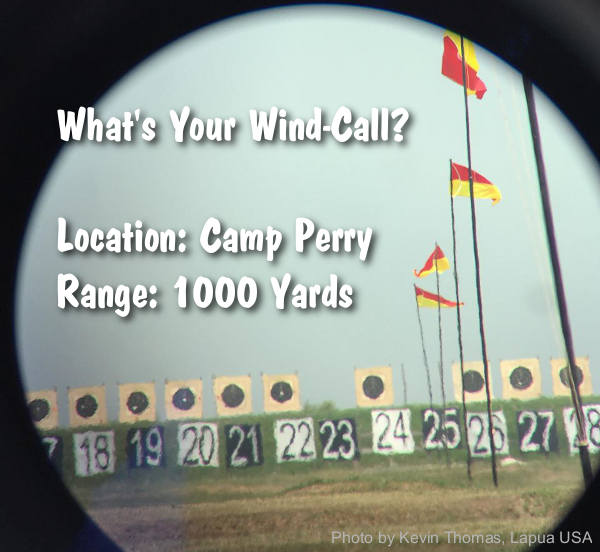




 “The NRA World Shooting Championship match is such a different breed — it’s really a difficult match for which to prepare! Over the past two years, I’ve learned to relax. I focus on relaxing in my own sport, because when you focus on the expectations over the procedure, it usually never works out in the shooter’s favor. The same goes for this match. You are tackling disciplines outside your expertise and using guns you aren’t familiar with, and that can really rattle your nerves if you don’t prepare for that mental challenge. But you can use this match design to your advantage. Remove all expectations, because, who is great at ALL the disciplines (besides Jerry Miculek)?! Give yourself some room to be ‘not so great’, focus on the fundamentals and try to enjoy the match. It is kind of liberating throwing everything to the wind and seeing how you stack up against all kinds of shooters! Coming from such a gear intensive sport as 3-Gun, I really enjoy walking up to 12 different stages and shooting guns and ammo that are provided. Although there may be issues with that format, it’s a great way to level the playing field, get down to brass tacks and see who is the most well rounded world champion shooter!” — Dianna Muller


