Ben Avery 10/30/2015 panorama photo by Tracy Hogg. CLICK HERE to zoom image.
Today is the Team Match Day at the F-Class Long-Range National Championships. F-Open and F-TR team shooters will have to deal with damp conditions on the range, as a storm front recently dropped rain at the Ben Avery Shooting Facility outside Phoenix. James Crofts says: “The 2×1000 Team match today is going to be a good day. Wind will be up to 10 mph and quartering.”
In the F-TR division, competition will be fierce. The Michigan F-TR Team, winner of the Mid-Range Championship earlier this week, looks to add a matching 1000-Yard National Team victory today. The shooters of Team X-Men, lead by 2014 individual F-TR Champion James Crofts, hope to reverse their fortunes, and win at the longer distance. And Team Sinclair, the “winningest” squad in F-Class history, looks to grab another title. Team Sinclair boasts multiple champions on its squad, including Derek Rodgers, the only man to have won both the F-TR and F-Open National Championship.
Trijicon Challenge Champion Jerry Miculek with wife Kay (left) and daughter Lena (right).
The legendary Jerry Miculek earned top honors at the 2015 Trijicon Shooting Challenge, winning a $50,000 grand prize. This year’s match, held October 21-24 at the Rockcastle Shooting Center, turned out to be a family affair — Jerry’s talented daughter Lena Miculek won the 2015 Womens’ Title. Todd Jarrett finished second overall, while Tim Yackley secured the Junior Division title.
Over $300,000 worth of Cash and Prizes Were Awarded
The 2015 Trijicon Challenge was a rich event. Shooters competed for over $100,000 in match cash, and over $200,000 in prize table awards. Some 180 professional and amateur competitive shooters from around the world traveled to the Rockcastle Shooting Center in Kentucky to compete.
This grueling event featured three days of action shooting in evenly weighted disciplines, with pistol, rifle, shotgun and combined arm segments. All firearms and ammunition were provided for the competitors, leveling the playing field.
With top five finishes in the final six stages of competition, Jerry Miculek showed the skills (and speed) that have made him one of the greatest action shooters in history. Jerry out-shot some very skilled competitors, including recently-crowned NRA World Shooting Championship winner Bruce Piatt, who finished sixth overall. Todd Jarrett took second, and Greg Jordan finished third. Rounding out the Top 5 were Tony Holmes (fourth) and BJ Norris (fifth).
Miculek Celebrates by Carving a Pumpkin with a Barrett .50 BMG
To celebrate his recent Trijicon Challenge victory, Jerry Miculek decided to do some pumpkin carving — with a .50 BMG Barrett Rifle.
Shooting the 30-lb rifle off-hand, Jerry blasted some serious holes in Mr. Pumpkin. Needless to say, the results were dramatic, if somewhat messy. Advancing the science of terminal ballistics, Jerry (not surprisingly) confirmed that “the 663-grain bullet did manage to penetrate the pumpkin all the way.” Thanks Jerry!
Yes, “Old Guys Rule” — at least at Mid-Range. At the NRA Mid-Range F-Class Nationals, a squad of seasoned veterans outshot their younger competitors, taking the F-Open Team Title with a 1598-102X score. The SEB/Berger Team Aggregate of 1598-102X is believed to be a new National Mid-Range Team Record. Think about that — the entire squad dropped only two points (out of 1600 possible) over the entire event. That’s superb shooting by a talent-loaded team.
The winning SEB/Berger team features shooters Larry Bartholome, Danny J. Biggs, Robert Bock, and Don Nagel, along with Coach Jim Murphy and Captain/sponsor Sebastian Lambang. Remarkably, all the “Three Bs” (Bartolome, Biggs, and Bock) shot 400s (not dropping a single point), and Danny Biggs totaled a superb 400-31X to finish as high man for the event.
Finishing second in F-Open team competition, with 1590-96X, was the local favorite, Team Wide Nines. Coached by Scott Harris, this squad features shooters Dan Bramley, Milton Gillette, Christine Harris, and Allan Rosenthal (also Captain). Dan Bramley finished the match with 400-24X, not dropping a point.
Individual F-Open Results
The individual Mid-Range F-Open Championship was a tightly-fought affair. Just six points separated the Top 10 shooters. John Myers took the title with a very impressive 1794-111X. Runner-up David Gosnell (1792-105X) edged third-place Danny J. Biggs (1792-100X) on X-Count. Jeff Cochran (1790-110X) was fourth, while Jim Murphy (1790-100X) finished fifth. While gains have certainly been made in the F-TR division, the Open-Classers proved that they still have the edge, shooting larger cartridges from a front rest. The best F-TR score, 1782-96X by Bryan Litz, was still 12 points and 15 Xs shy of Myer’s F-Open-winning performance.
Michigan Squad Wins F-TR Team Championship
In F-TR Team competition, the Michigan F-TR crew took top honors. Lead by newly-crowned Mid-Range F-TR Champion Bryan Litz, the Michiganders finished with an impressive 1597-89X, nine points ahead of runner-up Team Sinclair (1588-83X). Along with Bryan, Michigan shooters included Doug Boyer, Jim Grissom, and gunsmith/action-maker John Pierce. As a historical footnote, we believe this is the first time Team Sinclair has been beaten in a major match. However Team Sinclair’s Paul Phillips posted the top individual performance in the team event. Paul shot a superb 400-25X, not dropping a single point.
This past weekend, Bryan Litz of Applied Ballistics LLC, topped a field of great shooters to win the 2015 NRA F-TR Mid-Range National Championship. Bryan shot very well, mastering conditions that were tricky and sometimes bewildering, particularly at the shortest range, 300 yards. Consider this, Lou Mudica had the top score on Day Two (all 600 yards), yet he was way down at 41st position on Day One (300/500/600 yards). Finishing Second Overall was Scott Harris. Bryan’s Michigan team-mate Jim Grissom was third, while Bryan’s father (and MI team-mate) Bill Litz was fourth.
F-TR Top Ten at Mid-Range National Championship
Bryan was using a low-profile, carbon/composite-stocked rifle built by John Pierce. Bryan told us: “This was the same rifle and almost the same load with which I won the Midwest Palma match in the summer of 2014. (Story HERE.) My gear consisted of Pierce rifle, Bartlein barrel, Nightforce scope, Berger bullets, Lapua brass, Hodgdon powder (All those companies are sponsors of the USA F-TR team as well as the Michigan F-TR team.) My load for the Mid-Range Nationals was 43.0 grains of Varget with the Berger 215gr Hybrid bullet seated 0.005″ off the rifling.”
Click Image for Full-Size Version:
A lot of wind shooting strategy isn’t just about knowing exactly where to hold at any given point in time. A big part of it is recognizing periods of predictable readable conditions versus UNpredictable unreadable conditions and avoiding shooting in them. — Bryan Litz
At the Mid-Range Nationals, wind conditions at the shorter yardages caught many competitors by surprise. As a result, many shooters, including 2014 F-TR National Champion James Crofts, shot better at 600 yards than at 300. That seems surprising… but there is a reason. Bryan Litz explains that conditions at shorter distances are sometimes more difficult to read than at 1000 yards.
Bryan Litz Talks about Mid-Range Wind-Reading Strategies
Mid-Range is marked by more uncertainty than long range shooting. At long range you can see more flags, more mirage, and conditions tend to be more readable although they have a greater effect. At mid range, the closer you are to the target the less readable the conditions tend to be. Often times at 300 yards there is no mirage and very sparse flags to get a read on. You can still get blown out at 300 yards! 500 yards can be a little better and at 600 sometimes you can get a pretty good read on it, but the majority of strategy for shooting Mid-Range is managing the uncertainty. What is your plan for shooting blind?
Suppose you’re shooting along pretty well centered up in the 10 Ring. Suddenly you shoot a 9 out the side and can’t see an indicator that explains why. Stop! Clearly something is going on which is not readable. It’s likely to be around for a period of time. Its best just to wait for that uncertainty to blow through and start shooting again when things settle out again. How do you know when things have settled out? When everybody else is pretty much back into the 10 Ring for a little while, then you know that a stable condition has settled back in. Take your best guess and get back into it.
A lot of wind shooting strategy isn’t just about knowing exactly where to hold at any given point in time. A big part of it is recognizing periods of predictable readable conditions versus UNpredictable unreadable conditions and avoiding shooting in them. Good equipment is a must, and ballistic performance matters, but when it comes to winning a match versus placing in the top 10, it all comes down to who employs the winning strategy for the various different conditions. It can be more like a chess game then shooting. Competitive judgment is key.
Bryan Litz didn’t do too badly in the Mid-Range Team Match either, shooting a 200-10X. Bryan’s team-mate John Pierce shot a brilliant 200-15X. Looks like those low-profile Pierce-built rigs really hammer:
John Pierce (left) and Bryan Litz, who is holding his Pierce-built F-TR rifle.
The 2015 United States F-Class National Championships are underway now at the Ben Avery Shooting Facility in Phoenix. There’s a “hybrid” format this year. For 2015, the Nationals combine both Mid-Range and Long-Range competitions in one week-long mega-match. The Mid Range F-Class Nationals take place 24-27 October 2015, with shooting at 300, 500, and 600 yards. The Long Range National Championships then run October 28 through 31, with all targets at 1000 yards. The competition consists of two different divisions: F-Open and F-TR (Target Rifle).
The wind arrived early on Saturday…
It started off somewhat windy on Saturday, October 24 for the 300-yard and 500-yard matches. Bryan Litz mastered the conditions to end up leading the F-TR division. (Guess that knowing a thing or two about ballistics helps when the wind is blowing). James Crofts, 2014 F-TR National Champion, shoot well at 500 yards, but struggled at 300 yards (the X-Ring is just 1.5″ at 300 yards). He observed: “Not a bad day today — overall 13th. Bryan Litz has the overall F-TR lead. I’m down 20 for the day but there are lots of shots left to go.”
All the shooting today (Sunday, October 25th), will be at 600 yards. Jim posted from Phoenix: “It’s time to start Day Two of the F-Class Mid-Range Nationals. All 600 yards today and I’m ready. Looks like it could be a tricky day with gusty winds but it will be the same for everyone.”
James Crofts at the 500-yard line. He had a tougher time at 300 yards.
The CMP has just released proposed 2016 Competition Rules. There are a number of important proposed changes, some quite controversial. Topping the list are rule changes that would allow optics for service rifles and “modern military rifles” (MMR). If these changes are adopted, Service Rifle shooters and modern military rifle shooters will be able to use scopes up to 4.5X power. Rifle weight limits will be increased slightly to allow for the optics and the definition of “Service Rifle” will be liberalized to allow more AR variants. In addition, collapsible or adjustable-length stocks will be allowed.
We want to stress that these new rules have NOT been set in stone — not yet at least. The CMP issued its notice of Proposed 2016 Rule Changes to inform competitors and invite feedback. The CMP asks that comments/questions be sent to competitions @ thecmp.org, not later than November 13, 2015.
Major Proposed Rule Changes
1. Optical Sights For Service Rifles
The CMP states: “For several years, the CMP has recognized that optical sights are the wave of the future for Service Rifle shooting. Military recruits today do all of their training with optical sighted rifles. Service Rifle rules have traditionally tried to keep abreast of military rifle and training developments so opening Service Rifle shooting to optical sights became an inevitable change.” The 2016 rules will, for the first time, permit M16/AR15-type rifles to have optical sights (fixed power or zoom) with a maximum magnification of 4.5X and an objective lens no larger than 34 mm. There will not be a separate class for scope-sighted rifles. Instead, competitors will have a choice of using either a scope-sighted rifle that weighs no more than 11.5 pounds or a metallic-sighted rifle that will continue to have no weight limit.
2. More Options For M16/AR15-Type Rifles
Since accurized Service Rifles first came into popular use in the 1950s and 1960s, those rifles, whether M1s, M14s, or M16s and their commercial equivalents, have been rigidly defined. Legal M16-type service rifles had to retain the external profile of an M16A2 or M16A4 rifle and could only have modifications that were explicitly permitted in the rules. All this will change in 2016. The CMP plans to liberalize the Service Rifle rules to encourage greater participation. A wider variety of commercial AR-platform rifles will be allowed so long as they meet basic requirements, such as 20″ max barrel length, 5.56x45mm (.223 Rem) chambering, and a trigger pull of at least 4.5 pounds. Notably, the rifles can have either a gas-impingement system or a piston-operated gas system. Collapsible stocks will be allowed. However butt-plates and cheek-pieces may not be adjustable. (See all Requirements HERE).
3. Optical Sights for Modern Military Rifles (CMP Games)
One of the fastest growing rifle competition categories is for Modern Military Rifles. There are two classes, one for M16/AR15 platform rifles and one for a broad range of other military rifles. Competitors who compete in Modern Military Rifle Matches will now have the option of using optical sights with a maximum magnification of 4.5X. To make allowance for the increased weight of telescopes, the weight limit for AR-type rifles was increased to 8.5 pounds and for M-14/M1A rifles to 10.0 pounds. (This is a CMP Games limit — a different Rule than the Service Rifle Rule).
4. Stocks for Modern Military Rifles
Butt-stocks on these rifles may vary in length and collapsible or adjustable-length stocks will be allowed. Butt-stocks, however, may not have butt-plates or cheek-pieces that adjust up or down.
No Changes for Pistol, Vintage Sniper, or Rimfire Sporter Competitions
While big changes are slated for the Service Rifle and MMR disciplines, the CMP is not making significant rule changes for other popular CMP shooting sports.
Pistol Rules Are Unchanged
Except for permitting service pistols to have a Picatinny rail below the barrel, the Service Pistol and 22 Rimfire Pistol rules adopted in 2015 are unchanged.
Vintage Sniper Rifle Team Match Rules Are Unchanged
According to the CMP, Vintage Sniper Rifle Match rules “have stabilized nicely in the last two years” so there will be no 2016 rule changes for the Vintage Sniper two-man team event.
Rimfire Sporter Rifle Rules Are Unchanged
The most popular rimfire rifle match in the country continues to attract impressive numbers to its matches. Like the Vintage Sniper Rifle Team Match, these rules have now stabilized so that there are also no 2016 rule changes in Rimfire Sporter.
IBS Match Report by Tom Jacobs and Jim Bauer
“What a wonderful match” — those words were heard often during this year’s IBS 600-yard National Championship match. Tom and Sara Jacobs hosted the 600-yard Nationals September 26-27 at their Vapor Trail Valley Range in Spickard, Missouri. Attendance was strong, with 78 competitors from 14 different states. The Vapor Trail Valley range holds both 600-yard and 1000-yard yard matches throughout the year. Located in northwest Missouri, Vapor Trail Valley sits in the middle of crop ground and cattle country. The terrain is a mixture of tree lines and green pastures.
It seemed every aspect of the match came off flawlessly, thanks to the hard work of the organizers. Even the weather cooperated, with 80 degree days and 60 degree mornings. The wind was mild but twitchy, providing a challenge for the competitors. Overall though, conditions were generally good and some very impressive results were recorded. Despite the twitchy winds, over the course of the weekend, some eighty perfect 50-point targets were shot. That’s darn good shooting overall.
Interesting Factoids from Vapor Trail:
1. Competition is VERY tight now. The difference between 1st place and 20th place in Light Gun Group Aggregate was .478″, less than half an inch. The difference between 1st and 20th place in Heavy Gun Group aggregate was .480″, again less than half an inch.
2. 6mm cartridges, particularly the 6mmBR and Dasher, now dominate the 600-yard Benchrest game.
All but one Light Gun was chambered as a 6mm, mostly 6BRs or Dashers. Even in the Heavy Gun division, 6mms ruled — 58 out of 61 Heavy Guns were chambered for 6mm cartridges, mostly Dashers.
3. These rigs are capable of extreme accuracy. The ten best Light Gun groups were all under 1.250″ (FYI, at 600 yards, one-quarter-MOA is 1.570″). And, as you can see at right, the three smallest Light Gun Groups were all under 0.9″. Think about that — a one-inch group used to be considered darn good at 300 yards.
This photo shows the winners in the front row, kneeling. Left to right are: Bud Larson (HG Score), Richard Schatz (2 Gun Overall, HG Group) , and Jim Bauer (HG Overall).
After Friday practice, the match began with the Light Gun relays on Saturday. Both Light and Heavy Guns shoot 8-target Aggregates. At the end of the day Saturday, Tim Gonnerman was the Light Gun Group winner with a 2.236 Agg , edging runner-up Jason Walker by a mere .003″. That’s about as close as it gets. Dan Hullinger won Light Gun Score with a 382 (Danny Wake also had a 382 but placed second on the tie-breaker). Richard Schatz, “Mr. Consistent”, placed 4th for score and 5th for group to take the Light Gun Overall title. Last year’s two gun Champion Ryan Hunt finished in second place.
Equipment Choices of Two Gun Top 20
If you review the equipment list for the Top 20 Two Gun competitors, you’ll find that Nightforce scopes were used by 19 shooters, while BAT actions were used by 15 shooters. Remarkably, 17 out of the top 20 used rifles chambered in 6 Dasher. Hodgdon Varget was the most commonly-used powder followed by Alliant Reloder 15. In the barrel department, Brux enjoyed a slight edge over Krieger, with ten shooters using Brux Barrels vs. seven using Kriegers.
Note the large, extended-width base-plate under the forearm. This spreads the load and provides more stability when used with super-wide SEB MAX front rest.
The Heavy Guns came out on Sunday. Early morning relays saw a dead-flat wind condition that constantly changed as the day progressed. Scores settled a little and groups opened up, creating a little room between competitors. In the end, Bud Larson won the Heavy Gun Score title with a 385 total. This year’s Shooter of the Year leader Andy Ferguson was close behind with a 384. The Heavy Gun group champion is Richard Schatz with a 2.003 Agg, followed by Jim Bauer with a 2.017. The Heavy Gun overall went to Jim Bauer followed by “Andy Who?” Ferguson (see photo below).
The 2015 IBS 600-yard Two Gun Champion is Richard Schatz with 18 rank points. If you look at the new 600-yard traveling trophies, you’ll see Mr. Schatz’s name multiple times — this victory marks the third time Richard has won the 600-yard, Two Gun IBS National Championship in the past decade. Richard Schatz is certainly a great ambassador for our sport and a true gentleman. Second Place in the Two Gun overall went to Jim Bauer, not far behind with 20 rank points. Taking third was Andy Ferguson with 28 rank points.
Left to right are Two Gun Overall winner Richard Schatz, along with top female Shooter, Sally Bauer and Tom Jacobs, Vapor Trail Valley range owner.
The top lady shooter was Sally Bauer. A past IBS 1000-yard Shooter of the Year, Sally is a 7-time female National Champion in 600-yard or 1000-yard benchrest. Rory Jacobs was the Junior “Top Gun” this year, winning the Junior division and finishing 10th Overall among ALL shooters (of any age) in the Two-Gun Agg. Rory is a four-time Junior National Champion and three-time Junior shooter of the year. The top Rookie shooter was Carroll Lance.
As with many of the matches that we attend, the range owner’s family and friends make up the help for scoring and target crews, the lunch attendants and general maintenance of the ongoing match. This match is no different. Tom and Sara’s families took care of all the required chores and it all came together like a well-oiled machine. Give credit to Tom Jacobs for working with the sponsors to put together a great prize table — every shooter in attendance got a sponsored prize. Please take the time to let our sponsors know that you appreciate their generous support.
There was an excellent prize table, as this young fellow demonstrates
“Andy Who?” — Ferguson is Front-Runner in 600-Yard Shooter of the Year Race
Here’s the “Andy Who?” story. Andy Ferguson, a good friend and neighbor of the Vapor Trail Valley range owners, is currently leading the 600-yard Shooter of the Year (SOY) point competition. Given his hot shooting and top ranking in the SOY chase, some of Andy’s friends/fellow competitors thought Andy might be getting a “big head” (i.e. oversize ego). To bring him down to earth, as a joke, Andy’s friends printed up the “Andy Who?” T shirts. A good laugh was had by all.
Here’s something you’ve probably never seen before — a liquid-cooled benchrest rifle. No, this is not just a crazy experiment. This gun, built by Joel Pendergraft, produced a 10-shot, 3.044″ group that is still listed as the International Benchrest Shooters (IBS) 1000-Yard Heavy Gun record. Using this water-cooled 300 Ackley Improved, Joel shot the record group in April 2009 at Hawks Ridge, NC. This monster features a 12-twist, 4-groove Krieger barrel. Joel shot BIB 187gr flat-based bullets in Norma brass, pushed by a “generous amount” of Alliant Reloder 25 and Federal 210M primers.
This 3.044″ 10-shot group was a remarkable accomplishment, breaking one of the longest-standing, 1000-yard World Records.
Pendergraft was modest after his notable achievement: “What makes this so very special is to be able to celebrate the accomplishment with all of my shooting friends[.] A good friend once said that records are shot when preparation and opportunity meet. I feel blessed to have personally had the opportunity. The preparation we can individually work on and achieve but the opportunity only comes to a few. Those of you that compete in long range competition will know what I mean.”
The prestigious GAP Grind tactical match runs this weekend, 16-18 October, at the K&M Shooting Complex in Finger, Tennessee. The 2014 GAP Grind drew a huge turn-out, and this year’s Grind promises to top that — with more competitors and even tougher challenges. Held in association with the Precision Rifle Series (PRS), this year’s Grind features a Pro/Am format with professional and amateur competitors aiming for individual and team honors.
Lots of Action, with 20+ Stages
The GAP Grind is a notoriously challenging, “high tempo” match with minimal down time between stages. Over the course of 20+ stages, competitors will fire 200+ shots at a variety of steel, paper, moving, and reactive targets out to 1,200 yards. Target vary in size/difficulty based on the shooter’s position, distance, and time allotted. Most stages include “stressors” — i.e. time limits or required movement(s).
2014 GAP Grind Highlights Video:
Want to see what a “GAP Grind Experience” is all about? Then watch this video from the 2014 Grind. You’ll see a lot of movement through a wide variety of shooting positions. This ain’t no benchrest match, that’s for sure…
GAP Grind Guns by Giddings
Shelley Giddings, a skilled shooter of both firearms and cameras, attended the 2014 GAP Grind last week. While there, Shelley snapped some cool images of state-of-the-art tactical rifles. Here is a Giddings Gallery of Grind Guns. You can find more GAP Grind pix on Shelly’s Facebook Page.
Click any photo below to see a full-screen version.
Jay Christopherson (aka “JayChris”), Accurateshooter’s IT guru, is a heck of a good shooter as well as a computer wizard. Jay recently won the F-TR division of the NW Long Range Regional held at the always-challenging Rattlesnake Shooting Range. To top the F-TR field, Jay had to battle extreme wind conditions that required double-digit windage corrections (and a hold-off) just to get on paper. Jay said: “The wind was 25 to 35 mph, switching between half and full value. I had 18.5 minutes on. Some of the sling shooters were [running] 24-36 minutes.”
MUST WATCH Video! Wicked, INSANE 25-35 mph winds at Rattlesnake:
Jay reports: “The typical Rattlesnake range caveats apply with regards to scores. This was a Long Range Regional, here in Washington State. This was also the first time I’ve ever had to put on double digit windage on at a match. Yesterday at 1000 yards, I had to put on 15 minutes AND hold another 3.5 to the edge of the target board to get on paper. I probably owe a great deal of thanks to Monte Milanuk for convincing me that (after my third sighter off the target board) dialing in that much wind was, in fact, NOT insane.
Because I didn’t come to the match armed with enough ammo and I couldn’t afford to be shooting more sighters… it was a close thing as it was. Even some of the well-known wind ninjas shooting sling were having some difficulty with the conditions.
Jay was modest about his win: ‘I did a poor job of shooting at 800 yards on both days, in fairly decent conditions, but made up for it at 1000 on both days. I happened to dope the wind on the last relay better than the guy leading me.
Really, the wind is the story — on the last relay of that first day (shown in the video), the storm rolled in, along with a wildfire that started up on one of the hills behind us. We were all watching that pretty closely, but they contained it pretty quickly.”


 Over $300,000 worth of Cash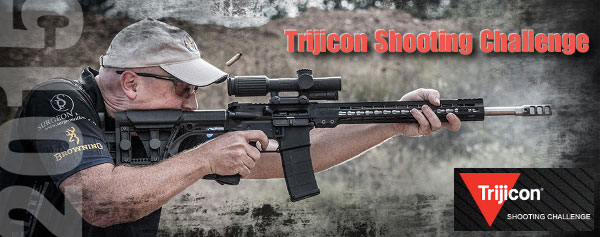


 All but one Light Gun was chambered as a 6mm, mostly 6BRs or Dashers. Even in the Heavy Gun division, 6mms ruled — 58 out of 61 Heavy Guns were chambered for 6mm cartridges, mostly Dashers.


 Jay reports: “The typical Rattlesnake range caveats apply with regards to scores. This was a Long Range Regional, here in Washington State. This was also the first time I’ve ever had to put on double digit windage on at a match. Yesterday at 1000 yards, I had to put on 15 minutes AND hold another 3.5 to the edge of the target board to get on paper. I probably owe a great deal of thanks to Monte Milanuk for convincing me that (after my third sighter off the target board) dialing in that much wind was, in fact, NOT insane.


