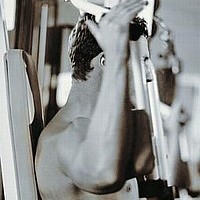
In the archives of The First Shot (the CMP’s Online Magazine), SGT Walter E. Craig of the USAMU discusses physical conditioning for competitive shooters, particularly High Power competitors. Fitness training is an important subject that, curiously, is rarely featured in the shooting sports media. We seem to focus on hardware, or esoteric details of cartridge reloading. Yet physical fitness also matters, particularly for High Power shooters. In his article, Craig advocates: 1) weight training to strengthen the Skeletal Muscle System; 2) exercises to build endurance and stamina; and 3) cardiovascular conditioning programs to allow the shooter to remain relaxed with a controlled heart beat.
SGT Craig explains: “An individual would not enter a long distance race without first spending many hours conditioning his/her body. One should apply the same conditioning philosophy to [shooting]. Physical conditioning to improve shooting skills will result in better shooting performance[.] The objective of an individual physical training program is to condition the muscles, heart, and lungs thereby increasing the shooter’s capability of controlling the body and rifle for sustained periods.”
In addition to weight training and cardio workouts (which can be done in a gym), SGT Craig advocates “some kind of holding drill… to develop the muscles necessary for holding a rifle for extended periods.”
For those with range access, Craig recommends a blind standing exercise: “This exercise consists of dry-firing one round, then live-firing one round, at a 200-yard standard SR target. For those who have access only to a 100-yard range, reduced targets will work as well. Begin the exercise with a timer set for 50 minutes. Dry-fire one round, then fire one live round and without looking at the actual impact, plot a call in a data book. Continue the dry fire/live fire sequence for 20 rounds, plotting after each round. After firing is complete, compare the data book to the target. If your zero and position are solid, the plots should resemble the target. As the training days add up and your zero is refined, the groups will shrink and move to the center.”
Fitness training and holding drills help position shooters reach their full potential. Here is 6-Time U.S. National Long Range Champion John Whidden.
Training for Older Shooters
Tom Alves has written an excellent article A Suggested Training Approach for Older Shooters. This article discusses appropriate low-impact training methods for older shooters. Tom explains: “Many of the articles you will read in books about position shooting and the one mentioned above are directed more toward the younger generation of shooters in their 20s. If you look down the line at a typical high power match these days you are likely to see quite a few folks who are in their middle 30s and up. Many people in that age range have had broken bones and wear and tear on their joints so a training program needs to take that into account. For instance, while jogging for an extended period for heart and lung conditioning may be the recommended approach for younger folks, it may be totally inappropriate for older people.”
Enjoy the Shooting Sports USA Archives
As we head into spring, many Americans will be spending more time at the range. And competitors will be shooting in rimfire and centerfire rifle matches throughout the country. Here’s an opportunity to learn competition skills, gun tuning methods, and reloading techniques from leading experts. A vast resource of gun-related content is available online for FREE. Check out the Shooting Sports USA Articles Archive. SSUSA maintains a vast digital library with hundreds of articles going back to June 2009.
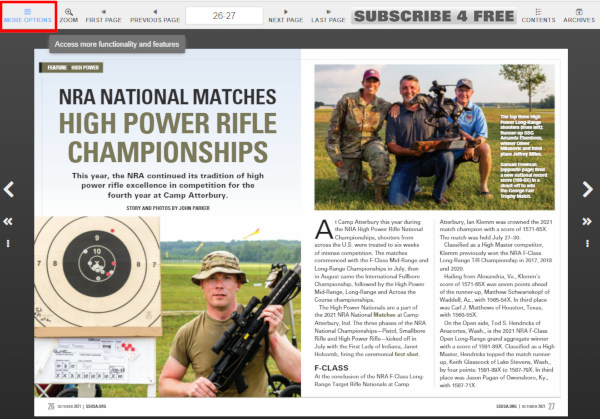
It’s easy to find back issues of Shooting Sports USA. Here’s how: First, navigate to the latest SSUSA Online Issue. Then click on the “ARCHIVES” icon in the upper right area (indicated with red arrow). When you click on “ARCHIVES”, a window will open with a selection of Shooting Sports USA magazine covers/dates in a vertical column. The most recent issue (November 2025) will appear at the top. You can then scroll down — use the vertical scroll bar to go from November 2025 (the latest issue) all the way back to June 2009. Click any issue cover to read.
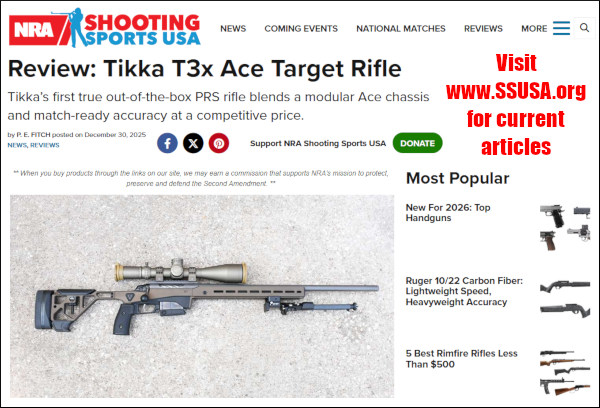
NOTE: It’s wise to use these archived digital magazine resources while you can. The NRA will continue the Shooting Sports USA website, but it has halted release of the monthly Shooting Sports USA digital magazines. Thankfully however, there will be new content posted regularly on the Shooting Sports USA website at SSUSA.org. Shown below is a review of the Tikka T3x Ace Target rifle from December 2025.
Click photo to read online Tikka T3x review.
How to Find and Save Articles
To search back issues, select “MORE OPTIONS” from the toolbar (top left). Then click the “SEARCH” button. When that opens, select either “Search Archives” for ALL back issues or “Search Only this Issue”. When you’ve made your choice, enter your search term(s). For example, you can search for “Camp Perry” or “Palma” or “F-Class Championship”. You can also save any archived issue as a PDF for viewing offline. Just click “SAVE” to download the article you’re currently viewing/reading.
Read Sample Articles
Here are a couple of our favorite SSUSA feature stories from recent years. There are hundreds of other informative articles worth reading.
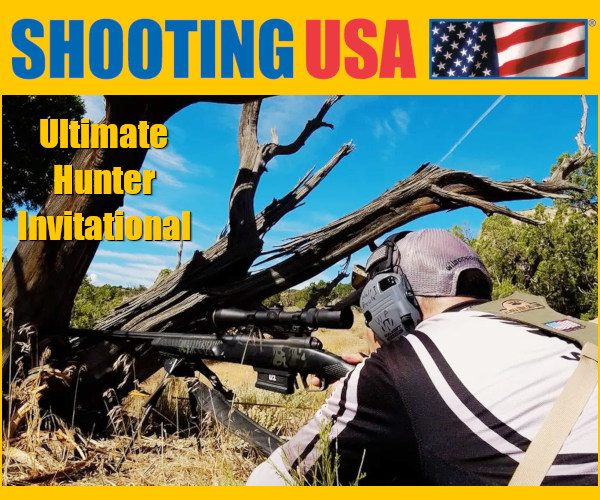
On its cable TV broadcast, Shooting USA will feature The Ultimate Hunter Rifle Challenge today 3/18/26. The Ultimate Hunter Rifle Challenge is a new shooting sport designed to appeal to the millions of hunters in the country who want to test their skills with equipment they likely already own. Today’s broadcast features the first Ultimate Hunter Invitational event. This match tests hunter skills with accuracy, position building, and time management for cash prizes totaling over $20,000.
Shooting USA SHOW TIMES: This Shooting USA Episode airs Wednesday, March 18, 2026 at 9:00 PM Eastern and Pacific; 8:00 PM Central on the Outdoor Channel. If you miss the regular broadcast, you can stream the show online at any time on Vimeo for $0.99 per episode.
To learn about other Ultimate Hunter field competitons, visit Ultimate-Hunter.com.
The folks at F-TR Ireland send greetings from the Emerald Isle: “Wishing all our friends … around the globe all the very best. Beannachtai na Féile Phádraig! (that means “St. Patrick’s Day Blessing”.) Hope you all have a great St. Patrick’s Day … whether be you Irish by birth, heritage, or aspiration!”
Your Editor sends a Happy St. Patrick’s Day greeting to all our AccurateShooter.com Bulletin readers. As an Irish-American whose great-grandfather was born in County Donegal, I’m proud to wear green today. But lest readers think that Ireland is only a land of shamrocks, lucky leprechauns, and Riverdancers, be aware that Ireland has an active community of precision shooters. In 2011, the National Rifle Association of Ireland unveiled the beautiful new 1200-yard range in Tullamore, at the Midlands National Shooting Centre. Also in 2011 Tullamore was was the site of the first modern-era Creedmoor Cup Challenge Match between Irish and American Teams. The Yanks won that year, but that was just the beginning of a great rivalry.
Midlands National Shooting Centre of Ireland In the year 2000, the National Rifle Association of Ireland (NRAI) was formed. One of its primary goals was to promote fullbore target shooting in Ireland. The NRAI needed a home and that home was found on the bog of Derrymore in Blueball just outside Tullamore in County Offaly. In 2000, a 400-yard range was built on the site. Three years later the 600-yard “Windmill” range, the first of its kind in modern Ireland, was also built to allow for mid-range target shooting. The site was christened the Midlands National Shooting Centre of Ireland (MNSCI) and with it the story of Irish F-Class began. No sooner had the 600-yard range been built at the MNSCI, when the NRAI formed a national F-Class league bringing together like-minded shooters from all over Ireland.
Irish Rifle (Crafted by Enda Walsh of Custom and Precision Rifles Ireland)
Irish Shooting Range (National Shooting Center, Tullamore, Ireland)
Benchrest Competition in Ireland
Along with long-range and F-Class shooting, benchrest shooting (both rimfire and centerfire) is also popular on the Emerald Isle. Here are images from a major rimfire match sponsored by the National Rimfire Benchrest Association of Ireland (NRBAI).
This video shows a variety of .22 LR rifles shooting Ireland rimfire matches from the bench. It’s great to see the many different rifle types and front/rear rests.
This article was originally written by noted rimfire gunsmith Bill Myers. Sadly, Bill passed away in May 2010, but his legacy lives on. He pioneered many advancements in rimfire gunsmithing and Myers-built guns still win matches in benchrest competition.
Crafting competitive rimfire benchrest rifles is considered an art as much as a science. The smith must understand subtle, yet critical aspects of vibration control, barrel tuning, and rifle balance. In the United States, only a handful of gunsmiths consistently turn out rimfire BR rifles that consistently run at the front of the pack at major matches. Bill Myers was one of those master craftsmen. In this article Bill discussed the process of building a winning rimfire BR rig. He reveals some interesting secrets, including his procedures for testing bedding performance and his barrel indexing system. Bill’s methods obviously work, as the Suhl-actioned rifle featured here won a truckload of trophies in its very first match.
Building a Match-Winning Rimfire Benchrest Rig
by Bill Myers
In my opinion, a winning rimfire benchrest rifle is probably twice as difficult to build as a competitive centerfire rifle. The relatively slow .22 LR bullets stay in the barrel much longer than centerfire bullets. This means that vibration control is critical. Likewise bedding is critical. Bore finish and lapping are very important. The amount of bore taper or “choke” can have a huge effect on accuracy. Ignition is also very important and above all, rimfire BR rifles need a very stable stock that tracks perfectly. A rimfire that shoots great is a marriage of all components and the shooter’s need to be aware of everything possible.
Click Photo to Zoom
The rifle featured in this article was built from scratch with attention to all the details that go into accuracy. The goal was to build a gun that could win from the get-go. This would be a “Spec Gun”, meaning a rifle that was personally tested and tuned by me for optimum performance before it went out to the customer.
The Suhl trigger is as good as it gets so no change was needed. It easily adjusts down to about 2 ounces.
Baer Stock in Bubinga Wood
There are many choices when you start to build a complete rifle. It has to shoot well and it has to catch ones eye, or it’s just another rifle on the line. I prefer wood stocks on rimfires for two reasons: they are very stable if the right wood is used and they have a certain traditional appeal to many shooters. I chose Bubinga wood for this particular gun because it is very stable and heavy, it has a very dense grain and a very pronounced figure with a natural red color. The Bubinga is a very forgiving wood to work with.
Gerry and Bruce Baer in Pennsylvania do all my stock blanks. I do all my own inletting and bedding. The blank weighed 4.5 pounds when it came off of Bruce Baer’s duplicator. This Bubinga wood is so hard that it did not need pillars, but I put them in anyway. I bed all my stocks with Loctite Steel Bed liquid and add filler to desired thickness. The final bedding is done with an aircraft tooling epoxy that does not deteriorate over time. The stock has an ebony butt plate and 6 coats of automotive clear, polished to a high finish.
Suhl 150-1 Action Accurized and BN-Nickel Plated
I used a new, unfired Suhl 150-1 action. As explained in the sidebar below, the Suhl 150 actions were originally crafted in East Germany for position rifles. They have a very fast lock-time and come with an outstanding trigger. However, they need some work when adapted to a modern BR gun. The action needed to be accurized and threaded. I have a special tool that I use to accurize actions. It uses two sets of spiders for dialing-in the bolt raceway. After the bolt raceway is running true, one can thread and true up all bearing surfaces so that everything is in perfect alignment with the action raceway bore.
BN-Nitride Plating on Action
I decided to plate the action and all bolt parts with Boron Nitride nickel plating. I bough the BN Electroless Nickel Kit from Caswell Plating and did the job myself. I started by bead-blasting the action so that it would end up with a “satin” finish. The plating material is then applied in a tank. The Boron Nitride goes directly into the plating solution, but you need to use a pump to keep the solution agitated so the BN distributes evenly.
Once the action is completely ready (the metal must be perfectly prepped, with no contaminants), the process goes easily and can be completed in about half an hour. The end result is a very slick, low-friction finish, that is .0002″ (two ten-thousandths) thick and hard as glass. The Boron Nitride makes everything very smooth. After the plating job, the action was noticeably slicker than before.
The cone breech (photo below) permits the barrel to be INDEXED (rotated around bore axis) to any position on the clockface. You then test various rotation settings to find the best accuracy. The system does work. Some barrels shoot best in a particular rotational setting. E.g. with index mark at 3 O’clock vs. 12 O’clock.
Fitting and Chambering the Barrel
As for a barrel, I had two good choices: one Shilen 1:16″-twist, 4-groove ratchet and one Benchmark 1:16″-twist, 3-groove. Both barrels were very accurate and at the end, I decided to leave the Shilen on the rifle because I wanted to put the Benchmark on another Suhl I’ve set aside for myself. I chambered the barrel for Eley flat nose EPS. We’ve found the gun also shoots the new Lapua X-ACT ammo very well.
The barrel finished at 25″ long and features a tuner by the Harrell brothers of Salem, Virginia. I use a flat 90° crown–it’s the most accurate and its gives a good seal against the tuner. I also use a 45°, 12-flute cutter that leaves no burr when cutting the crown. This chamfer protects the crown when cleaning the barrel. There is no sharp edge for the brush or jag to hit on the return stroke. The barrel was headspaced at .043″ and I use a tapered reamer ground by Dave Kiff of Pacific Tool & Gauge in Oregon. The chamber leade area is lightly polished to remove reamer burrs. The breech end of the barrel is machined with a 1/2″ ball end mill to produce what I call a “Myers cone breech.” Technically, it has a sloping radius as you can see, rather than a straight-sided cone. Finishing the breech in this fashion facilitates indexing the barrel, as the barrel can be rotated to any position (on the clockface), without requiring new extractor cuts.
Barrel Indexing — Finding the “Sweet Spot”
When indexing a barrel, one rotates it to different clockface positions relative to the action. Imagine marking a barrel at TDC or 12 o’clock, and then rotating it so the mark is at 3 O’clock, 6 )’clock, 9 O’clock and so on. At each position one shoots groups to determine at which index setting best accuracy is achieved.*
I know that barrel indexing is controversial. I don’t want to get into a lengthy debate other than to say that I believe that careful and thorough testing can reveal a “preferred” index position for a good barrel. With the barrel set in that particular position relative to the action I believe the barrel can yield optimal performance.
I perform the indexing tests indoors at 50 yards. I use a rail-gun with floating action. The barrel is held in place with a clamping fixture similar to an Anschutz 2000-series action. Basically, two vertically-stacked metal blocks clamp around the barrel. I can index the barrel this way simply by unclamping the barrel blocks, rotating the barrel and then re-clamping the system. I have a special system so the action can stay in the same position, even as the barrel is rotated.
It takes time and effort to get solid indexing results. Normally I shoot at least 400 rounds of ammo in 3-4 indexing sessions. Shooting a handful of groups is not enough. You may think you’ve identified the best index position, but you need to shoot many more rounds to verify that. Also, in a very good barrel, the effects of indexing may be subtle, so it will take many groups to confirm the optimal position. In my experience, really good “hummer” barrels do not benefit as much from indexing as an “average” barrel.
Accuracy Testing with Both Barrels
I tested the rifle indoors at 50 yards at the Piney Hill Benchrest Club range. There was no finish on the stock, but it shot well in my one-piece rest with the Benchmark 16-twist, 3-groove barrel and no added weight on the tuner. I shot 30 rounds of Eley Match EPS Black Box (1064 fps) and had 25 Xs and five 10s on the IR 50/50 style target. Not too shabby for a new barrel with no special break-in.
When the Shilen barrel arrived, I installed it on the rifle. By this time the stock had been clear-coated and finished, and the action had been polished and plated. I shot the Shilen barrel outside since it was too hot in the building. The first target was a 250-19X with a new lot of Eley Match EPS Black Box (1054 fps). The gun shot well. My friend Tony Blosser asked to shoot the gun, and he drilled a 250-20X in a steady wind using the same Eley ammo. See target at right.
Advanced Procedures — Vibration Control and Tuner Position
Barrel Tuning Using 2-Way Electronic Indicators
Before competing with this rifle, I put it in a firing fixture I use to tune the barrel. I employ a pair of very expensive Swiss 2-way electronic min/max hold indicators. These measure both up movement and down movement of the barrel as the gun is fired. I can measure the actual vertical travel of the barrel at any position from the front of the receiver to the tuner. I can also tell how long the barrel vibrates, time-wise. Using this fixture I found that the Shilen barrel was very consistent in readings and seemed to work well with no additional weight on the tuner. No barrel ever stops vibrating completely — but this was close, showing less than .002″ of total movement.
Bedding and Vibration Control
I have found that measuring the actual movement of the barrel during firing tells me a lot about the quality of the bedding. I have learned that if I see very big movements (e.g. .010″ up and .005″ down), then there may be a problem with the bedding. I saw this kind of big swing on a rifle with bedding that had not cured properly.
Another pattern I watch for is uneven vertical movement. For example, if the barrel vibrates .008″ up but only .002″ down, that tells me the bedding has issues. As noted above, I look for minimal vibration travel (after the tuner is fitted and optimized), and I also want that travel to be relatively equal both up and down. Good rimfire gunsmiths agree that proper bedding has an important influence on vibration control and tuning. By measuring actual barrel movement during firing, we can, to an extent, quantify how well the bedding is working. At a minimum, we can see if there’s a serious bedding problem.
Trial by Fire — Shooting the Gun in Competition
After semi-gluing in the action, the rifle was shooting great. So, I decided to take it to the Maryland State Unlimited Championship to see if it was truly competitive — whether it could “run with the big dogs”. As it turns out, the Bubinga Suhl was more than just competitive. The rifle won three of the six cards and won the meters championship. In the photo below you can see all the trophies the gun won in its very first match. One of the other competitors in Maryland, dazzled (and perhaps a bit daunted) by the Bubinga Suhl’s stellar performance, told me: “Sell that gun Bill. Whatever you do, just get that darn rifle out of here.” Confident that this was a rifle capable of winning major matches, I packed up the rifle and shipped it to Dan Killough in Texas. Killough has shot some impressive scores with the gun.
Suhl Target Rifles — East Germany’s Legacy
Suhl 150 rifles were manufactured in former East Germany (GDR) by the Haenel firearms factory in the town of Suhl. This region has a long history in arms production. In 1751, Sauer & Sohn founded the first German arms factory in Suhl. Following WWII, Suhl 150s were produced for Communist Bloc marksmen, including East German Olympic shooters. Prior to German unification, the East German national shooting arena was located at Suhl and hosted many top-level competitions including the 1986 ISSF World Championships.
Superb Rifles with Amazing Triggers
As a product of East Germany, the “mission” of the Suhl 150 was to rival the accuracy of the Anschütz, Walther and other premium match rifles built in the West. East German shooting teams wanted to finish on top of the podium, so they needed a rifle with superb inherent accuracy. The Suhl 150s have an outstanding trigger that can be adjusted down to about two ounces. The Suhl 150 action, like the Anschütz 54, boasts an extremely fast lock-time — an important factor in a position rifle. And Suhl barrels were legendary for accuracy.
Suhl 150 Benchrest Conversions
Many of the first used Suhl 150s that made it to America were converted to Benchrest rifles because the action/trigger/barrel combination was unbeatable for the price. Some of the barrels on these “surplus” Suhls were phenomenal — as good as any custom barrels available today. It was not unknown for a Suhl 150 barreled action, transplanted into a benchrest-style stock, to win BR matches with the original barrel. Today, however, most of the Suhl benchrest conversions end up with modern, American-made barrels. While some older Suhl barrels can “shoot with the best of ‘em”, new barrel designs optimized for use with tuners have an edge, at least in benchrest circles. That’s why builders such as Bill Myers swapped out the Suhl barrel with something like a Benchmark reverse-taper two-groove.
Today Suhl 150 rifles are very hard to find in North America. In 2006, a used Suhl 150, even without sights, might fetch $1200.00 or more. Then, in 2007 through early 2008, hundreds of Suhl match rifles were imported. This drove prices down, and those “in the know” snapped up complete Suhl 150s at prices ranging from $450 to $850 (see 2007 advert at right), depending on condition.
Many of these rifles were left “as built” and used successfully in prone competition. Others were converted into benchrest and silhouette rifles, “parted out” for the actions and triggers. If you were able to grab one of those imports at a good price–consider yourself lucky.
* Bill Myers actually created his own clamping rimfire action to facilitate barrel indexing. CLICK HERE to view Myers Rimfire Action. To index the barrel, Myers simply loosened three clamping-bolts and rotated the barrel in the action. Because there is no thread to pull the barrel in or out, the headspace stays the same no matter how much the barrel is rotated. With a threaded action, you might have to use shims to test different rotational positions, or otherwise re-set the shoulder with each change.
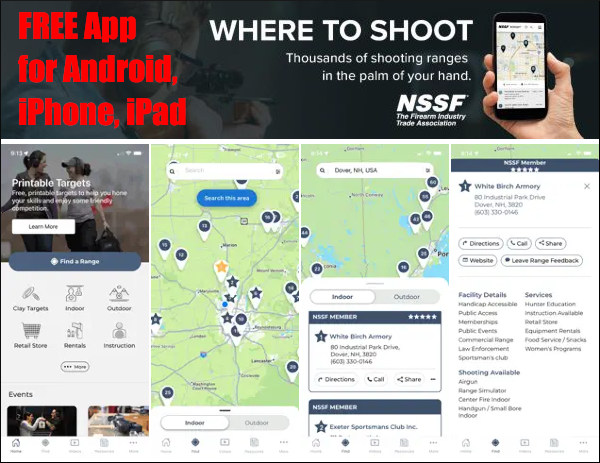
NSSF, the Firearm Industry Trade Association, has released a NEW and Improved Where To Shoot mobile App. This FREE mobile device App allows target shooters, hunters, and outdoor enthusiasts to locate shooting ranges throughout the USA. “Finding a safe, welcoming place to shoot should be simple,” said Joe Bartozzi, NSSF President/CEO. “The redesigned Where To Shoot App provides … accurate, up-to-date range information, training tools and more.”
Available for iPhone, iPad, and Android devices, the updated App provides fast, convenient access to the country’s most comprehensive directory of shooting ranges.
The Where To Shoot mobile App is available for FREE Download through the App Store and Google Play. Users can also search for ranges online at WhereToShoot.org.
A Faster Way to Discover Places to Shoot
The refreshed Where To Shoot app introduces a streamlined design and enhanced search tools that allow users to quickly find shooting facilities wherever they are — whether at home or traveling.
Key Features Include:
Nationwide Shooting Range Directory — Access one of the most comprehensive databases of shooting ranges in the United States. Events and Training Opportunities — Discover shooting events, instructional programs and other opportunities to improve skills. Mobile-Optimized Experience — Modern interface allows quick browsing and seamless range discovery. Location-Based Search — Instantly find ranges near your location or search by ZIP code, city, or state. Detailed Range Listings — View contact info, directions, and facility details before planning your visit. Indoor and Outdoor Range Filters — Identify facilities with your preferred shooting environment.
“The Where To Shoot platform has long been one of the most valuable tools for connecting target shooters with ranges,” said John McNamara, NSSF Vice President, Member Services. “This redesigned app strengthens that connection by making it even easier for people to discover local facilities and for ranges to showcase the experiences and services they offer.”
NSSF Requests Range Owners to List Their Facilities
NSSF encourages shooting range owners and operators to add or update their listings free of charge at WhereToShoot.org. By keeping listings current, ranges can help shooters easily discover safe, well-managed shooting venues. Enthusiasts can also help expand the directory by encouraging ranges that are not yet listed to create a free listing.
How fast can you shoot a bolt-action rifle? We doubt you can out-pace the ace “Stangskyting” shooters from Scandinavia. Some of these guys can run more than two rounds per second, including mag changes! That’s impressive. Bulletin reader C. Lemmermann from Denmark told us: “In Scandinavia we have this competition called ‘Stangskyting’. It’s similar to the ‘Mad Minute’ but we only have 25 seconds to hit the target [at] 200-300m distance with a 6.5×55 [target rifle].” In the Stangskyting video below a shooter named Børklop puts 16 rounds on target in just 25 seconds. (He starts with a round in the chamber and cycles through three, 5-round magazines).
Børklop’s performance, with just a sling and iron sights, is impressive. He’s shooting a Sauer 200 STR target rifle with 5-round magazine. Note that Børklop manipulates the Sauer’s bolt with his thumb and index finger, while pulling the trigger with his middle finger. As good as Børklop is, some Stangskyting competitors are even better. Roy Arne Syversrud from Oslo, Norway tells us: “The best shooters in Norway can do 21 shots in 25 seconds, changing the mag three times.”
Here’s another Stangskyting video. Check out the speed with which John Olav Ågotnes works that action — simply amazing!
This Guy Could Break the “Mad Minute” Record
Børklop’s rate of fire, 16 rounds in 25 seconds, is the equivalent of 38.4 rounds in 60 seconds. That’s a notable number because the record for the “Mad Minute”, a British Army marksmanship drill, is 38 rounds in one minute. That record was set in 1914 by Sergeant Instructor Alfred Snoxall, and still stands. So as you watch Børklop, keep in mind that Snoxall shot that fast for a full minute with a Lee-Enfield nearly 100 years ago!
Børklop has an average cycling time of 1.56 seconds per shot, starting with a round in the chamber. To beat the record of 38 rounds, he would need to make seven mag changes in sixty seconds. All those mag swaps could reduce his average time per shot, making it difficult to achieve 38 hits in a minute. But, if Børklop could use 10-round mags with his Sauer STR, this guy has the skills to break the record.
To emphasize the capabilities of the WWI-era British shooter who set the record, Snoxall shot as fast as Børklop does, but Snoxall reloaded with stripper clips. Snoxall’s SMLE (Lee-Enfield) rifle also had relatively crude open sights and the stock was far less ergonomic than Børklop’s Sauer STR stock.
Here’s another Stangskyting video showing John Ågotnes shooting rapidfire with his Sauer 200 STR (Scandinavian Target Rifle) chambered in 6.5×55. By our count, Ågotnes manages 17 shots within the 25-second time period. That rate of fire (17 in 25 seconds) equates to 40.8 rounds in one minute!
REGISTER Now for CMP 2026 National Matches at Camp Perry
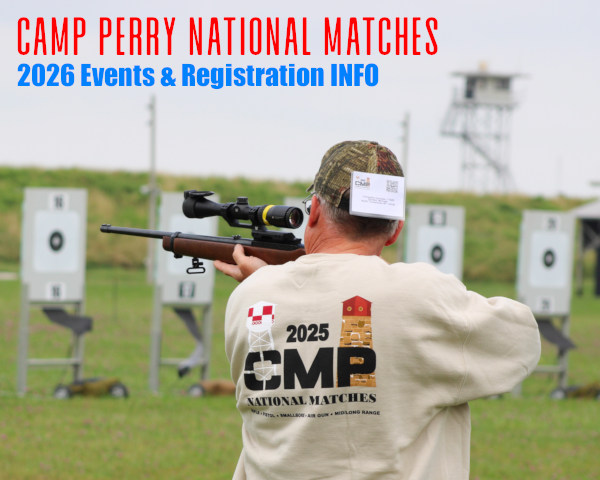
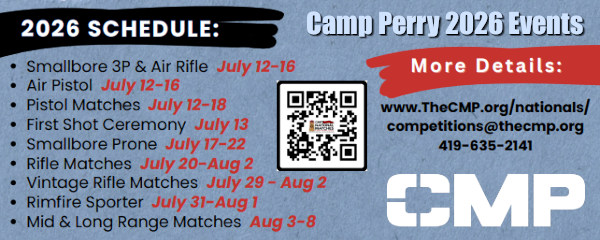
Registration for the Civilian Marksmanship Program’s 2026 National Trophy Pistol and Rifle Matches is now. This year’s National Matches will run from July 12 through August 9, 2026. Review the new 2026 National Matches schedule and other event info on the CMP website at TheCMP.org/cmp-national-matches.
The CMP National Matches, held at the Camp Perry National Guard Training Base since 1907, is conducted via a partnership between the CMP and the Ohio National Guard. The National Matches include multiple indoor and outdoor events, with spectators welcome to watch this noteworthy, century-old competition.
Along with several competitive opportunities for adults and juniors of all experience levels, the National Matches features a variety of educational clinics for marksmen and women as well as retail selections from some of today’s leading industry vendors. Whether participating for the first time, a seasoned competitor or simply observing, the National Matches has something for everyone. All events are open to the public, free for viewing. Spectators are welcome to observe firing on the Camp Perry ranges at any time, with ample parking on-site.
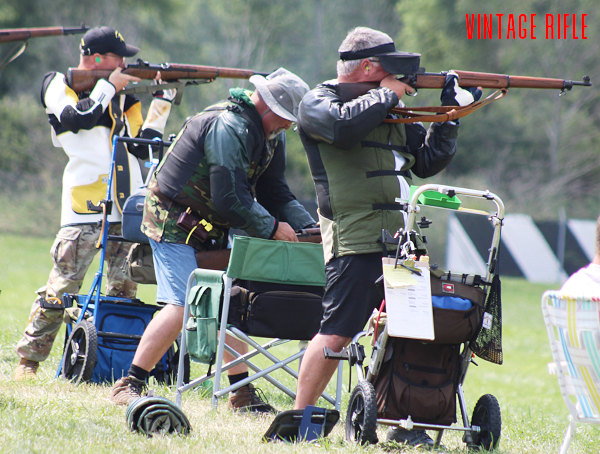
Highpower, Service Rifle, and Vintage Rifle
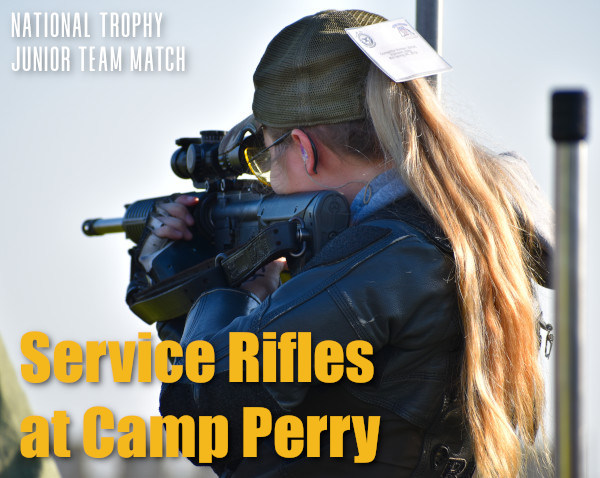
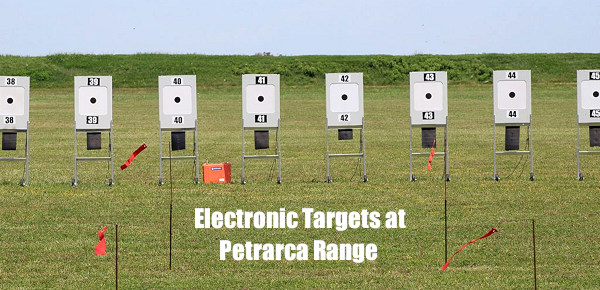
Introduced last year, the National Trophy Rifle series will again be held completely on electronic targets! The schedule of events includes prestigious matches like the President’s Rifle, Hearst Doubles, Rattle Battle, National Trophy Individual and National Trophy Team events. NOTE: The National Trophy Infantry Team Match will still be on paper targets.
A paired Junior Team Match is also on the schedule for young competitors, along with an assortment of vintage and modern military rifle events like the John C. Garand, Springfield and Vintage Sniper matches for individuals at every stage of their marksmanship abilities. Additionally, the M14 Heritage Match is a major attraction.
CMP National Championship Rifle
The CMP National Championship series features three days of 800 Aggregate competitions and a 4-Person Team event. Awards are presented for the leading competitors of each day as well as for the culminating 2400 Aggregate (800×3).
Mid-Range and Long-Range Rifle
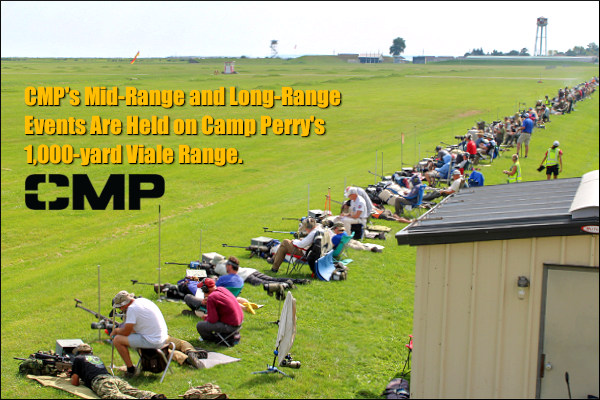
The CMP’s National Mid-Range and Long-Range series features both individual and team competitions, fired fully on CMP’s line of outdoor electronic targets. All Mid/Long-Range matches are open to Match Rifle, Service Rifle, Palma Rifle, F-Open, F-TR or AR Tactical categories fired from 600 yards (Mid-Range) and 1,000 yards (Long-Range).
New for 2026: The CMP has added a Mid/Long-Range category for this year: F-Class Practical. This “Practical” class is geared toward new competitors and has more affordable equipment standards. In addition, this summer an International 12-Person Team Match will be held, featuring teams from the United States, Great Britain and Canada. The event will feature a Palma course of fire: record shots at 800, 900 and 1,000 yards.
Rimfire Sporter Rifle
Highlighted as one of CMP’s most popular events, the Rimfire Sporter Rifle Match features .22 caliber competition in open sights (O-Class), telescopic (T-Class), tactical/unlimited (TU) and U.S. military rimfire training rifles (M-Class). The event is perfect for those just beginning in the sport or those looking for a unique challenge on the range.
Like last year, the event will be fired completely on electronic targets! Competitors will be able to enjoy close parking and the covered structure of Petrarca Range.
Smallbore Rifle
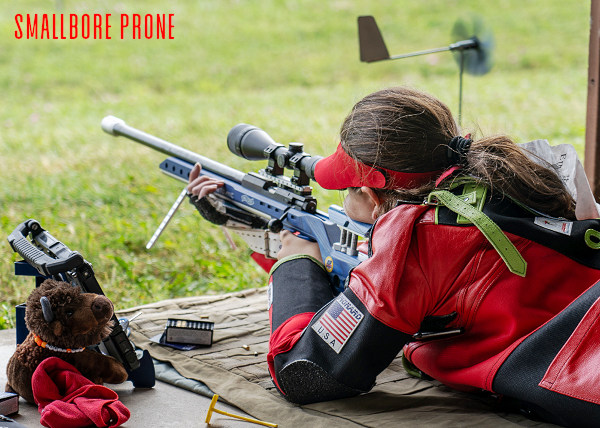
Likewise, the National Smallbore events will be fired on the same electronic targets as Rimfire Sporter — also setup on Camp Perry’s Petrarca Range. The schedule includes three-position and prone events, complete with an F-Class category for interested individuals.
National Air Rifle Championship
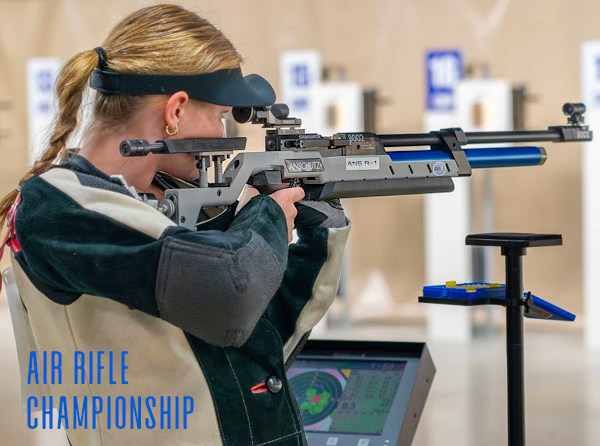
The National Air Rifle Championship (60 Shot and Team Match) for adults and juniors will be held at the same time as 3-position smallbore to accommodate those competitors wishing to fire in both events. These are sanctioned USA Shooting Designated Ranking Matches.
Pistol Events and Glock Challenge
Fired this year on newly minted paper targets branded with CMP’s insignia, the National Pistol events include a mix of traditional matches like the President’s 100 Pistol, National Trophy Individual and National Trophy Team events, along with a series of 900 Aggregate matches for .22, Center Fire and .45 Pistol. The GSSF GLOCK National Challenge will be returning to the schedule in 2026 along with the Service Revolver EIC Match. The National Air Pistol Championship will be held in the evening to allow competitors to take part in the aggregate matches during the day.
National Matches Air Gun Events
For air rifle and air pistol competitors, the National Matches Air Gun events will be offered within the Gary Anderson CMP Competition Center’s 80-point indoor electronic target range – also located on Camp Perry. The air gun events are available through the entirety of the National Matches and appeal to those of any experience level, with supported bench options included.
Marksmanship Training Clinics and SAFS
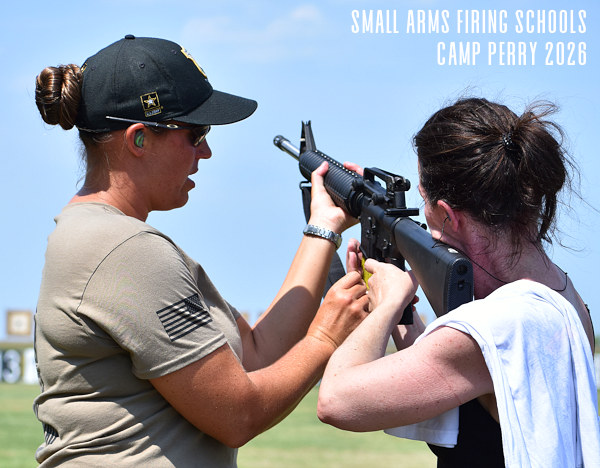
Image shows 2023 National High Power Rifle Champion Amanda Elsenboss (left) providing instruction. Amanda was, a former USAMU Team member, now serves in the National Guard.
Small Arms Firing Schools (SAFS) will be held for rifle, pistol and smallbore rifle. Participants in SAFS are trained by some of the top military instructors in the country on firearm safety and competition basics. All firearms and ammo are provided for the live-fire portion of the clinic. Other clinics during the National Matches include a Rimfire Sporter Rifle Clinic, the CMP Junior Rifle Clinic and the CMP Advanced Highpower Clinic, for more experienced competitors. Most clinics include both classroom and live-fire training on the range.
Sales at CMP Store
Behind the range, Commercial Row offers a variety of items for spectators and competitors – with an array of manufacturers selling used firearms, ammunition, competition gear, accessories, apparel and much more. The CMP North Store, located on the grounds of Camp Perry, allows even more buying opportunities at the Matches with a lineup of military surplus rifles, memorabilia and equipment needs.
Housing at Camp Perry
Housing for the National Matches is currently available on the grounds of Camp Perry. Accommodations include four-person huts, cottages, barracks, RV spaces and camp sites. Camp Perry housing info posted on the Camp Perry Lodging Center site. Also, if Camp Perry base housing is full, numerous hotels are available in the surrounding Port Clinton, Fremont, and Sandusky Ohio areas.
Todd Jarrett is one of the world’s best handgun shooters. A multi-time World Champion, Todd knows a thing or two about semi-auto pistols, particularly 1911s and 1911-based raceguns. Jarrett has been IPSC Open Division World Champion, has won the Steel Challenge World title four times (Limited Division), and has won than 100 Area championships, as well as many other action shooting events. Jarrett is the only USPSA Triple Crown Winner and he holds four USPSA National titles: Open, Limited, Production, and Limited-10. Jarrett revealed in an interview that between 1988 and 2001 he shot about 1.7 million rounds during practice: “I had a gun in my hand for two hours every day for 10 years to develop my skill level”.
In the video below, Todd explains how to get the proper grip on your handgun, and how to employ a proper stance. We’ve watched many videos on pistol shooting. This is one of the best handgun instructional videos we’ve seen. Todd explains, in easy-to-understand terms, the key elements of grip and stance. One very important point he demonstrates is how to align the grip in your hand so that the gun points naturally — something very important when rapid aiming is required. If you watch this video, you’ll learn valuable lessons — whether you shoot competitively or just want to have better control and accuracy when using your handgun defensively.
Recommended Thumbs-Forward Shooting Grip for 1911s
“Shooting semiautomatic pistols using the thumbs-forward method really becomes useful … where speed and accuracy are both needed. By positioning the thumbs-forward along the slide (or slightly off of the slide) you are in essence creating a second sighting device: wherever your shooting thumb is pointing is where the pistol is pointing. This makes it incredibly fast to draw the pistol, get your proper grip, and press forward to the target without needing to hunt around for the front sight.” — Cheaper Than Dirt Blog.
Rimfire tactical-style matches are now one of the fastest-growing types of rifle competition in the country. The USA has seen a big growth in rimfire tactical matches over the last six years. NRL22 and PRS Rimfire matches are held throughout the country. Right now there are probably ten times as many rimfire tactical matches as sanctioned PRS and NRL centerfire matches. The reason is simple — rimfire ammo is much less costly, and clubs can run challenging rimfire tactical matches at nearly any outdoor gun range that allows shooting out to 200+ yards.
The National Rifle League (NRL) started off sponsoring major centerfire tactical matches, similar to PRS competitions. That proved successful so the NRL added a .22 LR Rimfire series, called NRL22. The NRL22 rimfire discipline has been a major success, as rimfire guns are fun to shoot and ammo is very affordable. The most popular NRL22 matches have drawn up to 200 rimfire competitors. And now PRS has its own PRS .22 Rimfire series.
Precision Rimfire Match with Through-the-Lens Video
Here’s an interesting video featuring a top-tier .22 LR MDT-chassis rifle. The host, Pieter “Piet” Malan from South Africa, runs the excellent Impact Shooting YouTube Channel, which now has 320+ videos on target shooting and hunting. This video features a TriggerCam unit attached to the scope, so you can see hits on the targets, just as the shooter does.
NRL22 — Affordable, Challenging Rimfire Competition Series
NRL22 is a great way to get into competition shooting with minimal expense. There are currently eight (8) classes: Open, Base, Young Guns, Ladies, Air Rifle, Old Guns, Semi-Auto, and Adaptive. Base Class is for the budget-minded shooter — the combined MSRP of Rifle and Optic may not exceed $1650.00 (for example spend $800 on a rifle and $850 on a scope). That keeps the sport affordable. The other classes have no price limits on Rifle and Optic. The “Young Guns” division is for competitors 17 years or younger. Visit NRL22.com to find an NRL22 match near you. CLICK HERE for full NRL22 rules with 2026 updates.
Precision Rimfire Competition Match Report
This excellent video covers a big rimfire precision match, the King of 0.28 Miles event, held at the Rush Lake Range in MN. The video shows multiple stages with targets out to 300 yards, followed by a 465-yard challenge. Host Dave shot the match with a Vudoo Gunworks V22 rifle in a Grayboe Ridgeback stock, with a Trijicon Accupower 4.5-30x56mm FFP scope. The ammo was Lapua Center-X, a top-tier choice.
Rimfire Ammo Selection — Why Comparison Testing Is Important
Every gun and barrel is different, so you should test various ammo types in YOUR rifle. Additionally, you can benefit from lot testing with particular ammo types to optimize your ammo choice even more. If you’re serious about rimfire accuracy, lot testing can be very helpful, whether at your own rage or a testing center. There is no replacement for starting with a good lot of ammunition your rifle likes.
First Rimfire Precision Match — Lessons Learned
Here’s a helpful video for folks getting started in the Precision Rimfire game. Our buddy F-Class John, a top F-Open competitor (and YouTube video creator), is getting starting in the .22 LR precision discipline. Here he provides lessons learned from his first .22 LR precision match.
Tripod Review — Options for Precision Rimfire Shooters
The NRL22 match format is a great shooting discipline. NRL22 offers a high fun factor at relatively low cost. You don’t have to reload match ammo. A couple of 50-round boxes of .22 LR ammo will get you through the match. While some people bring lots of gear to matches, that’s by choice and not by necessity. You can keep it simple and still be competitive (and win).
Tips for NRL22 Competitors by Jonathan Ocab
I am a match director at my gun club and run our local NRL22 matches. People often ask me for tips for competing in NRL22. First, I recommend getting the course of fire for the month in advance and practicing those stages at the range. Here are other specific tips that should help NRL22 competitors improve their gun-handling and match results.
1. Dry Fire Practice — If you are not able to do live fire practice at the range, I encourage shooters to practice their shooting positions at home via dry fire. Setup props or barricades with pasters or other faux targets on a wall in the garage or inside the house and run through each stage.
2. Scope Magnification Level — The most common issue I see with newer shooters in NRL22 is the tendency to maximize their scope magnification. The timer will start, and the shooter gets into position on a target, but the scope is set to 15x or higher and the shooter can’t find the target. The shooter lowers the magnification, locates the target, and then increases the magnification again, takes the shot, transitions to another target, and repeats the process of decreasing magnification, locating target, etc. Novice NRL22 shooters should try using the mid-range magnification. Try shooting 7x-12x and learn to balance field of view and target image.


 In the archives of The First Shot (the CMP’s Online Magazine), SGT Walter E. Craig of the USAMU discusses physical conditioning for competitive shooters, particularly High Power competitors. Fitness training is an important subject that, curiously, is rarely featured in the shooting sports media. We seem to focus on hardware, or esoteric details of cartridge reloading. Yet physical fitness also matters, particularly for High Power shooters. In his article, Craig advocates: 1) weight training to strengthen the Skeletal Muscle System; 2) exercises to build endurance and stamina; and 3) cardiovascular conditioning programs to allow the shooter to remain relaxed with a controlled heart beat.






 In the year 2000, the


 Accurized and BN-Nickel Plated
 BN-Nitride Plating on Action
 Fitting and Chambering the Barrel
 Accuracy Testing with Both Barrels


 Today Suhl 150 rifles are very hard to find in North America. In 2006, a used Suhl 150, even without sights, might fetch $1200.00 or more. Then, in 2007 through early 2008, hundreds of Suhl match rifles were imported. This drove prices down, and those “in the know” snapped up complete Suhl 150s at prices ranging from $450 to $850 (see 2007 advert at right), depending on condition.