You go girl! Jessie Duff is the first woman in history to earn the title of USPSA Grand Master (GM), the highest rating conferred by the U.S. Practical Shooting Association (USPSA). To earn this prestigious ranking, Duff had to maintain an average above 95% in shooting classification courses, something never before achieved by a lady shooter. Jessie finished the year with a 95.39% average.
2013 was a banner year for Duff, who scored Open, Limited, and Single Stack Division wins at the USPSA National Championships. Duff also took multiple wins in the Steel Challenge World Championships, Steel Challenge Nat’l Championships, and Arkansas Sectional Championships.
“I am honored to have earned the designation of Grand Master with USPSA” said Duff. “This is something I have been working toward my entire shooting career and I’ve come this far thanks to a lot of hard work and a lot of support,” she added.
Duff, one of the most accomplished competition shooters in the world, has “raised the bar” for female shooters across the country. As female participation in shooting sports has grown, Duff’s accomplishments and continued success have blazed a path for women in competitive action shooting. “Jessie is one of the best shooters in the world,” said USPSA Executive Director Kim Williams. “USPSA is proud to announce her historic record as the first woman to ever reach this ranking in Practical Shooting,” added Williams.
In his Guns & Ammo Blog, Top Shot (Season 1) Champion Iain Harrison explains how to get started in 3-Gun Competition. Iain begins with some very practical advice: “Don’t worry too much about the gear. Spending a ton of money to get into the game, only to discover a few months later that you want to head in another direction, is a surefire way to alienate your significant other…. Go shoot what you have, even if it’s not ideal; you’ll learn much more about what works and what doesn’t by shooting in a match than you ever will by reading blogs like this.”
It’s obvious that you’ll need three firearms — pistol, carbine/rifle, and shotgun. But Harrison explains you don’t have to go out an get the most expensive (or complex) weaponry. For the rifle/carbine segment, Harrison says: “A vanilla AR15 with a low-power variable scope is a good place to start. Pretty much any flat top AR15 [will do].” For a scattergun, yes it would be nice to have an exotic Benelli M1 Super 90, but a low cost semi-auto from Remington, Winchester, or Mossberg will be competitive. And many guys start off with their “old reliable” Rem model 870 pump shotgun. Harrison explains: “Add an extended mag tube to the Remington 1100 lurking in the back of the safe and you have the shotgun component covered, though if you’d rather run your trusty pump gun… that’s cool too.”
Choice of Pistol and Caliber
The best handgun brand and caliber is really a matter of personal choice. You want a “dead-nuts” reliable pistol, for which you can get affordable accessories (holster, mag pouches, high-cap magazines). Glocks, 1911s, HKs, Sigs, S&W M&Ps are all popular. As for caliber choice, Harrison notes: “Most guys run 9 mm handguns as the capacity advantage over a .40 or .45 is significant, but whatever you choose, your holster is as important as the piece it contains. Bump a loaded pistol out of your holster in the middle of a stage and you’ll be going home early.”
Video Shows Highlights from 3-Gun Nation 2011 Championship
In his Guns & Ammo Blog post, Harrison also give advice about 3-Gun optics and he lists particular firearms models that are favored by competitors. Learn more about these topics by visiting the 3-Gun Nation website. When it comes to gun shopping, Harrison does advise to “buy new” — that’s because active 3-gunners fire so many rounds in practice and competition that they really can wear out their firearms. Click Here to read Harrison’s full Getting Started in 3-Gun Blog article. While visiting GunsandAmmo.com, check out Harrison’s amusing Top Five Reasons to Try 3-Gun. Here’s Reason Number One: “It’s sexy. So sexy in fact, it’s the only shooting sport with its own TV show!”
This week’s episode of Shooting USA TV features the NRA Annual meeting and the U.S. National Steel Championships, two segments worth watching. Shooting USA airs Wednesdays on the Outdoor Channel, at 3:30 pm, 8:30 pm, and 12:00 midnight (Thursday) Eastern Time (check with your TV carrier for other time zones).
Over 86,000 members attended the NRA’s Annual Meeting and new Product Show held this year in Houston’s giant convention center. With gun issues being so prominent in recent months, the NRA added over 1,000,000 new members in 2013. Not surprisingly, there was a huge turn-out in Houston. Shooting USA interviews industry leaders and spotlights Product Show highlights.
U.S. National Steel Championship
In the world of action shooting, there is no other sound that instantly draws the attention like a round hitting a steel plate. It’s been called “bang and clang” and “drag racing with guns”. For three days, at the U.S. National Steel Championships in Florida, the fastest pistol shooters from across the nation competed for glory, prize money, and the title of “America’s Fastest Gun”. This year the Main Match came down to an epic battle between KC Eusebio and Max Michel, two of the fastest shooters on the planet. Visit www.USSteelshoot.com for more info and complete match results.
Watch Video of KC Eusebio in Action at 2013 U.S. National Steel Championships:
In response to questions from a fellow F-Class shooter, G. Salazar offered some expert advice in an article entitled: Basics: A Few Wind Reading Tips. Here are highlights from that essay. You can read the entire article on Salazar’s Rifleman’s Journal Website. Salazar cautions that: “I certainly am not attempting to make this short item into a comprehensive lesson in wind reading, but there may be a nugget or two in here for the newer shooter. There is, however, no substitute for range time and coaching.”
Preliminary Matters — Holding Off vs. Knob-Turning
Let’s begin by eliminating one topic altogether — I realize that the predominant method of wind correction in F-Class is holding-off with the crosshairs of your scope rather than adjusting the windage knob. I am a firm believer in aiming at the center and turning the knob as needed, but we’ll leave that for another time and focus on seeing what the wind is doing.
The Wave — Wind Cycles and Shot Timing
I find that most shooters begin to shoot immediately when the time commences rather than waiting for an appropriate moment in the cycle, this often leads to lost points early on. If you’ve been scoring prior to shooting, hopefully you’ve observing the flags and your shooter’s shot placement. It’s a very useful way of gaining some insight into the day’s wind patterns before shooting.
My technique is based on the understanding of wind as a cyclical wave motion. That statement alone should give you plenty to think about[.] Imagine for a moment, a surfer. He waits for a gentle swell, gets moving on it and rides it through it’s growth and ultimately its crescendo and hopefully avoids being swallowed in its crash. Wind typically behaves in the same fashion as that wave and a smart shooter behaves as does the surfer — get on early in the wave, ride through the major change and get off at the right moment. Knowing when to stop shooting is every bit as important as shooting quickly through the predictable portion of the wave; getting back on to the next wave is a matter of delicate judgment and timing.
When you are on that rising (or falling) wave, the idea is to shoot very quickly to minimize the amount of change between shots and to make a small adjustment on each shot. Too many shooters waste time trying to analyze the exact amount of the change, by which time it has changed even more! Get on with it, click or hold over a set amount and fire the next shot quickly. This is the foundation of how I shoot and it is very effective as long as you know when to start, when to stop and you have a good man working the target – a slow marker is the death of this method.
Watch Shots from Other Shooters
We all watch the wind flags, of course, and the trees if your range is so blessed (ours are fairly barren), and many other small wind indicators. Watching the shots of your fellow shooter can also be a very useful tool and should be observed whenever possible. When a good shooter next to you comes up with a poor shot, it should signal you to stop and reassess conditions as they may not be what they appear.
While scoring for another shooter, take a moment to scan the line of targets. You’ll be surprised at how most of the shot markers move in unison to one side and then the other. The sad truth is that most shooters are behind the changes in the wind and they will get carried to either side of the bull as the wind changes. You’ll see this in the targets as they come up, and once learned, you’ll find that the line of targets is as useful as another row of flags.
The “Top Guns” of the tactical shooting world will be heading to the PRS Finale this upcoming weekend. This event, the culmination of the 2013 Precision Rifle Series, runs December 6-8, 2013 at the K&M Precision Rifle Training facility in Florida. The PRS Finale is a unique championship-style match for the nation’s best tactical shooters, competing with bolt-guns in four divisions: Pro, Semi-pro, Military, and Law Enforcement. To learn more about the PRS, visit PrecisionRifleSeries.com. You’ll find a good article on the ModernServiceWeapons.com (MSW) website, that outlines PRS rules, spotlights PRS match venues, and lists recommended gear. READ MSW PRS Article.
Below is a great video covering the 2012 PRS Finale from start to finish. Held at the Rifles Only range in Texas last December, the 2012 event drew 55 of the nation’s top tactical shooters, who competed for glory… and thousands of dollars worth of cash and prizes. If you like the tactical game, you’ll love this professionally-edited video. Because this video is over 29 minutes long, we’ve provided a timeline so you can quickly find the highlights:
AUDIO: Click Button to hear Rich Emmons Talk about the Precision Rifle Series.
Video TimeLine:
Registration:1:56
Chrono Work: 2:25
Night Briefing: 3:10
Day One: 4:00+
Running Wire: 5:15
Prone Mover: 6:48
Tower Challenge: 7:12
Net Challenge: 8:43
Tri-Level Barricade: 11:28
1/4-Miler Berzerker: 11:52
Mound Shot: 12:57
Platform: 13:14
Platform Mover: 13:42
5-Target Speed Dot: 14:26
The Rat Trap: 15:00
End of Day One Brief: 16:42
Day Two Start: 17:22
Ace Challenge: 17:30
Know Your Limits: 18:54
Non-Supported Engage: 19:25
Culverts Only: 20:25
Awards Ceremony: 23:15
Sponsor Credits: 26:50
Interviews with Competitors: 27:24
How did the PRS get started? Rich Emmons, PRS President, explains that the concept was to “accumulate ten or so matches and create a point series” that would determine “who was the best [tactical] rifle shooter in the country”. Rich says that: “It’s a points race, but it’s also a big Finale that brings the ‘best of the best’ all together in one ‘monster’ match.” The winner of the 2012 PRS Series was Wade Stuteville, who also took first in the 2012 Finale. Runner-up in the 2012 Series (with a third-place Finale finish) was Team GAP’s Chase Stroud. Jeff Badley of Team GAP finished third in the PRS 2012 Series (and second in the Finale). SEE 2012 PRS Pro Shooters Equipment List.
How to Get Started in Tactical Matches
If this fun and challenging tactical discipline appeals to you, head out to the range and get involved. Begin with local matches and develop your skill set. You don’t have to invest in $6000.00+ worth of rifle and optics. GAP’s George Gardner says you don’t need ultra-expensive gear: “The most important piece of gear is yourself. A one-minute rifle [can] win these matches every time… so you’ve got to bring it. You don’t get good overnight, so for someone trying to get into this, just shoot — you’ve got to get out there and shoot. My advice would be to get out and shoot one of these matches. It doesn’t matter how you place — just do it. You have to have a starting point. If you don’t start, you’ll never finish.”
Are you thinking, “Snow’s on the ground, winter’s here, I won’t be competing until spring.” Well think again — there are opportunities to compete indoors during these cold months.
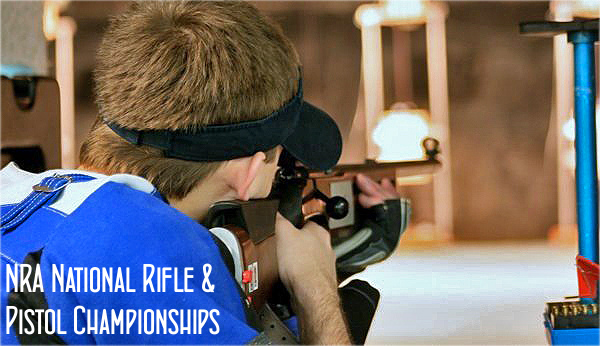
The 2014 NRA National Indoor Rifle & Pistol Championships start January 1, 2014. There will be indoor matches around the country with a variety of disciplines including Air Pistol, Rimfire Pistol, Air Rifle, and Rimfire Rifles. There is even a BB gun class for Juniors. The Indoor Championships involve multiple sectional tournaments, held in a variety of states from January through mid-April. This is like a super-duper postal match. Your results are sent to the NRA where they’re compared to other shooters. Winners are determined in late May. It’s a fun way to compete with many other shooters and it’s easy to get involved. There will be nearly 300 sectionals in 2014, so you’ll probably find an event close to home. Here are dates for 2013:
For more information contact these NRA staffers: Dian Bullock, (703) 267-1482 (Rifle); Ann Boyd, (703) 267-1452 (Pistol); Tori Croft, (703) 267-1473 (Collegiate).
The 50m Free Pistol is one of the events in the NRA National Indoor Championship. It takes skill — the pistol is shot one-handed, with iron sights, and the Ten-Ring is only 50mm (about 1.97″) in diameter. A competitive world-class score is 560 or better out of 600 possible points. Learn more about this challenging discipline in this USA Shooting video:
Tonight’s Episode of Shooting USA TV features the 2013 International Revolver Championship (IRC) from the Hogue Action Shooting Range located near Morro Bay, California. You can see another winning performance by Jerry Miculek. Hosted by the International Confederation of Revolver Enthusiasts (ICORE), this event draws hundreds of the world’s best wheelgunners. John Scoutten and Mike Irvine cover the action. The show airs on the Outdoor Channel at 3:30 pm and 8:30 pm Eastern Time (check local listings for other zones).
World’s Best Wheelgunners
The IRC, held May 31 through June 2, 2013, was the highlight of this year’s revolver shooting season. More than 240 of the world’s top revolver shooters negotiated their way through 12 stages of fire putting more than 70,000 rounds down range. Competition at the IRC is divided into three divisions: Classic, Iron Sights, and Open. Classic Division competitors use six shot revolvers and speed loaders, no moon clips allowed. In the Iron Sight Division, shooters are allowed up to eight rounds in the gun, with moon clips to speed reloads. Traditional iron sights are required. The Open Division includes eight-shot cylinders, moon clips, barrel porting, or compensators, and electronic optics.
Along with the adult classifications, the IRC features divisions for Junior shooters. The junior events are always crowd-pleasers. Some of these youngsters are definitely future champions in the making. The video below shows the 2009 IRC Junior Shoot-Off for the overall Junior Title.
The November 2013 Edition of Target Shooter Magazine is now available. The “cover boy” on this edition is Irish shooter Joe Melia, winner of the 2013 European F-Class Championships held at England’s Bisley Ranges. This month’s Target Shooter Magazine features an in-depth report on the Euro F-Class event, a review of the CZ Sporter rifle by Dick Wright, a feature on Benchrest Shooting by our friend Vince Bottomley, and a variety of other interesting articles.
Download in PDF or iPad Formats
Target Shooter magazine is offered at a reasonable cost of just £0.83 (about $1.33 US) per issue. Target Shooter is currently available in two digital formats: 1) Downloadable PDF file; and 2) Apple iPad eZine available from the App Store.
Earlier this month, Forum Member Steven Blair won the California Long-Range Championship (F-Open Class) shooting a .300 WSM. Here Steve explains the advantages of the .300 WSM cartridge in long-range competition. Steve also discusses the learning process required to shoot the stout-recoiling .300 WSM successfully. Steve cautions: “It took me months to learn how to shoot my .300 WSM rifle well”.
The Argument for the .300 WSM as an F-Open Cartridge by Steven Blair
There has been much interest lately regarding .300 WSM (Winchester Short Magnum) in F-Open competition. The cartridge is already well-established in 1000-yard benchrest and has been used successfully in F-Open, notably by Derek Rodgers to win the 2010 National Championship. Derek used, as do most .300 WSM BR shooters, a 210-grain bullet.
The .300 WSM is a modern design, short and fat with a 35° shoulder. It is a slightly rebated and beltless magnum, capable of approaching .300 Winchester Magnum performance with notably less powder. It has an excellent accuracy reputation and I’ve found it very easy to tune.
Berger introduced the outstanding .30-caliber, 230-grain Hybrid bullet in 2011. This bullet ballistically eclipses all others, caliber .30 and under. Berger rates it as G7 .380 and G1 .743. Trimmed and pointed, the B.C., estimated from elevation adjustments at 300, 600, and 1000 yards, increases to G7 .410. It is also an exceptionally accurate bullet.
The combination of these two items, .300 WSM cases and Berger 230gr Hybrid bullets, and their application to long range F-Class, is what I will discuss in this article.
VOICE FILE: Click Button to hear Steven Blair Explain How to Master the .300 WSM.
.300 WSM Brass — Choices are largely limited to Norma, Winchester and Remington (Lapua, are you listening?). Since I have only used Winchester and Norma brass, I won’t discuss Remington brass, which may also be a viable choice. I found Norma brass to be exceptionally good and have seen no evidence of short life that I’ve heard elsewhere. Winchester brass can produce results equal to Norma, if first sorted, culled, and prepped. There is a significant price difference between the two brands. It is worth noting that Norma manufactures both .270 WSM and .300 WSM brass. Either can be used. Winchester makes .270 WSM, 7mm WSM, .300 WSM, and .325 WSM brass. Again, any can be used but 7mm WSM requires pushing the shoulder back. The other three have the same shoulder dimension.
Bullet Selection — My approach is to use the highest B.C. bullet available that is accurate. As mentioned above, the hands-down, .30-caliber winner is Berger’s 230gr Hybrid. My loads using 230gr Hybrids produce approximately 2865 fps from 34″ barrels. In order to equal the 1000-yard, 10 mph wind deflection, 215 Hybrids must be run at 3030 fps, a fairly stiff load. By contrast, 7mm 180gr Hybrids must start at 3100 fps, not reliably achievable in most conditions. Lapua now makes a 220gr Scenar-L that Erik Cortina has shot a fair bit and reports that it is very accurate. It has a similar profile to the Sierra 220gr MatchKing, another possible candidate, albeit with much lower B.C. than Berger’s mighty 230gr Hybrid.
Barrel Life — After 1126 and 936 rounds shot at F-Class cadence in two barrels, my best guess is at least 2000 rounds accurate barrel life. The barrels look better than any of my .284 Shehane barrels at this point.
F-Open Rig with Tuner
Steve’s .300 WSM rifle features a BAT 3-lug action (with integral recoil lug and +20 MOA rail), in a Manners F-Class stock. The barrel is a 34″, 1.25″-straight contour Krieger or Brux fitted with an Erik Cortina 1.25″-diameter tuner (shown at right — note Index Marks). Other hardware includes a Bix ‘n Andy trigger, and Nightforce 12-42x56mm NXS scope (NP-R1 reticle). Some of these components were chosen to aid tracking (given the additional recoil). The rifle weighs 21 pounds, 13.5 ounces — just under the 22-pound F-Open limit.
Accuracy and Tuning Ease — The .300 WSM tunes more easily and is more tolerant than any of the four 6mmBR barrels I’ve shot. It is the most accurate large-caliber cartridge I know. A number of 1000-yard benchrest records were set with the cartridge and my experience reinforces that. During my .300 WSM load development, several 100-yard, five-shot groups were in the “ones”, no mean feat for a rifle pushing 230 grains at nearly 3000 fps. The load tolerance window, the powder charge spread where velocity, ES and accuracy are relatively constant, is 0.8 grains in my loading. That means the same load can be fired confidently in many conditions.
Exterior Ballistics — The extent to which the big bullet reduces wind deflection and vertical movement must be experienced to appreciate. I shoot against 7mm cartridges ranging from .284 Win to 7mm WSM, no slouches among them. When they are blown into the 9 Ring, I stay in the 10 Ring. When range vertical pushes them up or down to lose a point, I see it, too, but don’t drop points. However, there is nothing magic about it. The shooter still must point the gun at the right place. The mistakes just cost less and, since F-Class is an Aggregate game, the point spread will accumulate.
Recoil — This is the big downside of the .300 WSM + 230gr Hybrid combination. My rifle weighs 2½ ounces shy of 22 pounds and still pushes me around. My early testing was done with a load that produced 2950 fps. I still cannot shoot it well. The load is very accurate but I cannot manage the recoil consistently. At 2865 fps, it is manageable but always requires careful attention to body position, shoulder pressure, front rest setup, rear bag characteristics and other ergonomic factors. I have learned that shooting a rig with this much recoil places more emphasis on the factors our sling brothers and sisters have managed for many years. It took me months to learn how to shoot the rifle well. I fired over 1000 rounds before I began to feel comfortable. Persist, the results are worth it.
Summary — If you are willing to put the effort into learning how to shoot the cartridge and have a reasonable recoil tolerance, the investment will pay dividends. My scores have increased and become more consistent. My confidence in the rifle has also increased, no small matter in a game with many mental aspects. Be prepared for what could be a long learning curve. If all that sounds like too much, one of the 7mm cartridges is pretty close and certainly competitive in the right hands. My choice, given all the factors listed above, is .300 WSM.
Left to Right: RCBS Chargemaster, Hoover meplat trimmer, Omega trickler, Sartorius GD-503 scale.
Steven Blair has competed in F-Class competition since December of 2010 and F-Open since November of 2011. He placed fifth in the F-Class National Championship this year and is the two-time winner of both the California Long Range F-Class Championship and Twentynine Palms Long Range Regional. Steve shoots on Team Lapua.
Steve says the .300 WSM may offer an advantage at long range: “The weekend of 2-3 November, I won my second straight California Long Range F-Class Championship. Last year, my .284 Shehane performed well against strong competition. This year, the .300 WSM provided a ballistic edge that certainly gained a few additional points. My final 991-50X was at least partly due to the excellent ballistics and accuracy the big cartridge provided.”
Credit Des Parr for providing match details found in this report.
The 2013 European F-Class Championships are now history. Congratulations to new F-Open Euro Champion Joe Melia of Ireland, and new F-TR Euro Champion Paul Eggerman of Germany. Held at the Bisley Ranges in England, the European Championships drew top shooters from all over the Continent, plus the U.K. and Ireland. Following the individual competitions, national teams competed, and Great Britain emerged the big winner. British teams won gold in F-Open, F-TR, and the Rutland Cup. Hail Britannia!
On the GB F-Class Association website, Des Parr authored a great day-by-day account of the Euro Championships. Des writes: “The 2013 European Championships had a little of everything to keep everyone happy — some very light winds to please the trigger pullers, some very strong winds to please the wind-readers and only a little rain to please everyone! Friday was notable for having remarkably calm and steady wind. This enabled everyone to really see what their rifles were capable of in near to ideal conditions. The result was predictable; some very high scores.”
Individual Championships
In F-Open division, senior Irishman Joe Melia shot 457.39 to capture the title. Des Parr notes: “Joe got a rousing cheer from all his fellow competitors, indicative of his good standing. In second, it was another medal for Ireland, this time the fiercely competitive Anthony Dunne used all his experience to rack up 453.38. In third place was the new GB Captain from Wales, David Lloyd with 452.33.”
In F-TR, the Germany’s Paul Eggemann shot a superb score of 447.35 to win the individual title, ten points ahead of his nearest rival. Ukraine’s Sergei Baranov took second with 437.22, while his countryman Sergei Gorban finished third with 436.26.
TEAM COMPETITION 8-Man Event — Top place went to Team GB with 1084.58. Second place was taken by Italy with 1035.46 and in third was BDMP Germany with 1021.32. In F-TR, first place went to Team GB with 1007.32, with Team Italy second (987.31), and Ukraine third (978.26).
4-Man Rutland — There were ten, 4-man teams in the Rutland Competition. In F-Open, Winning Team GB was steered to victory by captain Peter Hobson with a super 524.19. France Open 1 took second with 522.17, while the Europe Open team was third with 497.22.
Irish Teams won silver and bronze in the 4-man Rutland Match at the European Championships.
In related news, Forum member Gary Costello from the U.K. won the GB/Euro National League title for 2013 with a total of 71 points. This multi-match title is based on the best of four (4) League Championship Competitions throughout the year. Gary explains: “We have eight shoots in total, this championship is open to GB F-Class Association members and includes shooters from France, Germany, Ireland, Netherlands, Spain, Ukraine and several other countries. Most of these countries have maximum 300 yards to shoot so the UK is the closest place to compete in long-range competitions. That’s a bit amazing considering the size of the UK to Germany for example.”
Gary used a 300 WSM built by Gunsmith Peter Walker, with a Nesika L action, Benchmark barrel, and a March 8-80x56mm scope. Gary told us that it took some time to master the 300 WSM, which has more recoil than a .284 Win, but in the end, Gary’s choice of caliber helped carry him to victory over a long season of hard-fought competition. Finishing second in League standings was Mark Daish with 70 points, while Des Parr took third place with 64 points. (Point totals based on best four matches.) Complete 2013 GB F-Class League Results are available on the GB F-Class Association website.


 You go girl! Jessie Duff is the first woman in history to earn the title of USPSA Grand Master (GM), the highest rating conferred by the U.S. Practical Shooting Association (USPSA). To earn this prestigious ranking, Duff had to maintain an average above 95% in shooting classification courses, something never before achieved by a lady shooter. Jessie finished the year with a 95.39% average.
 In his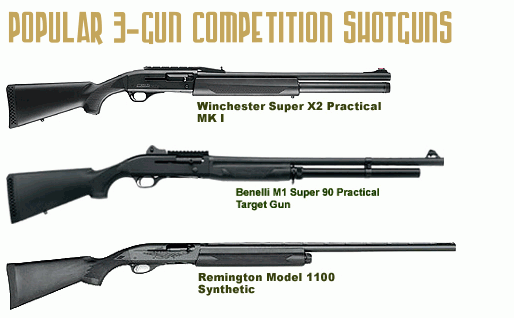


 In response to questions from a fellow F-Class shooter, G. Salazar offered some expert advice in an article entitled:
  My technique is based on the understanding of wind as a cyclical wave motion. That statement alone should give you plenty to think about[.] Imagine for a moment, a surfer. He waits for a gentle swell, gets moving on it and rides it through it’s growth and ultimately its crescendo and hopefully avoids being swallowed in its crash. Wind typically behaves in the same fashion as that wave and a smart shooter behaves as does the surfer — get on early in the wave, ride through the major change and get off at the right moment. Knowing when to stop shooting is every bit as important as shooting quickly through the predictable portion of the wave; getting back on to the next wave is a matter of delicate judgment and timing.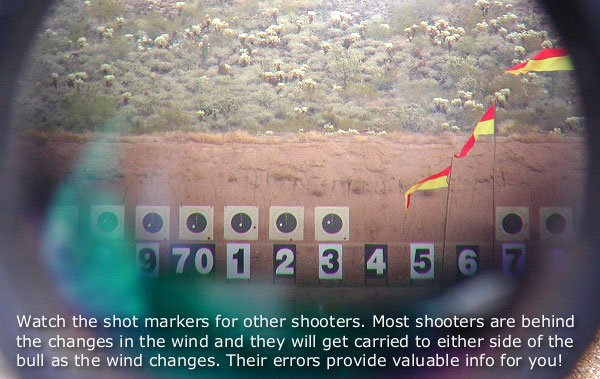


 How to Get Started in Tactical Matches


 The November 2013 Edition of
 The .300 WSM is a modern design, short and fat with a 35° shoulder. It is a slightly rebated and beltless magnum, capable of approaching .300 Winchester Magnum performance with notably less powder. It has an excellent accuracy reputation and I’ve found it very easy to tune.


 F-Open Rig with Tuner


