|
|
November 7th, 2013
The National Rifle Association celebrates its 142nd birthday this month. First chartered in New York state in November, 1871, the NRA was originally created to train citizens in marksmanship. Here’s an interesting account of the history of the NRA in the late 18th and early 20th century:
How the NRA Got Started in the 1870s
Dismayed by the lack of marksmanship shown by their troops, Union veterans Col. William C. Church and Gen. George Wingate formed the National Rifle Association in 1871. The primary goal of the association would be to “promote and encourage rifle shooting on a scientific basis,” according to a magazine editorial written by Church.
After being granted a charter by the state of New York on November 17, 1871, the NRA was founded. Civil War Gen. Ambrose Burnside, who was also the former governor of Rhode Island and a U.S. Senator, became the fledgling NRA’s first president.
 An important facet of the NRA’s creation was the development of a practice ground. In 1872, with financial help from New York state, a site on Long Island, the Creed Farm, was purchased for the purpose of building a rifle range. Named Creedmoor, the range opened a year later, and it was there that the first annual matches were held. An important facet of the NRA’s creation was the development of a practice ground. In 1872, with financial help from New York state, a site on Long Island, the Creed Farm, was purchased for the purpose of building a rifle range. Named Creedmoor, the range opened a year later, and it was there that the first annual matches were held.
Political opposition to the promotion of marksmanship in New York forced the NRA to find a new home for its range. In 1892, Creedmoor was deeded back to the state and NRA’s matches moved to Sea Girt, New Jersey.
The NRA’s interest in promoting the shooting sports among America’s youth began in 1903 when NRA Secretary Albert S. Jones urged the establishment of rifle clubs at all major colleges, universities and military academies. In February 1903, an amendment to the War Department Appropriations Bill established the National Board for the Promotion of Rifle Practice (NBPRP). This government advisory board became the predecessor to today’s Corporation for the Promotion of Rifle Practice and Firearms Safety, Inc. that now governs the CMP. The 1903 legislation also established the National Matches, commissioned the National Trophy and provided funding to support the Matches. By 1906, NRA’s youth program was in full swing with more than 200 boys competing in matches at Sea Girt that summer.
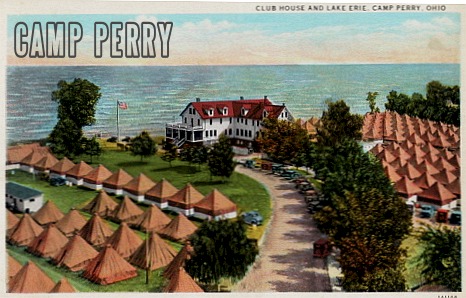
Camp Perry Site Acquired in 1906
Due to the overwhelming growth of NRA’s shooting programs, a new range was needed. Gen. Ammon B. Crichfield, Adjutant General of Ohio, had begun construction of a new shooting facility on the shores of Lake Erie, 45 miles east of Toledo, Ohio. The original land for Camp Perry was purchased in 1906, and the reservation was named after Commodore Oliver Hazard Perry, the American naval commander who won the Battle of Put-in-Bay during the War of 1812.

On August 19, 1907, Cpl. L. B. Jarrett fired the first shot at the new Camp Perry Training Site. And that year, 1907, Camp Perry held its first National Pistol and Rifle Championship events. This location has hosted the annual NRA National Matches ever since. Today, over 4,000 competitors attend the National Matches, making it the most popular shooting competition in the western hemisphere.
November 6th, 2013
With the price of reloading components rising and .22 LR rimfire ammo being difficult to obtain, more shooters are looking at air rifles for training and competition. With air rifles, the propellant is free, and pellets are cheap and readily available from local stores or web vendors such as Pyramyd Air.
UPDATE: The 2013 Extreme Benchrest Event is being held November 8-10 at the Quail Creek Gun Club. Friday the 9th was an open shooting day. The actual competition starts Saturday November 10th. You can still show up and compete if you register before 10 a.m. on Saturday. A variety of matches (benchrest, field target, silhouette, and pistol) will be held over the weekend.
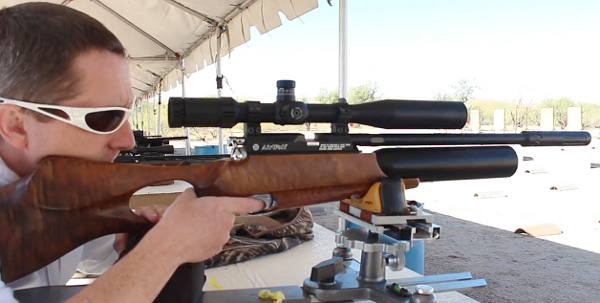
 The video below shows a very popular air rifle match — the Extreme Benchrest Event held at the Quail Creek Gun Club, in Green Valley, Arizona (south of Tucson). Many types of shooting took place over a full weekend. A 25m benchrest match was followed by the popular steel silhouette speed match (shot from the bench). Both indoor and outdoor pistol matches were held. There was even a “Extreme” Benchrest match, with bullseye targets placed at 75 yards (that offered plenty of challenge). This is very nicely made video, well worth watching. Enjoy! The video below shows a very popular air rifle match — the Extreme Benchrest Event held at the Quail Creek Gun Club, in Green Valley, Arizona (south of Tucson). Many types of shooting took place over a full weekend. A 25m benchrest match was followed by the popular steel silhouette speed match (shot from the bench). Both indoor and outdoor pistol matches were held. There was even a “Extreme” Benchrest match, with bullseye targets placed at 75 yards (that offered plenty of challenge). This is very nicely made video, well worth watching. Enjoy!
GREAT Video of Extreme Benchrest AirGun Event In Arizona

Though you won’t experience the recoil, blast, and noise of centerfire shooting, air rifle shooting still offers the challenge of hitting the target, just like any other shooting sport. With an air rifle you save money and there are fewer regulations (no FFL is required for an air rifle purchase). Modern air rifles can be very accurate. The top-of-the-line air rifles are not kids toys — these are sophisticated, finely-machined systems capable of surprising accuracy. And you won’t lack for competition opportunities. Around the country there are air rifle matches for both position shooters and benchrest competitors.

Video Find by Boyd Allen. We welcome reader submissions.
November 6th, 2013
 Imagine if thousands of junior shooters, from all around the country, could somehow compete in one giant, mega-match hosted at hundreds of different locations, with the scores all tallied together? Juniors in Maine could compete with young marksmen in Montana, or Florida (or any of the other 50 states). Sound like a pipe dream? Well such a program really exists. It’s called the Civilian Marksmanship Program (CMP) Postal Match, a 10-meter, three-position air rifle competition. Imagine if thousands of junior shooters, from all around the country, could somehow compete in one giant, mega-match hosted at hundreds of different locations, with the scores all tallied together? Juniors in Maine could compete with young marksmen in Montana, or Florida (or any of the other 50 states). Sound like a pipe dream? Well such a program really exists. It’s called the Civilian Marksmanship Program (CMP) Postal Match, a 10-meter, three-position air rifle competition.
The CMP Postal Match allows juniors from all 50 states to compete from the convenience of their home ranges. The top shooters later compete shoulder-to-shoulder at regional and national matches. The CMP Postal Match is open to all junior programs, including all JROTC, 4-H, Boy Scouts and junior clubs. Participants must be school age (not yet graduated from high school), and all team participants must be from the same school or club.

Here’s How the CMP Postal Match Works:
- Shooters must register with the CMP before January 24, 2014.
- Registered shooters will receive official CMP targets by mail ($5.00 per shooter).
- Targets must be mailed back to CMP for scoring, to be received no later than 2/4/2013.
- Postal scores can be viewed through CMP’s Competition Tracker system.
- The top Postal Match shooters will qualify for CMP Regional Championships, to be held at Camp Perry (OH), Anniston (AL), and Layton (UT) in 2014.
CMP Postal Match INFO | Postal Match Registration Instructions | National 3-P Air Rifle Rules
November 2nd, 2013
By popular request, this story has been reprinted from 2011.
 Forum member Al Nyhus is a top-level score shooter who has competed successfully with the 30BR cartridge in VFS (Varmint for Score) matches. Al has been working on an “improved” 30 BR cartridge that delivers extra velocity. Al’s 30 BRX cartridge is inspired by the 6mm BRX cartridge, popular in 600-yard benchrest and across-the-course competition. The 6mm BRX cartridge maintains the same sidewall profile and shoulder angle as the parent 6mmBR case. Likewise, the 30 BRX retains the 30° shoulder used on the popular 30 BR cartridge. Forum member Al Nyhus is a top-level score shooter who has competed successfully with the 30BR cartridge in VFS (Varmint for Score) matches. Al has been working on an “improved” 30 BR cartridge that delivers extra velocity. Al’s 30 BRX cartridge is inspired by the 6mm BRX cartridge, popular in 600-yard benchrest and across-the-course competition. The 6mm BRX cartridge maintains the same sidewall profile and shoulder angle as the parent 6mmBR case. Likewise, the 30 BRX retains the 30° shoulder used on the popular 30 BR cartridge.
Al reports: “Thought you might like to see what I’ll be working with in my VFS gun this season. It’s a true 30 BRX — a 30 BR with the shoulder moved forward 0.100″ with the standard BR shoulder angle. Stan Ware of SGR Custom Rifles built one last season for Steve Grosvenor and I was really impressed by the performance of Steve’s gun. The 30 BR barrel on my VFS gun needed replacing, so the new 30 BRX got the nod.”
30 BRX Delivers 150-200 FPS More Velocity than 30 BR
Al’s testing shows the 30 BRX gives a solid 150-200 fps speed gain over the 30 BR at the top, while needing just 2.5-3.0 more grains of Hodgdon H4198 to do so. A 30 BR case holds on average 40.8 grains of water, while the 30 BRX holds 42.3 grains (roughly 4% more). So the 30 BRX delivers a 7% increase in velocity with a mere 4% increase in H20 capacity. That’s pretty good efficiency. [Editor’s Note: Assuming 34 grains of H4198 is a typical 30BR match load, Al’s increase of 2.5-3.0 grains for the 30BRX represents roughly a 7.5-8.5% increase in actual powder burned. That explains the higher velocities.]
Why did Nyhus decide to try an “improved” 30 BR? Al explains: “The 30 BRX was created to operate at a [higher] velocity level than can be achieved with the standard 30BR case, while at the same time keeping the easy-tuning characteristics of the standard 30BR case. We also wanted to use the same powders currently used with the 30BR and maintain similar operating pressures.” Is the 30BRX harder to shoot because of the increased velocity? Al doesn’t think so: “In a 13.5-lb HV gun, the 30 BRX case is a pleasure to shoot with just a flea bite of recoil.”
Will the 30 BRX Replace the 30 BR in Score Competition?
The 30 BR is already an exceptionally accurate cartridge that dominates short-range Benchrest for Score competition. Will the 30 BRX make the standard 30 BR obsolete? Nyhus doesn’t think so. However, Al believes the 30 BRX offers a small but important edge in some situations: “On any given day, it’s the shooter that hits the flags best and makes the fewest mistakes that ends up on top. No amount of velocity will save you when you press the trigger at the wrong time. Missing a switch or angle change at 200 yards that results in 3/4″ of bullet displacement on the target can’t be compensated for with another 200 fps. That’s the hard fact of benchrest shooting. But on those days when, as Randy Robinett says, ‘our brains are working’, the BRX may offer enough of an advantage to turn a close-but-no-cigar 10 into an ‘X’ at 200 yards. Or turn a just-over-the-line 9 into a beggar 10.” Given the fierce competition in Score matches, an extra 10 or another X can make the difference between a podium finish and also-ran status.
November 1st, 2013
 Many shooting ranges have been closed over the past few years, victims of “urban sprawl” and concerns over noise and land use. Now there’s a bill in Congress that will help fund new ranges around the country. The U.S. House Judiciary Committee last week voted to advance the Target Practice and Marksmanship Training Support Act (HR 2463). This legislation is sponsored by Congressional Sportsmen’s Caucus (CSC) member Duncan Hunter (Rep., CA) and Caucus Vice-Chair Tim Walz (Dem., MN), along with a bipartisan coalition of 14 other House Members. This bill would allow states to use the excise taxes already collected on sporting equipment and ammunition to develop and maintain much-needed public shooting ranges. Having already received the approval of the Natural Resources Committee, passage of HR 2463 through the Judiciary committee was the final step necessary to send the bill to the House Floor. Many shooting ranges have been closed over the past few years, victims of “urban sprawl” and concerns over noise and land use. Now there’s a bill in Congress that will help fund new ranges around the country. The U.S. House Judiciary Committee last week voted to advance the Target Practice and Marksmanship Training Support Act (HR 2463). This legislation is sponsored by Congressional Sportsmen’s Caucus (CSC) member Duncan Hunter (Rep., CA) and Caucus Vice-Chair Tim Walz (Dem., MN), along with a bipartisan coalition of 14 other House Members. This bill would allow states to use the excise taxes already collected on sporting equipment and ammunition to develop and maintain much-needed public shooting ranges. Having already received the approval of the Natural Resources Committee, passage of HR 2463 through the Judiciary committee was the final step necessary to send the bill to the House Floor.
If passed by the House, HR 2463 would have to be approved by the U.S. Senate, and then signed by the President before it could become law. Based on recent experience, a Presidential veto doesn’t seem likely. Through December 2012, President Obama has vetoed just two of 621 bills that crossed his desk. That’s the fewest number of vetos since Millard Fillmore held office in the early 1850s.
Summary: H.R.2463 — 113th Congress (2013-2014)
Target Practice and Marksmanship Training Support Act – Amends the Pittman-Robertson Wildlife Restoration Act to: (1) authorize a state to pay up to 90% of the costs of acquiring land for, expanding, or constructing a public target range; (2) authorize a state to elect to allocate 10% of a specified amount apportioned to it from the federal aid to wildlife restoration fund for such costs; (3) limit the federal share of such costs under such Act to 90%; and (4) require amounts provided for such costs under such Act to remain available for expenditure and obligation for five fiscal years.
Shields the United States from any civil action or claim for money damages for injury to or loss of property, personal injury, or death caused by an activity occurring at a public target range that is funded by the federal government pursuant to such Act or located on federal land, except to the extent provided under the Federal Tort Claims Act with respect to the exercise or performance of a discretionary function.
Urges the Chief of the Forest Service and the Director of the Bureau of Land Management (BLM) to cooperate with state and local authorities and other entities to carry out waste removal and other activities on any federal land used as a public target range to encourage its continued use for target practice or marksmanship training.
October 31st, 2013

There was “Thunder Down-Under” last week at the 2013 World Benchrest Championships (WBC 2013) in Australia. The event was held at the Silverdale Range, a 1.5 hour-drive west of Sydney, NSW. This event drew roughly 80 of the world’s best 100/200 yard Benchrest group shooters who competed both individually and on national teams. Squads from Australia, Canada, Finland, Italy, New Zealand, Russia, South Africa, the United Kingdom, and the USA vied for WBC team honors. Both Australia and the United States fielded three teams, while New Zealand and South Africa each fielded two squads.

Conditions were vicious at times, with extremely high winds in a few relays. To show you how tough things were, legendary shooter Tony Boyer had a 1.560″ group during the LV 200-yard match, while Tom Libby shot a shocking 2.280″ group in the same relay. We can’t remember when we’ve ever seen groups like that posted by shooters of this skill level.
In team competition, the strong USA ‘A-Team’ finished first followed by South Africa A (second place) and Australia A (third place). Ed Adams, Tony Boyer, Gene Bukys, and Bob Scarbrough Jr. were the members of the winning USA A-Team.

In individual competition, Americans finished 1-2-3 in the Two-Gun. Texan Charles Huckeba topped the field, winning the Two-Gun Overall with a 0.2804 Grand Agg. Gene Bukys (0.2863) was second, and Bob Scarbrough Jr. (0.2881) finished third. In fourth place overall was South African Roland Thomsen (0.2919), while New Zealander Peter Haxell (0.2940) finished fifth. The top five for each of the LV and HV yardages are listed below.

Complete WBC 2013 Results have been posted on the Australian Benchrest Bulletin website. Scroll down and look for the blue “Latest Stuff” tab on the lower left. There you’ll find links for WBC 2013 events under the “Latest Results” header.
Light Varmint Grand Agg
1. Gene Bukys (USA-A) .2796
2. Todd Tyler (USA-C) .2817
3. Roland Thomsen (SA-A) .2952
4. Peter Haxell (NZ-A) .2971
5. Jan Hemmes (SA-A) .3024 |
Light Varmint 100 Yards
1. Freddie Botha (SA-B) .1936
2. Todd Tyler (USA-C) .2258
3. Wayne Campbell (USA-B) .2464
4. Peter Haxell (NZ-A) .2484
5. Gene Bukys (USA-A) .2486 |
Light Varmint 200 Yards
1. Jan Hemmes (SA-A) .2939
2. Gert Le Roes (SA-B) .2962
3. Roland Thomsen (SA-A) .2978
4. Gene Bukys (USA-A) .3106
5. Todd Tyler (USA-C) .3375 |
Heavy Varmint Grand Agg
1. Ivan Piani (ITA-A) .2389
2. Bob Scarbrough (USA-A) .2399
3. Ch. Huckeba (USA-C) .2424
4. Tony Boyer (USA-A) .2520
5. Ed Adams (USA-A) .2781 |
Heavy Varmint 100 Yards
1. Tony Boyer (USA-A) .1574
2. Ch. Huckeba (USA-C) .1722
3. C. Whittleton (AUS-B) .1872
4. Wyn. Campbell (USA-B) .1874
5. Bob Scarbrough (USA-A) .1900 |
Heavy Varmint 200 Yards
1. Ivan Piani (ITA-A) .2786
2. Ed Adams (USA-A) .2869
3. Bob Scarbrough (USA-A) .2897
4. Ch. Huckeba (USA-C) .3126
5. Jari Laulumaa (FIN-A) .3168 |

Photos by Todd Tyler, Tom Libby, and Scott Pieper, provided courtesy Aaron French.
October 28th, 2013
 This past weekend the IBS 600-yard Nationals were held at the Bench Rest Rifle Club of St. Louis. Attendance was strong, with 78 Light Gun shooters and 74 Heavy Gun competitors. Initial results are posted below. Forum member Mike Moses was the Two-Gun Overall winner, claiming the 2013 600-yard Title as National Champion. In the Two-Gun rankings, Johnny Powers finished second, followed by Dallas Johnson, Sam Hall, and Ryan Hunt. In the Light Gun Division Charlie Macke (shooting a big 7mm) finished first, ahead of second-place Mike Moses, and third place Ryan Hunt. In the Heavy Gun Class the top three were: Johnny Powers, Andy Ferguson, Dallas Johnson. This past weekend the IBS 600-yard Nationals were held at the Bench Rest Rifle Club of St. Louis. Attendance was strong, with 78 Light Gun shooters and 74 Heavy Gun competitors. Initial results are posted below. Forum member Mike Moses was the Two-Gun Overall winner, claiming the 2013 600-yard Title as National Champion. In the Two-Gun rankings, Johnny Powers finished second, followed by Dallas Johnson, Sam Hall, and Ryan Hunt. In the Light Gun Division Charlie Macke (shooting a big 7mm) finished first, ahead of second-place Mike Moses, and third place Ryan Hunt. In the Heavy Gun Class the top three were: Johnny Powers, Andy Ferguson, Dallas Johnson.
Past IBS 600-yard National Champ Sam Hall said conditions were brutal on the first day: “On Saturday, the wind was switching and gusting to 30 mph. Though there still were some crazy switches, Heavy Gun on Sunday was calmer thank The Lord! Day One was just about survival!”.
We will provide additional match details and photos as soon as they are available. Here are the unofficial standings for Two-Gun, Light Gun, and Heavy Gun. The order of finish is determined by combined rank points for Group Aggregate and Score Aggregate.
| Two-Gun Overall |
Light Gun Division |
Heavy Gun Division |
1. Mike Moses
2. Johnny Powers
3. Dallas Johnson
4. Sam Hall
5. Ryan Hunt
6. Andy Ferguson
7. David Dorris
8. Charlie Macke
9. Richard Schatz
10. Mike Hanes
JR Champion: Rory Jacobs |
1. Charlie Macke
2. Michael Moses
3. Ryan Hunt
4. Rich Elijah
5. Samuel Hall
6. David Dorris
7. Dallas Johnson
8. Steven Hall
9. Johnny Powers
10. Richard Schatz |
1. Johnny Powers
2. Andy Ferguson
3. Dallas Johnson
4. Mike Hanes
5. Danny Forehand
6. Sam Hall
7. Mike Moses
8. Jeff Godfrey
9. Ryan Hunt
10. Steve Hoskin |
October 26th, 2013
Here’s a great Slide Show featuring images from the recent Western CMP Games at the Ben Avery Shooting Range outside Phoenix, Arizona. CLICK HERE for full match results. This video slide show features photos by Grant Guess and others. How many of your buddies do you recognize in the photos?
Click Arrow at lower left to start slide show (with music):
The Western CMP Games and Creedmoor Cup Matches were held October 11-20, 2013. As usual, the event was well-attended. The CMP Games featured the Small Arms Firing School, M16 Match, four Garand/Springfield/Vintage Military matches and the New Modern Military match. Other matches include a Carbine Match, a Rimfire Sporter Match, and the popular Vintage Sniper Match. The Creedmoor Cup events included a High Power Rifle Clinic, Creedmoor Cup (2400 point aggregate) Match, 4-Man Team Match, and Creedmoor EIC Match.
Western CMP Games Complete Match Results | 2013 Western CMP Games Program

October 25th, 2013
The pessimist complains about the wind; the optimist expects it to change; the realist adjusts the sails.” — William Arthur Ward
 Readers often ask us: “Is there a decent, easy-to-comprehend book that can help my wind-reading?” Many of our Forum members have recommended The Wind Book for Rifle Shooters by Linda Miller and Keith Cunningham. This 146-page book, published in 2007, is a very informative resource. But you don’t have to take our word for it. If you click this link, you can read book excerpts and decide for yourself. When the Amazon page opens, simply click the book cover (labeled “Look Inside”) and another screen will appear. This lets you preview the first few chapters, and see some illustrations. Readers often ask us: “Is there a decent, easy-to-comprehend book that can help my wind-reading?” Many of our Forum members have recommended The Wind Book for Rifle Shooters by Linda Miller and Keith Cunningham. This 146-page book, published in 2007, is a very informative resource. But you don’t have to take our word for it. If you click this link, you can read book excerpts and decide for yourself. When the Amazon page opens, simply click the book cover (labeled “Look Inside”) and another screen will appear. This lets you preview the first few chapters, and see some illustrations.
Other books cover wind reading in a broader discussion of ballistics or long-range shooting, such as Applied Ballistics for Long-Range Shooting by Bryan Litz. But the Miller & Cunningham book is ALL about wind reading from cover to cover, and that is its strength. The book focuses on real world skills that can help you accurately gauge wind angle, wind velocity, and wind cycles.
All other factors being equal, it is your ability to read the wind that will make the most difference in your shooting accuracy. The better you understand the behavior of the wind, the better you will understand the behavior of your bullet. — Wind Book for Rifle Shooters
|
The Wind Book for Rifle Shooters contains straightforward guidance on the thought processes, techniques, and tactics used by expert wind-readers. The written text is supplemented by numerous easy-to-understand charts and illustrations. The authors show you how to put together a simple wind-reading “toolbox” for calculating wind speed, direction, deflection and drift. Then they explain how to use these tools to read flags and mirage, record and interpret your observations, and time your shots to compensate for wind. The essential wind-reading basics taught in this book can definitely help any shooter. Here are some reviews from actual book buyers:
I believe this is a must-have book if you are a long-range sport shooter. I compete in F-Class Open and when I first purchased this book and read it from cover to cover, it helped me understand wind reading and making accurate scope corrections. Buy this book, read it, put into practice what it tells you, you will not be disappointed. — P. Janzso
If you have one book for wind reading, this should be it. Whether you’re a novice or experienced wind shooter this book has something for you. It covers how to get wind speed and direction from flags, mirage, and natural phenomenon. The book also details methods for recording shots and improving your shooting and thus your wind reading skills. In my opinion this is the best book for learning to read wind speed and direction. — Muddler
I found this book to be something I have needed for quite a while. I have been shooting Long Range for 20 years and always had problems with the wind. I would just chase the spotter. This book makes it all make sense. — L. Cash
As far as I know this is the only book of its type. It’s very well written in a way that’s easy to understand for such a complex subject. The charts and graphs are extremely helpful. It’s a bit on the short side at about 146 pages but still packed with knowledge. — R. Johnson |
|

October 25th, 2013
 We expect you’ve heard of David Tubb, 11-time NRA National High Power Champion. Without question, David is one of the greatest rifle shooters who ever lived. What you may not know is that David came from a family of shooters. David’s father, George Tubb, was a nationally-ranked High Power competitor. What’s more (now this may surprise you), David’s mother “Polly” was was a great shooter in her own right. When she wasn’t rearing a future Champion, Polly was hitting the X-Ring at rifle matches. We expect you’ve heard of David Tubb, 11-time NRA National High Power Champion. Without question, David is one of the greatest rifle shooters who ever lived. What you may not know is that David came from a family of shooters. David’s father, George Tubb, was a nationally-ranked High Power competitor. What’s more (now this may surprise you), David’s mother “Polly” was was a great shooter in her own right. When she wasn’t rearing a future Champion, Polly was hitting the X-Ring at rifle matches.
Pauline (“Polly”) S. Tubb of Canadian, Texas, earned several rifle championships during the course of her shooting career. In this photo, Polly took a moment to appear for a photo after winning the 1962 National Woman’s Bolt Rifle championship at Camp Perry. One shooter who competed against Polly observed: “I was there as a 1962 Pennsylvania State Team junior! I remember Polly. She beat some of the best Army and Marine shooters and always did it with style and good humor.”
Now that’s our kind of gal. God Bless you Polly. Thanks for being a Leading Lady of our sport.

Archive photo courtesy Civilian Marksmanship Program, TheCMP.org.
|


