The 9th edition of the National Standard Three-Position Air Rifle Rules has just been released. The new 2012-2014 rulebook goes into effect immediately. Digital versions of the new Rulebook can be downloaded from the CMP website in eZine Format or Adobe PDF Format. NOTE: All changes from the previous rules are underlined in the Rulebook so new rules can easily be identified.
The 2012-2014 National Standard Rulebook has several rules that were changed to keep national 3-position air rifle rules in line with what competitors will see in USAS/ISSF rules at larger competitions. The ISSF is changing its rules for 10m and 50m rifle and pistol events to have separate “preparation and sighting” periods before record or competition firing begins. Since this will become the new international standard, the Council decided that junior position air rifle competitors in the U. S. should use the same procedures.
Here are some of the other notable rule changes (this is only a partial list; consult Rulebook for all changes!):
Rule 2.4 – LOAD
The command “LOAD” is no longer given before “START” in regular competitions. The command “LOAD” is still given prior to “START” in finals. This change reflects the fact that there is a separate preparation and sighting time before record fire. The command “START” allows competitors to continue to prepare their positions and then load and fire when they are ready to start firing sighters.
Rule 4.1.7 – 600 FPS Velocity Restriction
The new rules clarify that match directors do not have to check rifle velocities unless they feel a rifle was altered to be a “high velocity” rifle. It also recognized that using non-lead pellets may produce velocities slightly above the 600 fps maximum.
Rule 7.16 – Malfunctions
No extra time will be given for a malfunction or malfunction repair. An athlete may repair a rifle after notifying the Range Officer or a replacement rifle may be authorized by the Range Officer if there is physical evidence that the malfunction cannot be repaired. Additional sighting shots may be allowed if the athlete must get out of position to facilitate the repair, but only within the remaining shooting time. This change is [made] to eliminate delays caused by giving shooters extra time for malfunctions that frequently throw matches off schedule.
Last month, Sally Bauer set a pending new International Benchrest Shooters (IBS) Score Heavy Gun (HG) record for 1000-yard competition. Her score was 100-5X with a 3.495″ tie-breaker group. Sally shot the group on August 19, 2012 at the Gopher Rifle and Revolver Club in Harris, MN. If this record is approved, Sally will be the first female shooter to hold an IBS 1000-yard benchrest record. Sally’s handsome 67-lb Heavy Gun, “Stars & Stripes”, is painted with an American flag theme.
Sally Sets a Record
At the end of the Heavy Gun match #10 Sally was directed by Range Officer Gordy Mitchell to leave all of her equipment and rifle setting on her bench. Sally was perplexed by Gordy Mitchell’s direction but he assured her “It is a good thing”. Rumors swirled and Dave Holland was summoned to the pits.
Dave and Gordy brought the target back to the scoring shed and had club officials and some respected competitors measure and sign the target. All agreed Sally had just shot an IBS record score. Sally’s rifle and equipment were measured and photographed and the target sent off to the IBS for final measurement and verification.
Gun Specifications
Sally’s 67-lb Heavy Gun was originally purchased from Bill Shehane, and it uses Bill’s Maxi-Tracker stock. The gun was originally chambered for the 6-6.5×47 Lapua Improved. But the gun didn’t shoot like the Bauers wanted, so it was rechambered to 6mm Dasher by Gordy Gritters. The action is a 2″-diameter, round, chrome moly, 3-lug, 7 ½” BAT. The barrel is a 28″, 1:8″-twist Krieger, with 1.45″-diameter straight tube. The barreled action is secured in the stock with a 9″-long barrel block. The gun uses a 12X42 Nightforce BR scope and a Jewel BR trigger. Gordy Gritters smithed the rifle. Jim Sauer states: “We have known Gordy for years now and trust every phase of our gun projects — all of them are mechanical works of art. When we get our guns from Gordy we know we can put our focus on brass prep and load development and don’t have to worry about the guns being right. That really helps save time.”
Reloading Procedure for Sally’s “Stars & Stripes” Maxiby Jim Sauer
With every new rifle we start with new brass. The first step is to run them through a full length sizing die, then over an appropriate expander mandrel. Since we use a .270 neck on our 6 Dasher chambers, neck turning amounts to a 80% cleanup of the new Lapua brass necks. We do the normal primer pocket and flash-hole uniforming.
We fire-form two times to make sure we get nice sharp shoulder corners before competition. We then separate them according to weight using 1/10th of a grain differences for each box. Much of our loading process is geared around time savings. We look for easy-to-use, consistently good products and don’t vary from them unless we have a problem or results aren’t to our standards. We have chosen to shoot Clay Spencer’s 103gr 6mm bullets. We weight-sort and bearing-surface sort them and that’s it. I gave up trimming and tipping simply because it didn’t improve how Clay built them. We also use only one primer, the CCI 450.
We use one of four different powders. Our “go-to” powder is RL15, next we try Varget, then IMR 8208, and if that doesn’t work we try H4895. We have found that these bullets usually shoot best at 2970 fps. This is not an absolute, just what normally works best. We always try higher and lower velocities looking for that special load. Once we find the powder and quantity that works the best we play with the seating depth. Usually this is a fine-tune method and most of the time 15 thousandths into the rifling works the best. But don’t be afraid to jump the bullets as much as 0.100″. When we use this procedure we usually find a combination that will shoot nice, round ¾” groups at 400 yards.
Our reloading regimen starts with ultra-sonic cleaning our brass, then tumbling until shiny. We anneal the brass every time. We proceed to full-length resizing, repriming, and lubing the inside of the necks with graphite. We then charge with our selected powder and seat the bullets. We measure for concentricity, [shooting] the best ones for the record and the others for sighters. The load that Sally shot the record with is 33.0 grains of IMR 8208 XBR, CCI 450 primers, Spencer 103gr bullets, Lapua brass, bullet seated 15 thousandths into rifling, Velocity 2980 fps.
About Sally Bauer – This is the third year of competitive shooting for Sally. She listened to proper and basic instruction and learned at her pace. She developed her own style and discipline. Not wanting to be dependent on others Sally learned to set up her rests and carries Stars & Stripes to the bench by herself.
Sally and I would like to thank the kind people we have met in this crazy frustrating game of shooting. For the most part fellow competitors have been helpful and giving of the time, experience and knowledge. Every range owner and operator we have come across has treated us like family and friend. I can think of no other sport where the participants give so freely. We would also like to thank Dave Holland, Gordy Mitchell and all the others at GRRC for the professional way they handled the target and situation. — Jim and Sally Bauer
As an interesting historical note, Gordy Mitchell observed that there was an all-star line-up at the match when Sally set her record: “After checking our bench roster I noticed we had three national champions (2009-Ed Nazy, 2010-Jim Bauer, 2011-Todd Soeby) and current top five Shooter of the Year points leaders (Al Forbes, Sally Bauer, Jim Bauer, Shannon Lowman, and Larry Bryant) all at one match.”
Adding to its undefeated resume, Team Sinclair Int’l racked up an unprecedented fifth Team F-TR National Championship at Raton, New Mexico, last week. The team, consisting of firing members, Paul Phillips, Brad Sauve, Jeff Rorer, Derek Rodgers (Captain) and wind coach, Ray Gross, prevailed over 12 other teams representing the best F-TR shooters from the USA, South Africa, Australia, and Canada.
Boasting the highest attendance of any F-Class Nationals, the 2012 competition was made up of dual 1,000-yard matches, with 800 possible points per match. Team Sinclair scored 1561-48X to win the F-TR championship, finishing ahead of second-place North State X-Men (1542-39X) and third-place Team Savage (1541-47X). Team Sinclair’s Day 1 score of 790-31X topped all other F-TR teams and set a new (pending) U.S. F-TR National record for 1,000-yard F-Class competition.
“We’re grateful for Sinclair International’s support,” said the team in a joint statement. “All of us use Sinclair’s precision shooting components and reloading supplies when preparing for these events. We need products of the highest quality and consistency for us to succeed. We’ve never been defeated, and that’s a testament to Sinclair International.”
Sinclair’s F-TR Team has been competing since 2007. The newest member, Jeff Rorer, joined the team in 2009. Team Sinclair Int’l remains undefeated in F-TR National Championships. Here’s an interesting factoid about the Team Sinclair shooters. One or more members of the current Sinclair squad have been on the winning F-TR team at every U.S. F-Class National Championships since they were first held in 2004, except for 2010 when Sinclair did not field a team. Brad Sauve has been on the winning F-TR team every year except 2010: Great Lakes Express (2004, 2005 winning team); Team Green (2006 winner); Team Sinclair (2007, 2008, 2009, 2011 winner). Ray Gross and Paul Phillips were also on most of those winning squads.
For years Tiger Woods dominated the sport of golf. But even in his heyday, Tiger never had a run like IDPA ace Robert Vogel, who has an IDPA unbeaten streak dating back to 2007. For the sixth straight year, Bob Vogel (the IDPA’s only three-division Distinguished Master), has claimed the title of IDPA “Top Gun” winning the Stock Service Pistol (SSP) division title at the 2012 IDPA National Championships.
Vogel not only outgunned the entire field of 340+ shooters by 30 or more seconds this past weekend, but he also claimed the Most Accurate title to go along with his SSP win.
Vogel finished the match with six stage wins and a time of 206.62 seconds with just 31 points down over sixteen extremely challenging shooting stages. “The course design at the 2012 IDPA Nationals was technically very difficult and presented a serious challenge for even the most accurate of shooters”, said Joyce Wilson, IDPA Exec. Director.
There were many other impressive performances at the 2012 IDPA. Matthew Mink won the Enhanced Service Pistol (ESP) Division with a 238.93 (48), while Glenn Shelby took the Custom Defensive Pistol Division (CDP) title with a 248.48 (44) score. Team Comp-Tac’s Randi Rogers once again won High Lady, shooting 301.99 (114). Scott Warren earned High Senior honors with a strong 264.96 (79) performance.
Miculek Wins Enhanced Service Revolver Division
Jerry Miculek, the wizard of wheelguns, continued his string of consecutive Enhanced Service Revolver (ESR) titles, winning the 2012 title with a time of 298.14 (75). “There is nobody in the shooting sports like Jerry Miculek. Besides being a once-in-a-lifetime shooting talent, Jerry is above all an ambassador for the sports he competes in and the companies he represents,” said IDPA’s Joyce Wilson. “While most top shooters would leave the range immediately after shooting in the rain, Jerry stayed behind and spent time talking to the match staff and volunteers. That’s why you’ll never find an IDPA club or match where Jerry Miculek isn’t warmly welcomed.”
The 2012 IDPA National Championships took place September 19-22 in Oxford, North Carolina. Complete results from the 2012 IDPA Nationals are found on the IDPA website Match Page. To learn more about IDPA shooting, visit www.IDPA.com, read the DOWN ZERO Blog, or check for updates on the ShootIDPA Facebook Page.
Congratulations to David Bailey, the 2012 F-Open National Champion. Shooting at Raton last week, David scored 1283-59X, to finish one point ahead of fellow Forum member Bob Sebold (1282-59X). Past F-Open Champion Jeff Cochran tells us: “David did a masterful job. He had one of the best, if not the best, rifles on the line for the morning trigger-pulling contests. He also showed great patience choosing his shots wisely in some of the nasty, switchy afternoon conditions. Not only spitting them downrange when the conditions called for it, but he was smart enough to put on the brakes and not get burned. All in all, David had a great performance in a wide range of conditions.”
Bailey Shot a .280 Remington with Berger 7mm Hybrids
David was shooting a 7mm cartridge, but not the 7mm you might expect. David’s Bat-actioned F-Open rifle has a 32″ Bartlein, 9-twist barrel chambered for a no-turn-neck .280 Remington. David’s winning load consisted of 180gr Berger Hybrid bullets pushed at 2860 FPS by Russian primers and Hodgdon 4831SC powder. Bullets are seated about 0.015″-.020″ away from the lands (this happens to be Berger’s suggested “starting point” seating depth for these Hybrids). David says he does “very little brass prep” other than sorting his Remington brass. (That’s right — Remington!) He does use an expander ball during reloading to push out any neck-wall-thickness variations.
The pretty green stock is a Robertson Composites ‘Speedy F-Class’ model, with adjustable cheek-piece. David added 4.5 pounds of lead in the buttstock to bring the gun up to max F-Open weight. David’s rifle was originally smithed by Richard King of King’s Armory in Arlington, Texas, (817) 265-0118, rking3005 [at] sbcglobal.net. The current .280 Rem barrel was chambered and fitted on the gun by David himself.
We had a chance to chat with David Bailey after the Nationals. When asked how he felt about the big win, David replied: “It took a while to sink in… I was extremely happy that two of my teammates finished in top 10 — Mark (Walker) and Michelle (Gallagher) — [as a team] we had a very good week overall.” David wanted to give credit to his past/present team-mates, “both the Spindle Shooters and Long Shots — they have been a tremendous help.” David added, “In particular I want to say thanks to Jeff Cochran. And I can’t forget my gunsmith Richard King, he’s been a tremendous asset.”
For those who have been following David’s shooting, it was no surprise that he did well at Raton. David noted: “I’ve been shooting well for the last couple of years, but this time it all came together. I will say my wind reading has gotten a lot better the last couple of years.”
Asked if he had any advice for new F-Class shooters, David replied: “Practice — shoot as much as you can. And as for hardware and reloading — don’t get hung up on the gimmicks.”
Team Long Shots Wins F-Open Team Title
As captain of Team Long Shots, David Bailey helped lead the Long Shots Open Team to their second consecutive national title. The Long Shots compiled a 1583-83X score to finish first, ahead of second-place Team Spindle Shooters (1576-65X). Long Shots Team Members are: David Gosnell, Mark Walker, Ken Dickerman, team captain David Bailey, and coach Michelle Gallagher. This year, the Long Shots turned in a great performance, emerging victorious over what may be the largest number of F-Open teams ever at the F-Class Nationals.
For the equipment junkies, it’s interesting to note that Michelle Gallagher used a rifle with a new stock David Bailey designed and built. Texas gunsmith Richard King barreled Michelle’s rifle in .280 Remington, and also built other guns for Long Shots Team members. Richard built Mark Walker’s rifle and Ken Dickerman’s rifle and stocked David Gosnell’s gun. Jeff Cochran reports that Richard King also smithed two rifles used by the Sierra Spindle Shooters team (Cochran’s own gun and Jeff Traylor’s rifle). Overall Richard King worked on six rifles for the top two F-Open teams — that’s a pretty strong endorsement of King’s gun-building skills.
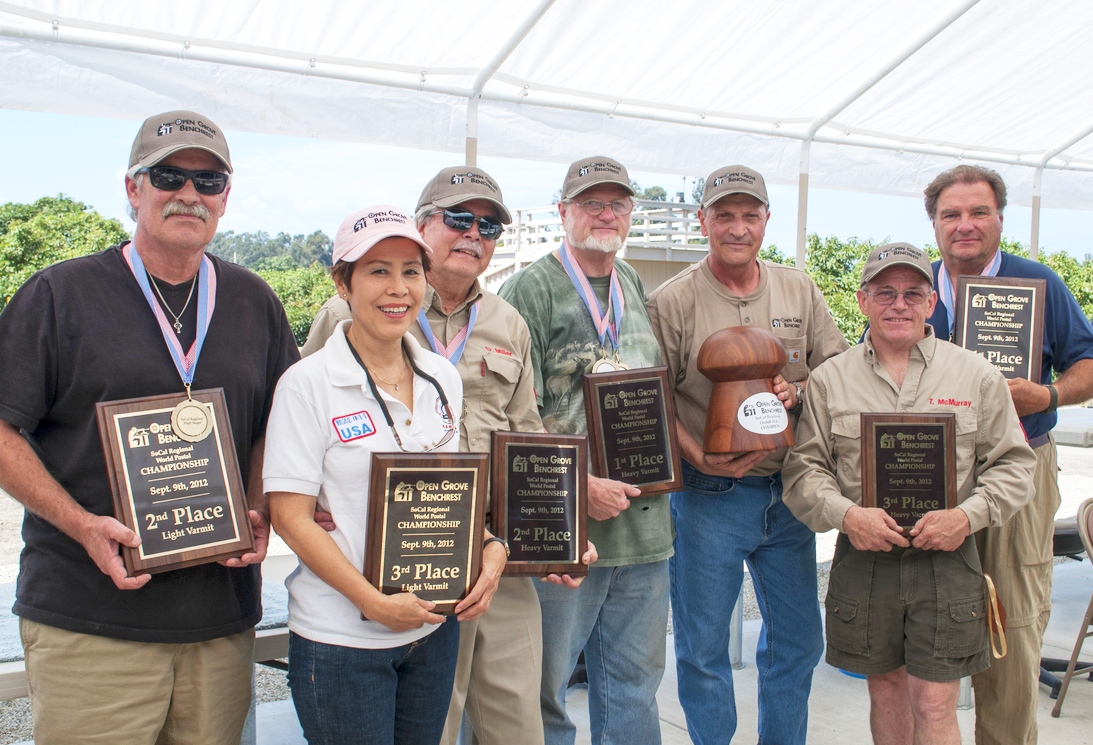
Open Grove Range in Southern California recently hosted an air rifle benchrest match. The Open Grove (SoCal) Regional was conducted in conjunction with the World Postal Championship and U.S. Air Rifle Benchrest nationwide standings, under World Rimfire and Air Rifle Benchrest Federation (WRABF) rules. All shooters competed for individual placements and SoCal Regional standings for this one event. In addition, three SoCal team members, Linzie Boise, Jim Herrick, and John Carter, would have their combined three-person match scores entered into World Postal Match team competition standings. It sounds more complicated than it really was. For most of the shooters this match was all about having fun with good friends. The cost was low, the fun factor was high, and, at the end of the day, everyone left with a big smile. CLICK HERE to View Match Photo Gallery (170 hi-rez pictures).
WATCH Match Video with Shooter Interviews
There were two competition classes: Light Varmint (LV) and Heavy Varmint (HV). Light Varmint class is for rifles weighing no more than 10.5 pounds, with a power limit of 12 foot-lbs-energy (FPE) max power. The Heavy Varmint class allows 15 pounds max weight, with a max power limit of 20 FPE. Any scope magnification is allowed. Unlike ARA rimfire benchrest, you can’t use a one-piece rest; a two-piece set-up (with front rest and rear bag) is required. For more information on Air Rifle Benchrest rules and classifications visit www.wrabf.com and usairriflebenchrest.com.
Hardware and Course of Fire
The rifles used at SoCal Regional are pre-charged using compressed air tanks. The rifles were chambered for either .177 or .22 caliber pellets. While some of the rifles were dedicated benchrest rigs, many were converted/adapted Field Target Rifles. The large side-focus-parallax wheels you see on some of the rifles are used for ranging in Field Target competition. The targets were set at 25 meters. Each target has 25 record bulls. The time limit was 30 minutes per target. Winners were determined based on the Overall Aggregate from the combined scores of three, 25-bull targets. Trophies were awarded to top shooters in HV and LV classes, and the Overall winner.
Comments from Match Director
After seven years as a rimfire benchrest shooter, I found a new passion with these air rifles. The cost involved will vary depending on where one wants to start. The sport right now is developing quickly with barrel manufacturers, custom action builders, and stock makers all getting involved. For Open Grove Benchrest, this event was a huge success in attracting different levels of competitors from first-time shooters to Benchrest regulars. We hope this will be a turning point for attracting new shooters to the sport. We tried to make this a fun family event. People really did seem to enjoy themselves. After the last relay, all the shooters were treated to a lunch. Then we gave out door prizes and awarded trophies to the winners.
Two familiar names topped the Open Division at the 8th NRA World Action Pistol Championship in Phillipsburg, Germany, which concluded September 16th. Doug Koenig won the Mens Open Division with a 1916-184 tally, finishing ahead of fellow Americans Kevin Angstadt (1916-171), and Bruce Piatt (1916-167). Among lady shooters, Jessie Duff scored an impressive come-from-behind victory to capture the Womens Open title with a 1900-151 score, edging USA team-mate Helen Jeavons (1899-131) by one point. Team USA’s Troy Mattheyer won the Metallic Division.
The host German Team also did well, winning titles in the Open Modified, Production, and Revolver Divisions. In fact, Germany’s Christoph Geppert (1912-159), Roman Hauber (1897-148), and Frank Reiche (1896-124) finished 1-2-3 among the wheelgunners.
Jessie Wins Ladies’ Open Title Jessie explained how she pulled out a gritty, come-from-behind win: “Dropping 12 points in the Practical event and being four points behind the leader, I was feeling rather defeated right out of the gate. I still had another event to shoot that day. After a short time to gather my thoughts, I decided I didn’t come to Germany to give up, and would give the rest of the match everything I had! My next two events were plates and barricade, and approached them with a clear mind and positive attitude, and cleaned them both.”
The last day of the event Jessie, sponsored by Taurus, was still four points behind the leader. With the “Mover” still to shoot, she knew she had to turn in her best performance to stay in the hunt for the championship. “I realized, I had given it everything I had, and that’s what I asked of myself. I couldn’t change anything now, and whichever way the title goes, I would be happy. When they brought our targets over to be scored officially, is when I realized I had pulled ahead by one point and won the Bianchi World Cup!”
USA ‘A-Team’ Wins Team Event
Team USA A, composed of Kevin Angstadt, Jerrold Della Bella, Doug Koenig, and Bruce Piatt, won the Team Open title with a combined score of 7652-658. Germany’s Team BDMP finished second with 7614-607. USA Team B (shown below) scored 7573-566 to finish third. In the two-person team comps, Rob Leatham and Kyle Schmidt combined for a Mens’ Production division win, while Americans Helen Jeavons and Vera Koo won the Ladies’ Team Event.
Photos courtesy Julie Golob, D. Brandenburger, and Jessie Duff.
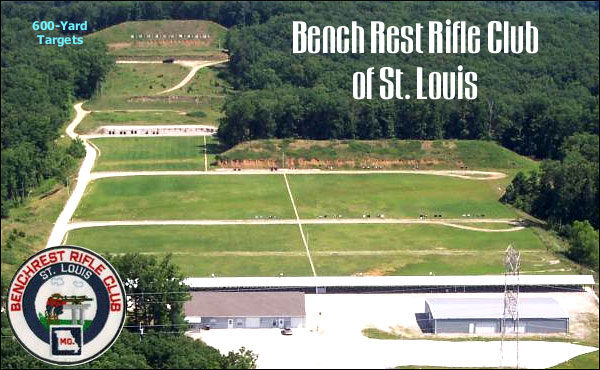
Mark your calendars, gents. The IBS 600-yard Nationals are slated for next weekend — September 28th through 30th. The event will be held in St. Louis, Missouri at the Bench Rest Rifle Club of St. Louis (BRRC). The 2012 600-yard Nationals consist of an 8-target Aggregate match in Light Gun (LG), plus an 8-target Aggregate match in Heavy Gun (HG). There will be a total (LG + HG) of 16 record targets (5 record shots each [80 total]). After a safety meeting, the match begins at 9:00 am on FRIDAY September 28th, and continues on SATURDAY, September 29th at 8:00 am. Sunday, September 30th is a make-up day if needed due to weather delays.
Sight-In and Practice Times on Thursday
Sign-up begins at 10:00 am, Thursday September 27th at the Club House. The range is also open on Thursday for sight-in and set-up. NOTE: Due to the nature of this event, open practice sessions will not be available on match days (9/28 – 9/30) prior to the start of the matches.
Match Fees are currently $80 for one class (Light Gun or Heavy Gun) or $150.00 for both classes. There is still time to register. Make checks payable to BRRC. For Match Info and lodging suggestions visit ShootingSTL.com or call Jerry Kloeppel at 314-973-2326. Camping is available for $10.00 per day.
The 2012 F-Class Nationals have concluded and the event was a great success. Nearly 200 shooters competed at Raton this year.
Congrats to the new F-Class National Champions: David Bailey (F-Open) and James Crofts (F-TR). Bailey amassed a 1283-59X score to edge F-Open runner-up Bob Sebold (1282-59X) by a single point. Note that Jim and Bob, both AccurateShooter Forum members, had the same X-count. Bob’s excellent X-count placed him ahead of Jim Murphy (1282-50X), who captured third place along with F-Open High Senior Title. High Lady Shooter was Michelle Gallagher with a 1274-51, while Danny Biggs, a past National Champion, was High Senior with 1273-46X.
Forum member James (‘Jim’) Crofts took the F-TR crown with a truly dominating performance. Jim’s 1272-47X was a full six points and 11 Xs ahead of runner-up (and 2011 champ) Jeff Rorer, who finished with 1266-36X. In third-place overall, was High Senior Daniel Pohlable (1264-42X). In fourth overall, was the High Lady shooter Trudie Fay (1259-45X).
Jim Crofts really deserves praise for his marksmanship at Raton. Jim’s F-TR Score of 1272-47X would have ranked him 13th in the F-Open division, ahead of dozens of skilled shooters running ballistically-superior cartridges. In his .308 Win, Jim ran Berger 200gr Match Hybrids at 2600 fps with Hodgdon Varget. Jim’s winning F-TR rifle featured a 30″ Brux barrel and Precision Rifle & Tool (PR&T) stock. And take note — Jim’s barrel had over 3000 rounds though it by the end of the match. Jim wants to thank Ray Bowman at PR&T for smithing a great rifle and providing sponsorship.
Interview with Jim Crofts
We had a chance to talk to Jim by telephone this morning, and he was kind enough to answer a few questions for us….
AccurateShooter: Is this your first big win? How did you feel receiving the trophy as National F-TR Champion?
Jim: I won the Berger SW Nationals earlier this year, but this is my first-ever National Championship. I was very relieved once it was over because there were many great shooters right behind me.
AccurateShooter: Did you run any new hardware at the Nationals? Did you alter your load any?
Jim: This is the same combination that I’ve used all year long. I went back to my old faithful PR&T-built rifle and my old faithful load and everything works. I still anneal my cases every firing. You will find this helps maintain consistent bullet seating and it helps lower your extreme spread.
AccurateShooter: Shooters from your neck of the woods have now won the F-TR division two years running — Whats the secret?
Yes, with my win we’ve had back to back F-TR National championships for North State X-Men club members. Jeff Rorer, last year’s F-TR champ [and 2012 runner-up] shoots with us at a local level. That’s who I’ve been chasing since last year’s National Championship. When you shoot against quality competition every week, it makes you strive for perfection.
AccurateShooter: How were conditions during the week? Raton can be windy…
Jim: Actually, conditions were moderate most of the week. However, on the last day, it was calm during the first match, but in the second match it got to be very tricky. There were changes in velocity and angles — I had a hard time keeping up with the velocity changes in the last match.
AccurateShooter: How has the FTR game changed in the last couple years? Is it more competitive than ever before?
Jim: The sport is growing and it’s getting tougher, that’s for sure. This year we had 91 competitors in F-TR. It went up from about 60 last year to 91 this year — a 50% increase. And the competition is really getting tight in F-TR. Not only are the numbers of shooters growing, but the quality of the competition is getting higher every year.
Also at the F-Class Nationals this year, some Eliseo Tubeguns made an appearance. Shown below are Linda Shehan (Team Australia) and Warren Dean (Team USA) with their GC-1 FTR rigs at the nationals. These tubeguns feature actions by Rod Shehan, with an Adam Davies bipod on the left, and Sinclair F-Class bipod on the right.
Breaking News:We’re informed that Forum Member James Crofts (aka “VA Jim”) has won the F-TR division of the F-Class Nationals, shooting a .308 Win rifle with Precision Rifle & Tool stock. Read more about Jim Crofts HERE.
The F-Class Nationals are underway right now at the Whittington Range in Raton, NM. Conditions have been fairly challenging. On Day 1 of the individual championship, forum member Steven B (aka “Sleepygator”) reports that: “The winds later in the day were a little tougher. The tailwind caused some vertical to those unfortunate enough to shoot the third match at the little end.” F-TR shooter James Crofts shot amazing well on Day 1, recording 446-17X. Crofts outscored not only all other F-TR shooters, but he beat all but one of the F-Open “hot rod” shooters, Mark Walker (who posted a 446-19X). When an F-TR outshoots nearly the entire F-Open field, that’s newsworthy. Well-done James. Forum member Mark H. (aka “Hunsucker”) observed: “I personally know for a fact how much Jim [Crofts] practices and how hard he works.”
On Day 2, conditions became trickier at the end according to Forum member Greg Taylor: “Day 2 started out very like Day 1, except a bit warmer. Winds were relatively forgiving, especially for Raton. That is until the third match. The last match of the day, winds were absolutely wicked, ranging from 1-2 mph, up to 10-11 mph, from SE/S. Scores for many dropped predictably.”
Close Competition in F-Open
F-Open leaders after Day 2 are: F-Open Leaders after Day 2: Bob Sebold with 886-39X, David Bailey with 885-44X, and Mark Walker with 885-37X. This is a tight battle — the top ten places in F-Open are separated by 6 points.
Team Sinclair Secures F-TR Team Win
In F-Class Team competition earlier this week, Team Sinclair secured a victory in the F-TR division with a combined score of 1561-48X. The team is coached by Raymond Gross, and shooters are Paul Phillips, Derek Rodgers (Captain/shooter), Jeff Rorer and Brad Sauve. Phillips declared: “Ray did a great job coaching for both spirit of America and nationals. Brads rifle shot half the national record and jeff and mine were the other half. Great work from the whole team. Very tough competition. FTR is getting very very competitive now.”


 The 9th edition of the National Standard Three-Position Air Rifle Rules has just been released. The new 2012-2014 rulebook goes into effect immediately. Digital versions of the new Rulebook can be downloaded from the CMP website in eZine Format or Adobe PDF Format. NOTE: All changes from the previous rules are underlined in the Rulebook so new rules can easily be identified.
 Sally Sets a Record


 Vogel not only outgunned the entire field of 340+ shooters by 30 or more seconds this past weekend, but he also claimed the Most Accurate title to go along with his SSP win.
 Miculek Wins Enhanced Service Revolver Division
 We had a chance to chat with David Bailey after the Nationals. When asked how he felt about the big win, David replied: “It took a while to sink in… I was extremely happy that two of my teammates finished in top 10 — Mark (Walker) and Michelle (Gallagher) — [as a team] we had a very good week overall.” David wanted to give credit to his past/present team-mates, “both the Spindle Shooters and Long Shots — they have been a tremendous help.” David added, “In particular I want to say thanks to Jeff Cochran. And I can’t forget my gunsmith Richard King, he’s been a tremendous asset.”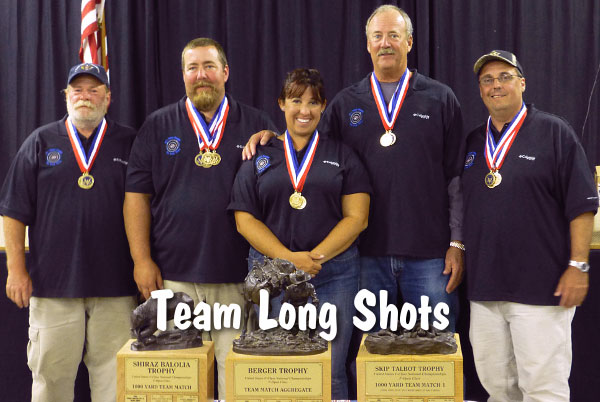



 Comments from Match Director
 Two familiar names topped the Open Division at the 8th NRA World Action Pistol Championship in Phillipsburg, Germany, which concluded September 16th. Doug Koenig won the Mens Open Division with a 1916-184 tally, finishing ahead of fellow Americans Kevin Angstadt (1916-171), and Bruce Piatt (1916-167). Among lady shooters, Jessie Duff scored an impressive come-from-behind victory to capture the Womens Open title with a 1900-151 score, edging USA team-mate Helen Jeavons (1899-131) by one point. Team USA’s Troy Mattheyer won the Metallic Division.
 Jessie explained how she pulled out a gritty, come-from-behind win: “Dropping 12 points in the Practical event and being four points behind the leader, I was feeling rather defeated right out of the gate. I still had another event to shoot that day. After a short time to gather my thoughts, I decided I didn’t come to Germany to give up, and would give the rest of the match everything I had! My next two events were plates and barricade, and approached them with a clear mind and positive attitude, and cleaned them both.”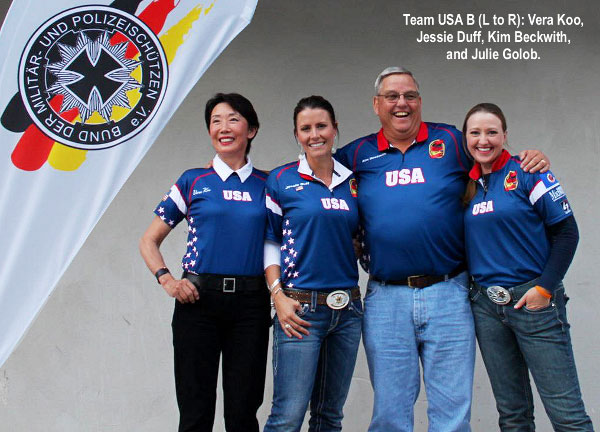

 Interview with Jim Crofts


