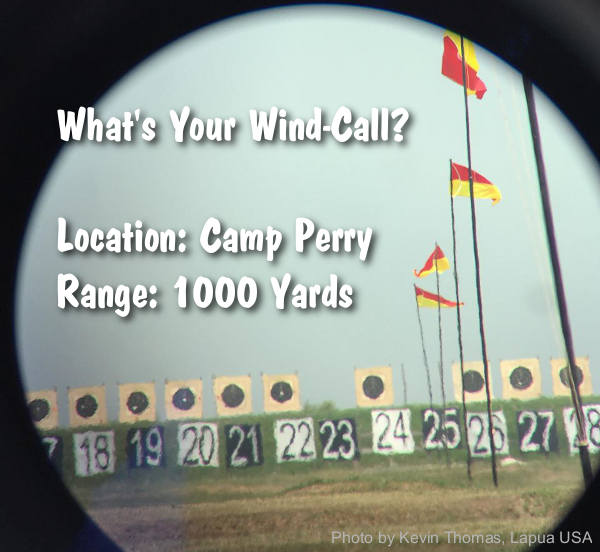
Emil Praslick III is widely recognized as one of the greatest wind wizards on the planet — a master at identifying wind value and direction, and predicting wind cycles. As coach of the USAMU and top civilian teams, Emil has helped win many high-level championships. In the three videos we feature today, Emil, who works with Capstone Precision Group (Berger, Lapua, SK, Vihtavuori) and Team Applied Ballistics, explains how to determine wind direction and velocity using a variety of indicators. Praslick, now retired from the U.S. Army, was an 18-time National and 2-time World Champion coach with the USAMU.
Video ONE: Wind Theory Basics — Understanding “Wind Values”
In this video from UltimateReloader.com, Emil explains the basics of modern wind theory. To properly understand the effect of the wind you need to know both the velocity of the wind and its angle. The combination of those variables translates to the wind value. Emil also explains that the wind value may not be constant — it can cycle both in speed and velocity. Emil also explains some of the environmental conditions such as mirage that can reveal wind conditions.
Video TWO: Determining the Direction of the Wind
Key Point in Video — Find the Boil
Emil explains how to determine wind direction using optic. The method is to use spotting scope, riflescope, or binoculars to look for the “Boil” — the condition in mirage when the light waves rising straight up. The wind will generate that straight-up, vertical boil in your optics when it is blowing directly at you, or directly from your rear. To identify this, traverse your scope or optics until you see the boil running straight up. When you see that vertical boil, the direction your optic is pointing is aligned with the wind flow (either blowing towards you or from directly behind you).
Video THREE: The No Wind Zero Setting
In this second video, Emil defines the “No-Wind Zero”, and explains why competitive shooters must understand the no-wind zero and have their sights or optics set for a no-wind zero starting point before heading to a match. In order to hit your target, after determining wind speed and direction, says Emil, “you have to have your scope setting dialed to ‘no wind zero’ first.”
Coach of Champions — Emil Praslick III
SFC Emil Praslick III, (U.S. Army, retired) works with Berger Bullets and Applied Ballistics. Emil served as the Head Coach of the U.S. National Long Range Rifle Team and Head Coach of the USAMU for several years. Teams coached by Emil have won 33 Inter-Service Rifle Championships. On top of that, teams he coached set 18 National records and 2 World Records. Overall, in the role of coach, Praslick can be credited with the most team wins of any coach in U.S. Military history.
Registration is now open for the Civilian Marksmanship Program (CMP) 2026 National Smallbore and Air Rifle events. These will be part of the 2026 CMP National Matches held at the Camp Perry National Guard Training Base in Clinton, Ohio. Review the 2026 National Matches schedule and event info on the CMP website. CLICK HERE for 14–page Smallbore and Air Gun Championships summary, and CLICK HERE for National Matches 2026 Event Calendar.
Smallbore (Rimfire) Events at Petrarca Range
The National Smallbore lineup includes iron sights and any sights prone events as well as 3×20 (three-position) individual and team matches. Smallbore events are fired on the covered outdoor electronic target line of Camp Perry’s Petrarca Range.
This video covers the Smallbore competition at the 2021 CMP National Matches at Camp Perry.
National Air Gun Matches at Gary Anderson Competition Center
Air rifle and/or air pistol competitors can participate in the National Air Gun Matches, held on the electronic target range at the Gary Anderson CMP Competition Center. The CMP Air Pistol Matches will take place at the Gary Anderson CMP Competition Center located on Camp Perry in Port Clinton, Ohio.
Schedule Allows Competitors to Shoot Both Smallbore AND Air Rifle Events
The National Smallbore and National Air Gun phases have been arranged in tandem to allow athletes the option of competing in both disciplines, with an aggregate event included for those firing in air rifle and three-position smallbore competitions.
About the National Matches:
The National Matches event is comprised of the CMP National Trophy Pistol and Rifle Matches, National Games Matches, National Smallbore Matches, National Air Gun Championships, and the National Mid-Range and Long Range Matches. The month-long series also includes a variety of educational clinics for all experience levels. All events are open to the public, with spectators welcome.
Sierra Bullets has published load data for the 6mm Creedmoor cartridge, a necked-down version of the popular 6.5 Creedmoor. Sierra has released very comprehensive 6mm Creedmoor load data, covering fifteen (15) different bullets from 55 to 110 grains. NOTE: Hornady-brand brass was used for Sierra’s 6mm Creedmoor load tests, not the newer, stronger Lapua 6.5 CM brass with small primer pockets. Hand-loaders using Lapua 6.5 Creedmoor brass necked to 6mm may have to adjust their loads.
Sierra writes: “As soon as the 6.5 Creedmoor was released in 2007, a 6mm version was being envisioned. After the 6mm Creedmoor demonstrated its worth at 1000 yards it began to catch the attention of Precision Rifle Series (PRS) competitors. The 6mm Creedmoor is a great fit for those looking for an AR platform-friendly cartridge. It delivers velocities very similar to the .243 Win and yet fits the AR10 magazine length[.] The 30-degree shoulder makes this a very efficient case and helps prolong case life as well. The 6mm Creedmoor works well with powders such as H4350, [RE-16], RE-17, and Ramshot Hunter for heavier long-range bullet weights. Slightly faster powders such as RE-15, Win 760, and Vihtavuori N540 work well with lighter weight bullets.”
Sierra Bullets Tested for 6mm Creedmoor Load Data
55gr BlitzKing (#1502)
60gr HP (#1500)
70gr HPBT (#1505)
70gr BlitzKing (#1507)
75gr HP (#1510)
In developing its 6mm Creedmoor load data, Sierra tested a very wide selection of propellants, two dozen overall. For the smaller bullets, fast-burning powders such as Benchmark, H4895, and CFE223 were tested. For the heavier 100+ grain bullets, Sierra tested a selection of medium-burn-rate powders including H4350, Reloder 16, Reloder 17, Varget, and Superformance. Sierra did a very thorough job. We know this information will be welcomed by 6mm Creedmoor shooters.
Don’t know what powder to try first? For the 107-110 grain bullets, if you want best accuracy and low ES/SD, our Forum members recommend Alliant Reloder 16 and Hodgdon H4350. If you are seeking max velocity with the 110-grainer, look at Hodgdon Superformance and Reloder 19.
Here are Sierra’s 6mm Creedmoor Load Data Charts for 90-95 grain bullets plus the 107gr MK and 110gr MK. There are five other tables for other bullet types.
BONUS: PRB 6mm Creedmoor and 6.5 Creedmoor Load Survey
The Precision Rifle Blog compiled Load Data from PRS Competitors, for both 6mm Creedmoor and 6.5 Creedmoor. This is a good place to start. PRB surveyed the match loads for “173 of the top-ranked precision rifle shooters in the country”. One cautionary note: These PRS guys may be loading fairly hot, so work up gradually, 0.3 grains at a time. CLICK HERE.
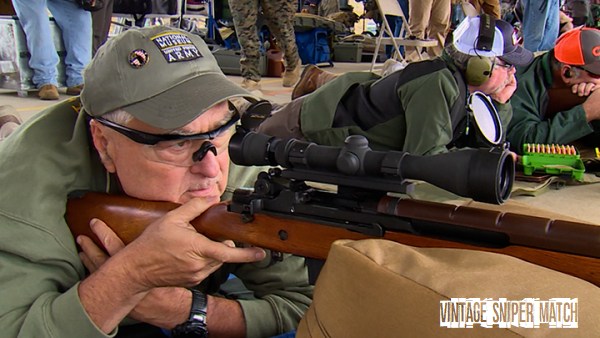
The March 4, 2026 episode of Shooting USA TV features the Vintage Sniper Rifle match at Talladega Marksmanship Park in Alabama. Vintage Sniper competitions use period correct battle rifles with older-style optics. Teams of two engage targets at three hundred and six hundred yards. “It’s a match that brings … a nostalgic competitor out. You’ll see World War II time-period rifles, sniper-type rifles that were used during World War II, [and] Korean War era”, noted Mark Johnson of the CMP. “The optics are either original optics or current reproduction of old optics.”
Shooting USA SHOW TIMES: This Shooting USA Episode airs Wednesday, March 4, 2026 at 9:00 PM Eastern and Pacific; 8:00 PM Central on the Outdoor Channel. In Canada, Shooting USA is broadcast on the Sportsman Canada Channel. If you miss the regular broadcast, you can stream the show online at any time on Vimeo for $0.99 per episode.
Vintage Sniper Rifle matches have proven popular with competitors of all ages, from 18 to 80. These matches are conducted with two-man teams, using vintage rifles with scopes. Most shooters use bolt-action rifles such as the 1903 Springfield and Swedish Mauser, but there is also a semi-auto class popular with Garand shooters. Along with today’s Shooting USA episode, you can watch a previous Vintage Sniper match on YouTube. Click the arrow below to start the 48-minute show:
Vintage Sniper Rifle Competition at Talladega
The Vintage Sniper Match at the CMP’s Talladega Marksmanship Park is a popular two-man team event, for shooter and spotter, using military rifles in service up to 1953. One added challenge is the time limit. The team has only 20 seconds to complete each shot — That’s 20 seconds for the spotter to read the conditions, and for the shooter to pull the trigger.
Who can identify this vintage European rifle, with its unusual scope mount?
Old “Number 2″ belonging to Ray Gross. Click Photo for full-screen Image.
Ray Gross, one of America’s great rifle competitors, has served as captain of the United States F-TR Team. While Ray is best known for his F-Class shooting and leadership, Ray is also an experienced service rifle shooter, who secured his Distinguished Rifleman Badge 31 years ago. Ray has shot many rifles during his competitive shooting career, but the M1A rifle above held a special place in Ray’s heart. This old semi-auto earned Ray his Distinguished Badge, and he’ll never forget that, though he parted with the rifle in 2016.
Posting back in 2016, Ray told us:
“I said goodbye to an old friend… Affectionately known as ‘Number 2′, she is the rifle that I earned my Distinguished Rifleman Badge with in 1995 (#1159).
That rifle was also responsible for a fair amount of Venison in the ’90s, as well. But since then, she has spent a lot of time in the closet. Last time I got her out was to destroy a bunch of hard drives containing evidence collected during my Computer Forensics days. She deserved better than that.
I will miss the beautiful sound of all that American steel slamming into battery when I tripped her bolt.” – Ray Gross
Ray Gross was profiled in Shooting Sports USA a few seasons back. Ray explained how he started his competitive shooting career with an M1A rifle:
How did you begin in competitive shooting?
I began competing in 1991, at age 27. I bought an M1A and joined the Midland County Sportsman’s Club. One day I was at the club shooting the M1A when a member, Rich Koskela, came over and invited me to join them shooting competitions. Up until that point, I had no idea there was such a thing as NRA Competitive Shooting and I had been a member since 1986. Anyway, Rich and some of his friends showed me the basics and at my first match, I finished in the top half and first MU.
What are your major accomplishments in the shooting sports?
In 1995, I earned the Distinguished Rifleman Badge and a few years later switched to Palma rifle. On the way to making my first Palma team in 2003, I won the Army Cup, the Andrus trophy twice and the Sierra Trophy once. As a coach, I won the Herrick match, and seven F-TR National Championship team matches. Internationally, I’ve coached three gold medal America Match teams (The USA has only won four in Palma Rifle), and earned a Silver and Bronze coaching on the Palma Team in 2015 and 2019. In 2017, I led the U.S. F-TR Team to a World Championship. In 2019, I also won the NRA ELR National Championship (25-lb max Division).”
“Descended from the M1 Garand, the M14 utilized multiple improvements that made it a far superior firearm for combat and a much better rifle for competition.” — Dick Jones, Shooting Sports USA.
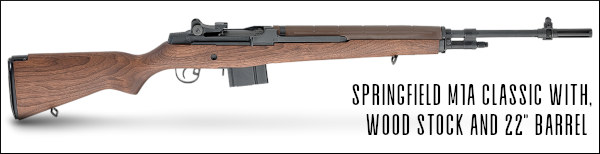
In the April 2018 issue of Shooting Sports USA, you’ll find a good article on the civilian version of the M14, now sold commercially as the Springfield M1A. An evolution of the battle-proven M1 Garand, the M14 was designed to shoot the 7.62×51 (.308 Win) round instead of the larger .30-06 Springfield cartridge used in WWI, WWII and Korea. While the vast majority of today’s M1As are chambered for .308 Win/7.62×51, Springfield Armory also produces a 6.5 Creedmoor version.
Dick Jones reports that accurized M14/M1As could post remarkable scores: “The accuracy potential of the M14/M1A is unquestionable. During their reign as service rifles, they produced multiple perfect 200 scores at 600 and 1000 yards in the hands of top shooters. This is a difficult feat with a modern, scoped, magnum-caliber rifle and remarkable with an iron-sighted battle rifle. Good competition rifles can group 10 shots under one MOA, and the meticulously-massaged rifles used by the top shooters during my career would consistently put up 10 shots under an inch at 200 yards off a test cradle.”
For many years, the semi-auto version of the M14 was “top dog” in iron sights Service Rifle competition. Now that discipline is dominated by .223 Rem (5.56×45) AR-type rifles, but the bigger .308-caliber rifle, now sold as the M1A, remains popular. And in non-pandemic years, the CMP hosts a major M1A Match at Camp Perry, sponsored by Springfield Armory. This is a very popular event with 100+ competitors and significant cash prizes.
This Springfield Armory video explains M1A field-striping, cleaning, and maintenance.
As racing improves automobiles, competition improves firearms, and the current crop of Springfield M1As, from the Basic to the top-of-the-line Super Match and Loaded models, reflects the years of development. The M14 and its variants are … still considered by many to be the best battle rifle in the history of the U.S. Military. — Dick Jones, Shooting Sports USA
Military Version Operation Revealed — M14 Training Film
The original military version of the M1A was the select-fire M14. The 27-minute official U.S. Army video below demonstrates the operation of the M14. Field-stripping is shown from the 5:13 time-mark through 8:30. Cut-away drawings show the M14’s gas operation at 8:40.
Watch M14 Functioning Cycle Starting at 9:25 Mark:
The M14’s complete 8-step functioning cycle is demonstrated from the 9:25 time-mark through 22:41. These eight operations are: 1) Feeding; 2) Chambering; 3) Locking; 4) Firing; 5) Unlocking; 6) Extracting; 7) Ejecting; and 8) Cocking. This movie is fairly long, but fans of battle rifles will find it well worth their time. Every M1A owner should definitely watch this video start to finish.
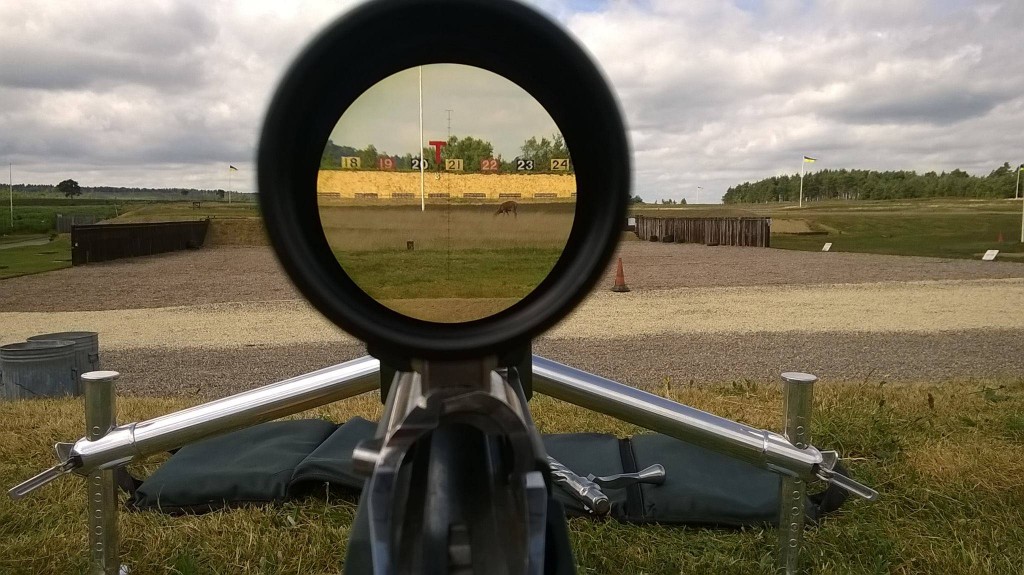
What’s wrong (or right?) with this picture? Does the “F” in F-class refer to “Fauna”? Look carefully at this Bisley Range photo taken by Australian R. Hurley while looking downrange through his March 8-80X scope. The photo was taken in 2015 at the Bisley National Shooting Centre in the UK.
The Story Behind the Photo
British shooter T. Stewart reports: “I was there when this photos was taken. All I can say was that Mr. Hurley was firmly reminded that should said deer accidentally jump in front of his bullet … he would spend five years ‘At Her Majesty’s Pleasure’.”
“That morning we had five deer moving across the targets, literally blocking the V-Bull. Since we were on the 900-yard Firing Point, and elevated for such, obviously the bullet would pass well above them. But they do NOT move or flinch at the noise or passing bullets since they are not hunted on the Bisley Ranges. Earlier this year we saw a herd of 20 or so deer grazing slowly across the Range.”
More Fauna Findings…
Apparently Bisley is not the only place were “the deer and the antelope play”. In Canada, on the Connaught Ranges near Ottawa, Ontario, shooters often encounter a variety of wildlife. William McDonald from Ontario says: “Animals are a common sight on the Range. Along with deer we see geese, turkeys, and coyotes on a daily basis.”
Likewise, E. Goodacre from Queensland, Australia often sees ‘Roos on his home range: “I shoot at Ripley, Australia, and shooting is regularly interrupted by kangaroos. Our last silhouette match was delayed by an hour while 30 ‘Roos dawdled across — silly buggers!”
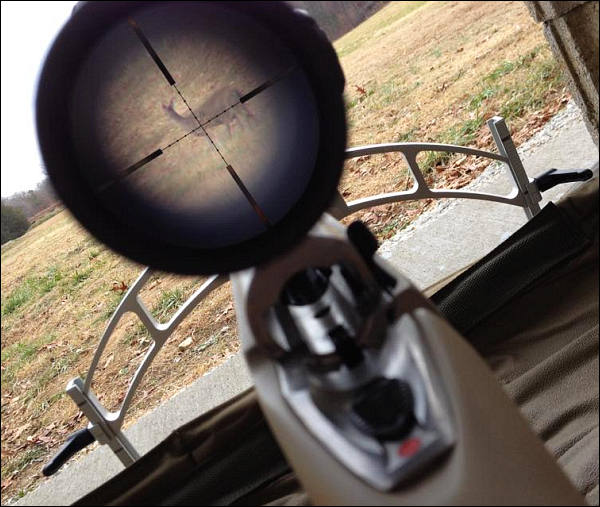
R. Hurley wasn’t the first fellow to view deer through his F-Class rifle’s scope. After seeing Hurley’s photo from Bisley, B. Weeks posted this image, saying: “Been there, done that!”
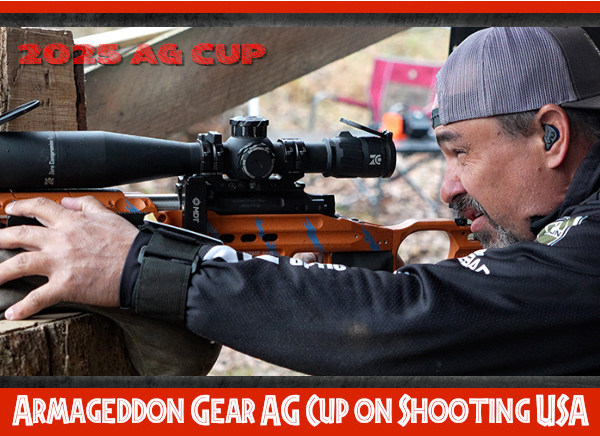
Precision Rifle fans should watch Shooting USA this week. On Wednesday, February 25, 2026 Shooting USA features coverage of the 2025 Armageddon Gear (AG) Cup Invitational. The 3-day AG Cup posts the biggest cash money match in precision rifle competition. This challenging multi-stage, elimination-format competition is one of the top tactical matches of the year. On the final day, the top competitors faced ten courses of fire to determine who will claim the Armageddon Gear AG Cup. This is an invitation-only match for America’s top Precision Rifle shooters, with the potential reward of huge cash prizes — $20,000 for the winner plus $1000 for each top scorer on the ten final courses of fire.
Shooting USA SHOW TIMES: This Shooting USA Episode airs Wednesday, February 25, 2026 at 9:00 PM Eastern and Pacific; 8:00 PM Central on the Outdoor Channel. In Canada, Shooting USA is broadcast on the Sportsman Canada Channel. If you miss the regular broadcast, you can stream the show online at any time on Vimeo for $0.99 per episode.
This Video Shows Highlights of the Armageddon Cup
The AG Cup is the brainchild of Tom Fuller, the owner of Armageddon Gear, and to say it’s a success is a bit of an understatement. This invitation-only match is the richest tactical/precision competition on the planet.
This AG Cup video has good footage of the stages in a previous 2022 AG Cup.
Armaggedon Gear — Tactical Accessories Armageddon Gear, founded by former U.S. Army Ranger Tom Fuller, sells support bags, gun cases, slings, suppressor covers, scope covers, and a wide variety of other accessories popular with the PRS/NRL crowd. Armageddon Gear now provides products to the U.S. Military, Law Enforcement, as well as PRS/NRL competitors.
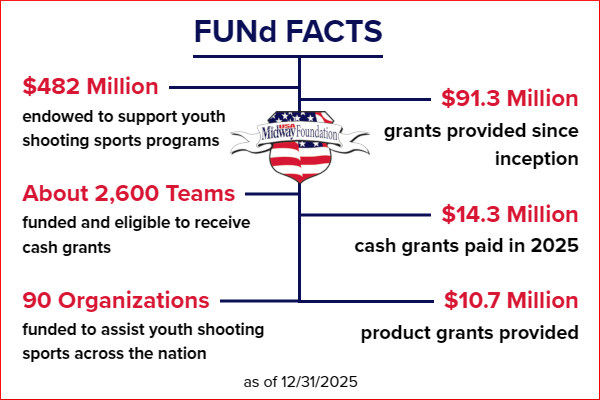
In its latest funding cycle, the MidwayUSA Foundation paid over $7.5 million to youth shooting sports teams and organizations. This record-breaking late 2025 grant cycle provided over $5.7 million to 970+ youth shooting teams and over $1.6 million to organizations that work with youth shooting programs. Since 2008, the MidwayUSA Foundation has paid nearly $80 million in cash grants to support youth shooting sports over the years. Foundation grants assist with costs for ammunition, targets, entry fees, and travel. Grants also help cover coach certification costss.
In total, this latest funding cycle provided over $7.5 million to the youth shooting sports community. This payout includes funds to youth shooting teams, organizations, and grants were provided to certain donor-advised endowments. A shout-out to the states of Minnesota, Iowa, Missouri, and Wisconsin for being at the top of the list in cash grant recipients and dollars paid to teams. In addition to youth shooting teams, the MidwayUSA Foundation provides funds to key state, regional, and national organizations that support youth shooting sports.
Rachel Augustine of Missouri 4-H Foundation stated: “The grants we receive from the MidwayUSA Foundation play a crucial role in the success of Missouri 4-H shooting sports. They help us provide essential funding for equipment, volunteer training, and state and national contests, as well as events. Through 4-H shooting sports, youth gain confidence, leadership, and responsibility, while developing a lifelong appreciation for shooting, hunting, and the outdoors.”
Donations Are Tax-Deductible
Donations made to MidwayUSA Foundation are tax-deductible and 100% of each donation goes to the endowment of the donor’s choice — nothing is removed for operations.
The MidwayUSA Foundation is a 501(c)(3) public charity working to sustain and grow youth shooting sports by providing long-term funding to youth shooting teams. For more information please visit MidwayUSAFoundation.org or call 1-877-375-4570.
CMP Introduces International Team Event for 2026
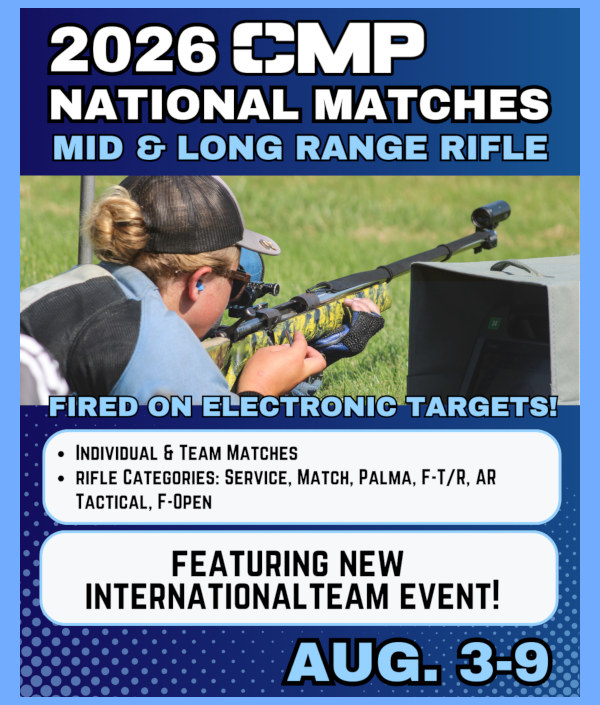
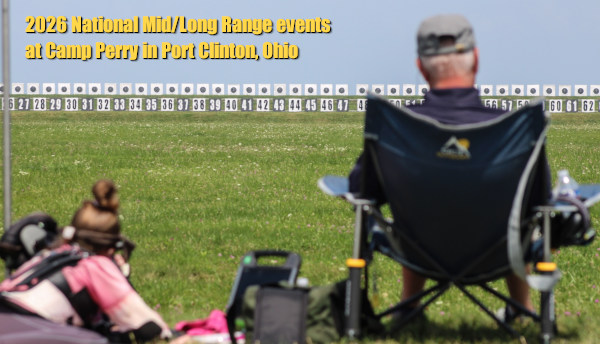
The Civilian Marksmanship Program (CMP) has added a new International Team Match during the 2026 National Mid/Long Range events at Camp Perry in Port Clinton, Ohio. The International 12-Person Team Match will be held Sunday, August 9, featuring a Palma team course of fire with record shots at 800, 900, and 1000 yards. The event is set to include competitors from the United States, Great Britain, and Canada. After the Camp Perry events conclude, the teams will travel to Ontario, Canada for the Canadian Fullbore Championships.
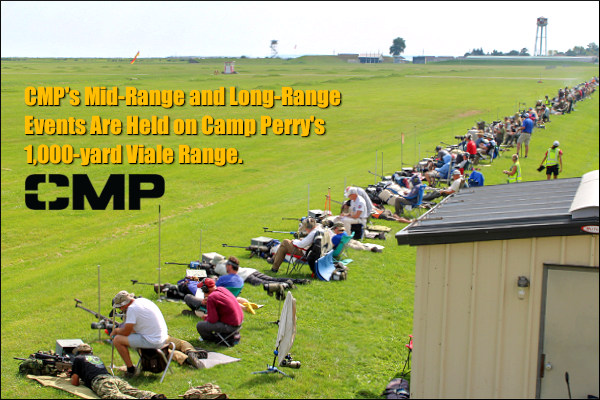
The National Mid/Long Range rifle events run August 3-9, 2026, as part of the CMP’s annual National Matches. Open to competitors of any experience level, these events feature individual and team competitions on Camp Perry’s Viale Range, fired completely on outdoor eTargets from 600 to 1000 yards. The National Long Range series will also include a 4-person Palma team match.
REGISTRATION Opens March 1, 2026
Registration for the 2026 National Matches opens March 1st, a week from now. Go to TheCMP.org/cmp-matches/national-long-range-matches to get complete information on the CMP’s National Long Range Matches, including programs, target info, and match schedules. On that page, you will find a registration link that activates 3/1/2026.
“We’re excited to host teams from Canada and Great Britain for the first time at a CMP Long Range event,” said Sara Rozanski, CMP Highpower Rifle Coordinator. “It offers us an opportunity to showcase our targets and facilities to top international competitors while making our own mark in the global Long Range community.”
CMP National Mid/Long Range Matches — Events and Course of Fire:
Matches include Match Rifle, Service Rifle, Palma, F-Open, F-TR, F-Practical, and/or AR Tactical.
Mid-Range 3×600 – three 20-shot strings slow prone at 600 yards in 22-minute time blocks 600-Yard Two-Person Team Match – 20 shots per team member at 600 yards Camp Perry Palma Match – 15 record shots at 800, 900, and 1000 yards, at each firing line in 22-minute time blocks Viale, Critchfield, Henry, Kerr, McMaken & Speaks, Baesel Memorial individual matches – 20 record slow prone shots in 30 minutes at 1000 yards Bataan Memorial 4-Man Team Match – 20 shots slow prone by each member at 1000 yards Winder Memorial Iron 4 Man Team Match – 20 record shots per team member in 47 minutes at 1000 yards Willis Lee, Jr. Memorial Two-Person Team Match – 20 record shots per team member in 47 minutes at 1000 yards Gen. Edward S. Bryant Memorial Two-Person Team Match – 20 record shots per team member in 47 minutes from 1,000 yards
About the Camp Perry National Matches:
Held at the Camp Perry National Guard Training Facility in Ohio since 1907, the Annual National Trophy Pistol and Rifle Matches represent some of the biggest and most popular shooting competitions in the Western Hemisphere. The 2026 National Matches schedule includes CMP National Air Gun Matches, National Rifle Matches, National Pistol Matches, National Smallbore Matches, and the National Mid/Long Range Matches. The CMP will also run popular Small Arms Firing Schools covering on safety and fundamentals for Pistol, Rifle and Smallbore Rifle disciplines.
The National Matches are conducted by a partnership between the CMP and Ohio National Guard. Learn more by visiting the CMP website at TheCMP.org/cmp-national-matches.
“The pessimist complains about the wind; the optimist expects it to change; the realist adjusts the sails.” — William Arthur Ward
Readers often ask us: “Is there a decent, easy-to-comprehend book that can help my wind-reading?” Many of our Forum members have recommended The Wind Book for Rifle Shooters by Linda Miller and Keith Cunningham.
New Edition — Hardback and eBook
The latest, updated edition of The Wind Book for Rifle Shooters was released in May 2020. This 144-page book, first published in 2007, is a great resource. But you don’t have to take our word for it. If you click this link, you can read book excerpts and decide for yourself. When the Amazon page opens, look below the book cover photo, and click the bar labeled “Read Sample”. This lets you preview chapters from the Wind Book, and view some illustrations. Along with the hardback edition ($21.07), Amazon offers a Kindle (eBook) edition for $14.99.
Other books cover wind reading in a broader discussion of ballistics or long-range shooting, such as Applied Ballistics for Long-Range Shooting by Bryan Litz. But the Miller & Cunningham book is ALL about wind reading from cover to cover, and that is its strength. The book focuses on real world skills that can help you accurately gauge wind angle, wind velocity, and wind cycles.
All other factors being equal, it is your ability to read the wind that will make the most difference in your shooting accuracy. The better you understand the behavior of the wind, the better you will understand the behavior of your bullet. — The Wind Book for Rifle Shooters
The Wind Book for Rifle Shooters covers techniques and tactics used by expert wind-readers. There are numerous charts and illustrations. The authors show you how to put together a simple wind-reading “toolbox” for calculating wind speed, direction, deflection and drift. Then they explain how to use these tools to read flags and mirage, record and interpret your observations, and time your shots to compensate for wind.
I believe this is a must-have book if you are a long-range sport shooter. I compete in F-Class Open and when I first purchased this book and read it from cover to cover, it helped me understand wind reading and making accurate scope corrections. Buy this book, read it, put into practice what it tells you, you will not be disappointed. — P. Janzso
If you have one book for wind reading, this should be it. Whether you’re a novice or experienced wind shooter this book has something for you. It covers how to get wind speed and direction from flags, mirage, and natural phenomenon. In my opinion this is the best book for learning to read wind speed and direction. — Muddler




 Ray Gross was profiled in