|
|
January 7th, 2008
The January 9th, Wednesday-night broadcast of ShootingUSA will feature the 2007 National Championships conducted at Camp Perry, Ohio. 2007 marked the 100th year of competition at Camp Perry and ShootingUSA’s weekly show will include highlights from last year’s Centennial rifle and pistol matches. Broadcast times are:
Eastern Time – 8:30 PM and 12:30 AM
Central Time – 7:30 PM and 11:30 PM
Mountain Time – 6:30 PM and 10:30 PM
Pacific Time – 5:30 PM and 9:30 PM
Camp Perry is now an Ohio National Guard base on the shore of Lake Erie. The annual national matches are a combined effort of the Guard, the Civilian Marksmanship Program and the National Rifle Association. Among the most popular events during the National Championships at Camp Perry are the Service rifle competitions. The first Service rifle competition dates back to the late 1800s. In 1903 President Theodore Roosevelt formally authorized the national matches to encourage better marksmanship for soldiers and civilians. In the beginning, the matches were held at different locations across the country, but in 1907 Camp Perry became the permanent site. 100 years later, the tradition continues as America’s most prestigious shooting competition.

CLICK HERE to view a flash video showing the USAMU Service Rifle Team in action, firing rapid-fire prone at 600 yards.
January 3rd, 2008
 We live in a digital, electronic era. The very story you’re reading right now consists of digital data packets transmitted electronically around the globe. Because of cost factors, 99+% of shooting matches in the USA still rely on old-fashioned manual scoring methods. However, target scoring can be done faster and more precisely with electronic scoring systems. Olympic and international CISM shooting competitions now employ electronic target systems. And electronic scoring is widely used in Europe already.
Below is a video showing an electronic scoring system developed by Norway’s Kongsberg Mikroelektronikk AS. Watch as a prone shooter puts five rounds on a 300m target. You can see the group form on the video screen at his shooting station. He’s a good shooter (with an accurate rifle). The first three shots are touching.
As you can see from the video, viewing shots on the monitor is easier than using a spotting scope and waiting for targets to be marked. The electronic target eliminates the need for a crew of target pullers in the pits. Click on the image to go to our VIDEO VAULT page. The electronic scoring video is the first item in the menu.
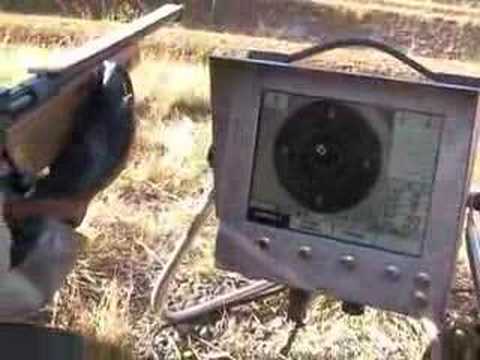
The Kongsberg system, like the electronic systems produced by Sius Ascor of Switzerland, do more than just display shot locations to the shooter. The target units automatically calculate scores, which are transmitted to a central computer. This can provide updated competitor rankings, and can even display the results to event spectators on large view screens.


CLICK HERE for a longer streaming Flash VIDEO showing how electronic target systems work.
December 28th, 2007

The First Shot, the CMP’s Online magazine, has released a new article by Spc. Tyrel Cooper of the U.S. Army Marksmanship Unit (USAMU). In his article, Straight to the Rear, Spc. Cooper describes proper trigger hand and finger positions and how to best “break the shot”.
Cooper explains: “Trigger control is one of the two main principles of shooting that we teach. You can have the best position in the world with perfect sight alignment, but if you have bad trigger control, you have wasted all that effort that you put into your position and sight alignment.”

This well-written article will help anyone who shoots off-hand, or who uses an AR or Spacegun-type rifle with a vertical pistol grip. Here are some more tips:
“Good trigger control begins with a good firing hand position. Place your firing hand high on the pistol grip, with a good firm grip. Grip tension should be like giving someone a hand shake or holding a child’s hand while walking across a street. A good firm grip [helps you] move your trigger finger without moving your other fingers. Try this, hold out your firing hand with fingers extended; now try moving your trigger finger to the rear as if you were pulling the trigger. Unless you concentrate very hard on moving just your trigger finger, other fingers will move. Now make a fist as if you were grabbing a pistol grip, now you can move your trigger finger freely without introducing movement in the other fingers.”
“I’m sure you have heard advice to place the tip or the pad of your finger on the trigger. This is true if you have short stubby fingers and that’s where the index finger naturally rests, but if you have long fingers like myself you want more of your finger around the trigger…. By placing your finger where it naturally rests on the trigger you are ensuring that you are pulling the trigger straight to the rear, and this also allows you to get more leverage on the trigger.”
CLICK to READ FULL ARTICLE
December 27th, 2007
Two varmint silhouette “fun” matches will be held at the Pala Range (near Temecula, CA) in the next two weekends. Join the fun at the year-end “Chili Shoot” on December 30th, and send out 2007 with a bang.


This Sunday, 12/30, Pala hosts a special end of year varmint shoot. Match organizer Harold will offer his famous Elk chili after the shoot. Feel free to bring a guest, and let John Adams (jadams009 [at] earthlink.net) know if you need a loaner rifle. As usual the range opens for sighters at 8 am, while the match starts at 9:15 am.
At Pala varmint shoots, max caliber is 6.5mm, to limit target damage. Typically you see a BR-style rifle, with a heavy, 28-30″ barrel, often using a muzzle brake. You need a very accurate chambering, so you’ll see 6BRs, Dashers, 6-284s, 6.5-284s, and a few 6mm Remingtons.
The first regularly-scheduled match of 2008 will be the next weekend, Sunday, January 6. It is rumored that BR ace Lou Murdica may show up and NBRSA 600-yard champ Don Nielson may also attend.
CLICK HERE for MORE INFO

December 24th, 2007
 The Sacramento Valley Shooting Center hosted its final, registered NBRSA 600-yard match of the year on December 22. Craig St. Claire dominated the match, taking seven individual awards, and setting two potential new aggregate records. The format was 3 targets for Light Gun and 3 targets for Heavy. 5 shots per target in Light. 10 shots per target in Heavy.
Shooting a 6BR smithed by Stu Harvey, Craig was on fire, winning big in both Light and Heavy Classes:
LG small group (1.906″)—-Craig St. Claire
LG high score (49, 1X)—-Craig St. Claire
LG 3-target Agg (2.501″)—-Craig St. Claire
HG small group (2.733″)—-Craig St. Claire
HG small Agg (3.086″)—-Craig St. Claire
Two-Gun 6-Target Agg (2.793″)—-Craig St. Claire
Two-Gun score (413,2X)—-Craig St. Claire
Craig’s 3-target Heavy Gun Agg of 3.086″ is a potential new NBRSA 600-yard Record. Likewise, St. Claire’s 6-target LG + HG Agg of 2.793″, if certified, will be a new record. Congrats to Craig for his spectacular shooting and to Stu Harvey for smithing another tack-driver.
December 18th, 2007
If you’re not familiar with the short-range benchrest game, and want to learn more about this most precise of all shooting disciplines, Peter Cronhelm has prepared an excellent summary of Benchrest Basics. Cronhelm covers everything from the origins of the PPC (Palmisano Pindel Cartridge) case, to the special terminology heard at short-range benchrest matches:
Bughole: Very small group.
Mothball: The 10-ring on the standard Benchrest Target.
Tomato Stake: A worn out or otherwise inaccurate rifle barrel.
Screamer: A group measuring less than 0.100” at 100 yards or less than 0.250” at 200 yards.
Weather Report: A Group “scattered” as a result of poor wind doping.
Wailing Wall: Place where targets that have been scored can be viewed by competitors.
If you want to learn about “point-blank” BR, give Peter’s well-written article a read. It’s fact-filled from start to finish and provides a quick but thorough explanation of the rules, gear, and shooting styles used in the short-range benchrest game.

Super Shoot (Kelbly’s Range) photo by Turk Takano, used by permission
December 13th, 2007
From an upcoming documentary, here’s a nice clip about young women who are involved in the shooting sports. We think this is the kind of positive story that needs to be told by organizations such as the NRA. A variety of teen female shooters are interviewed, including a World Champion Skeet Shooter. Many of the girls mentioned that shooting gave them “a chance to spend fun time with [their] dad.” Others noted that shooting gave them a chance to train and compete with adults, and that was very fulfilling.
CLICK HERE to WATCH VIDEO

The video reveals that, “since 2004, the number of elementary and high school girls competing in shooting sports has increased by 178%.” If you enjoyed this trailer and want to learn more about the feature documentary, “A Girl and a Gun” by Cathryne Czubek, visit AGirlandaGunfilm.com. Producer/Director Czubek notes: “Women and guns have been inexplicably linked throughout American history, but a recent spurt in female gun-ownership begs a closer examination into what’s driving this trend.”
December 12th, 2007
Here’s a product that should interest all F-Class shooters. It is a new bipod that offers unrivaled stability from an ultra-wide footprint. Nick-named the “Ski Bipod”, this impressive unit is custom-crafted by Canadian Henry Rempel, who also conceived the design. The height of the bipod is adjustable as is the distance between the runners or “skis” that contact the ground. And there is a cant adjustment allowing the rifle to be leveled on uneven ground. The reason Henry used ski-like runners rather than flat pads is that this allows the rifle to slide slightly reward during recoil. That eliminates much of the hop and rotation associated with conventional bipods.

Forum member Keith Skjerdal reports: “A lot of F-CLass guys in Canada are using the Ski Bipod made by Henry Remple out of Calgary. It is very well made and steady as a conventional pedestal rest. Even some guys in the USA and Britain have them now. If you want the best, this is it, in my opinion. This makes the trip to the mound easier than with a big pedestal rest. Downside? Well, since the Ski Bipod attaches to your rifle, it counts in your total weight under the rules. The Ski Bipod adds roughly 3.5 pounds to your gun’s weight. The cost is around $400-420 Cdn (this basically covers the cost of materials and all that milling work.)
To get one, contact Henry Rempel from Calgary. He does not have a web site. His home phone number (after 7 pm) is 1-403-272-8416. I think his email is henry.rempel [at] hotmail.com.”


Photos Copyright © Richard Dreger, used by permission.
December 7th, 2007
 Some 220 competitors from across the country participated in the Third Annual Fort Benning Three-Gun Challenge. Held at Krilling Range from Nov. 30th through Dec. 2nd, this three-gun tactical match was hosted by the U.S. Army Marksmanship Unit and supervised by the USAMU Action Shooting Team. The event was a major success, drawing many action shooting champions, with TV crews on hand to record the action. In the event, competitors used self-loading rifles (mostly AR types), semi-auto handguns, and shotguns. Most of the shotguns were self-loaders, using extended tubular magazines.
David Neth won the event, followed by Barry Dueck in second place and Kelly Neal in third. Neth, as well as two-thirds of the shooters, competed in “Tac Optics” division. There were 10 “Tac Irons” shooters, 33 in “Open Class” (including legendary Jerry Miculek), 15 in “Heavy Metal” (bigger calibers), and 7 in “Trooper” class. These classes correspond (for the most part) to the 3-gun categories under the International Multi-Gun Association (IMGA) 3-Gun Rules. These are similar in many respects to USPSA multi-gun rules. For more info, see 3GunRules.com.
Three-gun competition is a relatively new development in the shooting sports. High on the “fun factor”, the sport has been growing rapidly. It combines the speed and target diversity of cowboy action shooting with the appeal of using modern magazine-fed firearms and shooter-friendly rifle optics. Three-gun matches also reward shooter fitness as most stages are “run and gun” involving movement from one shooting position to another. To succeed at three-gun, a shooter must be both fast and accurate. All stages are timed, and points are lost for every miss. Some stages can be accomplished without reloads, but other stages require reloads on the clock.

CLICK HERE to WATCH VIDEO
If there is one area where we think three-gunners will improve in the future, it is reloading. Stage times will fall as the competitors evolve more fluid reloads with less wasted motion, particularly with shotguns. Shown above is a video of Chris Tilley winning the “Patrol Boat” shotgun stage of this year’s Fort Benning event. Watch the video carefully. Right after the boat starts moving, you will see Chris do a multi-round tubular magazine reload. He stokes his scatter-gun in less than two seconds.
Many VIPs were in attendence, including NRA President John C. Sigler, Fort Benning Dep. Commanding General Col. Lloyd Miles, and Fort Benning Chief of Staff Col. David Ling. Three broadcast video teams covered the match: American Rifleman TV (Outdoor Channel), ShootingUSA TV (Outdoor Channel), and Extreme Marksman (History Channel). Action Shooting is the fastest growing sport in America,” said USAMU Commander Lt. Col. Frank Muggeo. “Starting next year, Fort Campbell, KY., and Fort Bragg, NC, will also hold these types of events.”
December 5th, 2007
This week, ShootingUSA covers the Masters pistol championship at PASA park in Illinois. This unique multi-discipline handgun event combines Olympic 22LR Pistol, Handgun Silhouette, and Action Pistol. Mastering all three disciplines is very tough–in 22 years, no one has shot the match clean, scoring all the targets.
 The first event is offhand (non-supported) 25m and 50m precision shooting with Olympic rimfire pistols. There are 45 total targets, and the bulleyes are small and challenging. Next, in the long-range Silhouette stage, competitors use rifle-class caftridges (such as 6.5 BR) to knock down 45 steel plates placed from 75 yards to 200 yards. While the closer targets must be shot from a standing position, competitors normally use the lay-down “Creedmoor position” for the longer targets.

The third and final event involves speed-shooting at banks of steel plates — an exciting event to watch. Each shooter fires three times at three different sets of plates. Fastest total time wins the event.

This promises to be an informative ShootingUSA episode highlighting three different competitive handgun disciplines. ShootingUSA airs Wednesday nights on the Outdoor Channel: 8:30 PM and 12:30 AM Eastern; 7:30 PM and 11:30 PM Central; 6:30 PM and 10:30 PM Mountain; and 5:30 PM and 9:30 PM Pacific time.
|


