This discussion of rear bag designs and fill levels may offer some new insights for many readers. By “tuning” your rear bag you can reduce hop on shot-firing and help your rifle track better. All that can translate to better scores, particularly with large-caliber rifles.
Tuning Your Rear Sand Bags
Over the years, noted gunsmith and a Benchrest Hall-of-Fame inductee Thomas ‘Speedy’ Gonzalez has learned a few things about “tuning” rear sandbags for best performance. On his Facebook page, Speedy recently discussed how sand bag fill levels (hard vs. soft) can affect accuracy. Speedy says you don’t want to have both your front and rear sandbags filled up ultra-hard. One or the other bag needs to have some “give” to provide a shock-absorbing function (and prevent stock jump). And you want to tune your fill arrangements to match your shooting style. Free recoil shooters may need a different fill levels than bag squeezers (who a softer bag but harder ears).
SAND BAGS & HOW TO FILL THEMby Speedy Gonzalez
I was asked several times by competitors at the S.O.A. Matches and F-Class Nationals as to how I fill my sand bags for benchrest competition. Here is a copy of a reply I gave several years ago:
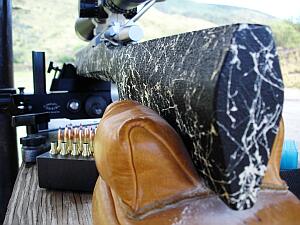
Back in the old days, Pat McMillan told me: “You can not have two bags filled so hard that you gun bounces on them in the process of firing round at your target, especially if you have a rig with a very flexible stock. The bags must be set up in a manner for them to absorb the initial shock of the firing pin moving forward and igniting the primer.
Then [they must] maintain their shape and absorb the second shock wave as well the rearward thrust and torque of the rifle. What happens to the rifle when this is not done? Well let me tell you. The rifles have a very bad tendency to jump and roll in the bags. This causes many of those wild, lost shots that one can’t explain.”
Here’s some Good General Advice for Bag Set-up:
1. You should not have TWO hard bags [i.e. both front AND rear] in your set-up.
2. Heavy sand magnifies these phenomena.
3. If you are a bag squeezer, pack ears hard and leave bag pliable enough to squeeze for the movement required. You may pack front bag as hard as rules permit.
4. Free recoil shooters pack both bags firm, but not so hard as to allow stock jump. Especially if you have a stock with a very flexible forearm.
5. We use play-ground sand, also know as silica sand. I sift mine to get any large impurities out then mix it with 25% to 50% with Harts parakeet gravel to the desired hardness that I am looking for. The bird gravel keeps the sand from packing itself into that solid as a brick state.
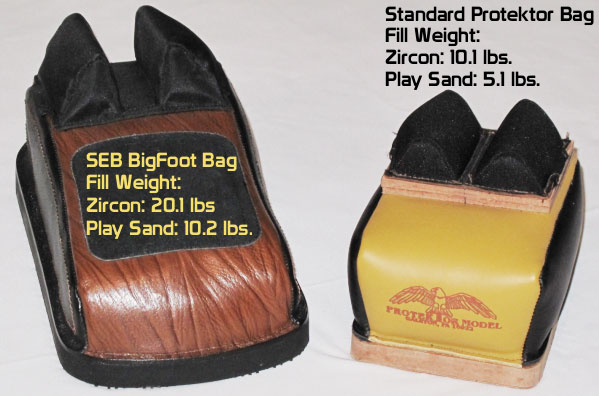
Speaking of bricks — another thing that happens when shooters employ that heavy zircon sand is the ears form a low spot under them from recoil and then tend to rock back and forth with the rifle causing many low shots to crop up. Edgewood makes an Edgewood/Speedy rear bag specially reinforced under the ears to eliminate this scenario.
Shown below are the latest SEB Bigfoot Bags. Note that the bags sit perfectly flat — there is no bulge on the bottom even though the bags are “packed to the brim with sand”.
General Thoughts about Bag Construction and Ear Materials
I do not like the solid double-stitched leather bottoms. While this seems like a good idea, I see more shooters have problems because of them. They tend to slide around the bench and or slide with the rifle on recoil. The standard Protektor with Cordura rabbit ears and an Otto ring bag with a Cordura front would be what I would suggest to the new shooter or one of the Edgewood / Speedy rear bags, these mimic the “Donut” and feature a ring of leather around the bottom circumference that keep the bottom from rocking on the bench or ground[.]
One last note –If you use the Cordura bags, keep them sprayed with a good silicon spray or “Rain-Ex”. This keeps them from getting sticky. — Speedy
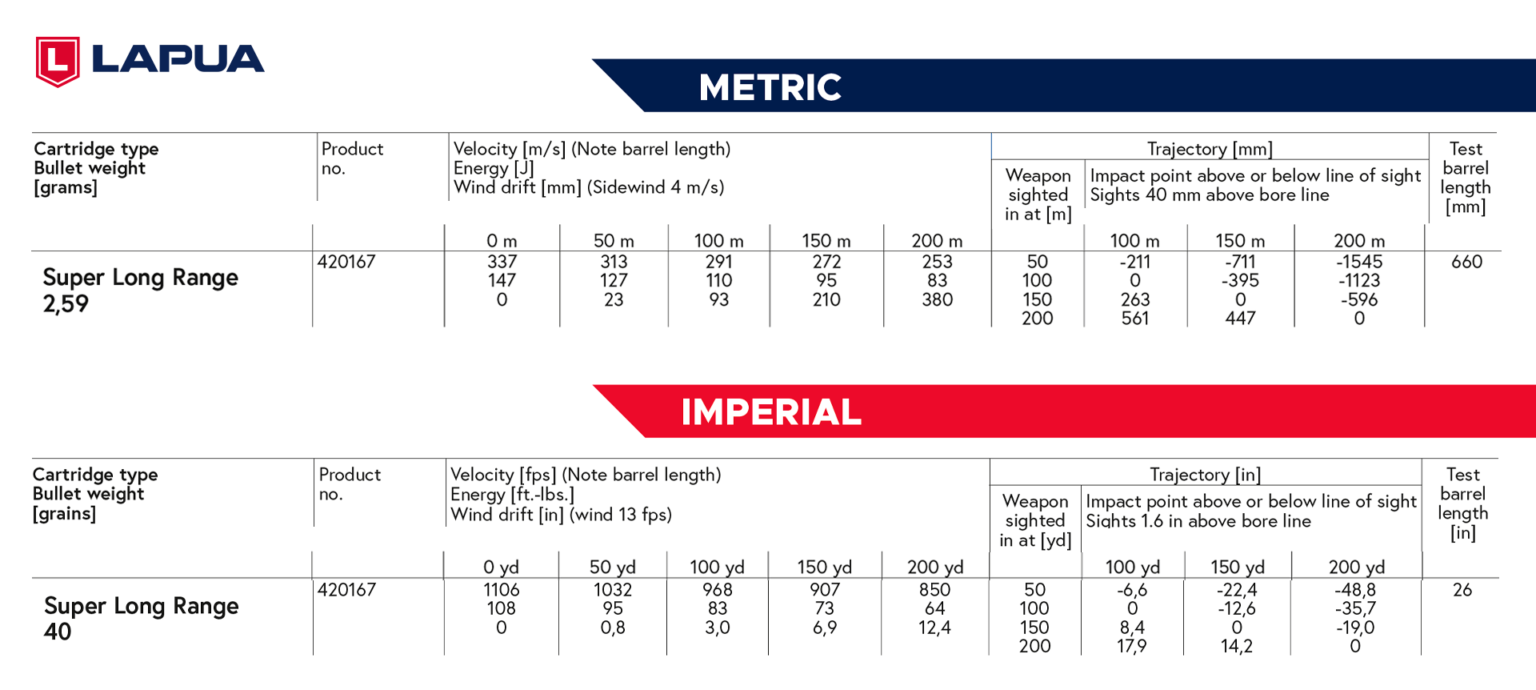
Lapua just introduced two new Long Range Rimfire ammo offerings. New for 2023, Lapua’s Super Long Range and Long Range rimfire ammunition are optimized for long range accuracy and consistency. The goal was to have extremely low extreme spread (ES) and standard deviation (SD), to yield the highest precision down range. Shooters competing in disciplines such as NRL22X and Rimfire ELR where targets are routinely placed beyond 250 yards, will benefit from Lapua’s new ultra-consistent Long Range rimfire ammo. Both the new Long Range and the Super Long Range have a 1106 FPS muzzle velocity (from 26″ barrel) and a 0.172 G1 Ballistic Coefficient.*
Introducing Lapua Super Long Range and Long Range .22 LR Ammo
Lapua’s two new .22 LR cartridges are designed for use at distances of 100 yards and beyond. The result of extensive product development and extremely advanced production processes, Lapua Super Long Range and Long Range rimfire ammunition offer ultra-consistent velocities and BC values for every shot. These new ammo types are designed for those competing in .22 LR rimfire disciplines at longer ranges. Those disciplines include: NRL22X, PRS 22, Rimfire Long Range, rimfire benchrest, and Field Target shooting. These new ammo types provide excellent performance on targets at 100 yards and beyond. With a 1106 FPS muzzle velocity, Lapua Long Range and Super Long Range provide a flat trajectory and improved wind performance. Both rimfire ammo types bring a competitive advantage with the Super Long Range offering the very best group accuracy.
Lapua states: “With a flat trajectory and improved wind performance, Lapua Super Long Range provides the very best accuracy for any top .22 LR shooter looking to beat the competition at longer distances.” The new Lapua Long Range ammo offers similar performance with the same 1106 FPS MV.
“Lapua’s new Long Range offerings are a game-changer for shooters seeking a competitive advantage in today’s most popular rimfire disciplines”, stated Jeff Knowles, Lapua U.S. Sales Director. “Lapua’s product innovation and manufacturing capabilities are unprecedented”.
Ammo Availability: Lapua’s new Long Range rimfire offerings will soon be available at authorized Lapua retailers for delivery by the end of the first quarter of 2023. Learn more about new Lapua Long Range rimfire ammunition at Lapua.com.
About Lapua: For 100 years, Lapua has been producing the highest-quality small caliber cartridges and components for civilian and professional use. Lapua is a part of the Capstone Precision Group, exclusive U.S. distributor for Berger, Lapua, Vihtavuori and SK-Rimfire products.
*Ballistic coefficients are calculated by Quick Target Unlimited Lapua Edition from V0 to V75 BC. G1 BC for all rimfire .22 LR bullets = 0.172.
Today is Friday the 13th. For those of you who are superstitious — maybe you should avoid climbing ladders, playing the stock market, or using power tools today.
When it comes to shooting, there are many things that shooters chalk up to “bad luck”. In fact, most of these instances of “bad fortune” just come from a failure to anticipate problems. When you have a major, critical problem at a shooting match, i.e. a “train wreck”, this can be the end of your weekend. In this article, Ballistics Guru Bryan Litz talks about “train wrecks” and how to avoid them, even if you are shooting on Friday the 13th. As Bryan told us: “I don’t believe in superstition — we make our own luck!”
How to Avoid “Train Wrecks” In Competition
In any shooting competition, you must try to avoid major screw-ups that can ruin your day (or your match). In this article, past F-TR National Mid-Range and Long Range Champion Bryan Litz talks about “Train Wrecks”, i.e. those big disasters (such as equipment failures) that can ruin a whole match. Bryan illustrates the types of “train wrecks” that commonly befall competitors, and he explains how to avoid these “unmitigated disasters”.
Urban Dictionary “Train Wreck” Definition: “A total @#$&! disaster … the kind that makes you want to shake your head.”
Success in long range competition depends on many things. Those who aspire to be competitive are usually detail-oriented, and focused on all the small things that might give them an edge. Unfortunately it’s common for shooters lose sight of the big picture — missing the forest for the trees, so to speak.
Consistency is one of the universal principles of successful shooting. The tournament champion is the shooter with the highest average performance over several days, often times not winning a single match. While you can win tournaments without an isolated stellar performance, you cannot win tournaments if you have a single train wreck performance. And this is why it’s important for the detail-oriented shooter to keep an eye out for potential “big picture” problems that can derail the train of success!
Train wrecks can be defined differently by shooters of various skill levels and categories. Anything from problems causing a miss, to problems causing a 3/4-MOA shift in wind zero can manifest as a train wreck, depending on the kind of shooting you’re doing.
Below is a list of common Shooting Match Train Wrecks, and suggestions for avoiding them.
1. Cross-Firing. The fastest and most common way to destroy your score (and any hopes of winning a tournament) is to cross-fire. The cure is obviously basic awareness of your target number on each shot, but you can stack the odds in your favor if you’re smart. For sling shooters, establish your Natural Point of Aim (NPA) and monitor that it doesn’t shift during your course of fire. If you’re doing this right, you’ll always come back on your target naturally, without deliberately checking each time. You should be doing this anyway, but avoiding cross-fires is another incentive for monitoring this important fundamental. In F-Class shooting, pay attention to how the rifle recoils, and where the crosshairs settle. If the crosshairs always settle to the right, either make an adjustment to your bipod, hold, or simply make sure to move back each shot. Also consider your scope. Running super high magnification can leave the number board out of the scope’s field view. That can really increase the risk of cross-firing.
2. Equipment Failure. There are a wide variety of equipment failures you may encounter at a match, from loose sight fasteners, to broken bipods, to high-round-count barrels that that suddenly “go south” (just to mention a few possibilities). Mechanical components can and do fail. The best policy is to put some thought into what the critical failure points are, monitor wear of these parts, and have spares ready. This is where an ounce of prevention can prevent a ton of train wreck. On this note, if you like running hot loads, consider whether that extra 20 fps is worth blowing up a bullet (10 points), sticking a bolt (DNF), or worse yet, causing injury to yourself or someone nearby.
[Editor’s Note: The 2016 F-Class Nationals will employ electronic targets so conventional pit duties won’t be required. However, the following advice does apply for matches with conventional targets.]
3. Scoring/Pit Malfunction. Although not related to your shooting technique, doing things to insure you get at least fair treatment from your scorer and pit puller is a good idea. Try to meet the others on your target so they can associate a face with the shooter for whom they’re pulling. If you learn your scorer is a Democrat, it’s probably best not to tell Obama jokes before you go for record. If your pit puller is elderly, it may be unwise to shoot very rapidly and risk a shot being missed (by the pit worker), or having to call for a mark. Slowing down a second or two between shots might prevent a 5-minute delay and possibly an undeserved miss.
4. Wind Issues. Tricky winds derail many trains. A lot can be written about wind strategies, but here’s a simple tip about how to take the edge off a worse case scenario. You don’t have to start blazing away on the command of “Commence fire”. If the wind is blowing like a bastard when your time starts, just wait! You’re allotted 30 minutes to fire your string in long range slow fire. With average pit service, it might take you 10 minutes if you hustle, less in F-Class. Point being, you have about three times longer than you need. So let everyone else shoot through the storm and look for a window (or windows) of time which are not so adverse. Of course this is a risk, conditions might get worse if you wait. This is where judgment comes in. Just know you have options for managing time and keep an eye on the clock. Saving rounds in a slow fire match is a costly and embarrassing train wreck.
5. Mind Your Physical Health. While traveling for shooting matches, most shooters break their normal patterns of diet, sleep, alcohol consumption, etc. These disruptions to the norm can have detrimental effects on your body and your ability to shoot and even think clearly. If you’re used to an indoor job and eating salads in air-conditioned break rooms and you travel to a week-long rifle match which keeps you on your feet all day in 90-degree heat and high humidity, while eating greasy restaurant food, drinking beer and getting little sleep, then you might as well plan on daily train wrecks. If the match is four hours away, rather than leaving at 3:00 am and drinking five cups of coffee on the morning drive, arrive the night before and get a good night’s sleep.”
Keep focused on the important stuff. You never want to lose sight of the big picture. Keep the important, common sense things in mind as well as the minutia of meplat trimming, weighing powder to the kernel, and cleaning your barrel ’til it’s squeaky clean. Remember, all the little enhancements can’t make up for one big train wreck!
Some folks say you haven’t really mastered marksmanship unless you can hit a target when standing tall ‘on your own hind legs’. Of all the shooting positions, standing can be the most challenging because you have no horizontally-solid resting point for your forward arm/elbow. Here 10-time National High Power Champ Carl Bernosky explains how to make the standing shot.
Carl Bernosky is one of the greatest marksmen in history. A multi-time National High Power Champion, Carl has won ten (10) National High Power Championships in his storied shooting career, most recently in 2012. In this article, Carl provides step-by-step strategies to help High Power shooters improve their standing scores. When Carl talks about standing techniques, shooters should listen. Among his peers, Carl is regard as one of the very best standing shooters in the history of High Power shooting. Carl rarely puts pen to paper, but he was kind enough to share his techniques with AccurateShooter.com’s readers.
If you are position shooter, or aspire to be one some day, read this article word for word, and then read it again. We guarantee you’ll learn some techniques (and strategies) that can improve your shooting and boost your scores. This stuff is gold folks, read and learn…
How to Shoot Standing by Carl Bernosky
Shooting consistently good standing stages is a matter of getting rounds down range, with thoughtfully-executed goals. But first, your hold will determine the success you will have.
1. Your hold has to be 10 Ring to shoot 10s. This means that there should be a reasonable amount of time (enough to get a shot off) that your sights are within your best hold. No attention should be paid to the sights when they are not in the middle — that’s wasted energy. My best hold is within 5 seconds after I first look though my sights. I’m ready to shoot the shot at that time. If the gun doesn’t stop, I don’t shoot. I start over.
2. The shot has to be executed with the gun sitting still within your hold. If the gun is moving, it’s most likely moving out, and you’ve missed the best part of your hold.
3. Recognizing that the gun is sitting still and within your hold will initiate you firing the shot. Lots of dry fire or live fire training will help you acquire awareness of the gun sitting still. It’s not subconscious to me, but it’s close.
4. Don’t disturb the gun when you shoot the shot. That being said, I don’t believe in using ball or dummy rounds with the object of being surprised when the shot goes off. I consciously shoot every shot. Sometimes there is a mistake and I over-hold. But the more I train the less of these I get. If I get a dud round my gun will dip.* I don’t believe you can learn to ignore recoil. You must be consistent in your reaction to it.
5. Know your hold and shoot within it. The best part of my hold is about 4 inches. When I get things rolling, I recognize a still gun within my hold and execute the shot. I train to do this every shot. Close 10s are acceptable. Mid-ring 10s are not. If my hold was 8 inches I would train the same way. Shoot the shot when it is still within the hold, and accept the occasional 9. But don’t accept the shots out of the hold.
6. Practice makes perfect. The number of rounds you put down range matter. I shudder to think the amount of rounds I’ve fired standing in my life, and it still takes a month of shooting standing before Perry to be in my comfort zone. That month before Perry I shoot about 2000 rounds standing, 22 shots at a time. It peaks me at just about the right time.
This summarizes what I believe it takes to shoot good standing stages. I hope it provides some insight, understanding, and a roadmap to your own success shooting standing.
— Good Shooting, Carl
* This is very noticeable to me when shooting pistol. I can shoot bullet holes at 25 yards, but if I’ve miscounted the rounds I’ve fired out of my magazine, my pistol will dip noticeably. So do the pistols of the best pistol shooters I’ve watched and shot with. One might call this a “jerk”, I call it “controlled aggressive execution”, executed consistently.
This popular video, viewed 3.4 million times on YouTube, provides a clear explanation of Minute of Angle (MOA) and how that angular measurement is used. Among novice shooters, there is much confusion over this term. In this NSSF Video, Ryan Cleckner, a former Sniper Instructor for the 1st Ranger Battalion, defines the term, “Minute of Angle” (MOA) and explains how you can adjust for windage and elevation using 1/4 or 1/8 MOA clicks on your scope. This allows you to sight-in precisely and compensate for bullet drop at various distances.
For starters, Ryan explains that, when talking about angular degrees, a “minute” is simply 1/60th. So a “Minute of Angle” is simply 1/60th of one degree of a central angle, measured either up and down (for elevation) or side to side (for windage). At 100 yards, 1 MOA equals 1.047″ on the target. This is often rounded to one inch for simplicity. Say, for example, you click up 1 MOA. That is roughly 1 inch at 100 yards, or roughly 4 inches at 400 yards, since the target area measured by 1 MOA increases in linear fashion with the distance.
More Minute of Angle (MOA) Explanatory Videos
This Gunwerks video explains that Minute of Angle subtends approximately 1″ for each 100 yards (well, 1.047″ to be more precise). That means a Minute of Angle increases in actual measured size the greater the distance of the target from the shooter.
This lengthy (24-minute) video defines Minute of Angle, and uses multiple diagrams to illustrate how MOA angular measurements works. The video also how MOA-based click values translate to point-of-impact changes at various distances.
A while back our Aussie friend Stuart Elliot of BRT Shooters Supply filmed some interesting videos at the QTS range in Brisbane, Australia. Stuart told us: “I was shooting in an Air Gun Benchrest match here in Brisbane, Australia. I finished my target early and was awaiting the cease fire and took a short, slow-motion video of windflag behavior.” You may be surprised by the velocity changes and angle swings that occur, even over a relatively short distance (just 25 meters from bench to target).
Here are windflags in slow motion:
The flags show in the videos are “Aussie Wind Flags”, developed by Stuart Elliot. For many years, these were sold in the USA by Butch Lambert, through Shadetree Engineering & Accuracy.
Here is a video in real time:
Stuart says this video may surprise some shooters who don’t use windflags: “Many people say the wind doesn’t matter. Well it sure does — whether for an airgun at 25 meters or a long range centerfire at 1,000.” This video illustrates how much the wind can change direction and velocity even in a small area.
The Civilian Marksmanship Program (CMP) has released its 2023 Travel Games schedule. The Travel Games are regional competitions that give competitors the chance to participate in notable CMP events found at the National Matches, but on a smaller scale. The CMP Games feature rifle and pistol matches designed for experienced competitors as well those who are new to the shooting sports. Along with shooting matches, each of the five scheduled 2023 Travel Games events will include Basic Rifle and Pistol Training Courses.
November 6-12, 2023 – Talladega 600, Talladega, Alabama.
For rifle shooters, the CMP Travel Games include a wide variety of modern and vintage rifle events including John C. Garand, Springfield, Rimfire Sporter, M1 Carbine, and Vintage Sniper Matches. The CMP High Power Matches offer more competitive possibilities such as the 4-Man Team Match, EIC Rifle Match, and three days of 80-Shot events. Pistol events include the CMP Match Pistol 2700, EIC Service Pistol, .22 Rimfire Pistol EIC, Military & Police Service Pistol, and 1911 As-Issued Pistol matches.
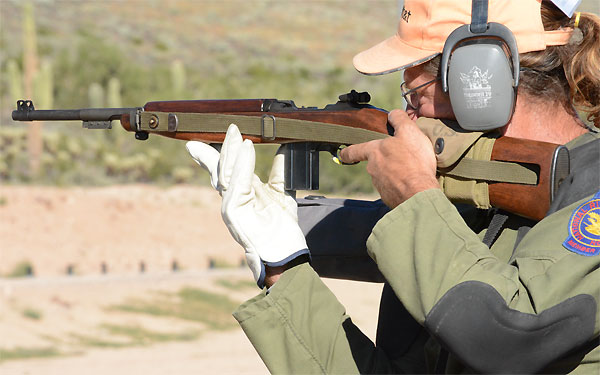
M1 Carbine Match at Western CMP Games
Electronic Targets for Rifle Events at CMP Travel Games
All CMP Travel Games rifle competitions will be fired on CMP Targets, a user-friendly electronic target system that instantly displays shot placement. The electronic targets also eliminate the need for pit duty. This helps matches run more quickly and efficiently with less physical strain for older shooters.
Training Programs at CMP Travel Games
In addition to competitions, educational opportunities such as the GSMM New Shooter Clinic, Basic Rifle and Pistol Courses and M1 Maintenance Clinics provide valuable experiences off the firing line. CMP-sanctioned GSMM (Garand-Springfield-Modern Military) rifle clinics teach basic and intermediate rifle marksmanship skills to new and beginning shooters. For newer shooters, the Basic Rifle and Basic Pistol Courses provide a solid introduction to firearm safety along with basic marksmanship skills and fundamentals. The courses also cover preparation for competitions and much more.
Garand Collectors Association Master Marksman Medal
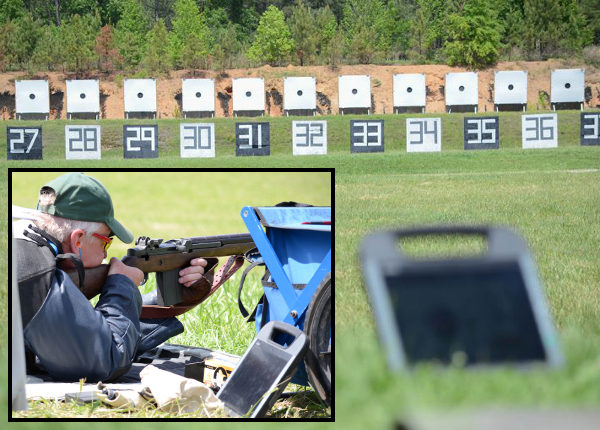
For the first time, in 2023, those competing in the John C. Garand Match with As-Issued M1 Rifles at CMP Travel Games will have the chance to earn a Garand Collectors Association (GCA) Master Marksman Medal. The GCA Master Marksman program is set to begin in January 2023. Like the CMP’s established Distinguished Badge Program, the GCA program will work on an Achievement Award point system, based on performance at designated CMP events.
CMP Competition 2023 rulebooks are now available on the CMP Website. For each discipline, you will find links for the full rulebook as well as separate links for 2023 Rule Changes. For this Sunday Gunday article, we focus on 2023 Rule Changes for rimfire (Smallbore) rifle and centerfire (Highpower) rifle. There are rule changes for pistol disciplines also, but this article does NOT cover pistol rules. Below are links for PDF files listing the CMP’s new 2023 rules for the Highpower and Smallbore rifle categories:
CMP rulebooks are updated annually to accommodate new program developments, clarify rules issues, and incorporate recommendations from competitors, match sponsors and CMP staff. The 2023 editions of these rulebooks are now posted on the CMP website where competitors, match officials, and match sponsors can download them to read or copy. Printed versions of the rulebooks will be produced in the next two or three months and will be available for purchase after that.
The CMP advises that “The 2023 rulebooks do not have any major rules revisions, but they do have a complex variety of changes, clarification and updates”. The summaries that follow identify and discuss the changes for the rifle rulebooks. If you have questions about the 2023 CMP Competition Rulebooks, contact the CMP Competitions Department at competitions@thecmp.org or (419) 635-2141, ext. 714 or 729. For Smallbore Rule questions, contact (419) 635-2141, ext. 730 or bdonoho@thecmp.org.
CMP HIGHPOWER RIFLE RULE CHANGES
The CMP Highpower Rifle program includes: 1) Traditional Service Rifle events conducted according to National Trophy Match rules; 2) Highpower Rifle events conducted according to CMP Cup Match rules; 3) Long-Range Rifle (prone and F-class events at 800, 900, and 1000 yards); and Mid-Range Rifle (prone and F-class events at 300, 500, and 600 yards). The CMP program for Mid- and Long-Range competitions now includes: 1) Match Rifle Prone Long-Range, 2) Service Rifle Prone Long-Range, 2) F-Class Long-Range, 3) AR Tactical Long-Range, 4) Prone Mid-Range, F-Class Mid-Range 6) AR Tactical Mid-Range, and 7) Service Rifle Mid-Range events.
There are no major changes in the 2023 Highpower Rifle rules, but there are several technical changes that competitors and match sponsors will want to note:
1.5/Table 1. CMP Highpower Rifle Events. A Mid-Range 300-500-600 course of fire is added.
2.6.9. National Trophy Teams. State National Trophy Rifle Teams (6 firing members) may have a maximum of two members who are from adjoining states that do not enter teams in the competition.
2.8.1. New Shooter Definition. Civilian National Trophy Team members will now be permitted to retain new shooter eligibility for two years (formerly one year).
3.2.11. Spectators and Media. A new rule encouraging the accommodation of spectators and media at competitions was added. It spells out limitations on their actions.
3.8.1 & 3.8.2. Pre-Preparation and Preparation Periods. Rules defining current pre-prep and preparation periods are added.
3.9.3 c). Interruptions. If interruptions lead to competitors getting out of position, the CRO may authorize additional preparation time before resuming firing.
3.12.3./Table 2. Rifle Achievement Awards. Cut scores are revised, based on 2022 National Match results.
4.1.1 g). Magazines. Altering M16/AR magazines by opening the front of the magazine to accommodate slightly longer bullets is authorized.
4.1.1 j) M16/AR15 Service Rifle External Appearance. New language provides a standard for evaluating minor alterations in the “general overall external appearance” of M16/AR rifles. Minor alterations created by the installation of after-market products for these rifles that have trigger configuration and trigger guard variations or slightly different external appearances (i.e., no walk pins, etc.) will generally be approved under this revised criteria. Such minor alterations may be approved provided that they 1) do not provide an unfair advantage, 2) fulfill rifle functionality requirements and 3) generally meet M16 external dimension specifications.
4.6.2. j) & k). Targets. The new 300-500-600 Yard Mid-Range course will be fired on MR targets. Rules defining reduced MR targets for 300 and 500 yards are added.
5.2.3 c). Rapid-Fire Loading, CMP Cup Match Events. The Rapid-fire loading procedure for CMP Cup Matches is not changed, but it is clarified.
5.4. Rifle National Match Course, Table 4. This rule is rewritten so that the Highpower Rifle National Match Course can be programmed as a National Trophy, or EIC sanctioned Service Rifle Match (with no sighters and starting rapid-fire from standing) or as a CMP Cup Match (with sighters and starting rapid fire in position). Allowing the firing of this course as a CMP Cup Match is new.
5.7.4 f). Team Matches. When Long-Range team events are fired, a time limit of 47 minutes for two team members will apply. In these events, team members may pair fire or fire in succession.
5.9. Long Range Matches, Table 7. Additional details regarding the application of Palma Rules were added for events that are restricted to Palma rifles. A provision authorizing a CRO to optionally use block time that combines the preparation and firing times was added.
5.12. Mid-Range Courses, Table 8. Details regarding the new 300/500/600 Mid-Range course of fire (event) are added to the Table defining Mid-Range Courses.
CMP GAMES RULE CHANGES
CMP Games Competition Rules for Rifle and Pistol govern Vintage Military Rifle, As-Issued Pistol, and Rimfire Sporter events. The 2023 CMP Games Rules introduce three new events, including new benchrest events. There will also be an expanded version of the Special EIC Matches.
Here is a list of notable changes in this rulebook for the CMP Games RIFLE Events:
1.5/Table 2, CMP Games Rifle and Pistol Events. This rule lists the different events that are recognized by the CMP as “CMP Games” events. Three new rifle events are added for 2023: Benchrest Vintage Military Rifle Match, Rimfire Sporter Dewar Match, and Rimfire Sporter Benchrest Match
1.8.11. Spectators and Media. A new rule regarding spectators and media is added. The rule encourages match sponsors to welcome and accommodate them but also places limits on what they may do.
3.3.6. Benchrest Supported Position. A definition of the benchrest firing position that will be authorized for the new VMR, and Rimfire Sporter Benchrest Matches is added. Supports under the fore-end are allowed; supports under the butt-stock are not allowed.
4.6.6. Benchrest VMR Match. Provides rules for the Benchrest VMR Match.
5.4.4 i). Rapid-Fire Loading, Springfield M1A Match. Loading procedures for the Springfield M1A Match, where competitors must start and load rapid-fire series in position, are unchanged, but clarified.
6.2.1 Vintage Sniper Rifle. The M1903 Springfield rifle with straight pistol grip stock and a Winchester A5 or Lyman 5A scope was added to the list of legal sniper rifle/scope combinations.
6.5.8 Interruptions in Vintage Sniper Rifle Team Matches. A provision was added that allows the firing of one additional sighting shot if there is an interruption of more than 5 minutes in 300-yard firing or 3 minutes in 600-yard firing.
CMP GAMES RIMFIRE SPORTER RULE CHANGES
8.2.2 a) Rimfire Sporter Adjustable Stocks. T and O Class rifles may have adjustable butt-plates or cheek-pieces if those features are fixed and cannot be readily changed without tools during the firing of an event.
8.3.7. Targets. Targets for the Rimfire Sporter Dewar and Benchrest events are defined.
8.6. Rimfire Sporter Dewar Course. A Dewar course of fire (20 shots prone at 50 yards and 20 shots prone at 100 yards) is added. This event was fired on an experimental basis during the 2022 National Matches.
8.7. Rimfire Sporter Benchrest Course. This is the second new Rimfire Sporter event in the 2023 rules. Competitors will fire their rifles from benchrests at 100-yard smallbore rifle targets, using a maximum of two sandbag rests (but no buttstock rest). The course of fire includes a 5-minute sighting period, followed by 40 record shots in 30 minutes.
8.8.4. Scoring Internal Crossfires. A rule change clarifies how Rimfire Sporter internal crossfires are scored.
10.3-10.5. National Records. Adds the new events to the National Records list.
SMALLBORE RIFLE COMPETITION RULE CHANGES
The big news is that the 2023 National Matches Smallbore Rifle Championships will be conducted on electronic targets. The other big change is the addition of rules for the new F-Class Smallbore Rifle events. Provisional F-Class smallbore rifle events were held during the 2022 CMP Smallbore Prone Championship at Camp Perry. F-Class will now officially be part of the CMP Smallbore Rifle Program. Accordingly, the 2023 (5th Ed.) CMP Smallbore Rifle Competition Rules adds rules for Smallbore F-Class competition. Here are the notable changes in the 2023 CMP Smallbore Rifle Rules:
5.3. F-Class Smallbore Rifles. Two types of F-Class rifle front supports are recognized, a front rest (F-O, Open Rifle) or a bipod (F-TR, Target Rifle). Non-mechanical rear rests are authorized.
5.6.1. Ammunition. F-Class events are limited to rimfire .22 LR ammunition loaded with 40-grain bullets.
6.1.4. Supported Prone Position. Describes the firing position authorized for F-Class shooting.
6.2. 100-Yard International Target. This is the 300 Meter ISSF target, scored with an 8 mm diameter bullet, reduced for use in F-Class 100-yard events that are fired and scored with 5.56 mm bullets.
6.2.4. Target Hanging Procedures. A new rule prohibits the use of distinctive colored target clips as a means of distinguishing a target (competitors should use target numbers to identify their targets).
6.3.5. Wind Flags. Wind flag height must correspond with bullets’ flight paths.
6.4. Table 3. The three-position course of fire was changed in 2022 to be the same as the new ISSF 3×20 course of fire (formerly 3×40).
6.4. Table 5. The F-Class 160-shot course of fire includes 40 shots at 50 yards on the ISSF reduced 50m target, 40 shots at 50 m on the old A-50 metric target, a combined 50 and 100 yard 40-shot event and 40 shots at 100 yards on the 100-yard international target (see Rule 6.2).
6.4.8. F-Class Procedures. F-Class firing procedures provide for 5- or 2-min. pre-prep and 3-min. preparation periods, followed by unlimited sighting shots with each record fire stage.
7.9 and 7.10. Competition Procedures, Electronic Targets. These procedures were included in the previous edition of this rulebook, but they are highlighted here because the CMP plans to have electronic targets in place during the 2023 National Matches at Camp Perry. In prone but not three-position events, competitors will be allowed to switch back to sighting shots during record firing. 40-shot prone events can be fired without a break, but an extra five minutes is provided in the time limits (unlimited sighters and 40 record shots in 45 minutes) to allow competitors who would like to take a break during these events to do so. Target aiming masks provided for any sight stages will have an aiming mark inscribed on them.
7.12.9. Disclaimed Shot. Procedures for handling disclaimed shots are provided.
There are a series of EIC Match Credit Changes for 2023, along with revisions for the Distinguished International Shooter Badge to adapt these regulations to ISSF rule changes. Check the 2023 Smallbore Rules for details, starting at section 11.3.3.
AN INTRODUCTION TO CMP COMPETITION RULES
The CMP’s Winter 2022 edition of On the Mark magazine contains “COMPETITION RULES—A Primer on Competition Rules and How to Follow Them”. This article (on pages 6-13) covers rulebook terminology, guiding principles in shooting rules, safety and safe range procedure rules, and an outline of the technical rules contained in each rulebook. CLICK HERE to download this issue of On the Mark.
DISTINGUISHED MARKSMAN BADGE CHANGES
The CMP Highpower Rifle, Smallbore Rifle, Pistol, and Air Gun rulebooks have rules that describe the Distinguished Marksman Badge program for eligible competitors in that discipline who have physical disabilities or limitations that prevent them from complying with all rule requirements for other Distinguished Badges. To compete for a Distinguished Marksman Badge, competitors with disabilities must apply to the CMP for a “Distinguished Marksman Authorization” (contact 419-635-2141, ext. 602; acantu@thecmp.org). Eligible competitors who fire EIC Match scores that equal or exceed EIC minimum cut scores receive EIC points that count towards the awarding of the Distinguished Marksman Badge.
AIR RIFLE AND AIR PISTOL COMPETITION RULES
The Second Edition CMP Air Rifle and Air Pistol Competitions Rules 2023 are posted on the CMP website. CLICK HERE to download those Air Rifle and Air Pistol Rules. NOTE: the CMP states that: “2022 1st Edition Rulebooks will continue to be used in 2023. If any changes are necessary during the year, an errata sheet will be printed to accompany published rulebooks.”
The paper targets you use can make a big difference during load development and training — helping you align your crosshairs, estimate group size visually, and also record load data/gun type. Here’s a collection of FREE printable precision and training targets. This selection includes popular load development targets AccurateShooter created as well as other useful grid targets. You can download ALL these targets as PDF files and then print them out on 8.5×11″ heavy paper.
AccurateShooter.com offers an online archive with over 50 FREE downloadable targets. You’ll find all types of FREE targets — sight-in targets, varmint targets, rimfire targets, bullseye targets, tactical targets, load development targets and more. CLICK HERE for all our free targets, including our LOAD DEV target.
Since we created this target a decade ago, it has proven very popular as a load development target, since all your load data fits neatly in the boxes under each target. In fact this target is used by both rifle-makers and barrel-makers (including Criterion) to test their products. The diamonds have 1/2″ sides and you can align your cross-hairs on the horizontal and vertical lines. It is a clean design that is easy to see even at 200 yards. When we test, we usually crank in a little elevation, setting the point-of-impact higher. That way our shots land in the gray circles, leaving the red squares intact for precise aiming.
This is a nicely-designed six-bull grid target. Use this for load development or accuracy testing. Set your scope so you can aim at the orange diamonds while your shots impact in the box above. This target has a visible background grid so it is easy to estimate your group size. You’ll find other load development targets in this Shooters’ Forum Thread.
Five Diamond Grid Targets
Here’s a popular grid target with multiple red diamond aiming points. The background includes a grid pattern with 1″ squares — that helps to quickly estimate group size through your scope. We recommend using a color printer for this target so the diamonds and grid lines are bright red.
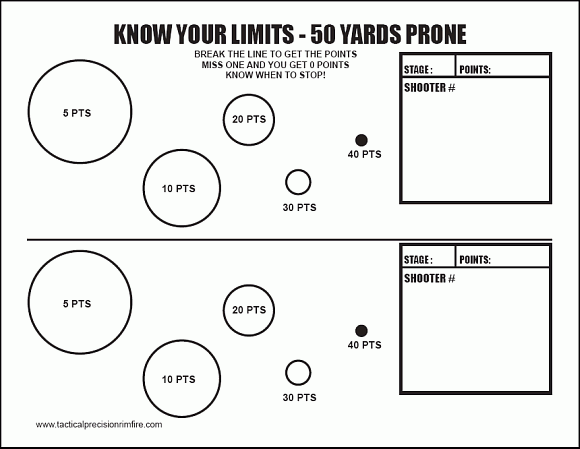
We use the two targets below for load development and precision practice. For the left target, use the corners of the diamonds to align your cross-hairs precisely. The circle dot target (on the right) can also be used for informal rimfire competition at 50 yards. Right-Click Each Target to Download Printable PDFs.
Know-Your-Limits Target for Rimfire Training & Fun Matches
Here’s a rimfire training target with “big to small” target circles. Start with the largest circles, then move to the smaller ones in sequence. This systematic drill provides increasing challenge shot-by-shot. Novices often are quite surprised to see their accuracy improve as they move from bigger to smaller aiming points. That provides positive feedback — always a good thing.
This target was created using Open Office (Draw) by Forum member TwoBoxer for 100-yard load development and practice. He tells us: “The color, size of the center dot, crosshair lines, etc. were varied to work with my scope and magnification at 100 yards. I expect the group POI to move as elements of the load are varied. So concern about obliterating the aim point is minimal, and needs to be controlled by how you zero the rifle in any case.”
RED Center Pistol Target
Here’s a NRA-type target for pistol shooting. The bright red center helps when shooting indoors because well-placed bullet holes are much more visible. This target includes data entry boxes to record gun type, score, and load data. This is one of many good free targets available at Targets4free.com.
Proud owner Dirk L. says: “This is my first build — never thought it would be a .308!”
Here’s a handsome F-TR rifle with a beautiful red stock that suits the holiday season. This ruby red beauty was a recent addition to the long-running Pride and Joy Rifle thread in our Shooters’ Forum. The rifle belongs to Forum member Dirk L. (aka “Pinkes”) who hails from South Africa. This is a .308 Win, with 30″ Bartlein barrel, and X-Max action. The stock is a custom composite with carbon fiber for strength and lightness. And yes this rifle shoots as good as it looks. Check out the impressive 5-shot groups below…
X-Max for Xmas — Impressive Metal-work
Along with that beautiful red stock, this F-TR rig has some very cool features, including a South African-crafted X-Max Action. The action designer Piet Welgemoed explains: “The X-Max action body is 17-4PH stainless steel pre-hardened to 44° Rockwell. Bolt and handle are one-piece stainless steel, nitrated to 55° Rockwell 0.2mm deep. Bolt is also fluted. Inside is the firing pin with washers (see below). The washer cuts the lock-time almost by half and also weighs less. The bolt-knob and bolt shroud are CNC aluminum. The action has very tight tolerances.” The complete action with +20 MOA rail and trigger weighs 1.475 kg (3.25 lbs).” Owner Dirk notes that the competition trigger, set at 3.0 ounces, is also Welgemoed’s design.
Wicked Accuracy with Bartlein Barrel, Varget, and 220gr SMKs
This gun has already proven to be a great shooter. Below are two FIVE-shot groups at 100 meters. The group on the left is in the low threes, with three of five shots essentially in one hole. Dirk loads Lapua .308 Palma brass and #2231 200gr Sierra Matchkings, seated 20 thousandths off the lands. The Varget powder and CCI primers drives the 200gr SMKs at 2620 fps.
Brass: Lapua .308 Win Palma (small primer) | Primers: CCI 450 | Powder: Varget
Bullet: New 200gr SMK #2231 | Seating: 0.020″ Off | Velocity: 2620fps
Composite Stock — One of Three by Renier Mostert
And what about that beautiful red stock? The rifle’s owner told us: “This was one of three similar stocks built as a test run by Renier Mostert, a professional composite stock builder and former benchrest shooter from Pretoria, South Africa. Renier was approached by three friends, who were all looking for decent, custom-built FTR composite stocks. There were a number of stocks available to them (mostly imported), but [those] were either made of wood or aluminum. The requirements for the composite stock build was very specific. Aluminum V-Blocks for the actions were required. The stocks had to be light enough to carry some beefy barrels and optics without compromising rigidity and still be within the F-TR weight limit. The three friends supplied Renier with an imported wooden stock as their shape of choice. Although the shape was quite straight-forward, Renier made a few dimensional changes to features which were not symmetrically correct on the sample, and then built a mold from it.”
Renier uses several methods to craft composite stocks for various disciplines: F-Class, benchrest, competition rimfire, hunting, and tactical. For this build he chose to build a shell constructed of a well-planned mix of woven fiberglass cloth and bi-directionally woven carbon fiber with aerospace quality epoxy resin to reduce weight in some areas and increase stiffness in other areas. He used a wet lay-up process where the two halves gets laid up and joined together while still wet to form a complete, continuous shell. The closed mold gets cured under pressure in an oven for several hours at very specific temperatures. After curing, the shell is filled with a high-tech mix of lightweight filler and epoxy resin. The composition of the mix varies in different areas of the stock to facilitate more strength or reduced weight where applicable.
After the initial build, the aluminum hardware was installed. An adjustable cheek piece, Anschutz rail, and adjustable recoil pad mechanism were installed. The stocks were inletted by Renier, while the final fitting and bedding procedures were left for each customer’s gunsmith to complete. The stocks were light enough for the rifles to comfortably be within the F-TR weight limit. A barrel tuner was mounted on one of the rifles, and the rifle still made the F-TR Class weight limit, 8.25 kg (including bipod). The bipod shown in photos in the SEB Joy-Pod.
Paint — Candy Apple Red over Metallic Silver Base
After final gunsmithing, the stocks were returned to Renier Mostert for custom painting. The rifle featured in this article was done in Candy-Apple Red paint from DNA Paints (an Australian company). To get the desired effect, a metallic silver base coat was used, enhanced with a modest amount of medium coarse glitter, followed with multiple layers of candy until the correct shade was achieved. A high-quality automotive clear coat was used to finish off the paintwork.


 Back in the old days, Pat McMillan told me: “You can not have two bags filled so hard that you gun bounces on them in the process of firing round at your target, especially if you have a rig with a very flexible stock. The bags must be set up in a manner for them to absorb the initial shock of the firing pin moving forward and igniting the primer.

 Lapua just introduced two new


 Train Wrecks (and How to Avoid Them)
 4. Wind Issues. Tricky winds derail many trains. A lot can be written about wind strategies, but here’s a simple tip about how to take the edge off a worse case scenario. You don’t have to start blazing away on the command of “Commence fire”. If the wind is blowing like a bastard when your time starts, just wait! You’re allotted 30 minutes to fire your string in long range slow fire. With average pit service, it might take you 10 minutes if you hustle, less in F-Class. Point being, you have about three times longer than you need. So let everyone else shoot through the storm and look for a window (or windows) of time which are not so adverse. Of course this is a risk, conditions might get worse if you wait. This is where judgment comes in. Just know you have options for managing time and keep an eye on the clock. Saving rounds in a slow fire match is a costly and embarrassing train wreck.
 How to Shoot Standing
 5. Know your hold and shoot within it. The best part of my hold is about 4 inches. When I get things rolling, I recognize a still gun within my hold and execute the shot. I train to do this every shot. Close 10s are acceptable. Mid-ring 10s are not. If my hold was 8 inches I would train the same way. Shoot the shot when it is still within the hold, and accept the occasional 9. But don’t accept the shots out of the hold.





 Garand Collectors Association Master Marksman Medal


 CLICK HERE TO DOWNLOAD PDF TARGET


