The U.S. Army Marksmanship Unit (USAMU) has produced an excellent series of videos, which collectively cover the Basic Rifleman’s Course. If you are getting started in High Power shooting, or want to improve your position shooting skills, this series is well worth watching. And these videos are not just for service rifle shooters — even bench shooters can benefit from these videos, particularly Part 5, which explains how to estimate wind speed and direction. The lead instructor for these videos is SFC Brandon Green, a three-time National High Power Champion. When SFC Green talks, you should listen.
SFC Brandon Green is a shooting superstar. Green won his third NRA National High Power Rifle Championship in 2018 at Camp Atterbury, Indiana. He dominated the HP Championship cycle, finishing eight points and ten Xs ahead of his nearest competitor. Brandon also won High Power National Championships in 2015 and 2013. And in 2017 he set new records at the CMP’s National Trophy Matches at Camp Perry. One of the greatest marksmen in the nation’s history, SFC Green has no weaknesses, excelling at all positions, both rapid-fire and slow-fire.
Part 5 — Wind and Weather Estimation (Very Useful for All Shooters)
Note: This video includes a hit location “target analysis” in the first 6 minutes.
Part 4 — Minute of Angle Explained
Part 3 — Ballistics and Zeroing
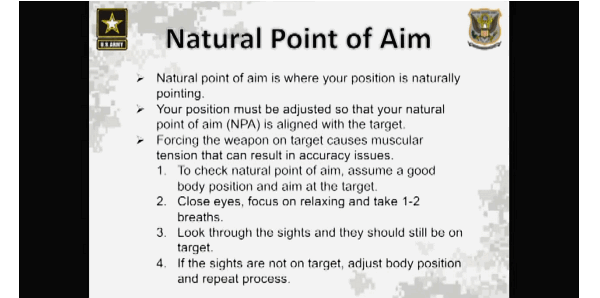
Part 2 — Positions, Sight Alignment, and Natural Point of Aim (Very Useful)
Part 1 — Aiming and Sight Picture
Three-time National High Power Champion SFC Brandon Green (left above) set four new National Records at Camp Perry in 2017.
About SFC Brandon Green — One of America’s Greatest Marksmen
A three-time National High Power Champion, SFC Green has had a distinguished shooting career while at the USAMU. In 2018 Green set 4 Individual National Records and capturing his first President’s 100 match win while setting a new national record for the match. 2018 also saw SFC Green winning his third National Trophy Individual championship while setting a new national record for this championship. In 2017 Green won his fourth Interservice Individual Championship, setting a new record for this match in the process. He was also a member of several first-place winning teams, including the Nation Team Trophy and the National Infantry Trophy team match at the National Championships.
SFC Green has won the Interservice Long Range championships five times and is the current record holder for this match. In 2007 and 2008 Green captured the coveted Wimbledon Cup trophy during the NRA National Long Range Championships. He earned his third overall NRA National High Power Championship title in 2018. Green is also a lead instructor for the USAMU’s marksmanship courses and teaches the Small Arms Firing School every summer at Camp Perry, Ohio.
The Southwest Nationals 600-yard competition was held Wednesday, February 9, 2022 at the Ben Avery Shooting Facility in Phoenix, AZ. For F-Open, F-TR, and Sling Divisions there were three relays, each with 20 rounds for score. Thus, the maximum possible score was 600-60X. Remarkably, many of the top shooters shot 598 or above, and F-Open Winner Norm Harrold didn’t drop a point, finishing with 600-35X. Congrats to the class winners:
F-Open 600-Yard Winner:
Norm Harrold, 600-35X
Note: Jim Murphy was close behind with 599-47X,
the high X-Count for the match.
F-TR 600-Yard Winner:
Alton Johnson, 598-36X
Sling Division 600-Yard Winner:
Kelly Frank, 599-29X
Top 10 by Division
F-OPEN Division
NORMAN HARROLD 600-35X Winner
JIM MURPHY 599-47X
DAN BRAMLEY 599-38X
KEN DICKERMAN 599-37X
ANDY AMBER 599-31X
TIM VAUGHT 598-38X
JAY CHRISTOPHERSON 598-35X
BRYAN BLAKE 598-35X
DAVID GOSNELL 598-34X
JOSEPH MEYER 598-33X
F-TR Division
ALTON JOHNSON 598-36X Winner
GERRY WIENS 597-30X
KEITH TRAPP 595-37X
RANDY LITTLETON 595-33X
BRIAN HARDER 595-31X
JAMES CROFTS 595-28X
EDWARD SHELLEY 595-28X
STEVE ERNST 595-24X
LUKE RAMSEY 594-31X
RAYMOND WEAVER 594-31X
SLING Division
KELLY FRANK 599-29X Winner
KIMBERLY ROWE 598-28X
MIKE KELLEY 598-28X
TRUDIE FAY 597-35X
BOBBY GILL 597-31X
MICHAEL HALSEY 597-27X
MICHAEL CARLO 597-26X
RICHARD FORD 596-37X
KEN NELSON 596-32X
FAZAL MOHIDEEN 595-36X
Today, Thursday February 10, there will be a 4-person Palma Team Match with targets at 800, 900, and 1000 yards. There will be unlimited Sighters and 15 shots for record at each distance. Teams will consist of four firing members, a captain, a coach and an alternate. Divisions are: Palma, Optic, F-Open, F-TR.
Bonus Discounts For 2022 Southwest Nationals Competitors
Generous supporter of the Southwest Nationals, PMA Tool, is offering every SWN competitor 25% OFF PMA TOOL products. Check out all of PMA’s products at pmatool.com. NOTE: this discount ONLY applies to current 2022 SWN competitors.
Longtime supporter of the Southwest Nationals, McMillan Stocks, is generously offering every SWN competitor and range officer 25% OFF any McMillan hunting or tactical stock (not BR or F-Class stocks). Check out all of McMillan’s offerings at McMillanUSA.com. NOTE: This discount only applies to current 2022 SWN Competitors and Range Officers.
The Berger SW Nationals competition is back! After being cancelled in 2021 due to Covid concerns, one of America’s best shooting matches returns in 2022. The match kicks off tomorrow, February 9, 2022, and continues through Sunday February 13, 2022 at the Ben Avery Shooting Facility in Phoenix, Arizona.
This is a unique match that combines F-Class competition with High Power (Palma) prone sling shooting. The nation’s top F-Open and F-TR shooters will be in Phoenix, along with top “hard-holders” with their bolt-action long-range target rifles.
If you’re curious about the equipment favored by Berger SWN competitors, here are the equipment lists from the last SWN match in 2020. This list was compiled by the match directors from info supplied by 2020 F-Class and High Power competitors. This covers hardware (actions, barrels, stocks), optics (riflescopes, spotting scopes), and cartridges (brass, bullets, powders). As you’d expect, .284 Win (and variants) dominated the F-Open ranks. Though some guys did try the .223 Rem for F-TR, the .308 Win was still used by the vast majority of F-TR shooters.
Matt Schwartzkopf, USA F-TR Team member (and Ben Avery Range Supervisor), collected comprehensive gear reports during the 2020 Berger SW Nationals. Matt then created charts showing competitors’ choices for Actions, Barrels, Stocks, Riflescopes and Spotting Scopes. In addition, Matt compiled bullet choice and powder preferences for all classes along with cartridge rankings for F-Open Division.
ACTIONS Listed by Division (Sling, F-TR, F-Open)
ACTIONS by Brand (Combined Listing — All Divisions)
BARRELS by Brand (Combined Listing — All Divisions)
BULLETS by Brand (Combined Listing — All Divisions)
CARTRIDGE BRASS by Brand (Combined Listing — All Divisions)
POWDER by Brand (Combined Listing — All Divisions)
STOCKS by Brand (Combined Listing — All Divisions)
RIFLESCOPES by Brand (Combined Listing — All Divisions)
SPOTTING SCOPES Listed by Class (Sling, F-TR, F-Open)
The best F-Class and Sling shooters in the nation compete each year at the Berger Southwest Nationals at the Ben Avery range in Arizona. Walk down the firing line and you’ll see the absolute “best of the best” in equipment — from $3500 optics to $2000 stocks and $400 triggers. Berger SWN shooters have some of the best equipment you can buy. In this game, where just 1 or 2 points can separate first from third place (considering X-Count), it’s important to have top-flight equipment. That means a custom action, custom barrel, and high-end stock or chassis system.
Cartridge Selection in F-Open Division
In addition, Matt produced an interesting listing of cartridge/caliber types for the F-Open division. This is helpful because cartridge choice is unrestricted in the F-Open class. By contrast, the F-TR division is limited to .223 Remington (5.56×45) or .308 Winchester (7.62×51). You can see that the .284 Winchester (and variants) currently dominate F-Open.
Shooters’ Forum Thread about SWN Gear Selection
There was a discussion of the 2020 SWN Gear Selection in our Shooters’ Forum. CLICK HERE to view that Forum thread. Many top SWN shooters, including past F-Open National Champion Larry Bartholome, contributed to this Forum discussion about gear options.
The Berger Southwest Nationals officially starts on Wednesday, February 9, 2022. However there will be Open Practice today at the Ben Avery Benchrest Range. If you’re shooting the Match and need to confirm your zero after travel, or perhaps do some last-minute load testing, you may want to take advantage of today’s testing session. This is also a chance to test out new equipment — such as a new rear bag, or new front rest — and ensure everything is working right. It’s also a good idea to make sure your scope is aligned properly and working 100% correctly.
Matt Schwartzkopf, Ben Avery Range Director, posted this welcome message on our Shooters’ Forum:
Berger SWN Check-In and Practice
[Berger SWN] shooters can check in and pick up their scorecards starting Tuesday 2/8/2022 at the Berger Building from 1 PM to 5 PM, and starting at 6:30 AM on Wednesday morning, 2/9/2022.
The gates to the facility will not be opened until 6:30 AM each morning of the match. Please do not enter the facility until the gates are opened by Ben Avery Staff.
Practice for the SWN is available on Tuesday, February 8, 2022 at the Ben Avery Benchrest Range from 8:00 AM to 5:00 PM.
We look forward to seeing everyone,
SWN Event Staff
The 2022 Berger Southwest Nationals kicks off later this week at the Ben Avery Shooting Facility in Phoenix, AZ. The match runs February 9-13, 2022*, starting with the mid-range competition for F-Class and High Power (sling) rifles, followed by long-range matches. Here’s an inexpensive cart that can help haul gear for major matches where you’re moving from one firing berm to another over the course of a day.
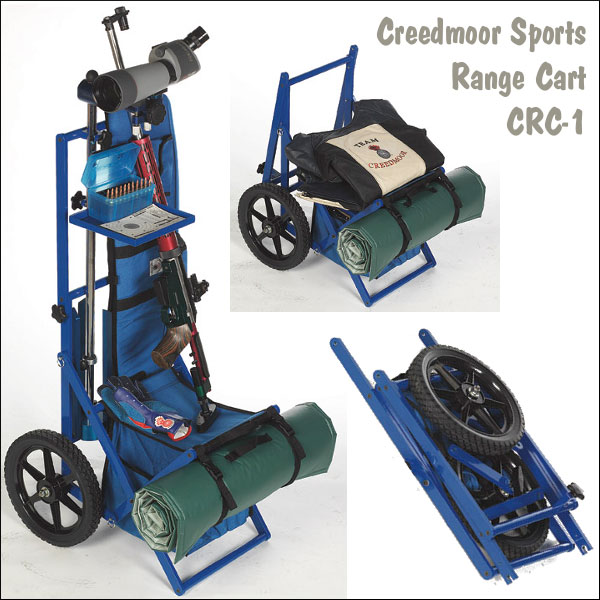
High Power and F-Class shooters have a ton of gear they need to carry out to the firing lines. (These photos were taken at the Berger SWN). To do the hauling, you can certainly purchase a factory-made, purpose-built cart that folds up and has all the bells and whistles. The Creedmoor Sports CRC-1 (photo right) is a proven, quality product that works great. You’ll find these used by top shooters at Camp Perry. But the Creedmoor CRC-1 cart costs $499.95.
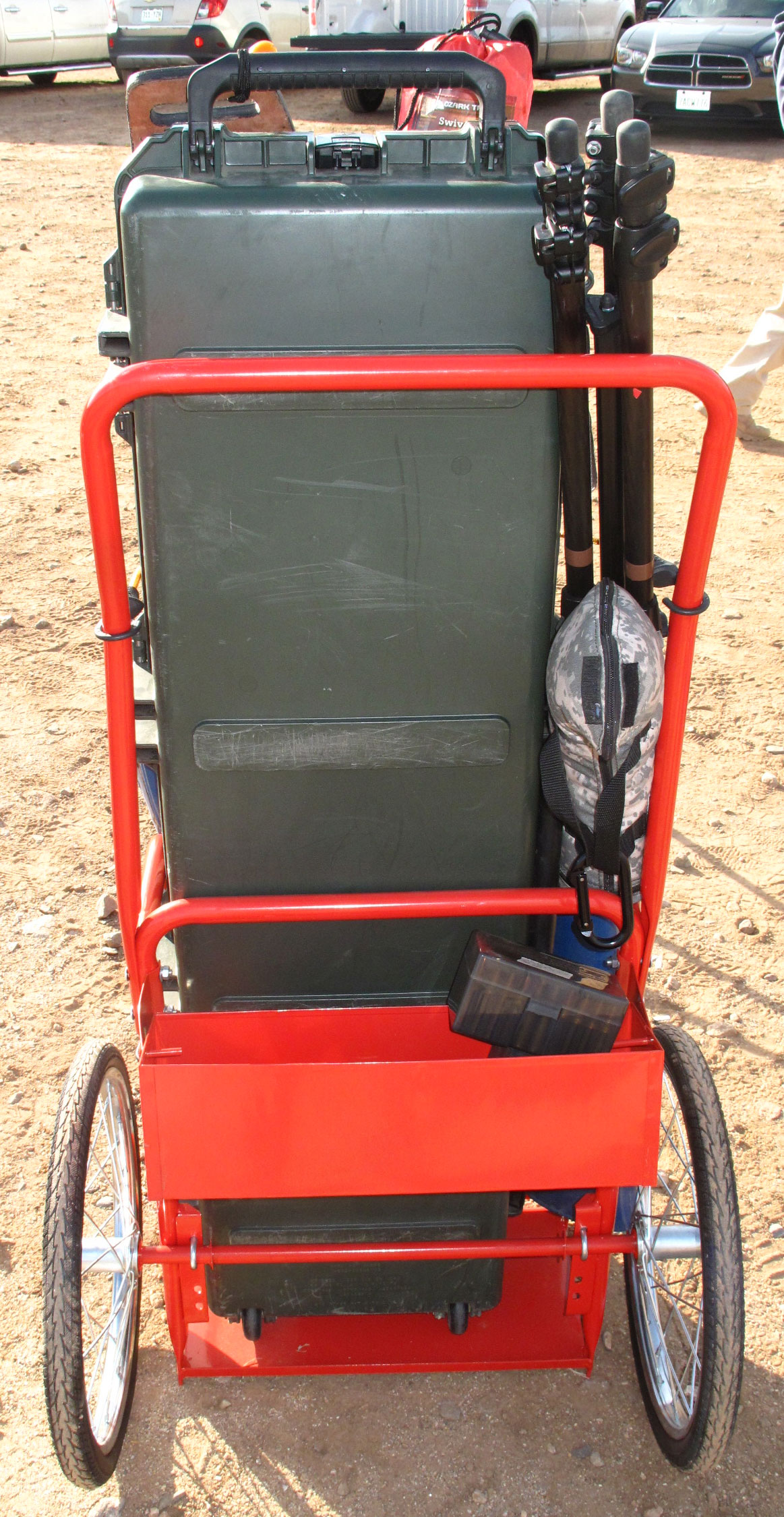
For a fraction of that price ($69.99), plus a few dollars more for do-it-yourself enhancements, you can have a heavy-duty cart that will haul all your gear just fine, though it doesn’t fold up. In the top photo is a Harbor Freight Welding Cart we saw at the Berger Southwest Nationals. This rig is carrying a rifle in hard gun case, bipod, folding chair, shooting mat, tripod, spotting scope, rear sand-bag, and ammo box — that’s a lot of gear!
Check out the Harbor Freight Welding Cart, item #65939. This cart is available now for just $69.99. Overall size is 29-1/2″ L x 20″ W x 49″ H, and width between side rails is 18″. The wheels (with tires) are 20 3/4″ in diameter for smooth rolling. Consider that, if you made your own cart from scratch you could easily pay $30.00 or more just for the large-diameter wheels and axle. Do note — this cart has air-filled tires. Be sure to inflate before you go to the Range!
As sold, the Harbor Freight Welding Cart can benefit from upgrades for range use. But with a few bungee cords (and some creativity), the cart can be adapted pretty easily to hauling your gun gear. If you want to enhance the basic cart, it’s easy to add plastic side-panels on the bottom unit, and fit a barrel-holding system on the cross-tube. This ensures rifles and gear won’t flop forward. (A small piece of wood under the bottom panel provides a bit of extra lift that will keep the bottom plate out of the dirt and gravel.)
* The Berger SW Nationals normally concludes on a Sunday, but the official schedule includes Monday, February 14 in case there is a lost day due to weather.
The Tack Driver Showdown is a 300 meter, one-of-a-kind match designed to determine the most accurate rifles in the world regardless of discipline or class. The 2021 Tack Driver II event had 80 of the world’s top competitors representing several disciplines (Short-Range for Group, Short-Range for Score, UBR, F-Class, 600-yd and 1000-yd Benchrest) with calibers/cartridge types ranging from .22 PPC to .300 WSM.
IMPORTANT: Folks, if you shoot competitive benchrest, please DO watch the First Video below. It is full of invaluable information and shooting tips. As Bart holds multiple world records, you should listen to what he says. This is, without question, one of most informative benchrest videos I have ever seen in 18 years of running this site. — EDITOR
This year the match was VERY challenging, with tough, very windy conditions and low temperatures. The overall winner of the Grand Aggregate was bullet-maker Bart Sauter, shown above. Bart was shooting his wickedly accurate 6 BRA rifle with 103gr bullets of his own making. Bart demonstrated that a 6 BRA cartridge with long bullets can beat a 6 PPC, at least at 300 meters when the wind is fierce.
WATCH THIS! Folks, if you are a benchrest competitor, you absolutely should watch this video. This offers very important insights you won’t find anywhere else. The first five minutes shows very important advice on setting up your rest and bags. Starting at the 10-minute mark, Bart shows how he shoots the rifle, with rapid manual reloads. At the very end, 15:55+ Bart runs five (5) shots in 9 seconds!
Match Results — What Cartridge Types Dominated
Bart reports: “It’s interesting to see the calibers/cartridges in the Top 10 of each category. The Group Match was in fact won by the 6 PPC. However, look at the top 5. Three of the Top 5 are NOT 6 PPCs — that’s notable. The Score Match was won with a .30 WW (I have no clue what that is). There were two .30 calibers in the Top 5 and three in the Top 10. The Grand Aggregate was won with a 6 BRA. I think it’s noteworthy the Top 5 had two 6 PPCs, two 6 BRAs and a .30 WW! That’s a pretty good mix. The Top 10 had a variety of 6MMs and one .30 caliber. That’s another surprise.”
Group Match Results
1st 6 PPC
2nd 22 PPC
3rd 300 WSM
4th 6 Dasher
5th 6 PPC
6th 6 BRA
7th 6 PPC
8th 6 BRA
9th 6 PPC
10th 6 PPC
Leveling the Playing Field — What Works Best at 300 Meters Commentary by Bart Sauter
There has been a long standing debate in the shooting world as to whether mid-range/long-range cartridges such as the Dasher, 6 BRA, and 6mmBR are accurate enough to compete against the 6 PPC or 30 BR at shorter distances. The problem has been finding a format that allows the both short-range and longer-range cartridges to compete on a level playing field. The Tack Driver match addresses the problem by moving the distance to 300 meters (approximately 329 yards). This is a bit farther than short range group and score matches which are typically shot at 100 and 200 yards. While the mid-range/long range cartridges shoot primarily at 600 and 1000 yards.
Cartridges Left to Right: 6 PPC, 30 BR, 6mmBR, 6 BRA, 6 DASHER. Those five cartridges represent 85% of cartridge types used at the Tack Driver II match.
Another piece of the puzzle is the type of match — group vs. score. Short Range matches consist of either a group or score match. In group shooting you’re trying to shoot as small of a group as possible (5- or 10-Shot group). Unlike score it doesn’t matter where the group forms on the target. However, in score competition the goal is to hit five individual bullseyes per target, preferably dead center. Score matches are won by the highest point total while group matches are won by the smallest aggregate (smallest average of total groups shot).
Things are different for longer range competitions. 600-yard and 1000-yard Benchrest competitors shoot for score AND group simultaneously on the same target. In other words competitors are trying to shoot the smallest group in the middle of the bullseye for the highest point total. The Tack Driver addresses this problem by having an equal number of score targets and group size targets. Tack Driver II had 5 score targets and 5 group targets at 300 meters, so neither discipline is favored.
6 BRA Wins Tack Driver II Match
The winning combination this year was a 6 BRA (6mmBR Ackley Improved) shot by Bart Sauter. Below are the particulars on Bart’s winning rifle and load information. Watch the following video to learn more about Bart’s very accurate rifle.
Barrel – Lederer 1:8″-Twist, 28″
Barrel Bore Diameter – 0.237″
Neck – .272″ NO TURN
Bullets – 103gr Bart’s Hammers
Case – Lapua 6mmBR parent
Primers – CCI BR4 sm rifle
Powder – Hodgdon H4895
Seating Pressure – 22 to 25 lbs. on gauge
Bullet Seating Depth – .009″ into the rifling from first touch.
Tack Driver II-Winning 6 BRA Rifle — Components Explained
Questions and Answers with Bart Sauter
Match Prep, Cartridge Choice, Comparative Wind Drift, Reloading Gear, Wind Conditions and more…
Q: How did you prepare for the match?
Bart: My good friend and shooting buddy, Jim Chaney, built a target frame which was placed at 300 meters for practice before the match. Our two biggest concerns about the match were: 1) staying competitive during the score portion; and 2) being able to see bullet holes during heavy mirage. The range is mostly South Carolina sand and faces southeast (you can get sun in your eyes). It has a notorious reputation for heavy mirage. So much so that seeing bullet holes can be an issue. Many shooters were swayed to shoot .30 calibers because the holes are easier to see. In fact, when the sun came out for the last couple of targets, several shooters complained they couldn’t see their shots on paper.
Q: I know you’ve shot a 6 PPC for years? What made you decide to go with a 6 BRA?
Bart: Well several things. During practice I bounced back and forth, playing with the 6 PPC and the 6 BRA. My shooting buddy Jim shot his 6 PPC. One of the things I noticed was my 6 BRA consistently edged my 6 PPC and and Jim’s 6 PPC in group size.
The Drift Test — The real eye-opener came when Jim and I conducted a drift test at 200 yards comparing the 6 PPC with 68gr Boattail Avengers to my 6 BRA with 103gr Bart’s Hammers. For the test both rifles were tuned as well as possible. The idea was for both shooters to hold the same point of aim for each shot (total of 5 per sequence). The shots were fired simultaneously by conducting a count down for example “One, Two, Three, FIRE!” Winds were 7 to 10 mph.
Bart (foreground) and Jim Chaney conducting comparative wind-drift tests with 6 PPC and 6 BRA prior to Tack Driver II Match.
Each shot was intentionally fired in a different wind condition over flags. The first 3 shots from the 6 BRA formed a nice 0.300″ group while the 6PPC spread out to a 0.650″. The final two shots were fired in a hard crosswind pushing to the right then a hard crosswind to the left. The 6 PPC was pushed to over a 1.6 inch group while the 6 BRA kept them to around an 0.850″. The test was so conclusive that during the drive to the match Jim abandoned his 6 PPC, and we doubled up on my 6 BRA.
Comparative Wind Drift Explained — 6 PPC vs. 6 BRA
Q: That explains why you chose the 6 BRA, but how did you meet the challenge of seeing 6mm bullet holes despite bad mirage?
Bart: Jim and I played with several different scopes trying to see what would work best. The mirage at my place can be substantial. Around September I purchased the new Valdada 10-60x56mm Precision scope with 40mm tube. This scope is amazing, not only optically, but rock solid accuracy-wise. So if anything was going to work to see bullet holes, it’s this scope. As it turned out, I had no problem seeing my shots on the Tack Driver II targets while others struggled on the last couple of targets.
Q: Did you preload for the match?
Bart: No. I’ve never been to this range so I wasn’t sure where I needed to be load-wise. Also the forecast was calling for cool temperatures and rain, so I had no clue. The plan was to get there early and start tuning soon as the range opened for practice on Friday. It took about 15 shots to verify that the same velocities and load that I ran at a previous Memphis match would work for the Tack Driver II.
Q: If you weren’t preloaded, did you load at the range?
Bart: Not exactly, I didn’t preload for the match at home but I did preload at the hotel. I brought 300 sized and primed cases and everything needed to reload. So after practice, it was back to the hotel to load. Below is my set-up at the hotel.
Reloading setup at hotel: K&M Arbor Press with seating pressure gauge, Wilson Bullet Seater, AutoTrickler V3 Powder trickler/scale housed in a portable, wind-proof loading box.
I loaded cases with Hodgdon H4895 in one-tenth grain increments (0.3 grains total spread) to shoot over the course of the day. I expected that a three-tenth spread would be enough to keep the rifle in tune over the forecast 20-25 degree temperature range. As a backup plan in case the load went completely sideways we hauled all the loading gear to the range each morning. I kept 100 sized and primed cases ready if needed. Fortunately we did not have to use them. We were able to use the three different, prepared loads throughout the day, changing as the ambient temperature rose (highest charge in morning).
Q: What were conditions like?
Bart: The conditions at Tack Driver II for both days were tough! We had switchy head winds ranging from 15 to 25 mph with occasional gusts to 30 mph. Temperature started with morning lows in the high 30s and warmed to a high around 50. The forecast called for rain both days but fortunately it didn’t materialize during the competition.
Bart Sauter checks out conditions during the match. Winds were switchy with gusts to 30 MPH.
Q: Do you have any observations or take-aways from the match?
Bart: Yes, I do! Jim Cline and crew puts on one hell of a match — very well organized and professionally run. And, most of all, the Tack Driver II was fun. Jim keeps things rolling and he has a gift for winding shooters up and getting the competitive juices going. For example he told three of the Top 6 PPC shooters, “If Bart beats you with that 6 BRA, all of you are getting autographed T-shirts at the award ceremony”.
True to his word, Jim Cline presents (L to R) Roy Hunter, Jeff Pineheart, and Wayne Cambell, with their Bart Sauter-autographed Tack Driver T-shirts. (Cline stands behind the trio.)
About Bart Sauter and Bart’s Custom Bullets
Our philosophy at Bart’s Custom Bullets is to take care of our customers, don’t cut corners, test everything, and never sell a bullet I wouldn’t be proud to take to a match. We started making bullets in 2000, while I was still in the Army. From the beginning Kim (my wife) and I decided to spend whatever It would take to get the best equipment available. We built a range for testing at every location the Army sent us. It’s been a successful combination.
Our bullets have set well over 50 world records and have won every major competition in short range. Now we are making strides to accomplish the same thing in Long Range.
Bullet Design — What Does the Future Hold? We have come a long way in the design and manufacturing of bullets. Everything has improved to include high-quality presses, jackets with close to zero run-out, and bullet dies that are straighter and more concentric than ever before. I believe we are close to the apex of designing bullets that shoot from 100 out to 1000 yards. Any improvement at this point will be incremental. In my opinion, the bullets we make right now are capable of shooting a 0.500″ group at 1000 yards (without wind effects). That probably sounds crazy to a lot of shooters. But I think the capability currently exists. It’s just going to take a special gun, barrel, shooter and condition combination to see it. Now bullets for Extreme Long Range (ELR) could be a new frontier for bullet design.
Look carefully at the photo above. That stylish black rear bag doesn’t look anything like an Edgewood or Protektor — it’s a Lenzi bag from Italy. The front Bag-holder on the SEB Neo Rest is also a Lenzi product.
Lenzi Rear Sand Bag
Pat Reagin of PMA Tool offers a really superb rear bag that comes from Italy. Pat tells us: “We are now carrying rear bags made by Italian benchrester Alberto Lenzi. Made in Italy, these Lenzi bags are AWESOME! They are available for short range and one that is slightly taller for long range.” The Lenzi rear bags feature a big, 8″x6″ footprint with a thick, slightly concave base that sits very flat on the bench top. The Long Range Model is 1/2″ shorter with slightly taller ears. For both bag versions, chose Nylon ear fabric or 3M Slick covering.
Lenzi bags are very stable with a reassuring “dead” feel on the bench. Guys who have tried this bag really like it. Pat says: “I can’t explain it, but the bag seems to absorb energy/recoil better than other bags — the gun tracks a little better and I get back on target really well.” CLICK HERE for more information: Lenzi Long Range Rear Bag | Lenzi Standard Rear Bag.
– Black leather with Cordura at stock contact points with blue stitching.
– 1/2″ flat between medium ears.
– Heavy 8″x6″ base with built-in “donut”.
– Weight about 15.5 lbs filled with heavy sand in bottom & white sand in ears.
– Bags offered with Nylon Ear Covering OR 3M Slick Ear Fabric.
Lenzi Replacement Top for SEB NEO Front Rest
Some SEB NEO rest owners prefer a conventional front bag instead of the SEB standard three-piece front bag. This rest top made by Alberto Lenzi addresses the issue by replacing the entire rest top. The rest top features a more conventional design and includes a traditional style front bag that conforms to IBS and NBRSA rules.
Do you own a LabRadar chronograph, or perhaps you are planning to add one to your range gear this season? With a LabRadar, you don’t have to go downrange to set up the chrono on a tripod and fuss with bore-sighting. LabRadars are excellent chronographs, particularly when paired with an inertial trigger.
Here is an excellent accessory that can be easily fitted to LabRadars. This Edelkrone StandONE all-terrain foldable camera stand can provide a stable base when shooting from a bench or the ground. It can quickly and easily adjust to uneven ground so that your LabRadar sits properly vertical and square to the horizon. The versatile Edelkrone StandONE sells for $119.20 at B&H Camera.
Note how the StandONE can adapt to uneven ground through the multiple hinges on the legs.
Forum member X-47B found this stand and he says it works great with his LabRadar. He is a commercial photographer, so he is familiar with the latest and greatest camera stands. In our Shooters’ Forum he posted: “Working in commercial photography and video I come across all different equipment. When I got this Edelkrone StandONE folding base, I realized it is the perfect base for a LagRadar. Works on friction, no ball-head needed. It works on any terrain and folds up tiny, so it’s perfect for prone or the bench.” Stated load capacity is 15 pounds, and this is made to hold expensive camera gear, so there’s no problem placing a LabRadar unit on top.
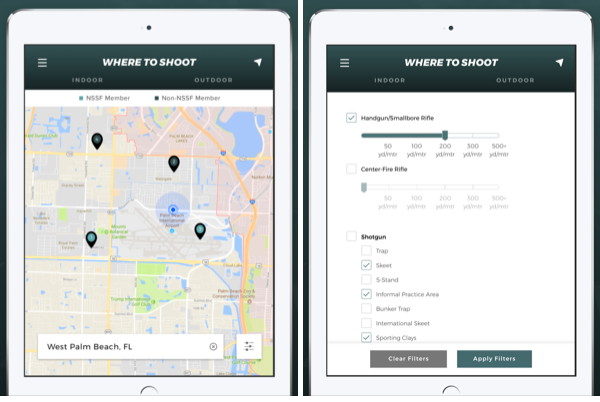
The Where To Shoot Mobile App quickly locates shooting ranges near you, drawing on North America’s most comprehensive directory of shooting ranges. Users can search by current location, state, or zip code. Once you locate a range, you can view activities offered along with a summary of range facilities. You can even get driving directions.
The app is modeled after NSSF’s popular WhereToShoot.org® website and is updated frequently with range information for every U.S. state and Canadian province. Once you’ve located a place to shoot, the App can provide directions to the range. The App also includes video tips for shooters, news, and firearm-safety information.
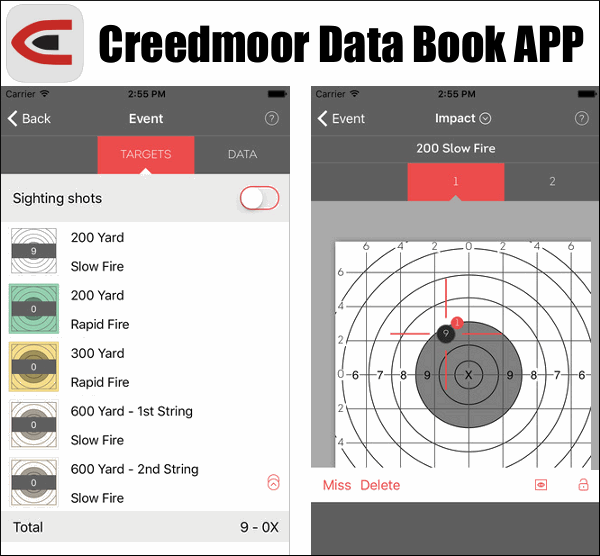
Tired of carrying old-fashioned paper Score Books? Well now you can go digital — Creedmoor Sports offers a full-featured Scoring Book App that lets you plot your shot locations/scores using an Android device or Apple iPhone or iPad. The price is right — FREE! Just visit the iTunes store or Google Play Store to download the App for FREE.
Record Match and Practice Data
This FREE Data Book App, available in the Apple App Store, and the Google Play Store, provides all the same functions and capabilities of the traditional, spiral-bound print-format Creedmoor Rifle Data/Score Book, but with the convenience and ease of recording your match and practice information with your mobile device. With this App you can break your 20 shot slow-fire segments into either 10- or 20-shot targets, and also opt for sighting shots. All the specific event data can also be recorded, such as location, wind, light etc., along with wind and elevation adjustments.
COMMUNICATIONS Restrictions: In some matches you are not allowed to have electronic communication ability, so you may have to set your iPhone to “Airplane Mode”, or use this only with an iPod (which does not have two-way communication capability).




 F-Open 600-Yard Winner:


 High Power and F-Class shooters have a ton of gear they need to carry out to the firing lines. (These photos were taken at the Berger SWN). To do the hauling, you can certainly purchase a factory-made, purpose-built cart that folds up and has all the bells and whistles. The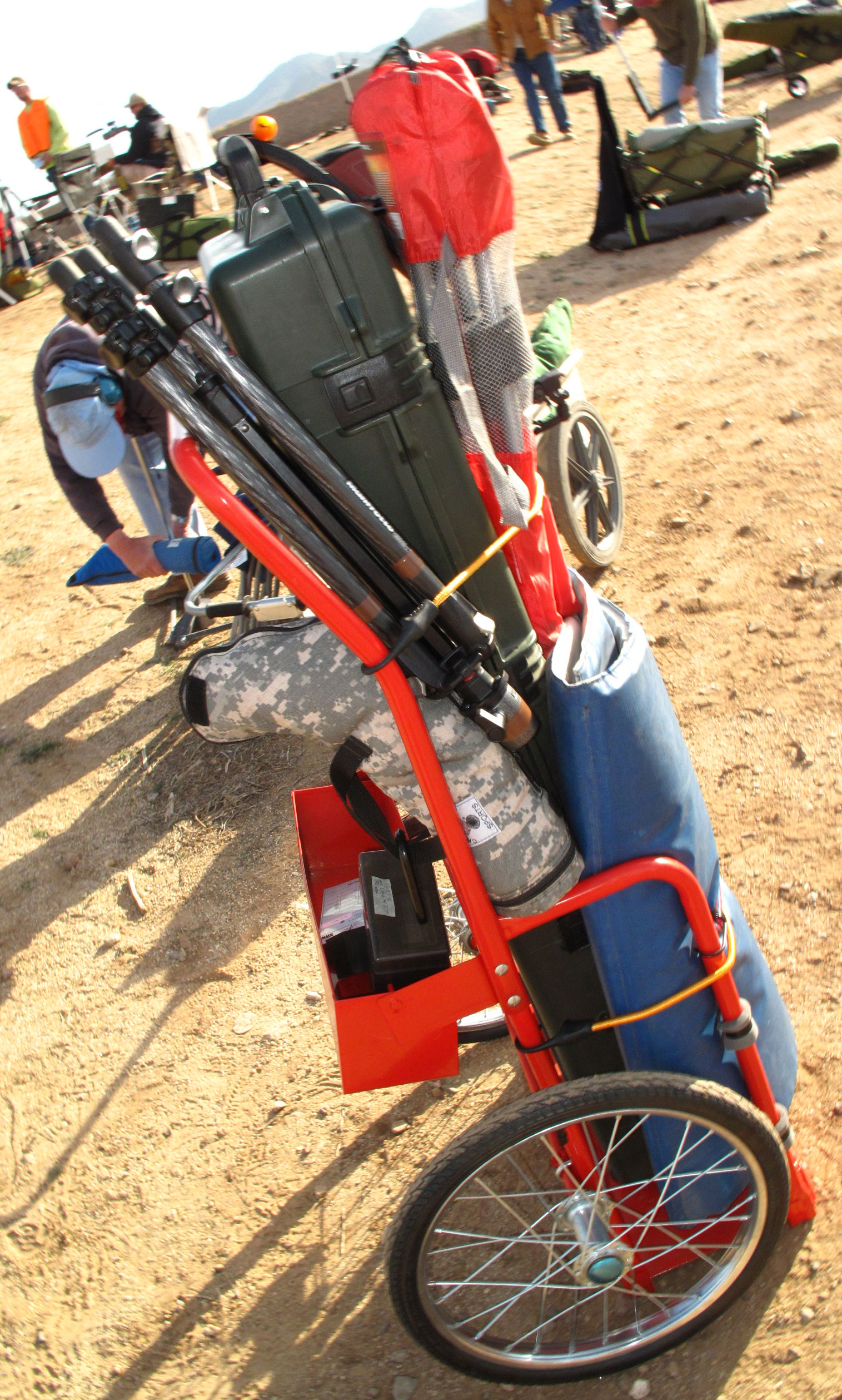


 Our philosophy at


 Tired of carrying old-fashioned paper Score Books? Well now you can go digital —


