Top Guns at LR Nat’l Championship: SSG Amanda Elsenbuss (2nd place), Oliver Milanovic (Champion), Jeffrey Miles (3rd place). Photo courtesy Shooting Sports USA.
Milanovic Wins LR National Championship
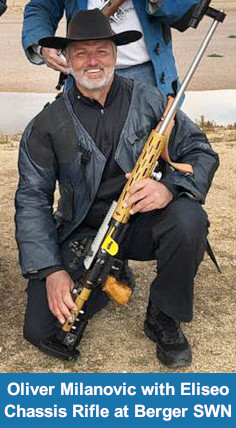
We have a new Long-Range National Champion. Competing at Camp Atterbury in Indiana, Oliver Milanovic took the 2021 NRA National Long Range Championship with a score of 1245-73X. Oliver was shooting an Eliseo Chassis + Borden Action Palma Rifle with 155gr bullets. Finishing second, tied on points but with four fewer Xs, was 2019 National Long Range Champion SSG Amanda Elsenbuss, with 1245-69X. In third place was Jeffrey Miles, just one point back, with 1244-73X.
As you can see, with the top three shooters all separated by just one point, it was a very close competition. But Milanovic, a popular marksman from Arizona, put on an impressive performance to take the win and the Thompkins Trophy. No stranger to the podium, Oliver has been on the winning Sling Division Team at the Berger SW Nationals in the past.
For all the relays, Milanovic shot his trusty .308 Winchester Competition Machine (Eliseo) chassis rifle with a Borden action, loading Palma-spec 155-gr bullets. In the Long Range Championship, other chamberings are allowed for some stages, but we’re told Oliver ran his 155gr Palma load throughout. Milanovic also won the Palma Individual Trophy Match with an impressive 450-30X score, not dropping a single point.
Dennis DeMille shows a young competitor at the CMP Western Games how to adjust his leather sling.
The NRA High Power Over-the-Course (OTC) National Championship will be held at Camp Atterbury over the next 7 days. Firing will be done in multiple positions — prone, sitting/kneeling, and standing. Proper support and adjustment of the sling is vital for successful High Power competition. In this short article, Dennis DeMille, a past Service Rifle Champion, explains how to set-up a sling on match rifles.
Setting-Up a Leather Service Rifle Sling for Competition
So you made the mistake of disassembling your leather service rifle sling, or are intimidated about how to use one? In this Creedmoor Sports InfoZone video, Dennis DeMille (past Creedmoor G.M.) explains how to set up and use a sling. The covers the basics — Dennis starts with a totally disassembled leather service rifle sling and shows you how to set it up properly.
Tip: “Many shooters shy away from using a leather sling because they have never been taught how to use one. That’s unfortunate. In my opinion a leather sling offers more support than a web sling, which is important when competiting with the heavier than normal rifles.”
Configuring the Sling for the Standing (Offhand) Position
In this second in a series of Creedmoor InfoZone videos on the setup and use of the leather service rifle sling, Dennis DeMille details how to configure and best utilize the leather service rifle sling while shooting from the standing position.
Tip: “Putting the Frogs in different hole will change the amount of added elevation a sling provides.”
Looking at Sling Types — Comparing the Features
In this video Dennis showcases a large variety of shooting slings. He explains the strong points of each type so you can choose the sling best suited to your discipline and shooting style.
The Benefits of Dry-Fire Training
Once you know how to set up your sling properly, you’ll want to practice. Dennis DeMille stresses the importance of dry-fire practice with sling and shooting coat. Dry-Fire training is essential to the sling disciplines. Dennis DeMille, a national Service Rifle Champion, told us that, for every minute he spent in actual competition, he would spend hours practicing without ammunition. While in the USMC, Dennis would practice in the barracks, working on his hold and dry-firing:
“The most important thing is to spend time off the range practicing. Most of what I learned as a High Power shooter I learned without ammunition — just spending time dry firing and doing holding exercises. Holding exercises will really identify the weak parts of your position. The primary purpose of dry firing is to get you used to shooting an empty rifle. If you can shoot a loaded rifle the same way you shoot an empty rifle then eventually you will become a High Master.”
The 2021 NRA Long Range Target Rifle Championships, and Palma Matches, have been taking place this week at Camp Atterbury in Indiana. May of America’s top sling shooters have been competing, employing their skills on targets at 800 to 1000 yards. The Palma Team and individual matches were held August 15-16, with other matches running through Friday, August 19.
15 August — Palma Team Match
16 August — Palma Individual Match
17 August — Leech Cup/Porter/Andrus/Roumanian Team Matches
18 August — Wimbledon Cup/Farr/Doc Aiken/Herrick Team Matches
19 August — Mustin/Remington (and Shoot-offs)/Award Ceremonies*
Last day of the 2021 NRA National Long-Range Championships at Camp Atterbury:
Thomas Colyer Wins Leech Cup Shoot-Off
Forum member Corbin Shell reported: “I was fortunate to score for Thomas Colyer who shoots on the Oak Ridge Sportsmen’s Association (ORSA) long range rifle team. His Shoot-Off score was a 100-5X — not dropping a point. Michelle Gallagher was also in the Leech Shoot off and shot 99-3X.” A talented marksman, Thomas Colyer also won the Wimbledon Cup several years ago.
Phillip Crowe Wins Mustin Match
FYI, Phillip Crowe, also from Oak Ridge Sportsmen’s Association (ORSA) long range team, won the Mustin match with a Shoot-Off score of 99-3X. Here is a photo of Phillip at the beginning of the Mustin Shoot-Off.
According to the NRA High Power Rules 3.3.1 (a), a Palma rifle is “a rifle with metallic sights chambered for the .308/7.62 or .223/5.56 NATO cartridge case”.
When talking about Palma rifle competition, the traditional course of fire is at three yardages, 800, 900 and 1000 yards. The first Palma match was conducted by the NRA in 1875 at New York’s Creedmoor Range. The original Palma trophy, now lost to the ages, was commissioned by none other than Tiffanys. SEE 2018 SSUSA Camp Atterbury Long Range Gallery HERE.
IBS 1000-Yard National Championship
The IBS 1000-Yard Benchrest National Championship took place this past weekend, August 14-15, at the scenic Deep Creek Shooting Range outside Missoula, Montana. The Match was well attended, with 66 shooters in the Light Gun (LG) division, and 62 in Heavy Gun (HG). The venue was beautiful (as always), but conditions were challenging at times. One shooter noted: “The wind was brutal the last relay. Many shooters DQ’d”.*
Despite the tough conditions, there were some very impressive performances. Jason Walker took the Overall title, based on combined LG and HG standings. Shooting well in both classes, Jason (aka “LRPV” in our Shooters’ Forum) finished 3rd in LG and 6th in HG. Jason’s LG group size Agg was an impressive 4.357″. Nick Howlett was second Overall. Steve Simons won the LG division while James Bradley topped the HG field.
Jason Walker
Nick Howlett
James Bradley
Richard Jette
Dave Way
Top Five LG Overall
Steve Simons
David Torgerson
Jason Walker
Todd Zaun
Richard Jette
Top Five HG Overall
James Bradley
Jason Walker
Nick Howlett
Jason Peterson
Tom Mousel
Winners photo courtesy Jason Walker, 2021 IBS 1000-Yard Two-Gun Champion.
Gunsmith Alex Wheeler, who built many of the top-finishing rifles, noted: “Congratulations to the winners, you pulled your way to the top in some pretty tricky conditions. It was good to see every one again as well as meeting some in person for the first time.”
Equipment Used by Light Gun and Heavy Gun Competitors
The equipment lists, for both Light Gun and Heavy Gun, were heavily dominated by Krieger barrels. The Overall Winner and both LG and HG class winners used Kriegers. There were also many Bartlein barrels and Lilja barrels. But surprisingly, the equipment lists only showed 5 Brux barrels in Light Gun and 3 Brux barrels in Heavy Gun. BAT actions were the most common in both divisions, followed by Borden actions.
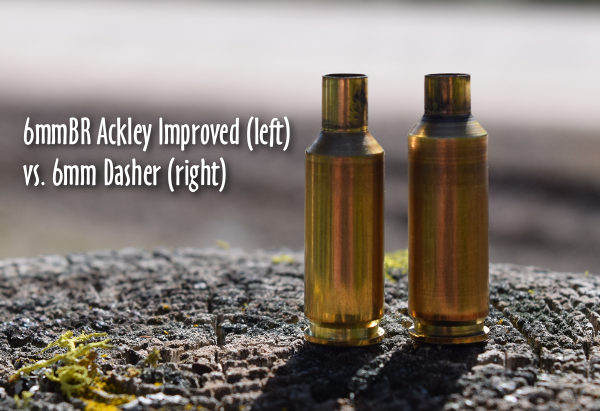
The vast majority of the shooters ran a 6mm cartridge in both Light Gun and Heavy Gun divisions. These were overwhelmingly 6mm Dashers and 6 BRAs. The 6 BRA (aka 6mmBR Ackley Improved) has a 40-degree shoulder like the Dasher, but with a longer neck. There were a half-dozen .300 WSMs in Heavy Gun division, and a couple 7mm RSAUMs, but the 6 Dashers and 6 BRAs dominated the field, even in HG.
Overall Winner Jason Walker was shooting two 6mm Dasher rifles. Both guns had BAT actions, Krieger barrels, and Nightforce scopes. Jason’s Heavy Gun had a Maxi-Tracker stock while his Light Gun had a PR&T LowBoy stock. In both rifles, he ran a 6mm Dasher loaded with Vapor Trail bullets pushed by Hodgdon Varget powder and CCI BR4 primers. Jay Cutright did the barrel work while Gordy Gritters worked on the PR&T stock. (NOTE: Jason changed to the LowBoy stock after the LG equipment list was submitted.)
Light Gun Overall winner Steve Simons was running a 6 BRA in Light Gun. Steve’s LG, smithed by Alex Wheeler, had a BAT action, Krieger barrel, Wheeler LRB stock, and Vortex scope. He loaded his 6 BRA cases with Vapor Trail bullets, Hodgdon H4895 powder, and CCI 450 Primers.
Heavy Gun Overall winner James Bradley was also running a 6 BRA in Heavy Gun. Again this had a BAT Action, Krieger barrel, Wheeler LRB stock, and Vortex scope. The rig was smithed by North Ridge Rifles. James shot Vapor Trail bullets, H4895 powder, and Federal 205M primers.
Looking back at the firing line from the target berm.
Deep Creek Range
The Deep Creek Range in Missoula, MT is one of the nicest places to shoot in the Intermountain West region. The range is located in the mountains within a few minutes drive of Missoula, and there is camping on-site. When conditions are good at Deep Creek, records get broken. To learn more about shooting at Deep Creek, contact Jamey Williams at jameydan[at]gmail.com.
Here is an aerial view of the Deep Creek Range (Drone video by David Gosnell):
* One shooter at the match reported that: “Our last HV gun relay of the Match produced 11 DQs out of 13 competitors.” We have not confirmed this, but even if there were just a handful of DQs is is unfortunate for those HG competitors.
** This is the Heavy Gun Overall, as designated on the right top. However, the columns are erroneously titled “Light Gun”. If you compare the two linked results pages, you will see that they are NOT the same.
For today’s Sunday GunDay story, we head across the Atlantic to the famed Bisley range in the United Kingdom (UK). There the historic Imperial Meeting took place last month. This shooting competition is steeped in history, first being held 161 years ago in 1860. Today we highlight the .300 WSM rifles shot by F-Open winner (and Forum member) Gary Costello. Gary came home with a huge haul of trophies. He won the F-Open Grand Agg on V-count scoring 665-76V, 19Vs more than second place Lance Vinall’s 665-57V. In the UK the “V” is equivalent to our “X”, and the target has five number rings, with five being the highest numerical shot value.
Gary posted: “Finally cooled down after the Bisley Imperial Meeting. What a week, 8 trophies, 14 gold medals, two silver, two bronze and the big one — the Grand. It was an experience shooting in 86+ F degree heat and at some unusual times. Congratulations to all the medal and comp winners, in particular to second-place Lance Vinall, who shot a great match”.
About the Imperial Meeting at Bisley in the UK
The Imperial Meeting is a large, multi-discipline rifle shooting match contested annually in the United Kingdom. This article spotlights Gary Costello, who won the 2021 Imperial F-Open division with his pair of handsome .300 WSM rifles.
The first Imperial Meeting event was contested on Wimbledon Common, in southwest London, in 1860 when Queen Victoria fired the first shot and gave a prize of £250 to the best individual marksman. Originally the Meeting was only available to Volunteers (regular and reserve military personnel) using the issued service rifle of the day.
Today the UK National Rifle Association holds the Imperial Meeting as an open competition with the aim to promote and encourage marksmanship throughout the Queen’s (or King’s) dominions. The event has grown to include many different disciplines. The largest entry is for Target Rifle, which dominates the final week of the Meeting and culminates with the final of the Queen’s Prize. The Queen’s Prize remains the premier award for the Meeting’s top shot, with the £250 prize still given to the winner.
Host to the competition is the National Shooting Center at Bisley, the world-renowned range complex which can host virtually all forms of shooting from air rifle to 1200-yard full-bore matches. Set in 3000 acres of heathland, Bisley is unique in character with a wide variety of ranges.
Report from Imperial Meeting at Bisley by Gary Costello
The recent 2021 Imperial Meeting was the 152nd event of its kind. Last year was my first Meeting and it was a condensed version as the COVID lockdown had just been relaxed (but later revived). This 2021 Imperial was the full version. In F-class we had 15 scheduled matches, held at 300, 500, 600, 900 and 1000 yards. In these matches you get two sighters and the 15 shots for record. This year was my second Imperial Meeting. Lots of shooters were keen to enjoy some shooting freedom now that the UK national lockdowns had ended. However the NRA was still practicing COVID safety protocols.
Three very prestigious competitions are qualifiers for the final matches. These three are: the St. Georges, the Donaldson, and the Farquharson (named after George Farquharson, the father of F-Class). The finals add another three matches if you qualify. Also there are three range Aggregates which qualify for medals/trophies.
Twin Winning .300 WSM F-Open Rifles
Gary brought TWO .300 WSM F-Open match rifles to the Imperial Meeting. Gary notes: “I had two .300 WSM rifles ready for the competition. I have managed to tune both rifles to take the same ammo and seating depth allowing me to alternate and use the same lot of ammo. My philosophy was to alternate both rifles as to not cause too much attrition/wear (due to the high round count and multiple matches). One .300 WSM rifle has a Borden BRMDX action, with some Thomas “Speedy” Gonzales mods and the trademark Speedy bolt shroud fluting. This has a 1:9.5″-twist Benchmark 5-groove barrel, actually chambered by Stuart Anselm at GS Precision Engineering Services.”
Gary’s second .300 WSM F-Open rifle features a BAT M RBLP dual port fitted with a 1:10″-twist Bartlein barrel (supplied by Speedy), with action tuned and modified by Speedy. Both rifles are chambered virtually identically. Both rifles have Cerus stocks, blueprinted Jewell triggers, and Ezell PDT tuners.
The rifles are supported with a Lenzi front coaxial rest and a Lenzi rear bag, spec’d to the Cerus stocks.
Match .300 WSM Load — Berger Bullets, Norma Brass, H4350, Fed 210M
I run the .30 Cal Berger 215gr Hybrid bullet exclusively. I have not found a better long range bullet for F-Class. I use neck-turned Norma .300 WSM brass, H4350 powder, and Federal 210gm match primers. Unfortunately H4350 is not available in the UK anymore, but I was lucky to buy up a decent amount before it was banned. I anneal the Norma brass with an AMP 2 annealer every firing. But I do NOT trim and chamfer after every firing — only when the brass gets to the point of requiring it.
Here is the .300 WSM compared to a .284 Shehane (7mm), another popular F-Open cartridge Cartridge comparison image by Kris Wilson, aka “Willow” on our AccurateShooter Forum.
The .300 WSM has been described as a “super-sized Dasher”.
OPTICS — March 10-60x56mm High Master Scopes
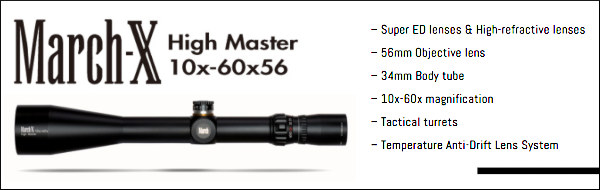
Both .300 WSM rifles have March 10-60x56mm High Master (HM) riflescopes. Gary notes: “In my slightly biased opinion, this scope is simply the best F-Class and long-range scope money can buy. I was using a MTR-3 reticle in one scope and the slightly thinner MTR-1 reticle in the other. The HM temp lens system is astonishingly clear and bright. It’s very easy on the eye, reducing strain and fatigue during long shoots.”
March optics have a clever system which enables shooters to use their scopes like a FFP scope on specific zoom power. The MTR1 and MTR3 reticles are subtended with hash marks at 1 MOA on 40X and 2 MOA at 20X, this allows the shooter to calibrate the necessary hold from a sighting shot without even looking at a plotting sheet, it also makes very precise hold over and follow up shots, (which proved invaluable during the week with the very switching and changing conditions) it also gives you the choice to turn down the power if mirage and conditions call for it.
March 10-60×56 HM scopes feature a Temp anti-drift lens system. This has really proved its worth in searing temps. The clarity and image quality helped me achieve three personal bests and wins. (TIP: Use the MD disk supplied with your scope if you have one. Mine never left the rifle all week.) In fact I actually stopped using my spotting scope on some of the shoots as I could see mirage better through the March than anything else.
Mental Preparation — Be Confident and Consistent
I went into the Imperial after having a very good season so far. I was unbeaten in three National 2-day matches. So my confidence was high and I was feeling good about the competition. This confidence proved a massive advantage — you have to believe in your abilities.
My main focus was to be consistent. At the Imperial it’s almost impossible to win every single competition, as there are 18 in total. However one must not to make too many mistakes and be consistent. As Brian Litz says, a “train wreck” will finish your comp. However if you stay consistent and only drop a few points here and there, you will be all right, as most other competitors will drop a few points as well. The key is not to make BIG mistakes.
Here’s an example of avoiding the “train wreck” disaster when conditions are tough:
Final Final — the Farquharson. It was super hot, the wind was up and conditions were very tricky, I knew this was going to be a survival match and it was. I saw many 3s going in, however I did have a pretty good hold on the conditions losing a few 4s but nothing major until a big fat 3 came out of nowhere. But I persevered and did not let this upset me as I could see lots of points being lost around me. When the dust had settled I won by 2 points in this match and 4 points overall in the Aggregate.
Physical Fitness — Training Is Important
I have been working hard on my physical fitness for the past two years (after a pretty serious condition). Fitness really helps in a long competition and especially in the heat, with the stress it can cause. During the Imperial match, vehicles are only allowed in certain areas so you have to be able to hand-carry your shooting kit all over the range, a very large area. In recent months, I’ve dropped 25 pounds in weight. That helped — I found myself very physically able to cope with the exertions.
Reloading Advice from Gary Costello
Check and Double-Check Everything! Often I have found errors and mistakes which would not bode well for accuracy.
Label Everything! This is especially important when preparing for a long competition, and when shooting different rifles.
Choose a Temp-Stable Powder. Make sure you select a powder that is not sensitive to temp variations. Hodgdon, and Alliant would be my choice, and of course some Vihtavuori powders.
Load to the MIDDLE of your Accuracy Node. This way you can allow for warmer or cooler temps and conditions. I see lots of guys just pick the fastest speed and/or smallest group. But that can get you in trouble on hot days.
Use Quality Tools and Dies. Buy the best reloading gear your budget allows. Quality kit will last forever and stand you in good stead.
Thanks to Speedy, Cerus, and March Scopes
A big mention has to go to my good friend and master gunsmith Thomas (“Speedy”) Gonzales. This man is a legend and has taught me more about the dark arts than anybody. I think he produces the finest rifles known to man. Give credit also to Cerus Rifleworks. All my rifles have Cerus stocks and they are just awesome. Final mention is to March Optics. I have the honor to work with this company since 2010. I believe they make the finest optics in the world.
Gary also shot with the winning White Horse Lodge F-TR Team coached by Stuart Anselm.
Silhouette Championship in Pennsylvania For the past few days, the Ridgway Rifle Club in Ridgway, PA has hosted the 2021 NRA Smallbore Rifle Silhouette Championship. Many of the nation’s top silhouette shooters attended this event. After a warm-up match on the 7th, the Championship match began on Sunday, August 8th and concluded on Tuesday, August 10th. Each match day featured a 40-round match with Standard Rifle and a 40-round match with Hunter Rifle. The High Power (centerfire) Silhouette Matches will continue later this week.
Original 1950s Metal Silhouette from Mexico Donated to Ridgeway Club
There was a special dedication at the match. Ace silhouette shooter Erich Mietenkorte explained: “Most people will see this picture and just see the two of us kneeling next to a piece of steel that roughly resembles an ewe. However, in reality it represents the origin of [a sport] that has enriched my life immensely. Rifle silhouette … has added to my life an extended family of some of the nicest, most humble, and selfless people I have had the privilege to get to know[.]
This silhouette was made in the 1950s for the Club De Tiro Y Caza Cananea in Sonora, Mexico and is one of the original targets that was shot at a distance of 500 meters to give birth to the sport of rifle silhouette. It is only fitting that it was presented to the Ridgway Rifle Club for its ongoing efforts in promoting the sport in the United States. Special thanks to Daniel and Carlos Salazar, and Mark Pharr for honoring our sport with this special gift. READ Letter from Club De Tiro.
Here are Team Lapua, Team Berger Bullets, and Team SK members with their awards from the match. The staff of the Ridgway Rifle Club put on an outstanding event, with High Power Silhouette to follow. Excitement is growing for the inaugural Lapua Monarch Cup in 2022.
Congratulations to Luke Johnson on winning the 2021 NRA smallbore rifle silhouette championship. Luke won the overall title and also won the hunter gun championship. Luke’s team Lapua teammate Cathy Winstead-Severin won the standard rifle championship. Cathy Winstead-Severin finished 2nd followed closely by Laura Goetsch. Team SK’s Erich Mietenkorte took 4th overall. CLICK HERE for full Match Results.
The NRA Blog ran an feature on Silhouette shooting by NRA Silhouette Program Coordinator Jonathan Leighton. Here are selections from Leighton’s story:
NRA Silhouette Shooting
The loud crack from the bullet exiting the muzzle followed by an even louder ‘clang’ as you watch your target fly off the railing is really a true addiction for most Silhouette shooters. There is nothing better than shooting a game where you actually get to see your target react to the bullet. In my opinion, this is truly what makes this game so much fun.
Metallic Silhouette — A Mexican Import
Silhouette shooting came to this country from Mexico in the 1960s. It is speculated that sport had its origins in shooting contests between Pancho Villa’s men around 1914. After the Mexican Revolution the sport spread quickly throughout Mexico. ‘Siluetas Metalicas’ uses steel silhouettes shaped like game animals. Chickens up front followed by rows of pigs, turkeys, and furthest away, rams. Being that ‘Siluetas Metalicas’ was originally a Mexican sport, it is common to hear the targets referred to by their Spanish names Gallina (chicken), Javelina (pig), Guajalote (turkey) and Borrego (ram). Depending on the discipline one is shooting, these animals are set at different distances from the firing line, but always in the same order.
Before Steel There Was… Barbeque
In the very beginnings of the sport, live farm animals were used as targets, and afterwards, the shooters would have a barbeque with all the livestock and/or game that was shot during the match. The first Silhouette match that used steel targets instead of livestock was conducted in 1948 in Mexico City, Mexico by Don Gonzalo Aguilar.
As the sport spread and gained popularity during the 1950s, shooters from the Southwestern USA started crossing the Mexican border to compete. Silhouette shooting came into the US in 1968 at the Tucson Rifle Club in Arizona. The rules have stayed pretty much the same since the sport has been shot in the US. NRA officially recognized Silhouette as a shooting discipline in 1972, and conducted its first NRA Silhouette Nationals in November of 1972.
Now There Are Multiple Disciplines
The actual sport of Silhouette is broken into several different disciplines. High Power Rifle, Smallbore Rifle, Cowboy Lever Action Rifle, Black Powder Cartridge Rifle, Air Rifle, Air Pistol, and Hunter’s Pistol are the basic disciplines. Black Powder Cartridge Rifle also has a ‘Scope’ class, and Hunter’s Pistol is broken into four sub-categories. Some clubs also offer Military Rifle Silhouette comps.
Where to Shoot Silhouette
NRA-Sanctioned matches are found at gun clubs nation-wide. You can find match listings on the Shooting Sports USA website or contact the NRA Silhouette Department at (703) 267-1465. For more info, visit SteelChickens.com, the #1 website dedicated to Silhouette shooting sports.
Here’s good news for 30BR shooters. Paul Parosky, maker of the excellent PRP Custom Bullets, is now offering 30BR neck-turned brass. This can save you considerable time and effort forming 30BR cases from Lapua 6mmBR brass. And the neck-turning is superb, again representing time save (and no tools to buy). You will soon be able to order this 30BR brass from Bruno Shooters Supply. If you communicate with Amy at Bruno’s, Paul may be able to neck-turn to your specific thickness. Paul notes: “Here are necks turned for a 0.330 neck. I’ll try my best to accommodate anyone’s neck dimensions as they wish. Just message Amy Bruno Parosky (at Bruno’s) for details.”
About this Neck-Turning set-up — Paul Parosky notes: “For neck-turning I’m using an old drill press that has been re-worked. The cutter and spindle are all indicated before neck turning to ensure no runout. The RPM is around 520. The lube I use is a mixture of royal and mystery oil.”
Why the 30 BR Dominates 100/200 Benchrest for Score Competition
The 30BR, along with some wildcat variants, remains the dominant cartridge in short-range (100/200) benchrest-for-score competition. The 30BR’s .308″-diameter bullets are larger than the 6mm bullets used by the 6PPC (which rules group BR competition). The bigger 30-Cal diameter has an advantage in touching scoring rings. In addition, the 30BR is also relatively easy to tune, and barrel life is considerably better than with smaller-caliber benchrest cartridges. For more information, see our AccurateShooter 30BR Cartridge Guide.
Cases are Expanded, Then Neck-Turned
To produce his 30BR brass, Parosky first uses a series of expander mandrels. Then he neck-turns with power using a converted drill press. Paul tells us: “This is done the old school way, I use three different tapered expander mandrels, then neck-turn it to the proper neck chamber, then run them up through a FL expander mandrel to ensure necks are straight. Then I clean all the cases.”
Paul Parosky Can Also Neck-Turn 6PPC Brass
Paul Parosky also expands and neck-turns 6PPC cases that are made from parent Lapua .220 Russian cartridge brass. Here, illustrating his 6PPC neck-turning operation, is a recent Paul Parosky post on the USA Benchrest & Extreme Precision Shooters Facebook page.
2021 CMP Springfield M1A Match at Camp Perry
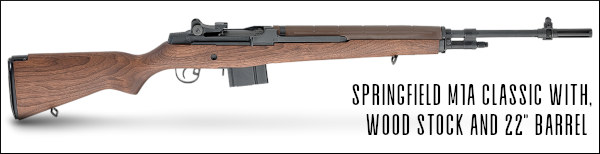
Today we feature the M1A rifle. This is the one day in the year when the rugged M1A rifle, descended from the M1 Garand, is the star of the show at Camp Perry. The 14th Annual Springfield Armory M1A Match takes place today, August 8, 2021 at the CMP National Rifle Matches.
History of the Springfield M1A Match
The Springfield Armory M1A match began with one man’s idea and passion. Springfield Armory’s Mike Doy witnessed the waning of classic M1 Garand and M1A rifles from the competitive High Power firing lines. “I really wanted to get those M1A rifles out of safes and closets and back out onto the field. So [13] years ago, I promoted the idea of running an M1A-specific match at Camp Perry. That first year we had over 600 competitors and spectators.” Now the match offers some of the biggest pay-outs at Camp Perry. In recent years, Springfield Armory has donated over $25,000 worth of cash and prizes, including a $2,000 cash award to the overall winner.
Folks, take the time to WATCH this 3-minute video. It has great match footage of Camp Perry and interviews with M1A competitors. Well worth watching!
Nick Till in 2009 M1A Match. Nick was the 2007 Service Rifle Nat’l Champion. Photo courtesy NRA Blog.
Springfield M1A at Camp Perry National Matches
For many years, the semi-auto version of the M14 was “top dog” in iron sights Service Rifle competition. Now that discipline is dominated by .223 Rem (5.56×45) AR-type rifles, but the bigger .308-caliber rifle, now sold as the M1A, remains popular. The CMP hosts a major M1A Match every year at Camp Perry, sponsored by Springfield Armory. Significant prizes are awarded. In past years M1A Match competitors took home over $25,000 worth of cash and merchandise. This year’s Springfield M1A match will be held at Camp Perry on August 8, 2021.
Springfield M1A Match 2016 — Rapid Fire Sitting Stage
In the April 2018 issue of Shooting Sports USA, you’ll find a good article on the civilian version of the M14, now sold commercially as the Springfield M1A. An evolution of the battle-proven M1 Garand, the M14 was designed to shoot the 7.62×51 (.308 Win) round instead of the larger .30-06 Springfield cartridge used in WWI, WWII and Korea. While the vast majority of today’s M1As are chambered for .308 Win/7.62×51, Springfield Armory also produces a 6.5 Creedmoor version.
Dick Jones reports that accurized M14/M1As could post remarkable scores: “The accuracy potential of the M14/M1A is unquestionable. During their reign as service rifles, they produced multiple perfect 200 scores at 600 and 1000 yards in the hands of top shooters. This is a difficult feat with a modern, scoped, magnum-caliber rifle and remarkable with an iron-sighted battle rifle. Good competition rifles can group 10 shots under one MOA, and the meticulously-massaged rifles used by the top shooters during my career would consistently put up 10 shots under an inch at 200 yards off a test cradle.”
In this video, YouTube Reviewer Hickok 45 compares the M1 Garand and the M14/M1A:
“Descended from the M1 Garand, the M14 utilized multiple improvements that made it a far superior firearm for combat and a much better rifle for competition.” — Dick Jones, Shooting Sports USA.
M1A Match Equipment Rules and Course of Fire
Renewed interest in the M1A, coupled with major sponsorship from Springfield Armory, led to the the first dedicated Camp Perry M1A match in 2008. That first-ever match proved a huge success, drawing over 500 shooters. This year, match organizers also expect hundreds of shooters.
Equipment rules allow pretty much all types/grades of M1As in the match. The one-day course of fire consists of 50 shots at 300 yards on the NRA MR-65F target, as follows: 5 sighters; 20 shots slow-fire prone; 10 shots rapid-fire prone; 10 shots rapid-fire, kneeling or sitting; and 10 shots slow-fire standing. Here are photos from the 2014 Springfield MIA match, courtesy NRA General Operations.
See how the modern M1A is built in this Springfield Armory Video:
As racing improves automobiles, competition improves firearms, and the current crop of Springfield M1As, from the Basic to the top-of-the-line Super Match and Loaded models, reflects the years of development. The M14 and its variants are … still considered by many to be the best battle rifle in the history of the U.S. Military. — Dick Jones, Shooting Sports USA
Military Version Operation Revealed — M14 Training Film
The original military version of the M1A was the select-fire M14. The 27-minute official U.S. Army video below demonstrates the operation of the M14. Field-stripping is shown from the 5:13 time-mark through 8:30. Cut-away drawings show the M14’s gas operation at 8:40.
Watch M14 Functioning Cycle Starting at 9:25 Mark:
The M14’s complete 8-step functioning cycle is demonstrated from the 9:25 time-mark through 22:41. These eight operations are: 1) Feeding; 2) Chambering; 3) Locking; 4) Firing; 5) Unlocking; 6) Extracting; 7) Ejecting; and 8) Cocking. This movie is fairly long, but fans of battle rifles will find it well worth their time. Every M1A owner should definitely watch this video start to finish.
Friday August 6 through Sunday, August 8, 2021 classic military rifles will fill the firing lines at Camp Perry. The National John C. Garand, Springfield, Vintage and Modern Military Match (GSMM) will be held Friday, Saturday, and Sunday, with the one-day Springfield M1A Match on Sunday only. (See CMP Camp Perry Calendar.) Some participants will shoot just one rifle type, but there is also a combined GSMM 4-Gun Aggregate. This GSSM Agg encompasses a series of position shooting matches on NRA SR targets at the CMP Nationals. As the matches are completed, day by day, results will be posted on the CMP National Matches Results Page.
This video shows the Garand Match at Camp Perry. The rifles are still the same a decade later…
The annual GSMM event is one of the most popular events at Camp Perry, drawing participants from around the nation. One of the favorites to win the GSMM Aggregate is Brian Williams, recently profiled in our Daily Bulletin. The 4-gun Aggregate includes Garand, 1903 Springfield/1917 Enfield (or similar bolt rifle), M1 Carbine, and AR-type rifle for “Modern Military”. Remarkably, Brian has won the GSMM 4-Gun at the CMP National Matches in Camp Perry three years in a row — the inaugural 2017 4-Gun Agg, plus 2018 and 2019. There was no match in 2020 due to COVID, so Brian aspires to his fourth title in 2021. Below, Brian offers some thoughts on the classic wood-stocked rifles used in GSMM competition.
The Classic Wood Guns of CMP 4-Gun Competition
Perspectives on M1 Garand, M1903A3, M1917, and M1 Carbine
Brian provides perspectives on the “Wood Gun” game, with suggestions on how to improve your performance with the M1 Garand, M1903 Springfield, M1917 Enfield, M1 Carbine, and other 20th Century military rifles. Brian explains what to look for
Q: What should one look for when acquiring older rifles for CMP 4-Gun Games — M1 Garand, M1903/1903A3, M1917, M1 Carbine? What are realistic budgets for these firearms? What kind of accuracy can one expect? What upgrades are important?
Brian: All of these military surplus rifles are out there, but they are getting harder to get your hands on. And, just like everything else, the prices continue to rise. Not that long ago you could get your hands on a M1 Garand for four or five hundred dollars. In today’s market they are usually about double that price. But understand that these rifles are all unique and all have a story to tell. No two are alike, or have the same story. Just like the guns themselves, there are fewer and fewer dedicated gunsmiths for these vintage rifles. But I promise if you look for a good smith, they are out there and they are some of the most interesting people you will ever meet.
M1 Garand — Of the four (4) centerfire guns I shoot in the CMP games, my favorite has to be the M1 Garand. There were over 6 million of them produced in a very short time period, and every single one has its own unique story, and that is just cool. M1 Garands are capable of good accuracy. I believe that a well-maintained M1 with at least a replacement barrel is capable of shooting between 1 and 1.5 MOA.
M1903A3 Springfield — I find that the sights on a M1903A3 are a little easier to see than the sights of the M1903, but both are very accurate rifles. Like most military rifles in the current climate the prices have risen dramatically, but there are some gems out there that can be had for far less than $1000. The nice thing about the Springfield rifle is that almost all of the accuracy than you would want can come from just replacing a worn out 80-year-old barrel. In terms of accuracy, I think a good M1903A3 can shoot 1 MOA most of the time.
M1917 Enfield — This rifle is the newest of my collection and it shoots very well, with just a new Criterion barrel — again about 1 MOA with iron sights. These rifles are very close in price to the M1903 Springfield. But if you do your homework and keep your eyes open, there are always great deals to be found. I actually prefer shooting the M1917 to my M1903A3, due primarily to the M1917’s cock-on-close bolt which allows smoother cycling.
Public domain photo from Armémuseum (The Swedish Army Museum).
M1 Carbine — By 1945 there had been more M1 Carbines built than Garands. Today the Carbine can be harder to find, and due to the scarcity the price has shot up and most military M1 Carbines are going for more than $1000 at this point. The great thing about the M1 Carbine is that as long as you have a good ammo supply this rifle can shoot. Honest. I have had countless numbers of people that tell me that there is not an M1 carbine that will shoot. I can tell you from experience that they will, but you are going to have to put in some time with one to learn how to get it to shoot where you want it.
The M1 Carbine shoots the .30 Carbine round, with 110gr bullet going about 1990 FPS. In comparison, the .30-06 Springfield round used in the M1 Garand is almost three times more powerful than the .30 Carbine.
OK this is no novice. But even champion pistol shooter Jessie Harrison, Captain of Team Taurus, had to start with the basics. Jessie says that safety should always be your number one priority.
At AccurateShooter.com, our primary focus is precision target shooting with rifles. But it’s definitely fun to shoot pistols too, and we bet most of our regular readers own handguns. Here are six tips for shooting safely and accurately with handguns. These pointers will help you advance your skills and have more fun with your pistols and revolvers.
1. Make Sure Safety Is Number One
Whether you own one gun or one hundred, gun safety must always be your main priority. In this video, Smith & Wesson Team Captain Julie Golob covers the basics of gun safety.
2. Start with a .22 LR Handgun
We strongly recommend that new pistol shooters start off with a .22 LR rimfire handgun. The .22 LR cartridge is accurate but has very low recoil, less “bark” than a centerfire, and very little smoke and muzzle flash. New shooters won’t have to fight muzzle flip, and won’t develop a flinch from the sharp recoil and muzzle blast common to larger calibers. With the .22 LR, the trainee can focus on sight alignment, breathing, and trigger pull. When he or she has mastered those skills, move on to a .38 Special or 9mm Luger (9x19mm).
What gun to use? We recommend the 10-shot Smith & Wesson Model 617. Tthis is ideal for initial training, shooting single action, slow-fire. You want to focus on sight picture and holding steady. Shown above is the 4″-barrel Model 617 which balances well. There is also a 6″-barrel version. It has a longer sight radius, but is a little nose-heavy. Both are great choices. They are extremely accurate and they boast a very clean, precise trigger.
If you prefer a semi-auto .22 LR pistol, we recommend the Browning Buck Mark series. Buck Marks are very accurate and very reliable. This rimfire pistol is available in a variety of models starting at under $350.00. Like the S&W Model 617, a good Buck Mark will serve you for a lifetime.
3. Use Quality Targets with Multiple Aim Points
It’s common for new pistoleros to start shooting at cans or clay birds at a public range. That can be fun, but it’s better to start with proper targets, placed at eye level, at 7-10 yards. We like to use targets with large, brightly colored circles. Focus on putting 5 shots in a circle. We recommend targets that have multiple bullseyes or aiming points — that way you don’t have to constantly change your target. There are also special paper targets that can help you diagnose common shooting problems, such as anticipating recoil. EZ2C makes very good targets with bright, red-orange aim points. You can also use the bright orange Birchwood Casey stick-on Target Dots (right). These come in a variety of diameters. We like the 2″ dot at 10 yards.
4. Shoot Outdoors If You Can
We recommend that new pistol shooters begin their training at an outdoor range. There are many reasons. First, the light is better outdoors. Indoor ranges can be dark with lots of shadows, making it harder to see your target. Second, sound dissipates better outdoors. The sound of gunfire echoes and bounces off walls indoors. Third, an outdoor range is a more comfortable environment, particularly if you can get out on a weekday morning. Indoor ranges, at least in urban areas, tend to be crowded. Many also have poor ventilation. If you can make it to an outdoor range, you’ll be happy. Many outdoor ranges also have some steel pistol targets, which offer a fun alternative to paper. When shooting steel however, we recommend polymer encased or lead bullets to avoid ricochets.
Too many new pistol shooters try to move right to rapid fire drills. It’s better to start slow, practicing the basics, under the guidance of a good mentor. If you belong to a club, ask if there are certified instructors who will help out. This Editor learned pistol shooting from a seasoned bullseye shooter, who got me started with a .22 LR revolver and very close targets. Over the course of a few range sessions we progressed to farther targets and faster pace. But the fundamentals were never forgotten. When starting your pistol training, it’s wise to view some instructional videos. Top Shot Champion Chris Cheng hosts an excellent Handgun 101 Series produced by the NSSF. We’ve linked one of these Handgun 101 videos for Tip #6.
6. SLOW DOWN — This Is Not a Race
When you learned to ride a bicycle, you started slow — maybe even with training wheels. The same principle applies to pistol shooting. When you get started with handguns, we recommend you shoot slowly and deliberately. Start with the handgun unloaded — just work on your sight alignment and breathing. With snap caps in place, try some dry-firing drills. Then progress to live fire. But be deliberate and slow. With the target at 20 feet, see if you can get three successive shot-holes to touch. Believe it or not, many common pistols are capable of this kind of accuracy (but you won’t see many shooters at indoor ranges who pursue that kind of precision). Once you master your form and accuracy, then you can work on your speed.


 Milanovic Wins LR National Championship


 The Benefits of Dry-Fire Training


 IBS 1000-Yard National Championship





 For the past few days, the


 The
The 
 Metallic Silhouette — A Mexican Import
 Before Steel There Was… Barbeque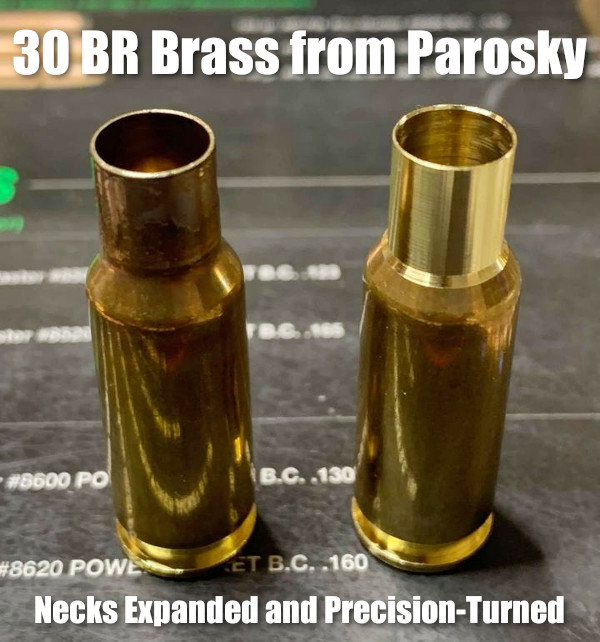




 It’s common for new pistoleros to start shooting at cans or clay birds at a public range. That can be fun, but it’s better to start with proper targets, placed at eye level, at 7-10 yards. We like to use targets with large, brightly colored circles. Focus on putting 5 shots in a circle. We recommend targets that have multiple bullseyes or aiming points — that way you don’t have to constantly change your target. There are also special paper targets that can help you diagnose common shooting problems, such as anticipating recoil. EZ2C makes very good targets with bright, red-orange aim points. You can also use the bright orange Birchwood Casey stick-on Target Dots (right). These come in a variety of diameters. We like the 2″ dot at 10 yards.


