Running out of space in your gun safe? Here’s a clever product that will allow you to store more long guns in your current vault. The plastic Rifle Rods from Gun Storage Solutions slip in long-gun barrels and then grip the shelf above using Velcro pads. This allows you to nestle your rifles and shotguns much closer together than with the conventional racks provided with most gunsafes.
The handy Rifle Rods are offered in bright orange or basic black. We prefer the orange rods (shown above with the Velcro “receiver” shelf liner provided with the Rod Kit).
Rifles with narrow furniture (such as lever guns) can be placed very close together, saving lots of space. For benchrest or varmint rifles with wider fore-ends, you won’t benefit as much. Note that, in the photo above, all of the guns are fairly slim — none have wide fore-ends. Still we think these Rifle Rods could open up 12″ or more horizontal clearance in a medium-sized safe — that could easily allow you to store six (6) more guns in two rows, as shown.
Rifle Rod Kits Starting at $20.70
A kit with 5 Rifle Rods and loop fabric shelf liner costs $20.70 on Amazon.com, while the 10-Rod Kit with liner costs $33.29 this week. That’s a lot cheaper than buying a new safe. A six-pack of additional Rifle Rods costs $17.95 on Amazon. You can also purchases rods and fabric directly from Gun Storage Solutions.
WARNING: Always REMOVE Rod from barrel before taking gun to the range. Never place live ammunition in a gun with storage Rod in the barrel!
Product tip from ELR Researcher. We welcome reader submissions.
As an Amazon affiliate, this site can earn revenues through sales commissions.
New CZ Shadow 2 Target Pistol — Great for Gun Games
The new CZ Shadow 2 Target pistol has attracted much attention, with some very positive reviews. The Firearm Blog says the new Shadow 2 Target may be the most accurate CZ pistol ever made. But with a steep $2599.99 MSRP it better be good! If you compete in action pistol matches, the CZ Shadow 2 Target could take you to the next level… but that price could be a deal-breaker for many. Here are two recent video reviews of this impressive new pistol. CLICK HERE for more photos and full specifications.
In the video below GunsAmerica Digest Editor True Pearce reviews the new CZ Shadow 2 Target pistol. This 9mm pistol features an extended slide, 6-inch polished and hand-fitted barrel, full steel frame, and handsome ergonomic grip. This pistol also boasts a very crisp trigger that can adjust to five positions.
The regular Shadow 2 has won many IPSC world championships. And this new Shadow 2 Target model should be even better. The 6″ barrel and long slide offer significantly reduced muzzle lift for faster follow-up shots plus longer sight radius for more precise aiming. NOTE: As this pistol is designed for iron sights competition, the slide does NOT have an “optics cut” to take the larger red dot optics.
This 6 PPC features a Nesika Extended ‘C’ action, Krieger 1:13.5″-twist LV barrel, Kelbly stock, and stunning paint by Mike Lavalle of killerpaint.com. For an eye-catching R-Rated paint surprise, Click HERE.
One of the most popular items in our Shooters’ Forum is the ongoing “Pride and Joy” thread. Since 2009, Forum members have posted photos and descriptions of their most prized firearms. Here are some of the most recent “Pride and Joy” rifles showcased in our Forum. Do you have a gun you’d like to see featured there? Register for the Forum and you can add your favorite gun to the list.
Click image to view large, full-screen photo!
For this week’s Sunday GunDay we’ve selected five fan favorites from the Pride and Joy archives. First up is this custom 30 BR brought to you by ANSHUTER2013 and built by Dave Bruno. We were captivated by the clean lines and handsome looks of the Roy Hunter Curly Maple stock. Nestled in that stock is a BAT B action fronted by a 1:17″-twist James Lederer 24″ HV barrel. A Jewell trigger with fixed 42x44mm Nightforce scope round out this beauty.
This state-of-the-art 6 PPC boasts all top-tier components. And owner Wes R. shoots it with a superb rest/bag/pad set-up that inspires envy. This “Bughole 6 PPC” features a Bat DS action, Bix’N Andy trigger, with Bartlein 1:13.75″-twist barrel. The stock is a super-low-profile Scoville with carbon strengthening. The front rest is a SEB NEO, while in the rear is the new Lenzi sandbag. Folks tell us the Lenzi is super stable, which improves tracking from shot to shot. Note the timer attached to the front rest as well as the nice Edgewood leather bench “blanket” and arm-rest pad.
Forum Member Killick attached PickleForks to his handsome blue Eliseo R1 TubeGun now chambered in .284 Winchester, a top choice for the F-Open discipline. Killick explains: “Behold! An Eliseo R1 F-Classer. This started out as an R1 Long Range sling rifle (6XC) with a Borden TubeGun action. It is now rebarreled in .284 Win with Gary’s PickleFork fore-end adaptor. Props to Gary Eliseo at Competition Machine LLC.”
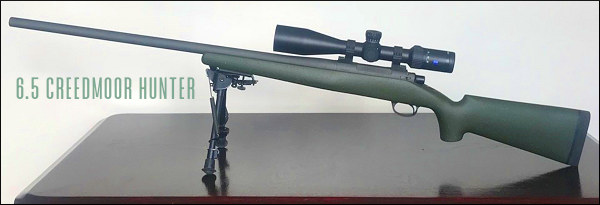
Sometimes clean and simple is the way to go — particularly with a hunting rifle. WEATHERBYFAN’s 6.5 Creedmoor is built around a Stiller Predator single-shot action in a texturd, green Wildcat Var-Tac stock. The 1:8″-twist Bartlein barrel is finished at 28″. That’s pretty long for a hunting rig, but it delivers added velocity. Finishing off this nice rigle is a Zeiss 6-24x50mm optic. Sometimes less is more and this is a perfect example of that.
Our final offering is from Forum member 300_WHISPER. Completed just months ago by gunsmith CALEB85, this .308 Win rifle features a Bighorn TL3 action with a Bartlein M40 26″ 1:10″-twist barrel, and Manners TA Elite stock. Other components include Trigger Tech Special, Area 419 self-timing muzzle brake, and a Weaver Tactical 3-15x50mm FFP mil/mil optic. When test-fired by Caleb with ammo using Berger 175gr OTM Tactical bullets, this nice .308 Win delivered a 1.6″ 5-shot group at 400 yards. The owner says “It’s my dream rifle. I couldn’t be happier”.
UltimateReloader.com offers some of the most thorough firearms and reloading tool tests on the internet. And the Ultimate Reloader YouTube Channel now has over 1200 videos that showcase reloading tools, accurate firearms, precision optics, gunsmithing methods, and top-tier reloading components. For today’s Saturday at the Movies feature, we showcase eight great videos created by Gavin Gear and his UltimateReloader team. These videos highlight NRL22 Rifles and optics, the remarkable AMP Annealer, a new affordable target cam, Bix’N Andy Triggers, Silencerco Suppressors, and a stunning 6×47 Lapua rifle project. Enjoy this Saturday Video Showcase.
Popular .22 LR Rimfire Tactical Competition — NRL22
NRL22 and PRS Rimfire are some of the fastest-growing shooting disciplines in the USA. The NRL now runs 7-8 times as many rimfire NRL22 matches as centerfire matches. The popularity of rimfire precision shooting is easy to understand — .22 LR ammo is a small fraction of the cost of centerfire ammunition and you can compete at any local range that goes out to 200 yards. In this video Gavin Gear explains the features you want in an NRL22 rifle. The related video (at right) explains what you’ll want in an optic for NRL22 competition.
AMP Annealer — Guide for Getting Started
Gavin Gear with New Zealanders Matt Findlay (center) and Alex Findlay (right) of Annealing Made Perfect.
This detailed 11.5-minute review outlines the features of the impressive AMP electronic annealing machine, the AMP Mark II DB. This uses a computer control to deliver precise annealing times and temperatures with a profile for your specific lot and brand of brass. This video explains how to set the annealing timing for your brass and how to configure multiple profiles. One AMP Mark II DB owner offers high praise for AMP annealers: “If you want to anneal the best way possible this is it. Does a torch work? Sure it does. The AMP does it far better and far more consistently.”
Budget Ranger Target Camera from LongShot Precision
Longshot offers superb, reliable, high-resolution target cameras favored by top shooters around the world. Now LongShot offers its Ranger target cameras starting at just $199.00 for the basic Ranger Target Camera which runs at 100 yards. For those who shoot at longer distances, we recommend the Ranger Plus model which reaches out to 1000 yards. Powered by state-of-the-art 5G WiFi technology, the Ranger Plus connects to your phone or tablet. You can purchase the Ranger Plus for $399.00. The features of these two Ranger systems are compared in the graphic below:
6x47L Rifle Build with BAT Action & Woox Furiosa Ultra Chassis
Gavin Gear has completed many impressive custom rifles. This handsome rifle is one of Gavin’s best efforts. Chambered for the 6-6.5×47 Lapua wildcat cartridge (aka 6x47L), this rifle has show great accuracy. It boast a handsome black BAT Hammerhead action and a wood/metal composite WOOX Furiosa Ultra chassis. This high-tech hybrid stock/chassis combines wood sections over a full-length, aerospace-grade aluminum skeleton chassis, giving it the “feel” of a wood stock with the strength and stability of a metal stock. Gavin likes the way the stock feels on the trigger hand in particular and the smooth wood cheekpiece is also very nice. Made in Italy, the Furiosa is offered in three versions all with wood sections on the forearm, grip area, and cheekpiece. Choose natural Walnut Brown, Micarta Black, or Midnight Grey.
SilencerCo Suppressors Tested
Gavin Gear of UlimateReloader.com got a chance to visit a SilencerCo dealer, The Range LLC in Yakima, WA. During his visit, Gavin was able to test a number of suppressors (aka “moderators” or “silencers”) for both rifle and pistols. Gavin has released a lengthy article covering his experiences. If you are in the market for a suppressor, we highly recommend you read Gavin Gear’s full SilencerCo Products Overview on UltimateReloader.com.
Bix’N Andy Trigger Testing
Bix’N Andy makes some of the best triggers you can buy, with versions suited for benchrest, F-Class, ELR, PRS/NRL, as well as hunting and varminting. In this October 2024 video, Gavin looks at the features and functionality of a variety of Bix’N Andy triggers. You can purchase these quality triggers from BulletCentral.com at attractive prices starting at $199.00.
Ultimate Reloader’s Most Popular Video EVER:
.223 Remington vs. 5.56x45mm — 7.7 Million Views
This video explains essential facts and corrects common misconceptions related to both .223/5.56 ammunition, as well as .223/5.56 rifles. Gavin provides insight on chamber specs, pressure levels, barrel twist rates, military 5.56 crimped brass, and other important topics. If you are new to the AR world, this video is definitely worth watching. And that’s why it now has garnered over 7.7 MILLION YouTube views, making it one of the most popular gun-related videos ever. Full Story:CLICK HERE for full written analysis of .223 Rem vs. 5.56x45mm with graphs and data.
BONUS — Key Legal Insights for Gun Owners
Interview with Attorney William Kirk of Washington Gun Law
SHOT Show is one of the biggest trade shows of the year among ALL industries. This year there are thousands of exhibitors spread out over two exhibit halls the combined size of 14 football fields! Thankfully a number of YouTubers have been working hard, finding interesting new products in the miles of aisles. Today we feature some notable videos from SHOT Show 2025, along with some cool product reports — leading off with Lapua’s announcement that it will be producing 6mm Dasher brass this year. That earned high praise from our Shooters Forum members.
Tikka T3x Ace Competition Rifles and T1x Rimfire Rifle
The new Tikka T3x Ace rifles works great for both hunting or match PRS/NRL use. They are chambered in .308 Win and 6.5 Creedmoor. We like the Tikka’s smooth-running action and very nice, crisp trigger. For rimfire competition, consider the Tikka T1x .22 LR match rifle. This features customizable chassis, heavy barrel, single stage trigger and 20 MOA Picatinny rail. Prices for both centerfire and rimfire Tikka rifles are quite reasonable compared to a custom build. You can get great deals on Tikka rifles from leading vendor EuroOptic.com. CLICK HERE for EuroOptic Tikka Rifle Sale.
New 6mm Dasher and 7mm PRC Brass Coming from Lapua
Great news — Lapua is releasing top-quality 6mm Dasher Cartridge Brass later this year. The 6mm Dasher is one of the most successful and popular cartridges for mid-range benchrest competition, and it is also now very popular with PRS/NRL shooters because of its superb accuracy and relatively low recoil. It’s a great varmint cartridge as well. The 6mm Dasher cartridge is inherently accurate and load development is relatively easy with known accuracy nodes with 103-108gr bullets. We are delighted that Dasher brass will finally be available from Lapua in the fall of 2025.
We were also pleased to see Lapua will be offering 7mm PRC Cartridge Brass later this year. The 7mm PRC can efficiently drive the heaviest .284-caliber projectiles. This gives F-Open competitors and long-range hunters a great new brass option. When teamed with Berger’s new 190gr LR Target Hybrid bullet (see below), the Lapua 7mm PRC could become a top choice for F-Open shooters.
One other cool new product coming soon is a high-BC 144gr 6.5mm Max Range Target Bullet. This .264 caliber bullet offers great 0.670 G1 and 0.335 G7 Ballistic Coefficients making it one of the highest-BC 6.5mm bullets ever crafted. The new Max RT 6.5mm bullet will be available for consumers in spring 2025.
New CZ Shadow 2 Target Pistol — Great for Gun Games
In this video GunsAmerica Digest Editor True Pearce reviews the impressive new CZ Shadow 2 Target pistol. This 9mm pistol features an extended slide, 6-inch polished and hand-fitted barrel, full steel frame, and handsome ergonomic grip. This pistol also boasts a very crisp trigger that can adjust to five positions.
The regular Shadow 2 has won many IPSC world championships. And this new Shadow 2 Target model should be even better. The 6″ barrel and long slide offer significantly reduced muzzle lift for faster follow-up shots plus longer sight radius for more precise aiming.
Berger Offers New 7mm 190gr LR Hybrid Target Bullets
Here’s big news for F-Open shooters running 7mm cartridges in F-Class competition. Berger will be offering a new, ultra-high BC bullet that could enhance scores. The new 190gr Long Range Hybrid Target projectile offers a higher Ballistic Coefficient which can translate to a flatter trajectory and greater resistance to deflection by crosswinds. In this Ultimate Reloader video F-Class John compares the new Berger 190gr LR Hybrids with Berger’s popular 180gr hybrids. John examines the 190-grainer’s ballistic advantages and demonstrates how thee 190s perform on the range, after load development and seating depth testing.
Innovative SG Sight Pro “Smart” Shooting Glasses Have Heads-up Display of Shot Time, Split Time, and Shot Count
Here’s a great new product for folks who participate in “on the clock” shooting competitions. SG Sight Pro offers innovative new safety eyewear with an onboard “heads up” display. This projects key info in the top left corner of the left lens so the shooter can see shot times and splits. It would be cool if a company could provide a product like this for High Power and F-Class shooters that would show the e-Target score after each shot without moving one’s head position.
Olympic Biathlete Twins Talk with Living Legend Jerry Miculek
In this video talented twins and Olympic Biathletes Lanny and Tracy Barnes visit the Mossberg booth and get trigger tips from legendary shooter Jerry Miculek starting at 1:30 time-mark. The twins also check out Mossberg long guns in the video, including the new Mossberg 590R shotgun and 590RM with a 10-rd detachable shotshell magazine.
SHOT Show Shorts — Highlight Videos
Arken OPS rifle with micro-action, backdraft barrel, and hex suppressor.
Very nice, ultra-light Browning rifle with carbon stock and fluted bolt.
How to Order a Suppressor the Easy Way — E-Filing
Are you considering getting a suppressor this year? There are important Federal regulations regarding suppressors, because they are considered a Class III device. You may also want to consider having the suppressor owned by a trust. The process of getting a suppressor is covered in this helpful video. It explains Federal rules and how to e-File your application through the Silencer Shop.
Vudoo V22 Ravage with a fluted 18″ Kukri barrel in an Urban Camo Grayboe Ridgeback stock.
Rimfire precision shooting is hot. NRL22 and PRS Rimfire are some of the fastest-growing shooting disciplines in the USA. The NRL now runs 7-8 times as many rimfire matches as centerfire matches these days. The popularity of rimfire precision shooting is easy to understand — .22 LR ammo is a small fraction of the cost of handloaded centerfire ammunition and you can have a fun competition at any local range that goes out to 200 yards or so.
If you’re looking for a top-tier .22 LR precision bolt-action rifle, here is a very impressive option…
Vudoo Gun Works Ravage Precision .22 LR Rifle
Among the most accurate .22 LR precision rifles you can buy is the mag-fed Vudoo Ravage with Grayboe Ridgeback stock. Popular YouTube gun tester 22Plinkster declared: “It’s a Tack-Driver … this .22 LR Rifle is the most accurate .22 LR bolt-action rimfire rifle I have ever shot in my life.” And he notes that he has shot Anschutz, Lithgow, and other quality rifles.
Firing from a Lead Sled, 22Plinkster starts out at 50 yards, and produced a 0.335″ group at 50 yards using Lapua Midas+ ammunition (4:00 time-mark). Then this session gets really impressive. Continuing with Lapua Midas+ ammo, this Vudoo Ravage produced a sub-half-inch group at 100 yards*. You can watch that Midas+ group form up from 7:20 to 8:25 in the video. Then, with ELEY Tenex ammo, he produced a 0.707″ group (10:30) and an even smaller group (11:55). This complete rifle is available from Vudoo Gun Works for $3230.00 without optics. That a ton of money, but if you compete in the rimfire ELR game, the investment may be worth it, as the exceptional accuracy really makes a difference past 250 yards.
22Plinkster says Vudoo’s Ravage is a top choice for NRL22/PRS rimfire matches and Rimfire ELR competitions: “This is the cream of the crop. [Many] people who are winning PRS rimfire matches are shooting Vudoos. What sets this rifle apart from a lot of the other Match 22 rifles is what it does past 300 yards. A lot of rifles — Anschutz, Lithgow, CZ — shoot really good out to 300 yards. But after 300 yards, their accuracy diminishes big-time.”
If you are interested in getting a Vudoo rimfire rifle, then definitely watch this 20-minute Guns & Tactics video. It provides extensive accuracy testing for multiple ammo types with verified group sizes. Then the reviewer shows the working details of the rifle, including the bolt, trigger system, and magazine. The video also includes field testing from bipod as well as competition-type practical stages out to nearly 400 yards.
We are now on Day Two at SHOT Show 2025 in Las Vegas. There are huge crowds visiting the thousands of display booths in the “miles of aisles”. Over 52,000 people have registered for the event. This year’s SHOT Show encompasses two facilities — the Venetian Expo AND the new Caesars Forum. Combined, these facilities provide over 830,000 net square feet of exhibit space. The two trade show halls are connected by an elevated walking bridge.
CLICK HERE for the searchable database of all SHOT Show 2025 exhibitors.
Today, as part of our Day Two coverage of SHOT Show 2025, we are featuring videos and image of new rifles from SIG Sauer, Savage, and Smith & Wesson. It’s just a coincidence all three companies start with the Letter “S”. Other major manufacturers, including Beretta, Bushmaster, FN, Remington, Rossi, Sako, and Tikka also have many new guns on display at SHOT Show 2025.
Interesting New Rifles at SHOT Show 2025
SIG Sauer Spear DMR in 6.5 Creedmoor
At SHOT Show 2025, SIG Sauer unveiled the Spear DMR, a 6.5 Creedmoor Designated Marksman Rifle with 20″ barrel and fully adjustable, folding stock. While not yet available commercially, SIG Sauer has suggested this rifle may offered for sale later this year. In its product review, GunsAmerica notes: “The SIG Spear DMR features a fully adjustable and folding stock… nearly identical to the SIG Cross rifle stock, this version utilizes a different angled mount while maintaining the same ultra-light construction. The stock includes precision adjustments for both the cheek riser and length of pull[.] Its folding design … makes the rifle more compact for discreet transport or storage without compromising functionality or ergonomics.”
Smith & Wesson Model 1854 Stealth Hunter
The Smith & Wesson Model 1854 Stealth Hunter combines a traditional lever-action rifle design with modern upgrade. Features include an extended Picatinny rail for optics, an M-LOK equipped fore-end, a Hi-Viz H3 front sight, and an adjustable ghost ring rear sight sourced from XS Sights. Available calibers are .45 Colt, .44 Magnum, and .357 Magnum.
The 16.3-inch 410 stainless-steel (with a threaded muzzle) has a twist rate of 1:16, the receiver is forged 416 stainless steel, and the fore-end, which has 15 M-LOK slots, is aluminum with a hard-coat anodized finish. The black synthetic stock has textured grip panels. The rifle also has a large loop operating lever and a manual cross-bolt safety. See this rifle at the Savage Booth #12427.
Savage Model 110 Pro Pursuit Hunting Rifle
With a cerakoted bolt and action, PROOF Research carbon-wrapped barrel, and lightweight Grayboe Phoenix 2 stock, the 110 PPR offers easier carrying in the field along with good durability. The 110 PPR (Pro Pursuit Rifle) incorporates new features on the company’s proven 110 platform. It sports a nicely-patterned camo synthetic stock and field-friendly features like a large knurled bolt handle, flush QD sling adapters, and a 20 MOA rail. The carbon-fiber-wrapped 22-inch Proof Research barrel also saves weight. A three-round AICS-style mag, dual extractors, and muzzle brake facilitate quick follow-up shots. The 110 PPR is offered in nine different chamberings, with emphasis on big-game cartridges. MSRP is $2,399.
SHOT Daily Magazines For Day 1 and Day 2
Want more information on new firearms and optics? Then check out SHOT Daily Magazine. Shown below are covers for the digital versions of the SHOT Daily print editions distributed at SHOT Show. The Day 1 issue features new rifles while the Day 2 issue showcases notable new optics. Click each cover page box to launch the full version which you can read in full for free by signing up.
New Product Center
The New Product Center is a “must-see” offering at the Venetian EXPO. There are dozens of interesting and innovative new products all in one convenient location.
The 2025 SHOT Show (Shooting, Hunting, and Outdoor Trade show) is officially underway in Las Vegas, with the full opening this Tuesday morning, January 21, 2025. Thousands of new products are on display at SHOT Show 2025, hosted at the Venetian Expo/Convention Center and Caesars Forum in Las Vegas. Gunmakers from around the world will be introducing hundreds of new (and updated) rifles, pistols, and shotguns. Along with the new guns, SHOT Show will feature noteworthy new optics, electronics, reloading equipment, hunting gear, and accessories.
The 2025 SHOT Show combines exhibit space at Caesars Forum and The Venetian Expo with a bridge between the two facilities. This year more than 2,800 exhibitors will showcase their products on 830,000+ net square feet of floor space. SHOT Show is the largest trade show of its kind in the world. Total attendance at last year’s SHOT Show exceeded 55,000 exhibitors, buyers, media, and industry professionals from 50 states and over 115 countries.
Quick Picks — Video Shorts from SHOT Show 2025 Day 1
Product Previews
Here are 8 Interesting Products from SHOT Show 2025. Click each Image for more details.
SHOT Show Supplier Showcase — Monday and Tuesday
The SHOT Week Supplier Showcase returns this year with 600+ suppliers and countless materials and solutions. After a great first day yesterday, the Supplier Showcase kicks off its second and final day in the 5th Floor Palazzo Ballroom of The Venetian Convention Center.
SHOT Show 2025 INFO Sources
SHOT Show TV and YouTube — For all SHOT Show TV product highlights, interviews and overall show coverage, visit the SHOT Show Youtube Channel. SHOT Show Daily News — The SHOT News Page has multiple daily reports and links to key content. Social Media — For real-time highlights and breaking news from the show, the SHOT Show’s Facebook, Instagram, YouTube, and X (Twitter) feeds offer regular reports with interviews, photos, and videos. SHOT Show Mobile App — Download the SHOT Show 2025 Mobile App for real-time show announcements, interactive floor maps, meeting and scheduling functions, product-information downloads (including product scanning at the New Product Center), SHOT Show video feeds and more!
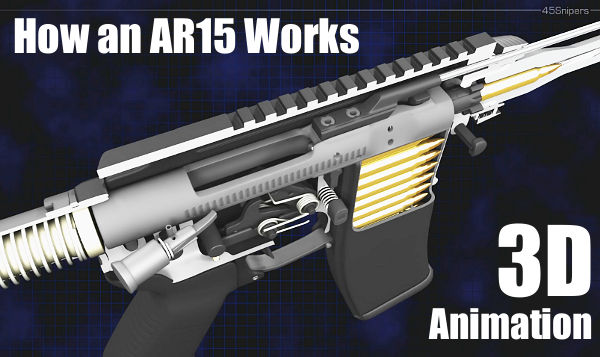
Ever wondered how the parts inside an AR15 work together? Just exactly how does the reciprocating bolt carrier feed rounds from the magazine? How do the elements in the trigger group work and reset after each shot? How does the gas system bleed gas from the barrel and operate the bolt carrier? These and other questions are answered in this eye-opening video from 45Snipers. Using “cutaway” 3D computer animation, this 5-minute video shows all features of an AR15 inside and out. This fascinating firearms animation allows the viewer to look inside the upper and lower receivers, into the bolt carrier, chamber, barrel, and magazine.
This video starts off slow and has annoying background music, but it is well worth watching if you own or shoot any AR-platform rifle. It illustrates all the key operations during the charging, loading, firing, and ejection processes. The cutaway animation shows how rounds are stripped from the magazine and then chambered. It then shows how every part of the trigger group works, and how the firing pin strikes the primer. You can even watch the bullet move down the barrel before the empty shell casing is removed from the chamber and tossed out the ejection port. Here are sample frames from the video:
Video find by Grant Ubl. We welcome reader submissions.
SHOT Show 2025 kicks off on Monday, January 20, 2025 with Industry Day at the Range. We’ll have friends there at the Boulder City Range testing new rifles and pistols, and checking out new optics and accessories. Then on Tuesday, January 22nd, the doors open at the Venetian Expo and Caesars Forum. Over 2700 companies will be exhibiting products this year, with booths and displays covering over 800,000 square feet of floor space. Show organizers expect over 50,000 attendees.
SHOT Show is restricted to industry professionals — manufacturer personnel, buyers/sellers of products, and media representatives. But thankfully, there will be lots of coverage from the event. We’ll be providing regular updates through our Daily Bulletin. In addition, we’ll be following SHOT Show coverage from leading gun-related YouTube Channels, including BackFire, Guns America Digest, The Firearm Blog (TFB-TV), RECOIL Magazine, and Ultimate Reloader. And below are official pages from the show website:
This video shows six interesting firearms that will be featured at SHOT Show 2025. Items include Aero Precision M4E1 Pro ambi-AR rifle, Langdon Tactical 301 Blackout shotgun, KelTec PR57 pistol, Smith & Wesson Model 1854 Stealth Hunter rifle, HM Defense HM50B2 Gen2 rifle, Patriot Ordnance LMR Base rifle.
Here’s a selection of five notable handguns and rifles set for unveiling at SHOT Show 2025. Featured guns include: Bergara BMR-X rimfire rifle, Shadow Systems CR920X pistol, Jacob Grey TWC Black pistol, Bushmaster V-Radicator AR rifle, Wilson Combat Div77 Project 1 pistol.
Here are two good videos from 2024. The first is a great intro to SHOT Show, and the second covers Range Day, which is being held today at the Boulder Rifle & Pistol Club outside Las Vegas.
In addition, NRA Publications’ Shooting Illustrated will provide extensive coverage of SHOT Show — from pre-show private events to Media Day At The Range to updates from the Venetian Expo and Caesars Forum in Las Vegas. Shooting Illustrated staffers will be at SHOT Show to find notable new firearms, gear, and accessories, which will be covered via regular updates on the internet. Check out ShootingIllustrated.com for daily show recaps, as well as exclusive, live content from Las Vegas on Instagram, Twitter, Facebook and YouTube.
Shooting Illustrated is the NRA’s official journal covering personal defense, concealed carry, and tactical firearms, training and gear. Shooting Illustrated reaches over one MILLION users through its print magazine, digital publications, and social media. Visit ShootingIllustrated.com for more information.