At the request of our readers, we provide select “Deals of the Week”. Every Sunday afternoon or Monday morning we offer our Best Bargain selections. Here are some of the best deals on firearms, hardware, reloading components, optics, and shooting accessories. Be aware that sale prices are subject to change, and once clearance inventory is sold, it’s gone for good. You snooze you lose.
NOTE: All listed products are for sale to persons 18 years of age or older. No products are intended for use by minors.
1. Midsouth — Big Sale on All RCBS Products, Save $10-$100
⏺ Major sale on all RCBS tools, dies, presses and more
Midsouth is running a huge SALE on RCBS products — Presses, Reloading Tools, Powder Dispensers, Tumblers, Dies, Priming Sets, Casting Accessories and more. Save up to $80 on Reloading Kits, up to $100 on Electronic Powder Dispensers, and save $30 on Rotary Tumblers. Go to Midsouth’s RCBS Sale Page, then chose a product category. NOTE — Check often as inventory is changing.
2. Graf’s — Alpha Brass IN STOCK, Many Popular Types
⏺ Great brass for popular chamberings incl. 6mmBR, 6GT, 6mm Creedmoor
Alpha Brass makes excellent-quality cartridge brass for many popular categories. The price is competitive with other top-tier brass, ranging from $118-$130. In stock now at Grafs.com are: 22 GT, 6mmBR, 6mmGT (6GT), 6mm Creedmoor, 6.5×47 Lapua, .260 Remington, 7mm-08, and .308 Winchester Alpha brass. Both benchrest shooters and PRS/NRL competitors have been impressed with current production Alpha brass which ships in excellent slotted plastic cases with perforated bi-layer foam for protection.
3. Powder Valley — Bullet Bash SALE
⏺ Huge bullet sale — many brands, very good prices
If you need bullets for hunting, target shooting, or competition, check out the big Bullet Bash Sale at Powder Valley. A huge variety of bullets are on sale from Berger, Lapua, Sierra, Barnes, Hornady, Nosler and more. IMPORTANT: From the Bullet Bash Landing Page, click your preferred bullet-makers’ name(s) on the left — that way you can quickly find your favorites.
⏺ Top choice for PRS/NRL competition, plus 15% Off Code
For NRL22 or PRS/NRL matches, you’ll want a FFP scope with 0.1 Mil clicks. While you can spend over $2k on a suitable optic, we suggest getting the Vortex Strike Eagle 5-25x56mm for $799.99. This has good glass, a handy EBR-7C “Xmas Tree” reticle, and great owner reviews: “You cannot find a better scope for this price. Great glass and built sturdy with 34mm tube”; “Best bang for your buck. Clear glass, turrets track extremely well”; “[Great] for NRL22 … consistently repeatable when dialing for distance. Highly recommend.” To make this deal even better, EuroOptic offers free 2-day shipping, PLUS you get 15% Off with Code VTR15. That lowers your net cost to $679.99, a $120 savings.
5. Natchez — SIG Sauer Scope & Rangefinder Combo, $394.99
⏺ Great “intelligent combo” — LRF data works with scope
Here’s a solid combo kit for hunters. For under $400 you can get the SIG Sauer BDX rangefinder and riflescope system — a 3.5-10x42mm scope and laser rangefinder. With the SIG BDX smartphone App you can pair the KILO BDX rangefinder and the BDX-enabled scope. Once you’ve created your basic ballistic profile, the system’s brain tells you the needed hold-over. After ranging your target, the KILO BDX rangefinder employs advanced Applied Ballistics software and then sends the elevation solution to the scope via Bluetooth.
⏺ Turkey time — save $101 on good Rem 870 pump shotgun
Spring Turkey season is around the corner. Here’s a good deal on a name-brand, American-made shotgun. Brownells is now offering $101 off the Remington 870 Synthetic Fieldmaster 12ga shotgun. This ultra-reliable, pump-action shotgun has a 26″ barrel, and ships with full, modified, and IC chokes. This Rem 870 has a rugged synthetic stock with a nice rubber butt pad.
7. Amazon — Walker’s Black Razor Slim Muffs, $37.00
⏺ Good NRR 23 Electronic Muffs at great price
Here’s a great deal on good electronic muffs favored by shooters. Right now you can get black Walker’s Razor Slim Electronic Muffs for just $37.00, a 47% discount. Other colors of Razor Slim muffs are offered starting at $39.99 (plain black is the best deal). These Razor muffs have a good noise reduction rating (NRR) of 23dB. (For best protection run plugs under the muffs.) The Razor series also feature Walker’s comfort fit headband for all day shooting, and come in a host of color options.
8. Amazon — Lyman LR Precision Reloading Handbook, $12.99
⏺ Good starting resource for long-range competitors
Learning to shoot long range takes time and experience. Shorten the learning curve with the Lyman Long Range Precision Reloading Handbook. This print resource features specific data for a number of precision long range cartridges and bullets. It also includes pressure and velocity data as well as articles by top PRS shooters and industry experts.
9. Field Supply — Dominus Camo Jacket, $15.99
⏺ Incredible bargain for a spring/fall hunting jacket
Here’s a good medium-weight jacket for hunters at an insanely low price. Sold elsewhere for over $200, this Dominus Jacket is now just $15.99! The Dominus Smart Foam 3-Pocket Vented Jacket has a nice Mossy Oak Infinity camo pattern. This scent-blocking jacket features dynamic thermal regulation and the stretchable fabric is water-resistant and quiet. Available sizes are medium and large.
10. Amazon — 6 Inch Calipers w/ Extra Large Screen, $29.98
⏺ Big screen is a big plus with these Digital Calipers
Every handloader can use a good set of digital calipers. With an extra large, high-contrast LCD fisplay, these Jiavarry digital calipers show bigger numbers that are easier to read. That help ensure you don’t make mistakes. These calipers have a good Lithium battery and offer ample 0-6 inch (0-150mm) measuring range with ±0.02 mm/0.001″ resolution.
For today’s Sunday GunDay we present the merger of artistry and gunsmithing with a selection of elaborately-engraved rifles. These rigs are impressive to say the least. There are hunting rifles as you’d expect, but we even include a one-of-a-kind benchrest rifle with engraved action.
Amazing Double-Barreled Safari Bolt Guns
Here are some of beautifully-engraved safari rifles from Fuchs Fine Guns of Austria. These rifles feature a unique Double-barrel Bolt Action receiver, which is quite unique. Along with stunning wood stocks, the Fuchs rifles boast extensive detailed engraving with gold and jewelled highlights.
On this Fuchs .416 Rem Mag double-barrel rifle, the pistol grip contains a tiger’s eye gemstone set in silver. White gold is used for the tiger’s paws, symbolizing the beast’s formidable strength. The tiger’s paws on the pistol grip cap are surrounded by blue sapphires.
This DBR 48 Fuchs rifle with Celtic-themed engraving is chambered for the .470 Capstick caliber, the largest cartridge Fuchs offers. This rifle’s internal magazine offers a six-shot capacity. This DBR 48 was decorated in a Celtic motif. The bolt handle ends in a ball made of solid sterling silver. The magazine cover displays the Celtic boat symbol which stands for prosperity, wealth and power.
Benchrest Rifle with Engraved Stiller Action
“Ultimate PPC” by Speedy with engraved Stiller Viper action. Titanium Rest by John Loh (R.I.P.).
A Very Unique Viper Action, Two Years in the Making
This is no ordinary Viper action. The full engraving attracts your attention, but there are some slick “performance mods” Jerry Stiller added at Speedy’s request.
First, the action features a plain-Jane unfluted bolt, with a slight taper in the middle, a bit of a wasp-waist. Speedy prefers an unfluted design because it has superior wear characteristics. He’s found, when working with an aluminum action such as the Viper, the sharp flutes on the bolt will wear the inside of the action faster.
In the interest of reduced wear, Speedy also requested a smaller-sized loading/ejection port. This provides for a larger front and rear receiver ring, which enhances bolt bearing surface. More bearing surface reduces point loading for less internal wear.
First-Ever Hornady “Number One” Rifle with Baron Engraving
This “Hornady Number One” rifle was commissioned as the featured 2015 SHOT Show Gun. It was displayed in Las Vegas and auctioned on Gunbroker.com. The action and bottom metal is elaborately engraved by Baron Engraving of Trumbull, Connecticut. Hornady hired Bill Wiseman & Company to craft the barrel and action and Hornady commissioned Lucid Solutions (Clem Boyd) to build the stock. But the Hornady name IS now engraved on the side of a rifle receiver and that does represent a genuine first. This one-of-a-kind rifle, serial number “H-001″, is a bolt-action hunter, chambered for the .300 RCM cartridge.
Savage Rifle Created for Savage ArmsCompany President
This unique Savage 99 rifle was created for Joseph V. Falcon, President of Savage Arms in the 1950s.
Presentation Engraved Savage 99 Rifle
When you run the company, you get some pretty nice stuff — in this case you get what may be the most elegant Savage ever made.
This rifle was created for Joseph V. Falcon, who served as President of Savage Arms in 1956. This highly embellished Savage 99 lever-action rifle is chambered for the .300 Savage cartridge. It features deluxe checkering and gold inlays. This presentation-grade rifle boast deep relief engraving with a golden elk on one side of the receiver and a stalking cougar on the other. This rifle was given to Joseph V. Falcon from his friends at Savage in December of 1967. Falcon later donated the rifle to the NRA. This impressive model 99 is currently showcased at the NRA National Firearms Museum in Fairfax, Virginia.
Savage 99 Quick History
Arthur Savage invented the first “hammerless” lever action rifle with the entire mechanism enclosed in a steel receiver. This rifle featured a rotary magazine with a unique counter that displayed the number of rounds remaining. The Model 99, as it became known, was the gun that launched a company. There is an interesting history of the company’s logo which features an Indian chief in feather head-dress. In 1919, Chief Lame Deer approached Arthur Savage to purchase lever-action rifles for his tribe’s reservation and the two men struck a deal. In return for discounted rifles and support, Savage received the tribe’s endorsement. By virtue of that association, Arthur Savage added the Indian head symbol to the company’s commercial trademark and letterhead.
Jesse Kaufmann — Modern Engraving Master
Jesse Kaufmann, who operates Black Hills Gunstocks and Engraving LLC in South Dakota, is a true master of metal engraving and he also does superb stock checkering. Here is an example of Jesse’s engraving work on a barreled action. Watch the video to see more of Jesse’s artistry.
BONUS — A Stunning Wheelgun
Artistry in metal — Engraving has long been used to decorate fine firearms. Thankfully, engraving is not a lost art. There remain fine craftsman who can engrave beautiful designs into the metal components of rifles, shotguns, and handguns. Above is a spectacular Dragon-engraved Korth revolver from Nighthawk Custom. It has elaborate engraving covering almost the entire surface of the barrel, cylinder, and visible frame. In addition, an elaborate metal dragon’s tail has been embedded in the wood grip.
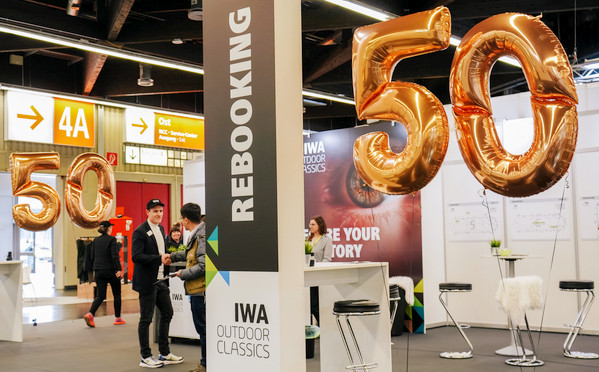
The IWA Outdoor Classics, aka the “Euro SHOT Show”, is underway right now in Nuremberg, Germany. This event, the largest gun/hunting/outdoors trade show in Europe, opened on February 29th, and concludes Sunday, March 3, 2024. Over 1080 companies from 53 nations have exhibits on display with thousands of products including rifles, pistols, optics, hunting accessories, and ammunition. In terms of exhibitor numbers, the IWA Outdoor Classics ranks second only to the USA’s SHOT Show as a global trade show for shooting, hunting, and outdoor activities. 2024 marks the 50th Anniversary of the IWA Outdoor Classics.
For this Saturday Video Showcase, we feature new rifles and new optics. Many of the videos were produced by the LowReady Magazine Youtube Channel. This channel now has nearly 100 videos created at the 2024 IWA Outdoor Classics — an amazing amount of content released in just two days!
Bergara Premier Elite — Metal Chassis PRS/NRL Rifle
Bergara is now in the tactical rifle game offering the impressive new Premiere Elite Rifle suitable for PRS and NRL Competition. This rifle is offered in 6mm Creedmoor, 6.5 Creedmoor, and .308 Win chamberings. The new Premier Elite boasts a top-quality MDT ACC Elite metal chassis, TriggerTech Diamond trigger, and Bergara profile 7 competition barrel.
STEINER eRanger 8 Scope and eRanger Rangefinder Binoculars
In this video, the lovely Danielle Valkyrie interviews Steiner Rep Christoph Weigler. They discuss the features of the impressive new eRanger 8 scopes. These have environmental sensors and integrated ballistics solvers which can display the proper hold at any distance. The eRanger scopes “talk” to the new eRanger LRF 10X42 rangefinding binoculars. This allows the rangefinder data to appear in the scope’s view. There is also Steiner GeoApp which can map locations on a smart phone.
Beretta APX A1 Optics-Ready Pistol
In this video Product Manager Christian Schulte shows Danielle Valkyrie the Beretta APX A1 pistol in both full-size and compact configurations. NOTE: This video also features Danielle shooting an APX the day before (2:14 time-mark). The modular, striker-fired APX A1 Tactical is a “flexible and reliable all-rounder”. The serial number is now placed on the internal chassis, so the polymer grip can be exchanged.
Merkel K5 Break-Action Rifle
This All4Hunters video features the stunning, single-shot Merkel K5 hunting rifle, one of Merkel’s best-selling firearms. The break-action rifle is sleek, easy to handle and, above all, light. Merkel is now offering the K5 in a 6.5×55 SE version, plus a K5 chambered in .270 Winchester — both with longer barrels to better exploit the full energy of the cartridges. In response to consumer requests, Merkel now offers the K5 with 23.6″ (600mm) barrels in .270 Winchester and 6.5×55 SE.
New Leupold Mark 4HD Riflescopes
Leupold unveiled its new Mark 4HD series with five riflescope models, all with a four times zoom factor: 1-4.5x24mm and 2.5-10x42mm (with 30mm main tube), plus 4.5-18x52mm, 6-24x52mm and 8-32x56mm (all with 34mm tube).
Mark 4HD scopes cost considerably less than Leupold’s Mark 5HD series, and 4HD models use the more common 30mm or 34mm rings. (Most 5HD scopes require 35mm rings.) In this All4Hunters.com video, Leupold representative Tim Lesser explains the features of the new 4HD series optics. Shown below is a video showing the 4.5-18×52 model. For varmint hunting we’d probably step up to the 6-24x52mm model.
Bergara B14² CREST Carbon/Carbon Rifle
If you’re looking for a very light-weight field rifle, consider the Bergara B14² CREST Carbon rifle. This features a carbon-laminate stock plus a carbon-wrapped barrel. Before optics, all-up weight is 6.8 pounds for short-action models. A wide range of chamberings are offered: .223 Rem, .243 Win, 6.5 Creedmoor, 6.5 PRC, .270 Win, 7mm PRC, 7mm Rem Mag, .308 Win, .30-06 Springfield, and .300 Win Mag.
Day 2 of the IWA Outdoor Classics event (aka “Euro SHOT Show”) is underway. There will be two more days, with the show concluding on Sunday, March 3, 2024. This year’s event has been very popular, with high attendance. The show directors say there are over 1080 exhibiting companies from 53 nations at this year’s event. CLICK HERE to see hundreds of hi-rez photos from manufacturers’ displays at the 2024 IWA Outdoor Classics.
European Market for Civilian Firearms is Thriving
Europe’s civilian firearms industries are thriving, based on data from the European Institute of Hunting and Sporting Arms (IEACS). “Global production of civilian firearms has increased in recent years, as has European production, which recorded 3.6 million firearms produced in 2020, of which 2.7 million were pistols and 900,000 were shotguns and rifles. Compared to the previous year, this represents a 34% increase in European firearms production,” said Nicola Perrotti, IEACS president.
You’ll find over 130 new products on the IWA Outdoor Classics NEW Product Showcase. Product names are listed alphabetically, and you can also search by product type and/or country. Along with the new products you can also access ALL Products at the show. Here are three notable new products we found:
AZ-P1 Giant .38 Special Match Pistol from ARMA ZEKA s.r.o.
Ares LRF Thermal Scope from Thermtec
FZ-8 Hardshell Eco-Leather Full-Length Gun Case from Acropolis
IWA Outdoor Classics Special Programs
There are some cool special programs at this year’s IWA Outdoor Classics. Along with the expert speaker program, there is a Knife Demo Area, an Airsoft Shooting Range, and a very cool Optics Testing Area. We’d like to see that at SHOT Show in the USA.
New Product Showcase Video (English and German)
This video covers a variety of pistols and rifles on display at the 2024 IWA Outdoor Classics event. NOTE: This runs in English for 17 minutes, then the second half of the video is in German language.
This video shows Hornady’s AR-compatible, 22 ARC cartridge and Hornady’s new polymer-tipped ELD-VT bullet.
This video shows new Victrix model Tactical Bolt-action rifles suitable for PRS/NRL matches.
Blast from the Past — Eye-Catching Guns from 2023 IWA
If you like high-grade wood and handsome engraved metal, then watch this video compiled at the 2023 IWA Outdoor Classics. Similar eye-catching firearms are on display this year as well. In a world of polymer pistols and bland black MSRs it’s great to see classic high-grade wood and beautiful metal work.
The IWA Outdoor Classics show is very much about hunting. Here’s a display of the latest and greatest camo and Hi-Viz (day-glo) apparel for hunters.
This year the IWA Outdoor Classics, aka “Euro Shot Show”, marks its 50th year as Europe’s leading outdoor, hunting, and target shooting trade show. The event opened today February 29, and runs through Sunday March 3, 2024 in Nuremberg, Germany. For the next four days, the Nuremberg metropolitan region will once again focus on hunting, target shooting, and the outdoor adventure market. In its 50th year, the IWA Outdoor Classics is a huge event, drawing over 1,080 exhibitors from 53 countries.
In 2024, the IWA Outdoor Classics celebrates its Golden Anniversary. For more than 50 years, outdoor and shooting industry companies have come together in Nuremberg to present the latest products and services for hunting and shooting sports. For 2024, Europe’s leading outdoor trade show will host more than 1,080 German and international exhibitors in nine exhibition halls. In addition, there will be a wide variety of seminars, meetings, and interactive demonstrations.
Stefanie Leege, Exhibition Director of IWA OutdoorClassics posted: “This year we are particularly honored to welcome exhibitors, visitors, and press representatives to IWA Outdoor Classics. Our 50th anniversary is definitely an honor for us, but even more so for the commitment of our customers and [exhibitors]. We … look forward to an unforgettable Anniversary edition.”
Manufacturers and vendors from the hunting, shooting sports, and outdoor segments offer a vast range of products this year. From hunting, sport shooting, and airsoft firearms to optics and technologies, ammunition, knives, hunting accessories, clothing and outdoor equipment, there is plenty to discover in the nine halls at IWA Outdoor Classics 2024. IWA Outdoor Classics allows buyers and retailers from around the world to see thousands of new products from international manufacturers all in one convenient setting.
Handguns, Shotguns, Rifles, and More
Wheelgun Showcase at Korth Arms
Modern Scopes and Optics on Display
Outdoor Gear, Shooting Equipment, and Hunting Accesories
Along with the firearms, optics, stocks, and reloading products, there were many booths features outdoor clothing, hunting gear, and shooting accessories.
Official INTRO Video for IWA Outdoor Classics 2024
Our friend Gavin Gear of UltimateReloader.com often gets to test the latest and greatest reloading tools before they hit the market. He does a good job showing the features of new products with informative videos. Today we present three interesting products that Gavin has reviewed. First off is the impressive new RCBS Rebel reloading press. Next is the versatile three-head Case Prep Trio machine from Hornady. Third, Gavin reviews new Die Lock Rings and Breech Lock Die Bushings from Lee Precision.
RCBS Rebel Single-Stage Reloading Press
Most hand-loaders have used an RCBS Rock Chucker press at one time or another. Recently RCBS unveiled its new Rebel single-stage press. Like the Rock Chucker, the Rebel has a Cast Iron frame, but with a bigger base and taller arch (for a larger opening). The most important change is that this new Rebel press ejects primers out the bottom of the ram. This a big deal — just put a bin under the press to collect spent primers. However — take note — the Rebel has no on-press priming. You need to prime your cases separately. That’s not really a major issue, as we know the majority of our readers prime separately using hand or bench priming tools.
In this video Gavin loads ammo on the new the Rebel single-stage press and explains its notable features, including the primer ejection through the ram.
Currently Midsouth Shooters Supply is running a major RCBS Products Sale, with significant savings. The RCBS Rebel Press is now on sale for $219.99 at Midsouth, $30 off the regular price — a good deal for a press that can last a lifetime.
Hornady Lock-N-Load Case Prep Trio
Hornady’s compact Case Prep Trio machine (item 050160) packs a lot of functionality in a small package. This triple-threat tool has a small footprint, yet it can perform three tasks as well as much more expensive, tower-style case prep units.
Gavin Gear does a nice job explaining the features of the Case Prep trio. Watch this video to see how it can help you perform chamfering, deburring, and pimer pocket uniforming tasks more efficiently.
With three active stations, you can chamfer, deburr and clean primer pockets without having to change tools. The Case Prep Trio ships with inside chamfer, outside chamfer, and deburr tools. You can also use the machine with other optional 8/32 threaded accessories such as primer pocket reamers and case neck brushes. We’ve used this machine and it works well. The only negative is that you will get metal shavings on your bench (unlike some of the larger case prep centers). We’ve seen some guys put a small pan under the power head — then you can just dump the shavings out of the pan.
Lee Die Lock Rings and Spline Drive Breech Lock Bushings
New basic lock ring in left hand. Older non-splined ring in right hand.
In this video Gavin Gear reviews three types of die accessories from LEE. These work for virtually all standard dies, not just LEE-brand reloading dies. The new LEE basic silver-finish die lock rings now feature splines for enhanced grip and compatibility with LEE’s new die lock ring wrench (photo right). They still boast a rubber 0-Ring that helps “float” the die for improved cartridge concentricity.
LEE’s latest Ultimate Die Lock Rings have two major improvements — a colorful anodized finish, and a split-ring design with a tensioning screw, that allows these rings to be clamped securely to your dies. Available as a set, this package includes three ultimate die lock rings, and a plastic die lock ring wrench.
Gavin also reviews Lee’s Spline Drive Breech Lock Bushings for use with presses fitted with LEE’s Breech Lock system. These new Breech Lock bushings allow rapid change-out of dies without modifying the setting. The colorful new bushings feature splines on top that work with the new Lee Lock ring wrench shown above. In addition, the Breech Lock Bushings have a clamp to preserve die depth setting.
A fire in the home is always to be feared. And a fire in your reloading room can be disastrous. Near your reloading bench you probably have flammable solvents, and maybe gunpowder. What would happen if an electrical fire started in your reloading room? Would you be alerted? Do you have a proper fire extinguisher at hand?
Here’s a true story from Forum Member Joe O. (aka “Joecob”) that provides a valuable safety lesson. After Joe started up his old tumbler, an internal connector worked loose, causing an arc which started a fire in his basement reloading area. Luckily Joe had a functioning smoke detector, and a fire extinguisher.
Very few of us would worry about fire when we plug in a tumbler or other AC-powered reloading tool. But there is always the possibility of a malfunction and a fire. Quick thinking (and a handy extinguisher) prevented serious damage to Joe’s reloading room and house — but things could have been worse (much worse), had Joe not responded quickly.
Fire in the Reloading Room — Report by Joecob
The day before ‘Sandy’ hit I was cleaning brass the way I always have. I set the vibratory tumbler on the back of my reloading bench in the basement. I loaded the media hopper with 40 fired empty brass cases (and walnut media), plugged the cord in, turned the tumbler on and went back upstairs to watch TV. I could hear the tumbler running in the background.
About half an hour later I heard the basement smoke alarm go off. I ran downstairs. Flames were licking from the melting plastic of the tumbler.
I grabbed the nearby ABC cannister extinguisher and squirted out the fire and soaked the charred bench areas with water. Good thing I had the extinguisher! And I was glad I religiously store powder and primers properly — away from the bench (and everything else).
What caused the fire? It looks like an internal AC connector finally vibrated loose enough to arc and ignite the plastic. WHEH! I had been using that thing for 25 years the same way without mishap. Guess I should have known to periodically check the guts of a thing that plugs in and vibrates for a living?
Today I went out and bought a new even bigger ‘Pro’ ABC extinguisher, plus a dual-detector smoke alarm, and an ultrasonic cleaner. That experience was scarier than the storm. I hope this true account might help someone else to avoid a bad experience.
In his account, Joe refers to an “ABC” cannister fire extinguisher. The “ABC” refers to the fire classification rating: Class A (trash, wood, and paper), Class B (liquids and gases), and Class C (energized electrical equipment) fires. There are many brands of ABC-rated extinguishers.
The rechargeable Kidde Pro 210 Fire Extinguisher (SKU 21005779) contains four pounds of a multipurpose monoammonium phosphate dry chemical extinguishing agent. It has a discharge time of 13 to 15 seconds, a discharge range of 10 to 15 feet, and an operating pressure of 100 PSI. The seamless aluminum cylinder measures 4.5 inches in diameter and 15.7 inches tall. The Kidde 210 has a 6-year limited warranty. This is now $45.40 on Amazon, 29% off the regular price.
Do you occasionally get completely unexplained flyers, or have a shot land straight down at 6 O’Clock, right below your point of aim? That could be caused by poor or inconsistent trigger technique. How you pull the trigger can and does affect your accuracy.
Many gun enthusiasts start with pistols. When they later start shooting rifles they may carry over some not-so-good practices acquired from shooting handguns with heavy 4 to 6-pound trigger pulls. You may want to “re-learn” your trigger techniques to get better rifle results.
Shooting Sports USA has a good article on trigger technique that offers many useful tips. That article also has many helpful illustrations, including the one shown above. Another illustration shows different types of trigger shoes (straight vs. curved) and explains how each makes a difference: “With a lightly curved trigger, the shooter’s finger can contact the trigger either high or low according to preference. Higher contact will increase the resistance.” READ ARTICLE HERE.
The article analyzes common errors, such as pulling the trigger with the very tip of the finger rather than the pad of the index finger: “Using the tip of the finger can lead to lateral pressure on the trigger, which throws off the shot.”
The article also explains that you should check your trigger regularly to make sure it is functioning properly and is not out of adjustment: “Just like any other moving part, the trigger can suffer from wear. In such a precise mechanism, tiny amounts of wear can cause major problems.”
The ergonomics of the Eliseo Tubegun allow a nice, straight trigger pull.
Trigger Tips
Six Suggestions for Making your Trigger Control More Consistent.
1. If your triggers are adjustable, set the pull weight appropriate to the discipline. For a hunting rifle, you don’t want an ultra-light trigger pull. For High Power, you may want a two-stage pull, while on a Benchrest rifle you may prefer a very light trigger.
2. If you have a two-stage trigger, experiment with different combinations of First Stage and Second Stage.
3. Have a friend watch you as you pull the trigger, and maybe even take a close-up video as you pull the trigger. This can reveal a variety of flaws.
4. Practice dry-firing to see if flaws in trigger technique are causing gun movement.
5. As an experiment, try pulling the trigger with your middle finger. Ergonomically, the middle finger has a more straight alignment with the tendons in your hand. This exercise can help you identify alignment issues with your index finger.
6. For stocks with adjustable Length of Pull you may want to set the LOP differently for bench shooting vs. prone or F-Class shooting.
When Only the Best Will Do…
German-made Bix’N Andy triggers, available from BulletCentral.com, are among the very best you can buy. Available in both single-stage and two-stage, Bix’N Andy triggers are extremely precise, repeatable and smooth. The unique internal, friction-reducing roller ball system allows for extremely low reset force, yielding an ultra-crisp let-off. Bix’N Andy triggers can be fitted with a variety of trigger shoes according to shooter preference.
At the request of our readers, we provide select “Deals of the Week”. Every Sunday afternoon or Monday morning we offer our Best Bargain selections. Here are some of the best deals on firearms, hardware, reloading components, optics, and shooting accessories. Be aware that sale prices are subject to change, and once clearance inventory is sold, it’s gone for good. You snooze you lose.
NOTE: All listed products are for sale to persons 18 years of age or older. No products are intended for use by minors.
1. Creedmoor Sports — Sightron Scope Sale
⏺ Save hundreds on excellent Sightron competition scopes
Sightron offers excellent optics with great performance for the price. We like Sightron Optics for their quality competition scopes at affordable prices. Right now, through 2/29/2024, Creedmoor Sports is running a big Sightron Scopes SALE including the popular SIII LR and the advanced EV SD series. NOTE: If any of these sell out, you can get most of these models on sale direct from Sightron this month. Act soon — this Creedmoor Sports Sale ends 2/29/2024 at the end of February.
2. KYGUNCO — Charles Daly 335 Pump Action Shotgun, $327.63
⏺ Great deal on nice camo hunting shotgun with optic
Do you plan to go turkey hunting this spring but need a new gun? Here’s a handsome, pump-action shotgun with optic at a great price. Right now, at KYGUNCO, the Charles Daly 335 Field 12ga pump shotgun is on sale for just $327.63. This features a 26″ barrel, full Mossy Oak Camo finish, and it comes complete with a 4 MOA Red Dot optic. A real bargain, this is a good choice for spring turkey hunting.
3. Bullet Central — $30 off Bix’N Andy Triggers
⏺ Superb Bix’N Andy Triggers with $30 Off Code
Bix’N Andy triggers work great for PRS, F-Class, silhouette, and Palma competition rigs, and they also work well for hunting rifles. Right now Bullet Central has Bix’N Andy Triggers on sale. Use Code FCJ30 to Save $30 on any purchase of $300 or more including Bix’N Andy triggers. With a wide selection, you’ll find a Bix’N Andy trigger that fits your needs.
4. Graf’s — Ginex Primers in stock including Large Rifle
⏺ Large rifle primers IN STOCK plus other primers at good prices
We’ve seen plenty of small rifle primers but large rifle primers have been very hard to find recently. Graf’s has what you need. Right now Graf’s has GINEX LARGE RIFLE Primers and Small Rifle primers in stock, as well as Large Pistol and Small Pistol primers in stock. All these Unis GINEX primers are available now and ready to ship. User reports on Unis GINEX primers have been very positive.
5. Natchez — Leupold Optics Sale
⏺ Large Leupold sale — riflescopes, binoculars, spotting scopes, LRFs and more
If you need a new scope check out the Leupold Optics Sale over at Natchez. Save up to $600 on scopes for hunting rifles, service rifles, varmint rigs, and long-range target rifles. In addition to riflescopes, Leupold spotting scopes, Laser Rangefinders, and Red Dot optics are on sale with big discounts.
6. Amazon — LEE Breech Hand Press Kit, $71.33
⏺ Compact hand press can do a number of key tasks — Great Sale
The LEE Breech Lock Hand Press Kit combines the popular LEE Hand-Held Press with a LEE Breech Lock System that allows reloaders to quickly change dies without having to readjust dies. This hand-held reloading press weighs only 1.5 lbs and works well for depriming tasks or bullet seating at the range. This kit, now just $71.33 on sale, includes Hand Press, Ram Prime Unit, Powder Funnel, and Resizing Lube.
7. Sportsman’s WH — Kel-Tec SUB2000 9mm, $499.99
⏺ Get $100 back from Kel-Tec with Purchase of handy SUB2000 rifle
The Kel-Tec SUB2000 rifle is a semi-auto rifle chambered in 9mm Luger (9x19mm). It can be quickly and easily reduced in size to 16.25 inches for easy transport/storage by simply rotating the barrel up and back. Price after $100 Manufacturer’s Rebate is now just $399.99. Make the $499.99 purchase before 3/1/2024 and Kel-Tec will send out a $100 check. For mounting accessories, the SUB 2000 has two Picatinny fore-end rails plus five M-LOK mounting slots on the fore-end sides.
8. Amazon — Plano 50″ Rifle Case, $47.02
⏺ Good basic case big enough for long-barrel rifles
Protect your firearms from damage with this hard-shell gun case. The Plano Protector Series rifle case is designed to accommodate a single scoped rifle or two non-scoped rifles or shotguns up to 50″ long. This case has heavy duty latches for secure transport. Padlock tabs offer additional security to guard your gear. This Plano gun case is TSA/Airline approved.
9. KYGUNCO — Blazer Pistol Ammunition Sale
⏺ Discounted USA-made 9mm, .38 SPL, .40 SW, 10mm, and .45 ACP ammo
CCI Blazer Pistol Ammunition is quality, made-in-USA pistol ammo that we have used with great success. NOTE: The 9mm ammo has brass cases while the .38 SPL, 10mm, 40 S&W, and .45 ACP Blazer ammo has NON-reloadable aluminum cases to keep price to a minimum. We have found, in most pistols, this ammo functions very well and is just as accurate as CCI brass-cased pistol ammo. With 50ct boxes on SALE now in 9mm, .38 SPL, 10mm, 40 S&W, and .45 ACP, you can save money and practice more often. The 9mm is a steal at $12.49/50 while the 230gr .45 ACP is a very good deal at $19.45/50.
10. Amazon — Splatterburst Targets 50pk, $39.99
⏺ Targets have fifteen 3″ bulls per sheet — bullet impacts show bright yellow
Splatterburst Targets make spotting bullet impacts easy, with hi-viz, bright yellow shot marks. With fifteen 3″ bullseyes, this Splatterburt target sheet is great for rimfire or centerfire practice. And you can see bullet impacts out to 400 yards. And right now you can get FIFTY (50) of these 15-bull target sheets for just $39.99 on Amazon — that’s just 80 cents per target sheet. The BRIGHT yellow bullet holes are visible in all light conditions, great for people with weak vision.
A multi-time F-TR National Champion, James “Jimmy” Crofts is one of America’s top F-Class competitors. And now this F-TR ace has a stunning new rifle in his arsenal. AccurateShooter Forum member CigarCop, head honcho of KW Precision LLC, built a stunning F-TR rig for Crofts a few seasons back. This handsome, top-tier rifle features top-tier components: Borden action, twin Brux barrels, Cerus RifleWorks F-TR Stock, and Jewell trigger, all resting on a wide-base Phoenix Bipod.
James Crofts photo by Kent Reeve.
Have a good look at these photos below. Yes, envy is the appropriate reaction. With the smooth operation of the Borden action and the predictable accuracy of Brux barrels, we know James’s rig shoots as good as it looks.
CigarCop actually chambered two barrels for James, with different fluting patterns — conventional linear flutes for one tube, and lines of staggered ovals for the other. Finished length for both barrels is 30″. Yes it looks cool, but the fluting was done mainly to save weight with the 30″-long lengths. CigarCop tells us the complete rifle, without scope and rings, weighs just under 15 pounds. Max allowed weight for an F-TR rifle, with scope, is 18.18 pounds (8.25 kg).
When James Crofts is not shooting his .308 Win F-TR rig,
he often trains with a .22 LR Rimfire rifle. Read on…
Rimfire Training for F-Class Competitors
2014 and 2012 U.S. National F-TR Champion James Crofts is one of America’s top F-Class shooters. A member of 2013 World Championship-winning F-TR Team USA squad, James knows a thing or two about long-range shooting. But you may be surprised to learn how James sharpens his shooting skills at relatively short distances. You see, James often practices with a .22 LR rimfire rifle at distances from 50 to 200 yards. James tells us: “Shooting my F-Class rimfire trainer saves me money and improves my shot process and wind-reading abilities.”
Remington rimfire 40X barreled action in PR&T LowBoy stock with PT&G bolt.
Rimfire Training Teaches Wind-Reading Skillsby James Crofts
Training with the rimfire is extremely useful and can be done from 25 yards out to 200 yards. I am lucky and can shoot 50 yards right off my back deck. That is far enough that any miscue on rifle handling will show up on the target. I use a two dry-fire to one actual shot routine for my practices. This gives me much more positive reinforcement without any negative reinforcement.
Wind reading is extremely important with a .22 LR rifle. I use a set of smallbore flags to aid my wind calls. The smallbore flags are a must and force you to look at the flags and mirage on each and every shot.
This Rimfire rifle features a CMP-sourced Rem 40X barreled action, PR&T Low Boy stock, Jewell trigger, and Phoenix bipod. The gun was built by Ray Bowman of Precision Rifle & Tool. James Crofts told us: “The project turned out awesome — the rifle was a hammer from the beginning even with the stock barrel.”
Rimfire Training Is Cost-Effective
Rimfire ammunition is much less costly than centerfire ammo. Though .22 LR prices have risen, you can still get a 500-round brick of decent ELEY .22 LR target ammo for around $70.00. That works out to fourteen cents a round. That’s a fraction of the cost of handloading .308 Win match ammo, with the price of bullets, brass, and primers these days. The top match-grade, .308-cal centerfire bullets can cost around $70 per hundred. Then you have to figure in brass, primers, and powder. Finally you have to consider your precious centerfire barrel life lost to practice.


 First, the action features a plain-Jane unfluted bolt, with a slight taper in the middle, a bit of a wasp-waist. Speedy prefers an unfluted design because it has superior wear characteristics. He’s found, when working with an aluminum action such as the Viper, the sharp flutes on the bolt will wear the inside of the action faster.


 Presentation Engraved Savage 99 Rifle




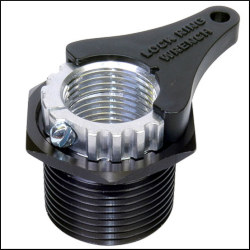 In this video Gavin Gear reviews three types of die accessories from LEE. These work for virtually all standard dies, not just LEE-brand reloading dies. The new LEE basic silver-finish die lock rings now feature splines for enhanced grip and compatibility with LEE’s new die lock ring wrench (photo right). They still boast a rubber 0-Ring that helps “float” the die for improved cartridge concentricity.
 A fire in the home is always to be feared. And a fire in your reloading room can be disastrous. Near your reloading bench you probably have flammable solvents, and maybe gunpowder. What would happen if an electrical fire started in your reloading room? Would you be alerted? Do you have a proper fire extinguisher at hand?
 I grabbed the nearby ABC cannister extinguisher and squirted out the fire and soaked the charred bench areas with water. Good thing I had the extinguisher! And I was glad I religiously store powder and primers properly — away from the bench (and everything else).
 In his account, Joe refers to an “ABC” cannister fire extinguisher. The “ABC” refers to the fire classification rating: Class A (trash, wood, and paper), Class B (liquids and gases), and Class C (energized electrical equipment) fires. There are many brands of ABC-rated extinguishers.


