Muzzle brakes are controversial. Some people swear by them, while others swear at them. Still, there’s no question that a good brake can reduce felt recoil up to 45%. And likewise, the best brakes, when installed properly, seem to have no negative effect on accuracy.
Roy Bertalotto has done considerable experimentation with muzzle brakes, testing dozens of brake designs on his own rifles over the past few years. Roy’s article, Adventures with Muzzle Brakes, discusses various aspects of muzzle brake design and performance. Roy doesn’t claim that his testing is definitive, but his article is definitely worth a read. Here are some of Roy’s interesting findings:
Exit Hole Diameter
“Best accuracy and effectiveness of the brake was obtained with a hole .020″ over bullet diameter. If the exit hole is too small, such as +.005″ over bullet diameter, accuracy suffers. If the depth of the exit hole is too shallow, the metal around the hole will erode very quickly.”
Hole Placement
“The most effective braking was with a brake 1″ in diameter with a 3/4″ exit hole on each side, just in front of the muzzle. The bullet passes through a cone of 35 degrees before it exits the brake. (Like the tank example), Incredible reduction of recoil. But loud and ugly. Very easy to make since you don’t need a spin fixture or a dividing head.”
Bottom Gas Venting Helps Accuracy
“In my tests, not having holes all around the brake effects accuracy a bit. I believe it does something to the bullet by the air pushed ahead of the bullet creating unequal turbulence in the bullet path. I’ve tried a few brakes where I drilled only holes on the top, test fired, and then completed holes on the bottom and in every case, accuracy improved.” Below you see some spiral-ported brakes crafted by Clay Spencer.
Brakes Work Best with High-Pressure Cartridges
“The higher the pressure of the particular round, the more effective the brake. I have over 20 rifles with brakes. The 220 Swift is the king of reduction. Followed very closely by the 25-06, 6mm Remington, any Weatherby small bore. With a proper brake and a hot handload under a 40 gr bullet, the Swift will move 1/2″ to the rear and 0 muzzle rise! Big boomers with low pressure like 45-70s and shot guns benefit the least.” [Editor’s Note: Roy is judging effectiveness by the percentage of recoil reduction rather than absolute levels of recoil. Obviously if you start with a heavier-recoiling round, the absolute amount of recoil energy reduction is greater. Roy is really talking about efficiency–brakes are most efficient when used with high-pressure cartridges.]
Installation is Key to Accuracy
Roy’s findings are fascinating and suggest that further study of muzzle brakes is warranted. But we can all agree that precision installation of the brake is essential for accuracy. A poorly-installed, mis-aligned brake will degrade accuracy, that is well-known.
Harrell’s Precision has made tens of thousands of muzzle brakes, in many styles and port arrangements. The Harrell brothers offer some good advice for gunsmiths installing brakes: “Muzzle brakes aren’t magic, they reduce recoil by redirecting exiting gas. What’s important is that they are straight and the threads are perpendicular with the base. The only way to get the base and threads perpendicular is to thread, not tap, them on a lathe.”
Forum member Russ T. is an experienced High Power shooter, with a Tennessee LR State championship to his credit among other excellent performances. He recently reviewed the performance of his Eliseo Tubegun chambered in 6mmBR. Russ writes:
“Got a good chance to shoot my tube gun today at 600 yards. I put a new Bartlein barrel on it chambered in 6BR. I had to do VERY little load develpment to find a good load. In fact all loads I tried would have shot a 200 out 200 possible at 600 yards. The winner load is a classic 6BR recipe right from the pages of this web site: 30.0 grains Hodgdon Varget, CCI 450 primers, 105gr Berger VLD seated .010″ into the lands, Norma brass with two-thousandths (.002) neck tension.
The gun, built on an Eliseo B1/R1 (single shot) tube stock*, has a trued Remington action with Dave Kiff (PT&G), fluted, coned bolt with Sako extractor, GTR firing pin, spring and shroud, and Rifle Basix trigger. The barrel is a 30″ Bartlein, 1:8″ twist 5R heavy Palma. My reamer is a .272 neck for Norma brass and .104 Freebore. Centra rear iron sights are fitted.
Weather was very dark and cloudy but there was very little wind. On the MR-1, 600-yard target I squeeked out a 200-16X. This little case is a flippin’ hammer at 600 yards! What a lot of fun to shoot. Lynwood Harrell just sent me a die in the mail so I’m ready for the season. I can see why the Europeans shoot this case at the very demanding 300-meter target!
This little case is a real winner at 600 yards. The nice thing about it is there is no false-shoulder/fire-forming hassle, and no necks to turn. Just load it and shoot it. I have two rifles that have turned necks and that is a lot of work when you’re doing 200 pieces of brass per rifle. The 6BR is just not picky. In fact the bullets just seem to know where to go.
My 6BR was built by Wald Precision Rifles. Call (701) 527-6447 and ask for Steve. Steve has produced Three National Championship quality rifles for me. I really have to thank Steve for doing such great work, he really stands behind his product. I know every one reading this can appreciate a good craftsmen when you’re putting your hard-earned money into a project such as this. So who deserves the credit — the Archer or the arrow-maker?”
*The B1 is the original Eliseo single-shot Tubegun stock, designed for the Barnard action. The newer R1 has a similar design, but is configured for a Remington 700 or Rem-clone actions.
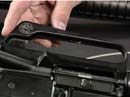
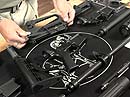
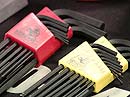
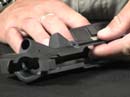
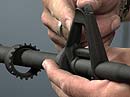
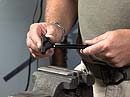
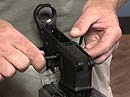
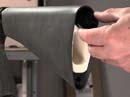
Brownells, a leading supplier of AR-15 parts and accessories, now offers a comprehensive series of AR-15 assembly instruction videos. They are available online for FREE. The broadcast-quality videos, shot in-house in Brownells’ studios, represent a huge undertaking by Brownells. We’re talking hours of content that provide both novice or expert all the information one needs to build an AR-15 from scratch. The free video series includes 52 separate clips, divided into nine (9) sections, each occupying a separate page on Brownells’ website. You can easily navigate among the 50+ segments to watch just the part you need without fast-forwarding or rewinding through a huge file. Sections 1 and 2 explain the features of various AR models, Section 3 spotlights the specialized tools you’ll need for the build, and Sections 4-9 demonstrate the correct way to install all the various parts and pieces.
For each video, PDF instructions are also available so you can watch a segment, print out the illustrated instruction sheet, and head to the bench. Plus, there’s a set of checklists so you can make sure you’ve ordered every piece you need. Whether you’re building a complete gun, or just installing a new safety, flash hider or stock, there’s a lot of valuable information to make the job easier.
The videos can be accessed, FREE, through the website howtobuildanar15.com, or you can click on the links in the tables below. You can also order an AR-15 catalog from the site, or by phone at 800-741-0015, mention code #PEK.
Brownells is the world’s largest supplier of firearm parts, gunsmithing tools, equipment and accessories. Brownells stocks more than 30,000 items, backed by a 100% satisfaction, unconditional, lifetime guarantee. To place an order or for more info, call 800-741-0015 or visit brownells.com.
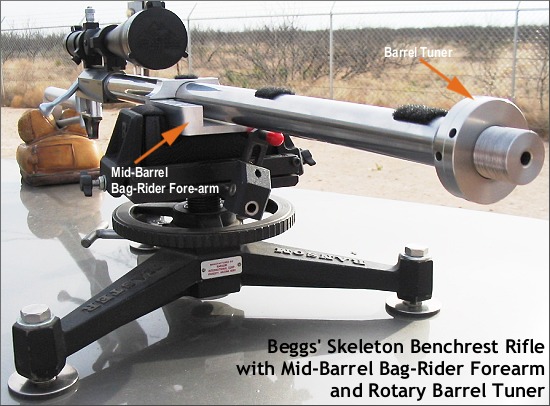
Gene Beggs is a Texas shooter and gunsmith known for “out of the box” thinking. He has successfully pioneered the 220 Beggs and 6mm Beggs cartridges in BR competition, and has developed radical new rifle designs and tuners at his West Texas research facility (with a 100-yard indoor shooting tunnel). Recently Beggs has tackled the challenge of indexing centerfire barrels. It looks like he has engineered a workable solution that will allow shooters to index their barrels without altering the critical headspace dimension. If this really works, Gene has come up with an important new gunsmithing procedure with the potential to enhance accuracy for a wide variety of firearms.
Barrel Indexing Basics
Barrel Indexing is a procedure for optimizing the rotational position of a barrel relative to the action. With a conventional barrel installation, if you were to put a mark on the outside of a barrel and then screw the barrel into the action, that mark might end up at at 12 o’clock, or 6 o’clock or pretty much any position on the “clock-face”, depending on where the shoulder is cut on the barrel. When the shoulder butts up against the face of the action (or recoil lug), you can’t screw the barrel in any farther. At that point, the barrel’s rotational position is fixed and can’t be changed without altering headspace.
Tests with rimfire barrels suggest that careful barrel indexing can produce accuracy gains. We’re not quite sure why — there are different theories — but it has been clearly demonstrated that by rotating the barrel relative to TDC (top dead center) on the action, you can move bullet point of impact quite dramatically. On rimfire barrels machined with a cone breech and secured with a barrel block system (as on an Anschutz 2000-series action), gunsmiths such as Mike Ross have been able to easily experiment with index positions. CLICK HERE for Mike Ross Indexing Tests.
But indexing centerfire barrels has been a challenge. You can use shims to adjust the barrel’s index position relative to action TDC, but this moves the shoulder in and out, effectively altering headspace by the width of the shims used.
Is there a way to index a centerfire barrel without changing the headspace? Texas Benchrest shooter and gunsmith Gene Beggs thinks he has the answer.
The Beggs Barrel Indexing Solution
With a conventional barrel installation, the action/receiver has an internal female thread. The threaded breech end of the barrel, or tenon, has a male thread. The barrel simply screws in until its rotation is stopped (and index position fixed) when the shoulder hits the action face or recoil lug.
Beggs has come up with an ingenious solution using an intermediary threaded bushing that fits between the action thread and the tenon threads. The barrel tenon is reduced in diameter slightly and re-threaded to mate with the inner bushing. This inner bushing is shorter than the receiver threads so it can be adjusted inwards and outwards. Its position is fixed with a set-screw. The effect of moving the inner sleeve inwards and outwards is to change the index position at which the barrel tenon threads start to “grab” as they are spun inwards. Set the inner sleeve at one position, and the tenon threads may start contact at 6 o’clock for example. Rotate the inner sleeve a half-turn and the threads will start at 12 o’clock.
Now, as you continue to screw the barrel inwards, it will still stop when the shoulder hits metal — so headspace is always the same. But…and this is the key point, the barrel’s rotational index position will vary depending on the position of the inner bushing. By adjusting the bushing position, you control where the barrel’s threads start to “connect”. The result is that the rotational orientation of the barrel can be indexed at any point on the dial.
Boyd Allen has given this example which may help readers visualize things: “Think of a slot-head machine screw being tightened till it bottoms. The final orientation of the slot after tightening depends on where it picks up the first thread of the threaded hole. If the hole itself is rotated then the final position of the slot, relative to the viewer, will be rotated by a similar amount. Screw a slot-head machine screw all the way into a nut. Now turn the nut. The slot rotates with it.”
System Slated for Production
Gene Beggs is excited about the new indexing system and plans to create a kit that can be used by gunsmiths. Gene writes:
“Inserted in between the action threads and the barrel tenon is a bushing that can be adjusted fore and aft in the action. This makes it possible for the barrel tenon shoulder to contact the receiver face at any position of the clock. Of course, the barrel tenon must be turned down and threaded to match the inside threads of the bushing. A small stainless steel set screw now holds the bushing securely in place. Adjustments are quick, easy and secure.
I spent two days in the tunnel testing the system. The test rifle is a Cobra sporter chambered in 6mm Beggs stocked with one of my Ultralite aluminum stocks. Barrel torque was rechecked each time the barrel was re-indexed and never seemed to loosen up. The sweet spot was found on the second adjustment at the six o’clock position. After a couple of days of testing, I now have complete confidence in the rifle and indexing system. Unless problems arise, we will soon be tooling up and producing kits which will require gunsmith installation.”
For more information on the Beggs Indexing system, email Gene at genebeggs [at] cableone.net, or call (432) 631-5124, or (432) 367-0329.
Remington Arms just introduced a new cartridge, the 30 Remington AR (aka “30 RAR”), to be used in AR-platform rifles to be built by its DPMS subsidiary. (Remington, DPMS, and Bushmaster are all owned by Cerberus Capital Management, a private holding company.) The cartridge carries the “short, fat” design to the extreme. It is based on a shortened version of the .450 Bushmaster, which itself was a cut-down version of the .284 Winchester. Like the .284 Win, the 30 Remington AR has a rebated rim, so it will fit a .308 Win-sized boltface (0.473″). While it resembles a 30BR, the new case is much fatter, offering an impressive 44 grains of powder capacity. The portly diameter of the 30 RAR case dictates that the magazine will be a single-stack, and will hold only four (4) rounds.
Cram a Big Cartridge in an AR15 Mag and Make Sure It’s a Thirty
What was Remington thinking? Well, the stated project goal was to transform the standard AR15 into a “legitimate big game hunting platform.” Presumably, a 30-caliber cartridge was chosen for marketing purposes as that is the most common deer hunting caliber. The “science” of the design was basically to stuff the biggest cartridge possible in a standard AR15-sized magazine. According to Outdoor Life columnist John Snow: “DPMS President Randy Luth and Remington’s John Fink (brand manager for the rifle division) … both said that the goal was to look at the AR lower and see how much cartridge they could fit in there.”
30 Remington AR (30 RAR) Specifications
Case Capacity
Rim Diam.
Parent Cases
Shoulder
Factory Load
Mag Type
44.0gr H20
0.473″ .308 bolt face
.450 Bushmaster .284 Winchester
25°
125gr SP or 125 B-Tip 2800 fps 0.267 BC
4-Round Single Stack
Factory 30 Remington AR Rifles and Uppers
Initially, the 30 Remington AR round will be chambered in complete, DPMS-built Remington R15 rifles, which start at $1,199.00 MSRP. For production rifles, the expected rate of twist is 1:10″, but that has not been finalized. What about separate uppers? Given the hefty price of the complete rifle, existing AR owners may prefer to purchase a 30-caliber upper by itself. While no release date was given, Remington stated that 30 RAR uppers will definitely be offered for sale in the future.
Impressive Velocities but Much Less Energy than a .308 Win Shooting 160s
With 44 grains of capacity, the 30 RAR can generate some impressive velocities with bullets in the 120-125gr weight range. Remington claims its 125gr factory ammo will deliver 2800 fps muzzle velocities running at about 55,000 psi pressure levels. Three factory loads will be offered: Rem-branded 125gr Core-Lokt PSP and 125gr AccuTip BT, and a UMC-branded 123gr FMJ. At $18.99 per 20-round box, the UMC ammo is intended for inexpensive practice purposes. The $35.99/box AccuTip and $26.49/box Core-Lokt PSP are much costlier. The relatively light-weight bullets used in the Remington ammo have poor Ballistic Coefficients compared to the longer, heavier bullets typically used in a .308 Win or 7mm-08. The 125gr Core-Lokt has a 0.267 BC, while the 125gr AccuTip is somewhat better at 0.335. Nonetheless, Remington’s ballistics tables show that the AccuTip should match the trajectory of a 165gr AccuTip (fired from a .308 Win), fairly well out to 400 yards. However, there is a BIG difference in energy as you can see from the table below. At 300 yards, the 125gr AccuTip delivers 1153 ft/lbs of energy compared to 1661 ft/lbs for a 165gr AccuTip launched at 2700 fps from a .308 Win. (Note: these numbers were calculated with 24″ barrels. Remington’s 30 RAR-chambered R15 rifle has a 22″ barrel, so its performance should be somewhat less impressive.)
COMMENTARY by EDITOR
Our first reaction to the news of Remington’s new cartridge was: “Why?” The obvious (and cynical) answer is that Remington wanted to sell AR-style rifles to deer hunters who need an excuse to purchase a military-style semi-automatic. There may be a market for that… who knows. But there is already a proven, compact 30-caliber cartridge that fits a standard-sized AR15 lower — the 7.62×39. The 7.62×39 won’t push a 125-grainer as fast as the bigger 30 RAR, but the 7.62×39 will still kill a whitetail plenty dead. Perhaps Remington’s engineers should simply have applied themselves to producing a proper (i.e. 100% functional) 7.62×39 magazine. This Editor has tried most of the AR15 7.62×39 magazines on the market (from 3-rd to 30-rd capacity). None of those I tested worked particularly well. Some simple redesign work (call the MagPul folks) would solve that.
Better AR Ballistics with 6.5 and 6mm Cartridges
If the goal was to produce an AR15 with better ballistics and downrange energy than the .223 Rem cartridge delivers, we’re not sure a 30-caliber was the way to go. The 6.5 Grendel performs exceptionally well in AR rifles, delivering great accuracy with 123gr Lapua Scenar or Sierra bullets. Likewise, the AR15 can be a superb High Power and Cross-the-Course platform shooting the 6mmAR cartridge developed by Robert Whitley. The 6mmAR is the 6.5 Grendel necked down to 6mm. Shooting 105 Berger VLDs it comes very, very close to the ballistics of the larger 6mmBR cartridge, and it gives up nothing in accuracy. By contrast, with its low-BC bullets, the 30 Remington AR is not going to be competitive at longer ranges with either the 6.5 Grendel or the 6mmAR. And with factory mags limited to four (4) rounds, you couldn’t use this gun effectively in High Power matches, even if it proves highly accurate on the short course.
Important Innovation or Another Orphan Cartridge?
Only time will tell whether the 30 Remington AR cartridge will catch on with sport shooters and hunters. We’re not sure the round has an important purpose that cannot be filled by existing, proven cartridges. The complete 30 RAR rifles are expensive ($1200+) compared to a typical bolt-action deer rifle, so we wonder how many deer hunters will actually jump on Remington’s bandwagon. Speaking frankly, so long as the cartridge is available only with Remington-made brass, we predict little interest among competitive shooters. Now if Lapua were to produce a 65,000-psi rated version of this cartridge, THAT might interest hunter benchrest shooters and BR for score shooters. A Lapua 30 RAR would be like a 30BR on steroids. But alas, don’t expect Lapua, or Norma, or even Winchester, to produce 30 RAR brass any time soon.
So, does the 30 Remington AR (aka “30 RAR”) have a future? It will certainly stimulate sales of AR-platform rifles to some extent. That’s important because AR sales have been lagging recently. Perhaps that is enough justification for a new round. All things considered however, we think Remington would have been better off building its “AR for big game” around the 6.5 Grendel case, perhaps in a 7mm version. Still, we have to credit Remington’s designers. Using a modern “short, fat” design, with a rebated rim, they’ve achieved impressive velocities in a very compact cartridge. The chopped-down .284 may prove to be a very accurate design.
For two years, Forum member John Skowron (John708) has been campaigning a 6BRX, built by Nat Lambeth (RustyStud). You’ll find the full history of John’s 6BRX project in this Forum Thread. With this rifle, John was the overall 1000-yard winner at Butner in February 2007.
The 6mm BRX is based on the 6mm BR cartridge. The shoulder is moved forward, but the shoulder angle and case taper is the same as the parent cartridge. This way you can use standard dies for most purposes (although it is a good idea to have a custom full-length die so you can size the entire case body). Many of our readers have been interested in the 6mm Improved (BRX, Dasher etc.), but they’ve wondered about case durability and barrel life. John has answers for those questions:
6BRX Case Life
Case life running the Berger 105s at 3000+ fps is 14-15 reloads. Brass was discarded when the primer pockets became too loose. The 6BRX brass OAL after fireforming is 1.56″. Max OAL for the 6BRX is 1.58″. The brass never stretched enough to require trimming before discard. Another plus for the 6BRX and Lapua brass. By the way don’t even bother with Remington-brand 6BR brass. The primer pockets were so loose after my standard fire-forming load I had to trash all the cases. Stick with the good stuff, Lapua.
6BRX Barrel Life
Here are Skowron’s comments as his round count increased:
2750 Rounds: I now have 2570 rounds through my 6mm BRX. I was just at the range today doing an accuracy test. I shot two 10-shot groups at 100 yards, one with 105gr Bergers, and the other with 107gr Sierras. Both were identical 0.44″ 10-shot groups. Not bad for a rifle with 2500+ rounds through it.
2900 Rounds: I now have 2900 rounds through my 6mm BRX. I was doing some load testing with the new 6mm Berger bullets. I compared them with my existing comp. load in my 6mm BRX. The 105gr Bergers, jammed .015″ into the lands, with 31.5 grains of Varget and Fed 205s are still shooting .45″ 10-shot groups at 100 yards. Velocity is 3060 fps. I don’t know how long this Broughton barrel will last, but I’m amazed that it’s lasted this long.
2950-3044 Rounds: I had virtually no throat erosion until I reached 2900 rounds. After 2900 rounds throat became noticeably rougher on cleaning and groups opened up. 10-shot groups with match ammo were now .53″ (compared to low fours before). At 2950 rounds the groups ran .58″. At 3044 rounds, the groups opened up to .7″. That’s not enough accuracy for LR work.
CONCLUSION: Barrel life with competitive accuracy was 2900 rounds with this gun.
Achieving this barrel life goal pretty much completes my 6mm BRX project. I’m now shooting a cartridge that has the same or better barrel life than the 260 Rem, it’s more accurate, with essentially equal wind drift. [Editor’s Note: Richard Schatz recently won the NBRSA 1000-yard Nationals with a 6 Dasher, a similar 6BR Improved cartridge, but with a 40° shoulder. Richard’s barrel had over 2000 rounds through it.]
Forum member Jim (aka FalconPilot) recently provided a strong endorsement of a Tennessee gunsmith. We thought this was worth sharing. Jim notes:
“A lot of times on the internet all we hear are the bad things. I just wanted to pass a little valuable info along to all my fellow shooters. Disclaimer: I am in no way connected to or sponsored by Howard — I pay just like everyone else.
Howard Pitts of Taft, TN is the owner of Pitts Precision Rifles. I met Howard at the Regional F-Class Championship in the spring and he is a hell of a nice guy. At the time, the barrel gave out on my Dowling-built 6.5-284, and someone there referred me to Howard. After watching his daughter Halie shooting all weekend (she kicked a number of well-known butts!!) with a gun that her dad had built, I decided to have Howard rebarrel my gun. This gun was a hummer before, and even more of a hummer when I got it back. Not only does it shoot “lights out”, but the quality of work was top-notch, and turn-around time was impressive.
Move forward a few months…I had a 6BR built and chambered by another very well-known gunsmith. Great guy, fast turn-around, but the gun give me problems from the get-go. The Lapau brass was just too big for the chamber. I tried bumping shoulders, using small body dies, everything I knew of, and finally after about 800 rounds, gave up. (Moral to this story is ALWAYS use your own reamer, one that you know is right.) The gun shot in the high .30s to low .40s… but I expected more.
I’d decided that I wanted a Dasher anyways, so a call to Dave Kiff had the reamer on its way. Another call to Tim North and I had another barrel on the way — Tim is a great guy, went way out of his way to help, and makes a damn good barrel.
I next called Howard Pitts, explained my situation, and he told me to get him the equipment. He set my old barrel back, and chambered both barrels for me. Three weeks later, the gun returned with the same top quality work that I had received the first time around. Again, at a price that was more than reasonable (Pitts charges $150.00 for a typical chambering job). I’ve shot the gun over the last two days. While fireforming the brass, the gun is shooting in the .20s. With formed brass, I turned in a 5-shot, 100-yard group of .089″, my best group ever. Here is a group at one thousand (1000) yards:
I just wanted to point out a gunsmith that is honest, very accommodating, and who produces incredible work at a very fair price. Anyone looking for a smith, should give Howard a call at 931-993-6122 or 931-425-6895 (secondary), email: htpitts [at] bellsouth.net .”
Editor’s NOTE: Jim makes a very good point about reamers — it’s wise, when possible, to acquire your own reamer for an important project. That eliminates a variety of potential problems and it also ensures that you can get a near-identical chamber when it’s time to re-barrel the gun.
Regarding Pitts Precision — we’re pleased to spotlight a smith who does excellent work, at a reasonable price, with good turn-around times. There are many otherwise outstanding smiths who, due to their heavy workload, may take months or even years to complete a rifle. With one of this site’s own project guns, we had to wait 10 months for a barrel job — not a complete rifle — just chambering, fitting, and crowning a barrel. We applaud those smiths who can organize their schedules to provide good work in a timely fashion.
Benchrest accuracy from a Barnard? You Betcha! In a recent 600-yard benchrest match in Ojai, California, the powder-blue 6.5×47 Barnard shown below delivered an impressive 1.5″ five-shot group to set small group for the match. The gun has shot well under 1/4-MOA at shorter ranges during testing. Owned by SoCal shooter Bill H., the gun was smithed by Mac Tilton of MT Guns in Santa Barbara, CA. Mac says, “even with that long barrel, the gun balances well on the bags in the Mastin stock.” Owner Bill is delighted with the gun’s performance, telling us “this rig really demonstrates how accurate the 6.5×47 cartridge can be.” Bill was shooting Lapua 6.5×47 brass with Lapua 123gr Scenar bullets, Reloder 15 powder, and CCI BR4 primers.
Key Components from Down-Under
The rifle features a Barnard model “P” three-lug action, Barnard target trigger, Mastin F-Class laminated stock (with painted finish), and a 32″ heavy-contour True-Flite barrel. Both action and barrel are products of New Zealand, while the Mastin stock was crafted in Australia. For a better look at this handsome rifle, CLICK THIS LINK for a supersized photo.
We recently followed an auction for a Cooper 17 HMR. Such a rifle (in normal trim) might typically sell for $1300.00 on Gunbroker.com. But the bids on this particular rifle soared, eventually closing at $3126.00! What made this Cooper so desireable? Well it did have a case-colored receiver, but the main attraction was custom-crafted stock from Stocks by Umberger. Shown below is a centerfire stock produced by Brent Umberger.
Artisan’s Legacy Lives On
Brent Umberger practiced his trade as a master stockmaker for four decades. Sadly, he passed away a couple of years ago. However, the company he started, and the legacy of fine craftsmanship he created, are being carried on. In recent years, Brent worked with Adam Fraley and Jason Basham, training them in the fine arts of gunsmithing and stockmaking and sharing his expertise. After Brent’s passing, Adam and Jason purchased the business from Brent’s widow. Adam and Jason are now continuing the tradition of fine-crafted, hand-checkered wood stocks built from the finest woods available. Stocks by Umberger products are showcased on the website, StocksByUmberger.com.
Umberger rifles and shotguns have been featured in many publications including American Shotgunner, Gun Week, Peterson’s Shotguns, Sporting Clays, American Walnut Industry and Trap and Field magazines. Umberger guns have graced the cover of The Shooters’ Bible, and a fabulous Purdy sidelock shotgun stocked by Brent is on display at the ATA Hall of Fame.
Looking for a cool extended bolt knob to provide extra leverage and more secure grip while working the action of your rifle? Bolt Knobs by Bill offers a wide array of styles and colors, all hand-crafted with great precision. Bill Hawk’s products range in price from $20 to $30. The O-Ring style provides excellent comfort and grip. The Tactical style knob is slightly longer and has no o-rings. It is available with or without knurling. Bill also offers a conventional oversized ball in plastic or metal. Click images below to see LARGE PHOTOS.
Custom bolt knobs are made from aluminum stock that has been machined, media blasted, and powder coated for a durable and uniform finish. Choose from dozens of powder-coat colors. Knobs are drilled and tapped to fit 5/16 x 24 threaded bolt handles. A round ball style is available in aluminum, steel, or phenolic (hard plastic with threaded brass insert). This configuration still provides plenty of gripping surface but keeps the overall length of the bolt handle shorter compared to the tactical model.
Bill Hawks tells us that all his products can be customized: “I started selling bolt knobs a few years ago when I began to combine my passion for metal working and my passion for shooting. Of course, there were other manufacturers who already made bolt knobs, but I wanted to offer something a little different by allowing the shooter to tell me what they wanted and do my best to produce it. Hence the ‘custom’ part. Most people are happy with the tactical and o-ring knobs that are featured on my website, but I also make them to customer spec. Length, profile, thread size, and material can all be adjusted at no extra charge in most cases. My emphasis is primarily on offering a service to my fellow shooters.” There is a secure shoping cart on Bill’s Website, so it’s easy to order. Direct questions to info [at] boltknobsbybill [dot] com, or call (319) 321-0827.


 Forum member Russ T. is an experienced High Power shooter, with a Tennessee LR State championship to his credit among other excellent performances. He recently reviewed the performance of his Eliseo Tubegun chambered in 6mmBR. Russ writes:


 Remington Arms just introduced a new cartridge, the 30 Remington AR (aka “30 RAR”), to be used in AR-platform rifles to be built by its DPMS subsidiary. (Remington, DPMS, and Bushmaster are all owned by Cerberus Capital Management, a private holding company.) The cartridge carries the “short, fat” design to the extreme. It is based on a shortened version of the .450 Bushmaster, which itself was a cut-down version of the .284 Winchester. Like the .284 Win, the 30 Remington AR has a rebated rim, so it will fit a .308 Win-sized boltface (0.473″). While it resembles a 30BR, the new case is much fatter, offering an impressive 44 grains of powder capacity. The portly diameter of the 30 RAR case dictates that the magazine will be a single-stack, and will hold only four (4) rounds.

 COMMENTARY by EDITOR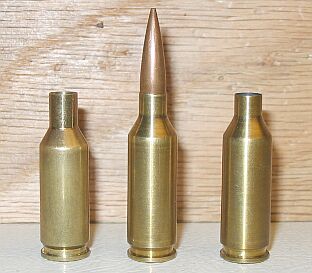


 Benchrest accuracy from a Barnard? You Betcha! In a recent 600-yard benchrest match in Ojai, California, the powder-blue 6.5×47 Barnard shown below delivered an impressive 1.5″ five-shot group to set small group for the match. The gun has shot well under 1/4-MOA at shorter ranges during testing. Owned by SoCal shooter Bill H., the gun was smithed by Mac Tilton of


 Artisan’s Legacy Lives On


