How is a modern, metal-chassis rifle built? This very cool video from Masterpiece Arms answers that question. The nicely-edited video shows the creation of a Masterpiece Arms tactical rifle from start to finish. All aspects of the manufacturing process are illustrated: 3D CAD modeling, CNC milling of the chassis, barrel threading/contouring, chamber-reaming, barrel lapping, laser engraving, and stock coating. If you love to see machines at work, you will enjoy this video…
Real Avid sells a unique multi-tool designed expressly for rifles and shotguns. The $29.99 Gun Tool™ combines 18 of the most commonly used long gun tools in a compact package. The Gun Tool boasts three Torx wrenches (T20; T15; T10), two Allen hex drives (3/32″; 5/32″), and four screwdriver blades (1/8″ flat; 3/16″ flat; Phillips 1 & 2). In addition, there is a magnetic 3/16″ driver, a pin punch, and a stainless claw blade useful for opening shipping boxes or trimming target backers.
The most unique feature of the Gun Tool ($30.35 on Amazon) is a stepped, multi-size choke-tube wrench that fits six shotgun bores from .410 all the way up to 10 gauge (see photo below right). For active shotgunners, that provides great versatility in a small package.
Praise from Respected Reviewers
In 2012, the NRA’s American Hunter magazine awarded The Gun Tool their Golden Bullseye award in the “Gear of the Year” category. The Gun Tool has also been awarded an outstanding 100% approval rating and a full endorsement by the North American Hunting Club.
Noted gun journalist Jim Shepard wrote: “I’ve been playing with ‘The Gun Tool’… and I’ve found it to be a pretty promising device that really should find a place in lots of range bags. If you’re a long gun shooter, it has something you’ll eventually need in the way of a tightening/loosening/adjusting tool.” Jim cautions that the claw blade does not lock into place.
The Biden administration, through its Commerce Department Bureau of Industry and Security (BIS), will impose new gun export restrictions starting May 30, 2024. These restrictions will affect a wide range of gun exports to 36 countries world-wide. These new restrictions follow gun export “pauses” mandated last October. Fox News explains:
“The Biden administration plans to impose new restrictions on firearms exports and increase scrutiny on transactions … a Commerce Department official said late on Thursday. The department on Oct. 27 issued a pause on most firearm exports to assess the ‘risk of firearms being diverted to entities or activities that promote regional instability, violate human rights, or fuel criminal activities.’
The Department plans to announce on Friday it will lift the pause from May 30 when the new restrictions take effect. The Commerce Department expects the restrictions to result in about a 7% reduction, or $40 million, out of the $600 million in average annual U.S. firearm exports, the official said.”
Additionally, the Commerce Department will revoke some export licenses and will cut some licenses from four years to one-year. SEE Legal Analysis.
Biden Administration Restriction of Firearms Exports By Larry Keane, NSSF Senior V.P. and General Counsel
“President Joe Biden’s relentless rebukes of the firearm industry and law-abiding gun owners isn’t just an infringement on our Second Amendment rights – it’s a calculated and well-financed attack on the fabric of American liberty. President Biden calls the firearm industry ‘the enemy’ and his administration is systematically attempting to dismantle the industry and pander to the whims of radical gun control lobbyists. The evidence is clear, and the statistics damning.
The Department of Commerce’s Bureau of Industry and Security (BIS) recently finalized a rule that made a 90-day firearm export ‘pause’ permanent policy and created burdensome regulatory requirements. Sold under the guise of national security, this policy will hamstring the U.S. firearm industry’s competitiveness and cost thousands of good-paying jobs by impeding a critical revenue source. The economic impact is staggering, with estimates far exceeding $250 million – a devastating blow to an industry already reeling from government overreach.” READ Full Story on NSSF.org.
This new Department of Commerce Rule goes into effect on May 30, 2024. The new firearms export policies are explained in the Federal Register:
“In this interim final rule (IFR), the Bureau of Industry and Security (BIS) is amending the Export Administration Regulations (EAR) to enhance the control structure for firearms and related items[.] This rule identifies semi-automatic firearms under new Export Control Classification Numbers (ECCNs); adds additional license requirements for Crime Control and Detection (CC) items, thereby resulting in additional restrictions on the availability of license exceptions for most destinations; amends license review policies so that they are more explicit as to the nature of review that will accompany different types of transactions and license exception availability (including adding a new list of high-risk destinations); updates and expands requirements for support documentation submitted with license applications; and better accounts for the import documentation requirements of other countries (such as an import certificate or other permit prior to importation) when firearms and related items are authorized under a BIS license exception. … This rule is effective May 30, 2024.”
For this Saturday Video Showcase we are featuring products and operations of Kelbly’s Inc. We are doing this to help help honor the memory of George E. Kelbly Sr., the man who founded Kelbly’s Inc. producers of superb actions, stocks, and complete rifles. In addition, George Kelbly Sr. created the impressive range where the annual Super Shoot benchrest competition was held for many decades. Sadly, George passed away on May 14, 2024. He will be missed — George Kelbly Sr. was a great leader in the shooting community.
Kelbly’s Product and Gun-Building Videos
Want to see new-born Pandas? No, not the furry kind — rather Stolle Panda actions produced with state-of-the-art CNC machinery. If you’ve ever wondered how precision benchrest, long-range, and tactical rifles are built, check out this first video from Kelbly’s. You’ll see actions finished, barrels chambered and crowned, pillars installed in stocks, barreled actions bedded, plus a host of other services performed by Kelbly’s gunsmiths and machinists.
Click Volume Control to Activate Sound for Kelbly’s Video:
If you’re a fan of fine machine-work, this video should be both informative and entertaining. You can see how precision gun work is done with 21st-Century technology. Tip of the hat to Ian Kelbly and crew for producing this excellent video visit to the Kelbly’s production center. CLICK HERE to watch this video full-screen with full sound and no auto-start. That will make it easier to see production details.
Kelbly’s Super Shoot — Group-Shooting Benchrest Action
Here is a video from the 2022 Kelbly’s Super Shoot, the last-ever Super Shoot event held at the impressive Kelbly’s range in Ohio. The Super Shoot is a 100- and 200-yard benchrest competition with the world’s top group shooters. The Super Shoot, in the post-Kelbly’s phase, is now run by Super Shoot Sports with major sponsorship from Shilen. The 50th Super Shoot will be held May 20-23, 2024 (this coming week) at the St Louis Benchrest Club.
Above is another Kelbly’s Range video from a decade earlier at the 2012 Super Shoot. This has excellent footage showing the firing line and the forest of wind-flags.
Kelbly’s Nanook Lightweight LR Hunting Rifle
Kelbly’s impressive Nanook MG rifle features a magnesium chassis, with a 26″ carbon-wrapped barrel and folding stock. Strong yet light, the 7.9-lb Nanook MG is a long-range hunting rifle that’s easy to carry, yet can effectively shoot big-caliber cartridges capable of taking large game.
Guide to Kelbly’s Hunting and Tactical Actions
This video by Preferred Barrels features four modern hunting/tactical actions: Atlas Lite, Nanook, Atlas Tactical, and Prometheus. These actions stand out for their precision engineering, making them a top choice for both hunters and competitive shooters. The unique TG ejector system ensures reliable mechanical ejection, reducing reliance on chamber pressure and maintaining shot alignment. These actions are a good choice for PRS/NRL shooters as well as traditional hunters looking for lightweight precision.
Kelbly’s F-Class Panda Action
Here is a short third-party review of the impressive F-Class Panda Action from Kelbly’s. This is popular with competitors because the action has a wide, flat bottom that beds securely, plus the action has a built-in +20 MOA rail. These actions have a smooth movement and can deliver great accuracy. The F-Class Panda action is offered in both short and long versions, starting at $1600.00.
Firing Pin Maintenance — Kelbly’s Tutorial
The last video in today’s Saturday showcase offers some very important tips on maintaining your firing pin. While this features Kelbly’s action components, many of the observations apply to other modern actions as well. You definitely want to keep your firing pin in good order as pin problems can lead to unexpected fliers, or decreased accuracy on target.
Detail from Doan Trevor rimfire prone stock (Fiddleback Walnut) with Stiller 2500 X Action.
New Mexico Gunsmith Doan Trever is a true wizard with wood. At Doan Trevor Custom Rifle Building, he crafts stunning figured wood stocks, and also builds complete wood-stocked and fiberglass-stocked rifles that shoot as good as they look. Doan is a true master, with a mind for function and an eye for beauty. The ability to hand-craft wood is becoming a lost art. For this Sunday, we celebrate four projects crafted by Doan: two complete rifle, a special F-Class stock built for multiple actions, and an F-TR stock for a Sako action. Visit DoanTrevor.com to view find dozens of other stunning stocks and complete rifles.
Mausingfield America Rifle with English Walnut Stock
Doan told us: “This is a highly figured piece of English Walnut with burls and flowers. Along the bottom of the stock there’s a burl/flower that looks like an owl and one side looks like the Sandia Mountains. This rifle is in 30 PCR. Doan adds: “The owner is enjoying this rifle immensely.”
Walther KK500 (Twin Trigger), English Walnut Laminate Stock with Fiddleback Accents
About this unique rig Doan notes: “This left-handed rifle has two triggers. It has an electronic trigger AND a mechanical trigger. With the wood stock option, the charging cable needs to be modified modify in order to clear the trigger extension to be able to charge. Also, keeping with aesthetics, I made it able to remove the trigger guard in order to charge more easily. Removing the trigger guard does not change the bedding.”
American Walnut F-Class Stock with Figured English/Claro Walnut Fore-End Inlay
Doan explains: “The owner has three actions with the same barrel block mounting system. He wanted to be able to use one stock. I built a bedding system that would accomplish this task. The two pieces of Claro Walnut on the fore-end are mirror copies.”
F-TR Stock for Sako 85 with Johnny Byer Stock Blank
Here’s a handsome F-TR rig. Doan reports: “The pistol grip cap is a piece of Screw Bean Mesquite Wood from my old front yard in Albuquerque. (I live in Rio Rancho, NM now.) Take a look at the bottom photo with the blue background, the rifle doesn’t have any stippling yet. Sometimes, you have stippling as the last step. There’s no room for error when this order of events is necessary.”
Doan Trevor is a master gunsmith and stock-maker who works in the old style. He still hand-crafts stocks from start to finish, and does all the metal-work on the custom rifles he builds. Starting with highly-figured woods, Doan carves and shapes his stocks largely by hand, with meticulous attention to detail. Each rifle he builds is optimized for its intended discipline, and custom-fitted for the customer.
With photography by Doan’s talented wife Sue, Doan has created a website, DoanTrevor.com, that is a feast for the eyes. You can see beautiful wood-stocked rifles being hand-crafted. Doan also illustrates how he creates custom metal parts, and how he beds barreled actions into the finished stocks.
Definitely visit Doan’s website. Be sure to click on the site’s secondary pages: Rifle Building, Woodworking, and Metalworking. There you’ll find info on wood-working plus hundreds of high-quality photos.
Contact Doan Trevor
Doan Trevor Custom Rifle Building
Website: DoanTrevor.com
Email: doantrevor@gmail.com
Phone: 714-457-5566
Products and Services: Custom rifle building for High Power, F-Class, Long Range, and Smallbore shooters. Fancy Wood and Fiberglass Rifle Stocks, Custom Grips for Rifles, and Offset Sights.
The 2024 NRA Annual Meetings & Exhibits will take place at the Kay Bailey Hutchison Convention Center on May 17-19, 2024 in Dallas, Texas. That’s just three weeks away. The Exhibit Hall is open all three days and will showcase over 14 acres of the latest guns and gear from the most popular companies in the Industry. From entertainment to special events, it’s all happening in Dallas. GET More info here: https://NRAAM.org.
Scheduled Events at 2024 NRA Annual Meetings and Exhibits
May 16 — NRA Foundation Banquet and Auction
May 16-18 — NRA Voter Verification
May 16-19 — NRA Wall of Guns (with Giveaways)
May 17 — NRA Foundation Nat’l Firearms Law Seminar
May 17 — NRA Clubs and Associations Workshop
May 17 — Co-Ed Women’s Leadership Forum Gala
May 18 — NRA Annual Meeting of Members
May 18 — Hunters’ Leadership Forum Reception
May 19 — National Prayer Breakfast
DATE TBD — NRA Leadership Forum
NRA Convention Exhibitor Floor Plan (Find Company Locations)
Hundreds of leading firearms, ammo, optics, and accessories makers will showcase their products at the NRA convention. CLICK HERE to visit the Floor Plan map page. There you can find booth number for your favorite exhibitors.
MAP for Hutchison Convention Center Area in Dallas
Top is a CZ 457 MTR; middle Anschutz with BR stock; bottom is Bergara B14R in DPT Chassis.
With the variety of rimfire disciplines, from cowboy action to Olympic three-position smallbore, there are countless different rimfire designs on the market — bolt guns, lever guns, single-shots, toggle-links and more. These may shoot the same ammo, but they certainly vary in looks and ergonomics. This is testimony to human creativity.
In our Shooters’ Forum, you’ll find a long-running thread showcasing rimfire rifles for plinking, hunting, 3P Target Shooting, Silhouette, Rimfire F-Class, NRL22 and more. Here are some of the notable recently-posted rifles in that Forum thread, with brief build/component details.
ARA Benchrest Rifle with Stiller Action, Shilen Ratchet Barrel
Forum member Peebles24 showcased his cool flame-paint-job .22 LR benchrest rifle against a scenic, snowy background (never too cold to shoot right?). “I had a new rifle built this past fall by Mark Penrod at Penrod Precision. Stiller 2500X action, Shilen ratchet barrel, Jewell trigger, McMillan stock, Harrell’s tuner, Sightron SIII 10-50×60mm glass. I’m shooting it off my Arnold Machine one-piece rest made locally by Cliff Arnold. I visited the Lapua Testing Center East and got a case of Midas+.” For ammo testing results, click photo at right.
In late April the gun competed in its first ARA benchrest match in Wabash, Indiana.
Beautiful MasterClass-Stocked Rifle for Rimfire F-Class
Here is a handsome rifle belonging to Forum member Redd. Set up for prone Rimfire F-Class-style competition, this rig features a Shilen Ratchet barrel with Erik Cortina Tuner fitted to a Stiller 2500X action. It boasts a beautiful MasterClass figured Walnut stock and rides on a SEB Joy-Pod bipod up front. The optic is a Nightforce 40x45mm Competition.
CZ 457 .22 Magnum Transformed with KRG Bravo Stock
Forum member JAS-AS purchased a .22 Magnum CZ which he revived as a training rig with a new stock. He posted: “I use a CZ457 in .22 Magnum mainly as a trainer — bipod and rear bag kind of stuff. It has evolved over the last year or so. Next change will be a Lilja barrel. This because it can shoot brilliantly (at times) but not consistently. And accuracy degrades as it gets minimally dirty. Also, it doesn’t like 40gr rounds — the groups open up to 1.5 MOA. It’s at its best with 30 and 35 grain rounds running at up to 2250 fps. I believe that to be a twist-rate issue.”
The “Before” photo shows the rifle “as purchased” with a Nikon Monarch 4-16x42mm mildot scope. The “After” image shows the CZ 457 as modified. JAS-AS notes: “I added a bunch of stuff: KRG Bravo stock, Vortex Strike Eagle 5-25x56mm FFP scope, new bipod and Precision Underground bag, trigger spring. With this setup I shoot at 100 yards+ exclusively.” Show at right is a 9-shot group with the rifle at 100 yards. Three-shot groups at 100 have been below half-MOA.
Savage Mark II Squirrel/Field Rifle
This Savage Mark II rifle isn’t fancy, but it has brought much satisfaction to its owner, Forum member “Ohio Varmint Shooter”. He posted: “Just a nice field gun. Less than $200 (without scope). Cheap wooden stock, thin pencil barrel. My squirrel/field gun. There is absolutely nothing special about this… except it’s lefthanded. It shoots fine, preferring CCI standard velocity rounds. I did splurge and put a more-than-needed scope on it. Most scopes with fixed parallax (in this category), have it fixed at 50 yards. I wanted variable parallax so I could set it at 35 yards. I don’t know if it really makes any difference, but I do try to go for accurate head shots. The scope is also a little overkill in magnification, but it does help with the head shots and my aging eyes.”
“As a youth in the 70s, I always dreamed of a left-handed bolt. So getting back into shooting/hunting about 8 years ago, I was delighted to discover this gun. Growing up I had a semi-auto 22, but being a lefty … it would spit powder on my face.” — Ohio Varmint Shooter
Tikka T1x Action in Eliseo Competition Machine Chassis
Here is Gary Eliseo’s personal Rimfire Match Target Rifle with Tikka T1x action. The T1x action is carried in Competition Machine Rimfire Chassis. Gary also posted some recent 100-yard groups, using SK rifle match ammo in this rifle. Gary runs Competition Machine LLC and produces the chassis system for this cool rig, along with outstanding Across-the-Course, High Power, and F-Class chassis systems for rimfire and centerfire rifles.
Vudoo Action Benchrest Rifle with Benchmark 3-Groove Barrel
Here is a classy benchrest rig belonging to Forum member FCJIM. It features a Vudoo LBRP action, Benchmark 3-groove barrel, Harrell’s Precision tuner, NightForce Benchrest scope, and McMillan Edge stock. The stock work was done by Doan Trevor, while FCJIM did the metal work himself, using a Nevius reamer. This rig likes to shoot ELEY Black and Lapua Midas+ ammo.
Last but not least, here is a “blast from the past”. This classic lever-action single shot is crafted by CPS Rifles (Paul Shuttleworth), a boutique gun-maker specializing in single-shot rifles, particularly reproductions of the Stevens 44 1/2. Note the richly-figured wood and the lovely color case-hardening on the receiver. There is a dual Set Trigger system. You pull one trigger through a relatively long stroke until it clicks. The the second trigger breaks the shot (and drops the hammer) with just a few ounces of pull weight. This rig, fitted with MPA Vernier-type tang sights, belongs to Forum member “Mills” from Texas.
Even with the very best cartridge brass, you can achieve the most consistent neck-wall thickness with precision case-neck turning. This can be done slowly with hand-tools (such as a K&M Tool), but powered neck turning can produce superb results in a fraction of the time. For today’s Saturday Showcase we feature the excellent 21st Century Power Neck-Turning Lathe and the state-of-the-art AUTODOD machine from F-Class Products. In addition, we show how neck turning can be done using a vertical milling machine fitted with a neck-turner. And to start off, we offer a Keith Glasscock video that analyzes when it makes sense to turn necks, considering the demands of your particular shooting disciplines.
To Turn or NOT to Turn — Wisdom from Keith Glasscock
In this video, top F-Class Shooter and Wind Coach Keith Glasscock discusses the process of turning case necks. Neck-turning may be mandatory if you have a chamber with reduced-diameter neck dimensions. With a standard chamber you may still want to do a minimal neck-turn to make your brass more consistent or to increase clearance. On the other hand, high-quality brass, such as Lapua, may perform exceptionally well right out of the box. Keith explains how to determine whether you need to turn your brass for your discipline, and explains procedures that help you achieve great results.
21st Century Innovation Powered Neck-Turning Lathe
The 21st Century Innovation Power Neck-Turning Lathe is a superb system for quickly and precisely uniforming the neckwall thickness of cartridge brass. With this powered system you can turn necks faster and more efficiently, with less effort. The cases feed very smoothly and the results are beautiful. Power is activated by the red button on the end of the blue, horizontal feed handle
The Powered Neck-Turning Lathe is a modular system. Swing the bar from right to left to feed the case. The power head (with case holder) glides on stainless steel rails for smooth movement. This allows very precise feed rate. Power is supplied via a button that is built into the end of the feed handle. Push the red button to make the case spin. It’s as simple as that. NOTE: The 21st Century Power Neck-Turning Lathe has been updated — the frame and motor are now flat black in color.
Here is another video that shows how the lathe system operates:
AUTODOD Power Neck-Turner from Black Machine
Bryan Blake of F-Class Products has created an ultra-precise and speedy neck-turning machine, the AUTODOD. This employs twin precision cutter tips to turn case necks inside and out quickly and efficiently, with superior precision. The advanced AUTODOD Neck Turning Machine holds cases securely in a precision-machined spindle attached to an electric motor. Twin blades move precisely during the cutting process, milling the necks inside and out. The turned necks come out perfect every time, with the shoulders trimmed exactly (with doughnut removed) as well. If you turn hundreds of cases during a shooting season, you may want to consider getting an AUTODOD from F-Class Products. Below is a video from F-Class John Showing the AUTODOD Machine in action.
Neck-Turning Cases with a Milling Machine
Our friend Erik Cortina figured out how to turn his match cartridge case-necks using his milling machine. Erik told us: “While in Raton [a while back], Mid Tompkins told me that he turns his brass on milling machine. He said he could do about 500 in two hours, so I decided to try it.” Erik fitted a Don Nielson “Pumpkin” neck-turner to the mill, and he used a modified 21st Century case holder to secure the brass. As you can see from this video, Erik was very successful with the process. The tool spins at 1500 rpm, turning Lapua 6.5-284 cases that have been necked up to 7mm.
It’s hard to argue with Erik’s results. Here are his turned Lapua cases, which have neck-wall thickness consistent to two ten-thousandths of an inch.
Neck-Turning Lubricants for Turner Mandrels
For Neck-Turning, Try STP Blend or Assembly Lube
For hand neck-turning, a variety of lubricants can work well on the outside of the necks. You will also want to lube the mandrel which runs inside the case. There are many options for lubing the neck-turning tool mandrel while turning case necks. Some folks use a blend of STP® Oil Treatment and Mobil 1 lube. Chuckw2 reports: “Try STP and Mobile 1 Synthetic oil in a 50/50 mixture. Very slick, you will need to tumble your cases after turning.” STP is a very thick lubricant, that flows and clings almost like honey. Jason reports the STP blend comes off easily in an ultra-sound bath, using a bit of detergent. At many retailers, STP is also available in a convenient 7-ounce tube, so you don’t have to buy a large bottle.
Another even cheaper option is assembly lubricant. For turning his case necks, RStreich uses assembly lube from an auto parts store. He notes: “The brand I have is reddish in color and kind of sticky like honey. It’s far better than the Imperial die wax I was using before.” There are a variety of types, both with and without moly additive, and you can select the viscosity you prefer if you sample a few brands. Be sure to clean out any lube residue from the inside of your necks when you have completed your neck-turning.
AR-platform rifles can be maintenance-intensive beasts. They need regular inspection, cleaning, and lubrication. But some AR owners make the situation worse by not regularly cleaning important small parts, or by using too MUCH oily/greasy lubricants in the wrong places. A properly maintained and lubricated AR15 can shoot hundreds of rounds (between cleanings) without a problem. If you learn where (and where not) to apply lubricant, you’ll find that your AR will run more reliably and the task of cleaning the bolt, bolt carrier, and upper receiver internals will be less of a burden.
Here we showcase videos that show how to field-strip an AR-15, inspect the key parts, clean components, and lubricate internal parts as needed. Along with these videos, we recommend you read the comprehensive AR-15 Gun Cleaning Clinic article on the Brownells website. This explains in detail important procedures that the videos might only cover in a few seconds.
If you want to keep your black rifle running smoothly and reliably, you must clean it regularly and follow the correct maintenance procedures. Here are five videos that explain how to properly disassemble and clean AR-platform rifles.
1. How To Clean Your AR-15 | Cleaning and Maintenance Tips
This is a quick 90-second starter video that may help new AR owners. Ricky Lehnhardt of OTIS Technology demonstrates the basics of cleaning and maintaining your AR-15. Lehnhardt does a good job identifying the points that need cleaning on the inside of ARs. However he works very quickly in the video. You may want to pause the video at some points. Also, Lehnhardt employs a cable for pulling patches and brushes through the barrel. Yes this is fast and easy. However, for match AR rifles, we recommend that you instead use a cleaning ROD with fitted bore guide.
2. Take-Down and Full Cleaning of AR-15 by Jerry Miculek
Here ace shooter Jerry Miculek takes down and cleans an AR-platform rifle belonging to his daughter Lena. This is a good video because Lena’s rifle was “run hard and packed up dirty” so you can see where carbon and grease build up. This 35-minute video is very thorough. Jerry is one of the nation’s top action carbine shooters, so listen carefully to his advice on cleaning and lubrication.
3. AR-15 Maintenance: Field-strip, Clean and Lubricate an AR-15
Gunsite Academy instructor and gunsmith Cory Trapp demonstrates the proper way to field-strip, clean, and lubricate an AR-15 carbine. In this 30-minute video, Trapp offers several important technical tips and hints. For example, at 11:05 Trap demonstrates how to determine if your bolt needs new gas rings. Along with cleaning procedures, this video explains how to inspect key components and how to function-test your AR before each shooting session.
4. AR-15 Dissassembly and Cleaning Guide
This video does a good job, with close-ups, showing how to remove the bolt carrier and clean the inside of the upper receiver. Then you can see how to work with various tools to clean the bolt, bolt carrier, and inside of chamber. We also recommend that you inspect the ejector recess and extractor recess. When we’ve inspected ARs that failed to cycle properly, we have often found nasty gunk (mixture of carbon, greasy lube, and brass particles) in these areas.
5. Basic AR-15 Quick and Easy Field Maintenance
In this NSSF-sponsored video, pro shooter Ryan Muller demonstrates basic, quick field maintenance of his AR-15. This would be for a quick cleaning and lubrication of the reciprocating parts. This covers rapid maintenance in the field. For full field-stripping and thorough cleaning, watch the previous videos.
Handy Mat for Cleaning AR Rifles
When working on an AR-15, it’s smart to have a pad that can absorb solvents and cushion your upper and lower. The $24.99 Real Avid Smart Mat is a good choice. This features printed take-down instructions and it has a handy parts tray on the right side. The mat rolls up for convenient storage. Click HERE to learn more.
Vital Inspections You Should Do After Disassembly
Last but not least, here are recommended inspections you should do every time you do a full field-strip and cleaning of your black rifle:
Thank to efforts by the NSSF, and the ATF adopting eForms, you can now get a suppressor purchase authorization with a far shorter wait time. NSSF began working to improve ATF NFA form processing in 2013 when it pressed the agency to institute electronic form processing, or eForms. This has had significant positive effects in reducing NFA wait times. As a result you can pay the required Federal $200 tax and obtain suppressor purchase authorization much more quickly.
Suppressors are now legal in 42 U.S. States. There are certain legal requirements for obtaining a suppressor, including paying a $200 Tax Stamp. To own a suppressor you must be legally eligible to purchase a firearm, pass a BATFE background check, pay a one time $200 Transfer Tax, and satisfy age requirements. The process for paying the $200 requires submitting an ATF Form 4 for each suppressor that you purchase. You can submit either electronically or via paper. The Form 4 authorizes transfer of the suppressor from the dealer or manufacturer to you. MORE INFO HERE.
A significant drop in processing wait times on submitted National Firearms Act (NFA) forms is shown in a new Bureau of Alcohol, Tobacco, Firearms and Explosives (ATF) report. The ATF has revealed that the average wait time on a paper NFA Form 4 — the most popular NFA form submitted — dropped to an average of 245 days for processing, while average processing times for electronic eForm 4s dropped to 53 days. Previously, wait times on Form 4s were near 280 days for paper form processing and between 90 and 190 days for electronic processing. NSSF has learned that in some cases fully electronic Form 4s were processed in as few as four days and in some cases on the same day.
Form 3 processing times also dropped with reports of of them being processed in as few as four days. Form 5 processing wait times for the tax-exempt transfer and registration of firearms dropped down to 19 days for paper forms and an average of one day for the electronic form.
OPINION: Suppressors Should Not Be Subject to NFA Regulation
NSSF continues to support the Hearing Protection Act and other proposed legislation that would remove silencers, commonly called suppressors, from the National Firearms Act. Suppressors are devices that provide hearing protection for hunters and target shooters. They are legal to own in 43 states and to hunt with in 42 states. Removing suppressors from the NFA would free up considerable ATF resources unnecessarily spent processing paperwork.


 Biden Administration Restriction of Firearms Exports
 For this Saturday Video Showcase we are featuring products and operations of Kelbly’s Inc. We are doing this to help help honor the memory of George E. Kelbly Sr., the man who founded
 Detail from Doan Trevor rimfire prone stock (Fiddleback Walnut) with Stiller 2500 X Action.


 Contact Doan Trevor
 May 16 — NRA Foundation Banquet and Auction


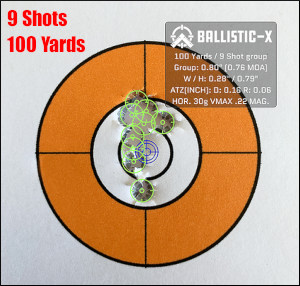 Forum member JAS-AS purchased a .22 Magnum CZ which he revived as a training rig with a new stock. He posted: “I use a CZ457 in .22 Magnum mainly as a trainer — bipod and rear bag kind of stuff. It has evolved over the last year or so. Next change will be a Lilja barrel. This because it can shoot brilliantly (at times) but not consistently. And accuracy degrades as it gets minimally dirty. Also, it doesn’t like 40gr rounds — the groups open up to 1.5 MOA. It’s at its best with 30 and 35 grain rounds running at up to 2250 fps. I believe that to be a twist-rate issue.”


 For Neck-Turning, Try STP Blend or Assembly Lube
 Another even cheaper option is assembly lubricant. For turning his case necks, RStreich uses assembly lube from an auto parts store. He notes: “The brand I have is reddish in color and kind of sticky like honey. It’s far better than the Imperial die wax I was using before.” There are a variety of types, both with and without moly additive, and you can select the viscosity you prefer if you sample a few brands. Be sure to clean out any lube residue from the inside of your necks when you have completed your neck-turning.


