Oregon Ballot Measure 114 is considered by many to be the most oppressive, anti-gun legislation in the nation. We urge ALL Oregonians to vote in the upcoming election and vote “NO” on Ballot Measure 114. Here are some of the key provisions of the unconstitutional Ballot Measure 114 which will restrict the Second Amendment rights of Oregonians:
Ballot Measure 114 will require a permit to purchase or transfer any firearm.
Ballot Measure 114 creates a searchable government registry of firearm owners.
Applicants cannot obtain a permit without first passing a law enforcement firearms training course, but Law Enforcement Agencies are NOT required to provide the training.
Ballot Measure 114 bans ammunition magazines over 10 rounds.
Gun Owner Registry: Ballot Measure 114 would allow your personal information to be added to a government registry. Measure 114 requires law enforcement to maintain a registry of gun owner’s personal information including applicant’s legal name, current address, and telephone number, date and place of birth, physical description, fingerprints, pictures, and any additional information determined necessary by law enforcement. This data will be published annually, so every criminal can find out who has guns and where they are stored.
Mandatory Permit to Purchase/Transfer Guns: Ballot Measure 114 requires a permit-to-purchase (or transfer) a firearm. The permit must be issued by law enforcement. A Concealed Handgun License does not qualify as a permit-to-purchase. A Hunter Safety Certification does not qualify as a permit-to-purchase. Permits must be renewed every 5 years for a fee. Issuance of a permit requires completion of classroom and live-fire training offered only by law enforcement certified instructors. There is no limit to the amount that can be charged for these classes. Nothing requires law enforcement agencies to actually offer the classes required to obtain the permit.
Firearm Magazine Restrictions: Ballot Measure 114 bans ALL firearms magazines with more than 10 rounds. Measure 114 will ban the use, possession, manufacturing, and transfer of ammunition magazines over 10 rounds. Use of a currently-owned magazine will only be lawful on private property, at a shooting range, and while engaged in hunting. When a magazine is transported off private property, the magazine must be removed from the firearm and stored separately.
Want to learn more about Ballot Measure 114? CLICK HERE for FULL TEXT of Ballot Measure 114.
Unconstitutional and Impractical Training Requirements
Ballot Measure 114 mandates gunowner training by Law Enforcement agencies, but provides no separate funding for that training carried out by police and sheriffs. The Stop114.com website explains:
The measure only allows those approved by police to provide the required “training” to apply for a permit. Police in Oregon are underfunded and understaffed. There is no plan in place to actually provide any training and virtually no police have the facilities or manpower to provide classes.
The Oregon State Sheriff’s Association has estimated that if a person somehow could complete the required training, the permitting process would cost sheriffs almost $40 million annually. There is nothing in the measure that provides any funding and the fees included would not come close to covering the costs. The estimate of costs to local police (not Sheriffs) is $51.2 million dollars the first year.
Free Range American states that Ballot Measure 114 could halt gun sales for two years or more:
OREGON MEASURE 114 COULD HALT GUN SALES IN STATE FOR YEARS
OCTOBER 14, 2022 By David Maccar
If [Oregon Ballot Measure 114] passes, the state will have the strictest gun laws in the entire country. Its passage will also likely result in the suspension of gun sales and purchases in the state, potentially for years, as the state creates a purchase permitting system from scratch that will cost taxpayers tens of millions of dollars.
The measure requires only a simple majority to pass.
If it passes, its various provisions would go into effect in January. On a recent Howl for Wildlife podcast, Amy Patrick, the policy director for the Oregon Hunters Association (OHA), told Free Range American that it will take at least two years to stand up a permitting system for residents. There’s no grace period, which means FFL gun sales would simply stop until purchase permits could be issued, potentially putting gun shops out of business and preventing state residents from exercising their 2A rights.
For more information visit Stop114.com and/or FreeRangeAmerican.us.
You can also contact the NRA to get involved:
Contact Rick Coufal at nra.oregon [at] gmail.com
Contact Jesse Greening at Jesse [at] nrailafrontlines.com
TEN Shots in 0.303″ (0.289 MOA) at 100 Yards
Look at that target showing TEN shots at 100 yards, with eight (8) shots in the main cluster at the top. The ten-shot group measures .303″ (0.289 MOA), as calculated with OnTarget Software. Not bad for a handgun — a very nice bolt-action XP-100 pistol! What do you think, can your best-shooting rifle match the 10-shot accuracy of this XP-100 pistol?
Report by Boyd Allen
This story goes back a few seasons… this remarkable XP-100 pistol belongs to Dan Lutke, a Bay Area benchrest shooter who publishes the results for the Visalia matches to the competitors and the NBRSA. He has been an enthusiastic competitor for an number of years, at various ranges, notably Visalia and Sacramento. The action is a Remington XP-100, to which a Kelbly 2 oz. trigger has been fitted. On top is an old Japanese-made Tasco 36X scope (these were actually pretty darn good). The Hart barrel (a cast-off from Dan’s Unlimited rail gun) was shortened and re-chambered for the 6x45mm, a wildcat made by necking-up the .223 Remington parent case. The custom stock/chassis was CNC-machined by Joe Updike from 6061 Billet Aluminum to fit the XP-100 action and mount a target-style AR grip with bottom hand rest. The gun was bedded and assembled by Mel Iwatsubu. In his XP-100 pistol, Dan shoots 65gr custom boat-tails with Benchmark powder.
This diagram shows the most common 6x45mm wildcat, which is a necked-up version of the .223 Remington parent cartridge. NOTE: The dimensions for Dan Lutke’s benchrest version of this cartridge may be slightly different.
ACAD drawing by Peter Gnanapragasam CC by SA 3.0, via Wikimedia Commons. Title Added.
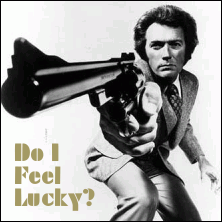
Happy Halloween
Hickok45 Carves Pumpkin Faces with Handguns
To celebrate Halloween, here’s an example of master wheelgun marksmanship. Popular YouTube host Hickok45 skillfully creates a smiling face on a pumpkin using a S&W Model 29 .44 Magnum revolver. This is the classic blued, double-action revolver popularized by Clint Eastwood as Dirty Harry. This has become a tradition for Hickok 45 — every year he puts a face on a pumpkin using a different firearm, typically a pistol, but he’s used a couple rifles as well. This year’s 2022 pumpkin-carving effort was done with a suppressor-equipped 9mm Mini Uzi. SEE PUMPKIN Shooting Playlist for all Hickok45’s annual pumpkin blasts.
Want to see more? Hickok45 has also carved pumpkins with a dozen firearms. Here is a pumpkin carved with a genuine, WWI-era Colt 1911 carried by an American soldier in the Pacific theater.
And here is a rather grim-looking face applied using the .40 SW Glock 23.
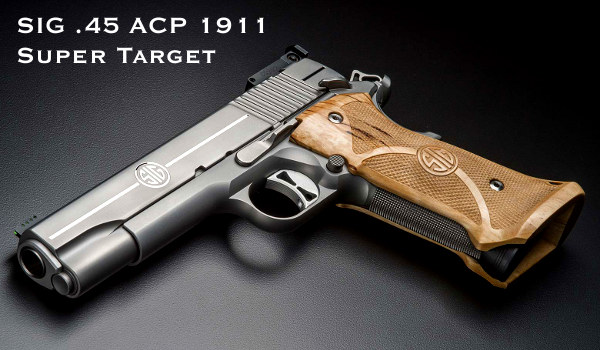
The model 1911 pistol, designed by John Moses Browning, is an American classic. Originally manufactured as .45 ACP military pistols, modern 1911s have evolved to be superb competition pistols, and carry pistols. With a Single-Action-Only (SAO) configuration, the 1911 design is different than most modern pistols. You must have the hammer cocked to fire a 1911 — like a single-action revolver. But the positive side of the Single-Action design is than modern 1911 pistols enjoy superb triggers with very positive release and fast reset. There is a reason the 1911 design is the basis for so many modern competition pistols.
In today’s Saturday at the Movies feature, we showcase videos that cover the history, design, and function of 1911-type pistols. We also include videos that explain how to field-strip a 1911 and how to accessorize/upgrade 1911 pistols.
Operation of 1911 Pistol with 3D Animations
Here are two excellent videos that show how a classic 1911-type pistol functions. 3D computer graphics animation offers a X-Ray view inside the pistol, showing how cartridges feed and how the slide cycles during the firing process.
How to Field-Strip and Re-Assemble a 1911 Pistol
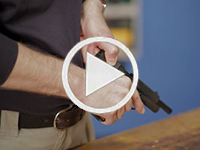
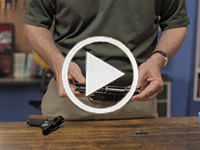
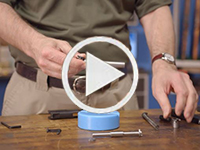
There are a few tricks to field-stripping a 1911-type pistols, and it helps to have a couple specialized tools. This helpful TFB-TV (The Firearm Blog) video shows the process of disassembling a 1911 pistol from start to finish, and notes components that require lubrication or special attention.
History of the Classic Model 1911 Pistol
The model of 1911 pistol is an American classic with a long and illustrious history. These two videos cover the interesting origins of the 1911 pistol, and explain how J.M. Browning designed the remarkable 1911 pistol which became the iconic American sidearm of the U.S. Military, the longest-serving pistol in American military history.
A fascinating article by Rock Island Armory covers the complete evolution of the 1911 pistol, including its earlier prototype variants, starting with the model of 1905. SEE: Road to the 1911 Article (with Model 1905, 1907, 1909, and 1910 prototypes).
Over time the 1911 design has evolved into many variants, including the modern “race gun” used in rapid-fire pistol competitions. Here is an STI DVC Open model fitted with a C-More sight, and front compensator.
Pistol Shooting Skills Demonstrated with 1911
How to Grip a 1911 Handgun Properly
World Champion pistol ace (and 18-time Bianchi Cup winner) Doug Koenig demonstrates how to grip a handgun. While the fundamentals are demonstrated on a 1911 pistol they are effective for establishing a proper grip on any handgun.
Trigger Press and Trigger Control
In this video Champion shooter Doug Koenig talks about key techniques that apply to all pistol marksmanship — not just speed shooting “on the clock”. With any handgun, Doug explains, you should focus on consistent trigger control. You want to avoid yanking the trigger or anticipating recoil.
How to Accessorize Your 1911
This six-part series by Brownells provides step-by-step instruction on how to accessorize your 1911. The videos cover changing out the mainspring housing, magazine release, slide release, hammer, guide rod, and installing a group gripper. If you want to upgrade your 1911, these videos are worth watching.
Here is a cool video that shows the entire production process for a SilencerCo Octane pistol suppressor start to finish. Beginning with the raw materials, this video shows a wide variety of cutting, milling, drilling, burnishing, fitting, metal bathing, surface finishing, and laser etching processes.
If you have any interest in production methods you’ll want to watch this video all the way through, and maybe a second time.
SilencerCo states: “From cutting metal to chemical baths, to extensive quality control every step of the way, our streamlined process is more than just a few steps.” We think you may be surprised by how many steps are involved in producing this silencer (aka “suppressor”).
The Octane is a user-maintainable, multi-caliber centerfire pistol silencer featuring a modular mounting system for use across a wide range of hosts. High strength, stainless steel CTA™ (Click Together Assembly) baffles are easily disassembled for cleaning. This design makes the Octane one of the most durable small-caliber suppressors on the market.
In its Octane 45 review, SilencerShop notes: “When it comes to ease of maintenance, the Octane 45 is probably the simplest .45 suppressor on the market. It uses the new click-together baffle system from Silencerco/SWR – which allows the suppressor to come apart like a monocore suppressor, while providing performance that is closer to a K-Baffle design.””
Ammoland is a popular website hosting tons of gun-related content. Every day Ammoland releases multiple stories about new firearms, gun industry trends, and important Second Amendment legal and political developments. Along with gun news, Ammoland now offers regular tests of new rifles and pistols. Here are four recent Ammoland video reviews of new-for-2022 handguns, two 9x19mm pistols, and two rimfire handguns (one .22 LR and one .22 WMR). Ammoland feature articles supplement all four videos.
SIG Sauer P365 X-Macro 9mm
AmmoLand recently tested the 17-round Sig Sauer P365 X-Macro pistol. It determined that this is a very good pistol, as are other P365 variants, including the basic P365 and the P365XL. Ammoland’s tester, Jim Grant, was very impressed: “The P365 X-Macro 9mm is just a great all-around handgun. In my opinion, the new SIG P365 X-Macro is a must-have concealed carry piece for shooters who still carry either a micro sub-compact and want more rounds or guys who carry the larger P320 9mm pistol. The Macro is a level-up upgrade over SIG’s other concealed carry guns yet still allows shooters to customize it to meet their exact needs completely.” CLICK HERE for full review on Ammoland.com.
Kel-Tec PMR-30 .22 WMR Pistol
Kel-Tec’s innovative PMR-30 .22 WMR pistol has a huge 30-round capacity. You read that right — this new semi-auto rimfire holds THIRTY rounds. Ammoland’s reviewer, Jim Grant, notes: “While a firearm chambered in the low-recoil .22 Win Magnum Rimfire will never have the fight-stopping ballistic efficacy of a big-bore caliber… the capacity of the rimfire round shouldn’t be discounted either. That’s why Kel-Tec’s introduction of both PMR-30 and CMR-30 is so revolutionary. It makes short work of any varmints within range and is a great pistol for teaching new shooters that isn’t terribly expensive to shoot and has very soft felt recoil.” CLICK HERE for full review on Ammoland.com.
Taurus GX4XL T.O.R.O. 9mm
The Taurus GX4XL T.O.R.O. 9mm pistol boasts a low price, good ergonomics, and high capacity. Ammoland notes: “On paper, it should be the go-to concealed carry gun — but in a market saturated with solid alternative carry pistols, can Taurus’ latest iteration of its GX series of handguns hold its own?” Tester Jim Grant concluded: “So, is the new Taurus GX4XL T.O.R.O. EDC worth its $420 MSRP? If you already own the original Taurus GX4, no. The XL is harder to conceal and, while easier to shoot, doesn’t increase performance to a large enough extent to warrant buying a new pistol. But if you don’t have a good subcompact pistol and aren’t flush with cash, the GX4 XL will do the job.” CLICK HERE for full review on Ammoland.com.
Hands-On P322 Testing by Ammoland’s Jim Grant
Ammoland’s Jim Grant did a very thorough review of SIG’s P322 rimfire pistol. Grant shot hundreds of rounds both with and without a suppressor. He concluded that the P322 was extremely reliable and fun to shoot: “SIG P322 Verdict — Is the SIG P322 worth a buy? Abso-freaking-lutely yes. The P322 ships with two mags, a threaded barrel, two triggers, and an optic cut. That is an already impressive package but add… that the gun is literally peerless in terms of reliability and you have a recipe for total market dominance. What’s even better is that the gun has a MAP of $399.” CLICK HERE for full review on Ammoland.com.
The U.S. Army Marksmanship Unit (USAMU) has published a series of reloading articles on its Facebook Page. In this article, the second in a 3-part series, the USAMU covers the process of loading competition pistol ammunition. The authors focus on two key elements — the taper crimp and the quality/uniformity of the original brass. If you shoot pistol competitively, or just want to maximize the accuracy of your handguns, read this article. The taper crimp tips are very important.
Loading Accurate Competition Pistol Ammunition — Part 2 of 3
Today, we resume our series on factors affecting accuracy in pistol handloads. Readers who missed Part One can visit our USAMU Facebook Page. Scroll down to March 28, 2018 to find that first installment which is worth reading.
One often-overlooked aspect of handloading highly-accurate pistol ammunition is the amount of taper crimp used, and its effect on accuracy. (NOTE: this article pertains to loading for semi-autos – revolver crimp techniques involve some quite different issues.) Briefly, different amounts of taper crimp are used with various handloads to obtain best accuracy. The amount is based on bullet weight, powder burn rate and charge, plus other factors such as case neck tension. During machine-rest testing of experimental Service Pistol ammunition, many variables are examined. Among these, our Shop often varies a load’s crimp in degrees of 0.001″ when re-testing for finest accuracy.
How to Measure Taper Crimp on Pistol Cartridges
One question that often arises is, “How do I measure the taper crimp I’m putting on my cartridges?” Using the narrow part of one’s dial caliper jaws, carefully measure the case diameter at the exact edge of the case mouth on a loaded cartridge. It’s important to take several measurements to ensure consistency. Also, be sure to measure at several places around the case mouth, as case wall thickness can vary. After measuring 2-3 cartridges with a given crimp setting, one can be confident of the true dimension and that it can be repeated later, if needed.
However, for good results, one must use brass from one maker due to variances in case wall thickness. For example, the same degree of crimp that imparts a measurement of 0.471″ with Brand X brass may result in 0.469″ with Brand Y. Thus, for best accuracy, using brass from the same manufacturer is important — particularly for 50-yard Slow Fire. In a perfect world, it is better still to use brass from one lot number if possible. With the popularity of progressive presses using interchangeable tool heads, keeping separate tool heads adjusted for each load helps maximize uniformity between ammunition lots.
Brass Uniformity and Accuracy
Brass is important to pistol accuracy. While accurate ammunition can be loaded using brass of mixed parentage, that is not conducive to finest results, particularly at 50 yards. It is important for the serious competitor to pay attention to his brass – even if only for the 50-yard “Slow Fire” portions of “Bullseye” matches and practice. By segregating brass as described above, and additionally keeping track of the number of times a given batch of cases has been fired, one can ensure case neck tension and case length are at their most uniform.
Given the large volumes of ammunition consumed by active pistol competitors, using inexpensive, mixed surplus brass for practice, particularly at the “short line” (25 yards), is understandable. In NRA Outdoor Pistol (“Bullseye”), the 10-ring is relatively generous — especially for a well-trained shooter with an accurate pistol and load. However, for the “long line” (50 yards), purchasing and segregating a lot of high-quality brass to be used strictly for slow-fire is a wise idea. To keep track of your brass on the line, use a unique headstamp marking with 1 or 2 colors of marking pen ink.
Uniform Cartridge Overall Length is Important
Cartridge case Overall Length (OAL) uniformity as it comes from the factory is important to achieving utmost accuracy. More uniform case lengths (best measured after sizing) contribute to greater consistency of crimp, neck tension, ignition/burn of powder charge, headspace (rimless cartridges), etc. Cartridge case-length consistency varies noticeably by maker and, with lesser manufacturers, also from lot to lot. Some manufacturers are more consistent in their dimensions than others, and also in the hardness/ductility of their brass. Similarly, pay attention to primer brands, powder lot numbers, etc.
Consider Using a Lock-Out Die with Progressive Presses
When reloading pistol ammo with a Progressive press, we strongly recommend the use of a lock-out die, or other system that can detect double charges or low charges. If your progressive is manually advanced, the possibility of a double charge is very real — and that can have disastrous consequences.
On UltimateReloader.com website you’ll find an excellent two-part series on the function and set-up of the RCBS Lock-Out Die. This die prevents loading if a high or low powder charge is detected. The video below shows setup of the RCBS Lock-Out Die on the Dillon XL-650 progressive press.
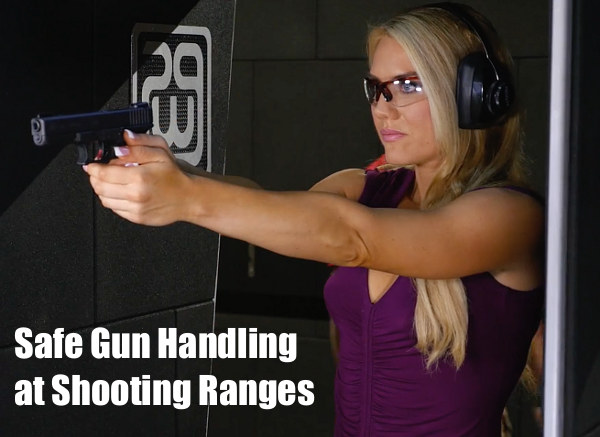
There has been a long, cold winter in many parts of the USA. So if you want to maintain your shooting skills, shooting indoors may be the only convenient option. When shooting indoors you should always be extra careful and follow all key gun safety practices and adhere to proper range “Etiquette”.
The NSSF (NSSF) offers a useful Range Safety and Etiquette video. This 8.5-minute video explains safe practices, especially at indoor ranges. In the video, the moderator list the basic rules of gun safety, before covering key range etiquette topics such as range officer commands, how to uncase your firearm on the range when you first arrive, and what to do if a firearm is accidentally dropped. There are also safety tips specific to handling both semi-automatic handguns and revolvers.
BAD RANGE BEHAVIOR — Five Things NOT to Do at the Range
Here are the five worst behaviors we’ve seen at indoor ranges. These behaviors are both dangerous and inconsiderate. Any one of these behaviors can get you permanently banned from an indoor range.
1. Sweeping other individuals after loading a weapon behind the firing line is very bad. All your weapons should be empty until you reach your shooting station.
2. Turning the handgun sideways while trying to clear a malfunction or insert/remove a magazine. This will point the muzzle at a fellow shooter. Or, after shooting a gun, the shooter fails to clear the weapon and then places the gun somewhere near the shooting station with the muzzle in an unsafe position.
3. Reacting unpredictably when firing a high recoil handgun. We’ve seen people take a second shot by accident with the muzzle way off target.
4. Not obeying range commands — in particular continuing to shoot during called cease-fires.
5. Poorly aimed shooting that hits target frames or carriers, causing ricochets.
Seven Types of People at the Gun Range — HUMOR
This video is satire, but with lots of truth in the characterizations. Laughter guaranteed.
Double-Up on Hearing Protection When Shooting Indoors
When shooting pistols indoors we recommend quality muffs with earplugs underneath, offering double protection. When inside an enclosed range, with other shooters blasting away right next to you, you really need effective hearing protection. But you also need to hear range commands and be able to communicate with your fellow shooters. That’s why we recommend electronic muffs with plugs underneath.
Today’s episode of Shooting USA TV has two interesting reports. Fans of 1911 pistols will enjoy the report on America’s leading collector of this classic handgun. In addition, Shooting USA has an informative feature on the Springfield Model 1903 bolt-action rifle, which served the U.S. military in two World Wars.
Shooting USA SHOW TIMES: This Shooting USA Episode airs Wednesday, October 5, 2022 at 9:00 PM Eastern and Pacific; 8:00 PM Central. If you miss the regular broadcast, you can stream the show online at any time on Vimeo for $0.99 per episode.
America’s Most Notable 1911 Collector
Today’s Shooting USA episde features a notable collector of rare and extremely valuable 1911s from as far back as the Military Trials in March of 1911. He even owns the Savage that competed for the contract and lost to John Browning’s design made by Colt. Plus, he has 1911s with official documents to prove they don’t exist, but they are very much present in his collection. At a location in Indiana, behind a 1300-pound door, rests a stash of 1911s that would make any museum proud.
The 1911 pistol, the most famous of John Browning’s classic pistol designs, served as the standard pistol of the US Military for 75 years. More than two and a half million were made for U.S. forces, and civilian versions are still in production today. The 1911 is one of the most popular for collectors, because of its rich history, and the many variations by different gun-makers.
There are so many different variations of the war era 1911 that it’s hard to keep track of all the versions. In fact, some 1911s are known not by the markings they have but rather the markings they lack. Collectors call them “lunchbox guns”, pistols that made their way out of the factory (maybe in somebody’s lunchbox) before they got a serial number and proof markings.
History’s Guns — Springfield Model 1903-A3 Rifle
Mention WW II and instantly folks will remember the M1 Garand. But at the start of the war, there weren’t enough of them. So, thousands of American soldiers instead carried the Model 1903 Springfield, left over from World War I. And Remington got the contract to make more and make them quickly. That brought changes, lots of them, and a new designation, the U.S. Model 1903-A3. This legendary rifle is featured today on Shooting USA’s History’s Guns segment.
M1903 Springfield shooter at Camp Perry. From GarandThumbBlog’s 2015 CMP Games Video.
One of the feature stories covers the increased popularity of “optics-ready” handguns. These come with slides configured to mount Red Dot optics. In some cases these new handguns are sold with the Red Dot optics pre-installed, ready to go. The Shooting Industry article explains:
“It wasn’t too long ago optics-ready handguns were little more than a novelty. But today, it’s difficult to talk about the handgun segment without delving into the increasing number of guns coming from the manufacturers with optics already installed, or ready to accept one.”
Mike Sfakianos, a senior manager at Bill Jackson’s in Pinellas Park, Florida, remembers customers coming into the store even three or four years ago and being skeptical about the utility of a Red Dot on a pistol:
“It was a slow start. People thought it was more of a competition-type thing. Now it seems like just about every manufacturer has gone to an optics-ready gun”, observed Sfakianos, noting customers are growing increasingly interested in carrying subcompacts with Red Dot optics.
If you are interested in a wide selection of optics-ready handguns, check out the recent Modern Carry: Best Optics-Ready Pistols article in the CheaperThanDirt Blog. This highlights ten current production pistols from Canik, CZ, FN, Hechler & Koch, Keltec, SCCY, SIG Sauer, Smith & Wesson, Springfield Armory, and Taurus. Below is the Taurus G3 T.O.R.O (Taurus Optic Ready Option), a full-frame pistol with 17+1 9mm capacity.
Gun Safes — Why Every Gun Owner Needs One
A second article in this month’s Shooting Industry magazine covers gun safes and security systems. This covers recent trends in gun safe design, marketing, and sale. The article notes that attacks on gun ownership and Second Amendment rights are increasing so it is more important than every for gun owners to have secure storage for their firearms both at home and in their vehicles. FYI, gun thefts from vehicles make up the largest source of stolen guns.
Based in Charlotte, NC, Hyatt Guns stocks over 7,000 guns in a vast 20,000 square-foot facility. To complement its massive firearms inventory, Hyatt Guns maintains the largest safe showroom in the region.
Cutting Edge Digital Gunsafe Technology — There Are Potential Problems
Hyatt Guns offers a range of mechanical and electronic gun storage options, though Hyatt Guns stays away from hyper-technology because it’s often expensive and difficult to service. V.P. Mitch Hyatt notes: “The mechanical dials and simple digital safes have great failsafe options. We can help customers set these up, and we work with several local locksmiths if they ever need one. But, with the larger vault safes, when you get into the fingerprint technology, often times it leads to replacing the whole unit, and you have to deal with whether the manufacturer will take it back or replace it.”


 Gun Owner Registry: Ballot Measure 114 would allow your personal information to be added to a government registry. Measure 114 requires law enforcement to maintain a registry of gun owner’s personal information including applicant’s legal name, current address, and telephone number, date and place of birth, physical description, fingerprints, pictures, and any additional information determined necessary by law enforcement. This data will be published annually, so every criminal can find out who has guns and where they are stored.


 Happy Halloween









 Today’s Shooting USA episde features a notable collector of rare and extremely valuable 1911s from as far back as the Military Trials in March of 1911. He even owns the Savage that competed for the contract and lost to John Browning’s design made by Colt. Plus, he has 1911s with official documents to prove they don’t exist, but they are very much present in his collection. At a location in Indiana, behind a 1300-pound door, rests a stash of 1911s that would make any museum proud.


