Thanksgiving is Thursday, November 27th this year. Looking for culinary inspiration for your holiday gatherings? The NRA Blog offers three special (and delicious) Wild Game Recipes for your family feasts:
Honey Mustard Planked Wild Turkey Breast
Mushroom-Stuffed Wild Boar Roast with Black Truffle Sauce
BBQ Brined Pigeon
These recipes come from some of the country’s best chefs, and they all seem mouth-watering. You’ll find a full list of ingredients plus step-by-step cooking tips.
One of the many advantages to hunting is the assortment of game you can gather that lasts for an extended period of time. Just because it’s Thanksgiving doesn’t mean you have to stick with a whole turkey from the store and a ham hock.
We have three unique spins on wild game recipes that will suit your dining table perfectly. Even if you’re one of those hunters who enjoys a quick hunt the morning of Thanksgiving, these recipes will make your holiday more delicious than ever. — NRABlog.com
And for those folks who hope to harvest their own gobbler for the Thanksgiving holiday, here is a special NRA Turkey target that can help you hone your turkey-hunting skills.
GetZone.com offers a turkey hunting video with expert guidance on Turkey hunting, specifically stalking and shot placement: “When it comes to shotgun hunting, you don’t want to get BBs in the meat, so the most common (and lethal) shot with a shotgun is a headshot.”
This photo is from GetZone.com, a website that provides information on shooting and hunting. CLICK HERE to watch a GetZone video on turkey hunting. Work Warning: When you click photo, a loud audio track may start immediately, so turn down the audio volume.
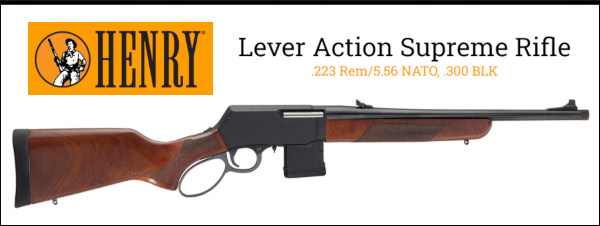
The Lever Action Supreme Rifle (LASR) from Henry Repeating Arms has been named 2025 Rifle of the Year by Guns & Ammo magazine. The selection was based on a rigorous evaluation process, which included extensive field testing, in-store availability checks, and value assessments. With these considerations, Henry’s LASR rose above other new rifles introduced in 2025 to earn Guns & Ammo’s top honor.
Chambered in .223 Wylde or .300 Blackout, the LASR is available at Henry dealers nationwide with an MSRP of $1,299. For more information, visit www.HenryUSA.com.
This new Henry rifle will be featured in the Guns & Ammo November 2025 issue which hits newsstands on November 5th. In the feature story, Guns & Ammo highlighted the Lever Action Supreme Rifle’s ability to reliably feed from commonly available MSR-pattern detachable box magazines, a unique feature for a lever-action rifle. The Guns & Ammo editors also praised the Henry’s quad-bar linkage action that allows reliable, smooth operation without interference from the magazine. Among the key factors that earned Gun of the Year honors, Guns & Ammo noted the LASR rifle’s sub-MOA accuracy potential, suppressor-ready design, good handling, and high-quality materials.
“We set out with this rifle to raise the bar for America’s most iconic rifle platform, and this award suggests that the team was able to accomplish just that,” said Anthony Imperato, Founder and CEO of Henry Repeating Arms. “We’re honored that Guns & Ammo has recognized the fruits of our labor, and I am incredibly proud of the many bright minds that came together to make this rifle a reality.”
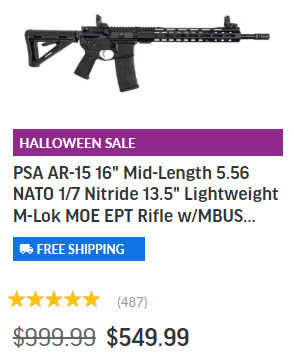
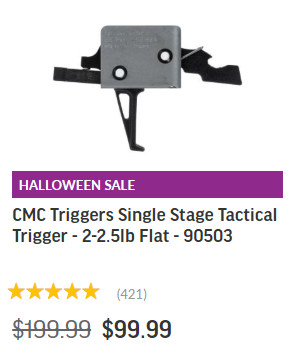
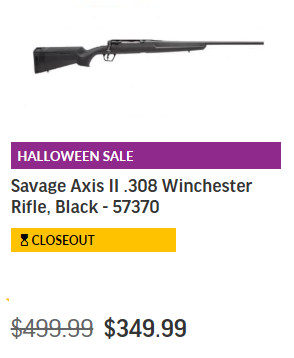
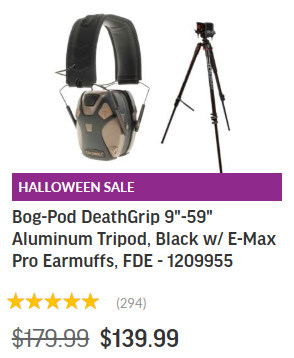
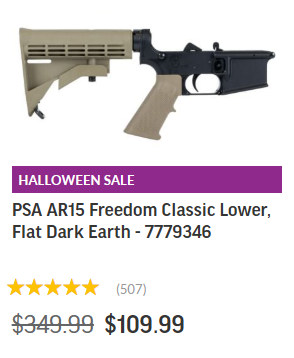
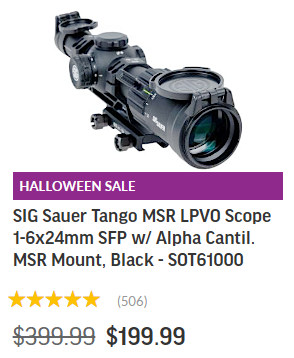
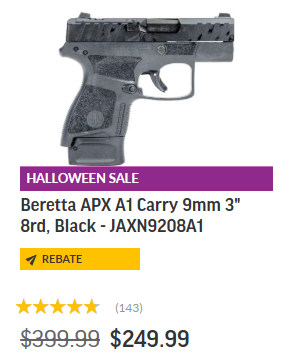
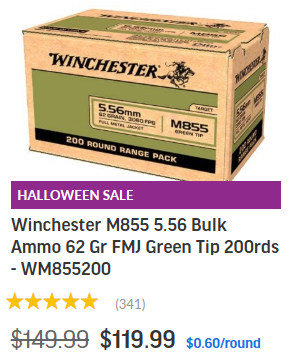
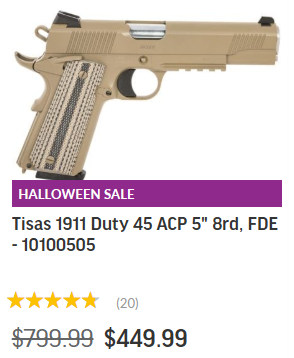
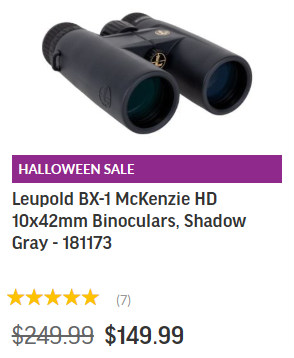
Palmetto State Armory (PSA) is running a major Halloween Sale for the next few days. We found some very impressive deals. For example, save $150 on a Savage hunting rifle, save $450 on a PSA AR15, save $240 on a complete AR lower, save $350 on a 1911 pistol, and save $200 on a SIG Sauer optic. And there are big savings on other products such as gun cases, magazines, rifle scopes, triggers and more.
If you compete in service rifle, NRL22, or 3-Gun competitions, we recommend getting a .22 LR AR-style rifle for cross-training and fun matches. With this Rimfire Combo Special you get a good S&W rimfire rifle plus 3 magazines and a nice rifle case.
At the request of our readers, we provide select “Deals of the Week”. Every Sunday afternoon or Monday morning we offer our Best Bargain selections. Here are some of the best deals on firearms, hardware, reloading components, optics, and shooting accessories. Be aware that sale prices are subject to change, and once clearance inventory is sold, it’s gone for good. You snooze you lose.
NOTE: All listed products are for sale to persons 18 years of age or older. No products are intended for use by minors.
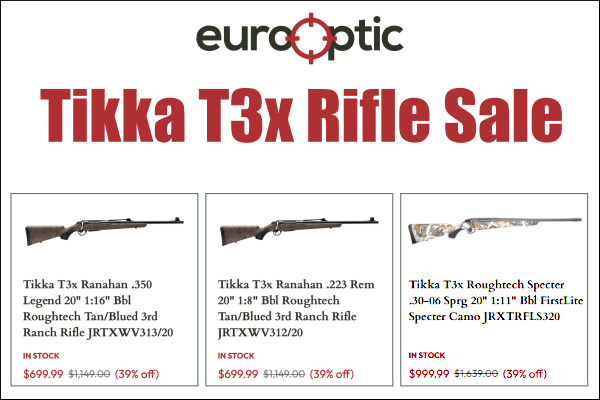
1. EuroOptic — Tikka T3x Rifle Sale, Save up to 40%
⏺️ » Fantastic savings on excellent, accurate hunting rifles
Tikka makes some of the best off the shelf rifles on the market and for a limited time you can pickup one of their many T3x rifle variants at prices up to 40% off. Prices start at just $699.99 after discount. These T3x Tikkas are great hunting rifles for large and small game. There is a wide selection of cartridge types, both standard and magnum. These T3x rifles are typically quite accurate, and they have smooth-operating actions with very good triggers.
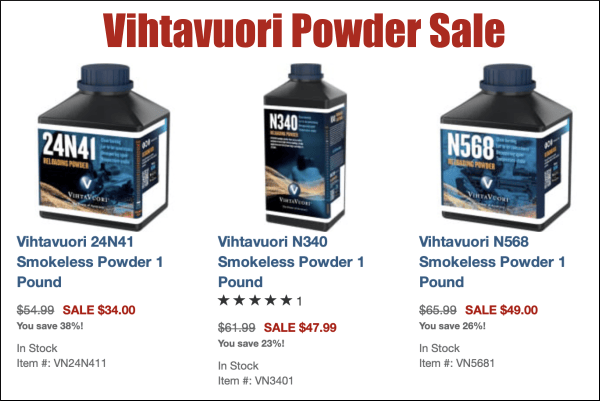
2. Graf & Sons — Vihtavuori Powder Sale
⏺️ » Major discounts on top-quality powders
Vhitavuori powders are favored by top shooters in many disciplines — from action pistol to F-Class and ELR. While other powder brands may be hard to find (at reasonable prices), Graf’s has a wide selection of popular Vihtavuori powders in stock at attractive prices. For example N133 powder (much favored by top short-range benchrest competitors) is IN STOCK at $54.99 per pound. And versatile N340 pistol powder is now just $47.99 per pound, a 23% savings off the standard price.
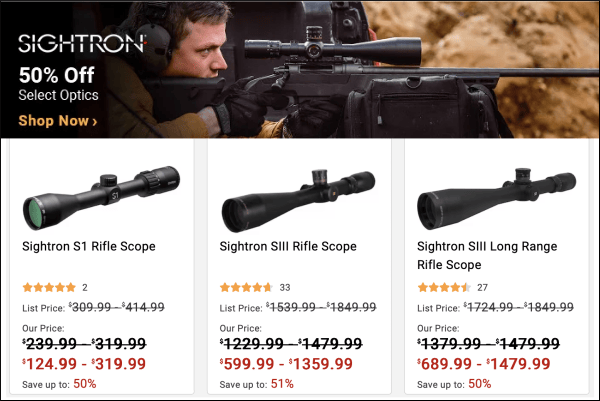
3. MidwayUSA — Sightron Optics Sale up to 51% OFF
⏺️ » Huge 50% discounts on popular scopes for competition and varminting
Need a good, sharp, and reliable for competition or hunting? Right now MidwayUSA is running a major Sightron Scope Sale with huge discounts on quality Sightron SI and SIII Optics with superb Lifetime Warranty. You can save up to 51% on select hunting and long range optics. Items on sale include a 3-9x40mm S1 ($124.99, 50% off), 6-24x50mm SIII ($599.99, 51% off); and 8-32x56mm SIII ($689.99, 50% off). These are SFP scopes with 1/4-MOA clicks.
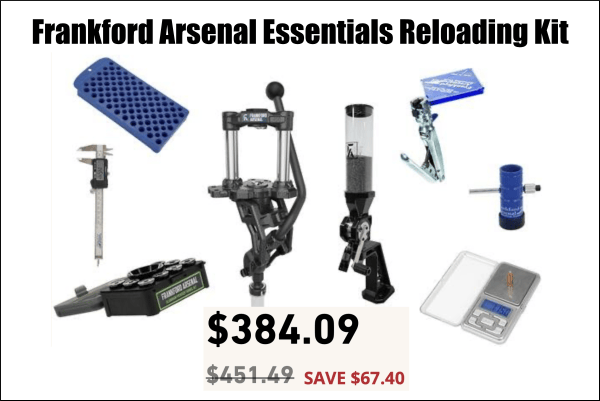
4. Natchez — Frankford Arsenal Essentials Reloading Kit, $384.99
⏺️ » Very complete reloading kit with excellent F-1 press
Need a complete reloading kit with all the tools you need for precision handloading? Then check out this Frankford Arsenal F-1 Single Stage Press and Reloading Accessories Kit. On sale now for $384.99 at Natchez, this kit includes the Frankford Arsenal F-1 Single Stage Reloading Press, Benchtop Powder Measure, Hand Primer, Aluminum Powder Funnel Kit, Digital Calipers, DS-750 Powder Scale, Powder Trickler, and Universal Reloading Tray. NOTE: If you don’t need the full kit, you can also buy many of the listed items separately at great prices. For example, the F-1 Press is $129.99 by itself.
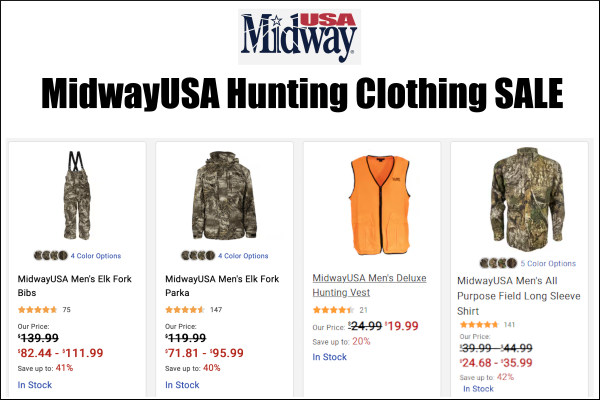
5. MidwayUSA — Midway Camouflage Hunting Clothing Sale
⏺️ » Major discounts on good camo gear for hunting season
If you need good camouflage clothing for a fall hunt, check out the MidwayUSA Hunting Clothing Sale with discounts up to 44% on camo bibs, jackets, hoodies, vests, gloves and more. Featured Elk Fork items combine a rugged exterior camo shell with breathable PrimaLoft insulation. There are also Zip Fleece hoodies, Long Sleeve shirts, Elk Grove Camo Gloves, and insulated vests. And if you need a high-viz orange top or vest there are multiple options on sale.
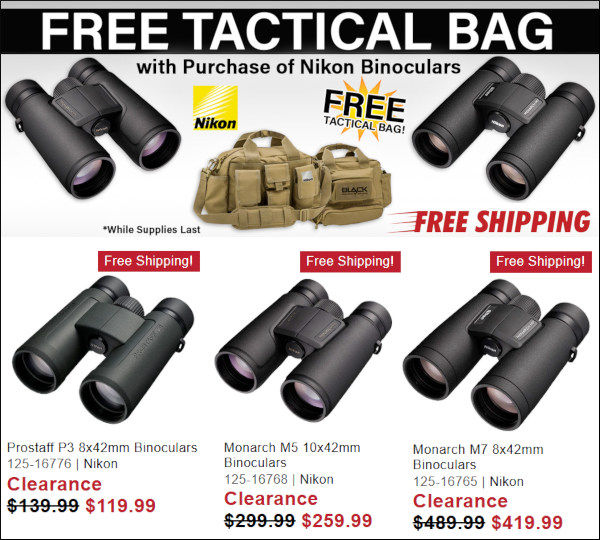
6. Midsouth — Nikon Binoculars Sale + FREE Tactical Bag
⏺️ » Good binoculars with free shipping and bonus tactical bag
Nikon binoculars are respected for durability and for clarity, especially in low light conditions. Now you can get Nikon Monarch M5, M7, and Prostaff P3 or P7 Binoculars at the lowest prices we’ve seen in a while. This is a great chance to pick up good binoculars for spotting/hunting AND get a nice, multi-pocket tactical bag for FREE. With Nikon Clearance Sale discounts of 14-16%, these binoculars start at $119.99 for the ProStaff P3 8x32mm model. The tactical bag is a free bonus with purchase of any Clearance Nikon binoculars, plus you get FREE Shipping.
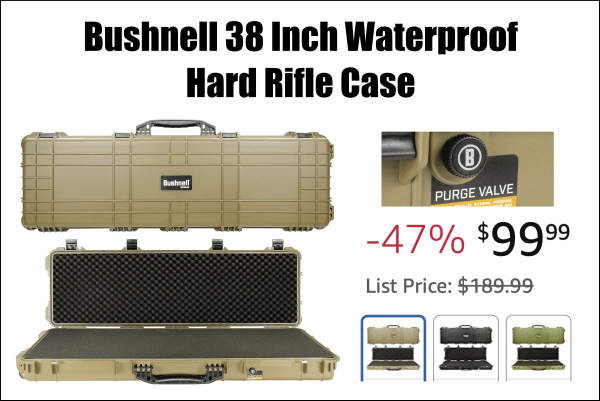
7. Amazon — Bushnell Hard Sided Rifle Case, $99.99
⏺️ » Rugged, TSA-approved waterproof case with wheels and pluckable foam
When traveling with rifles you need a high-quality hard case. The Bushnell 38″ GX3836 Large Hard Case (#ad) is made from rugged polypropylene with integrated roller wheels. This sturdy, waterproof case will hold hunting or tactical rifles, and can also carry longer competition guns with the barreled action separated from the stock. External dimensions are 38.3″ x 17.85″ x 6.25″. The case features three layers of foam padding: egg-crate foam top liner layer; customizable pull & pluck layer; and foam bottom layer. This quality rifle case is now just $99.99 on Amazon — a 47% savings off the regular price.
8. Amazon — Frankford Arsenal Quick-N-EZ Tumbler, $59.99
⏺️ » Major discount on good tumbler that will last for years
All handloaders should have a good case tumbler to clean fired pistol and rifle brass. The Frankford Arsenal Case Tumbler (#ad) is a very effective and reliable unit with a handy transparent top cover. Right now this unit is just $59.99 on Amazon (20% Off). When used in conjunction with Walnut or Corn Cob media, this Case Tumbler removes lube, carbon, and oxidation from cases quickly and conveniently. This Quick-N-EZ tumbler holds up to 600 9mm Luger cases or 350 .223 Rem cases.
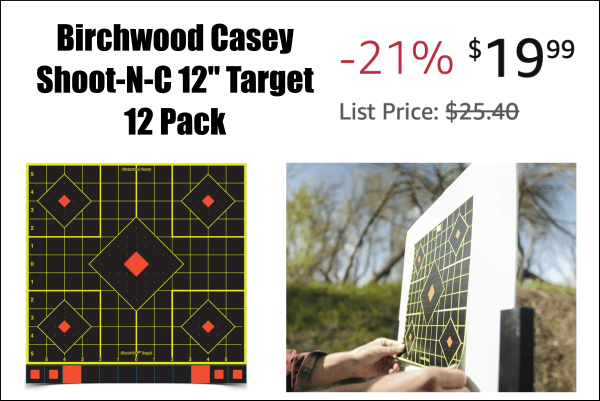
⏺️ » Good Hi-Viz reactive target with inch grid and 5 diamonds
Reactive targets are great for pistol practice and rifle shooting at longer ranges. Bullet impacts show as bright yellow circles. We like these Birchwood Casey Shoot-N-C 12″ Sight-In Reactive Targets (#ad), price $19.99 for a 12-pack. There are five diamond-type targets on each sheet. Convenient 1-inch numbered grid lines simplify scope adjustments. You can use the center diamond for sighting-in and 4 smaller targets for testing loads. Shots produce high-contrast yellow spots on the black target face, which are easy to see even from long distances.
As an Amazon affiliate, this site can earn revenues through sales commissions.
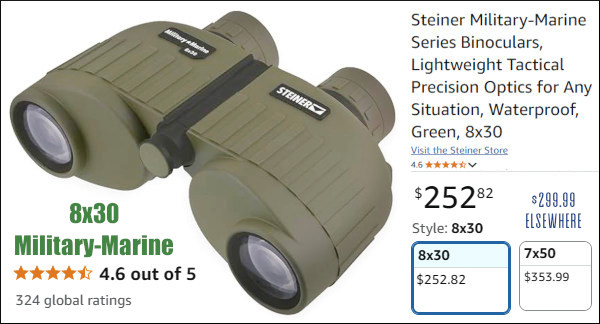
A while back your Editor was in New Mexico, on a prairie dog expedition. While in the field, my companions and I used two pairs of Steiner 8x30mm Military/Marine binoculars to spot the critters. Finding the Prairie Dogs (PDs) could be challenging in the high grass. Often, a PD would reveal only its head — a small target at distances approaching 400 yards. We really needed sharp optics with high contrast to spot the dogs hiding behind tufts of grass or dry brush.
The Steiner Military/Marine binoculars performed superbly. I came away very impressed with these armored 8x30mm binoculars (now called Model 2033). The glass is bright and super-sharp. And the rubber-armored body is truly rugged. These binoculars offer both right and left diopters — important for me as my left eye requires more correction than the right eye. One great feature of the Steiners is the focusing system which keeps everything you can see in focus. This really is a big deal. You don’t have to constantly fiddle with focus — everything past about 20 yards is in sharp focus all the time.
As one Steiner owner reports: “Focusing set-up is worth the price of admission. Set it and forget. Amazing. This single feature makes these worth owning.” And the sharpness is impressive. I compared the Steiners’ image with a 6.5-20x40mm Leupold EFR riflescope set at 8X. Both 8×30 Steiners were brighter than the Leupold scope, and the Steiners resolved individual blades of grass and fine details better than the Leupold. Of course, comparing a binocular optic with a riflescope is like comparing apples and oranges. The advantages of binoculars (compared to a monocular scope) are well known — the brain combines the two images (left eye and right eye) to create a more vivid, 3D effect, with greater perceived contrast.
Good Binoculars Are a “Must-Have” Item for Hunters
After three days in the prairie dog fields I came away convinced that a good set of binoculars is absolutely essential for varmint hunters. As the PD population was fairly thin where we were shooting, we probably spent five minutes glassing for every minute actually behind the trigger. Over 90% of the dogs were first spotted with binocs rather than riflescopes. We had a fixed (non-rotating) bench so it was difficult to swing the rifle more than about 30° from one side to another (60° total arc). With the binoculars, and their wide field of view, we could quickly scan a much wider arc.
Steiner 8×30 Military/Marine Binocs are Just $255.70
At the end of our hunt, I told my host that I planned to purchase some Steiner 8×30 Military/Marine Binoculars similar to the units we used during our New Mexico varmint hunt. When I arrived home I was amazed to see that the Steiner 8×30 Military/Marine Binoculars are now just $252.82 on Amazon.com (#ad), with FREE shipping. That’s a great value, considering the ruggedness and optical quality of the unit. Most other vendors sell these binoculars for $299.99, so you can save $47+ with Amazon, plus get FREE shipping.
Need more power and low-light capability? The Steiner 210 10×50 Military/Marine (#ad) is also offered on Amazon.com. It has more magnification and better low-light performance. However, it costs $524.99, more than double the current price of 8×30 Military/Marine on Amazon! Unless you really need the 10×50’s extra low-light capability, the 8×30 M/M is the smart choice.
On the Defensive Edge Website, you’ll find a good article by Shawn Carlock about wind reading. Shawn is a veteran law enforcement marksman and a past USPSA national precision rifle champion. Shawn offers good advice on how to estimate wind speeds and directions using a multitude of available indicators — not just your wind gauge: “Use anything at your disposal to accurately estimate the wind’s velocity. I keep and use a Kestrel for reading conditions….The Kestrel is very accurate but will only tell you what the conditions are where you are standing. I practice by looking at grass, brush, trees, dust, wind flags, mirage, rain, fog and anything else that will give me info on velocity and then estimate the speed.”
Shawn also explains how terrain features can cause vertical wind effects. A hunter on a hilltop must account for bullet rise if there is a headwind blowing up the slope. Many shooters consider wind in only one plane — the horizontal. In fact wind has vertical components, both up and down.
» CLICK HERE to Download Full Article as Printable PDF
If you have piloted a small aircraft you know how important vertical wind vectors can be. Match shooters will also experience vertical rise when there is a strong tailwind blowing over an up-sloping berm ahead of the target emplacements. Overall, Shawn concludes: “The more time you spend studying the wind and its effect over varying terrain the more successful you will be as a long-range shooter and hunter.”
This Editor, as a life-long sailor, also has some suggestions about wind. Many folks may not realize that wind can cycle, both in direction and in speed (velocity). If you are patient, you should be able to sense the timing of the cycles, which will help you predict shifts in wind direction and velocity. While it is tempting to shoot in the lulls, sometimes the true wind vector (angle + speed) may be most constant when the wind is blowing stronger.
Another tip for hunters is to orient your shot, when possible, in alignment with the wind direction. Try to face into the wind, or have the wind at your back. This is especially effective when shooting in a varmint field. Use a string of tape on a pole to show wind angle. Then shoot directly into the wind or with the wind directly at your back. This will minimize horizontal deflection caused by the wind.
If you are looking to acquire a reliable, accurate rifle for a late fall hunt, Howa can be a good choice. Howas feature smooth-running actions with fine two-stage HACT triggers. A Howa barreled action can also be a good basis for a DIY project. But some folks have heard that it may be difficult to find stocks, or to fit an after-market barrel. That’s not true. There are many stock options available, and in this article, Bill of RifleShooter.com shows that it is easy to remove the factory-installed barrel with the right tools. We think a Howa makes a fine basis for a varmint rig or field rifle. Or you can build a tactical rifle as Bill did. You can start with the factory barrel and when you want/need more accuracy, then have a gunsmith install a custom barrel from Krieger Barrels, Lilja Barrels or other quality brand.
The Carbon Stalker is an excellent ultralight factory option, weighing just 4.6 lbs. with Mini Action (before optics). All Howa Carbon Fiber Stalker rifles come with a Sub-MOA Guarantee and Lifetime Warranty.
What You Need to Know About Howa 1500-series Rifles
Tech Feature by Bill, editor of RifleShooter.com
Consider this article the “Howa 1500 Overview”. There has been a lot of interest in Howa rifles and barreled actions imported by Legacy Sports International. In addition to being able to buy a complete rifle from a dealer, Brownells sells barreled actions in a wide variety of calibers and configurations. In this post we are going to take a look at the Howa 1500 series.
Howa Rifles — General Background
Howa is a Japanese heavy machinery company. One of its product lines are firearms, which are imported into the United States of America by two different companies, Legacy Sports International and Weatherby. Legacy sells the 1500 under the manufacturers name while Weatherby re-brands the guns as the Weatherby Vanguard. In general, the finishes on the Weatherby rifles are more refined than the LSI-imported 1500s.
General Evaluation of Howa 1500 Rifles
I’ve found Howa 1500s to be solid, entry-level rifles that are capable of sub-MOA accuracy out of the box. I’ve actually purchased two Howa rifles I’ve tested because I like them so much. The gun below, a Howa Mini-Action in 7.62×39 Russian, is one of my favorite factory guns to shoot.
Check out this three-shot group I drilled at 100 yards with the rifle above and 125-grain Sierras. It took a lot of work and load development to get there, but when it did, it worked well.
Howa 1500 HACT 2-Stage Trigger
Howa 1500s feature the very nice Howa HACT trigger. This is an adjustable, two-stage trigger, set for about 3 pounds (combined stages). Crisp and repeatable, this is an excellent trigger for a factory gun. There is no annoying Glock-style safety lever in the middle of the trigger blade. The 2-stage design and pull weight range works well for a hunting rifle or a rig for PRS competition. Rifleshooter.com says the Howa trigger is “one of the best factory triggers, along with Tikka. I’ve found the Howa trigger superior to a Remington 700 — the Howas doesn’t need to be replaced.”
Writing for the Western Outdoor News, WONews.com, Steve Comus has field-tested the HACT Trigger. Steve writes: “I always liked two-stage triggers, because of the way I could take-up the slack and then actually know when the rifle was going to go off. The take-up on the [HACT] trigger was fast and easy. The crisp, positive release when pressure was put on during the second stage [reminded me] of some of the target rifles I shot through the years.”
Howa Actions — Three Options
Howa offers three action lengths: Mini, Short, and Long. You can see the bolts for the three action lengths in the image below. The Mini-Action has similar external dimensions to the Remington Model Seven, however, the Mini-Action’s bolt does not travel as far to the rear. This is a mixed bag. The upside is you have a quicker action (shorter bolt throw). The downside is you are limited to shorter rounds such as the .223 Remington, 7.62×39mm Russian, and 6.5 Grendel. But if you need a bigger cartridge, just choose the standard or long action Howa variant.
Howa 1500 vs. Remington 700 — Important Differences
Is the Howa 1500 a Remington 700 clone, or some kind of improved Remington 700? No, not really. While the top radius of the Howa 1500 does match the Model 700, and they can both use the same two-piece scope bases, there are a number of differences.
If you look at the Howa 1500 alongside the Remington 700 you’ll note the M700 is a round action, while the Howa is a flat-bottom action. In many ways the Howa’s bottom half reminds me of a push-feed Winchester. This means the chassis and stocks that support a Howa 1500 are not V-block based like you’ll find on a 700, instead they have a flat bottom. While the bolt of the Howa is similar in external appearance to the Model 700, it does offer some improvements, notably an M16-style extractor and a firing pin assembly that can be easily removed without tools.
Howa 1500 action screws are metric and are in a different location from the 700. The Howa 1500 has an integral recoil lug that accepts the front action screw, this means you have more of the front action screw engaging the action. WARNING: If you install it into a poorly-fitted stock or action you may bind it.
Can a Howa Action Be Used for a Custom Rifle Project?
Absolutely! You can either buy a barreled action from Brownells and throw it in a chassis system/stock of your choice or you can use a stripped action to build a custom rifle. If you are in the chassis market, MDT offers a wide variety of chassis in different price ranges. All have worked well for me.
How to Remove Howa Factory Barrel from Action
You may have heard internet grumblings about removing Howa barrels. Some keyboard commandos say they are extremely difficult to remove without a relief cut. Well Bill at Rifleshooter.com demonstrates that Howa barrels can be removed without trouble, provided you have the right tools. Watch this video:
Watch Howa Barrel Removal Video — Quick and Easy (Click Speaker Icon for Audio)
Q: Is it difficult to remove a barrel from a Howa 1500?
A: Not very. I’ve heard from some smiths that worked on Howas (years ago) that the factory barrels are difficult to remove. However of the half dozen or so Howa barrels that I’ve pulled, they’ve been very easy. I use a Brownells action wrench with the top piece for a Rem Model 700 and the flat bottom resting against the flat on the wrench.
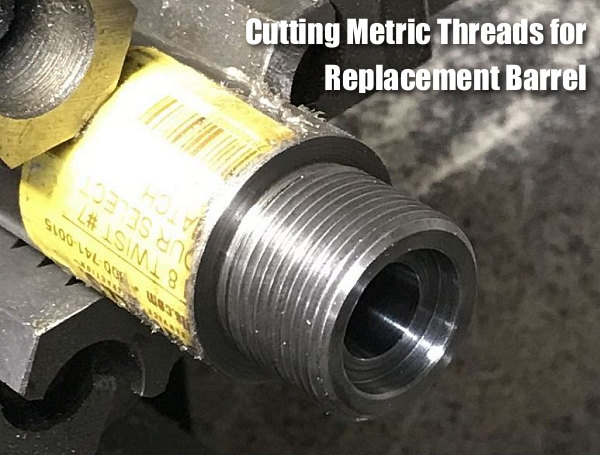
Howa Actions Require Metric Barrel Threads
It’s easy to thread a barrel for a Howa action. You just have to cut metric threads — most lathes out there can cut them. I cut the threads below on a manual lathe using change gears. [Editor: John Whidden cuts metric tenon threads with a CNC lathe. “It’s easy,” John tells us, “No issue whatsoever.”]
Using Howa Actions for Custom Rifles
I have built a few customs with Howa actions. Below is one of my favorite, a .308 Winchester. It consists of a Howa 1500 action, Shilen Select Match Rem Varmint contour barrel\, and Modular Driven Technologies (MDT) ESS chassis. Great rifle and it hammers!
Hunting season opens next month in many parts of the country. What better way to prepare the mind and spirit for your hunting adventure than to read a classic hunting book? We’ve found ten of the best hunting books every written and provided links below. The list of authors is impressive, including Ernest Hemingway and Theodore Roosevelt.
Recommended Books about Hunting
There’s no shortage of good hunting-related reading material. Here are some of the best books written about hunting. You can find all these titles on Amazon.com. Many are offered in eBook format as well as printed versions. Click on the link(s) below to preview a sample from each book.
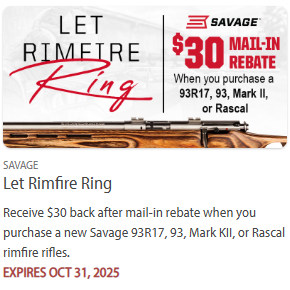
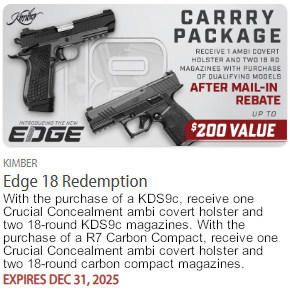
We’ve found a dozen great discount/rebate programs. These specials can save you big bucks on rifles, pistols, shotguns, ammo, and shooting accessories. Some of these rebates are worth $100 or more. For example you can get up to $350 off a Beretta Long Gun and save $100 on a Franchi Hunting Rifle. And there’s a $200 credit for a SilencerCo Suppressor. Note: Many of these promos are good through the end of December 2025, but some expire at the end of October 2025 — so check the dates.
Fall hunting season is here. When we ask serious deer/elk hunters to name the #1 thing they’d like to improve about their equipment, most say they want to reduce the overall weight of their gear. Weight savings can start with a lighter rifle. This article features the very affordable Howa Super Lite rifles, which are under 4.5 pounds without scope.
When you’re trekking many miles in the back-country on a hunt, rifle weight DOES matter. Many hunters want to keep their rifle weight as low as possible to reduce the overall load they must carry in the field. Howa now offers a series of Super Lite rifles that weigh under four and a half pounds (without scope, sling, or ammo). That’s impressive.
Howa claims that its Super Lite rifle is the “absolute lightest centerfire rifle on the market”. We can’t confirm that. But at a listed 4 pounds, 7 ounces (without optics), the carbon-fiber stock Super Lite model is very low in weight and mass (4.4375 pounds to be exact, without scope). And there is a Super Lite Short Barrel model (with 16.25″ barrel) that is just 4 pounds, 3 ounces (without scope). Either version is VERY light indeed — an important plus for hunters carrying their gear for long hours in the field.
Both standard and short-barrel versions of the Howa Super Lite rifle are currently available in .243 Win, 6.5 Creedmoor, 7mm-08 Rem, and .308 Winchester, four very popular hunting chamberings.
Photo shows Howa Super Lite Rifle with Kyptek Altitude Camo finish.
For 2024 the Howa Super Lite is offered with six carbon stock finishes, including three impressive camo types: Kryptek Obskura Transitional, Kryptek Altitude, and XK7 Kings Camo. Fitted with the strong but light Stocky’s Carbon Fiber stock, these Super Lite models feature a black webbing and soft touch for added texture and enhanced grip on the low-mass carbon stock. Howa also offers a walnut-stocked version of the Super Lite rifle. This weighs a bit more — 5 pounds, 9 ounces.
Howa Super Lite Rifle Features
Stock Options: Gray, Tan, Green, Kryptek Obskura Transitional Camo, Kryptek Altitude Camo, XK7 Kings Camo, and Walnut Wood (no wood for short barrel models)
Rifle Weight: Standard 4 lbs. 7 oz. | Short Bbl 4 lbs. 3 oz. | Walnut Stock, 5 lbs. 9 oz.
Chamberings: .243 Win, 6.5 Creedmoor, 7mm-08, .308 Win
Stock: Stocky’s Carbon Fiber Stock with Accublock patented Lug Bed
Standard Barrel: 20″ Blued barrel threaded (½”-28) and Suppressor Ready
Short Barrel: 16.25″ Blued
Trigger: 2-Stage Match Trigger with 3-position Safety
Optics Mounting: Included one-piece Picatinny Rail
Stock Feature: Limbsaver Butt Pad
Warranty: Lifetime Howa Warranty
Accuracy Claim: Sub-MOA 3-shot group at 100 yards with premium factory ammo
The Howa Super Lite also has some interesting mechanical features, including machined receiver and gorged bolt, tool-less firing pin removal, and a reliable M-16 style extractor/ejector. CLICK HERE for more INFO on HOWA Super Lite rifles and the rest of the Legacy Sport International product line.







 A while back your Editor was in New Mexico, on a prairie dog expedition. While in the field, my companions and I used two pairs of




 Howa 1500 HACT 2-Stage Trigger














 Fall hunting season is here. When we ask serious deer/elk hunters to name the #1 thing they’d like to improve about their equipment, most say they want to reduce the overall weight of their gear. Weight savings can start with a lighter rifle. This article features the very affordable Howa Super Lite rifles, which are under 4.5 pounds without scope.


