Here are eleven of the more interesting products (and people) we saw on Day Two of SHOT Show. This is only the tip of the iceberg folks. With 12.5 miles of aisles, and over 1600 Exhibitor booths, we can only show a tiny fraction of the products on display. There are tactical rifles and gear everywhere in sight. We also found some interesting target systems and reloading tools. Stay tuned for more product previews tomorrow from SHOT Show at the Sands Convention Center.
Savage 10/110 BA Stealth
You asked for it — here it is — the new Savage 10/110 BA Stealth. This new rifle features a strong yet light aluminum chassis that accepts AR-compatible rear sections. Savage says the actions have been “factory blueprinted”. Available chamberings are: 6.5 Creedmoor, .308 Winchester, .300 Win Magnum, and .338 Lapua Magnum. We shot this rifle, in .308 Win, at Media Day and we liked the ergonomics.
NEW Alliant Reloder 16 Powder
Alliant’s engineers showed us “top-secret” data charts comparing various popular powders. This new Reloder 16 is one of the most temp-stable propellants ever created. Burn rate is slightly faster than H4350. Initial accuracy results have been very promising. AccurateShooter.com will be testing this powder very soon. Stay tuned.
Savage A17 in Laminated Thumbhole Stock
Here is the 17 HMR Savage A17 in new laminated, thumbhole stock. We want one. The wood-stocked A17 balances well and feels good. This is a definite upgrade over the original plastic stock.
Vortex 6-24x50mm FFP Razor HD
Vortex unveiled a very impressive new tactical scope, the 6-24x50mm Razor HD. Vortex says this top-of-line optics was engineered to compete with anything on the market — including the big-name German brands. The glass was excellent, and we loved the fact the elevation turret offers a full 25 MOA of elevation in one rotation. Great feature.
Pardini Competition Air Rifle
Design for Olympics-level competition, this new Pardini is one of the most sophisticated air rifles ever made. It has a very sophisticated loading system that allow you to load pellets without changing your hold on the rifle. It was designed with input from Olympic Champion shooters.
Ken Oehler and the New System 88
Chronograph Guru Ken Oehler explained the capabilities of his “enterprise-grade” System 88. This combines a proof-channel chronograph at the firing line with sonic sensors at 1000 yards (and other distances in between if desired). This allows very precise calculation of true bullet BCs.
$38,000 JANZ Multi-Barrel, Multi-Caliber Revolver
You are looking at the world’s most expensive wheelgun, the JANZ multi-caliber system. Custom-built for each customer, this amazing revolver shoots multiple cartridge types — even rimfire. As far as we know this is the only revolver in the world that shoots .22 LR rimfire as well as centerfire cartridges up to .500 SW. The builder, JANZ-Praszisionstechnik GmbH, will craft the gun with as many barrels and cylinders as the owner wants. As shown in the photo, the price is around $38,000.
New Bullets from Sierra
Sierra Bullets had its new Tipped MatchKings on display, and well as the very impressive new 7mm 183-grain MatchKings, which are “tip-uniformed” at the factory. Lester Bruno shot some of these 183-grainers and said they held amazing waterline at 1000 yards, indicating that the bullet-to-bullet BC is very consistent. Listed G1 BC for the 183gr MK, SKU #1983, is .707.
Jerry Miculek, World’s Fastest Wheelgunner
We met up with the legendary Jerry Miculek at the Hornady Booth. The world’s fastest wheelgunner (and a darned good rifleman too) had fans lined up for autographs. What’s the secret to Jerry’s success? Hard work, hands of steel, and a positive attitude.
New Throat Erosion Gauge from PT&G
Pacific Tool and Gauge had a bunch of new products on display. One item that caught our eye was an interesting Throat Erosion Gauge. Index marks on the main shaft let you determine, with precision, how much your throat has moved. Screw-on, caliber-specific pilots let you gauge all popular calibers.
Sig Sauer 5-25x52mm “Whiskey 5″ SFP Scope
We were very impressed with Sig Sauer’s optics, which offer a lot of capability for the price. The new 5-25x52mm Whiskey 5 optic offers positive controls and a nice illuminated reticle center (good for low light). The “street price” is around $1200.00 – $1300.00. READ Full Review Here.
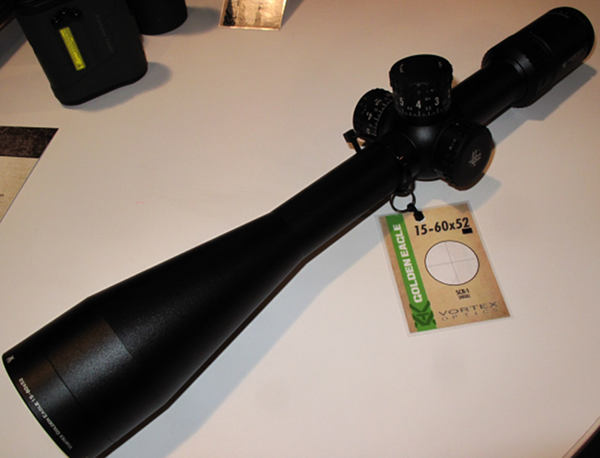
SHOT Show offers a unique opportunity to see a host of new products AND reconnect with old friends in the shooting world. We met with our friends John Krieger (Krieger Barrels), Ian Kelbly (Kelblys.com), Dave Kiff (PT&G), and Eric Stecker (Berger Bullets). On SHOT Show Day One we saw many interesting items, including a new $1500.00, 15-60x52mm comp scope from Vortex and the amazing Bix’n Andy Elypse action. That 15-60X Vortex should prove a great choice for F-Class competition and the Elypse “raises the bar” for lightweight benchrest actions.
Everyone involved in long-range target shooting should check out this New Vortex “Golden Eagle” 15-60x52mm scope. It offers a 4X zoom ratio with 60X max magnification, with an affordable street price of around $1500.00. That undercuts the competition from other major brands by hundreds of dollars. Two reticle options will be offered, a fine cross-hair and one with MOA-based hold-over lines. We’ll provide a more complete report soon….
Howa — Mini-Action Bolt Gun
We finally got our hands on the Mini-action Howa, a very nice little rifle. I immediately noticed that the bolt is extremely smooth — really nice. The HACT 2-stage trigger is excellent — just about perfect for a varmint rifle. The action is nearly an inch shorter than a conventional “short action” so bolt movement is shorter. The rifle is currently offered in .204 Ruger and .223 Remington, and Howa may release a .222 Remington, 6.5 Grendel and 7.62×39 version in the future. Street price on this rifle is around $600.00. I give this rifle two thumbs up, way up. I want one.
Kelbly’s — New Composite GRS Stocks
Kelbly’s is the North American distributor for GRS stocks from Norway. For 2016 GRS has introduced advanced composite stocks. These share the ergonomic design of GRS wood stocks, but offer greater strength, rigidity, and durability. If you are looking for an advanced composite-matrix stock for hunting and tactical applications, you should check out this new GRS. We were very impressed.
Bix’n Andy — Titanium Elypse Action
This may be the most sophisticated benchrest action ever created. The new Bix’n Andy Elypse action will be offered in both stainless and Titanium (shown above). The action features an elliptical profile and a drop port. The trigger, sold separately, is superb, absolutely superb. There are many unique features, such as the flared loading port ramp and easy-change bolt handle. This is truly the Rolls-Royce of precision actions.
Shilen — AR and Savage Drop-in Barrels
We visited the Shilen booth and chatted with Wade Hull, Shilen’s President. Wade explained that Shilen now offers a variety of Drop-in Barrels for Savages as well as “large-format” ARs (AR10 type rifles in 308-family chamberings). Wade also noted that Shilen has streamlined its production process, so wait-time on chambering work has been reduced significantly.
Stocky’s Stocks — New 3D-Printed Prototype Stock
3D Printing and Rapid Prototyping has come to the gunstock world. Stockys Stocks showed off a high-tech 3D-printed prototype of its new tactical stock with removable cheekpiece. We also checked out Stocky’s impressive Long Range composite stocks. Very strong, and very rigid, these stocks feature a CNC-milled aluminum bedding block. These are a stunning value for just $199.99.
RAS Tuners — Combo Tuner + Muzzle Brake
Tuners work — though it may take a bit of time and effort to dial in your tune. The RAS Tuner system combines a sensitive tuner with a removable muzzle brake. There are systems for ARs as well as bolt guns. The inventor of the RAS says he has seen significant reductions in group size.
Tactical Solutions — High-Bling Rimfire Rifles and Pistols
If bling is your thing, then Idaho-based Tactical Solutions has you covered. This company offers a wide variety of firearms including .22 LR rimfire target pistols and rifles. The rifle in this photo is configured with a permanent barrel extension that makes it ATF-compliant. But the actual barrel is threaded below the barrel extension so you can add a suppressor and still have a short overall-length “fun gun”.
Hygenall — LeadOff Products
Anyone who does a lot of shooting may be exposed to lead residues. Lead is a tough substance to remove from human skin. We chatted with the scientists who created these LeadOff products and were quite impressed. The product uses sophisticated chemistry to “grab and remove” the lead molecules on your skin. This product has earned health agency certifications.
Champion — Plinking Targets for Fun Shooting
Among all the “Operator-ready” Black Rifles and Tactical gear, it was nice to see a display dedicated to the simple fun of shooting. As kids, we all started our shooting careers plinking with a BB Gun or a simple rimfire rifle. Champion makes a variety of reactive targets that are great for plinking.
Scores of manufacturers showcase their products at the SHOT Media Day event, held each year in Boulder City, Nevada. This year we saw some legendary names (such as Colt and Winchester), as well as new, 21st-century gun-makers (such as Tracking Point). Savage and Kimber had some surprising new offerings, and we saw impressive new optics from Zeiss and Minox. There were some interesting trends. Many firearms were equipped with “factory” suppressors. Ruger, much to our surprise, showcased a Ruger 10/22 takedown rifle fitted with a Ruger-branded suppressor. It was extremely quiet. Many of the handgun manufacturers, including Ruger and Walther, supplied ammunition with composite polymer matrix bullets. These bullets are significantly lighter than conventional pistol bullets of the same caliber (the reduced bullet mass did lessen felt recoil with 9mm and 45 acp pistols). The polymer bullets are lead-free, and they don’t ricochet, so they are both more “eco-friendly” and safer when used on steel targets.
New Savage 110 BA Stealth Rifle
Savage unveiled a modern, “monolithic” metal-chassis tactical rifle. Designed to compete with the Ruger Precision Rifle (RPR), the new Savage 110 BA Stealth has an AR-type hand grip, skeletal buttstock, and a low-profile vented forearm. This rifle will be offered in .308 Winchester and 6.5 Creedmoor while a slightly bigger model will be offered in .300 Win Mag and .338 Lapua Magnum. Savage says that all the 110 BA Stealth models will feature “factory blue-printed actions” for improved accuracy. MSRP varies from $1200 to $1600 depending on caliber and configuration. It should be available starting next month.
The model on display, chambered in .308 Winchester, proved accurate in the hands of Ed M. of 65guys.com. Ed liked the trigger and the fact that the rifle uses PMags. The stock, based on a design by Drake Associates, is very light but also very rigid. Ed thought this stock would work well on barricades in tactical matches. Steve L. of 65guys.com said there is “pent-up demand” for a rifle like this, and he predicts the 110 BA Stealth will be a big seller for Savage.
New K6 Revolver from Kimber
Kimber, known for its 1911-type semi-auto pistols, has introduced an all-new K6 .357 magnum carry revolver. Kimber’s hammerless wheelgun was very nicely crafted and had one of the smoothest double-action pulls we’ve tried. The trigger pull was long, but very consistent and smooth. With the Kimber, you don’t feel a series of “stages” or transitions as you do with most other double-action revolvers. The other impressive thing about the new revolver is the finish — the stainless is very smooth and shiny, the result of “much hand polishing” according to Kimber engineers.
Ruger 10/22 Takedown with Factory Suppressor
The most fun we had all day was at the Ruger booth. There we got to test a Ruger 10/22 Takedown fitted with a Ruger-branded factory-made suppressor. This little rifle was a hoot to shoot, and with the suppressor in place it was amazingly quiet. We really liked this set-up and the take-down system worked brilliantly — just pull one lever, then twist and the barrel section comes off. For those states where you can own a suppressor, we strongly recommend this configuration. The “can” is sold separately and buyer must still comply with all applicable state and Federal laws.
Zeiss Victory V8 4.8-35x60mm Rifle Scope
Zeiss showed off its impressive Victory V8 line of riflescopes. These offer an 8X zoom ratio, with handy BDC turrets — just dial the yardage indicated on the turret (you can custom-order BDC rings calibrated for your favorite load). The new V8 scopes offer many impressive features. We shot a rifle fitted with the new 4.8-35x60mm V8, which features a very beefy 36mm main tube. The glass was bright and ultra-sharp. Zeiss claims 92% light transmission. Fiber optic technology provides a very precise red dot in the center of the reticle. This was visible even in bright sunlight. Zeiss will offer three other V8 models: 1-8x30mm, 1.8-14x50mm, and 2.8-20x56mm.
APO .338 Lapua Magnum
Bigger is apparently better when it comes to serious tactical rifles. There were quite a few rifles chambered for the powerful .338 Lapua Magnum Cartridge. We tried out a .338 LM from Ashbury Precision Ordnance. With some help from a laser rangefinders, we were able to put rounds on a large steel plate at 960 yards. The trigger was nice and the suppressor reduced felt recoil. This was a nice rifle, with a comfortable cheek-piece and ergonomic grip.
Minox MD 88 Spotting Scope
We noticed a BIG front objective on a brand-new Minox spotting scope — one of only two in the country. This new spotter features low-dispersion glass and dual focusing rings — a large “fast focus” ring and a second smaller, fine focus ring. The price, including 20-60X eyepiece, will be around $1750.00. Jason Baney, who works for EuroOptics, says this new Minox spotting scope compares well with other spotters that cost considerably more.
Blaser R8 Professional Thumbhole Fancy Wood
If there was one rifle I wanted to take home with me, it was this nice Blaser R8 “Professional Success” model with a fancy wood new thumbhole stock. This rifle was very comfortable in all shooting positions. The gun balanced well and the straight-pull Blaser action is fun to use. It can be cycled rapidly without disturbing your position on the rifle.
This is always something new and unusual on display at Media Day at the range. This tracked one-man rig provides all-terrain mobility so disabled persons can enjoy hunting and wilderness recreation.
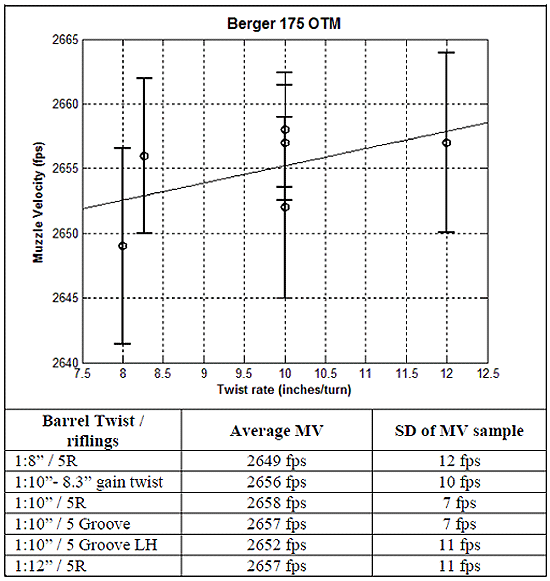
We will be interviewing Bryan Litz of Applied Ballistics tomorrow at SHOT Show in Las Vegas. As a sneak preview of some of the topics we’ll cover, here are some highlights of some important, original research conducted by Bryan and his Applied Ballistics team. Bryan wanted to know how much velocity was altered by twist rate. The “real world” test results may surprise you….
The Applied Ballistics team tested six (6) same-length/same-contour Bartlein barrels to observe how twist rate might affect muzzle velocity. This unique, multi-barrel test is featured in the book Modern Advancements in Long Range Shooting. That book includes many other fascinating field tests, including a comprehensive chronograph comparison.
Barrel Twist Rate vs. Velocity — What Tests Reveal by Bryan Litz
When considering barrel twist rates, it’s a common belief that faster twist rates will reduce muzzle velocity. The thinking is that the faster twist rate will resist forward motion of the bullet and slow it down. There are anecdotal accounts of this, such as when someone replaces a barrel of one brand/twist with a different brand and twist and observes a different muzzle velocity. But how do you know the twist rate is what affected muzzle velocity and not the barrel finish, or bore/groove dimensions? Did you use the same chronograph to measure velocity from both barrels? Do you really trust your chronograph?
Savage Test Rifle with Six Bartlein Barrels
Most shooters don’t have access to the equipment required to fully explore questions like this. These are exactly the kinds of things we examine in the book Modern Advancements in Long Range Shooting. In that book, we present experiments conducted in the Applied Ballistics lab. Some of those experiments took on a “Myth Buster” tone as we sought to confirm (or deny) popular pre-conceptions. For example, here’s how we approached the question of barrel twist and muzzle velocity.
Six .308 Win Barrels from Bartlein — All Shot from the Same Rifle
We acquired six (6) barrels from the same manufacturer (Bartlein), all the same length and contour, and all chambered with the same reamer (SAAMI spec .308 Winchester). All these barrels were fitted to the same Savage Precision Target action, and fired from the same stock, and bench set-up. Common ammo was fired from all six barrels having different twist rates and rifling configurations. In this way, we’re truly able to compare what effect the actual twist rate has on muzzle velocity with a reasonable degree of confidence.
Prior to live fire testing, we explored the theoretical basis of the project, doing the physics. In this case, an energy balance is presented which predicts how much velocity you should expect to lose for a bullet that’s got a little more rotational energy from the faster twist. In the case of the .30 caliber 175 grain bullets, the math predicts a loss of 1.25 fps per inch-unit of barrel twist (e.g. a 1:8″ twist is predicted to be 1.25 fps slower than a 1:9″ twist).
Above, data shows relationship between Twist Rate and Muzzle Velocity (MV) for various barrel twist rates and rifling types. From fast to slow, the three 1:10″ twist barrels are: 5R (canted land), 5 Groove, 5 Groove left-hand twist.
We proceeded with the testing in all 6 barrels from 1:8” to 1:12”. After all the smoke cleared, we found that muzzle velocity correlates to twist rate at the rate of approximately 1.33 fps per inch of twist. In other words, your velocity is reduced by about 5 fps if you go from a 1:12” twist to a 1:8” twist. [Editor: That’s a surprising number — much less than most folks would predict.] In this case the math prediction was pretty close, and we have to remember that there’s always uncertainty in the live fire results. Uncertainty is always considered in terms of what conclusions the results can actually support with confidence.
This is just a brief synopsis of a single test case. The coverage of twist rates in Modern Advancements in Long-Range Shooting is more detailed, with multiple live fire tests. Results are extrapolated for other calibers and bullet weights. Needless to say, the question of “how twist rate affects muzzle velocity” is fully answered.
Other chapters in the book’s twist rate section include: · Stability and Drag – Supersonic
· Stability and Drag – Transonic
· Spin Rate Decay
· Effect of Twist rate on Precision
Other sections of the book include: Modern Rifles, Scopes, and Bullets as well as Advancements in Predictive Modeling. This book is sold through the Applied Ballistics online store. Modern Advancements in Long Range Shooting is also available in eBook format in the Amazon Kindle store.
Savage Arms, now part of Vista Outdoor, will be offering many new guns for 2016. The big news is the A22, a .22 WMR version of Savage’s popular A17 semi-auto rifle (chambered in 17 HMR). Also debuting for 2016 are more variants of A17 and B.MAG rifle series, plus as all-new Model 42 Takedown shotgun-and-rifle combination gun. Along with the all-new models, Savage will add new chamberings to existing rifle types. For example, Savage AXIS and AXIS II rifles will soon be available chambered for the popular 6.5 Creedmoor.
Savage New Product Highlights for 2016
Savage A22 Magnum in .22 WMR (NEW)
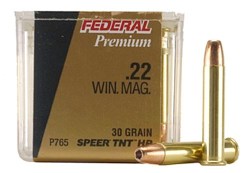
The new A22 Magnum is chambered for .22 WMR (Winchester Magnum Rimfire) and features the same, innovative delayed-blowback, semi-automatic action as the original A17 (which was chambered in 17 HMR). We expect the new A22 to be popular with varminters who prefer to shoot a bigger, heavier bullet, or who find .22-caliber barrels easier to clean.
Savage Model 42 Takedown (NEW) — .410ga and .22 LR
The Model 42 Takedown is a break-open combo gun that fires rimfire rounds from the top barrel and .410 bore shotgun shells from the bottom. It breaks down with the push of one button and includes an Uncle Mike’s Go Bag for transport.
Savage A17 — Wood Stock, Bull Barrel
New-for-2016 A17 target models feature heavy barrels for increased accuracy and gray wood laminate stocks improved feel and handling. We feel the new laminated stock really improves tha A17 as a general purpose varmint gun.
Savage B.MAG — New Stocks, Heavier Barrel Option
Savage’s B.MAG was built around the 3000 fps 17 Winchester Super Magnum rimfire cartridge. For 2016, three new models have been added to the B.MAG lineup: Target Beavertail, Heavy Barrel, and Sporter.
6.5 Creedmoor Chambered Rifles
Savage Arms has added nine new rifles chambered for the popular 6.5 Creedmoor cartridge. They include the new model 16 Lightweight Hunter, AXIS, AXIS LH, AXIS XP, AXIS XP Camo, AXIS XP Stainless, AXIS II XP, AXIS II XP Stainless and AXIS II XP Hardwood.
See New Savage Guns at SHOT Show
Savage’s new-for-2016 products can be viewed during SHOT Show at the Vista Outdoor booth (#14551). Product photos and specs will appear on SavageArms.com after the show.
Need a gun safe? Well now there’s a modular vault option from “Big Red”, Hornady Manufacturing. Hornady has acquired SnapSafe, manufacturer of modular safes. Delivered in sections and assembled on site, SnapSafe vaults combine steel-walled security with ease of mobility and installation. The heaviest segment of a SnapSafe is typically under 100 pounds so one adult male can lift and move the safe sections up stairs (or anywhere else). SnapSafe vaults feature 9-gauge steel walls, 8 chrome steel 3/4″ locking bolts, and a one hour (2,300°) fire rating.
SnapSafe modular gun vaults are delivered on a pallet right to your door and can be assembled in minutes. The assembly process is illustrated in the video above. Basically the safe bolts together — it’s a bit like assembling an IKEA cabinet. In addition to conventional safes, SnapSafe also manufactures lock boxes and auxiliary safes that can be stored in trunks, under beds, or in walls. SnapSafe products will be on display at booth #2119 at Shot Show, January 19-22. For more information on SnapSafe products, visit www.Snapsafe.com.
Headed to SHOT Show next week? Then you should download the FREE SHOT Show Mobile App. Available for all mobile devices, this App really makes it easier to plan your SHOT Show schedule, and navigate the floor of the Sands Convention Center. The 2016 SHOT Show Mobile App is now available for download on Apple, Android, Blackberry and Windows smartphones and devices. Apple users will find the app in the App Store, Android users will find their version in the Google Play Store, and Blackberry and Windows users can CLICK HERE. Learn more about the App at SHOTmobile.com.
Handy Interactive Map
The App includes an interactive map that can direct you from your current location to your next destination. Arrange your meetings with a handy scheduling calendar. And you can search for any SHOT exhibitor by name or product category. In addition, the App lists major show events as well as important new products.
The Free SHOT Show App lets you do some very cool things with your smartphone. You can contact exhibitors directly through the App to request appointments or callbacks. You can take notes while visiting a vendor’s booth or attending a seminar. Of course you can schedule your agenda, and see an entire day’s events in a glance. But perhaps the best function of all is the “Smart Route”. This allows you to create the most efficient point to point route from one booth location to another.
With its polished brass receiver, the Model 1866 “Yellow Boy” lever-action rifle is the first gun to bear the Winchester name.
The Winchester Arms Company marks its 150th Anniversary this year. On May 22, 1866, Oliver Winchester established the Winchester Repeating Arms Company, and introduced what would become a legendary rifle, the Winchester Model 1866, aka “Yellow Boy”. Seven years later Winchester would introduce another famed lever-action gun, the Model 1873, called the “Gun that won the West”. More than 700,000 Model 1873s have been produced.
Winchester Repeating Arms will celebrate its 150th Anniversary at this year’s SHOT Show in Las Vegas. A special exhibit curated by the Cody Firearms Museum will feature unique guns of great historical interest. On display will be the first-ever Winchester branded rifle, a Model 1866, Buffalo Bill’s Model 1873 Smoothbore that he used in his Wild West Show, President Eisenhower’s custom Model 1894, President Kennedy’s custom Model 70, and former Winchester Canada President R.F. Bucher’s custom Model 101. In addition, Buffalo Bill’s gauntlets and cowboy hat will be displayed.
Also, the Winchester Ammunition booth will have a large historical display of firearms as well. That display will include guns from the collections of John Olin, Ernest Hemingway, Zane Grey, and notably, the “Forgotten Winchester” Model 1873 from the Great Basin National Park.
The Man Who Founded Winchester
Oliver Fisher Winchester was an innovative and driven man who saw the future of firearms and built an industrial empire around the lever-action rifle. Born in Boston in 1810, Winchester’s initial foray into business was as a maker of men’s shirts. Seeing the economic potential of the fast-growing firearms industry, Winchester found investors, and in 1857 bought a controlling interest in the Volcanic Repeating Arms Company from two inventive gentlemen named Horace Smith and Daniel B. Wesson. Winchester continued to refine firearm designs with inventors Benjamin Tyler Henry and Nelson King, and on May 22, 1866, the Winchester Repeating Arms Company was born.
What covers an area greater than the Great Pyramid at Giza, attracts visitors from 100 countries, and has over 1600 exhibitor booths distributed along 12.5 MILES of Aisles? The SHOT Show in Vegas is the correct answer. The annual trade show for the $6 billion per year fireams/hunting industry, SHOT Show is the ultimate gathering for all things gun-related. It runs next week, January 19-22, in Las Vegas. Just how big is SHOT Show? This NSSF Infographic reveals some amazing facts:
The most important 2016 CMP rule change allows 4.5X (max) optical sights for Service Rifle shooting.
The new 2016 rulebooks for CMP-governed Service Rifle, Pistol and CMP Games shooting events have just been released. There are some very important changes for 2016, including the authorization of scopes for Service Rifle competition. You can download the new Rulebooks for free with the links below. NOTE: The most important 2016 Rules changes are indicated with underlined text in the new Rulebooks.
The big rule changes in the 2016 CMP competition rules concern the modernization of CMP Service Rifle standards. Starting in 2016, Service Rifle competitors will be able to choose between service rifles with traditional metallic sights or rifles with telescopes with a maximum of 4.5X magnification. These scopes may be fixed-power or variable, with max 4.5 power zoom. This rule change was coordinated with a similar rule change adopted by the NRA.
The CMP states: “The decision to legalize optical sights on service rifles was taken after several years of discussion and a recognition that U.S. military personnel no longer use anything but optical sights on their military rifles. CMP Service Rifle rules have traditionally tried to keep abreast of military rifle and training developments so opening Service Rifle shooting to optical sights became an inevitable change. To quote one comment received by the CMP, “It is very difficult now to say that as-issued ‘AR-15 or M16′ does not include telescopes.”
Another major change in the CMP Service Rifle rules will allow the use of a much wider variety of M16/AR15-type rifles. Legal service rifles will no longer be restricted to rifles that rigidly comply with the M16 service rifle profile. Starting in 2016, Service Rifles can be any “M16 U. S. Service Rifle or a similar AR15 type commercial rifle that is derived from the M16 service rifle design” and that complies with these restrictions:
Chambered for the 5.56 x 45 mm (.223) NATO cartridge.
Designed or modified for semi-automatic fire only.
Have either a gas-impingement system or a piston-operated gas system.
Have a barrel that is no longer than 20 inches, or 21 5/8 inches if the barrel has a flash suppressor.
Must use the same upper receiver and barrel for the entire match.
Have a trigger pull of at least 4.5 pounds.
Quad rails or similar hand guards are permitted, but the front sling swivel location must be fixed at 13 ¼ inches (+/- ½ in.) ahead of the forward edge of the magazine well (8.0 inches on M4 configured rifles).
Use standard service magazines or commercial equivalents.
Have a fixed or collapsible butt-stock that may vary in length and even be adjusted between firing stages. Butt-plates or cheek-pieces may not, however, be adjustable.
Have a standard A1 or A2 pistol grip.
Extended bolt releases and mirror-image left-hand receivers will be permitted.
No Weight Limit For Service Rifles
Before issuing its new rules, the CMP solicited comments. A substantial majority of competitors’ comments supported allowing optical sights and the broadening of the Service Rifle rule. The one rule change that most shooters opposed was a proposed weight limit for Service Rifles with optical sights. After considering these comments, the CMP Rules Committee rejected the the Service Rifle weight limit proposal. Accordingly, in 2016, there will be no weight limits for Service Rifles, whether they have optical or metallic sights.
Iron Sights and Optics Will Compete in the Same Class
The CMP considered having optics-equipped Service Rifles in a separate classification. That idea was rejected. So, for 2016 there will be ONE CLASS for all Service Rifles (both iron-sighted and scoped). The CMP observed that “the arguments for having one unified competitor category competing together for EIC points and Distinguished Badges prevailed. Having separate categories and one Distinguished Badge would have created nightmare administrative challenges. Having two categories and separate Distinguished Rifleman Badges for optical and metallic sighted rifles would have become a formula for diminishing the prestige of the traditional Distinguished Rifleman Badge. The final CMP decision was to keep one strong, unified Service Rifle event instead of two smaller categories[.]”
Rule Change Concerning Malfunctions (No more Alibis)
Another major Service Rifle rule change will abolish allowing extra time or refires for malfunctions. This change will save time because malfunction refires effectively double the length of time needed for rapid-fire relays in big matches. The main reason for this change is to place more responsibility on competitors for having rifles and ammunition that function with complete reliability. Comments received by the CMP concerning this change showed that it is controversial, but a majority of shooters supported the change. One shooter wrote: “The elimination of “alibis” is long overdue. It was always most frustrating to me when it takes longer to shoot rapid fire than slow fire.”
Story Tip by Shiraz Balolia of Bullets.com. We welcome reader submissions.






 Savage A22 Magnum in .22 WMR (NEW)



 The Man Who Founded Winchester


