Thus far in 2013, the National Shooting Sports Foundation (NSSF) has distributed 31,000 firearm safety kits through Project ChildSafe. Through this program, NSSF helps prevent unauthorized access to firearms when they aren’t in use. The NSSF launched Project ChildSafe in 2003 to educate gun owners on their responsibility to keep their guns out of the wrong hands, and provide the tools to help them do so.
Through partnerships with law enforcement the NSSF have distributed more than 36 million free firearm safety kits to gun owners throughout the United States. Notably, between 2000 and 2010, fatal firearm accidents dropped 22 percent. Firearms accidents are now less than 1 percent of all fatal accidents in the United States.
Message from Steve Sanetti, NSSF President
This year NSSF has committed $1 million to provide free gun safety kits, including a lock, in partnership with law enforcement agencies across the country, to gun owners, and educate gun owners about responsible firearm handling and storage. Success with this campaign relies on the participation of responsible firearm owners at the local level.
It only takes a few seconds for an accident to happen, and it takes just as few seconds to prevent one. Please join us in this important work.
ATK announced that it will pay $315 million to acquire Caliber Company, the parent company of Savage Sports Corporation which runs Savage Arms, and Stevens. Savage will be integrated into ATK’s Sporting Group business which includes Federal Premium, Alliant Powder, CCI, RCBS, Speer, Champion Targets, and other outdoor sports brands.
The acquisition of Savage by ATK will expand ATK’s portfolio offering by adding a respected producer of long guns to its family of leading brands in the shooting and outdoor sports industries. ATK anticipates closing the transaction in the first quarter of its Fiscal Year 2014, which ends June 30, 2013.
ATK (NYSE: ATK) announced it has entered into an agreement to acquire Caliber Company, the parent company of Savage Sports Corporation (Savage). Savage is one of the world’s largest manufacturers of hunting rifles and shotguns, delivering innovative products for more than 100 years. The acquisition would expand ATK’s portfolio offering by adding long guns to its leading brands in commercial and security ammunition, shooting sports and security-related accessories. The transaction is subject to regulatory approvals and customary closing conditions. ATK anticipates closing the transaction in the first quarter of its Fiscal Year 2014 (FY14), which ends June 30, 2013.
Under the terms of the transaction, ATK will pay $315 million in cash, subject to a customary working capital adjustment. This represents a trailing twelve months ended March 31, 2013 EBITDA multiple of approximately 5.5 times (unaudited). ATK believes the acquisition will be accretive to FY14 earnings per share. ATK will finance the acquisition with cash on hand and funds available under its existing credit facility.
“The acquisition will complement ATK’s growing portfolio of leading consumer brands,” said Mark DeYoung, ATK President and CEO. “This opportunity will allow us to build upon our offerings with Savage’s prominent, respected brands known for accuracy, quality, innovation, value and craftsmanship. Savage’s sales distribution channels, new product development, and sophistication in manufacturing will significantly increase our presence with a highly relevant product offering to distributors, retailers and consumers.”
Operating under the brand names of Savage Arms, Stevens, and Savage Range Systems, the company designs, manufactures and markets centerfire and rimfire rifles, shotguns and shooting range systems used for hunting as well as competitive and recreational target shooting. The company was organized in 1894 by Arthur Savage and has expanded into market-leading positions. Savage is located in Westfield, Mass. and Lakefield, Ontario, and employs approximately 600 skilled employees.
“Savage offers customers a unique value proposition that is unmatched by any other firearms manufacturer and will be a tremendous complement to ATK’s existing ammunition and shooting accessories portfolio,” said Al Kasper, Savage President and Chief Operating Officer.
ATK will integrate Savage within its Sporting Group business. ATK’s Sporting Group is the established leader in sporting and law enforcement ammunition and shooting accessories. ATK’s ammunition brands include Federal Premium, CCI, Fusion, Speer, Estate Cartridge and Blazer. ATK’s accessories brands include BLACKHAWK!, Alliant Power, RCBS, Champion targets and shooting equipment, Gunslick Pro and Outers gun-care products, and Weaver optics and mounting systems.
Caliber Company has been a portfolio company of Norwest Equity Partners (NEP), a leading middle market equity investment firm, since January 2012. NEP is headquartered in Minneapolis, Minn.
ATK is an aerospace, defense, and commercial products company with approximately 15,000 employees and operations in 21 states, Puerto Rico, and internationally. ATK is headquartered in Arlington, Va. News and information can be found on the Internet at www.atk.com, on Facebook at www.facebook.com/atk, or on Twitter @ATK.
If you’re looking for a great start for your summer, mark your calendars for May 31 through June 2, 2013 and plan to shoot the 2013 Remington-Bushmaster Long Range Regional at the Reade Range in central Pennsylvania. June in the Appalachian Mountains is a beautiful time and place. The Reade range is a first-class facility and terrific place to shoot. Since last year improvements have been made to the range to help accommodate the large number of competitors that this and other matches draw. The Regional tournament is open to conventional (sling), and F-class shooters (both F-TR and F-Open). There is still time to sign-up for the match and entries are still being accepted.
Firing will begin on Friday, May 31st with a 4-man team match that follows a morning of practice. Saturday is 3×1000 any/iron match followed by a wind clinic by Bryan Litz and a prize raffle. The match concludes on Sunday with 3×1000 any/any matches and awards presentations (with meal provided). Several teams are expected to be in attendance, pit pullers will be available for hire by competitors and Applied Ballistics will operate a hospitality tent with drinks and snacks all weekend.
CLICK “PLAY” to HEAR Bryan Litz TALK about LR Regional Match Course of Fire and PRIZES:
As if the fun of competitive shooting isn’t enticing enough, this match is heavily sponsored with some terrific prizes. Awards for the winners include: Remington rifles, Championship medals, and first place Team medals. Pluis half the entry fees will be returned to the winners as cash awards. In addition to awards, the prize table, containing donations from over 30 sponsors with a value well over $6,000, will be raffled as door prizes. Last year, every competitor was able to walk away with a prize!
Remington-Bushmaster Arms is the primary sponsor of the match. Applied Ballistics, LLC is promoting the match and you can see a full list of the match sponsors and prizes on the Applied Ballistics website. Sponsor donations are greatly appreciated. If you have a business in the firearms industry and would like to support the shooting sports by donating to this match, please contact Jennifer Litz at Jennifer.litz [at] appliedballisticsllc.com.
Judge Glen E. Conrad, Chief Judge of the United States District Court for the Western District of Virginia, entered a final judgment upholding the validity of Ashbury International Group, Inc.’s patent on its modular rifle technology. The court also held that Cadex Defence, Inc. of Canada infringed that patent, and enjoined Cadex from future infringement. Ashbury was represented by the Troutman Sanders law firm, and D. Alan Nunley of Reston, Virginia. The official case title is: Ashbury International Group, Inc. v. Cadex Defence, Inc., Case No. 3:11cv79, filed on December 16, 2011, in the U.S. District Court for the Western District of Virginia.
“The court held that Ashbury’s patent is valid, and potential infringers now know that Ashbury will protect its valuable intellectual property,” said Robert Angle, the head of Troutman Sanders’ Litigation Department in Virginia and a leading intellectual property litigator. “This case validates the significant investment Ashbury has made in its technological innovations.”
After entry of judgment, Ashbury CEO/President Morris Peterson declared: “We are very pleased with the final judgment, and feel confident that our intellectual property and [our] many innovative ideas … can in fact be protected, even in the hyper-competitive firearms industry. Our customers in the government, military, and sport shooting communities rely on Ashbury’s innovations. They deserve to have our best-engineered designs, particularly in life-critical applications.”
Virginia-based Ashbury Int’l Group is a DOD contractor, systems integrator, engineering, manufacturing and logistics company serving the government, military, and Spec-Ops communities in the USA and allied foreign nations. Among its products, Ashbury has designed fully integrated precision rifle platforms using the advanced SABER®-FORSST® modular stock chassis system for sporting, target competition and tactical shooting activities. Ashbury currently holds 16 US Patents relating to its advanced modular chassis system for precision bolt action rifle platforms, including the patent infringed by Cadex, U.S. Patent No. 7,802,392, and other patents pending.
About Troutman Sanders Law Firm Troutman Sanders LLP is an international law firm with more than 600 lawyers and offices located throughout the United States and China. Founded in 1897, the law firm represents clients ranging from multinational corporations to individual entrepreneurs, federal and state agencies to foreign governments, and non-profit organizations to businesses representing virtually every sector and industry.
Current demand for loaded ammunition and reloading components is very high. To meet this demand, ammo imports into the USA have nearly doubled. But supplies are still short. One reason is that domestic ammo manufacturers are already operating at full capacity — and they have been doing so for the past decade or so. The machines just can’t run any faster…
Now an important domestic ammo-maker has committed to a significant increase in production capacity. Remington Arms Company, LLC (“Remington”) recently announced a major expansion of its Lonoke (Arkansas) Ammunition Plant. Remington will spend $32,000,000 to add new structures and machinery.
Work on the expansion, which will include the construction of a new building, is expected to begin second quarter of 2013. The $32 million expansion plan is projected to be in operation by the second quarter of 2014. The Remington’s Lonoke Ammunition Plant, opened in 1969, produces a wide variety of commercial ammunition.
“We continue to invest in all of our manufacturing operations because we are committed to ensuring quality, increasing product availability, and improving on-time delivery. This significant investment in Lonoke is a testament to that commitment. Our customers can count on Remington to invest in its manufacturing operations in order to ensure that its facilities are state-of-the art”, said Kevin Miniard, Chief Operating Officer of Remington. Read about Remington ammunition.
The National Shooting Sports Foundation (NSSF), the trade association for the shooting industry, is severing its ties with British-based Reed Exhibitions. On May 9th, NSSF announced that it has reached an agreement with Reed Exhibitions to terminate the contract the parties had for the management of the SHOT Show. Accordingly, effective immediately, Reed Exhibitions will no longer be manager and producer of the SHOT Show. NSSF is now actively engaged in the process of identifying a new show management company to manage and produce the SHOT Show beginning with the 2014 SHOT Show in Las Vegas.
The NSSF stated: “Reed Exhibitions provided excellent service to NSSF and the customers of the SHOT Show for more than three decades, however, the company’s decision to restrict the sale of certain types of firearms this year at its consumer hunting and fishing show — an event unrelated to NSSF and the SHOT Show — was in conflict with NSSF’s mission to serve the shooting sports industry. As a result, both organizations decided it was in the best interest of the SHOT Show to end their relationship.”
Reed Exhibitions had banned AR-platform rifles and other semi-automatic, mag-fed firearms from the 2013 Eastern Sports and Outdoor Show (ESOS) in Pennsylvania. As a result, consumers complained and many exhibitors boycotted the show. Ultimately, the ESOS was postponed. (Related ESOS Story)
The SHOT Show — the Shooting, Hunting and Outdoor Trade Show — is owned and sponsored by NSSF. It is the largest and most comprehensive trade show for all professionals involved with the shooting sports, hunting and law enforcement industries. The 2014 SHOT Show will be held January 14-17 at the Sands Expo and Convention Center in Las Vegas.
If you plan to compete at the 2013 NRA National Rifle and Pistol Championships, you can now register online. To sign up, visit www.NMEntry.com. Returning shooters should enter their Camp Perry Competition ID (from a previous year). New shooters should enter NRA member ID, if available. Choose one (or more) of the five championship events: Pistol Championship, Smallbore Rifle Championship, High Power Rifle Championship, Mid-Range Rifle Championship, Long Range Championship.
Competing at Perry is special: “For over 100 years, shooters in the United States have made the pilgrimage to Camp Perry for the NRA National Matches, and the honor to shoot shoulder-to-shoulder with the best.” (NRABlog)
Watch Slide Show from 2012 NRA Long Range Championship
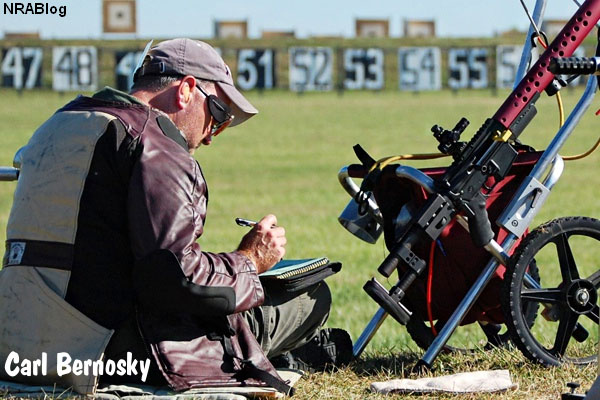
A recently-released study by the Bureau of Justice Statistics (BJS) establishes, without a doubt, that serious gun crime has dropped dramatically in the last twenty years. The BJS Report showed a 39% decline in gun murders from 1993 to 2011 plus a 69% drop in non-fatal gun crimes.
In fact, according to the L.A. Times: “In less than two decades, the gun murder rate has been nearly cut in half. Other gun crimes fell even more sharply, paralleling a broader drop in violent crimes committed with or without guns. Violent crime dropped steeply during the 1990s and has fallen less dramatically since the turn of the millennium.”
A separate independent study by the Pew Research Center, affirms that “National rates of gun homicide and other violent gun crimes are strikingly lower now than during their peak in the mid-1990s, paralleling a general decline in violent crime[.] Compared with 1993, the peak of U.S. gun homicides, the firearm homicide rate was 49% lower in 2010, and there were fewer deaths, even though the nation’s population grew. The victimization rate for other violent crimes with a firearm — assaults, robberies and sex crimes — was 75% lower in 2011 than in 1993.” The PRS findings were based on CDC data (for gun homicides) and on U.S. Justice Department data for “non-fatal victimizations”.
Ignorant Americans Believe Gun Crime is Rising
Ironically, though it is absolutely clear that serious gun crime has dropped while gun ownership has increased, the majority of Americans believe that gun crime is on the rise. According to a survey by the Pew Research Center, the majority of Americans believe that serious gun crime is on the rise.
A recent Pew Research Center survey asked the question: “Compared with 20 years ago, has the number of gun crimes in America gone up, gone down, or stayed the same?” Among those surveyed, 56% said gun crime had gone up, 26% said it had stayed the same, and 12% said it had gone done. 65% of women said gun crime has gone up compared to 46% of men.
As to why most Americans don’t understand that gun crime has gone down, one can only speculate. Certainly, the way firearms-related subjects are reported by the mass media may play a role in confusing the general public.
We recommend that you read the Overview of the Pew Research Center Study, which presents many interesting (and thought-provoking) points. After “crunching the numbers”, the Pew researchers analyzed why gun crime rates have declined so dramatically over the last two decades. A variety of factors are discussed, including demographic changes, increased policing, and tougher laws.
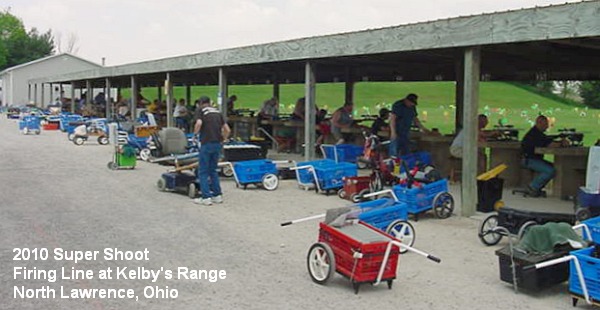
Ready for the Super Shoot? The 41st Annual Firearms Industry Super Shoot will be held on May 22-25, 2013, at Kelbly’s Rifle Range in North Lawrence, Ohio. This annual event draws some of the best 100-yard and 200-yard benchrest shooters in the world. Last year’s Super Shoot had almost 300 competitors from the USA and 14 other countries (about 15% of the competitors come from overseas).
2012 Super Shoot Highlights Video (Watch This — It’s Very Well Done!)
If you’ve never attended the Super Shoot before, and don’t know what to expect, former Sinclair International President Bill Gravatt offers some insights into this great event:
Super Shoot — What It’s All About
The excitement and anticipation leading up to a Super Shoot can be hard to explain to those who haven’t been to one. Every year, some shooters arrive at the Super Shoot a week early to dial in their rifles, learn wind conditions for the range, and enjoy the camaraderie of their fellow shooters. As the match draws closer, campers and RVs fill the area behind the range, and shooters stake out turf all over the property with their reloading and cleaning equipment setups.
Many shooters choose to load cartridges in the main barn directly behind the 60-bench firing line, while others decide to work in pop-ups, campers and other outbuildings around the facility. Benchrest shooters tend to load in small batches, and some most load cartridges between each match. Many shooters clean their rifles after each match, while others sometimes go two or three matches between cleanings, depending on the number of rounds they fire.
Another part of high-level benchrest competition that will amaze first-time attendees is the quality and amount of equipment benchrest shooters use. Just in front of the shooting benches and the targets, range flags of all kinds sprout up, from the typical “daisy wheel” flags to very sophisticated velocity indicators that show varying wind intensity. Shooters adjust their flags to align with the particular target in front of a specific bench, just slightly below the path of the bullet but still partially visible in the high-powered scopes.
The rifles represent a variety of actions, usually custom, with heavy benchrest barrels by various barrel makers. The most popular cartridge used is the 6mm PPC, but occasionally you will run into someone using a 6mm BR or a slightly modified 6mm BR, and as well as a few other cartridges. Rifle rests used are typically heavy tripods or plate rests. You see a lot of Sinclair rests, Farley rests, and a variety of others, including a few homemade rests. Bags are typically Edgewood or Protektor.
Super Shoot — Runners, Pickers and the Pursuit of Perfection
The techniques vary between shooters, and they are interesting to observe. Some shooters “run” their targets and will shoot a quick sighter and then run all 5 shots as fast as they can before conditions change. Others are “pickers” and shoot each shot carefully, going back and forth between the record target and the sighter target to verify wind conditions and bullet drift. These guys will sometimes shoot up to 10 sighters and use the full seven minutes. Both styles of shooting work and many shooters use both techniques depending on the match conditions[.]
Anyone who attends the Super Shoot will come away with a greater appreciation of precision benchrest shooting. Experienced benchresters already know there will be windy days that drive them crazy, and less experienced shooters can get completely lost when… holding off a shot in the wind. But the reward is worth it. It’s very satisfying to hold off a full inch at 100 yards because the wind changes during your string and drop your fifth shot into a sub 0.100″ group with only seconds remaining on the clock. And that’s what the Super Shoot is all about.
The Super Shoot begins with the Light Varmint Class, for guns that weigh 10.5 lbs or less, and consists of a Warm-Up match and five Registered Matches at 100 yards. Shooters are assigned to one of at least six relays and rotate through 12 benches between each of the registered matches. The rotation ensures each shooter faces various wind conditions found at different parts of the range. Competitors can fire an unlimited amount of sighter shots into the sighter target square. The shooters use these sighters to check changes in wind conditions and determine the amount of hold-off, if necessary.
Once the match starts and the “Commence Fire” command is given, shooters have seven minutes to fire five shots into the record target square. These five shots comprise their “group” score for the match. The groups are gauged using a target measuring device with a magnifier and measures the two outermost shots in the group from center point to center point. This group size is the shooter’s score for that match. The laymen’s way to calculate group size is to measure outside edge to outside edge and subtract the bullet diameter. Both procedures achieve roughly the same results. The group sizes for the five record matches comprise their 100 yard Light Varmint Aggregate. Obviously, the smallest aggregate wins.
The second day repeats the process, only competitors are shooting the Heavy Varmint Class rifles, weighing up to 13.5 lbs, at 100 yards. On the third day, the targets are moved to 200 yards and the Heavy Varmint Class is shot at that yardage. The reason for staying with the Heavy Varmint Class is that shooters who switch to heavier barrels can leave them on after shooting 100 yards. On Saturday, the final day of the match, the shooters compete with the Light Varmint guns at 200 yards.
There are winners for each yardage and gun: Light Varmint 100, Light Varmint 200, Heavy Varmint 100, and Heavy Varmint 200. There are also winners for each gun with the two yardages combined. The grand champion of the shoot is the Two-Gun Champion who has the lowest overall group aggregate for the four days of shooting.
For more information, email jim[at]kelbly.com or call (330) 683-4674. You can register onsite (at the Kelbly’s range) or CLICK HERE for 2013 Super Shoot Registration Form. NOTE: After May 10, 2013 registration fees are $130 per gun — no exceptions.
Report based on story by Vanessa Oler
Could your rifle hit a vehicle-sized target located 2.07 miles away (i.e. 3650 yards)? Well Billy Carter’s .375 CheyTac can. Last month, shooting at the NRA’s Whittington Center, Billy Carter hit a 12’x12′ target at the confirmed range of 2.07 miles. Carter was participating in the Whittington U Extreme Long Range III Course. Carter’s 3650-yard hits set a new Whittington U program record for long-distance shooting with a sub-50-caliber rifle. At that distance, 1 MOA is 38.22 inches! Edge to edge, a maximum 3.77 MOA-diameter circle would fit inside the 12′ x 12′ square target.
About the Rifle and Load
Carter’s M200 Intervention is chambered in .375 CheyTac. The beast weighs 31 pounds and measures 53″ overall, as fitted with 29″ barrel and muzzle brake. The optic is a Vortex Razor HD 5-20x56mm (MOA-click version). This First Focal Plane fat boy features a 35mm main tube. To reach out to 3650 yards, Carter was running a whopping 136.5 grains of Retumbo powder in his .375 CheyTac USA brass. That was ignited by Federal GM215M primers. All that Retumbo was pushing the CheyTac USA 350gr “Balanced Flight Trajectory” bullet, a custom copper-nickel-alloy projectile.
Hits on 12’x12′ target at 3650 yards (2.07 miles) Two-mile engagement at the Extreme Long Range III Course at the Whittington U on April 24, 2013.
How the 3650-yard Shot Was Made Carter enrolled in a series of Long-Range Marksmanship courses under the guidance of Jon Weiler, a former U.S. Army Sniper. In 2011, the NRA selected Weiler to help launch the Whittington U long-range training program. Progressing through the long-range courses at Whittington U, Carter began to realize his .50 BMG and 338 Lapua were insufficient for the upcoming Extreme Long Range III Course — with targets increasing in difficulty from 750 yards to 3650 yards. Carter heard industry insiders hinting that Australian sniper teams were using a .375 CheyTac to shoot at 3000+ yards. So Carter called CheyTac USA and ordered a M200 Intervention in the .375 CheyTac chambering.
The first day of the Long Range III course, rifles were sighted-in at 500 yards and students engaged targets at 1200 yards. On Day 2 a cold front and driven snow made shooting near impossible. So, on the third and last day, Carter and the other students decided to go out as far as possible.
This range had four targets: 1890 yards, 2970 yards, 3040 yards, and 3650 yards. Carter figured he could skip the first two, but Weiler said “You have to build up to it”. Carter recounted, “I took 15-20 rounds to work my way up to the 3040 target. At that point you have to take a break. I pulled out my kestrels and started doing the math. My scope had no more vertical space, so I was forced to use five MOA at 3040, then calculate a full value 3 o’clock wind. Basically speaking, I was shooting out of my scope at that point. And hoping. ”
The first three shots, I wasn’t there and I knew it wasn’t going to work. But then I got close. The adrenaline started rushing and I couldn’t stop. I’m almost there, I thought.” Weiler, at the spotting scope, kept an even tone: “Same hold.” Carter shot again. Weiler let the excitement rise in his voice: “I can now say you’ve hit that 3650 target twice.”
Interview with Billy Carter
Carter is V.P. of Carter’s Shooting Center (CSC) in Houston, Texas. CSC is one of the largest private firearms retailers in the country.
“This was unreal. To think just a month before, I didn’t even know the velocity of my load! To pull off a two-mile hit was such a rush… it was dream come true.” Carter gave credit to Weiler: “John was an excellent instructor, designing the course to help you stairstep your way up to incredible distances. It wasn’t like you were just going to spend all day blindly shooting at some impossible target. He teaches you how to succeed at shooting long distance by starting with the basics — correct prone stance, trigger control, and rifle positioning.”


 Thus far in 2013, the National Shooting Sports Foundation (NSSF) has distributed 31,000 firearm safety kits through Project ChildSafe. Through this program, NSSF helps prevent unauthorized access to firearms when they aren’t in use. The NSSF launched Project ChildSafe in 2003 to educate gun owners on their responsibility to keep their guns out of the wrong hands, and provide the tools to help them do so.
 ATK announced that it will pay $315 million to acquire Caliber Company, the parent company of Savage Sports Corporation which runs Savage Arms, and Stevens. Savage will be integrated into ATK’s Sporting Group business which includes Federal Premium, Alliant Powder, CCI, RCBS, Speer, Champion Targets, and other outdoor sports brands.


 You can visit the
 Judge Glen E. Conrad, Chief Judge of the United States District Court for the Western District of Virginia, entered a final judgment upholding the validity of

 The
The 

 A recently-released study by the Bureau of Justice Statistics (BJS) establishes, without a doubt, that serious gun crime has dropped dramatically in the last twenty years. The BJS Report showed a 39% decline in gun murders from 1993 to 2011 plus a 69% drop in non-fatal gun crimes.
 Ready for the Super Shoot? The 41st Annual Firearms Industry Super Shoot will be held on May 22-25, 2013, at


 Carter enrolled in a series of Long-Range Marksmanship courses under the guidance of
  The first day of the Long Range III course, rifles were sighted-in at 500 yards and students engaged targets at 1200 yards. On Day 2 a cold front and driven snow made shooting near impossible. So, on the third and last day, Carter and the other students decided to go out as far as possible.


