Two new mixed team events will be part of the 2014 Youth Olympic Games Program, while the total number of quotas will remain unchanged.
The International Olympic Committed (IOC) has approved the Shooting program for the 2014 Youth Olympic Games. The program includes the previously approved individual events, 10m Air Rifle Men, 10m Air Rifle Women, 10m Air Pistol Men and 10m Air Pistol Women plus two new events, 10m Air Rifle Mixed Teams and 10m Air Pistol Mixed Teams.
The number of participation quotas for the individual events remains the same (20 quotas per 4 events, for a total of 80 quotas). Athletes who compete in the individual events will also form two-person mixed teams (one male, one female) according to their place finishes in the individual events. No additional athlete quotas were allocated for those events.
All teams will be composed of one male and one female athlete based on their final rankings in the individual Air Rifle and Air Pistol Men and Women events.
Mixed Team events will take place over 2 days, following the 4 days of individual competitions. In the team duels, the two members of each team will fire one shot on command. The scores of the two team-members will be combined and compared with the combined score of the other team. The team with the higher total will score one point. The paired teams will continue to fire single shots on command until one team scores ten points to win that round of competition. Detailed technical rules for the YOG Mixed Team events will be provided after the ISSF Administrative Council meeting in November 2012.
In preparation for Hurricane Sandy and other natural disasters, the Bureau of Alcohol, Tobacco, Firearms and Explosives (ATF) urges federal firearms licensees (FFLs) and federal explosives licensees and permittees (FEL/Ps) to be prepared, and stand ready to protect their merchandise and facilities. ATF has prepared guidance (available online) regarding how to plan ahead before disasters strike. First, FEL/Ps should review the PDF brochure, Voluntary Steps to Prepare for a Pending Natural Disaster, (ATF Publication 5400.16, March 2011).
Additionally, a hurricane preparedness brochure and a video are available on ATF’s website. The brochure, Disaster Preparedness for Federal Firearms Licensees (ATF publication 3317.7) provides information regarding businesses that are affected by flooding or other natural disasters. The video, “Disaster Preparedness,” can be accessed on the ATF Online Education Seminars Page.
FEL/Ps that have additional questions concerning preparedness are urged to contact their local ATF field office or the Explosives Industry Programs Branch at 202-648-7120.
FFLs with additional questions, should contact their local ATF field office or the ATF Firearms Industry Programs Branch at 202-648-7190. For other useful information on planning for a natural disaster, please visit www.ready.gov. Further information about ATF is available at www.atf.gov.
Four-time USA Olympian SFC Jason Parker won the ISSF World Cup Final, finishing ahead of Han Jinseop of South Korea and Olympic finalist Ole Krsitian Bryhn of Norway. Parker, a soldier serving with the USAMU, claimed the International Shooting Sport Federation (ISSF) World Cup Final trophy in the Men’s Three-Position Rifle event Thursday in Bangkok, Thailand.
Ranked ninth in the world, Parker earned his invitation to Bangkok after winning the Milan World Cup earlier this season. The 38-year-old Parker, no stranger to the World Cup Finals after six previous visits, made it to the final round with a head-start of four points after shooting an 1,171. Scoring 95.5 points during the final stage, Parker won gold with an overall score of 1266.5 points. Parker added. “”I have been competing in World Cup Finals since 1998, and dreaming of a gold medal since then. It’s finally around my neck, and it feels great!”
Three points behind him, Korea’s Han Jinseop pocketed the silver medal with an overall score of 1263.5 points. Making it to the final with 1166, Han overtook Norway’s Ole Kristian Bryhn to finish on the second step of the podium with a final score of 97.5 points. Bryhn landed in third, securing the Bronze medal with a total score of 1263.0 (1167+96.0) points.
Parker’s Olympic and USAMU teammate SFC Eric Uptagrafft took fourth in the World Cup Final Wednesday in the Men’s Prone Rifle event. (He finished .6 points away from second place). In other ISSF World Cup events in Bangkok, USAMU shotgunners did well. Josh Richmond earned the gold medal in Men’s Double Trap while Vincent Hancock shot his way to a silver medal in Men’s Skeet.
Elite Field for ISSF World Cup
Starting with the London World Cup in April and then passing through Milan and Munich, the 2012 ISSF World Cup Series finished in Bangkok. Only the sport’s top performers were invited to compete in the World Cup Finals. Ninety (90) shooters from 34 countries, including Olympic medalists and past World Cup title holders, competed at the Thailand ISSF World Cup Match this year. (Shown at right is SFC Parker competing at the Milan World Cup.)
The 35th Anniversary SHOT Show is less than three months away, and there’s no time like the present to start planning your show. Watch this video news update for details on what you need to know about the 2013 SHOT Show. SHOT Show will run January 15-18, 2013 at the Sands Expo Convention Center in Las Vegas. Note: SHOW Show is not open to the general public. However, persons in the shooting industry and working journalists can obtain credentials to attend. Learn more about the 2013 SHOT Show at www.ShotShow.org. Late breaking news and special promotions can be found on the SHOT Show Facebook Page. CLICK LINKs to Register for 2013 Shot Show: Attendees | Media
Exhibitor Registration and Personnel Credentials
SHOT Show exhibitors may now order show credentials for booth personnel on the Exhibitor Dashboard. All exhibit staff must wear credentials at all times in order to gain access to the show floor. Order your credentials today and avoid on-site lines and fees. Get more details at the SHOT Show blog.
Looking for a shooting facility close to home? Need a place to zero your hunting rifle? Or perhaps you’re planning a trip this fall and want to find a gun range near your vacation destination. Then check out WhereToShoot.org. This NSSF-sponsored website provides the most comprehensive online directory of shooting ranges in North America. Listings are updated frequently with range information for all U.S. States and Canadian Provinces. You can search by state, by zip code, or by keyword. You can also limit your search to specific types of facilities (such as indoor pistol ranges).
Where2Shoot App for iPhones
Folks with smart phones can access the WhereToShoot range database via the FREE Where2Shoot iPhone App. This handy App also provides shooting sports news and safety tips.
UPDATE Oct. 25: NSSF.org and WhereToShoot.org websites are having technical problems.
WhereToShoot.org allows anyone to search for a place to shoot in their area. Site users can simply enter their state or zip code and a list of shooting ranges is created. Searches can be further narrowed by selecting which shooting discipline you are interested in. NOTE: If you own a shooting range or if you’ve recently changed locations, NSSF encourages you to enter or update your range information.
Bonus Features on WhereToShoot.org
In addition to its range-locating capability, the site now offers a number of other Resources for Shooters, including links to video tips, free printable targets, news about local shooting events and opportunities, safety information and more. Below are three of the NSSF’s nine free PDF targets:
As we reported a few weeks ago, Bryan Litz has written a new book, Accuracy and Precision for Long Range Shooting. We know many readers have pre-ordered Bryan’s latest book. Here’s the good news. Bryan reports that most pre-orders for the new book shipped yesterday, and the rest will go out today.
We asked Bryan to explain the differences between his original Applied Ballistics for Long Range Shooting resource book and the new Accuracy and Precision book. Here is Bryan’s explanation…
The first book, Applied Ballistics for Long-Range Shooting, covers the elements of long range shooting and explains how all the various mechanisms of external ballistics affect trajectories. It’s also the book that contains detailed drawings, BC and stability data for hundreds of bullets.
The new book, Accuracy and Precision for Long Range Shooting explains the impact of external ballistic effects in terms of “hit percentage”. For example, if you choose to ignore Coriolis Effect in your ballistic solution, how much will your hit percentage be reduced on a 10″ target at 1000 yards? How about a 5″ target at 500 yards? How much would your hit percentage be improved on a 15″ target at 1200 yards if you reduce wind uncertainty from +/-3 mph to +/-2 mph?
There are also numerous performance comparisons between different classes of cartridges. For example: how much higher is hit percentage for a .338 Lapua Magnum than a .308 Winchester for common environments and targets?
The new book identifies accuracy and precision effects and defines their effects separately. Did you ever wonder why it’s so easy to shoot a 10 inch GROUP at 1000 yards, but how difficult it is to HIT A 10″ TARGET at 1000 yards on the first shot? Shooting a 10 inch group is precision, but centering the group is a challenge of accuracy.
It’s quite common for long range shooters to focus 90% of their effort on the precision aspect, and only 10% on accuracy. To actually hit targets, you need a balance of accuracy and precision, with accuracy becoming increasingly more important as range is extended. — Bryan Litz
Some of our readers have questioned how to set up their body dies or full-length sizing dies. Specifically, AFTER sizing, they wonder how much resistance they should feel when closing their bolt.
Forum member Preacher explains:
“A little resistance is a good, when it’s time for a big hammer it’s bad…. Keep your full-length die set up to just bump the shoulder back when they get a little too tight going into the chamber, and you’ll be good to go.”
To quantify what Preacher says, for starters, we suggest setting your body die, or full-length sizing die, to have .0015″ of “bump”. NOTE: This assumes that your die is a good match to your chamber. If your sizing or body die is too big at the base you could push the shoulder back .003″ and still have “sticky case” syndrome. Also, the .0015″ spec is for bolt guns. For AR15s you need to bump the shoulder of your cases .003″ – .005″, for enhanced reliability. For those who have never worked with a body die, bump die, or Full-length sizing die, to increase bump, you loosen lock-ring and screw the die in further (move die down relative to shell-holder). A small amount (just a few degrees) of die rotation can make a difference. To reduce bump you screw the die out (move die up). Re-set lock-ring to match changes in die up/down position.
That .0015″ is a good starting point, but some shooters prefer to refine this by feel. Forum member Chuckhunter notes: “To get a better feel, remove the firing pin from your bolt. This will give you the actual feel of the case without the resistance of the firing pin spring. I always do this when setting up my FL dies by feel. I lock the die in when there is just the very slightest resistance on the bolt and I mean very slight.” Chino69 concurs: “Remove the firing pin to get the proper feel. With no brass in the chamber, the bolt handle should drop down into its recess from the full-open position. Now insert a piece of fire-formed brass with the primer removed. The bolt handle should go to the mid-closed position, requiring an assist to cam home. Do this several times to familiarize yourself with the feel. This is how you want your dies to size your brass, to achieve minimal headspace and a nearly glove-like fit in your chamber.”
We caution that, no matter how well you have developed a “feel” for bolt-closing resistance, once you’ve worked out your die setting, you should always measure the actual amount of shoulder bump to ensure that you are not pushing the shoulder too far back. This is an important safety check. You can measure this using a comparator that attaches to your caliper jaws, or alternatively, use a sized pistol case with the primer removed. See Poor Man’s Headspace Gauge.
Story by NRAHuntersRights.org and NRAblog.com
Shown above is the Belfast Wildlife Area rifle range in Kindards, South Carolina. Belfast was the first public, unmanned shooting range opened and paid for completely with funds raised by NRA Grants and the Wildlife and Sportfish Restoration Program … an act made possible through Pittman-Robertson grants. Several other state Natural Resource Departments have followed suit. Such facilities provide hunters and shooters with a convenient, low cost location to sight in firearms and practice shooting. Now that may be in jeopardy.
In the article below, NRAHuntersRights.org Managing Editor J.R. Robbins explains why government funding for Public Shooting Ranges is threatened:
OMB Threatens to Freeze Pittman-Robertson Funds
Sportsmen nationwide should be aware of a recently released report from the White House Office of Management and Budget that itemizes $31 million in Pittman-Robertson funds to be “sequestered” from the U.S. budget. Sequestration sets aside funding–effectively “freezing” it — until a debt is repaid.
The listing of the P-R funding (as well as $34 million of Dingell-Johnson funds that support sport fishing) is part of a huge package of across-the-board government budget reductions planned to take effect January 2, 2013, unless Congress can develop a plan to cut $1.2 trillion over the next decade.
This year is the 75th anniversary of the Pittman-Robertson Act, more formally known as the Federal Aid in Wildlife Restoration Act. As most hunters know, the act put an 11 percent excise tax on rifles, shotguns, ammunition and archery equipment that is distributed to state game and fish agencies for the purposes of habitat acquisition and improvement, reintroduction of declining species, wildlife research, hunter education, shooting range development and other conservation projects. (The tax on handguns is 10 percent.)
It is this funding and these projects that have brought back species such as whitetail deer, turkeys, wood ducks, antelope, bald eagles and Canada geese from dangerously low levels a century ago to the strong, sustainable populations we see today. Hunters’ dollars are directly responsible for these and other conservation milestones.
Since 1937, hunters have contributed nearly $7 billion dollars through the Pittman-Robertson Act for the benefit of wildlife conservation. For any given project, P-R funding pays 75 percent of costs, and states must contribute at least 25 percent–most of which comes from hunting license fees …
Part of the Precision Rifle Series, the GAP Grind is one of the premier precision tactical matches of the year. Top tactical shooters from around the country will compete for glory (and $100,000 worth of prizes) in this year’s GAP Grind, hosted at the K&M Precision Rifle Training Center in Baker, Florida. The GAP Grind is a notoriously challenging, “high tempo” match with minimal “down time” between stages. The course of fire involves multiple stages, with an assortment of steel, reactive, paper and automated moving targets situated from 50 to 1000 yards.
Target sizes will vary in difficulty based on the shooters position, distance and time allotted. To heighten the challenge, most stages will involve time limits and/or movement requirements. Scoring will follow Precision Rifle Series guidelines to reward the most consistent shooters. The cost of the GAP Grind is $275.00 per competitor and shooters must bring at least 175 rounds of ammunition. Rifles are limited to cartridge sizes no larger than .300 Win Magnum. The Course of Fire will be revealed at the start of the competition on Saturday, October 26th.
“Train-Up” Session on Friday, October 26
An 8-hour Train-Up Course will be offered to competitors on Friday, 26 October from 7:00 am to 3:00 pm. The course will review basic fundamentals and rapidly transition to range exercises and drills commonly seen in today’s precision rifle competitions. K&M Precision staffers and members from the GA Precision Rifle Shooting Team will provide hands-on instruction. During the Train-Up session, competitors can confirm their come-ups at 100-1000 yards, engage moving targets, and shot at multiple range props and targets. While the Train-Up will be held at the same location as the GAP Grind, but there will be no training that actually duplicate Grind competition stages. The Train-up and Match fee cost is $525 and will limited to maintain a 1 to 5 instructor to student ratio.
Remington has announced that it is recalling four (4) lots of Remington .338 Lapua Magnum ‘Express Rifle’ Ammunition. The recalled lots are: L13SA29L, L13SA29R, L13SB29L, and L13SB29R. The reason for the recall is that the listed lots “may have been improperly loaded. Improper loading may cause malfunctions which may result in damage to the firearm, serious personal injury or death.” CLICK HERE for more information, and to download PDF Recall Notice from Remington.


 Two new mixed team events will be part of the 2014 Youth Olympic Games Program, while the total number of quotas will remain unchanged.
 All teams will be composed of one male and one female athlete based on their final rankings in the individual Air Rifle and Air Pistol Men and Women events.
 In preparation for Hurricane Sandy and other natural disasters, the Bureau of Alcohol, Tobacco, Firearms and Explosives (ATF) urges federal firearms licensees (FFLs) and federal explosives licensees and permittees (FEL/Ps) to be prepared, and stand ready to protect their merchandise and facilities. ATF has prepared guidance (available online) regarding how to plan ahead before disasters strike. First, FEL/Ps should review the PDF brochure,
 Four-time USA Olympian SFC Jason Parker won the ISSF World Cup Final, finishing ahead of Han Jinseop of South Korea and Olympic finalist Ole Krsitian Bryhn of Norway. Parker, a soldier serving with the USAMU, claimed the International Shooting Sport Federation (ISSF) World Cup Final trophy in the Men’s Three-Position Rifle event Thursday in Bangkok, Thailand.
 Elite Field for ISSF World Cup
 The 35th Anniversary SHOT Show is less than three months away, and there’s no time like the present to start planning your show. Watch this video news update for details on what you need to know about the 2013 SHOT Show. SHOT Show will run January 15-18, 2013 at the Sands Expo Convention Center in Las Vegas. Note: SHOW Show is not open to the general public. However, persons in the shooting industry and working journalists can obtain credentials to attend. Learn more about the 2013 SHOT Show at
  Looking for a shooting facility close to home? Need a place to zero your hunting rifle? Or perhaps you’re planning a trip this fall and want to find a gun range near your vacation destination. Then check out


 The new book,
 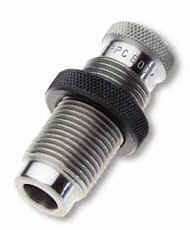 To quantify what Preacher says, for starters, we suggest setting your body die, or full-length sizing die, to have .0015″ of “bump”. NOTE: This assumes that your die is a good match to your chamber. If your sizing or body die is too big at the base you could push the shoulder back .003″ and still have “sticky case” syndrome. Also, the .0015″ spec is for bolt guns. For AR15s you need to bump the shoulder of your cases .003″ – .005″, for enhanced reliability. For those who have never worked with a body die, bump die, or Full-length sizing die, to increase bump, you loosen lock-ring and screw the die in further (move die down relative to shell-holder). A small amount (just a few degrees) of die rotation can make a difference. To reduce bump you screw the die out (move die up). Re-set lock-ring to match changes in die up/down position.
 The listing of the P-R funding (as well as $34 million of Dingell-Johnson funds that support sport fishing) is part of a huge package of across-the-board government budget reductions planned to take effect January 2, 2013, unless Congress can develop a plan to cut $1.2 trillion over the next decade.


